
businesses with each other (domestic and international). When technology has become globalized, the price level has been established, then culture will be the decisive factor for victory in the market. However, the development momentum of a business can be broken if the values of corporate culture are no longer suitable. So how can businesses have a culture that both preserves core values and constantly moves to always adapt to the surrounding environment?
Currently, there are still many leaders, many businesses and businessmen who do not realize the role and driving force of Culture in economic development, and even consider building Corporate Culture as a distant issue, outside the production and business process. Therefore, paying attention to building and promoting Corporate Culture in Vietnam at the present stage is both a necessity and a requirement, and also a mission of every Vietnamese enterprise. The State always supports, and the public always supports, businesses that know how to preserve and care for building Corporate Culture. The appearance of cultured businesses will increase the beautiful image of the country on the path of deep integration with the world economy.
IV. Content of building Corporate Culture
1. Some key views when building Corporate Culture
Maybe you are interested!
-
 Building corporate culture in Vietnam: current situation and solutions for improvement - 13
 -
 Corporate Social Responsibility (Csr) Has Positive Impact on Building and Developing Corporate Culture
 -
 Some Suggestions for Building Corporate Culture for
 -
 Building corporate culture at WalMart - 11
 -
 Research on Building and Developing Corporate Culture
Corporate culture is the foundation for the development of the enterprise, it is both historical and maintained, inherited and eternal through many generations of members. It is the spiritual asset, the glue that binds the members together. Therefore, any enterprise that knows how to focus on building Corporate Culture will certainly develop sustainably. In the process of building and developing Corporate Culture, it is necessary to clearly understand some basic viewpoints as follows.
Viewpoint 1: Business leaders (founders) play a decisive role
in building corporate culture. Corporate culture can only be created when business leaders have enough strength and talent to create a system of values, establishing the meaning of business activities. They must be the initiators,
promote, defend and spread cultural values throughout the enterprise. Leaders must first thoroughly and deeply understand the values they initiate, then set an example in seriously implementing customs, habits and complying with common standards. In addition, sharing, consensus and joint implementation by all members of the enterprise are also indispensable factors in building Corporate Culture.
Viewpoint 2: Building Corporate Culture is a long-term process and
requires persistence. Corporate culture is the spiritual asset of the enterprise, it cannot be built in one or two days but requires a process of persistent and arduous efforts, forming the concepts of values, psychological trends and common cultural nuances of the enterprise. That requires summarizing practices, discovering typical behaviors, noble values..., encouraging everyone to follow, maintaining and nurturing them for a long time to become traditions, customs and habits that are not easily changed.
Viewpoint 3: Corporate culture is closely linked to national culture and culture.business culture. This point has been analyzed in Part I, Section 2. No business can build a successful culture if it is outside the impact of National Culture. Therefore, when building a Corporate Culture, it is necessary to take into account the impact of traditions, customs, common values, etc. of National Culture and Business Culture.
Viewpoint 4: Corporate culture is created by all members of the business.
create. Building a corporate culture requires cultural education for all members, improving knowledge, ethical level... to make them understand and imbue the core standards and values of corporate culture. Only when members clearly understand the values, standards, traditions, customs... in corporate culture, consider the business as their family and serve wholeheartedly, then the business will be successful in building a true culture for itself.
Viewpoint 5: Corporate culture must be approached as a component part.
corporate governance system. Corporate culture must be built in close association with the corporate governance system. A true corporate culture cannot exist if other elements of the corporate governance system are not properly established such as organizational structure, mission, goals of the enterprise, etc.
Viewpoint 6: Each enterprise has its own corporate culture. Corporate culture can be suitable and stable for this enterprise but can also become unreasonable and inappropriate for another enterprise. As analyzed in the concept section, corporate culture exists throughout the process from establishment to construction and development of the enterprise, so from a certain perspective, any enterprise has its own culture. Therefore, when researching or referring to experiences in building corporate culture, do not arbitrarily apply the philosophies, values, standards, behaviors, etc. of other enterprises to your own enterprise.
2. Steps to build Corporate Culture
Building a corporate culture is a comprehensive process, not simply a matter of leaders putting values into the business in a discrete way. So to build a comprehensive corporate culture, what specific steps need to be developed? There are many implementation models proposed by researchers, however
However, the most widely used model is the 11-step model by two authors, Julie Heifetz and Richard Hagberg 6 .
6 Julie Heifetz and Richard Hagberg are two key members of the Hagberg Consulting Group, which specializes in organizational effectiveness and leadership development.
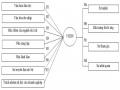
Figure 1.2: 11-step model for building corporate culture
Source: Dr. Phan Quoc Viet and Master Nguyen Huy Hoang (2005), Building Corporate Culture, Entrepreneurial Culture, No. 3.
Step 1: Learn about the environment and influencing factors.
First of all, it is necessary to study the environment and factors that affect the future strategy of the enterprise, and consider whether there are any factors that change the strategy. In the current trend of global integration, there are many factors that affect the strategy of the enterprise and indirectly affect the business performance of that enterprise. Researching and finding factors that have an important influence on the strategy of the enterprise is a necessary need and must be carried out quickly. Only then, from a passive position, the enterprise will proactively receive the influence, thereby being able to come up with safe and positive solutions.
Step 2: Identify the core values that underpin success.
This is the most basic step in building a corporate culture. Core values must be timeless values (in themselves as obvious truths, meaningful as the main driving force) that are condensed in each individual of an organization throughout the process of movement and development, thereby being able to link and converge personal goals, helping to affirm the unique identity of a business in relation to the environment. It is necessary to be extremely careful and honest when determining core values. If too many core values are established, the business may be confused about what is the most basic thing, easily confusing the unchanging core values with business practices and strategies - which need to be constantly changed to suit the outside. It would be right for a business not to change its core values to suit the market, but on the contrary, change the market (if possible) to always maintain its own core values.
In this second step, it is important to note that the core values of leading companies should not be mistaken as a source for defining core values for your own business. In other words, core ideas never come from imitating the ideas of others. Each business must decide for itself its own core values, regardless of the external environment, competitive factors, or modern trends and management styles.
Step 3: Build a vision of where the business will go.
Vision is the ideal picture of the enterprise in the future, the orientation for building corporate culture. The enterprise that the leader wants to build may be completely different from the existing enterprise. Vision can be understood as a long-term goal on the basis of which the enterprise establishes its solid position in society. Once the enterprise establishes its own vision and shares it with all members of the enterprise, then all efforts and endeavors of the entire organization will become a potential internal force, contributing to building the enterprise closer and closer to the desired values that have been shaped in that vision.
Step 4: Assess your current culture and identify what needs to change.
Changing or building a corporate culture often begins with an assessment of the current culture and, combined with the corporate development strategy, considering the cultural elements that need to be changed. Evaluating culture is extremely difficult because culture is often difficult to see and easy to confuse in terms of evaluation criteria. Unspoken or unwritten assumptions are even more difficult to assess. Often, people are immersed in culture and do not see its objective existence. However, corporate culture also has tangible manifestations, and it is necessary to study and consider those signs in order to establish the basis for promoting or eliminating appropriate or inappropriate cultural values.
Step 5: Close the gap between existing values and desired values
desire.
This is the next step when the business has identified its ideal culture and has an understanding of the existing culture in the business. At this point, it is necessary to focus on how to narrow the gap between current values and desired values. These gaps should be assessed according to 4 criteria: behavioral style, communication, decision making, treatment.
- Daily behavior style: It is the way members behave on a daily basis. Style can be friendly or serious, playful or formal, formal, distant or intimate, speaking freely and somewhat rudely or academically…
- Communication methods: How are ideas communicated, via e-mail, or face-to-face, two-way or one-way communication. Is internal information widely disseminated, accessible to anyone in need, or strictly hierarchical?
- Decision-making method: Collective decision-making with centralized democratic or autocratic discussion; Having systematic or spontaneous support tools; daring to do and dare to take responsibility or avoiding responsibility, pushing things aside...
- Working style: Working for passion, love or for money, rice bowl. Finishing things to avoid mistakes or seeking perfection, passion for creativity, accepting risks; working is the most useful life or just staring at the clock waiting for break time... Working with high team spirit, or competition, jealousy...
Step 6: Identify the leadership role in driving cultural change.
Leadership plays an extremely important role in building a corporate culture. Leaders are the ones who initiate and guide change efforts. Leaders are responsible for building a vision, communicating it to employees so that they understand it correctly, believe in it, and work together to build a corporate culture. Leaders also play an important role in dispelling employee fears and instability. In many businesses, success is achieved thanks to the leadership and steering talents of senior managers. This does not rule out the possibility that businesses fail due to the influence of managers. Therefore, determining the role of leaders is extremely necessary.
Step 7: Once the spacing has been determined, the next step is to draft.
an action plan that includes goals, activities, timelines, milestones, and
specific responsibility
To outline an action plan, it is necessary to ask the following questions: What are the priorities? Where should efforts be focused? What resources are needed? Who is responsible for specific tasks? Deadlines? Reasonable allocation of resources and clearly defining what needs to be done play an equally important role. This is the step to concretize all the inferences and assessments after reviewing the current situation of the enterprise's Corporate Culture, playing the role of the first step in the action cycle.
Step 8: Communicate the need for change, action plan, and motivate
employee morale, motivating change.
Change will affect the lives of employees. They need to know that change will bring them good things. Motivation and encouragement will be easier when people know their role is to contribute and build the future of the business. In many businesses, there are cultural values that have become lifestyles, habits, and corrosive spirits in the thinking of all members, whether they are suitable or not really suitable. Therefore, convincing them to gradually give up those cultures will be difficult. However, once the business encourages and employees see the importance of changing those cultural values, all difficulties are only a matter of time. This 8th step can be shortened if the propaganda and sharing work in the business is carried out well.
Step 9: Identify obstacles and reasons for resistance to change, build
strategies to cope
Getting people out of their comfort zone is a difficult task. Therefore, leaders must encourage, motivate and show employees how their benefits increase during the change process. Only then will employees be motivated to improve themselves and join the innovation process.
Step 10: Institutionalize, model, and reinforce cultural change.
The leaders' behaviors and decisions must be models for employees to follow and be consistent with the established cultural model. During this stage,