
effective and sustainable, ensuring independence, autonomy and socialist orientation, protecting national interests, maintaining national security, promoting national cultural identity, and protecting the ecological environment".
This is a major policy in the foreign policy and integration of our Party and State. According to this point of view, the culture of Vietnamese enterprises also needs to change in the direction of strongly promoting the inherent values in the traditional culture of the nation combined with the achievements of world culture to create a corporate culture that meets international standards and carries the Vietnamese national identity, capable of bringing Vietnamese enterprises to victory in competition . It must be a dynamic, creative culture; professional in management; seeking profits on the basis of high responsibility to society; community solidarity; ready to cooperate in the spirit of mutual benefit; long-term benefits must be considered instead of only considering short-term benefits, with the aspiration to conquer the world.
3.1.3. The role of building corporate culture of Vietnamese enterprises in the context of international economic integration
Risk management, innovation, and rapid adaptation to win in competition are what all Vietnamese enterprises aim for. From the past to the present, technology has been considered the basic factor that creates the basic competitiveness of enterprises. However, due to the imitative and rapidly diffused nature of technology in today's flat world, its position in business competitiveness is only temporary, not long-term.
Unlike technical technology, corporate culture is very difficult to imitate or even impossible to imitate completely because corporate culture factors such as philosophy, viewpoints, unique values with a system of ideas and behaviors will create the unique personality and identity of the enterprise. Therefore, corporate culture will become the key factor creating the basic competitiveness of Vietnamese enterprises in today's era.
Maybe you are interested!
-
 Vietnamese Enterprises' Perception of the Role of Corporate Culture (2003)
 -
 Building a strong corporate culture for the survival and development of Vietnamese enterprises - 14
 -
 Building a strong corporate culture for the survival and development of Vietnamese enterprises - 2
 -
 Building corporate culture in Vietnam: current situation and solutions for improvement - 13
 -
 Corporate Social Responsibility (Csr) Has Positive Impact on Building and Developing Corporate Culture
In our country, social awareness of business and building corporate culture has not been taken seriously for many long-standing historical reasons, from the ideology of agriculture, to the history of fighting against foreign invaders, to when the nation was completely free.
but encountered difficulties in the economic renovation process. Only in the Resolution of the 5th Central Conference, Session VIII, did our Party truly emphasize economic development as the focus, Party building as the key, and cultural development as the spiritual foundation of society. Combining these focuses is essentially emphasizing the issue of corporate culture.
However, it was not until the 10th Congress that our Party raised the issue of a closer and more synchronous connection between culture and economy, and determined that an economy developing in a civilized and modern direction cannot fail to pay attention to culture in the economy. However, we have not really focused on promoting, reforming, and taking specific measures in building corporate culture. We talk a lot about cultural families, protecting and preserving national culture, but we have not talked much about corporate culture - a cell of the economy. All concerns up to now have been mainly to find out whether businesses pay taxes fully, comply with the law, and do things that are prohibited by law. We tend to manage every small detail (which is very difficult to check), rather than managing according to an overall model, arousing the awareness of businesses. More importantly, we have not paid special attention to building a unique corporate culture, especially in the context of economic globalization when intangible values such as the name of the company that produces the product are valued more highly than criteria of quality, price of products and services.
In the past two years, society has begun to widely discuss issues of corporate culture, business culture, and leadership culture; entrepreneurs have also been honored by taking October 13 as Entrepreneurs' Day; business associations have also promoted this issue; courses on "corporate culture" have also begun to appear, etc. However, it is still highly formalistic, the vast majority of business leaders still do not really understand what corporate culture is, how to build corporate culture, and do not see corporate culture as the foundation, identity, and driving force of business development. There are still many controversies about the concepts of corporate culture, company culture, business culture, and business culture.
Building a Vietnamese corporate culture does not stop at building a "philosophy" or an "ethics" in business, but moreover, it is building a "Vietnamese business school", a necessary and strategic task in the process of strong integration with the world economy.
3.2 ORIENTATION FOR BUILDING CORPORATE CULTURE FOR BUSINESSES
VIETNAMESE ENTERPRISES IN THE TREND OF ECONOMIC INTEGRATION
INTERNATIONAL
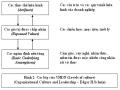
From the analysis of limitations and positive aspects (section 2.2); requirements for international economic integration (section 3.1), the following corporate culture model is proposed:
National pride; Spirit of solidarity and cooperation; Spirit of eagerness to learn, flexibility and creativity;
Confucianism: Humanity - Justice - Propriety - Wisdom - Trust
Principles, operating principles, values, philosophy, long-term vision
Building Leadership Culture, Qualifications and Qualities
Skill
Building Culture
Business Customers Partners
Government, regulatory bodies Shareholders
Society, environment
Brand Marketing, Public Relations (PR)
Building Organizational Culture
Organizational mechanism (structure and institutions)
Human resource policy
Building a corporate culture house requires combining the cultural knowledge of the times and national cultural identity to create a corporate culture that meets international standards and carries national identity . The content of each item is explained as follows:
3.2.1. Determine vision, long-term goals, build a widely shared operating philosophy and principles
In the current volatile integration environment, planning long-term goals and business development orientation is the first important task . Without a vision with long-term goals, business operations will easily become entangled, wandering around with short-term benefits but may sacrifice long-term goals (for example, not investing in technological innovation can reduce depreciation costs leading to increased short-term profits but in the long run, businesses lose their technological competitiveness). Moreover, businesses cannot develop sustainably, long-term, with enough scope and strength to reach out to the world market, and even have a high risk of being acquired even in the domestic market.
Vision and long-term goals are often built for a period of 5-10 years. Building long-term goals requires considering :
 Growth prospects of the target market (a)
 Business destination (b)
 Feasibility of the target is based on consideration of current internal resources and planning of future investments (c)
A good vision and long-term goals must ensure :  Having a desire to develop (d).
 High sharing to all management and staff. In the management team, long-term goals can be planned in relatively detail, with full basis and conditions for implementation, for example, financial planning, marketing strategy, distribution, etc. But when shared to all staff, long-term goals if highly generalized, easy to understand, clear, and highly expressive , will have a greater effect. (e)
 Can influence the activities, perceptions, and behaviors of each department and employee (f)
As in section 1.3.3 introducing Unilever Vietnam, the company's 5-year goal (2000-2005) is determined to be: "Perfecting the health and beauty needs of every Vietnamese family" . This can be said to be a long-term goal that is both highly strategic and has great sharing power for every Unilever employee, from production line staff, sales staff to senior leaders of Unilever.
For senior managers, this is the goal of monopolizing the Vietnamese market. Unilever entered the Vietnamese market in 1995, when Vietnam had just opened its market economy. The circulation of personal and family care products such as shampoo, laundry soap, etc. in those years in Vietnam was still very modest. Recognizing the potential of the consumer goods market in Vietnam (calculated based on Vietnam's population indicators, income situation, economic development of Vietnam, average needs of each individual for daily activities based on the starting point of the living standards of Vietnamese people...) (a) and considering the competitive situation of this product in the Vietnamese market, senior managers determined the goal of capturing about 60% of the domestic market share (b) . This goal is specifically planned into a financial picture such as estimating how many tons of products need to be produced, the revenue earned, how much investment is made in production, distribution, marketing, and finally how much profit is estimated. Based on that, each department makes specific plans such as factory capacity, distributor network in provinces and cities, marketing program, how many new products need to be launched on the market... (c, e)
Once the feasibility of the long-term goal was determined, during the Unilever Family Day in 2000, the board of directors shared the company's long-term goal and together with more than 2,000 Unilever employees, they created an easy-to-understand, motivating, national-expressive operating principle that motivated the working spirit of all employees. To fulfill the health and beauty needs of every Vietnamese person , production staff knew that they needed to produce many quality products to meet the needs of 80 million Vietnamese people, the sales team needed to expand the distribution network to 54 provinces and cities in Vietnam, and research and development staff needed to launch many new products.
suitable for the needs of Vietnamese people... all employees, regardless of department, can easily find their tasks in the company's operating principles and goals. (d, e, f)
Thanks to the great aspirations that are feasible and highly shared by the board of directors and employees, Unilever Vietnam has achieved great achievements in the period of 2000-2005, the company achieved its set goals of profits and sustainable investment for the future, moreover, there are product lines in which the company's market share accounts for 80%, contributing greatly to improving the quality of life of Vietnamese people after the renovation.
Through the above analysis, it is clear that a suitable vision and long-term goals are the decisive factors for the company's outstanding success in the long term.
3.2.2. Building a Leadership Culture
Business leaders in the new era need to have a professional and dynamic leadership culture with the requirements of innovation and adaptation in the business environment. Therefore, business leaders need to meet the following requirements:
About level:
 Have basic business knowledge (for example, understanding the law of supply and demand of the market; development trends of the world economy; revenue-cost-profit model; meaning of return on capital, return on investment; reading and understanding financial reports...)
 Have necessary professional knowledge in the field of operation (basic understanding of technical characteristics, processes, features of products and services provided, may not need to know more than the technical department but must be at least better than a normal customer)
 Understanding of business culture of partners, especially foreign partners.
  Knowledge of domestic and international business laws.
 Have a certain level of foreign language proficiency , especially business English.
About quality:
 Have business ethics (respect reputation, respect the law, do not do fraudulent business, have social responsibility, do not assist partners in bad business practices even though it may be very beneficial to you)
 Have passion and enthusiasm in business
 Dynamic , creative
 Eager to learn
 Adapt quickly, proactive , not afraid of innovation High
  spirit of cooperation
All of the above qualities are essential in the dynamic and challenging environment of international economic integration.
About skills:
 Having the ability to plan and organize work scientifically and reasonably, need to know clearly what to do, what to delegate to subordinates. In an era of too much information and complexity in business like today, this is a really useful skill for managers to achieve success in the modern business environment.
 Have business skills : communication, negotiation, contract signing
 Have leadership skills : understanding modern management knowledge; team leadership skills; understanding of motivational theories, human resource management...
 Have good information management and communication skills : proficiently use modern management tools and software (email, smart work schedule, information search tools, arrange, organize and store information reasonably... to reduce time to a minimum)
One thing that needs to be affirmed is that all of the above criteria can be trained and learned, and they do not necessarily have to be innate talents. The modern world has enough tools and methods to help leaders train the qualities, skills and qualifications necessary for 21st century leaders. The important thing is to have a determined will and a spirit of learning, which are the strengths of
Vietnamese people. When achieving the above standards, Vietnamese business managers will certainly reach new heights, no longer being business “bosses” but business “leaders”. Between the concepts of “boss” and “leader” is a long distance of development. That should also be the goal of Vietnamese business managers.
Another suggestion from Professor Tuong Lai that is considered very useful in building a culture for Vietnamese businessmen today: “ A truly proactive and calm attitude in assessing and analyzing the situation seriously, not being arrogant but also not being self-deprecating, being confident to have the courage to commit but also being humble to learn from others to limit one’s lack of experience and knowledge. That is a necessary cultural trait for Vietnamese businessmen today.”
In the current situation of our country, one thing that needs to be discussed is that every Vietnamese businessman needs to have a passionate patriotism and high national pride, which is the basis of all efforts to strive to make "the people rich, the country strong", "on par with the world powers".
3.2.3. Building Organizational Culture
Organizational culture in the new era must have the following capabilities:
 There must be a suitable organizational mechanism that can reduce conflicts , create high cohesion between departments and members in the enterprise; can coordinate and control the actions of members and departments in all activities of the enterprise.
 There must be effective human resource policies that can motivate employees and promote individual and collective strengths.
To meet the above requirements, Vietnamese enterprises need to pay attention to some issues in the process of building organizational culture for enterprises as follows:
a.Organizational mechanism: includes organizational structure and organizational institutions that regulate the behavior of members and departments in the enterprise.
(1)Organizational structureThere are five types of organizational structures: simple (i), functional (ii), strategic business unit (iii), matrix (iv), and horizontal (v). From (i) to (iv), the nature of modern management increases, which is also synonymous with the management mechanism.