
Chapter 2
CURRENT STATUS OF SOFT SKILLS EDUCATION FOR STUDENTS OF SAVANNAKHET COLLEGE OF EDUCATION
Lao People's Democratic Republic
2.1. Overview of Savannakhet College of Education, Lao PDR
Savannakhet Pedagogical College of Lao PDR is the largest Pedagogical College in Laos, a key school, a school with a long tradition of teacher training for nearly 70 years. Many generations of veteran and experienced teachers of Laos have grown up here. This is the Pedagogical College of Central Laos, training teachers mainly for Savannakhet and Khammouane provinces.
The mission of the school is to train quality human resources at intermediate, college and university levels (joint training) for the education system in the Central region of Laos. The school plays a key role in the system of teacher training schools in training and fostering teachers and educational managers, participating in developing training programs, compiling programs, curriculum, textbooks for all levels of education.
Currently, the school has 4 faculties: Faculty of Preschool - Primary Education, Faculty of Foreign Languages, Faculty of Social Sciences, Faculty of Natural Sciences and 6 affiliated departments: Student Management Department, Professional Education Department, Training and International Relations Department, Quality Control Department, Organization Department, General Administration Department. The school has affiliated high schools which are practice schools from preschool to junior high school. This organizational and distribution condition is also favorable for conducting experiences and GDKNM in the school unit when there is such a closed training system.
Currently, the school has more than 213 staff and teachers, of which 111 are female. More than half of the teachers have a Master's degree in the right major, of which 3 are PhDs, and currently 20 are studying for Master's and PhD degrees at home and abroad. The rest have university degrees, some of whom are completing their university degrees. A young teaching force is quite dynamic and can fulfill the requirements of innovation in teaching.
- The school's students in the 2017-2018 school year are 1,652 full-time students and about 1,000 part-time students:
+ The Foreign Language Department has 6 regular classes and 133 students (79 female - 1 male)
52) University system (12+4).
+ Faculty of Social Sciences has 6 regular classes and 150 students (female 101 - male 49): History has 4 regular university classes (12+4); Language and Literature has 2 regular university classes (12+4).
+ Faculty of Natural Sciences has 21 regular classes and 710 students (472 female - male)
238): Information Technology 7 classes, regular university system (12+4); Physics 2 classes, regular university system (12+4); Chemistry 6 classes, regular university system (12+4); Mathematics 6 classes, regular university system (12+4).
+ Faculty of Primary Education - Preschool Education has 6 regular classes and 659 students (554 female - 105 male):
Primary education includes 1 regular class (12+2); 5 regular classes (12+4); 6 regular classes (9+3).
Preschool education includes 6 regular classes (12+2); 3 regular classes
(12+ 4).
It can be said that the number of students with different systems and faculties is a very strong force for the youth work and movement activities of the school. The training of Savannakhet College of Education also has about 50 students who are Buddhist monks in the pagoda and Catholic parishioners studying all faculties from Foreign Languages, Natural Sciences, Social Sciences, Primary Education. The diversity and richness of culture and religion create a school that is oriented towards the community and close to the life of society.
Students of Savannakhet Pedagogical College have the characteristics of the lifestyle and activities of the Laotian people in the Central and Southern regions. With a lively and sociable personality, they like community cultural activities, like picnics and exploring nature, they are lively but also very formal in festival rituals and cultural events. These are also the strengths of students and education in the pedagogical college needs to know how to arouse and promote in the education of non-formal skills for students.
Savannakhet Pedagogical College is one of the colleges with quite good facilities and equipment in the system of colleges, especially compared to other pedagogical colleges in the country. With a system of lecture halls, laboratories, practice rooms, professional rooms, libraries, stadiums, multi-purpose gymnasiums, practice schools, technical facilities are being upgraded day by day. Student dormitories are being expanded and upgraded, the landscape and pedagogical environment are increasingly renewed, contributing significantly to improving the quality of training and scientific research of the pedagogical college.
2.2. Overview of the survey on the current status of soft skills education for students at Savannakhet Pedagogical College, Lao PDR
2.2.1. Survey purpose
Assessing the current status of KNM education for students of Savanakhet Pedagogical College, Assessing factors affecting KNM education activities to determine the practical basis for proposing measures.
2.2.2. Survey content
- Current status of awareness of KNM and KNM education for students of Savannakhet College of Education
- Current status of methods and forms of organizing KNM education activities for students of Savannakhet College of Education
- Current status of factors affecting KNM education activities for students of Savannakhet Pedagogical College.
2.2.3. Survey subjects
Including: 50 lecturers and 150 students of Savannakhet College of Education
2.2.4. Survey method and survey result processing
2.2.4.1. Survey method
- Questionnaire survey method: To collect information on awareness, methods, forms and factors affecting KNM education activities for students of Savannakhet College of Education.
2.2.4.2. Processing survey results
- The data collected from the questionnaire was processed by counting the quantity, calculating the percentage and calculating the average score to arrange in order. Through the collected data, we have analyzed and clearly understood the current situation of KNM education for students of Savannakhet Pedagogical College.
2.3. Survey results on the current status of soft skills education for students of Savannakhet College of Education, Lao PDR.
2.3.1. Current awareness of lecturers and students of Savannakhet College of Education about the concept of soft skills and soft skills education
Perception is the foundation of human attitudes and behaviors. Correct perception will create the premise for positive attitudes and correct behaviors and activities. We present different perspectives on soft skills, soft skills education, conduct a survey of the perceptions of students and lecturers of Savannakhet College of Education about these concepts and obtain the results shown in the following chart:
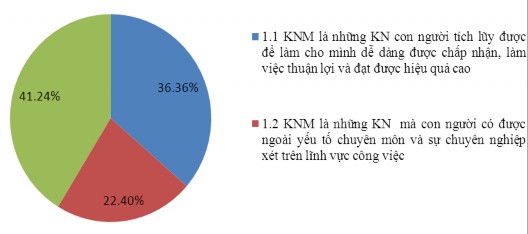
Figure 2.1: Students' awareness of the concept of soft skills
Through the chart, we see that the concept of soft skills is the skills that are not directly related to professional knowledge but are more about the spirit of each individual to ensure the process of adapting to others, work to maintain positive relationships and contribute to supporting the implementation of work effectively is the most chosen (reaching a rate of 41.24%). The concept of soft skills is the skills that people accumulate to make themselves easier.
Being easily accepted, working smoothly and achieving high efficiency was chosen by 36.36% of students (ranked 2nd). However, from the above data, it shows that there is no clear difference in the selection rate between the viewpoints, meaning that there are many different viewpoints on soft skills without a common consensus in students' perception.
Based on the study of students' perceptions of the concept of soft skills, we continued to investigate students' perceptions of the concept of soft skills education and obtained the results shown in the following chart:
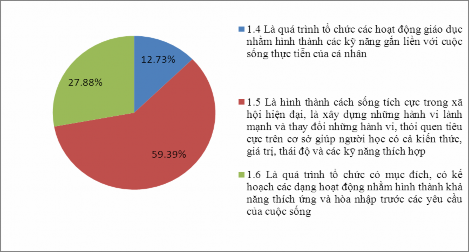
Figure 2.2: Students' perceptions of the concept of soft skills education
From the chart above, we can see that 59.39% of students believe that soft skills education is the formation of a positive way of life in modern society, building healthy behaviors and changing negative behaviors and habits on the basis of helping learners have knowledge, values, attitudes and appropriate skills. 27.88% of students believe that soft skills education is a process of purposefully organizing and planning activities to form the ability to adapt and integrate to the requirements of life. Only 12.73% of students believe that soft skills education is the process of organizing educational activities to form skills related to the practical life of individuals. Thus, students' awareness of the concept of soft skills education has a relatively high level of consensus.
Along with studying students' perceptions of the concepts of soft skills and soft skills education, we also studied lecturers' perceptions of the above concepts and obtained the results shown in the following chart:
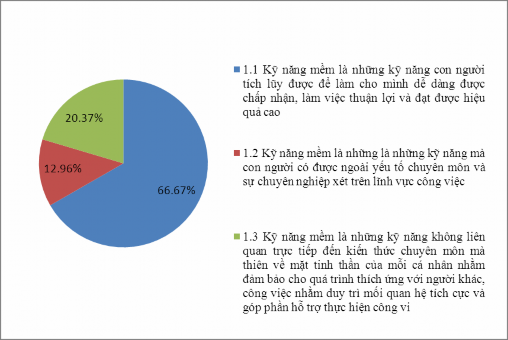
Figure 2.3: Lecturers' perceptions of the concept of soft skills
Through the chart above, we can see that most lecturers believe that soft skills are skills that people accumulate to make themselves easily accepted, work smoothly and achieve high efficiency (reaching 66.67% of the choices). 20.37% of the surveyed lecturers believe that soft skills are skills that are not directly related to professional knowledge but are more about the spirit of each individual to ensure the process of adapting to others, work to maintain positive relationships and contribute to supporting effective work performance. A small number of lecturers (accounting for 12.96%) believe that soft skills are skills that people have in addition to professional factors and professionalism in the field of work. From the survey data, it can be seen that although there are still different opinions, lecturers at Savannakhet College of Education have a very high consensus in their perception of the concept of soft skills.
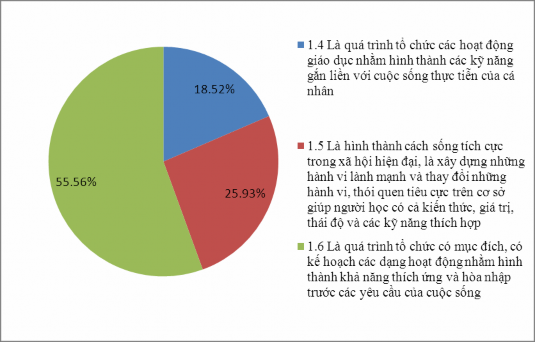
Figure 2.4: Teachers' perceptions of the concept of soft skills education
The data in the chart shows that 55.56% of the surveyed lecturers believe that soft skills education is a purposeful and planned process of organizing activities to form the ability to adapt and integrate with the requirements of life; 25.93% of lecturers believe that soft skills education is the formation of a positive way of life in modern society, building healthy behaviors and changing negative behaviors and habits on the basis of helping learners have knowledge, values, attitudes and appropriate skills; 18.52% of lecturers believe that soft skills education is the process of organizing educational activities to form skills associated with the practical life of individuals. Thus, the majority of lecturers have a correct perception, consistent with the theoretical basis of the topic on the concept of soft skills education.
In order for the soft skills education process for students of Savannakhet College of Education to be highly effective, first of all, it is necessary to have a correct awareness of soft skills and soft skills education of lecturers and students. However, during the investigation, we found that the awareness of lecturers and students is completely correct and consistent with each other. This is shown in the following data table:
Table 2.1: Comparison of perceptions of lecturers and students at Savannakhet College of Education on soft skills and soft skills education
Status
Concept | Lecturer | Student | |||
Number quantity | Proportion % | Number quantity | Proportion % | ||
Soft skills | |||||
1.1 | Soft skills are the skills people accumulate to make themselves easily accepted and work smoothly. and achieve high efficiency | 36 | 66.67% | 60 | 36.36% |
1.2 | Soft skills are skills that people have in addition to technical and professional factors. on the job | 7 | 12.96% | 37 | 22.40% |
1.3 | Soft skills are skills that are not directly related to professional knowledge but are more about the mental aspect of each individual to ensure the process of adapting to others and work, to maintain positive relationships and contribute to supporting the implementation of work effectively. effective way | 11 | 20.37% | 68 | 41.24% |
Soft skills education | |||||
1.4 | Is the process of organizing educational activities to form skills associated with linked to the practical life of individuals | 10 | 18.52% | 21 | 12.73% |
1.5 | It is to form a positive way of life in modern society, to build healthy behaviors and change negative behaviors and habits on the basis of helping learners have knowledge, values, attitudes and the right skills | 14 | 25.93% | 98 | 59.39% |
1.6 | It is the process of purposefully and plannedly organizing various types of activities to build adaptability and integration. before the demands of life | 30 | 55.56% | 46 | 27.88% |
Maybe you are interested!
-
 Soft skills education for students of Savannakhet Pedagogical College, Lao PDR - 2
 -
 Soft skills education for students of Savannakhet Pedagogical College, Lao PDR - 14
 -
 Current Status of Life Skills Education for Primary School Students Through Experiential Activities in Lao Cai City Primary Schools
 -
 The Relationship Between Measures of Managing Autonomy Skills Education for Ethnic Minority Students in Secondary Schools in Bao Yen District, Lao Cai Province
 -
 Organizing physical education teaching activities at People's Security College I in the current reform period - 14