
The Tay people have lived in villages for a long time and have lived in a densely populated manner. Located in the residential landscape of the valley, Tay villages are often established in basin valleys or along the hillsides, each village has its own residential area and cultivated land. In the past, their villages often leaned against hills, facing the fields so that every year humus was washed down to make the land more fertile, near rivers and streams for convenience in living and production. In the village, there are many clans living together, in Ban Thau village, Tan Thanh commune, the main clans are Hoang, Lanh, Chu, Loc, Ha, Nong... In order to help each other in life, in the past, the Tay people had the custom of making close friends (ket tong) with the same year of birth. Once making friends, they are considered family members and are accepted and respected by the families, brothers, and relatives on both sides. In particular, the village and neighborhood relationships of the people are also consolidated by religious and belief activities. At the beginning of each village, the Tay people have a communal temple to worship the local god Tho Cong, worshiping the saints in the area. Every year, on the occasion of Tet Nguyen Dan and the 15th day of the 7th lunar month, everyone in the village brings incense, flowers, and offerings to worship the god Tho Cong. In early spring, the people often organize the Long Tong festival (going down to the field) on a certain field to pray for a year of favorable weather and bountiful crops. After Doi Moi (1986), along with changes in economic and social life, the traditional cultural features in the Tay villages in Ban Thau village have faded a lot, the custom of Ket Tong no longer exists and the organization of the festival going down to the field has also disappeared for a long time. In particular, in the space of the Tay village in Ban Thau village today, there are also many differences compared to tradition. Most of the village roads, alleys, and gates to houses are built like Kinh people's streets with rows of houses built close together and house numbers attached. Even the name of the village is now attached to the street name "Ban Thau street" along the main road to Tan Thanh border gate.
The emergence of social evils
Ban Thau is one of the border villages, with many opportunities for economic development with the increasingly rapid urbanization rate, but this is also a favorable environment for social evils to thrive such as drugs, smuggling, prostitution, tax evasion, gambling, possession of dangerous weapons... Through interviews with Ban Thau village police officers, it is known that currently there are 10 drug addicts; 5 cases are considered suspected drug addicts and 4 are criminals. The situation of gangs, even individuals, killing each other with knives and swords - a supporting tool to resolve conflicts - is quite common. In addition to the common "cold" weapons such as knives, tofu, machetes, and swords, there are also other rich and diverse types such as pepper spray, electric guns, electric batons, electric pliers, etc. The trade in these primitive weapons continues due to the characteristics of Tan Thanh being a border commune with a national border gate and many systems of trails and shortcuts across the border. Therefore, it is easy for criminals to transport smuggled goods from China to Vietnam. On the other hand, because trading in these items brings high profits, the owners of the goods ignore the consequences to secretly conduct business. Recently, in 2011, the Tan Thanh Border Guard Station Police Working Group discovered and caught red-handed 2 subjects illegally buying, selling and storing "cold weapons" in Ban Thau village. They were Lo Van Tu, born in 1986, illegally storing 6 swords of various types, 10 electric batons, 2 electric guns, 1 tear gas gun and 3 bullets of unknown origin. The second subject was Chu Khanh Duc, born in 1981, who was selling knives and swords to tourists at the border gate. Searching Khanh's business counter, the police seized 890 sharp knives and 70 machetes. The Working Group drew up a record to seize all the above evidence and brought the subjects to the headquarters for investigation and clarification. At the investigation agency, the subjects confessed that all of the above weapons were purchased from China, then smuggled through trails to Vietnam and secretly sold to tourists for profit.
From 1998 to 2010, Tan Thanh Border Guard Station arrested 97 cases with 114 subjects transporting nearly 3 billion Vietnamese Dong in counterfeit goods; 34 cases with 39 subjects transporting more than 13.6 kg of heroin; 30 cases with 52 subjects tricking 43 Vietnamese women and children to China for sale. In addition, many cases of trading and transporting modern medicine; buying and selling and transporting illegal weapons; trading in explosives; chasing and arresting wanted subjects... were all successfully destroyed by the station. On average, every year, Tan Thanh Border Guard Station alone has fought and arrested up to 70% of drug, counterfeit money, and human trafficking crimes along the entire Lang Son border. Because of the "hotness" of this border gate, which is considered the "fire that tests gold", the Provincial Border Guard Command often chooses this place to "entrust" officers and soldiers who are truly capable and responsible, and have been tested through practical work at other border posts.
4.3. Issues raised
Maybe you are interested!
-
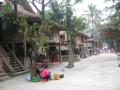
 Some Pictures of the Transformation of Traditional Culture of Thai People in Mai Chau
 -
 Factors Determining the Resolution of Traditional - Modern Relations in the Development of Military Culture of the Vietnam People's Army
 -
 Traditional Culinary Culture Characteristics of Thai People in Mai Chau
 -
 Family culture of the Tay people in Cao Bang province - 1
 -
 Solutions for tourism development in Tien Lang - 10
zt2i3t4l5ee
zt2a3gstourism, tourism development
zt2a3ge
zc2o3n4t5e6n7ts
- District People's Committees and authorities of communes with tourist attractions should support, promote, and provide necessary information to people, helping them improve their knowledge about tourism. Raise tourism awareness for local people.
*
* *
Due to limited knowledge and research time, the thesis inevitably has shortcomings. Therefore, I look forward to receiving guidance from teachers, experts as well as your comments to make the thesis more complete.
Chapter III Conclusion
Through the issues presented in Chapter II, we can come to some conclusions:
Based on the strengths of available tourism resources, the types of tourism in Tien Lang that need to be promoted in the coming time are sightseeing and resort tourism, discovery tourism, weekend tourism. To improve the quality and diversify tourism products, Tien Lang district needs to combine with local cultural tourism resources, at the same time combine with surrounding areas, build rich tourism products. The strengths of Tien Lang tourism are eco-tourism and cultural tourism, so developing Tien Lang tourism must always go hand in hand with restoring and preserving types of cultural tourism resources. Some necessary measures to support and improve the efficiency of exploiting tourism resources in Tien Lang are: strengthening the construction of technical facilities and labor force serving tourism, actively promoting and advertising tourism, and expanding forms of capital mobilization for tourism development.
CONCLUDE
I Conclusion
1. Based on the results achieved within the framework of the thesis's needs, some basic conclusions can be drawn as follows:
Tien Lang is a locality with great potential for tourism development. The relatively abundant cultural tourism resources and ecological tourism resources have great appeal to tourists. Based on this potential, Tien Lang can build a unique tourism industry that is competitive enough with other localities within Hai Phong city and neighboring areas.
In recent years, the exploitation of the advantages of resources to develop tourism and build tourist routes in Tien Lang has not been commensurate with the available potential. In terms of quantity, many resource objects have not been brought into the purpose of tourism development. In terms of time, the regular service time has not been extended to attract more visitors. Infrastructure and technical facilities are still weak. The labor force is still thin and weak in terms of expertise. Tourism programs and routes have not been organized properly, the exploitation content is still monotonous, so it has not attracted many visitors. Although resources have not been mobilized much for tourism development, they are facing the risk of destruction and degradation.
2. Based on the results of investigation, analysis, synthesis, evaluation and selective absorption of research results of related topics, the thesis has proposed a number of necessary solutions to improve the efficiency of exploiting tourism resources in Tien Lang such as: promoting the restoration and conservation of tourism resources, focusing on investment and key exploitation of ecotourism resources, strengthening the construction of infrastructure and tourism workforce. Expanding forms of capital mobilization. In addition, the thesis has built a number of tourist routes of Hai Phong in which Tien Lang tourism resources play an important role.
Exploiting Tien Lang tourism resources for tourism development is currently facing many difficulties. The above measures, if applied synchronously, will likely bring new prospects for the local tourism industry, contributing to making Tien Lang tourism an important economic sector in the district's economic structure.
REFERENCES
1. Nhuan Ha, Trinh Minh Hien, Tran Phuong, Hai Phong - Historical and cultural relics, Hai Phong Publishing House, 1993
2. Hai Phong City History Council, Hai Phong Gazetteer, Hai Phong Publishing House, 1990.
3. Hai Phong City History Council, History of Tien Lang District Party Committee, Hai Phong Publishing House, 1990.
4. Hai Phong City History Council, University of Social Sciences and Humanities, VNU, Hai Phong Place Names Encyclopedia, Hai Phong Publishing House. 2001.
5. Law on Cultural Heritage and documents guiding its implementation, National Political Publishing House, Hanoi, 2003.
6. Tran Duc Thanh, Lecture on Tourism Geography, Faculty of Tourism, University of Social Sciences and Humanities, VNU, 2006
7. Hai Phong Center for Social Sciences and Humanities, Some typical cultural heritages of Hai Phong, Hai Phong Publishing House, 2001
8. Nguyen Ngoc Thao (editor-in-chief, Tourism Geography, Hai Phong Publishing House, two volumes (2001-2002)
9. Nguyen Minh Tue and group of authors, Hai Phong Tourism Geography, Ho Chi Minh City Publishing House, 1997.
10. Nguyen Thanh Son, Hai Phong Tourism Territory Organization, Associate Doctoral Thesis in Geological Geography, Hanoi, 1996.
11. Decision No. 2033/QD – UB on detailed planning of Tien Lang town, Hai Phong city until 2020.
12. Department of Culture, Information, Hai Phong Museum, Hai Phong relics
- National ranked scenic spot, Hai Phong Publishing House, 2005. 13. Tien Lang District People's Committee, Economic Development Planning -
Culture - Society of Tien Lang district to 2010.
14.Website www.HaiPhong.gov.vn
APPENDIX 1
List of national ranked monuments
STT
Name of the monument
Number, year of decisiondetermine
Location
1
Gam Temple
938 VH/QĐ04/08/1992
Cam Khe Village- Toan Thang commune
2
Doc Hau Temple
9381 VH/QĐ04/08/1992
Doc Hau Village –Toan Thang commune
3
Cuu Doi Communal House
3207 VH/QĐDecember 30, 1991
Zone II of townTien Lang
4
Ha Dai Temple
938 VH/QĐ04/08/1992
Ha Dai Village –Tien Thanh commune
APPENDIX II
STT
Name of the monument
Number, year of decision
Location
1
Phu Ke Pagoda Temple
178/QD-UBJanuary 28, 2005
Zone 1 - townTien Lang
2
Trung Lang Temple
178/QD-UBJanuary 28, 2005
Zone 4 – townTien Lang
3
Bao Khanh Pagoda
1900/QD-UBAugust 24, 2006
Nam Tu Village -Kien Thiet commune
4
Bach Da Pagoda
1792/QD-UB11/11/2002
Hung Thang Commune
5
Ngoc Dong Temple
177/QD-UBNovember 27, 2005
Tien Thanh Commune
6
Tomb of Minister TSNhu Van Lan
2848/QD-UBSeptember 19, 2003
Nam Tu Village -Kien Thiet commune
7
Canh Son Stone Temple
2160/QD-UBSeptember 19, 2003
Van Doi Commune –Doan Lap
8
Meiji Temple
2259/QD-UBSeptember 19, 2002
Toan Thang Commune
9
Tien Doi Noi Temple
477/QD-UBSeptember 19, 2005
Doan Lap Commune
10
Tu Doi Temple
177/QD-UBJanuary 28, 2005
Doan Lap Commune
11
Duyen Lao Temple
177/QD-UBJanuary 28, 2005
Tien Minh Commune
12
Dinh Xuan Uc Pagoda
177/QD-UBJanuary 28, 2005
Bac Hung Commune
13
Chu Khe Pagoda
177/QD-UBJanuary 28, 2005
Hung Thang Commune
14
Dong Dinh
2848/QD-UBNovember 21, 2002
Vinh Quang Commune
15
President's Memorial HouseTon Duc Thang
177/QD-UBJanuary 28, 2005
NT Quy Cao
Ha Dai Temple
Ben Vua Temple
Tien Lang hot spring
div.maincontent .p { color: black; font-family:"Times New Roman", serif; font-style: normal; font-weight: normal; text-decoration: none; font-size: 14pt; margin:0pt; } div.maincontent p { color: black; font-family:"Times New Roman", serif; font-style: normal; font-weight: normal; text-decoration: none; font-size: 14pt; margin:0pt; } div.maincontent .s1 { color: black; font-family:"Times New Roman", serif; font-style: normal; font-weight: normal; font-size: 16pt; } div.maincontent .s2 { color: black; font-family:"Times New Roman", serif; font-style: italic; font-weight: bold; text-decoration: none; font-size: 14pt; } div.maincontent .s3 { color: black; font-family:"Times New Roman", serif; font-style: italic; font-weight: normal; text-decoration: none; font-size: 14pt; } div.maincontent .s4 { color: black; font-family:"Times New Roman", serif; font-style: normal; font-weight: normal; font-size: 14pt; } div.maincontent .s5 { color: black; font-family:"Times New Roman", serif; font-style: normal; font-weight: bold; font-size: 14pt; } div.maincontent .s6 { color: black; font-family:"Times New Roman", serif; font-style: normal; font-weight: normal; text-decoration: none; font-size: 14pt; } div.maincontent .s7 { color: black; font-family:"Times New Roman", serif; font-style: normal; font-weight: bold; text-decoration: none; font-size: 14pt; } div.maincontent .s8 { color: black; font-family:"Times New Roman", serif; font-style: normal; font-weight: normal; text-decoration: none; font-size: 9pt; vertical-align: 6pt; } div.maincontent .s9 { color: black; font-family:"Times New Roman", serif; font-style: normal; font-weight: bold; text-decoration: none; font-size: 12pt; } div.maincontent .s11 { color: black; font-family:"Times New Roman", serif; font-style: normal; font-weight: normal; tex
Solutions for tourism development in Tien Lang - 10
zt2i3t4l5ee
zt2a3gstourism, tourism development
zt2a3ge
zc2o3n4t5e6n7ts
- District People's Committees and authorities of communes with tourist attractions should support, promote, and provide necessary information to people, helping them improve their knowledge about tourism. Raise tourism awareness for local people.
*
* *
Due to limited knowledge and research time, the thesis inevitably has shortcomings. Therefore, I look forward to receiving guidance from teachers, experts as well as your comments to make the thesis more complete.
Chapter III Conclusion
Through the issues presented in Chapter II, we can come to some conclusions:
Based on the strengths of available tourism resources, the types of tourism in Tien Lang that need to be promoted in the coming time are sightseeing and resort tourism, discovery tourism, weekend tourism. To improve the quality and diversify tourism products, Tien Lang district needs to combine with local cultural tourism resources, at the same time combine with surrounding areas, build rich tourism products. The strengths of Tien Lang tourism are eco-tourism and cultural tourism, so developing Tien Lang tourism must always go hand in hand with restoring and preserving types of cultural tourism resources. Some necessary measures to support and improve the efficiency of exploiting tourism resources in Tien Lang are: strengthening the construction of technical facilities and labor force serving tourism, actively promoting and advertising tourism, and expanding forms of capital mobilization for tourism development.
CONCLUDE
I Conclusion
1. Based on the results achieved within the framework of the thesis's needs, some basic conclusions can be drawn as follows:
Tien Lang is a locality with great potential for tourism development. The relatively abundant cultural tourism resources and ecological tourism resources have great appeal to tourists. Based on this potential, Tien Lang can build a unique tourism industry that is competitive enough with other localities within Hai Phong city and neighboring areas.
In recent years, the exploitation of the advantages of resources to develop tourism and build tourist routes in Tien Lang has not been commensurate with the available potential. In terms of quantity, many resource objects have not been brought into the purpose of tourism development. In terms of time, the regular service time has not been extended to attract more visitors. Infrastructure and technical facilities are still weak. The labor force is still thin and weak in terms of expertise. Tourism programs and routes have not been organized properly, the exploitation content is still monotonous, so it has not attracted many visitors. Although resources have not been mobilized much for tourism development, they are facing the risk of destruction and degradation.
2. Based on the results of investigation, analysis, synthesis, evaluation and selective absorption of research results of related topics, the thesis has proposed a number of necessary solutions to improve the efficiency of exploiting tourism resources in Tien Lang such as: promoting the restoration and conservation of tourism resources, focusing on investment and key exploitation of ecotourism resources, strengthening the construction of infrastructure and tourism workforce. Expanding forms of capital mobilization. In addition, the thesis has built a number of tourist routes of Hai Phong in which Tien Lang tourism resources play an important role.
Exploiting Tien Lang tourism resources for tourism development is currently facing many difficulties. The above measures, if applied synchronously, will likely bring new prospects for the local tourism industry, contributing to making Tien Lang tourism an important economic sector in the district's economic structure.
REFERENCES
1. Nhuan Ha, Trinh Minh Hien, Tran Phuong, Hai Phong - Historical and cultural relics, Hai Phong Publishing House, 1993
2. Hai Phong City History Council, Hai Phong Gazetteer, Hai Phong Publishing House, 1990.
3. Hai Phong City History Council, History of Tien Lang District Party Committee, Hai Phong Publishing House, 1990.
4. Hai Phong City History Council, University of Social Sciences and Humanities, VNU, Hai Phong Place Names Encyclopedia, Hai Phong Publishing House. 2001.
5. Law on Cultural Heritage and documents guiding its implementation, National Political Publishing House, Hanoi, 2003.
6. Tran Duc Thanh, Lecture on Tourism Geography, Faculty of Tourism, University of Social Sciences and Humanities, VNU, 2006
7. Hai Phong Center for Social Sciences and Humanities, Some typical cultural heritages of Hai Phong, Hai Phong Publishing House, 2001
8. Nguyen Ngoc Thao (editor-in-chief, Tourism Geography, Hai Phong Publishing House, two volumes (2001-2002)
9. Nguyen Minh Tue and group of authors, Hai Phong Tourism Geography, Ho Chi Minh City Publishing House, 1997.
10. Nguyen Thanh Son, Hai Phong Tourism Territory Organization, Associate Doctoral Thesis in Geological Geography, Hanoi, 1996.
11. Decision No. 2033/QD – UB on detailed planning of Tien Lang town, Hai Phong city until 2020.
12. Department of Culture, Information, Hai Phong Museum, Hai Phong relics
- National ranked scenic spot, Hai Phong Publishing House, 2005. 13. Tien Lang District People's Committee, Economic Development Planning -
Culture - Society of Tien Lang district to 2010.
14.Website www.HaiPhong.gov.vn
APPENDIX 1
List of national ranked monuments
STT
Name of the monument
Number, year of decisiondetermine
Location
1
Gam Temple
938 VH/QĐ04/08/1992
Cam Khe Village- Toan Thang commune
2
Doc Hau Temple
9381 VH/QĐ04/08/1992
Doc Hau Village –Toan Thang commune
3
Cuu Doi Communal House
3207 VH/QĐDecember 30, 1991
Zone II of townTien Lang
4
Ha Dai Temple
938 VH/QĐ04/08/1992
Ha Dai Village –Tien Thanh commune
APPENDIX II
STT
Name of the monument
Number, year of decision
Location
1
Phu Ke Pagoda Temple
178/QD-UBJanuary 28, 2005
Zone 1 - townTien Lang
2
Trung Lang Temple
178/QD-UBJanuary 28, 2005
Zone 4 – townTien Lang
3
Bao Khanh Pagoda
1900/QD-UBAugust 24, 2006
Nam Tu Village -Kien Thiet commune
4
Bach Da Pagoda
1792/QD-UB11/11/2002
Hung Thang Commune
5
Ngoc Dong Temple
177/QD-UBNovember 27, 2005
Tien Thanh Commune
6
Tomb of Minister TSNhu Van Lan
2848/QD-UBSeptember 19, 2003
Nam Tu Village -Kien Thiet commune
7
Canh Son Stone Temple
2160/QD-UBSeptember 19, 2003
Van Doi Commune –Doan Lap
8
Meiji Temple
2259/QD-UBSeptember 19, 2002
Toan Thang Commune
9
Tien Doi Noi Temple
477/QD-UBSeptember 19, 2005
Doan Lap Commune
10
Tu Doi Temple
177/QD-UBJanuary 28, 2005
Doan Lap Commune
11
Duyen Lao Temple
177/QD-UBJanuary 28, 2005
Tien Minh Commune
12
Dinh Xuan Uc Pagoda
177/QD-UBJanuary 28, 2005
Bac Hung Commune
13
Chu Khe Pagoda
177/QD-UBJanuary 28, 2005
Hung Thang Commune
14
Dong Dinh
2848/QD-UBNovember 21, 2002
Vinh Quang Commune
15
President's Memorial HouseTon Duc Thang
177/QD-UBJanuary 28, 2005
NT Quy Cao
Ha Dai Temple
Ben Vua Temple
Tien Lang hot spring
div.maincontent .p { color: black; font-family:"Times New Roman", serif; font-style: normal; font-weight: normal; text-decoration: none; font-size: 14pt; margin:0pt; } div.maincontent p { color: black; font-family:"Times New Roman", serif; font-style: normal; font-weight: normal; text-decoration: none; font-size: 14pt; margin:0pt; } div.maincontent .s1 { color: black; font-family:"Times New Roman", serif; font-style: normal; font-weight: normal; font-size: 16pt; } div.maincontent .s2 { color: black; font-family:"Times New Roman", serif; font-style: italic; font-weight: bold; text-decoration: none; font-size: 14pt; } div.maincontent .s3 { color: black; font-family:"Times New Roman", serif; font-style: italic; font-weight: normal; text-decoration: none; font-size: 14pt; } div.maincontent .s4 { color: black; font-family:"Times New Roman", serif; font-style: normal; font-weight: normal; font-size: 14pt; } div.maincontent .s5 { color: black; font-family:"Times New Roman", serif; font-style: normal; font-weight: bold; font-size: 14pt; } div.maincontent .s6 { color: black; font-family:"Times New Roman", serif; font-style: normal; font-weight: normal; text-decoration: none; font-size: 14pt; } div.maincontent .s7 { color: black; font-family:"Times New Roman", serif; font-style: normal; font-weight: bold; text-decoration: none; font-size: 14pt; } div.maincontent .s8 { color: black; font-family:"Times New Roman", serif; font-style: normal; font-weight: normal; text-decoration: none; font-size: 9pt; vertical-align: 6pt; } div.maincontent .s9 { color: black; font-family:"Times New Roman", serif; font-style: normal; font-weight: bold; text-decoration: none; font-size: 12pt; } div.maincontent .s11 { color: black; font-family:"Times New Roman", serif; font-style: normal; font-weight: normal; tex
4.3.1. Land and sustainable livelihoods
Since the opening of the border, especially the construction of the Tan Thanh Border Gate Economic Zone, a large number of people from inside and outside the province have come to do business, including the Tay people in Ban Thau village. This reality has contributed to creating jobs for hundreds of workers, reducing the poverty rate, and improving the material and spiritual life of the villagers. From a difficult border area, Tan Thanh has become a bustling border gate economic zone. However, through an in-depth interview with Mr. Hoang Van Hoan - head of Ban Thau village, the most difficult problem for the villagers today is the issue of land and employment for the people. For farmers, land is the most important and valuable means of production, and at the same time, it is also the largest natural asset/capital of households to ensure their livelihood. However, in reality, the agricultural land area, especially the wet rice fields of each Tay family in Ban Thau village, is very limited, with each household having on average only 1 - 2 sao of rice fields. The main cause of this problem is the revocation of agricultural land use rights.

The State's industrial land in Ban Thau and Na Lau 6 villages is used for industrialization and urbanization purposes, in this case the construction of Tan Thanh Border Gate Economic Zone (the State reclaimed 10 hectares of rice fields in Ban Thau village). This means that all agricultural land in Ban Thau village has been converted into non-agricultural land, forcing farmers in the community to change their traditional livelihoods. Another issue that causes many conflicts between State agencies and the people is compensation.
Land is too low. In 1998 - 1999, the State's compensation price for rice fields was from 5,000 - 6,500 VND/m2 . In the case of Mr. Hoang Van Dien's family in Ban Thau village, the State confiscated 1,000m2 of corn-growing land, but the compensation received was only over 11 million VND. With this small amount of money, the family could not invest in other areas. Although people in both villages filed complaints to the provincial and central governments, they were not resolved. This caused great indignation among the entire people of Ban Thau village with the local government for a long time. The State's confiscation of land use rights led to households losing more and losing less, and also caused land disputes between households in the village.
even leading to mutual killing. This is a current and hot issue in Ban Thau village that has lasted until now. Also at that time, most of the households in Ban Thau village moved to the side of the road to build houses (the land that the State had not yet taken) because the road was easy to travel because the old village had too muddy and difficult roads (currently there are only 7-8 households living in the old village). After reclaiming the land from the people, the government granted plots of land to build houses for the people but did not issue red books. In 2004, Ban Thau village only had 15 households granted red books, the households near the road had not been granted any. In addition, information about the government planning to plan all the land
6 The land recovered in Ban Thau village is mainly rice fields, while in Na Lau village it is mainly upland.
The current land of the people has made them not dare to invest in land for other purposes, not secure with their lives.
The State's land acquisition to build the Tan Thanh Border Gate Economic Zone has left many Tay households in Ban Thau village without land for rice cultivation, so they have to buy rice fields in other villages in Tan Thanh commune such as Na Tong, Na Nguom and Ban Duoc - villages that are not affected by land use planning. In 2011, the price of 1 sao of rice fields that people bought was about 30 million VND. Thus, although they were farmers who had long been attached to agriculture, now that their natural capital has been lost, the Tay people here have to work as hired laborers for families in other villages, even accepting to buy rice fields for long-term cultivation. This confirms that even though people participate in other activities such as working for hire, doing business and providing services, land and rice field cultivation are still important sources of livelihood for them.
The conversion of agricultural land to build the Tan Thanh Border Gate Economic Zone has made Ban Thau village move towards the urbanization process in the border area. Many new roads have been built and old roads have been upgraded, contributing to creating favorable conditions for people from inside and outside the province to come here to rent houses. Taking advantage of this opportunity, many families in Ban Thau village have invested in building houses with rows of level 4 houses divided into many small rooms with very limited amenities. Only a few households have invested in building 2-storey houses with many high-quality rooms. This simplicity partly comes from the minimum needs of the tenants because many of them are farmers from other provinces who come to work as hired laborers and porters at the border gate. They work all day, only needing a place to rest at night. Partly because the villagers of Ban Thau do not feel that this is a long-term and sustainable livelihood strategy because they are still confused about the State's land planning information. That is why
They are also very hesitant to invest more financial and natural capital in this business for long-term livelihood. The confiscation of agricultural land has broken down traditional livelihoods and foundations for survival, leading to resistance from the people, although ultimately unsuccessful. Among the reasons explaining the farmers' reactions, it is impossible not to mention their worries about how they will live, having no more land for production or becoming a new class of people. Should the State have vocational training policies for villagers, helping them find alternative jobs outside the traditional agricultural sector? This solution seems to be an effective tool and this responsibility should belong to the State agencies and the land users, not the farmers who lose their land.
With the village's existing agricultural and forestry land increasingly unable to expand due to the rapid population growth, households in Ban Thau village should take advantage of their land fund to grow fruit trees and industrial crops for business purposes. Every year, the Social Policy Bank of Van Lang district often provides capital for poor households to borrow for production, which is considered a motivation to help them work hard. At the same time, the State often subsidizes and provides free seedlings such as acacia and eucalyptus for people to plant and restore forests. With the current small amount of land, afforestation is opening up a promising development direction. If they are aware and know how to do business, and absorb advances in modern science and technology, their livelihoods will certainly gradually stabilize and develop sustainably.
4.3.2. The issue of preserving traditional culture
Culture is always a "dynamic" factor, or in other words, movement is the deciding factor for the survival of a culture. In human history, perhaps there is no culture that has not changed, because without change there will be no existence, and furthermore without change there will be no progress and development.
It is said that the trend of cultural change has been, is and will continue to take place, which is inevitable in the process of urbanization, cultural exchange and acculturation as it is today.
The Doi Moi process started in 1986 and especially since the construction of Tan Thanh Border Gate Economic Zone has greatly impacted the livelihood of the Tay people in Ban Thau village, helping to improve their lives day by day. However, besides the positive impacts on the economic aspect, it seems that the traditional cultural elements of the Tay people are increasingly fading away, especially in material culture. My research in Ban Thau village has shown that currently there are no Tay households that still maintain their traditional costumes or ways of building stilt houses. Spiritual cultural elements such as customs, rituals, beliefs, folk knowledge... have changed more slowly. There are many factors affecting the changes in the cultural life of the Tay people today, first of all, the development in the economic life of the people. Besides agriculture, the emergence of new sources of livelihood has increased the opportunities for people to find jobs (such as porters, traders, services, etc.), especially for young people. In that rhythm of life, simplifying rituals in life is inevitable. On the basis of the market economy, of social networks through friends and marriage, cultural exchanges between Tay - Kinh, Tay - Nung, Tay - Hoa are increasingly promoted. In the process of exchange, material cultural elements such as houses, costumes, food, and means of transportation of the Tay people in Ban Thau village are being "Kinhized" quite strongly. The cultural transformation of the Tay people is also influenced by the law of elimination and adaptation. Elements that are not suitable or do not have the conditions to develop in the new context will be lost and replaced by new elements.
The changes in the culture of the Tay people in Ban Thau village, Tan Thanh commune have both positive and negative elements. The positive points are that some
Customs and practices that are no longer suitable for today's life have been eliminated (taboos in childbirth, the custom of keeping dead bodies in the house for a long time, daughters-in-law are not allowed to eat at the same table with their parents-in-law...). However, this change also causes the loss of traditional cultural values that have existed for a long time in the life of the Tay people. That is the decline in humane behavior in the family and community, the heritage of wedding poetry and folk songs is also gradually disappearing. To preserve and promote the traditional cultural values of the Tay people in Ban Thau village today, first of all, we need to conduct systematic research on local cultural aspects and document them in books, newspapers, and films. It is necessary to build programs and projects to promote those cultural values in today's practical life. Regularly assess the level and trend of cultural change of the Tay people to make adjustments in local cultural policies, harmoniously resolving the relationship between conservation and development, and integration. Preserving the traditional culture of the ethnic group is also an effective solution to develop tourism in ethnic and mountainous areas in a sustainable manner.
4.3.3. Instability, risk and inequality
- The recovery of agricultural land has also prompted the Tay people in Ban Thau village to seek simple alternative livelihoods that do not require much training, but these activities depend on migrant workers, Chinese goods and the financial resources of each household. Income from renting out boarding houses is considered one of the most important sources of income for many households in Ban Thau village when there is no more agricultural land. Many households have about 4-5 rooms for rent and earn nearly 2 million VND/month from this source. Some households with larger land areas have about 10 rooms for rent with an income of 5 million VND/month. But more than half of the population in the village do not have rooms for rent. Other livelihood activities such as porterage, going to China