
- District People's Committees and authorities of communes with tourist attractions should support, promote, and provide necessary information to people, helping them improve their knowledge about tourism. Raise tourism awareness for local people.
*
* *
Due to limited knowledge and research time, the thesis inevitably has shortcomings. Therefore, I look forward to receiving guidance from teachers, experts as well as your comments to make the thesis more complete.
Chapter III Conclusion
Through the issues presented in Chapter II, we can come to some conclusions:
Based on the strengths of available tourism resources, the types of tourism in Tien Lang that need to be promoted in the coming time are sightseeing and resort tourism, discovery tourism, weekend tourism. To improve the quality and diversify tourism products, Tien Lang district needs to combine with local cultural tourism resources, at the same time combine with surrounding areas, build rich tourism products. The strengths of Tien Lang tourism are eco-tourism and cultural tourism, so developing Tien Lang tourism must always go hand in hand with restoring and preserving types of cultural tourism resources. Some necessary measures to support and improve the efficiency of exploiting tourism resources in Tien Lang are: strengthening the construction of technical facilities and labor force serving tourism, actively promoting and advertising tourism, and expanding forms of capital mobilization for tourism development.
CONCLUDE
I Conclusion
1. Based on the results achieved within the framework of the thesis's needs, some basic conclusions can be drawn as follows:
Tien Lang is a locality with great potential for tourism development. The relatively abundant cultural tourism resources and ecological tourism resources have great appeal to tourists. Based on this potential, Tien Lang can build a unique tourism industry that is competitive enough with other localities within Hai Phong city and neighboring areas.
In recent years, the exploitation of the advantages of resources to develop tourism and build tourist routes in Tien Lang has not been commensurate with the available potential. In terms of quantity, many resource objects have not been brought into the purpose of tourism development. In terms of time, the regular service time has not been extended to attract more visitors. Infrastructure and technical facilities are still weak. The labor force is still thin and weak in terms of expertise. Tourism programs and routes have not been organized properly, the exploitation content is still monotonous, so it has not attracted many visitors. Although resources have not been mobilized much for tourism development, they are facing the risk of destruction and degradation.
2. Based on the results of investigation, analysis, synthesis, evaluation and selective absorption of research results of related topics, the thesis has proposed a number of necessary solutions to improve the efficiency of exploiting tourism resources in Tien Lang such as: promoting the restoration and conservation of tourism resources, focusing on investment and key exploitation of ecotourism resources, strengthening the construction of infrastructure and tourism workforce. Expanding forms of capital mobilization. In addition, the thesis has built a number of tourist routes of Hai Phong in which Tien Lang tourism resources play an important role.
Exploiting Tien Lang tourism resources for tourism development is currently facing many difficulties. The above measures, if applied synchronously, will likely bring new prospects for the local tourism industry, contributing to making Tien Lang tourism an important economic sector in the district's economic structure.
REFERENCES
1. Nhuan Ha, Trinh Minh Hien, Tran Phuong, Hai Phong - Historical and cultural relics, Hai Phong Publishing House, 1993
2. Hai Phong City History Council, Hai Phong Gazetteer, Hai Phong Publishing House, 1990.
3. Hai Phong City History Council, History of Tien Lang District Party Committee, Hai Phong Publishing House, 1990.
4. Hai Phong City History Council, University of Social Sciences and Humanities, VNU, Hai Phong Place Names Encyclopedia, Hai Phong Publishing House. 2001.
5. Law on Cultural Heritage and documents guiding its implementation, National Political Publishing House, Hanoi, 2003.
6. Tran Duc Thanh, Lecture on Tourism Geography, Faculty of Tourism, University of Social Sciences and Humanities, VNU, 2006
7. Hai Phong Center for Social Sciences and Humanities, Some typical cultural heritages of Hai Phong, Hai Phong Publishing House, 2001
8. Nguyen Ngoc Thao (editor-in-chief, Tourism Geography, Hai Phong Publishing House, two volumes (2001-2002)
9. Nguyen Minh Tue and group of authors, Hai Phong Tourism Geography, Ho Chi Minh City Publishing House, 1997.
10. Nguyen Thanh Son, Hai Phong Tourism Territory Organization, Associate Doctoral Thesis in Geological Geography, Hanoi, 1996.
11. Decision No. 2033/QD – UB on detailed planning of Tien Lang town, Hai Phong city until 2020.
12. Department of Culture, Information, Hai Phong Museum, Hai Phong relics
- National ranked scenic spot, Hai Phong Publishing House, 2005. 13. Tien Lang District People's Committee, Economic Development Planning -
Culture - Society of Tien Lang district to 2010.
14.Website www.HaiPhong.gov.vn
APPENDIX 1
List of national ranked monuments
STT
Name of the monument | Number, year of decision determine | Location | |
1 | Gam Temple | 938 VH/QĐ 04/08/1992 | Cam Khe Village - Toan Thang commune |
2 | Doc Hau Temple | 9381 VH/QĐ 04/08/1992 | Doc Hau Village – Toan Thang commune |
3 | Cuu Doi Communal House | 3207 VH/QĐ December 30, 1991 | Zone II of town Tien Lang |
4 | Ha Dai Temple | 938 VH/QĐ 04/08/1992 | Ha Dai Village – Tien Thanh commune |
Maybe you are interested!
-
 Potential, current status, solutions for tourism development in Tien Lang district, Hai Phong - 1
 -
 Solutions for sustainable tourism development in the Central Highlands - 23
 -
 Impact of tourism on the cultural and social life of Thai people in Mai Chau - Hoa Binh and development solutions Case study of 4 villages: Lac village, Pom Coong village, Van village, Nhot village - 1
 -
 Solutions to Mobilize Investment Resources for Tourism Human Resource Development
 -
 Some Solutions for Human Resource Development in the Tourism Industry of the Central Highlands and Central Highlands Region:
APPENDIX II
STT
Name of the monument | Number, year of decision | Location | |
1 | Phu Ke Pagoda Temple | 178/QD-UB January 28, 2005 | Zone 1 - town Tien Lang |
2 | Trung Lang Temple | 178/QD-UB January 28, 2005 | Zone 4 – town Tien Lang |
3 | Bao Khanh Pagoda | 1900/QD-UB August 24, 2006 | Nam Tu Village - Kien Thiet commune |
4 | Bach Da Pagoda | 1792/QD-UB 11/11/2002 | Hung Thang Commune |
5 | Ngoc Dong Temple | 177/QD-UB November 27, 2005 | Tien Thanh Commune |
6 | Tomb of Minister TS Nhu Van Lan | 2848/QD-UB September 19, 2003 | Nam Tu Village - Kien Thiet commune |
7 | Canh Son Stone Temple | 2160/QD-UB September 19, 2003 | Van Doi Commune – Doan Lap |
8 | Meiji Temple | 2259/QD-UB September 19, 2002 | Toan Thang Commune |
9 | Tien Doi Noi Temple | 477/QD-UB September 19, 2005 | Doan Lap Commune |
10 | Tu Doi Temple | 177/QD-UB January 28, 2005 | Doan Lap Commune |
11 | Duyen Lao Temple | 177/QD-UB January 28, 2005 | Tien Minh Commune |
12 | Dinh Xuan Uc Pagoda | 177/QD-UB January 28, 2005 | Bac Hung Commune |
13 | Chu Khe Pagoda | 177/QD-UB January 28, 2005 | Hung Thang Commune |
14 | Dong Dinh | 2848/QD-UB November 21, 2002 | Vinh Quang Commune |
15 | President's Memorial House Ton Duc Thang | 177/QD-UB January 28, 2005 | NT Quy Cao |
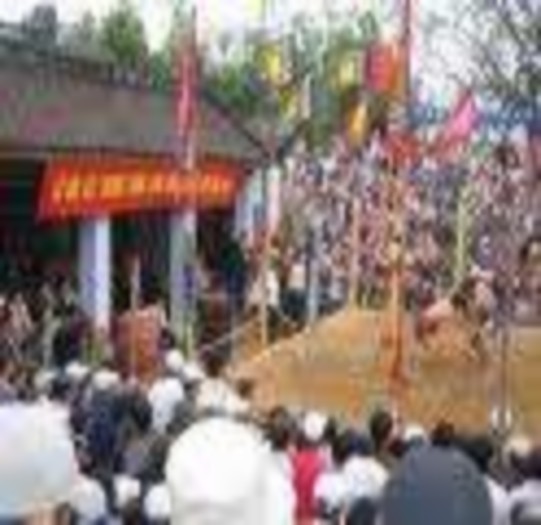
Ha Dai Temple
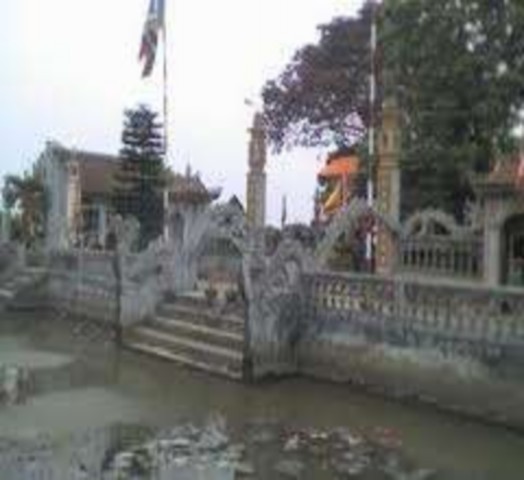
Ben Vua Temple
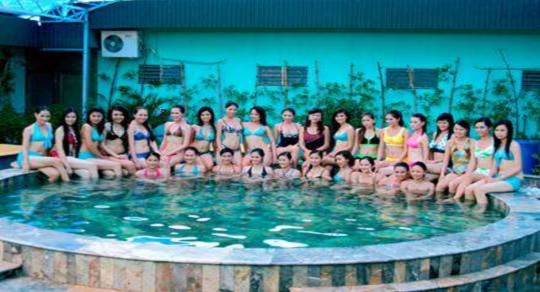
Tien Lang hot spring