
Hung Ha land - the cradle of Cheo art with Cheo mats of Hoi village, Ha Xa village... every village has an art troupe, Cheo singing and dancing teams. In Phuong La, there are also art troupes of the Association for Promoting Education, sports teams... Therefore, it is necessary to promote this traditional art form thoroughly, to expand artistic exchanges between units, between villages and communes in the district with other localities.
Strengthen physical education and sports activities to attract the most participants from all classes, ages, and genders. Organize many friendly meetings between villages and clans to stimulate the active participation of individuals and clans, contributing to creating a vibrant, joyful, united, and emotionally attached atmosphere between individuals, families, and clans in craft villages.
Through this activity, people see the role of cultural activities, see the great and practical significance of building cultural life in craft villages, voluntarily implement regulations and decisions of the Central and local governments on building cultural families, clans, villages, agencies and units; on implementing civilized lifestyles in weddings, funerals, festivals, etc.
4.3.2. Group of solutions to preserve and promote traditional cultural values
Maybe you are interested!
-
 Solutions for tourism development in Tien Lang - 10
zt2i3t4l5ee
zt2a3gstourism, tourism development
zt2a3ge
zc2o3n4t5e6n7ts
- District People's Committees and authorities of communes with tourist attractions should support, promote, and provide necessary information to people, helping them improve their knowledge about tourism. Raise tourism awareness for local people.
*
* *
Due to limited knowledge and research time, the thesis inevitably has shortcomings. Therefore, I look forward to receiving guidance from teachers, experts as well as your comments to make the thesis more complete.
Chapter III Conclusion
Through the issues presented in Chapter II, we can come to some conclusions:
Based on the strengths of available tourism resources, the types of tourism in Tien Lang that need to be promoted in the coming time are sightseeing and resort tourism, discovery tourism, weekend tourism. To improve the quality and diversify tourism products, Tien Lang district needs to combine with local cultural tourism resources, at the same time combine with surrounding areas, build rich tourism products. The strengths of Tien Lang tourism are eco-tourism and cultural tourism, so developing Tien Lang tourism must always go hand in hand with restoring and preserving types of cultural tourism resources. Some necessary measures to support and improve the efficiency of exploiting tourism resources in Tien Lang are: strengthening the construction of technical facilities and labor force serving tourism, actively promoting and advertising tourism, and expanding forms of capital mobilization for tourism development.
CONCLUDE
I Conclusion
1. Based on the results achieved within the framework of the thesis's needs, some basic conclusions can be drawn as follows:
Tien Lang is a locality with great potential for tourism development. The relatively abundant cultural tourism resources and ecological tourism resources have great appeal to tourists. Based on this potential, Tien Lang can build a unique tourism industry that is competitive enough with other localities within Hai Phong city and neighboring areas.
In recent years, the exploitation of the advantages of resources to develop tourism and build tourist routes in Tien Lang has not been commensurate with the available potential. In terms of quantity, many resource objects have not been brought into the purpose of tourism development. In terms of time, the regular service time has not been extended to attract more visitors. Infrastructure and technical facilities are still weak. The labor force is still thin and weak in terms of expertise. Tourism programs and routes have not been organized properly, the exploitation content is still monotonous, so it has not attracted many visitors. Although resources have not been mobilized much for tourism development, they are facing the risk of destruction and degradation.
2. Based on the results of investigation, analysis, synthesis, evaluation and selective absorption of research results of related topics, the thesis has proposed a number of necessary solutions to improve the efficiency of exploiting tourism resources in Tien Lang such as: promoting the restoration and conservation of tourism resources, focusing on investment and key exploitation of ecotourism resources, strengthening the construction of infrastructure and tourism workforce. Expanding forms of capital mobilization. In addition, the thesis has built a number of tourist routes of Hai Phong in which Tien Lang tourism resources play an important role.
Exploiting Tien Lang tourism resources for tourism development is currently facing many difficulties. The above measures, if applied synchronously, will likely bring new prospects for the local tourism industry, contributing to making Tien Lang tourism an important economic sector in the district's economic structure.
REFERENCES
1. Nhuan Ha, Trinh Minh Hien, Tran Phuong, Hai Phong - Historical and cultural relics, Hai Phong Publishing House, 1993
2. Hai Phong City History Council, Hai Phong Gazetteer, Hai Phong Publishing House, 1990.
3. Hai Phong City History Council, History of Tien Lang District Party Committee, Hai Phong Publishing House, 1990.
4. Hai Phong City History Council, University of Social Sciences and Humanities, VNU, Hai Phong Place Names Encyclopedia, Hai Phong Publishing House. 2001.
5. Law on Cultural Heritage and documents guiding its implementation, National Political Publishing House, Hanoi, 2003.
6. Tran Duc Thanh, Lecture on Tourism Geography, Faculty of Tourism, University of Social Sciences and Humanities, VNU, 2006
7. Hai Phong Center for Social Sciences and Humanities, Some typical cultural heritages of Hai Phong, Hai Phong Publishing House, 2001
8. Nguyen Ngoc Thao (editor-in-chief, Tourism Geography, Hai Phong Publishing House, two volumes (2001-2002)
9. Nguyen Minh Tue and group of authors, Hai Phong Tourism Geography, Ho Chi Minh City Publishing House, 1997.
10. Nguyen Thanh Son, Hai Phong Tourism Territory Organization, Associate Doctoral Thesis in Geological Geography, Hanoi, 1996.
11. Decision No. 2033/QD – UB on detailed planning of Tien Lang town, Hai Phong city until 2020.
12. Department of Culture, Information, Hai Phong Museum, Hai Phong relics
- National ranked scenic spot, Hai Phong Publishing House, 2005. 13. Tien Lang District People's Committee, Economic Development Planning -
Culture - Society of Tien Lang district to 2010.
14.Website www.HaiPhong.gov.vn
APPENDIX 1
List of national ranked monuments
STT
Name of the monument
Number, year of decisiondetermine
Location
1
Gam Temple
938 VH/QĐ04/08/1992
Cam Khe Village- Toan Thang commune
2
Doc Hau Temple
9381 VH/QĐ04/08/1992
Doc Hau Village –Toan Thang commune
3
Cuu Doi Communal House
3207 VH/QĐDecember 30, 1991
Zone II of townTien Lang
4
Ha Dai Temple
938 VH/QĐ04/08/1992
Ha Dai Village –Tien Thanh commune
APPENDIX II
STT
Name of the monument
Number, year of decision
Location
1
Phu Ke Pagoda Temple
178/QD-UBJanuary 28, 2005
Zone 1 - townTien Lang
2
Trung Lang Temple
178/QD-UBJanuary 28, 2005
Zone 4 – townTien Lang
3
Bao Khanh Pagoda
1900/QD-UBAugust 24, 2006
Nam Tu Village -Kien Thiet commune
4
Bach Da Pagoda
1792/QD-UB11/11/2002
Hung Thang Commune
5
Ngoc Dong Temple
177/QD-UBNovember 27, 2005
Tien Thanh Commune
6
Tomb of Minister TSNhu Van Lan
2848/QD-UBSeptember 19, 2003
Nam Tu Village -Kien Thiet commune
7
Canh Son Stone Temple
2160/QD-UBSeptember 19, 2003
Van Doi Commune –Doan Lap
8
Meiji Temple
2259/QD-UBSeptember 19, 2002
Toan Thang Commune
9
Tien Doi Noi Temple
477/QD-UBSeptember 19, 2005
Doan Lap Commune
10
Tu Doi Temple
177/QD-UBJanuary 28, 2005
Doan Lap Commune
11
Duyen Lao Temple
177/QD-UBJanuary 28, 2005
Tien Minh Commune
12
Dinh Xuan Uc Pagoda
177/QD-UBJanuary 28, 2005
Bac Hung Commune
13
Chu Khe Pagoda
177/QD-UBJanuary 28, 2005
Hung Thang Commune
14
Dong Dinh
2848/QD-UBNovember 21, 2002
Vinh Quang Commune
15
President's Memorial HouseTon Duc Thang
177/QD-UBJanuary 28, 2005
NT Quy Cao
Ha Dai Temple
Ben Vua Temple
Tien Lang hot spring
div.maincontent .p { color: black; font-family:"Times New Roman", serif; font-style: normal; font-weight: normal; text-decoration: none; font-size: 14pt; margin:0pt; } div.maincontent p { color: black; font-family:"Times New Roman", serif; font-style: normal; font-weight: normal; text-decoration: none; font-size: 14pt; margin:0pt; } div.maincontent .s1 { color: black; font-family:"Times New Roman", serif; font-style: normal; font-weight: normal; font-size: 16pt; } div.maincontent .s2 { color: black; font-family:"Times New Roman", serif; font-style: italic; font-weight: bold; text-decoration: none; font-size: 14pt; } div.maincontent .s3 { color: black; font-family:"Times New Roman", serif; font-style: italic; font-weight: normal; text-decoration: none; font-size: 14pt; } div.maincontent .s4 { color: black; font-family:"Times New Roman", serif; font-style: normal; font-weight: normal; font-size: 14pt; } div.maincontent .s5 { color: black; font-family:"Times New Roman", serif; font-style: normal; font-weight: bold; font-size: 14pt; } div.maincontent .s6 { color: black; font-family:"Times New Roman", serif; font-style: normal; font-weight: normal; text-decoration: none; font-size: 14pt; } div.maincontent .s7 { color: black; font-family:"Times New Roman", serif; font-style: normal; font-weight: bold; text-decoration: none; font-size: 14pt; } div.maincontent .s8 { color: black; font-family:"Times New Roman", serif; font-style: normal; font-weight: normal; text-decoration: none; font-size: 9pt; vertical-align: 6pt; } div.maincontent .s9 { color: black; font-family:"Times New Roman", serif; font-style: normal; font-weight: bold; text-decoration: none; font-size: 12pt; } div.maincontent .s11 { color: black; font-family:"Times New Roman", serif; font-style: normal; font-weight: normal; tex
Solutions for tourism development in Tien Lang - 10
zt2i3t4l5ee
zt2a3gstourism, tourism development
zt2a3ge
zc2o3n4t5e6n7ts
- District People's Committees and authorities of communes with tourist attractions should support, promote, and provide necessary information to people, helping them improve their knowledge about tourism. Raise tourism awareness for local people.
*
* *
Due to limited knowledge and research time, the thesis inevitably has shortcomings. Therefore, I look forward to receiving guidance from teachers, experts as well as your comments to make the thesis more complete.
Chapter III Conclusion
Through the issues presented in Chapter II, we can come to some conclusions:
Based on the strengths of available tourism resources, the types of tourism in Tien Lang that need to be promoted in the coming time are sightseeing and resort tourism, discovery tourism, weekend tourism. To improve the quality and diversify tourism products, Tien Lang district needs to combine with local cultural tourism resources, at the same time combine with surrounding areas, build rich tourism products. The strengths of Tien Lang tourism are eco-tourism and cultural tourism, so developing Tien Lang tourism must always go hand in hand with restoring and preserving types of cultural tourism resources. Some necessary measures to support and improve the efficiency of exploiting tourism resources in Tien Lang are: strengthening the construction of technical facilities and labor force serving tourism, actively promoting and advertising tourism, and expanding forms of capital mobilization for tourism development.
CONCLUDE
I Conclusion
1. Based on the results achieved within the framework of the thesis's needs, some basic conclusions can be drawn as follows:
Tien Lang is a locality with great potential for tourism development. The relatively abundant cultural tourism resources and ecological tourism resources have great appeal to tourists. Based on this potential, Tien Lang can build a unique tourism industry that is competitive enough with other localities within Hai Phong city and neighboring areas.
In recent years, the exploitation of the advantages of resources to develop tourism and build tourist routes in Tien Lang has not been commensurate with the available potential. In terms of quantity, many resource objects have not been brought into the purpose of tourism development. In terms of time, the regular service time has not been extended to attract more visitors. Infrastructure and technical facilities are still weak. The labor force is still thin and weak in terms of expertise. Tourism programs and routes have not been organized properly, the exploitation content is still monotonous, so it has not attracted many visitors. Although resources have not been mobilized much for tourism development, they are facing the risk of destruction and degradation.
2. Based on the results of investigation, analysis, synthesis, evaluation and selective absorption of research results of related topics, the thesis has proposed a number of necessary solutions to improve the efficiency of exploiting tourism resources in Tien Lang such as: promoting the restoration and conservation of tourism resources, focusing on investment and key exploitation of ecotourism resources, strengthening the construction of infrastructure and tourism workforce. Expanding forms of capital mobilization. In addition, the thesis has built a number of tourist routes of Hai Phong in which Tien Lang tourism resources play an important role.
Exploiting Tien Lang tourism resources for tourism development is currently facing many difficulties. The above measures, if applied synchronously, will likely bring new prospects for the local tourism industry, contributing to making Tien Lang tourism an important economic sector in the district's economic structure.
REFERENCES
1. Nhuan Ha, Trinh Minh Hien, Tran Phuong, Hai Phong - Historical and cultural relics, Hai Phong Publishing House, 1993
2. Hai Phong City History Council, Hai Phong Gazetteer, Hai Phong Publishing House, 1990.
3. Hai Phong City History Council, History of Tien Lang District Party Committee, Hai Phong Publishing House, 1990.
4. Hai Phong City History Council, University of Social Sciences and Humanities, VNU, Hai Phong Place Names Encyclopedia, Hai Phong Publishing House. 2001.
5. Law on Cultural Heritage and documents guiding its implementation, National Political Publishing House, Hanoi, 2003.
6. Tran Duc Thanh, Lecture on Tourism Geography, Faculty of Tourism, University of Social Sciences and Humanities, VNU, 2006
7. Hai Phong Center for Social Sciences and Humanities, Some typical cultural heritages of Hai Phong, Hai Phong Publishing House, 2001
8. Nguyen Ngoc Thao (editor-in-chief, Tourism Geography, Hai Phong Publishing House, two volumes (2001-2002)
9. Nguyen Minh Tue and group of authors, Hai Phong Tourism Geography, Ho Chi Minh City Publishing House, 1997.
10. Nguyen Thanh Son, Hai Phong Tourism Territory Organization, Associate Doctoral Thesis in Geological Geography, Hanoi, 1996.
11. Decision No. 2033/QD – UB on detailed planning of Tien Lang town, Hai Phong city until 2020.
12. Department of Culture, Information, Hai Phong Museum, Hai Phong relics
- National ranked scenic spot, Hai Phong Publishing House, 2005. 13. Tien Lang District People's Committee, Economic Development Planning -
Culture - Society of Tien Lang district to 2010.
14.Website www.HaiPhong.gov.vn
APPENDIX 1
List of national ranked monuments
STT
Name of the monument
Number, year of decisiondetermine
Location
1
Gam Temple
938 VH/QĐ04/08/1992
Cam Khe Village- Toan Thang commune
2
Doc Hau Temple
9381 VH/QĐ04/08/1992
Doc Hau Village –Toan Thang commune
3
Cuu Doi Communal House
3207 VH/QĐDecember 30, 1991
Zone II of townTien Lang
4
Ha Dai Temple
938 VH/QĐ04/08/1992
Ha Dai Village –Tien Thanh commune
APPENDIX II
STT
Name of the monument
Number, year of decision
Location
1
Phu Ke Pagoda Temple
178/QD-UBJanuary 28, 2005
Zone 1 - townTien Lang
2
Trung Lang Temple
178/QD-UBJanuary 28, 2005
Zone 4 – townTien Lang
3
Bao Khanh Pagoda
1900/QD-UBAugust 24, 2006
Nam Tu Village -Kien Thiet commune
4
Bach Da Pagoda
1792/QD-UB11/11/2002
Hung Thang Commune
5
Ngoc Dong Temple
177/QD-UBNovember 27, 2005
Tien Thanh Commune
6
Tomb of Minister TSNhu Van Lan
2848/QD-UBSeptember 19, 2003
Nam Tu Village -Kien Thiet commune
7
Canh Son Stone Temple
2160/QD-UBSeptember 19, 2003
Van Doi Commune –Doan Lap
8
Meiji Temple
2259/QD-UBSeptember 19, 2002
Toan Thang Commune
9
Tien Doi Noi Temple
477/QD-UBSeptember 19, 2005
Doan Lap Commune
10
Tu Doi Temple
177/QD-UBJanuary 28, 2005
Doan Lap Commune
11
Duyen Lao Temple
177/QD-UBJanuary 28, 2005
Tien Minh Commune
12
Dinh Xuan Uc Pagoda
177/QD-UBJanuary 28, 2005
Bac Hung Commune
13
Chu Khe Pagoda
177/QD-UBJanuary 28, 2005
Hung Thang Commune
14
Dong Dinh
2848/QD-UBNovember 21, 2002
Vinh Quang Commune
15
President's Memorial HouseTon Duc Thang
177/QD-UBJanuary 28, 2005
NT Quy Cao
Ha Dai Temple
Ben Vua Temple
Tien Lang hot spring
div.maincontent .p { color: black; font-family:"Times New Roman", serif; font-style: normal; font-weight: normal; text-decoration: none; font-size: 14pt; margin:0pt; } div.maincontent p { color: black; font-family:"Times New Roman", serif; font-style: normal; font-weight: normal; text-decoration: none; font-size: 14pt; margin:0pt; } div.maincontent .s1 { color: black; font-family:"Times New Roman", serif; font-style: normal; font-weight: normal; font-size: 16pt; } div.maincontent .s2 { color: black; font-family:"Times New Roman", serif; font-style: italic; font-weight: bold; text-decoration: none; font-size: 14pt; } div.maincontent .s3 { color: black; font-family:"Times New Roman", serif; font-style: italic; font-weight: normal; text-decoration: none; font-size: 14pt; } div.maincontent .s4 { color: black; font-family:"Times New Roman", serif; font-style: normal; font-weight: normal; font-size: 14pt; } div.maincontent .s5 { color: black; font-family:"Times New Roman", serif; font-style: normal; font-weight: bold; font-size: 14pt; } div.maincontent .s6 { color: black; font-family:"Times New Roman", serif; font-style: normal; font-weight: normal; text-decoration: none; font-size: 14pt; } div.maincontent .s7 { color: black; font-family:"Times New Roman", serif; font-style: normal; font-weight: bold; text-decoration: none; font-size: 14pt; } div.maincontent .s8 { color: black; font-family:"Times New Roman", serif; font-style: normal; font-weight: normal; text-decoration: none; font-size: 9pt; vertical-align: 6pt; } div.maincontent .s9 { color: black; font-family:"Times New Roman", serif; font-style: normal; font-weight: bold; text-decoration: none; font-size: 12pt; } div.maincontent .s11 { color: black; font-family:"Times New Roman", serif; font-style: normal; font-weight: normal; tex -
 Characteristics and cultural values of the Tay ethnic group in Dinh Hoa - Thai Nguyen. Current status and solutions - 2
 -
 Preserving and promoting the cultural identity of ethnic minorities in the Northeast region of Vietnam today - 3
 -
 The issue of preserving and promoting cultural heritage in Thua Thien Hue today - 19
 -
 Preserving and promoting the cultural identity of ethnic minorities in the Northeast region of Vietnam today - 1
4.3.2.1. Preserving traditional cultural values

Craft villages create a greater and more stable economic value than agricultural villages, contributing to improving the material life of local people. Craft village products are the crystallization of labor, heart, soul and skillful hands of craftsmen. In particular, each craft village has different legends, different worship of the founders of the craft; the way of competing in skills is also very different... so craft villages contain many traditional cultural elements of the nation.
 , cultural factors
long lasting
As analyzed above, due to having better economic conditions than the purely agricultural villagers, the religious and spiritual activities of the craft villagers are highly valued. In the current market mechanism, traditional cultural factors have been affected.
The impact is not small, the cultural features have been lost, the sacrificial activities lack a standard; some folk activities are obscure, even forgotten. Instead, there is ostentation, formality, sometimes becoming competition between clans... To preserve traditional cultural values in craft villages, we need:
1. Preserve and restore worship relics. The restoration, restoration or construction of new relics must pay attention to traditional elements, architectural uniformity, placing the relic in the general landscape of the entire relic complex, and harmony with the surrounding environment.
2. Preserve the worship rituals and village festivals according to the model of our ancestors. Do not let the economic needs, competition, and self-expression of some individuals cause the rituals to be deformed or distorted.
3. Propaganda and mobilize people to actively collect, learn and compile traditional cultural values of the village to preserve and disseminate to help everyone fully and correctly understand those cultural values.
4. Preserving the beauty of traditional customs (sharing and helping relationships). Based on the unique cultural factors of craft villages that influence the spiritual life of the people, such as the relationship between people in business relationships, economic relationships are governed by law and reason. Therefore, it is necessary to strengthen and maintain good blood relations, village relationships; unite and help each other to develop together. To preserve the beauty of customs and practices, it is necessary to adjust the criteria for building cultural families and clans... to suit the reality of craft villages.
4.3.2.2. Developing craft villages combined with promoting traditional cultural values to develop tourism
Craft villages are the nucleus for forming towns and townships in rural areas, providing conditions for building infrastructure, creating exchanges, expanding communication relationships... helping people to easily accept urban lifestyles much more than purely agricultural villages. The development of crafts and craft villages creates an economic foundation to preserve traditional cultural values of craft villages, thereby contributing to the preservation and promotion of village cultural values in general, and craft village culture in particular, making culture become the goal and driving force of building a new society.
In order to preserve and promote the value of relics and festivals to develop tourism in Phuong La village, it is necessary to evaluate the value of relics, festivals and other cultural values such as craft products, legends, etc. Currently, the work of preserving relics and festivals in Phuong La has received attention and focus from the people. However, the focus has only been on restoration without paying attention to promoting the role and promoting the relics. The organization of festivals also attracts people from some neighboring villages to participate, but it is not enough to become a regional festival.
Cultural products belong to the spiritual field created by humans to serve human life, satisfying different purposes and needs of individuals and communities. Cultural products always contain their own cultural identity, bearing personal and community imprints, so they always reflect and express local and regional elements... Cultural products have the power to attract tourists, but to become tourism products, they must participate in tourism business activities . Each craft village has unique and typical folk cultural features, expressed through two types of culture: tangible culture and intangible culture.
Typical material culture with rare religious and spiritual institutions. The products made by the craftsmen also carry the soul, character, and skillful hands of the craftsmen, so each product is a unique and individual work. Producing the same type of product, sometimes each family has its own, different tools and equipment...
The intangible culture of craft villages is clearly expressed through festivals. Craft village festivals are majestic and imbued with layers of culture and performances that recall agricultural rituals. In addition, there are rituals to worship the founder of the craft; the profession presentation customs of craft guilds. Associated with each craft are fascinating and mysterious legends (about the founder of the craft, about the gods worshiped). Craft villagers have their own secrets and formulas, and keeping the secrets of the craft is also very strict. Craft villagers often go to promote and exchange products, so they are open-minded, dynamic, approachable and have many differences in behavior and community activities compared to other people.
 The tangible and intangible characteristics of craft villages have lasting vitality, which is different from agricultural villages. It is this lasting vitality of craft village culture that has promoted the development of all aspects of social life.
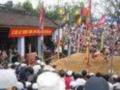
Phuong La is an ancient village that is also part of the common of the villages of the North Vietnam. The village has a communal house, pagoda, shrine, family church... and many precious antiques. The relics are an extremely important part of the spiritual culture of the village. The most prominent relics of Phuong La village are Dong Communal House, Ung Mao Pagoda, the Le and Tran family churches... and the Dong Communal House festival of the village; these are tourist attractions. The ancient Phuong La village festival had many special performances, especially the craft competition between the ancient clans that was very popular with the people (this custom no longer exists). Coming to Phuong La, we can also admire and buy unique machine-woven or hand-woven scarves for use or as gifts.
In order for Phuong La village festival to be more attractive to tourists, in addition to propaganda and promotion, the locality needs to establish a relic management board, organize a festival of sufficient scale, and systematically implement all stages in accordance with the law and in accordance with local conditions. In addition, local people and authorities need to restore some folk performances and traditional craft competitions of clans to create attraction and appeal to the people. Thus, we can both develop the economy and preserve and promote traditional values; at the same time, the landscape environment is protected, kept green - clean - beautiful, serving people's lives.
Traditional craft villages exist and develop because the products of the craft villages themselves create a unique identity in terms of the value of the products of their profession and craft village, creating a reputation for product quality, and a unique feature in the products of the craft village. Each product is the crystallization of the labor, the heart, the soul and the dexterity of the craftsman's hands ... From that, it has created a unique cultural identity of each profession and craft village - intangible cultural heritage; at the same time, the craft village is also the place to best preserve long-standing cultural traditions and pass on the secrets of the craft. Here, traditional customs and unique cultural features are deeply imbued. Therefore, the craft village also contains great potential for advertising.
promote Vietnamese cultural traditions and Vietnamese handicraft products. People come to the village sometimes just to buy products, admire the products, learn the secrets of the craft, and understand the culture of the craft village. Therefore, we need to have an orientation to contribute to increasing the value, affirming the brand of the craft village, helping the craft village develop better. To promote the cultural value of the village, more than ever, it is necessary to promote the role of artisans - the transmission of the craft, expanding the scale of vocational training, expanding the scale of the craft village and need to have policies to treat and honor artisans so that they can continuously contribute their intelligence to their descendants.
Craft village products attract the attention of visitors from all over the world, moreover, craft villages are places that preserve many cultural values characterizing Vietnamese cultural identity. The more developed the craft village is, the more abundant and ancient the artifacts and cultural heritages are, so we need to exploit the strengths of craft villages as a tourist destination - craft village tourism. Coming to craft villages, you can not only witness the production of traditional handicraft products, visit historical sites, cultural values of the villagers, but also choose to buy your favorite products. This is the goal that craft villages need to reach. To achieve the goal, Party committees and authorities at all levels need to plan architectural space, environmental landscape, create entertainment spots, motels, hotels, etc.
Thus, developing craft village tourism not only creates a cultural environment but also creates a market for exchanging goods and products, promoting product brands for those craft villages, and at the same time solving many problems of ecological environment, development of occupations, craft villages, and good cultural environment.
Craft village tourism will contribute to making local people aware of the value of cultural heritage, thereby having the awareness to preserve and protect. They themselves have appropriate actions and deeds; at the same time, they also have the awareness to propagate and mobilize their children, grandchildren, and everyone to participate in protection. Not only that, they also contribute their efforts and money to embellish and protect heritages, collect traditional capital, local antiques and thus the local traditional culture becomes increasingly rich and diverse, attracting more and more tourists.
To do this, local authorities and sectors need to have a master plan for the architectural space of craft villages. The plan must take into account production areas, places for displaying and promoting craft village products, planning areas for building cultural institutions, places for traditional cultural activities and new cultural activities, and especially creating attractive ecological areas that meet both the consumption needs of craft village residents and the needs of tourists. This way, we can both develop the economy and preserve and develop traditional values, while the landscape environment is protected, preserved, and effectively serves human life.
4.3.3. Group of solutions on career development
4.3.3.1. Craft village planning, creating conditions for expanding production areas
In the current conditions, craft villages ensure direct and immediate employment for a large part of the agricultural population who are under great pressure from the loss of agricultural land and population growth, contributing to political stability in rural areas and preventing social evils. Every day, a craft village can provide jobs for hundreds and thousands of workers. Some hired farmers have been trained to directly make products. Others work on the fields of households in the village or do other jobs such as transportation, housework and miscellaneous tasks, creating the premise for the industrial workforce in the new period. Craft villages contribute to training a team of craftsmen.
- pre-industrial workers, supplementing later industrial workers.
Nowadays, the craft village is increasingly asserting its great role in economic and social development. Currently, the weaving profession is still the pillar, the solid economic support for the people of Phuong La village and in the region for the following reasons:
- Solving employment, creating relatively high and more stable income compared to agricultural production, when life based on agriculture is facing difficulties because the average land area is low, fragmented, the price of agricultural products and food is not commensurate, and is at many disadvantages compared to the price of industrial products.
- Solving employment for residents of nearby villages without occupations, who are also under great pressure and disadvantage from losing their productive land, while the conditions for switching to new occupations are very difficult.
- Create a quantity of handicraft products to meet domestic consumption needs; raw materials for industrial establishments in many different industries. Craft villages create high economic value in the general economic structure and compared to industrial value in particular, meeting the great demand for domestic and export consumer goods, the residents' lives are always more secure than purely agricultural villages. Many communes and districts have placed the position of craft villages and craft communes as an important goal of the agricultural and rural economic development program. In many places, crafts and craft households have become the main source of livelihood for people.
Despite such an important role, the premises of production facilities in Phuong La are still facing many difficulties, even though they have been solved by satellite labor. A family-based production facility needs an average of 1,500m2 or more to build a factory, but in reality, the area of most of these families is from 2 - 3 sao (720 - 1,000m2 ) , now narrowed due to having to divide the land among the children when they live separately. Expanding the factory is very difficult because the land price is very high compared to the capital capacity of the production facilities; moreover, even if there is enough capital to buy more land, it is not easy to buy land adjacent to the existing production facility.
For the above reasons, authorities at all levels need to pay attention to creating all conditions to solve the problem of production space to help establishments expand their production scale. In Phuong La village, people no longer need to do agriculture because of low income, so the fields are abandoned, or the fields are rented out to people from other villages. Therefore, authorities at all levels should create conditions for owners of production establishments to rent that land to expand their factories to meet the needs of production development, collect land taxes according to State regulations, and use that money to invest in building infrastructure and welfare works for the village. Doing so will benefit both the workers and not waste agricultural land.
4.3.3.2. Complete the transportation system; provide electricity and water; thoroughly solve the problem of environmental pollution
- It is necessary to complete the traffic system , the traffic system is not only meaningful for the development of the village's tourism economy but also meaningful in terms of people's livelihood, contributing
vocational development section. To complete the traffic system in Phuong La village, authorities at all levels need to maintain the existing road structure, upgrade, restore and expand possible roads for convenient traffic, avoiding congestion; there should be some signs and traffic directions on the inter-commune road system and intra-village roads; it is necessary to build a raw material gathering area and a common export product delivery area for each village; create open space for tourists.
- Stable electricity and clean water are two extremely important factors for people's lives. Stable electricity and water not only ensure daily life but also ensure a stable power supply for production, contributing to socio-economic development. Authorities need to urgently intervene, inspect, review and upgrade the power system, ensuring a stable power supply to help people feel secure in production. Authorities at all levels should promptly deploy and put clean tap water systems into service for people's daily life.
- It is necessary to have measures to control and push back the environmental pollution of craft villages. Along with economic development, the pollution of the living environment of craft villages is currently a very urgent problem, the biggest obstacle for craft villages in Thai Binh. In general, the organization of production and business in craft villages is mainly household, so production is distributed everywhere in the village without concentrated areas. Thus, environmental pollution is spread throughout the residential area, seriously affecting the daily life and health of the people. When coming to Phuong La craft village, we cannot help but be surprised by the bustling scene such as streets, villas, high-rise buildings springing up close together. Industrial clusters with companies and factories are built and invested in modernly. However, when coming to Phuong La, everyone cannot help but worry about the dust of cotton, the strong smell of bleaching chemicals, the black river flowing through the village because of being too busy, indifferent to issues related to their lives, and even having poor awareness of social issues. Therefore, to solve the above shortcomings, local authorities need to have a master plan for the craft village. The planning must be suitable to the practical conditions of the village, so that people can easily comply and implement it in production and life.