
1.3.4. Resource analysis.
The purpose of resource analysis is to assess the strengths and weaknesses of the business itself as well as the tourist destination. From the results of the analysis, the tour operator must take advantage of and promote the strengths and limit the weaknesses of the business in parallel with exploiting the weaknesses of competitors.
1.3.5. Principles of pricing.
A tour product can be priced according to four principles:
- Cost pricing.
Maybe you are interested!
-

 The effectiveness of marketing communication activities for the program "An gia lap nghiep" for individual customers at Vietnam Joint Stock Commercial Bank for Investment and Development - Thua Thien Hue branch - 13
 -
 Managing the development of the Finance - Banking training program under the credit system at Thai Nguyen College of Economics and Finance - 1
 -
 Achievements in Defining Goals, Building Strategies and Planning for Stock Market Development
 -
 Measure 2: Tighten Management of the Development and Implementation of Program Content, Teaching Plans, Education and Training in Disaster Prevention
 -
 The Training and Development Program for Leadership Staff Has Not Really Contributed to Improving the Effectiveness of Strategic Thinking to Meet Requirements
- Competitive pricing.
- Pricing on demand.
- Pricing for new products: high pricing and low pricing.
1.3.6. Recommend development strategies and development advice.
A tour program can be defined and specific development strategies established depending on the time of launch and the location of the program. Development consultations are defined as the adjustment phase of a tour program after it has been sold to customers and feedback has been received.
Research agencies and individual businesses in the process of research and business need to make recommendations to management agencies, businesses or communities on local tourism development strategies or advise on business development strategies of businesses to exploit and maximize the potential of localities and businesses.
1.3.7. Some points to note when building a tour program
The main principles when building a tour program are:
- The program must have a reasonable implementation speed, not too much to cause fatigue. Except in mandatory cases, the movement must be suitable for the psychological and physiological endurance of each type of tourist, and there must be appropriate rest time.
- Diversify types of activities, enhance experiences in service consumption to avoid monotony and create boredom for tourists.
- Pay attention to the first welcoming activities and the farewell activities when the program ends.
- Pay attention to the evening activities in the program. Under the conditions allowed, optional programs can be offered to tourists. During a certain period of time (one day, one session) of the program, tourists can choose one of the organized programs. In general, optional programs are often included in the total price of the entire program. However, there are also optional programs (usually lasting one day) that are separate from the content of the pre-purchased program. When tourists buy these optional programs, they automatically extend their travel time.
- There must be a balance between the time and financial capabilities of the guests with the content and quality of the tour program, ensuring harmony between the company's business goals and the guests' travel needs.
In short , a complete itinerary is when reading it, visitors can feel the attraction, appeal and peace of mind that every detail, even the smallest, has been considered to ensure the success of the trip.
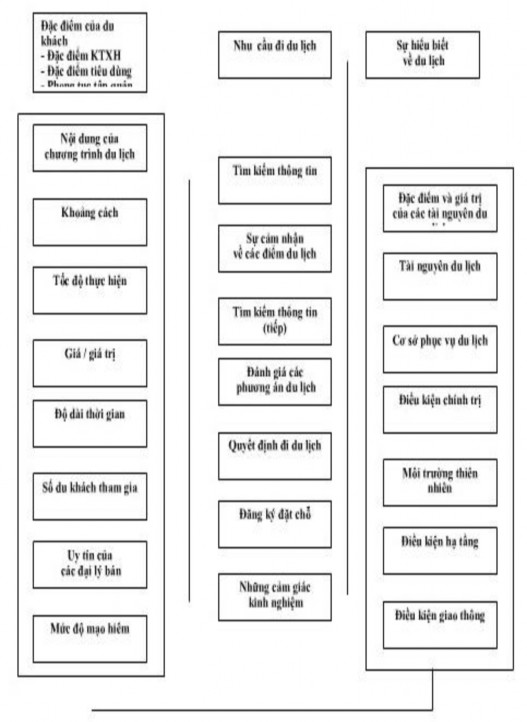
Figure 1.1. Tourists' program purchasing behavior is shown according to the model of Mathieson and Wall [36,p90]
1.4. Process of designing a complete historical-cultural tour program
1.4.1. Points to note when building a tour program
- Suitable for consumer characteristics.
- The tour program must have a reasonable operating speed.
- The tour program must be attractive.
- The program must be feasible.
- The program must be true to the purpose of the trip.
- Diversify activities to avoid boredom.
1.4.2. Process of building a complete historical-cultural tourism program.
Organizing, selling and implementing package tours are typical and basic activities of travel agencies. Programs with unique and attractive content, reasonable prices and high feasibility bring profits and prestige to travel agencies. For that reason, the package tour business market is always vibrant and fierce. Therefore, when building a tour program, it is necessary to follow the following steps in the tour program design process [31, p35]:
(1) Research market needs (tourists).
(2) Research on responsiveness.
(3) Determine the capacity and position of the travel business.
(4) Develop the purpose and ideas of the tour program.
(5) Funds with limited time and maximum price.
(6) Develop a basic itinerary, including the main and mandatory tourist attractions of the program.
(7) Develop transportation plan.
(8) Develop accommodation and dining plans.
(9) Minor adjustments and additions to the itinerary. Detail the program with sightseeing, resting and entertainment activities.
(10) Determine the cost and selling price of the program.
(11) Develop regulations for the tour program.
However, not every time a package tour is built, it is necessary to go through all the above steps. Experienced tour builders are those who rely on knowledge of tourism supply and demand, thoroughly understand the needs, interests, and tastes of tourists, and have the ability to invent new forms of tourism with unique content based on knowledge of resources and tourism businesses.
1.4.3. Research the relationship between tourists' needs and the content of the tour program (to ensure that tourists' expectations are met)
In scientific publications on tourism, it is acknowledged that, if we consider the overall needs of humans, in essence, tourism needs are a special and comprehensive type of human needs. Therefore, in order to understand tourism needs in a general and complete way, we first need to find out what “needs ” are in general of humans.
According to psychologists, needs are inevitable, natural, it is a psychological attribute of human beings, it is an inevitable demand of human beings to survive and develop. If satisfied, it will cause positive emotions for people, in the opposite case, it will cause resentment, discomfort (negative emotions). Up to now, in the field of psychology, there are many different theories studying human needs. One of them is Maslow's theory. According to "Theory of human motivation", this famous British scientist has proposed human needs in 5 levels as follows [36, p35]:
- Physiological needs: needs for food, water, sleep, rest;
- Need for safety, security, freedom from fear and anxiety;
- Belonging and love-affcetion, giving and receiving love;
- The need for self-esteem and esteem from others;
- Self-actualization- personal growth, self-fulfillment.
Later, due to the continuous development of society, human needs became more and more abundant and diverse, and the hierarchy of human needs was also supplemented with two more appropriate levels: the need for aesthetics, appreciation of beauty and the need for knowledge and understanding.
From there, it is possible that on the basis of Maslow's ladder, when basic human needs are met, they will have higher needs, not only " good food and nice clothes ", but they also want to understand the outside world, to feel and enjoy the beauty outside of life. Those human needs are also the main motivation for tourism program developers to create tourism programs that are suitable for the current life of people today.
To grasp the needs of tourists, tourism program developers often have to segment the market, select target markets and conduct market research and surveys. Usually, travel companies often determine the consumer desires of
target tourist market by :
- Document research : Learn about the market through research projects, expert opinions, books, magazines, statistical yearbooks... This is a low-cost method but sometimes there are difficulties in finding and processing information, the level of reliability and suitability is often not high. This is considered a secondary data source.
- Through travel agencies sending guests and familiarization tours: The two travel agencies (sending and receiving guests) will exchange information.
delegations of experts and delegates to learn about the market and determine the capabilities of each side as well as the prospects for cooperation. Typically, introductory or familiarization tours, travel businesses will have the opportunity to directly contact tourists, better understand their needs and interests. On the other hand, the exchange between the two sides will make the opinions given more convincing.
- Forms such as direct surveys by interview, opinion polls, hiring marketing companies.
In addition, when building a tourism program, it is also necessary to pay attention to the rich and diverse tourism consumption content:
- The motive and purpose of the customer's trip.
- General payment ability and spending ability of tourists.
- Usage habits, aesthetic tastes and quality requirements of transportation and accommodation services. This depends on the economic, social, lifestyle and consumption habits of tourists in each target market.
- Time requirements for travel, times when guests can travel. There are big differences in time budget between business travelers who are often busy, and pure tourists whose time budget is mainly for rest, relaxation and enjoyment.
- Other content such as travel frequency, average time for a trip, favorite tourist routes...
1.4.4. Responsiveness research
This relationship is to ensure the feasibility of the tourism program. The ability to meet is often expressed in two basic areas: resource value and the ability to be ready to welcome and serve tourists.
To select the values of tourism resources to exploit and use in programs, people often base on the following factors:
- The true value of tourism resources, the reputation of the resources, and its popularity are the initial bases. The core issue is the value of tourism resources.
Tourism must satisfy the cognitive, aesthetic, health needs... of tourists. The value of tourism resources is social recognition. Including recognition by UNESCO, by the nation, by the locality and word of mouth.
- The suitability of the value of tourism resources for the purpose of the tourism program. The values that tourism resources bring must meet the expectations of tourists and the distance and other factors must correspond to the constraints of tourists.
- Conditions for travel, security and order, and natural and social environment of areas with tourism resources.
The final factor in the ability to supply is to rely on the relationship of the travel company with service providers. When the program uses transportation, accommodation, food, shopping services... it can choose which suppliers to have the best service for customers and enjoy the most competitive prices. To do so, the relationship of the travel company with service providers must be a relationship of trust and cooperation for the benefit of both parties.
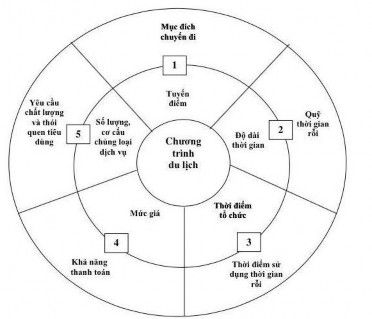
Diagram 1.2. Relationship between tour program content and customer needs