
Facebook and Twitter are two social networks that greatly support the increase of room revenue for Accord. Accor has successfully implemented many internet marketing activities on these social networks, including the campaign "AccorHotels welcomes new twitter users" in 2016. For the first time, a brand welcomed new Twitter users in a highly personalized way. For a week from April 4, 2016 to April 8, 2016, AccorHotels.com sent a welcome message to new Twitter users when they posted their first tweet with the tag #Myfirsttweet while staying at a hotel in the Accor chain. To show its welcome, the Accor brand decided to give those users a bathrobe embroidered with their Twitter name. Then, these people took a photo with the bathrobe and thanked Accor for the unique gift, posted on their Twitter with the tag: #AccorHotels,
#FeelWelcomeFromThe1stTweet. The campaign was launched in seven key markets: Germany, Australia, Brazil, Spain, France, Italy, and the UK. As a result, Accor gained widespread exposure across Twitter.
Marriott International, Inc. is the world's leading hotel company with more than 7,300 hotels across 30 brands in 135 countries and territories.
Marriott has deployed many IM applications through a series of IM tools such as website, fanpage, facebook, twitter or youtube... Among them, one of the successes in applying IM to Marriott's business operations is Marriott Bonvoy. Marriott Bonvoy application is a loyalty program designed on a technology platform that brings many benefits to KDL.
Maybe you are interested!
-

 Risk management in domestic travel business at domestic tourism sector Saigontourist Travel Service Company Limited 1681114527 - 1
 -
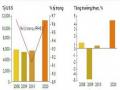 Business Performance of the Company in the Period 2009–2011 Table 2.1. Business Results of Viet Holiday Travel Company
 -
 Theoretical Basis and Practical Experience on Sustainable Tourism Development of a Provincial Locality
 -
 Past Travel Experience Scale at Destination
 -
 Some recommendations to improve the business strategy of Tay Ho Tourism Service Company - 9
This is Marriott International's loyalty program, which connects the portfolio network of 30 of the world's leading prestigious hotel brands and the high-class accommodation services of Marriott International. Members of the Loyalty Program can redeem reward points after experiencing services at Marriott hotels. Marriott leaders believe that innovation has always been an indispensable part throughout Marriott's 92-year journey of establishment and development, one of which is technology. Technology plays a key role in the new-age travel trend, which is seamless travel - from the time of booking to the entire trip.
First, travelers can book a room through the Marriott Bonvoy app. Once they receive an instant confirmation from the hotel, they can
complete the check-in process anytime, anywhere. This allows guests to skip the front desk, go straight to their room, and use their mobile key to open the door. From the same app, guests can search for nearby locations, make appointments with the front desk, and receive notifications about dry cleaning status using the live chat feature. As members stay frequently and meet eligibility requirements, they gain elite status and enjoy a host of attractive perks, including bonus points, upgraded Wi-Fi, and priority late check-out.
Another unique aspect of Marriott Bonvoy is its use of podcasts to build relationships with its loyalty members. A podcast is a collection of digital audio or video files that can be downloaded and listened to, either on a computer or on a mobile phone. Marriott Bonvoy podcasts focus on niche but relevant topics that appeal to the hotel’s loyal guests. For example, the Marriott Bonvoy Traveler: Behind the Design podcast delves into the creative decisions that go into the construction and design of some of Marriott’s top hotels. Featuring some of the hotel industry’s most prominent designers, these podcasts offer listeners insight into both the hotel industry and interior design in general. The podcasts also contribute to the Marriott Bonvoy Traveler brand’s digital Twitter accounts. This channel focuses on broader topics related to travel and traveler consumption patterns.
Best Western Hotels & Resorts
Best Western is one of the largest hotel management groups in the world. Currently, Best Western has 3 product levels corresponding to hotel brands such as: Best-Western Best Western with average facilities and services (3 stars); Best Western Plus with higher class (4 stars) and Best Western Premier brand with high-class facilities and services (5 stars). The luxury hotel and resort management group Best Western (Best Western Hotels & Resorts) is moving the entire system infrastructure to the AWS cloud platform (Amazon Web Services - a subsidiary of Amazon.com) to automate operating processes, quickly creating new, more personalized experiences for tourists when staying at more than 4,700 hotels and resorts worldwide.
Best Western Hotels & Resorts will move all of its business-critical applications to AWS, including its hotel reservations system, customer rewards platform, and global contact centers. Best Western Hotels & Resorts will leverage the power of AWS cloud services, including analytics, machine learning, databases, compute, and storage, as well as the expertise of AWS Professional Services, to accelerate innovation and improve operational efficiency for its members who own and operate hotels.
As part of its cloud migration, Best Western Hotels & Resorts is moving its hotel reservation systems from legacy databases to Amazon Aurora (for core database needs) and Amazon Redshift (for data storage) to increase capacity and speed up the processing of hotel reservations worldwide, allowing the company to scale during peak travel bookings. The company is undertaking a digital transformation to improve customer satisfaction, promote agile and flexible ways of working, and deliver new value to guests, hoteliers, and employees.
Best Western Hotels & Resorts has also found that virtual reality can provide real value to consumers – especially when it comes to researching and learning about travel. Virtual reality allows people to visualize locations more clearly, adding a sense of realism and immersion. Best Western Hotels has implemented virtual reality into its online tours, allowing potential travelers to enjoy a tour of the hotel. The videos are available to view in 360 degrees, with virtual reality elements added for those viewing through headsets. Users get a sense of the size and scale of the room, even the texture of the furniture and other design features. In order to shorten the time spent on hotel websites, virtual reality videos provide information in a more immediate, memorable way.
Shangri-La Hotels: Known as the largest hotel chain in Asia, Shangri-La executives believe that consumers now expect more from a hotel than just a comfortable night’s sleep. This means that hotel brands are now marketing the experiences they can offer guests in terms of basic amenities, price, and convenience.
User-generated content is a particularly effective way to do this, as it represents the experiences and perspectives of your visitors themselves.
have used the service. Shangri La Hotels and Resorts has launched its 'My Shangri La' campaign – built around user-generated content.
Specifically, the campaign involves users taking photos of their 'Shangri-La' moments, moments of 'unexpected joy and happiness', and then sharing them on Instagram and Weibo. To encourage users to participate, the campaign also includes a competition element, whereby the winner will receive a free stay at one of ten Shangri-La hotels.
Most of the campaign images highlight the luxury of Shangri-La hotels, thereby evoking travel inspiration and adventure in users.
AirBnB internet marketing campaign
Founded in 2008, Airbnb is currently a rental accommodation company in hundreds of countries and tens of thousands of cities around the world. To become one of the leading brands in the tourism service market, Airbnb has had very effective marketing strategies through the internet. Specifically as follows:
- In 2015, Airbnb hosted a show on the River Thames in London and encouraged guests to take photos and livestream the show, which was featured on social media. The show resulted in over 340 media releases, 70,000 page views, 10,000 new users and over 200 million likes across social media in the UK alone. This was a great result for Airbnb, helping to increase brand awareness and enhance its image.
- Airbnb is a brand that regularly catches new trends on social platforms such as Facebook, Twitter, etc. in a timely and skillful way. By capturing prominent events that many people are interested in, Airbnb has been creative and experimental in conveying messages in a new way rather than following the beaten path to create a difference and a unique mark for the brand.
- Airbnb always pays great attention to using high-quality images on the website for its customers. Airbnb even spends more on producing images and content than on advertising. Airbnb believes that really good content will attract more attention. Many customers who love to travel have used Airbnb because they feel inspired by the beautiful, impressive photos on Airbnb's website.
- In addition to websites, mobile platforms are also a growing trend today. Therefore, Airbnb has used a marketing strategy aimed at developing users on mobile platforms. Thanks to that, the brand development speed is faster, the number of customers on mobile is also increasing. Airbnb is a typical example of a startup that can develop into a global product. That is partly thanks to the brand's correct internet marketing strategies.
2.3.1.2. Practical experience from travel service businesses
Thomas Cook Travel Group: Thomas Cook Travel Inc was founded in 1841 and named after its founder. Thomas Cook is considered the father of the modern travel industry, and the formation and development of this group is closely linked to the development of the world tourism industry. This travel company has 21,000 employees in 16 countries, of which 40% work in the UK. Thomas Cook Travel Inc is one of the leading companies providing package tours in Europe, owning many hotels, resorts and airlines, serving about 19 million visitors each year in 16 countries. The number of visitors using Thomas Cook tours abroad also reached 600,000 people. But on September 23, 2019, Thomas Cook Travel Inc, the world's first travel group with a history of 178 years, declared bankruptcy.
Thomas Cook went bankrupt not because of the direct cause of no more customers, but mainly because the number of customers and customer flow when there were changes over time, causing this group to sink deeper and deeper into debt because the costs for their offline tourism infrastructure were too large. And one of the reasons leading to this result is the appearance of the internet. The current market has changed with the appearance of the internet, so the tour business has also shifted its focus to the online platform. Thomas Cook Travel Inc's strength is the package holiday market, but the package holiday market is gradually narrowing, because now tourists can freely choose each item for their vacation. Tourists also have many options, compare and choose affordable prices. Thomas Cook is out of the trend of developing this form of online tourism business. Despite announcing a partnership with Expedia in 2017, the company still relies heavily on its headquarters and call center services, choosing to become a full-service tour operator rather than adapting to the digital world and focusing on building its online presence. Thomas Cook’s customers who book directly are also older and more conservative.
Until its closure, Thomas Cook still owned more than 600 offices and headquarters located on commercial streets and in urban areas across the UK. Although Thomas Cook had the advantage of owning both hotels and airlines, the market was shrinking. Moreover, the package tour business is often dependent on seasons, so if one season of the year is problematic, the cash flow of companies like Thomas Cook will be immediately affected. This risk can come from severe weather or fluctuations in the main market.
2.3.2. Lessons learned for Vietnamese tourism businesses
Compared to many years ago, the application of IM in marketing activities has now developed very conveniently for agents and tourism enterprises. Starting from the initial activities such as the application of IM in communication and communication activities to customers. But looking back at the IM programs of Vietnamese tourism enterprises for a long time, it is usually still participating in fairs, conferences, organizing introduction and promotion campaigns in some markets, using IM but not really creating breakthroughs or bringing high efficiency. Therefore, based on the research of successes and failures at some enterprises, some corporations operating in the tourism sector in the application of IM, we can draw the following lessons in the application of IM for Vietnamese tourism enterprises:
First, combining IM and traditional marketing: Although IM has many outstanding advantages over traditional marketing in terms of speed, especially low cost and universality to a large number of customers on a global scale, IM is only a part of marketing, a way to implement marketing through a tool such as the internet, so IM can only solve some problems but cannot replace the entire role of traditional marketing in this important field.
On the other hand, traditional marketing is still effective with many customers and fills the information gaps of consumers, especially those that IM cannot reach. Technology is both an advantage and an obstacle for IM. Because not all customers use the Internet, if you only focus on IM and ignore traditional marketing, businesses will miss out on customers who are not exposed to the online environment. In fact, traditional hotels and travel agencies do not necessarily have to immediately switch 100% to online operations, but can switch at an appropriate rate to achieve the highest business efficiency. On the contrary, do not be like Thomas Cook, the lack of flexibility in the model as well as ignoring the direct business method
The main route is the biggest cause of Thomas Cook's bankruptcy. In the era of a booming digital economy, if businesses still rely largely on traditional marketing activities that are inflexible, lack of diffusion, and are costly, do not focus on combining them with building an effective IM platform at low cost, do not quickly adapt to changes in technology and the market, and are slow to seize opportunities, they will not keep up with trends, will not satisfy the needs and desires of customers, and will not delve into consumer behavior to analyze and find solutions, which will narrow down the choices, even leaving only one option - declaring bankruptcy. This is a painful lesson for all tourism businesses if they continue to operate and manage in the traditional way.
Therefore, to make a business's marketing campaign highly effective, businesses still need to combine traditional marketing and IM forms.
Second, cover marketing campaigns on different internet tools, especially creating media clips, or videos applying virtual reality technology.
In all the lessons learned above, it is clear that when conducting a campaign, all information about the message is spread on social networks such as Twitter, Facebook or Instagram and other channels such as YouTube, websites of businesses implementing the campaign. The number of messages shared over the internet has increased dramatically. With just a few mouse clicks and in a very short time, the communication message has been sent to every corner of the world. The number of people who know and access the message increases every minute, even every second. In particular, video marketing is considered an effective tool in expanding the ability to reach users. Videos help convey messages in IM activities to viewers in the most effective and concise way. And that is a huge media information warehouse that is almost never lost for communication for businesses.
Third, research on designing IM tools in a mobile-friendly direction.
Internet traffic generated by mobile devices is considered one of the fastest growing segments of the internet in recent years. In the report of Hootsuite - a social media management tool on the digital world in 2020. In 2020, the number of Internet users worldwide reached 4.66 billion, with 4.2 billion people using social networks and 5.22 billion people using smartphones. Number of smartphone users
globally, equivalent to 66.6% of the world's population. App Annie data shows that smartphones account for 53% of Internet usage time, with 90% of Internet users accessing the Internet via smartphones. Mobile applications and mobile websites are a new trend in the field of service marketing in general and tourism marketing in particular. With the advantage of convenience, being able to access necessary information quickly, anytime, anywhere, this form has been chosen by many tourists to get accurate information about flights, hotel rooms, destination information, weather and many other information during their trip, while integrating convenient payment . Therefore, mobile web and mobile applications can be considered the link connecting the Vietnamese tourism industry and if applied effectively, this will be an effective means to retain tourists who have used tourism services in Vietnam. Many foreign companies are optimizing their website versions on mobile platforms, becoming a complete and friendly information portal for tourists or creating their own mobile applications. Mobile applications help businesses locate customers, allowing passengers to conveniently interact with social networks, update status, etc.
This is a lesson that Vietnamese tourism enterprises can completely apply. Hoteliers and travel companies need to realize the urgency of investing in technology for IM activities. This is especially true for small and medium-sized enterprises and emerging markets. The number of internet users is increasing. The characteristic of the tourism industry is that visitors are often far from tourist destinations. With such convenience and complete information from the internet, by taking advantage of the internet in marketing activities, businesses can completely increase interaction with customers, achieve high marketing efficiency at very low cost.
CHAPTER 2 SUMMARY
Although the research on application conditions, application process and application tools of internet marketing in tourism enterprises is not a new issue, due to the specificity of tourism products and the specificity of technological changes, there are still many different approaches. Through the synthesis of research works related to the topic in chapter 1, the researcher summarized some basic theories on the concept of internet marketing, the benefits of internet marketing in tourism enterprises in general, the internet marketing process that tourism enterprises can use and online marketing - mix tools in tourism enterprises. In chapter 2, the thesis completed a number of proposed objectives, specifically as follows: