
Exporting a large quantity of goods to the US market, EU markets and many other markets around the world.
Along with the increase in the number of competitors, the nature of competition has also changed. As trade barriers have been gradually removed, transportation and communication have been modernized, goods and services can be produced and sold anywhere, and no business can avoid competition. Typical examples include: Caterpillar competes with Komatsu in Japan in heavy transport equipment; DuPont competes with Hoechst of Germany in the chemical industry; Chase Manhattan Bank competes with Barclay's Bank in the United Kingdom.
One point to note is that when producers from different countries are free to compete in the global market, the strongest producer can automatically raise the competitive standards for the remaining producers.
In that context, businesses in any country will have to be customer-oriented, constantly creative and dynamic. They need to be flexible and adapt to changes in the market. They must rely on their resources to produce and do business to serve the increasingly diverse needs of customers.
Maybe you are interested!
-
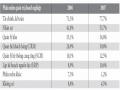
 Situation of Information Technology Application in Enterprises
 -
 Information Technology and Information Technology Applications
 -
 Solutions to promote the application of information technology in the tax industry in Vietnam - 30
 -
 Managing information technology projects at the Department of Customs Information and Statistics - 11
 -
 Strengthening the application of information technology to improve the competitiveness of small and medium enterprises in Vietnam - 1
- Technology is constantly being innovated
In fact, the superiority of process technology is the main reason for Japan's success, and promises to give Japan a competitive advantage in the 21st century. Although conventional wisdom holds that product technology yields a higher return than investment in process technology, Japan has proven that the opposite can also be true. About 70% of Japan's R&D investment goes to new processes, while only 30% goes to new product development. In the United States, the opposite pattern applies. Only 30% of R&D investment goes to new processes and 70% to product development.
new products. As a result, the top three products: the video recorder, the camera, the fax machine invented in the US, and the CD player created in Europe, became Japanese products. [35, pp. 3 - 4].
The point is that simply creating products will no longer be a competitive advantage. Certainly, as computer, software, and communications capabilities continue to advance at a rapid pace, the rate of technical change will increase as well.
- Changing customer expectations
In the late 20th century, manufacturers built standardized products for a relatively homogeneous market. Although the world market was not truly homogeneous, consumers bought standardized products because they had no other choice. Despite the limited choice, customers were relatively satisfied because there was nothing better than those standardized products. But by the early 21st century, with the emergence of many competitors producing high-quality, low-cost products, consumers had virtually unlimited choices. Manufacturers wanted to differentiate their products by providing high-quality services. For example, Japanese consumers can customize their cars in a showroom and be assured that the product will be designed, tested, and delivered to their door within 5 days.
With so many choices, consumer expectations have also increased. Many no longer accept standardized products, while others demand products and services that are tailored to them. In short, today’s customers know what they want, how much they will pay for it, and when they want it. These consumers will not necessarily buy from businesses that do not build good relationships with new customers.
- Illustrative model
Source: Research on changes in the business environment, 2009, author.
Figure 1.5: Changes in the business environment
1.2.2.2. Limitations of the bureaucratic administrative system
In the early 20th century, social scientists developed the theory of bureaucracy and argued that building an organizational model based on the bureaucratic administrative perspective was the most efficient way to operate large enterprises. The positive aspects of this model are:
- Work specialization: work is divided to become simple.
- Vertical axis of power: positions are organized according to a clear chain of command.
- Rules and regulations are established: to ensure uniformity and guidance for the activities of employees.
The behavior of employees in an organizational model based on the bureaucratic perspective is required to comply with standardized structures and procedures. Here; each department will be under the control of another higher department. Each of these departments is horizontally differentiated by the division of labor. This division of labor creates specialized departments, which specify areas of
areas of activity according to professional competence, assign responsibilities to carry out these activities, and allocate adequate authority to fulfill these responsibilities. [7, p. 29].
This imposition of structure and function creates high levels of specialization, combination of roles, and control of members through standardization.
However, social scientists as well as business administrators have pointed out in practice that building an organizational model based on a bureaucratic administrative perspective also exhibits the following limitations [7, p. 58]:
- Rules and regulations are established: formalistic, lacking personality because rules and controls are applied uniformly.
- Evaluation and voting are formal: all members are elected on the basis of technical expertise certificates.
- Career orientation: managers are professional officials rather than owners of the departments they manage.
Bennis [44, p. 4] predicted that the organizational model based on this view would become increasingly ineffective, outdated compared to contemporary reality, and even hinder the development of enterprises. In a letter to customers, shareholders and employees; Jack Welch, Chairman of General Electric stated “Bureaucrats must be ridiculed and eliminated. They thrive in the layers of the enterprise and behind the functional walls; it seems that every day we have battles to remove this structure and keep the enterprise open and free… the organizational model based on the administrative view of bureaucracy depresses people, distorts their interests, limits their dreams and turns the face of the entire enterprise into a fragmented world, the inner workings of an enterprise will be exposed, and everyone will see everything that belongs to the bureaucratic system: slowness
slow, selfish, insensitive to customers, even stupid…”. [25]. Paul Allaire; chairman and CEO of Xerox, when considering the old organizational model, which was built on a bureaucratic administrative perspective with independent functional departments, said that “In the functional organizational model of a bureaucratic administrative perspective, there is a natural tendency for conflicts to move up a notch. People are so used to sitting on their hands and waiting for decisions to come down. Sometimes, decisions come down. Sometimes they don’t. And when they do, it is often too late, because market conditions have changed or a more agile competitor has made a decision first…” [39, p. 110].
1.2.2.3. Changes within the business
During the operation process, enterprises are affected by factors from the external business environment leading to changes, but in many cases, enterprises have to change due to internal causes. These can be changes in the goals, business lines of the enterprise, fluctuations in personnel, and financial potential of the enterprise. Research by Duong Huu Hanh [5, p. 110] has shown that these factors include:
- About strategy:
- Current strengths and weaknesses in operations.
- Ability to seize opportunities and face external challenges.
- The need for an effective new strategy.
- About finance:
- Increased capital needs and ability to raise capital.
- Ability to allocate and use capital resources.
- Ability to control costs.
- About human resources:
- The actual quality of the enterprise's human resources.
- Ability to correctly identify human resource needs.
- There should be reasonable and motivating policies and incentives.
- About organizational culture
- The need to build a strong, dynamic, and unique corporate culture.
- About the organizational model:
- The need for a compact, scientific organizational model that ensures effective operation.
1.2.2.4. Trends in restructuring business organization models
Faced with rapid changes in the business environment, many businesses around the world have been and are taking measures to restructure their organizational models with the following main trends:
- Establish a decentralized management model in the enterprise
Centralization is the process of making decisions in the hands of the business management. Decentralization is the process of making decisions together with the management and lower levels. Centralized businesses have more layers of management with a narrower scope of operations. Employees here do not have the freedom to make decisions. On the contrary, decentralized businesses have fewer layers of management, thus giving employees more freedom to make decisions. [31].
According to Chandler, businesses around the world seem to be moving toward a decentralized management model. In his research with large technology companies such as General Electric and Hewllet Packard; Chandler found that executives there are moving toward a decentralized management model, which seems to be appropriate in a highly competitive technology business environment that requires rapid business response. [18]
- Eliminate management levels in the business
According to D. Keith [22, p. 19], for most of the 20th century, the organizational model of businesses revolved around the hierarchy. However, it seems that many things are changing so rapidly that one day, history will mark the end of the 20th century as the beginning of the end of the pyramidal organizational model.
World-class technology companies such as General Electric, Hewlett Packard, and Brunkswick Corporation have transformed into flatter organizations. With over 200,000 employees, General Electric has only about three to four layers of management between its CEO and its workers. With over 270,000 employees, Hewlett Packard, an information technology company, has only five layers between its CEO and its operating staff. Brunkswick Corporation, a Fortune 500 company, has
22,000 employees in 1998, reduced from 11 to 8 departments and reduced the number of employees from 560 to 220 in 2000. The company then further reduced the number of employees to 185, with only 5 layers between the CEO and the lowest-level workers. [36, pp. 2 - 10].
- Gradually reduce functional barriers between departments within the business
When predicting the future of business, Tom Peters said that the world is in a state of revolutionary change. Every business has and will continue to face new competitors. In many cases, business leaders do not even know where future competitors will come from. Therefore, the solution for business leaders seems to be to create flexibility in their businesses. Rules and regulations will be replaced by open-minded, competitive, and hands-on operations. Business leaders will set new standards by breaking down rules and regulations, vertical hierarchies, and
functional walls. They can communicate with other members at all levels, crossing traditional functional boundaries, making work get done faster. [43, pp. 103 - 109].
To prepare for the 21st century, General Electric CEO Jack Welch tried to build a boundaryless organizational model. He gradually reduced the functional barriers in business, which were created by functional departments, such as marketing, manufacturing, human resources, engineering. Or at Hewlett Packard, to increase the company's competitiveness in the world of information technology, Platt - CEO of Hewlett Packard since 1992 and his colleagues used an approach that spanned the boundaries between functional departments to bring new knowledge to engineers at Hewlett Packard [21, pp. 323 - 516].
- Establish working groups (specifically inter-departmental working groups) in the enterprise
According to Joseph H. Boyett and Jimmie T. Boyett in Beyond Workplace 2000, the organizational model is becoming very fluid. The diamond can now be cut into pieces. Businesses will no longer have departments, or divisions, or functional groups. Instead of existing fixedly around separate functions, cross-functional workgroups will be established around a core business process. [26].
To reassert its position in the market, in the early 21st century, Xerox, a technology company, moved from its traditional vertical organization with independent functional departments to a new organizational model with about 40 cross-functional business teams, with members gathered from different functional departments. To bring together creativity, knowledge, and production processes, General Electric established cross-functional work teams based on gathering individuals from different departments. [20, p. 516].