
- Import/export records to create bibliographic records according to MARC standards in UNIMARC, MARC 21 or CDS/ISIS formats.
- Processing, searching, accessing digital data
- Print catalogs, posters, documents, reports related to cataloging
- Quick search by multiple criteria. Allows control of bibliographic record consistency.
Maybe you are interested!
-
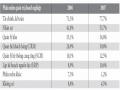
 Situation of Information Technology Application in Enterprises
 -
 Solutions to promote the application of information technology in the tax industry in Vietnam - 30
 -
 Strengthening the application of information technology to improve the competitiveness of small and medium enterprises in Vietnam - 1
 -
 Application of Information Technology in Teaching at Secondary Schools
 -
 Assessment of the Current Status of IT Application Investment Project Management at the Department of Information Technology and Customs Statistics
- Control consistency by author.
The application of IT in cataloging work is to create an automatic cataloging process. Currently, the Center is using both forms of automatic cataloging: original cataloging and copy cataloging.
Original catalog:
Original cataloging is also known as on-site cataloging. This is the process of creating a bibliographic record based on the direct description of documents in the library using available data input formats of a certain library software. The basic process of cataloging includes:
+ Pre-processing: Describe the document's bibliographic elements into the input form (worksheet)
+ Data entry
+ Edit records on the computer
+ Synchronize to the server for searching, printing results in the form of index or directory.
This process at the Center is to create a new record for the Center's database. The staff of the professional department will process the documents on the data entry form and enter the data into the computer according to the process. MARC 21 allows direct entry of market indicators, subfield codes along with bibliographic data. This allows library staff to be proactive in the cataloging process.
The center applies international standard description rules and ISBD bibliographic descriptions, AACR2 description rules and displays all MARC 21 field tags to help staff control errors in the cataloging process.
Copy cataloging:
Copy cataloging is one of the achievements of library automation in cataloging through computer networks or through other information carriers such as magnetic disks, CDs without having to re-catalog from scratch through data exchange standards. In essence, it is the implementation of bibliographic records of other libraries and adding specific elements of your library to create a new record accordingly.
However, in our country today, the copying and cataloging work has not been organized and carried out regularly because the Information Centers - Libraries have not reached a consensus on the use of templates, description rules as well as classification frameworks, and the cooperation between libraries has not been given due attention. This wastes a lot of time, effort of staff and the state budget.
Before using the software, the Center did not have any copy cataloging activities, but since using the software, the cataloging subsystem has imported records from external sources through connections, but there are still many limitations.
The process of copy cataloging is conducted by the Center through the Z39.50 portal to download cataloged documents through the database of the US Library of Congress (for foreign documents) at http://www.loc.gov/
, National Library of Vietnam (mainly Vietnamese documents) at http://www.nlv.gov.vn/nlv and through several other websites.
After the downloaded catalog is downloaded from the database of other libraries, the Center will proceed to catalog the fields to suit its library.
❖ Applying IT in serving readers ( archiving subsystem )
information)
The center organizes services for readers in the form of an open repository for all types of documents and has not yet lent them home.
This subsystem is designed to suit the needs of the library, allowing for document lending and reader information management, supporting document service activities, reader management and circulation statistics reporting.
Is the process of circulating library publications and readers, effectively using the information recorded during the borrowing and returning of cards, conducting various statistics. The subsystem has the following functions:
- Maximum automation of borrowing and repayment activities
- Integrated barcode. Diverse statistics
- Network connection. Handling overdue borrowed publications
The subsystem allows management of borrowing time, number of documents borrowed and reserved, borrowing fees, fines, etc. For readers, it allows registering new readers, modifying and updating information about readers. Allows setting different policies at each circulation point in your system.
The center is using barcode technology. It has been applied in many countries around the world. Barcode technology is the work of encoding information with black and white lines of variable width, which can be identified and decoded by barcode reading devices. The data after being decoded in the form of numbers or symbols can be easily entered into computers for use in databases for management and information lookup.
Barcode technology was born to manage the objects of library activities, which are documents and users, through software that can integrate barcodes. Each object has its own barcode, which contains basic information to identify the object accurately. Through barcode readers and computers, staff will have full information about the object.
quickly and accurately. The center is using two types of barcodes: barcodes for library cards and barcodes for documents.
Auxiliary equipment for information technology application
+ Barcodes for cards are supported by the software in the circulation subsystem with the function of printing cards and printing barcodes in different formats to help staff create card designs, then provide card printing and barcode printing functions for cards.
+ Barcode for documents is a registration number. After being added to the Center, documents will be added to the registration book by the department staff, assigned a registration number, preliminarily processed, then transferred to cataloging and here iLib will support the function of printing barcodes for publications.
The use of barcodes has created favorable conditions for staff and users, especially in serving and document inventory.
Along with the construction of the database, the Center has built and developed the online catalog OPAC (Online Public Access Ctalog) which has gradually replaced the traditional catalog with its superior features. OPAC is the result of automating the activities of cataloging, supplementing, circulating, ... after all the activities of directly processing documents, the online catalog OPAC will appear, and at the same time is the basis for exploiting other activities.
The OPAC module enables access to online public catalogs through a public access interface, providing quick search capabilities with a pre-defined template interface. Allows users to search by various criteria, supports search operators, and can search in both basic and advanced modes. Supports inter-library search via Z39.50, while managing users and providing a forum for users to exchange information with each other.
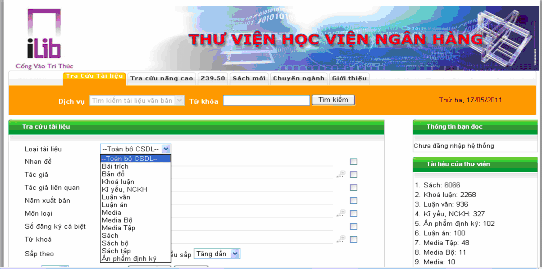
Figure 10. Document search interface on OPAC
In addition, OPAC also provides online services, support, viewing user information, new book notifications, document registration and document renewal requests online. It is a portal that helps readers and the Center communicate with each other conveniently and effectively, and can be integrated on the Internet to create an environment for readers to look up and use information provided by the library.
The OPAC subsystem has created a modern information search system that meets the needs of users for quick, accurate and diverse information search. Users can search for documents with many access points such as author name, document name, keywords, registration number, etc. and can combine fields in a search command to find exactly the document they need.
Users can search for information through the online search mode on the website http://www.hvnh.edu.vn/branch/148/1390 (this is the Academy's website) then go to the OPAC subsystem to look up documents because the Center does not have its own website.
The center also provides Internet access for lecturers, staff and students of the Academy. The computer system for students to access the Internet is 37 computers. The computer room for teachers to access the Internet is 12 computers. Creating conditions for users to access and search for new and modern information in the world, helping users to communicate and exchange information with each other.
Thanks to the application of IT, the service of the Center's readers becomes faster and more effective, reducing the time and effort of readers as well as library staff. At the same time, the application of IT also brings many benefits to information users, helping them access and exploit information in all forms to serve their learning and research process.
2.4.3.3. Application of information technology in database construction
A database is a collection of data in a certain field about management objects, stored on information carriers that can be read by electronic computers and managed according to a unified mechanism to help access and process data easily and quickly. A database includes a file or a set of data files. Information in these files can be divided into records, each record includes one or more fields. Fields are the basic units of data and each field contains information related to an aspect or an attribute of the entity described by the database. Using keywords or search commands, information users can quickly select records that satisfy the information requirements. That is thanks to the database being
managed by a database management system - is a software system, including programs that help users manage and exploit the database.
Building a database clearly shows the positive side of applying IT in document processing. It allows to minimize the cost and effort of librarians in cataloging documents as well as creating information products and services on demand. In addition, it creates the ability to exchange information resources between information agencies. The emergence of modern network systems and information network objects makes it possible for databases to be used as an information product or as an information processing tool. Building a database requires librarians to have a certain level of IT skills, database organization, understanding data characteristics, and database maintenance.
Realizing the importance of database building, the Center has paid great attention to electronic information sources and online databases. The Center has proactively contacted domestic and foreign publishers to request free provision of some documents. In particular, in 2007, 2008 and 2010, the Center contacted and was allowed by the Emerald Publishing House (UK) to allow the Academy's staff, teachers and students to access for free to exploit online electronic databases in the fields of economics, finance and banking, helping to save a significant amount of money (about 1,400 USD/month) for the Academy.
Since the beginning of April 2008, the Center has received and put into operation a new e-book database E-Brary with an access period of 3 years (April 2008 - April 2011). This is a full-text e-book database with more than 40,000 books in the fields of finance - banking and administration - business collected from more than 170 prestigious publishers and major universities in the world. Total
The cost to purchase access and use this database is about 13,000 USD/year.
The Center has been building a database to form an electronic data source, helping information users (NDT) to access and search for information remotely.
Thus, the work of building a database along with the investment and provision of modern equipment such as computers, network systems, etc. has helped the Center's other activities operate more effectively, improve the quality of service to readers and attract more and more people to use the library.
2.5. Comments on the application of information technology at the Information Center - Library of the Banking Academy
2.5. 1. Achievements
Regarding the facilities and equipment serving readers, it can be seen that it is quite complete with a 7-storey building and the total number of seats serving readers has met the needs of a large number of readers. The library has a fairly large computer system to serve readers to search for documents and access the Internet. There are full fans, lights, fire extinguishers, vacuum cleaners, printers,...
Recently, the library has selected, put into use and used the Ilib 4.0 electronic library software of CMC Software Solutions Company Limited in management, in the work of supplementing, cataloging and searching for documents, which has initially achieved very good results. The modules put into operation have greatly limited errors in the process of supplementing documents, as well as the process of operating and serving readers. The operations are carried out in a professional manner, thereby saving time and human resources. The supplement department has better controlled the purchase of duplicate new documents, and allocated new documents to service warehouses. For the cataloging department,
Professional standards are implemented more strictly, especially controlling consistency in classification and keywording for documents. Output products such as subject folders, new document folders, labels, etc. are done easily and quickly.
For the OPAC Module, the document search of users has been implemented but the response rate is not high, users still cannot open the OPAC page. Currently, CMC Company and the Academy's Network Center are researching to find out the cause to overcome this situation. On the other hand, because the OPAC page has not been put on the Academy's homepage, users cannot remotely access the databases. At the same time, there has not been a two-way online information channel between the library and users to promptly grasp the needs and adjust the working method to meet the needs of users.
Regarding circulation management, the Center is preparing conditions to conduct circulation on the software such as: pasting barcodes for retrospective documents, updating user data into the Circulation module on the software, building circulation management policies,...
Along with the application of modern library software in all professional activities, the Center has begun to prepare conditions for building a digital library. Valuable documents such as doctoral theses, scientific research projects at the industry and state levels have been scanned in full text for old documents, and electronic files have been archived for new documents. The Center has also purchased electronic documents. The construction of digital databases is being studied based on the experience of libraries that have done this work well such as: Information Center - Library of Foreign Trade University, Hanoi University, Pedagogical University, University of Science and Technology, Vietnam National University, Hanoi, ...
The working style, spirit and attitude of the staff are generally very good. The Center has a team of young, dynamic and enthusiastic staff in the process of serving readers and is well appreciated by readers. The number and quality of staff are increasingly consolidated, enhanced and developed compared to a few years ago. Every year, the staff at the library are given the opportunity by the Board of Directors to participate in professional training courses, participate in scientific seminars, and continue to create conditions for staff to study at a higher level.
The information and library center has also been cooperating with a number of Northern University Libraries to further improve the quality and efficiency of serving readers.
2.5.2. Some limitations
Although the infrastructure has been invested in relatively well, due to the initial application of IT, the exploitation of its full potential is still limited. The application of IT in operations is still at an initial level and has not yet fully exploited its effectiveness.
The computer system of the Information Center - Library is currently only connected to each other through the server of the Practical Bank, not an independent LAN. The computers are connected to the Internet but the number of computers is still limited, not enough to serve readers. Some computers have low configuration, are often damaged, not convenient for complex tasks.
A modern information system has not been built, in line with the general trend of the times and the general development direction of the library information system in the country as well as in the world. The number of computers serving document searching at the Center is still not enough and these computers often have technical problems.
The library has been equipped with a magnetic gate but has not yet installed a camera system in the open warehouses to observe and monitor entry and exit; contributing to maintaining security.
security, property safety, limiting students from taking books as they do now and possibly reducing direct labor.
CHAPTER 3.
SOME RECOMMENDATIONS TO IMPROVE EFFICIENCY
APPLICATION OF INFORMATION TECHNOLOGY IN INFORMATION - LIBRARY ACTIVITIES AT THE CENTER
INFORMATION – BANKING ACADEMY LIBRARY
3.1. Increase investment in upgrading information technology infrastructure
The process of applying IT, especially iLib software, to the activities of the Banking Academy Information and Library Center has only just begun to be applied, so it has not been completed yet. Therefore, I have some recommendations to the Center to improve the effectiveness of IT application.
To improve service capacity to meet the needs of information users, the Center needs to have a specific direction and investment development plan, both long-term in strengthening the construction of facilities and equipment. At the same time, to promote the results achieved in the initial application of IT in library information activities at the Center, the Academy's Board of Directors and the Center's Board of Directors need to strengthen the upgrade of the network and computer systems. The process of installing and testing the software shows that the computer and network systems at the Center and the Academy need to be repaired. In addition, it is necessary to upgrade computers including servers and workstations. The Center's computers include many types, some of which are left over from previous projects, some of which are donated by banks with simple configurations, have been repaired and upgraded. When running CMC's ILIB 4.0 software, these devices and the LAN system have revealed weaknesses that need to be overcome. At the same time, it is necessary to have a team of specialized IT staff to ensure the system operates stably.
Proceed to build a separate website for the Center because this is the gateway connecting the library and the outside world so that users can easily access information products and services, and also help