
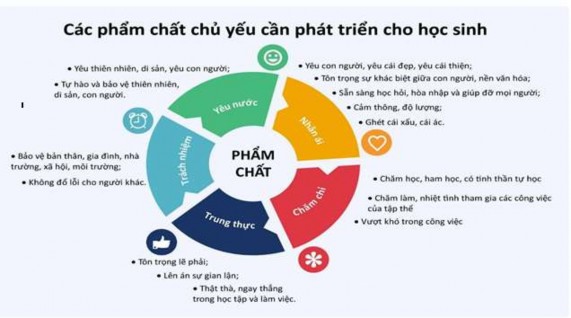
Figure 3.1. Main qualities in the 2018 general education program
Regarding competencies: Requirements to be achieved for general competencies (autonomy and self-study, communication and cooperation, problem-solving and creativity) and specialized competencies (language competencies, computational competencies, natural and social research competencies, technological competencies, information technology competencies, aesthetic competencies, physical competencies). These requirements are described in Figure 3.2.
Maybe you are interested!
-
 Organizing Capacity Training to Develop School Education Programs According to the New General Education Program for Management and Teaching Staff
 -
 Managing experiential activities of students at Nam Son Secondary School, Bac Ninh City according to the orientation of the new general education program - 2
 -
 Theoretical Basis of Managing Experiential Activities for Secondary School Students According to the New General Education Program.
 -
 General Education of Phu Binh District in the First 10 Years of the Renovation Period (1986 - 1996)
 -
 Managing the training activities for primary school managers of the Department of Education and Training of Ha Long city, Quang Ninh province according to the orientation of innovation in general education programs - 17
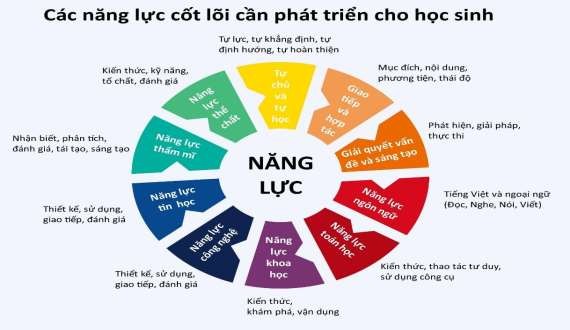
Figure 3.2. Core competencies in the 2018 general education program
Second, the curriculum is divided into two stages: The basic stage (first 9 years) with the goal of educating basic general knowledge, meeting the stream after secondary school. Therefore, the subjects are designed in a wide scope (integrating a number of subjects), less in-depth differentiation of content, less compulsory elective content; The career orientation education stage (3 years) corresponding to grades 10, 11 and 12, with the goal of differentiating career orientation. The content of the subjects, especially the learning topics, is both general and specialized in relation to post-secondary professions.
Third, the curriculum is open and interconnected. The openness of the curriculum is reflected in the openness of the content, the methods and forms of education, the decentralization of management in implementing the curriculum, the educational plan and the selection of textbooks and teaching materials. Accordingly, the curriculum only stipulates general principles and orientations on the requirements to be achieved in terms of students' PC and NL, educational content, educational methods and the assessment of educational results, without too many detailed regulations, to create conditions for textbook authors and teachers to promote initiative and creativity in implementing the curriculum. This is a new point in the direction of implementing the 2018 General Education Program compared to the current General Education Program. This new point requires teachers to truly understand the curriculum and have the skills to research and develop the curriculum.
According to author Luong Viet Thai (2018) in the summary report of the Ministry-level science and technology project on Research on the process of developing general school education programs after 2015, (B2015-37-35), the school program is developed according to the following process:
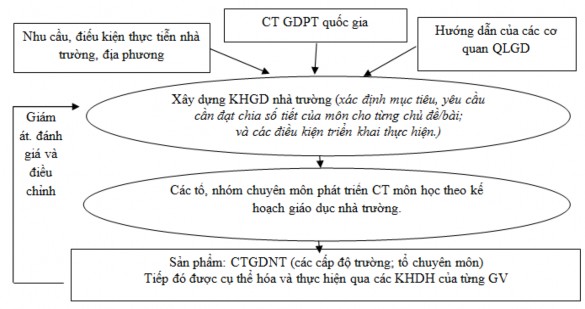
Figure 3.3. Diagram describing the process of developing school education programs
According to the process described in Figure 3.3, developing a school program includes many tasks at each level according to the function and task of the work. To build a school program requires the active participation of all managers, teachers and social forces inside and outside the school. The selected and supplemented contents will be reflected in the school education plan; the professional group plan and the teacher's personal plan.
Thus, developing school curriculum is a mandatory requirement for educational institutions implementing the 2018 General Education Program. This is a new and difficult issue for educational institutions and teachers. For a long time, teachers have had the habit of being absolutely loyal to textbooks and regulations on knowledge and skill standards in the subject curriculum without the skills to develop school curriculum and design topics to organize DHLS. Within the framework of this thesis, we propose to develop a school curriculum for History subject from the perspective of the work and tasks of teachers in preparing personal profiles, building teaching plans and organizing DHLS. In particular, the focus is on identifying and describing the requirements to be achieved and suggesting teaching organization activities for History subject topics in the 10th grade curriculum in high schools, identifying methods to organize DHLS effectively.
3.1.2. Orientation for implementing the 2018 History curriculum for high school level
According to the document "Guidelines for teaching History according to the new general education program" (Training documents for teachers and managers, Ministry of Education and Training, 2019), at high school level, History is an elective subject in the Social Sciences group. The goal of History at high school level " is to specify the goals of the General Education Program, helping students form and develop historical capacity through basic general knowledge content about world history, Southeast Asian history and Vietnamese history" . Through knowledge and lessons from history, the Program " contributes to forming and developing in students the main qualities such as patriotism, humanity, diligence, honesty, and a sense of responsibility for family, community and country" . At the same time, it contributes to the formation and development of general competencies for students (autonomy and self-study, communication and cooperation, problem solving and creativity) in the general education program through learning content and practical activities. It contributes to the development of historical competencies, a component of scientific competencies, on the basis of mastering the basic and advanced knowledge system of world, regional and Vietnamese history through a system of topics and special topics on political, economic, social, cultural and civilizational history.[5]
Based on the analysis of the CT GDPT subject of LS, we identified the internal circuits.
Content in each grade as follows:
*For grade 10, including career orientation content, topics on world history, Southeast Asia and Vietnam:
Regarding world and regional history, the 10th grade curriculum focuses on the topic of world civilization history and Southeast Asia to help students initially gain a general understanding of the main features of material and spiritual values created by humans in the course of world history.
Topics on Vietnamese history, including topics on some Vietnamese civilizations before 1858 and the cultural community of Vietnamese ethnic groups, aim to outline the main features of the cultural life, spirit and traditions of the Vietnamese people. These topics not only create a foundation for students to continue studying topics on economic, political, social and ideological development in Vietnamese history in grades 11 and 12, but also contribute to building a humanistic perspective and awareness of appreciating the material and spiritual values of human civilization in general and Vietnamese civilization in particular.
*For the 11th grade curriculum, the content includes topics on world history such as bourgeois revolutions and the development of capitalism; the formation and development of socialism, the process of national independence of Southeast Asian countries. This content helps students perceive the general features of the two basic economic-political systems that govern the development of modern world history; the common points of the colonization process and the different paths to national independence in the region on the basis of synthesizing general historical knowledge about the Southeast Asian region learned at the secondary school level.
Regarding Vietnamese history, students will learn about the War to defend the Fatherland and the war of national liberation in Vietnamese history (before the August Revolution in 1945); Some major reforms in Vietnamese history (before 1858 and some new issues compared to the current education program such as Vietnamese villages in history, the law to protect sovereignty, rights and legitimate interests of Vietnam in the East Sea.
*For the 12th grade curriculum, students will learn about world history after the Cold War, about the historical journey of ASEAN, in which the topic of the World during and after the Cold War addresses the main issues of the world situation in the second half of the 20th century and the early years of the 21st century.
On Vietnamese history refers to the basic issues of politics, economics, society, and diplomacy throughout modern Vietnamese history, including the content of the war to defend the Fatherland and the war of national liberation in Vietnamese history (from the August Revolution in 1945 to present) and the Renovation process in Vietnam from
1986 to present …
Thus, it can be seen that, compared to the current general education program, the general education program on History has changed significantly from the approach to the development of PC, NL, the perspective of building the program to the selection and arrangement of content lines. Therefore, the general education program 2018 in general, the general education program on History in particular will be implemented in the following directions:
- Organizing teaching according to the approach and development of learners' PC and NL. The requirements to be achieved by the subject are considered the output standards of the teaching organization process. To organize the implementation of the 2018 General Education Program for History, one of the mandatory requirements for educational institutions and teachers is to develop the school's educational program based on the framework program of the Ministry of Education and Training. Educational institutions and teachers need to research and analyze comprehensively and comprehensively the program combined with local economic and social conditions and the school's facilities and resources to correctly determine the position, role, and objectives of the subject, and the requirements to be achieved by the subject in conjunction with local realities.
- Increase the effective use of teaching methods and active teaching techniques to meet the requirements of learners' PC and capacity. In other words, it is to promote students' activities in the teaching process.
- Innovate testing and assessment in the direction of developing learners' PC and NL, in which, attach importance to assessing the process and assessing for learners' progress. Therefore, testing and assessing students' learning outcomes do not focus on testing the level of knowledge retention but on testing and assessing the level of completion of learning tasks throughout the learning process; testing and assessing the ability to apply knowledge into practice; the ability to analyze, evaluate, and comment on historical events and phenomena to draw historical lessons, the laws of historical development, etc.
- Strengthen career-oriented differentiated teaching through the development and selection of subject/topic combinations to organize teaching to meet the needs of learners and the practical conditions of the locality and school. At the same time, strengthen counseling and career guidance for students so that they have a correct understanding of their own motivations and learning goals in order to choose appropriate subject/topic groups.
3.2. Identify the requirements for the 10th grade history subject in high school
3.2.1. Basis for determining requirements to be met
Based on the results of theoretical and practical research on the organization of teaching by topic in general and the organization of teaching by topic in history in particular, we realize that to identify the topic and describe the indicators to specify the requirements to achieve the PC and NL of the topic specified in the curriculum plays an important role in building a teaching plan and organizing the teaching of the topics. To identify the indicators
In conjunction with the requirements to be achieved as specified in the course curriculum, the following factors must be considered:
Firstly, based on the National General Education Program (overall general education program and subject program). The National General Education Program stipulates the requirements for the qualities and abilities of each content stream in a dialectical relationship with the program's objectives and the grade level's objectives.
Second, based on the local context. This is one of the important bases for determining and describing the requirements of the topic to ensure practicality, suitability and feasibility. The local context includes the natural, economic and social characteristics of the locality; the conditions of facilities, the conditions of human resources; the educational goals, the economic and social development goals of the locality and the school. For the History subject, issues about the history of the formation and development of the locality; the events and phenomena occurring in the locality are the local education content in the history subject. These are historical figures; historical relics; local historical events, local policies and guidelines. These contents are researched, analyzed and included in teaching topics, which will contribute significantly to educating students' awareness, feelings and responsibilities towards their family, clan and homeland. Based on this factor, historical topics can be designed in the direction of starting from current issues, then going "back in time" to analyze and explain those issues through methods of information investigation, interviews, journalism, magazines, etc. This will help students have the opportunity to experience becoming historical researchers.
For example, when building topics on ancient and medieval world civilizations, we can start from the cultural achievements of ancient Vietnamese people to expand research on the time, conditions of formation and achievements of ancient and medieval mankind in each region and relate and apply them to the practical material and spiritual life in residential areas in local communities to research and identify traditional cultural elements and modern cultural elements in our modern society.
Identifying and describing the requirements of the topic based on the local context will help students have the opportunity to approach learning issues in real life, creating closeness and passion for students in exploring historical knowledge. At the same time, learning topics associated with the local context will be the basis and foundation for students to learn about the relationship between national, regional and world issues, contributing significantly to the implementation of the goal of global citizenship education in the period of integration and development.
Third, based on the ability and practical experience of teachers and the needs and capacities of students. Accordingly, history topics should be designed in a way that organizes and guides students in researching historical issues, in which it is necessary to respect subjectivity and independent thinking.
creation and creativity of teachers and students.
Thus, to describe the requirements of the topics in the subject, we need to base on three factors: the national education program, the local context and the ability and capacity of teachers and students. In which, the national general education program is the most important basis. The research results show that the above bases not only help teachers identify topics, describe the requirements of the topics in a scientific, feasible and practical way, but also help teachers enhance their capacity in building school education programs.
3.2.2. Process of determining the requirements of the topic
Determining the topic and the requirements of the topic is an important step in the process of preparing teaching topics. This task not only helps teachers prepare teaching documents; build long-term teaching plans (school year teaching plans, semester teaching plans and topic teaching plans) but also controls and determines the results of the teacher's teaching organization process. According to our research results, this task includes the following steps:
1. Analyze the entire history course curriculum and the course curriculum for each grade to clearly identify the role, position and tasks (requirements to be achieved) of the subject throughout the entire course (career orientation education stage) and in each grade.
The goal of this activity is to help teachers clearly identify the objectives (requirements to be achieved) of the subject from general to specific. That is, to identify the relationship between the program objectives, the grade objectives, and the topic objectives. This work will help teachers visualize the overall program of the subject. Based on that, teachers will identify the role, position, and tasks of each grade, each topic in the tasks and general objectives of the entire level of education.
For example, to build a 10th grade general education plan, we need to analyze the LS subject program issued by the Ministry of Education and Training to clearly identify the role, position, and subject objectives for the block/grade and in the entire program. The analysis results at this step will be an important orientation for implementing the next steps of determining the content flow and requirements to be achieved in order to specify the objectives of the general education program for the entire course and the objectives of the grade block program.
2. Analyze the grade level program to determine the main content streams as well as the requirements for each topic in each content stream.
The objective of this activity is to help teachers identify knowledge circuits and thematic systems corresponding to knowledge circuits; Identify the role and position of each topic in the 10th grade high school curriculum. To carry out this task, the research team studied the curriculum; analyzed local conditions; student subjects and abilities.
The teacher's ability to propose ways to propose topics and determine the requirements of the topic.
As a result of analyzing and researching the 10th grade History subject curriculum, we identified the following content streams:
The content of career orientation provides knowledge about history and history; the role of history is introductory to help students understand basic knowledge about history, history science; the role of history science in life and society; orientation of research methods, learning history suitable to students' needs and capabilities.
The content of world history includes two areas of knowledge: Knowledge of medieval civilization history and knowledge of industrial revolutions in world history to help students consolidate and expand the foundation of general historical knowledge formed in the basic education stage (junior high school level). Specifically
- The knowledge section on ancient and medieval civilization helps students have basic knowledge about human civilization in the ancient and medieval period, to help students present the basis for the formation and development of ancient and medieval civilizations and typical achievements of ancient and medieval civilizations.
- The knowledge about industrial revolutions in world history helps students have general knowledge about revolutions in human history such as the historical context of the revolutions; achievements of the revolutions; historical significance of the revolutions.
The content of the Southeast Asian region includes knowledge about the foundation and achievements of Southeast Asian countries.
The content of Vietnamese history includes knowledge about some civilizations in Vietnam before 1858; the community of Vietnamese ethnic groups to help students generalize the development of civilizations in Vietnam through historical periods; the community of ethnic groups in Vietnam, the material and spiritual cultural life of Vietnamese people and the tradition of national solidarity, policies to strengthen national solidarity in Vietnam.
Based on the above content circuits, we continue to research to determine the topics and describe the requirements to be achieved of the topics according to the content circuits in the program.
3. Analyze the requirements of each topic in each knowledge content of the program.
The objective of this step is to identify and describe the requirements for each topic and to plan the activities corresponding to the requirements of the topic. To carry out this step, we analyze the requirements of each topic in each content line of the subject program; analyze the local context and practical conditions of the school to identify the requirements and plan the specific content.