
LIST OF ABBREVIATIONS AND TERMS
CBQL: Education Management Officer: Education
General Education: General Education Teacher: Teacher
GVBM: Subject teacher GVCN: Homeroom teacher GD: Educational activities DN: Experiential activities HS: Students
Maybe you are interested!
-
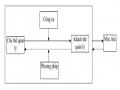
 Theoretical Basis of Managing Experiential Activities for Secondary School Students According to the New General Education Program.
 -
 Managing life skills education through experiential activities for secondary school students in Dak Glong district, Dak Nong province - 12
 -
 Managing national cultural identity education through experiential activities for students of Dai Tu secondary school for ethnic minorities, Dai Tu district, Thai Nguyen province - 2
 -
 Managing experiential activities of boarding students in high schools in the western region of Yen Bai province - 2
 -
 Managing life value education for students of Hiep Hoa district secondary school, Bac Giang province through creative experiential activities - 1
HT: Principal
NV: Staff
PHHS: Parents of students QL: Management
Secondary School: Junior High School
LIST OF TABLES AND CHARTS
Board:
Table 2.1. Conduct classification results of students at Nam Son Secondary School 36
Table 2.2. Results of academic ranking of students at Nam Son Secondary School 37
Table 2.3. Survey scale 40
Table 2.4. Meaning of average score 41
Table 2.5. Perceptions of managers and teachers on the importance of activities for
with students of Nam Son Secondary School, Bac Ninh City 42
Table 2.6. Students' awareness of the importance of extracurricular activities at Nam Son Secondary School, Bac Ninh City 45
Table 2.7. Evaluation of managers and teachers on the content of the activities for students at Nam Son Secondary School, Bac Ninh City 47
Table 2.8. Evaluation results of managers and teachers on forms of training activities
of students of Nam Son Secondary School, Bac Ninh city 50
Table 2.9. Student evaluation results on forms of extracurricular activities at Nam Son Secondary School, Bac Ninh City 53
Table 2.10. Evaluation results of managers and teachers on the effectiveness of the training activities
Students of Nam Son Secondary School, Bac Ninh City 55
Table 2.11. Student evaluation results on the effectiveness of the activities at Nam Son Secondary School, Bac Ninh City 57
Table 2.12. Results of evaluating the management of the objectives of experiential activities at Nam Son Secondary School, Bac Ninh City 59
Table 2.13. Evaluation results of managers and teachers on content management of activities at Nam Son Secondary School, Bac Ninh city 61
Table 2.14. Evaluation results of managers and teachers on content management of activities at Nam Son Secondary School, Bac Ninh city 64
Table 2.15. Evaluation results of managers and teachers on management, inspection and assessment
price of HĐTN at Nam Son Secondary School, Bac Ninh city 66
Table 2.16. Results of evaluating factors affecting the management of learning activities at Nam Son Secondary School, Bac Ninh city according to the definition
new general education program direction 68
Table 3.1. Survey results on the urgency of measures to manage student activities at Nam Son Secondary School, Bac Ninh City 91
Table 3.2. Results of survey on feasibility of measures to manage HĐTN
of students of Nam Son Secondary School, Bac Ninh City 92
Chart:
Chart 2.1: Chart comparing the conduct classification of students at Nam Son Secondary School, Bac Ninh city, period 2017-2019. 37
Chart 2.2: Chart comparing academic performance of students at Nam Son Secondary School, Bac Ninh city, period 2017-2019. 38
Chart 2.3: Results of the average score of the perception of managers, teachers and students on the importance of extracurricular activities for students at Nam Son Secondary School, Bac Ninh City 46
Chart 2.4: Results of the average score assessment of managers, teachers and students on the forms of non-teaching activities at Nam Son Secondary School, Thanh Hoa city.
Bac Ninh Street 54
Chart 2.5: Results of the average score assessment of managers, teachers and students on the effectiveness of forms of practical activities at secondary schools
Nam Son, Bac Ninh city 58
INTRODUCTION
1. Reason for choosing the topic
Experiential activities (EX) are one of the methods to develop practical capacity, consolidate knowledge in practical subjects, form, promote, and improve students' ways of cooperation and communication in society. EXPERIENCE ACTIVITIES can be effective when they really stimulate learners' passion, creativity, and proactive participation in the activities.
In Resolution No. 29-NQ/TW dated November 4, 2013, the 8th Central Conference, Session XI, on fundamental and comprehensive innovation of education and training stated the goal of creating fundamental and strong changes in the quality and effectiveness of education and training; Educating Vietnamese people to develop comprehensively and best promote the potential and creativity of each individual. [4]
Therefore, in 2015, the Prime Minister issued Decision No. 404 dated March 27, 2015 on approving the Project on innovation of general education programs and textbooks. According to the Draft Project on innovation of general education programs and textbooks after 2015, it is stated: “Experiential activities are essentially educational activities aimed at forming and developing students' moral qualities, will, emotions, values, life skills and necessary human capacities in modern society. Experiential activities are practical educational activities carried out in parallel with teaching and learning activities in general schools. Experiential activities are one of the methods to supplement and support teaching and learning activities. In practical activities, students consolidate the knowledge they have learned in subjects through practical activities, specific tasks and student actions. These are purposeful, organized educational activities carried out inside or outside of school to develop and nurture students' sense of independence, forming cooperation and collaboration in learning and social communication. [2]
With the Youth Activity Program in the basic education stage, it focuses on forming personality qualities, habits, and basic life skills: actively participating, designing, and organizing activities; knowing how to live positively, discovering oneself, adjusting oneself; knowing how to organize life and knowing how to work with a plan and responsibility. In particular, at this stage, each student also begins to identify their abilities, strengths, and prepare some basic abilities for future workers and responsible citizens. When students are active and experience discovery on their own, they will master life skills that are extremely important in their studies and in their own lives. When performing youth activity, junior high school students are often enthusiastic and have many interesting things, so it requires educators to be flexible, skillful, and engaging in activities, promoting the spirit of independence, collectiveness, and discipline. Therefore, it can be said that the Youth Union holds a particularly important position in the process of personality training, forming qualities and abilities for students; the Youth Union has contributed to making adjustments and having highly effective educational activity orientations.
In recent years, the Department of Education and Training of Bac Ninh city has directed schools in Bac Ninh city to manage experiential activities according to the orientation of the new general education program. Nam Son Secondary School, Bac Ninh city has carried out experiential activities and achieved certain results, but there are still certain shortcomings and weaknesses. The implementation method is not scientific, there are not enough measures, the quality of experiential activities is not effective. Therefore, the author himself, a manager at Nam Son Secondary School, Bac Ninh city, has researched and directed teachers in the school to soon form measures to manage experiential activities to improve the quality of experiential activities in the school. For the above reasons, the author chose
Research topic: "Managing experiential activities of students at Nam Son Secondary School, Bac Ninh City according to the orientation of the new general education program" .
2. Research purpose
Based on theoretical research and the current status of implementing experiential activities at Nam Son Secondary School, Bac Ninh city, propose measures to manage experiential activities according to the orientation of the new general education program.
3. Research subjects and objects
3.1. Research object
Experiential activities in secondary schools according to the new general education program.
3.2. Research subjects
Managing experiential activities at Nam Son Secondary School, Bac Ninh city according to the new general education program.
4. Research questions
What management measures are needed to successfully implement experiential activities according to the new general education program at Nam Son Secondary School, Bac Ninh City?
5. Scientific hypothesis
To effectively manage experiential activities at Nam Son Secondary School, Bac Ninh City, it is necessary to have management measures in the following direction: The content of experiential activities is closely linked and compatible with the content of the subjects being implemented, contributing to consolidating the knowledge learned in the subjects. There is consensus between the school, parents, and the community to mobilize resources to implement experiential activities. The teaching staff must have the knowledge and skills to implement experiential activities in the spirit of the educational program.
New general education program. Promoting the active and proactive role of students in extracurricular activities in the spirit of the new general education program.
6. Research tasks
To achieve the above research objectives, the thesis focuses on implementing the following research tasks:
6.1. Research on theoretical basis of managing experiential activities for secondary school students according to the orientation of the new general education program;
6.2. Survey, analyze, and evaluate the current status of experiential activity management for students at Nam Son Secondary School, Bac Ninh city;
6.3. Proposing solutions for managing experiential activities at Nam Son Secondary School, Bac Ninh city according to the orientation of the new general education program.
7. Limitation of research scope
- Experiential activities according to the new general education program include experiential activities in subjects according to the education program and experiential activities outside of school hours. In the topic, the author mentions experiential activities outside of school hours as an independent activity.
- Duration 02 years, school year 2017-2018; school year 2018-2019.
8. Research methods
8.1. Theoretical research method
The thesis conducts research on theoretical issues related to the topic, besides studying directives, resolutions, documents of the Party and State, of the Education and Training sector on principal management of the teaching and learning process in schools, especially at the secondary level; referencing, collecting and analyzing scientific documents in books, newspapers, and the Internet related to the research issue.
8.2. Practical research methods
8.2.1. Observation
The author uses the observation method in the research, focusing on the activities of teachers and students to understand the current situation, implementation, effects of experiential activities, students' interest in participating in experiential activities, thereby discovering the causes of the research situation.
8.2.2. Direct interviews with principals, teachers and students
Talk to staff, teachers, and students to learn about the content, organization methods, and student interests when participating in experiential activities.
8.2.2. Questionnaire survey
Conduct a survey using a questionnaire with questions for managers, teachers and students to collect information on the current status of managing HĐTN in secondary schools in the area in the current period.
8.2.3. Get expert opinion
Used to consult experts on the urgency and feasibility of measures to manage HĐTN at school when the author proposes measures.
8.3. Complementary research methods
The thesis has collected data, created tables and used mathematical formulas to quantitatively analyze the surveyed data; in addition, it uses drawings, charts and diagrams to demonstrate the results of collected and analyzed data.
9. Contributions of the topic
The thesis contributes to systematizing the theoretical basis of managing scientific research activities in secondary schools according to the orientation of the new general education program.
The research results have pointed out the limitations and challenges in implementing the new general education program at Nam Son Secondary School and proposed management measures to overcome those limitations.