
Besides natural landscapes, Quang Ninh is also rich in human tourism resources. Currently, Quang Ninh owns more than 600 historical relics.
- culture of all kinds. Among them, there are relics - scenic spots ranked as special national relics with exploitation value for tourism development such as: Yen Tu historical relic and scenic spot, Bach Dang historical relic and Tran Dynasty historical and cultural relic site in Dong Trieu, especially Yen Tu relic site is one of the highlights of spiritual cultural tourism. Every year, during the festival season, this destination attracts about 2 million visitors. In addition to Yen Tu relic site, other famous historical and cultural relics such as: Cua Ong Temple (Cam Pha City), Long Tien Pagoda, Duc Ong Tran Quoc Nghien Temple (Ha Long City), Cai Bau Pagoda - Truc Lam Giac Tam Zen Monastery (Van Don) ... are also places that attract tourists from all over the world to visit.
2.1.2. Types of tourism that have been and are being exploited in Quang Ninh
Quang Ninh is known as a tourism locomotive of the North. In recent years, Quang Ninh tourism has developed spectacularly, growing rapidly in the number of visitors and revenue; the image of Quang Ninh tourism is increasingly introduced and widely promoted... And Quang Ninh is likened to a miniature Vietnam with many types of tourism being exploited:
MICE tourism: With the advantage of beautiful natural landscapes, especially the world heritage and natural wonder of Ha Long Bay, in addition, the tourism infrastructure in Quang Ninh is quite developed, in terms of accommodation alone, the province has nearly
Maybe you are interested!
-

 For Exploiting Types of Tourism
 -
 Classification of the Convenience of 3 Types of Tourism
 -
 Medical Service Projects, Health Care
 -
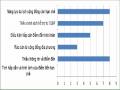 Types of Sea and Island Tourism Products Preferred by Tourists
 -
 Physical Health Care for Workers
1,000 1-5 star establishments, including 14 4-star hotels and 3 5-star hotels. In fact, in recent years, the number of MICE tours brought to Ha Long by domestic and international travel agencies has increased, opening up new prospects for attracting tourists in Quang Ninh. The clearest evidence is that in recent times, many high-level national and international conferences and seminars, cultural, sports and tourism events have been successfully organized in Ha Long. Typical examples include Tuan Chau International Entertainment and Tourism Area, hotels: Saigon - Ha Long, Novotel Ha Long, Plaza Ha Long, Grand Ha Long... These are hotels with closed services, from accommodation systems, event organization capabilities with halls that meet international conference standards.
Community tourism: The People's Committee of Quang Ninh province has just agreed to select 9 points for community tourism development in the period of 2020 - 2025 and support contents according to the proposal of the Project on Sustainable Community Tourism Development in Quang Ninh until 2025. It is expected that the investment capital demand for community tourism development in the period of 2020 - 2025 of Quang Ninh province is over 9,800 billion VND,
The 2026-2030 period is 11,500 billion VND. This investment capital is mobilized from the provincial budget, local budgets and socialization. In fact, some localities such as Dong Trieu, Van Don, Binh Lieu, Ba Che... have had community tourism models, but they are still fragmented, unsustainable, and have not been invested in or oriented for development commensurate with their potential. Director of the Department of Tourism of Quang Ninh province Pham Ngoc Thuy said that from now until 2022, Quang Ninh plans to build 3 pilot models of community tourism including: Dao cultural conservation area in Son Hai village, Nam Son commune (Ba Che district); Tay ethnic cultural village in Ban Cau village, Luc Hon commune (Binh Lieu) and agricultural community tourism site in Tien An commune (Quang Yen).
Sea and island tourism: Sea and island tourism in Quang Ninh is increasingly occupying an important position, attracting domestic and foreign tourists. Of the total of more than 8 million tourists coming to Quang Ninh each year, about 70% of tourists participate in sea and island tours. This shows that sea and island tourism is increasingly asserting itself as one of the potential marine economic sectors. Quang Ninh has 50% of its area being sea and islands with more than 2,000 islands, accounting for 2/3 of the total number of islands in the country. Along with that, over 250km of coastline has created many famous coastlines and beautiful beaches in the country for Quang Ninh. This is an invaluable resource for Quang Ninh to promote its strengths in sea tourism. One of the main highlights of sea tourism in Quang Ninh that every tourist coming to Quang Ninh cannot miss is the tourist center of Ha Long City, which owns Ha Long Bay - a world heritage and natural wonder. Another strength of Quang Ninh island tourism that cannot be ignored is Van Don and Co To island districts. These will be two high-quality island eco-tourism centers in the future that are being invested in and built. These two island districts, in addition to their poetic beauty, also possess many beautiful beaches, such as: Quan Lan, Minh Chau, Ngoc Vung (Van Don), Van Chay, Hong Van, Thanh Lan, Co To... It is worth mentioning that in the island areas of Quang Ninh, there are also extremely rich seafood resources. Quang Ninh is famous for its delicious seafood dishes, such as: shrimp, crab, squid, geoduck, oysters... Along with the above strengths, Quang Ninh island tourism also has a special attraction for international cruise tourism. This has been clearly demonstrated, in recent times many large international cruise lines, such as Star Cruises, Costa Crociere, Nautica, Seaborn, Legend of the sea and Azmara, Aurora, Sun Princess etc. have chosen Ha Long as a destination to bring tourists to visit. Every year, during the international cruise tourist season (from October to April), Ha Long is bustling with ships bringing thousands of international tourists to visit.
Festival and spiritual cultural tourism: In recent years, cultural resources have contributed to the development of festival and spiritual tourism activities in Quang Ninh. Quang Ninh's cultural heritages stretch from Dong Trieu to Mong Cai, to islands far from the mainland such as: Co To, Quan Lan - Minh Chau, Ngoc Vung... Currently, Quang Ninh is preserving 625 historical and cultural relics and scenic spots. Including Ha Long Bay twice recognized by UNESCO as a World Natural Heritage, 60 relics ranked at national level, 47 relics ranked at provincial level... Cultural and festival tourism, Quang Ninh currently has about 70 festivals held annually, mainly focusing on traditional folk festivals, held from January to March of the lunar calendar, with the characteristics of each region such as: Cua Ong Temple Festival (Cam Pha), Yen Tu Festival (Uong Bi), Tien Cong Festival (Yen Hung), Tra Co Communal House Festival (Mong Cai), Quan Lan Communal House Festival (Van Don)... Spiritual and cultural tourism, Quang Ninh has 4 key relic sites: Yen Tu scenic relic site (Uong Bi city), Tran Kings' tomb relic site (Dong Trieu district), Bai Coc Bach Dang relic site (Yen Hung district), Van Don relic site (Van Don district). In addition, there are many other typical relics such as: Cua Ong Temple, Tra Co Communal House, Quan Lan Communal House, Cai Bau Pagoda - Truc Lam Giac Tam Zen Monastery, Long Tien Pagoda...
Border tourism: With the advantage of having both land and sea borders with China, in recent years, Quang Ninh has focused on comprehensive development of economy, culture, and trade with Guangxi Province (China), including tourism development activities between the two sides. With 132 km of border with Guangxi Province (China), Quang Ninh has attracted a large number of tourists from China. In addition, Quang Ninh has 3 border gates: Mong Cai Border Gate (Mong Cai City), Hoanh Mo Border Gate (Binh Lieu District), Bac Phong Sinh Border Gate (Hai Ha District), which have helped trade and tourism activities in the border area develop more and more vigorously. In recent years, Quang Ninh Province (Vietnam) and Guangxi Province (China) have developed comprehensive cooperation and exchange in many aspects, including tourism. With inherent potential and advantages for tourism development, the two sides have promoted cooperation in tourism development and achieved many important achievements. According to the Department of Tourism, Chinese tourists to Quang Ninh account for ¼ of the total number of Chinese tourists to Vietnam, accounting for about 40% of international visitors to Quang Ninh. In the past 5 years, the number of Chinese visitors has grown at an average rate of 126.5% per year. On average, Mong Cai border gate welcomes over 300,000 Chinese visitors per year. Currently, Chinese tourists account for an important market share in the total number of international tourists.
of Quang Ninh. In 2016 alone, the total number of tourists to Quang Ninh reached more than 8.3 million, the total number of international visitors reached approximately 1.9 million, of which Chinese visitors accounted for 24% of international visitors staying in Quang Ninh, ranking first among the leading international visitor markets of the province. Among ASEAN countries, Vietnam is the second largest destination for Chinese tourists after Thailand. China is also a tourist destination that Vietnam and Quang Ninh people prioritize to travel. In 2016, 2.2 million Vietnamese people traveled to China, ranking first among ASEAN countries, every day there were about 1,000 Vietnamese people passing through Mong Cai - Dong Hung border gate for sightseeing combined with trade.
Culinary tourism: Quang Ninh cuisine is rich and diverse with a variety of dishes from the forest and the sea. Creativity and a lifestyle suitable to natural conditions have created a unique and regional cuisine for Quang Ninh cuisine. For people whose lives are closely linked to the sea, most of their dishes are made from seafood. Binh Lieu, Ba Che, Dam Ha, and Tien Yen are mountainous areas, and the people here have created their own culinary style closely linked to nature. These are dishes made from river and stream products such as: stream fish wrapped in betel leaves, snails cooked with bong; dishes exploited from the forest such as grilled betel leaves with ant eggs, stir-fried ant eggs with sticky rice, wild spinach soup of the Tay and San Chi ethnic groups... In addition, there are corn wine, potato wine, yeast wine, sim wine, purple ba kich wine (Ba Che, Tien Yen) that enchant visitors. Talking about Quang Ninh cuisine, it is impossible not to mention dishes made from cereals, especially cakes of ethnic groups such as Quang Yen gio cake; mugwort cake of Binh Lieu, Ba Che, Hai Ha, Dam Ha, Tien Yen, Mong Cai regions; Tai Long Ep cake of the San Diu people; round sticky rice cake, humpbacked square sticky rice cake of the Tay and San Chi ethnic groups... In recent years, Quang Ninh is the first locality in the country to focus on directing the construction of traditional culinary brands, typical of the locality associated with the One Commune, One Ward Product (OCOP) program. Up to now, Quang Ninh has many products that are loved by tourists, especially those in the culinary group such as Dong Trieu yellow sticky rice, Mong Cai pig, Tien Yen chicken, Van Don sea worms, Co To squid, Ha Long squid rolls, Binh Lieu vermicelli, Morinda officinalis wine, Ba Che yellow flower tea... Quang Ninh also implements many activities and events to exploit culinary values such as the Quang Ninh expanded culinary fair, culinary week, seminars, workshops, and the Good Chef Competition... to widely promote the value of culinary culture, attract the participation of tourists, help visitors have more time to experience, learn and spend more.
With many diverse types of tourism being exploited as mentioned above, the presence of new types of tourism such as health care tourism will certainly bring a lot of potential and help Quang Ninh tourism take off even more.
2.1.3. Current status of tourism exploitation in Quang Ninh recently
With advantages in tourism resources and effective policies for tourism development and support, recent years have marked impressive growth in Quang Ninh tourism. In 2018, the total number of tourists reached 12.2 million, up 24% over the same period in 2017, and total revenue from tourists to Quang Ninh was estimated at 23.6 trillion VND, up 28.1% over the same period in 2017.
In 2019, the total number of tourists to Quang Ninh reached over 14 million, an increase of 14% compared to 2018, revenue from tourists reached 29,487 billion VND, an increase of 25% compared to 2018.
In 2020, due to the severe impact of the Covid-19 pandemic, the total number of tourists to Quang Ninh in 2020 is estimated at 8.8 million, down 36.8% compared to 2019, total revenue from tourism is estimated at over 17,000 billion, down 42.34% compared to 2019.
As of 2021, despite being heavily impacted by the Covid-19 pandemic, Quang Ninh Province has 1,633 ranked tourist accommodation establishments with 32,451 rooms (including 11 5-star hotels with 3,461 rooms, 20 4-star hotels with 3,247 rooms).
rooms, 1 4-star luxury apartment with 156 rooms, 40 3-star hotels with 2,546 rooms,
90 2-star hotels with 2,848 rooms, 123 1-star hotels with 2,229 rooms, 120 hotels meeting minimum standards with 5,808 rooms, 879 tourist motels with 8,904 rooms, 174 homestays with 1,098 rooms, 81 2-star tourist accommodation ships with 1,340 rooms, 94 1-star tourist accommodation ships with 814 rooms). Quang Ninh's tourism products are focusing on developing 4 main product lines including sea and island tourism, spiritual and cultural tourism, community tourism and border tourism.
It can be said that in the context of the tourism industry being seriously affected and damaged by the Covid-19 pandemic, Quang Ninh is one of the rare localities that still develops tourism at a moderate level. However, besides the challenges, the epidemic context is also opening up new opportunities for tourism in Quang Ninh province in exploiting a type of tourism with great potential such as health care tourism. The problem is how to effectively exploit the orientation and solutions that need to be researched and proposed to suit the characteristics of the province in particular as well as the current situation in general, and that is also the research purpose of this topic.
2.2. Potential and conditions for exploiting health care tourism in Quang Ninh
2.2.1. Exploitation potential
2.2.1.1 Potential exploitation from geographical location
Quang Ninh is a province in the northeastern tip of Vietnam, with its back against the mountains and forests to the west, its east sloping down to the first half of the Gulf of Tonkin with a winding coastline with many river mouths, and a 250km long coastline.
Quang Ninh has geographical coordinates of about 106 o 26' to 108 o 31' east longitude and from 20 o 40' to 21 o 40' north latitude; the width from east to west, the widest place is 195km; the length from north to south is about 102km. The northernmost point of Quang Ninh is the high mountain range in Mo Toong village, Hoanh Mo commune, Binh Lieu district; the southernmost point is Ha Mai island in Ngoc Vung commune, Van Don district; the westernmost point is Vang Chua river in Binh Duong commune and Nguyen Hue commune, Dong Trieu town; the easternmost point on the mainland is Got cape in the northeast of Tra Co commune, Mong Cai city.
Quang Ninh has a national border and maritime border with the People's Republic of China. On land, the north of the province (including Binh Lieu, Hai Ha districts and Mong Cai city) borders Phong Thanh district and Dong Hung town, Guangxi province with 132.8km of border; the east is Bac Bo Gulf; the west borders Lang Son, Bac Giang, Hai Duong provinces; the south borders Hai Phong.
Thus, with the above favorable geographical location, Quang Ninh allows to welcome a large number of domestic tourists in the province and neighboring provinces and cities such as Hanoi, Hai Phong, Hai Duong, Thai Binh..., and is also a place to attract a large number of Chinese tourists from international border gates - and this is a potential tourist market with high spending ability.
2.2.1.2. Potential for exploitation of natural tourism resources and tourism resources
humanities
+ Landscape and Terrain: First of all, Quang Ninh is extremely favored by nature with a diverse landscape of plains, islands, mountains and forests. Quang Ninh is a mountainous and coastal province: more than 80% of the land is hills and mountains. More than two thousand islands floating on the sea are also mountains.
Regarding mountainous terrain, for a long time, the Dong Trieu mountain range with Yen Tu peak (1,068m high) on Uong Bi land and Am Vap peak (1,094m high) on Hoanh Bo land have become famous places attracting tourists to come here to experience the
Types of tourism such as Trekking, Sightseeing, Resorts and spiritual tourism (associated with the origin of the Truc Lam Yen Tu Zen sect).
The sea and islands of Quang Ninh are a unique terrain. More than two thousand islands account for more than two-thirds of the total number of islands in the country (2078/2779), the islands stretch along the coastline for more than 250km, divided into many layers. There are very large islands such as Cai Bau and Ban Sen, while others are just like miniature mountains. There are two districts that are completely islands, Van Don and Co To. In Ha Long and Bai Tu Long bays, there are thousands of limestone islands, originally karst terrain, eroded by water, creating thousands of shapes on the outside and fascinating caves inside.
In addition to alluvial flats, the coastal and island areas of Quang Ninh also have white sand beaches washed up by the waves. Some places have become white sand mines as raw materials for the glass industry (Van Hai), and some places have become wonderful beaches (such as Tra Co, Quan Lan, Minh Chau, Ngoc Vung...).
The terrain of the seabed in Quang Ninh is uneven, with an average depth of 20m. There are deep channels that are relics of ancient currents and reefs that are home to a wide variety of coral reefs. Current currents connecting to deep channels on the seabed also create a series of channels and ports on the winding coastline sheltered by the island corridors, creating a huge potential for seaports and waterways.
It is the diverse landscapes and terrains as above that have created the endless attraction of tourism in Quang Ninh province and are a potential that is extremely suitable for health care tourism - a place where tourists always want to return to the vast landscape or the majesty of nature, away from the dust, urban noise and the worries of industrial life in the city.
+ Climate:
Quang Ninh is located in a tropical climate zone with a hot, humid summer and a lot of rain; a cold, less rainy winter and the hot, humid tropical climate is the most dominant. Because it is located in the tropical belt, the sun passes through the zenith twice a year, the potential for radiation and temperature is very rich. Influenced by the Southeast Asian monsoon circulation, the climate is divided into two seasons: hot, humid summer with rainy season, cold winter with dry season.
It can be said that Quang Ninh's climate is both typical of the climate of the northern provinces of Vietnam and has its own characteristics of a coastal mountainous province; the archipelagos in Co To and Van Don districts... have characteristics of an oceanic climate; the mountainous regions always have a temperate climate.
The climate is milder and cooler than the plains and neighboring provinces. Regarding temperature: it is determined to have cold winters, with an average stable air temperature below 20 degrees Celsius. The hot season has an average stable temperature above 25 degrees Celsius . Therefore, this is also a climate environment suitable for the needs of relaxation and health care of tourists.
+ Human tourism resources
When tourists participate in a health care tour program, in addition to putting health goals first, enjoying cultural values and enjoying related services is also one of the indispensable contents. What could be more wonderful than resting, recovering health and refreshing yourself while experiencing scenic spots, typical dishes and being aware of new lands, unique and attractive customs and practices of the local residents where you go? And Quang Ninh is a locality with a high density of humanistic tourism resources in the country, while also being diverse in many types, able to meet the needs of many different groups of visitors. Specifically, with more than 600 historical and cultural relics and scenic spots of the province, there are many relics that have become attractive tourist destinations attracting a large number of visitors every year. Taking advantage of this advantage, Quang Ninh has developed spiritual tourism with a series of typical relics and scenic spots: Tran Dynasty historical relics (Dong Trieu town), Yen Tu relic and scenic complex, Ba Vang pagoda (Uong Bi city), Loi Am pagoda and Long Tien pagoda (Ha Long city), Cua Ong temple (Cam Pha city), Cai Bau pagoda (Van Don district)... According to the report of the Department of Tourism, currently about 120 relics and heritages are located in the tour destinations and fixed tourist routes of Quang Ninh, including relics that have been selected by travel agencies to design many separate products, packages to put into exploitation or put into exploitation in combination with other types of tourism. On the occasion of Lunar New Year every year (from the 1st to the 6th of the first lunar month), Quang Ninh welcomes about 700,000 - 1 million tourists, of which 70% are tourists present at the relics and heritages in the area. Below, the author would like to list some typical human tourism resources that can be combined with year-round health care tourism:
- Festivals: Quang Ninh has a year-round festival system with many unique and famous festivals such as: Yen Tu Festival (January 10 to the end of March of the lunar calendar); Tra Co Communal House Festival (June 1); Bach Dang Festival (March 7 to 9); Cua Ong Temple Festival (March 3 and 4); Ba Men Temple Festival (January 19 and 20); My Son Village Communal House Festival (January 16).