
LIST OF IMAGES
Page
Figure 2.1 Mackerel 3
Figure 2.2 Jackfruit wood used for smoking products 7
Figure 3.1 General flow chart of product 16 production
Figure 3.2 Experimental procedure 1 20
Figure 3.3 Experiment 2 procedure 21
Figure 3.4 Experimental procedure 3 23
Figure 3.5 Experimental procedure 4 25
Figure 4.1: Effect of salt (%) and sugar (%) ratio on product sensory evaluation score 30
Figure 4.2: Effect of salt (%) and sugar (%) ratio on product moisture reduction 32
Figure 4.3: Effect of sterilization temperature ( o C) on sensory changes
Product 34
Figure 4.4: Effect of smoking time (minutes) on sensory changes of the product 38
Figure 4.5: Effect of smoking time (minutes) on product moisture reduction 39
Figure 4.6: Complete smoked mackerel production process flow chart 45
Figure 4.7: Smoked, pasteurized, seasoned mackerel product 45
PART I: PROBLEM STATEMENT
1.1 Problem statement
Vietnam is one of the countries with great potential for seafood, reflected in the long coastline from North to South, and is blessed by nature with a dense river system. Therefore, Vietnam's seafood output is very rich. Especially in the Mekong Delta, freshwater fish are mainly concentrated. However, besides freshwater fish, saltwater fish are also developing equally. Among the saltwater fish, mackerel is a fish that also accounts for a large output, and is easy to catch in coastal provinces of Vietnam. Mackerel is considered a popular food in people's daily meals. The fish has delicious meat quality, can be processed into many dishes, and is a fish of high value. However, this fish has not been studied much, and research materials are limited.
Nowadays, with the advancement of science and technology, people around the world tend to consume more and more processed fish products along with other nutritious foods. In particular, a method that has both preservation and processing effects to create new products is the smoking method. Smoked fish is a popular product in Europe, Africa, America but not popular in Asia in general and in Vietnam in particular.
To contribute to increasing the economic value as well as the usage value of mackerel, diversifying mackerel products on the market, introducing a completely new smoked product compared to previous smoked products, that is, after making the product, consumers can use both the meat and the bones of the fish, thereby creating a product suitable for the taste of consumers, meeting food hygiene and safety requirements, this is also the reason why the topic " Research on the production process of pasteurized smoked mackerel products " was researched.
1.2 Research objectives of the topic
The aim is to produce products that suit consumers' tastes, thereby increasing the usage value as well as the economic value of mackerel, and at the same time diversifying mackerel products on the market.
1.3 Research content
Investigating the influence of salt (%) : sugar (%) ratio in the process of salting spices on the sensory value and quality of smoked products.
Investigation of the effect of sterilization temperature ( oC ) on the sensory value and quality of smoked products.
Investigate the effect of smoking time (minutes) on the sensory value and quality of smoked products.
Investigate the effect of storage time on the quality of smoked products.
1.4 Project implementation time
From January to May 2012.
PART II: LITERATURE REVIEW
2.1 General overview of mackerel raw materials
There are two main types of mackerel ( Decapterus ): common mackerel ( Decapterus maruadsi ) and elongated mackerel ( Decapterus lajang ).
Accessed December 22, 2011. [13]
- According to the classification system, mackerel are classified as follows: Kingdom: Animalia
Industry: Chordata
Class: Actinopterygii
Order: Perciformes
Family: Carangidae
Genus: Decapterus
Species: Decapterus maruadsi
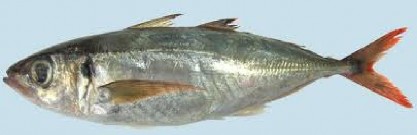
Figure 2.1: Mackerel
- English name: Round Sacd
- Other names: Mackerel, mackerel
This is a fish species with nutritional and economic value, commonly exploited in many places around the world.
Mackerel products are very diverse such as: canned food, fish cakes, dried food, daily dishes.
Mackerel is characterized by a nearly circular cross-section, slightly flattened on the sides, and a small size, sometimes up to 40 cm long. The fish has a secondary fin located behind the second fin and the anal fin. The breeding season is from February to May every year. It is a fish species that lives in schools, mainly concentrated in the Gulf of Tonkin, the central sea and
East, Southwest. Is an important source of raw materials for fishermen during the year-round fishing season.
Table 2.1 Chemical composition of mackerel.
STT
Chemical composition | Content % | |
1 | Water | 70-80% |
2 | Protein | 16-21% |
3 | Lipids | 0.5-10% |
4 | Mineral | 1-2% |
Maybe you are interested!
-

 Cultivation and Production Process of Special Rare Weasel Coffee
 -
 Research on some solutions to improve the quality of human resources at Khanh An Preschool Education Equipment Production and Trading Company Limited - 1
 -
 Research on determining varieties and some technical measures to increase productivity and economic efficiency in tomato production in the Red River Delta - 1
 -
 Research Works Related to the Current Status of Transformation of Socialist Production Relations in the Renovation Period in Vietnam
 -
 Logistics Activities in the Production Process
In addition, fish also contains vitamins, pigments, enzymes, etc. The chemical composition also depends on the species, environment, and age. Differences in chemical composition also affect the taste and nutritional value of the product. [7]
2.2 Overview of additives.
2.2.1 Refined salt NaCl
Table salt is mainly composed of NaCl, which is added to food to flavor the product, inhibit microorganisms, and partially separate water from the ingredients. This prolongs the product's shelf life. [10]
2.2.2 Road
In the processing of canned products, people often add sugar to enhance flavor, increase the sensory value and nutritional value of the product. Sugar added to the product must meet the correct standards, usually using RE type sucrose. [10]
2.2.3 Monosodium glutamate
MSG plays an important role in food processing, creating a sweet taste like meat. Therefore, it is used to increase the sweetness of the product. [10]
2.2.4 Pepper powder
Pepper powder is used in food processing to create a spicy, aromatic flavor thanks to the compounds piperine and chavixin, which increase the sensory properties of food and partly have the ability to inhibit microorganisms.
2.2.5 Garlic
In food processing, garlic contributes to the flavor of the product. Garlic contains iodine and essential oils, the main component of garlic essential oil is allicin C 6 H 10 OS 2 , an antibiotic with very strong antibacterial effects.
2.2.6 Chili
Chili is a herbaceous plant of the Solanaceae family. The spicy substance in chili is capsicum. Chili is used as a spice to create a spicy taste, add color, and remove fishy odors from food. [15]
2.3 Overview of smoked products
Smoking is a processing method that has existed for a long time and is widely developed in many countries, especially in Europe. The characteristic of smoked products is good preservation because the smoke has anti-rotting and anti-oxidation effects. The anti-oxidant substances in smoke are mainly phenol and its derivatives.
Smoked products have a very special color and flavor: fragrant and deep yellow. The formation of color and flavor is due to the complex synthesis of many substances left for the senses. Currently, people have found more than 200 different substances in smoke.
There are 2 smoking methods: cold smoking and hot smoking. Cold smoking at temperatures below 40 0 C, hot smoking above 40 0 C can reach up to 170 0 C. Cold smoked products are salted in advance, the smoking time lasts up to 5 days and nights, the salt content of the product is from 7-15%, humidity from 45-55%, has a tight, dry texture; meanwhile hot smoking lasts about 5 hours, the salt content in the product is below 4%, humidity from 60-70% and has a soft texture.
Smoked meats such as pork belly, ham, sausage, etc. produced by domestic food brands such as Duc Viet, Vissan, Ong Gia IKA, etc. are mainly available in supermarkets. Vietnamese people are also gradually trying and accepting the taste of smoked products. [7]
2.4 Processes affecting the processing
2.4.1 Raw materials
Raw materials that are not fresh will undergo auto-oxidation and will greatly affect the sensory value and quality of the product.
2.4.2 Spice soaking process
- Inhibits autolysis of enzymes and bacteria.
- High concentrations of salt and sugar cause high osmotic pressure that can rupture bacterial cell membranes.
- Create flavor for the product and preserve the product.
2.4.2.1 Diffusion and osmosis of salt, sugar and spices
Diffusion; is the equalization of the concentration of a substance within a given range. Molecules move from areas of high concentration to areas of low concentration.
Osmosis: is the process of movement of solute particles, overcoming the resistance of a semi-permeable membrane to move from a solution of low concentration to a solution of high concentration.
2.4.2.2 Exchange of salt and water during fish seasoning process
During the process of salting fish, under the effect of diffusion and osmosis, water in the raw material will go out and salt will penetrate into the fish body, changing the mass of the raw material.
2.4.2.3 Factors affecting the speed of seasoning
+ Effects of seasoning method
In general, the salting speed of the spice marinade and mixed spice marinade methods is slower than that of the spice marinade in solution.
+ Effect of spice concentration and marinating time
The more salt in dry brine or the stronger the brine concentration in wet brine, the faster the rate.
+ Effect of raw materials
This factor greatly affects the speed of salting. To reduce the salting time, people tattoo small holes on the fish skin to better absorb the salting solution.
2.4.3 Smoking process
2.4.3.1 Purpose of the smoking process
It is to develop the characteristic smell of the product, increase the ability to preserve and resist oxidation, and create new products. The smoking process contributes to the richness of products such as meat and fish... and also gives natural color to the product.
2.4.3.2 Smoked ingredients
Smoking fuel is usually wood, when burned it produces smoke for smoking and heat. The type of fuel determines the composition of the smoke, so choosing the fuel is also a very important issue. However, fuel should not use wood with a lot of resin because their smoke will make the product bitter, dark in color, reducing the value of the product.
Jackfruit wood is commonly used. Hardwoods produce the best smoke, softwoods such as pine are not used. Different fuels produce very different smoke compositions due to complex reactions depending on fuel composition and raw material composition.
Jackfruit wood is a type of wood with stable physical properties, does not warp, and is less susceptible to termites. The wood is light yellow, turning dark red over time. Jackfruit wood has a light fragrance, is soft, and flexible . [11]
Chemical composition: The wood contains polyhydric phenolic compounds 2-1-1-5 tetrahydroxysitillbenne, the wood pigments are artocarpin and artocapanone, a flavone and a flavonene respectively. The bark contains 3.3% tannin, and there are also two crystalline triterpenes, lupeol and acetate -amyrin. The resin contains crystalline steroketone and artostenone.
In addition, jackfruit wood also contains 56% cellulose, 28.7% lignin and 18.64% pentosan (Komarayati, 1995).
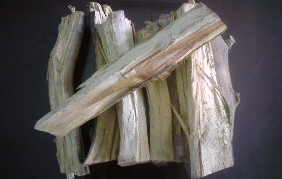
Figure 2.2: Jackfruit wood used to smoke products
2.4.3.3 Factors affecting the composition of smoke
+ Burning temperature