
1.1.1.2. Studies on evaluating the use of natural resources for tourism development
The history of climate research has existed for a long time, many authors have researched climate as the basis for the development of the climate sub-sector such as W. Koppen (Germany), Buduco, Alixop, SI Cottin, TV Pocropxcaia, SP Khronop, Yeu Am Sinh, etc. Many studies show that climate plays a very important role in tourism activities, especially outdoor tourism. Hu & Ritchie (1992) [176]; de Freitas et al. (2008) [162]; Asgary et al. (2011) [128] believe that climate is the key to the formation of many different tourism sectors, thereby assessing the role of climate for each specific tourism sector. Becken (2013) [200] in his research affirmed that climate has a multifaceted impact on tourism activities. Scott & Lemieux (2009) [159] and Gomez Martin (2005) [170] believe that good climate conditions will bring many benefits to tourism, making it easy to carry out outdoor recreational activities such as surfing, golfing, mountain climbing, hunting, fishing. On the contrary, weather and climate can create factors that are harmful to tourism activities such as air pollution, high temperatures, storms and floods. Studies on the impact of climate on tourism activities have increasingly different assessment approaches, accordingly, climate factors affect the tourism season - one of the main factors of tourism activities, and determine the tourism time, affecting the length and quality of the tourism season as well as the tourism environment, typically Hamilton and Lau (2005) [179] or A. Bigano et al. (2006) [129], recently C. Goh (2012) [150] emphasized the role of climate in the choice of tourism destinations of DK , author D. Maddison (2001) studied the impact of climate change (CC) on tourist flows [187]; Hadwen et al. (2011) studied the impact of climate on tourism seasons in different protected areas in East Australia [175]; or the group of authors Eugenio-Martin and Campos-Soria (2010) clarified the different characteristics between the climate at the native place and the climate at the tourist destination, leading to the emergence of tourism demand of foreign tourists to the new tourist destination [166]
Currently, in addition to the common use of different climate factors to evaluate the effectiveness of SKH on tourism, many synthetic climate indices are built in applied SKH such as the discomfort index (DI), effective temperature (ET), thermal radiation index (EI), and heat stress index (HIS), standard effective temperature (SET), equivalent physiological temperature ( PET), or 2 tourism climate indices (CIT, TCI). In which, Mieczkowski (1985) [ 208] based on the research results
Previous studies on climate classification for tourism, human comfort related to climate and tourism activity characteristics to create a tourism climate index TCI based on 7 climate factors, building a combination of typical weather patterns during the day with the levels of impact on human health as well as tourism activities. This TCI index was developed and applied in many studies in different territories such as Nir city (Iran) [161], Mazandaran province (Iran) [134], Herzegovina - neretva state (Bosnia) [174], Tbilisi (Georgia) [133], Mediterranean region [153]. Not only is it commonly applied in low latitude areas, this index is also widely used in other regions of the world. Amelung and Moreno (2009)
[147] used this TCI index to assess the current climate and predict the future for the whole of Europe. Ghislain Dubois (2016) [169] gave a picture of the current status of the application of this climate index. Currently, many studies also combine other climate indices with the TCI index, including Elham Bubarak (2015) using TCI simultaneously with the THI heat and humidity index [165], Daniel Scott, Michelle Rutty (2016) [158] combined the assessment of the holiday climate index (HCI) with TCI in Europe. In addition, the TCI index has developed into many new directions, in a more in-depth direction or applying modern information techniques such as the global effective thermal climate index (UTCI) of Krzysztof Blazejczyk et al. (2013) [184], K.Pantovou (2013) [185], the tourism climate adaptation index (TTCI) [135], the tourism climate index (CIT) - an index that combines a matrix of weather patterns to assess the level of climate favorability for tourism according to 7 different levels [189] of McBoyle, CR de Freitas et al. (2008), Gongmei Yu
Maybe you are interested!
-

 Identify Rating Levels and Rating Scales
zt2i3t4l5ee
zt2a3gstourism,quan lan,quang ninh,ecology,ecotourism,minh chau,van don,geography,geographical basis,tourism development,science
zt2a3ge
zc2o3n4t5e6n7ts
of the islanders. Therefore, this indicator will be divided into two sub-indicators:
a1. Natural tourism attractiveness a2. Cultural tourism attractiveness
b. Tourist capacity
The two island communes in Quan Lan have different capacities to receive tourists. Minh Chau Commune is home to many standard hotels and resorts, attracting high-income domestic and international tourists. Meanwhile, Quan Lan Commune has many motels mainly built and operated by local people, so the scale and quality are not high, and will be suitable for ordinary tourists such as students.
c. Time of exploitation of Quan Lan Island Commune:
Quan Lan tourism is seasonal due to weather and climate conditions and festivals only take place on certain days of the year, specifically in spring. In Quan Lan commune, the period from April to June and from September to November is considered the best time to visit Quan Lan because the cultural tourism activities are mainly associated with festivals taking place during this time.
Minh Chau island commune:
Tourism exploitation time is all year round, because this is a place with a number of tourist attractions with diverse ecosystems such as Bai Tu Long National Park Research Center, Tram forest, Turtle Laying Beach, so besides coming to the beach for tourism and vacation in the summer, Minh Chau will attract research groups to come for tourism combined with research at other times of the year.
d. Sustainability
The sustainability of ecotourism sites in Quan Lan and Minh Chau communes depends on the sensitivity of the ecosystems to climate changes.
landscape. In general, these tourist destinations have a fairly high level of sustainability, because they are natural ecosystems, planned and protected. However, if a large number of tourists gather at certain times, it can exceed the carrying capacity and affect the sustainability of the environment (polluted beaches, damaged trees, animals moving away from their habitats, etc.), then the sustainability of the above ecosystems (natural ecosystems, human ecosystems) will also be affected and become less sustainable.
e. Location and accessibility
Both island communes have ports to take tourists to visit from Van Don wharf:
- Quan Lan – Van Don traffic route:
Phuc Thinh – Viet Anh high-speed boat and Quang Minh high-speed boat, depart at 8am and 2pm from Van Don to Quan Lan, and at 7am and 1pm from Quan Lan to Van Don. There are also wooden boats departing at 7am and 1pm.
- Van Don - Minh Chau traffic route:
Chung Huong high-speed train, Minh Chau train, morning 7:30 and afternoon 13:30 from Van Don to Minh Chau, morning 6:30 and afternoon 13:00 from Minh Chau to Van Don.
f. Infrastructure
Despite receiving investment attention, the issue of infrastructure and technical facilities for tourism on Quan Lan Island is still an issue that needs to be resolved because it has a direct impact on the implementation of ecotourism activities. The minimum conditions for serving tourists such as accommodation, electricity, water, communication, especially medical services, and security work need to be given top priority. Ecotourism spots in Minh Chau commune are assessed to have better infrastructure and technical facilities for tourism because there are quite complete and synchronous conditions for serving tourists, meeting many needs of domestic and foreign tourists.
3.2.1.4. Determine assessment levels and assessment scales
Corresponding to the levels of each criterion, the index is the score of those levels in the order of 4, 3, 2, 1 decreasing according to the standard of each level: very attractive (4), attractive (3), average (2), less attractive (1).
3.2.1.5. Determining the coefficients of the criteria
For the assessment of DLST in the two communes of Quan Lan and Minh Chau islands, the students added evaluation coefficients to show the importance of the criteria and indicators as follows:
Coefficient 3 with criteria: Attractiveness, Exploitation time. These are the 2 most important criteria for attracting tourists to tourism in general and eco-tourism in particular, so they have the highest coefficient.
Coefficient 2 with criteria: Capacity, Infrastructure, Location and accessibility . Because the assessment area is an island commune of Van Don district, the above criteria are selected by the author with appropriate coefficients at the average level.
Coefficient 1 with criteria: Sustainability. Quan Lan has natural and human-made ecotourism sites, with high biodiversity and little impact from local human factors. Most of the ecotourism sites are still wild, so they are highly sustainable.
3.2.1.6. Results of DLST assessment on Quan Lan island
a. Assessment of the potential for natural tourism development
For Minh Chau commune:
+ Natural tourism attractiveness is determined to be very attractive (4 points) and the most important coefficient (coefficient 3), so the score of the Attractiveness criterion is 4 x 3 = 12.
+ Capacity is determined as average (2 points) and the coefficient is quite important (coefficient 2), then the score of Capacity criterion is 2 x 2 = 4.
+ Exploitation time is long (4 points), the most important coefficient (coefficient 3) so the score of the Exploitation time criterion is 4 x 3 = 12.
+ Sustainability is determined as sustainable (4 points), the important coefficient is the average coefficient (coefficient 1), so the score of the Sustainability criterion is 4 x 1 = 4 points
+ Location and accessibility are determined to be quite favorable (2 points), the coefficient is quite important (coefficient 2), the criterion score is 2 x 2 = 4 points.
+ Infrastructure is assessed as good (3 points), the coefficient is quite important (coefficient 2), then the score of the Infrastructure criterion is 3 x 2 = 6 points.
The total score for evaluating DLST in Minh Chau commune according to 6 evaluation criteria is determined as: 12 + 4 + 12 + 4 + 4 + 6 = 42 points
Similar assessment for Quan Lan commune, we have the following table:
Table 3.3: Assessment of the potential for natural ecotourism development in Quan Lan and Minh Chau communes
Attractiveness of self-tourismof course
Capacity
Mining time
Sustainability
Location and accessibility
Infrastructure
Result
Point
DarkMulti
Point
DarkMulti
Point
DarkMulti
Point
DarkMulti
Point
DarkMulti
Point
DarkMulti
CommuneMinh Chau
12
12
4
8
12
12
4
4
4
8
6
8
42/52
Quan CommuneLan
6
12
6
8
9
12
4
4
4
8
4
8
33/52
b. Assessment of the potential for humanistic tourism development
For Quan Lan commune:
+ The attractiveness of human tourism is determined to be very attractive (4 points) and the most important coefficient (coefficient 3), so the score of the Attractiveness criterion is 4 x 3 = 12.
+ Capacity is determined to be large (3 points) and the coefficient is quite important (coefficient 2), then the score of the Capacity criterion is 3 x 2 = 6.
+ Mining time is average (3 points), the most important coefficient (coefficient 3) so the score of the Mining time criterion is 3 x 3 = 9.
+ Sustainability is determined as sustainable (4 points), the important coefficient is the average coefficient (coefficient 1), so the score of the Sustainability criterion is 4 x 1 = 4 points.
+ Location and accessibility are determined to be quite favorable (2 points), the coefficient is quite important (coefficient 2), the criterion score is 2 x 2 = 4 points.
+ Infrastructure is rated as average (2 points), the coefficient is quite important (coefficient 2), then the score of the Infrastructure criterion is 2 x 2 = 4 points.
The total score for evaluating DLST in Quan Lan commune according to 6 evaluation criteria is determined as: 12 + 6 + 6 + 4 + 4 + 4 = 36 points.
Similar assessment with Minh Chau commune we have the following table:
Table 3.4: Assessment of the potential for developing humanistic eco-tourism in Quan Lan and Minh Chau communes
Attractiveness of human tourismliterature
Capacity
Mining time
Sustainability
Location and accessibility
Infrastructure
Result
Point
DarkMulti
Point
DarkMulti
Point
DarkMulti
Point
DarkMulti
Point
DarkMulti
Point
DarkMulti
Quan CommuneLan
12
12
6
8
9
12
4
4
4
8
4
8
39/52
Minh CommuneChau
6
12
4
8
12
12
4
4
4
8
6
8
36/52
Basically, both Minh Chau and Quan Lan localities have quite favorable conditions for developing ecotourism. However, Quan Lan commune has more advantages to develop ecotourism in a humanistic direction, because this is an area with many famous historical relics such as Quan Lan Communal House, Quan Lan Pagoda, Temple worshiping the hero Tran Khanh Du, ... along with local festivals held annually such as the wind praying ceremony (March 15), Quan Lan festival (June 10-19); due to its location near the port and long exploitation time, the beaches in Quan Lan commune (especially Quan Lan beach) are no longer hygienic and clean to ensure the needs of tourists coming to relax and swim; this is also an area with many beautiful landscapes such as Got Beo wind pass, Ong Phong head, Voi Voi cave, but the ability to access these places is still very limited (dirt hill road, lots of gravel and rocks), especially during rainy and windy times; In addition, other natural resources such as mangrove forests and sea worms have not been really exploited for tourism purposes and ecotourism development. On the contrary, Minh Chau commune has more advantages in developing ecotourism in the direction of natural tourism, this is an area with diverse ecosystems such as at Rua De Beach, Bai Tu Long National Park Conservation Center...; Minh Chau beach is highly appreciated for its natural beauty and cleanliness, ranked in the top ten most beautiful beaches in Vietnam; Minh Chau commune is also home to Tram forest with a large area and a purity of up to 90%, suitable for building bridges through the forest (a very effective type of natural ecotourism currently applied by many countries) for tourists to sightsee, as well as for the purpose of studying and researching.
Figure 3.1: Thenmala Forest Bridge (India) Source: https://www.thenmalaecotourism.com/(August 21, 2019)
3.2.2. Using SWOT matrix to evaluate Quan Lan island tourism
General assessment of current tourism activities of Quan Lan island is shown through the following SWOT matrix:
Table 3.5: SWOT matrix evaluating tourism activities on Quan Lan island
Internal agent
Strengths- There is a lot of potential for tourism development, especially natural ecotourism and humanistic ecotourism.- The unskilled labor force is relatively abundant.- resource environmentunpolluted, still
Weaknesses- Poorly developed infrastructure, especially traffic routes to tourist destinations on the island.- The team of professional staff is still weak.- Tourism products in general
quite wild, originalintact
general and DLST in particularalone is monotonous.
External agents
Opportunity- Tourism is a key industry in the socio-economic development strategy of the province and Van Don economic zone.- Quan Lan was selected as a pilot area for eco-tourism development within the framework of the green growth project between Quang Ninh province and the Japanese organization JICA.- The flow of tourists and especially ecotourism in the world tends toincreasing
Challenge- Weather and climate change abnormally.- Competition in tourism products is increasingly fierce, especially with other localities in the province such as Ha Long, Mong Cai...- Awareness of tourists, especially domestic tourists, about ecotourism and nature conservation is not high.
Through summary analysis using SWOT matrix we see that:
To exploit strengths and take advantage of opportunities, it is necessary to:
- Diversify products and service types (build more tourism routes aimed at specific needs of tourists: experiential tourism immersed in nature, spiritual cultural tourism...)
- Effective exploitation of resources and differentiated products (natural resources and human resources)
div.maincontent .p { color: black; font-family:"Times New Roman", serif; font-style: normal; font-weight: normal; text-decoration: none; font-size: 14pt; margin:0pt; } div.maincontent p { color: black; font-family:"Times New Roman", serif; font-style: normal; font-weight: normal; text-decoration: none; font-size: 14pt; margin:0pt; } div.maincontent .s1 { color: black; font-family:"Times New Roman", serif; font-style: normal; font-weight: normal; text-decoration: none; font-size: 13pt; } div.maincontent .s2 { color: black; font-family:"Times New Roman", serif; font-style: normal; font-weight: normal; text-decoration: none; font-size: 13pt; } div.maincontent .s3 { color: #0D0D0D; font-family:"Times New Roman", serif; font-style: normal; font-weight: bold; text-decoration: none; font-size: 14pt; } div.maincontent .s4 { color: black; font-family:"Times New Roman", serif; font-style: italic; font-weight: normal; text-decoration: none; font-size: 14pt; } div.maincontent .s5 { color: black; font-family:"Times New Roman", serif; font-style: italic; font-weight: bold; text-decoration: none; font-size: 14pt; } div.maincontent .s6 { color: black; font-family:"Times New Roman", serif; font-style: italic; font-weight: normal; text-decoration: none; font-size: 14pt; vertical-align: -3pt; } div.maincontent .s7 { color: black; font-family:"Times New Roman", serif; font-style: italic; font-weight: normal; text-decoration: none; font-size: 14pt; vertical-align: -2pt; } div.maincontent .s8 { color: black; font-family:"Times New Roman", serif; font-style: italic; font-weight: normal; text-decoration: none; font-size: 14pt; vertical-align: -1pt; } div.maincontent .s9 { color: black; font-family:"Times New Roman", serif; font-style: normal; font-weight: normal; text-decoration: none; font-size: 14pt; } div.maincontent .s10 { color: black; font-family:"Times New Roman", serif; font-style: normal; font-weight: bold; text-decoration: none; font-size: 14pt; } div.maincontent .s11 { color: black; font-family:"Times New Roman", serif; font-style: normal; font-weight: normal; text-decoration: none; font-size: 14pt; } div.maincontent .s12 { color: black; font-family:Symbol, serif; font-style: normal; font-weight: normal; text-decoration: none; font-size: 14pt; } div.maincontent .s13 { color: black; font-family:Wingdings; font-style: normal; font-weight: normal; text-decoration: none; font-size: 14pt; } div.maincontent .s14 { color: black; font-family:"Times New Roman", serif; font-style: normal; font-weight: normal; text-decoration: none; font-size: 9pt; vertical-align: 5pt; } div.maincontent .s15 { color: black; font-family:"Times New Roman", serif; font-style: normal; font-weight: normal; text-decoration: none; font-size: 9pt; vertical-align: 5pt; } div.maincontent .s16 { color: black; font-family:Cambria, serif; font-style: italic; font-weight: normal; text-decoration: none; font-size: 14pt; } div.maincontent .s17 { color: #080808; font-family:"Times New Roman", serif; font-style: normal; font-weight: bold; text-decoration: none; font-size: 14pt; } div.maincontent .s18 { color: #080808; font-family:"Times New Roman", serif; font-style: normal; font-weight: normal; text-decoration: none; font-size: 14pt; } div.maincontent .s19 { color: black; font-family:"Times New Roman", serif; font-style: normal; font-weight: normal; text-decoration: none; font-size: 11pt; } div.maincontent .s20 { color: black; font-family:"Times New Roman", serif; font-style: normal; font-weight: normal; text-decoration: none; font-size: 10pt; } div.maincontent .s21 { color: black; font-family:"Times New Roman", serif; font-style: normal; font-weight: bold; text-decoration: none; font-size: 11pt; } div.maincontent .s22 { color: black; font-family:"Times New Roman", serif; font-style: normal; font-weight: normal; text-decoration: none; font-size: 11pt; } div.maincontent .s23 { color: black; font-family:"Times New Roman", serif; font-style: italic; font-weight: normal; text-decoration: none; font-size: 14pt; } div.maincontent .s24 { color: #212121; font-family:"Times New Roman", serif; font-style: normal; font-weight: normal; tex
Identify Rating Levels and Rating Scales
zt2i3t4l5ee
zt2a3gstourism,quan lan,quang ninh,ecology,ecotourism,minh chau,van don,geography,geographical basis,tourism development,science
zt2a3ge
zc2o3n4t5e6n7ts
of the islanders. Therefore, this indicator will be divided into two sub-indicators:
a1. Natural tourism attractiveness a2. Cultural tourism attractiveness
b. Tourist capacity
The two island communes in Quan Lan have different capacities to receive tourists. Minh Chau Commune is home to many standard hotels and resorts, attracting high-income domestic and international tourists. Meanwhile, Quan Lan Commune has many motels mainly built and operated by local people, so the scale and quality are not high, and will be suitable for ordinary tourists such as students.
c. Time of exploitation of Quan Lan Island Commune:
Quan Lan tourism is seasonal due to weather and climate conditions and festivals only take place on certain days of the year, specifically in spring. In Quan Lan commune, the period from April to June and from September to November is considered the best time to visit Quan Lan because the cultural tourism activities are mainly associated with festivals taking place during this time.
Minh Chau island commune:
Tourism exploitation time is all year round, because this is a place with a number of tourist attractions with diverse ecosystems such as Bai Tu Long National Park Research Center, Tram forest, Turtle Laying Beach, so besides coming to the beach for tourism and vacation in the summer, Minh Chau will attract research groups to come for tourism combined with research at other times of the year.
d. Sustainability
The sustainability of ecotourism sites in Quan Lan and Minh Chau communes depends on the sensitivity of the ecosystems to climate changes.
landscape. In general, these tourist destinations have a fairly high level of sustainability, because they are natural ecosystems, planned and protected. However, if a large number of tourists gather at certain times, it can exceed the carrying capacity and affect the sustainability of the environment (polluted beaches, damaged trees, animals moving away from their habitats, etc.), then the sustainability of the above ecosystems (natural ecosystems, human ecosystems) will also be affected and become less sustainable.
e. Location and accessibility
Both island communes have ports to take tourists to visit from Van Don wharf:
- Quan Lan – Van Don traffic route:
Phuc Thinh – Viet Anh high-speed boat and Quang Minh high-speed boat, depart at 8am and 2pm from Van Don to Quan Lan, and at 7am and 1pm from Quan Lan to Van Don. There are also wooden boats departing at 7am and 1pm.
- Van Don - Minh Chau traffic route:
Chung Huong high-speed train, Minh Chau train, morning 7:30 and afternoon 13:30 from Van Don to Minh Chau, morning 6:30 and afternoon 13:00 from Minh Chau to Van Don.
f. Infrastructure
Despite receiving investment attention, the issue of infrastructure and technical facilities for tourism on Quan Lan Island is still an issue that needs to be resolved because it has a direct impact on the implementation of ecotourism activities. The minimum conditions for serving tourists such as accommodation, electricity, water, communication, especially medical services, and security work need to be given top priority. Ecotourism spots in Minh Chau commune are assessed to have better infrastructure and technical facilities for tourism because there are quite complete and synchronous conditions for serving tourists, meeting many needs of domestic and foreign tourists.
3.2.1.4. Determine assessment levels and assessment scales
Corresponding to the levels of each criterion, the index is the score of those levels in the order of 4, 3, 2, 1 decreasing according to the standard of each level: very attractive (4), attractive (3), average (2), less attractive (1).
3.2.1.5. Determining the coefficients of the criteria
For the assessment of DLST in the two communes of Quan Lan and Minh Chau islands, the students added evaluation coefficients to show the importance of the criteria and indicators as follows:
Coefficient 3 with criteria: Attractiveness, Exploitation time. These are the 2 most important criteria for attracting tourists to tourism in general and eco-tourism in particular, so they have the highest coefficient.
Coefficient 2 with criteria: Capacity, Infrastructure, Location and accessibility . Because the assessment area is an island commune of Van Don district, the above criteria are selected by the author with appropriate coefficients at the average level.
Coefficient 1 with criteria: Sustainability. Quan Lan has natural and human-made ecotourism sites, with high biodiversity and little impact from local human factors. Most of the ecotourism sites are still wild, so they are highly sustainable.
3.2.1.6. Results of DLST assessment on Quan Lan island
a. Assessment of the potential for natural tourism development
For Minh Chau commune:
+ Natural tourism attractiveness is determined to be very attractive (4 points) and the most important coefficient (coefficient 3), so the score of the Attractiveness criterion is 4 x 3 = 12.
+ Capacity is determined as average (2 points) and the coefficient is quite important (coefficient 2), then the score of Capacity criterion is 2 x 2 = 4.
+ Exploitation time is long (4 points), the most important coefficient (coefficient 3) so the score of the Exploitation time criterion is 4 x 3 = 12.
+ Sustainability is determined as sustainable (4 points), the important coefficient is the average coefficient (coefficient 1), so the score of the Sustainability criterion is 4 x 1 = 4 points
+ Location and accessibility are determined to be quite favorable (2 points), the coefficient is quite important (coefficient 2), the criterion score is 2 x 2 = 4 points.
+ Infrastructure is assessed as good (3 points), the coefficient is quite important (coefficient 2), then the score of the Infrastructure criterion is 3 x 2 = 6 points.
The total score for evaluating DLST in Minh Chau commune according to 6 evaluation criteria is determined as: 12 + 4 + 12 + 4 + 4 + 6 = 42 points
Similar assessment for Quan Lan commune, we have the following table:
Table 3.3: Assessment of the potential for natural ecotourism development in Quan Lan and Minh Chau communes
Attractiveness of self-tourismof course
Capacity
Mining time
Sustainability
Location and accessibility
Infrastructure
Result
Point
DarkMulti
Point
DarkMulti
Point
DarkMulti
Point
DarkMulti
Point
DarkMulti
Point
DarkMulti
CommuneMinh Chau
12
12
4
8
12
12
4
4
4
8
6
8
42/52
Quan CommuneLan
6
12
6
8
9
12
4
4
4
8
4
8
33/52
b. Assessment of the potential for humanistic tourism development
For Quan Lan commune:
+ The attractiveness of human tourism is determined to be very attractive (4 points) and the most important coefficient (coefficient 3), so the score of the Attractiveness criterion is 4 x 3 = 12.
+ Capacity is determined to be large (3 points) and the coefficient is quite important (coefficient 2), then the score of the Capacity criterion is 3 x 2 = 6.
+ Mining time is average (3 points), the most important coefficient (coefficient 3) so the score of the Mining time criterion is 3 x 3 = 9.
+ Sustainability is determined as sustainable (4 points), the important coefficient is the average coefficient (coefficient 1), so the score of the Sustainability criterion is 4 x 1 = 4 points.
+ Location and accessibility are determined to be quite favorable (2 points), the coefficient is quite important (coefficient 2), the criterion score is 2 x 2 = 4 points.
+ Infrastructure is rated as average (2 points), the coefficient is quite important (coefficient 2), then the score of the Infrastructure criterion is 2 x 2 = 4 points.
The total score for evaluating DLST in Quan Lan commune according to 6 evaluation criteria is determined as: 12 + 6 + 6 + 4 + 4 + 4 = 36 points.
Similar assessment with Minh Chau commune we have the following table:
Table 3.4: Assessment of the potential for developing humanistic eco-tourism in Quan Lan and Minh Chau communes
Attractiveness of human tourismliterature
Capacity
Mining time
Sustainability
Location and accessibility
Infrastructure
Result
Point
DarkMulti
Point
DarkMulti
Point
DarkMulti
Point
DarkMulti
Point
DarkMulti
Point
DarkMulti
Quan CommuneLan
12
12
6
8
9
12
4
4
4
8
4
8
39/52
Minh CommuneChau
6
12
4
8
12
12
4
4
4
8
6
8
36/52
Basically, both Minh Chau and Quan Lan localities have quite favorable conditions for developing ecotourism. However, Quan Lan commune has more advantages to develop ecotourism in a humanistic direction, because this is an area with many famous historical relics such as Quan Lan Communal House, Quan Lan Pagoda, Temple worshiping the hero Tran Khanh Du, ... along with local festivals held annually such as the wind praying ceremony (March 15), Quan Lan festival (June 10-19); due to its location near the port and long exploitation time, the beaches in Quan Lan commune (especially Quan Lan beach) are no longer hygienic and clean to ensure the needs of tourists coming to relax and swim; this is also an area with many beautiful landscapes such as Got Beo wind pass, Ong Phong head, Voi Voi cave, but the ability to access these places is still very limited (dirt hill road, lots of gravel and rocks), especially during rainy and windy times; In addition, other natural resources such as mangrove forests and sea worms have not been really exploited for tourism purposes and ecotourism development. On the contrary, Minh Chau commune has more advantages in developing ecotourism in the direction of natural tourism, this is an area with diverse ecosystems such as at Rua De Beach, Bai Tu Long National Park Conservation Center...; Minh Chau beach is highly appreciated for its natural beauty and cleanliness, ranked in the top ten most beautiful beaches in Vietnam; Minh Chau commune is also home to Tram forest with a large area and a purity of up to 90%, suitable for building bridges through the forest (a very effective type of natural ecotourism currently applied by many countries) for tourists to sightsee, as well as for the purpose of studying and researching.
Figure 3.1: Thenmala Forest Bridge (India) Source: https://www.thenmalaecotourism.com/(August 21, 2019)
3.2.2. Using SWOT matrix to evaluate Quan Lan island tourism
General assessment of current tourism activities of Quan Lan island is shown through the following SWOT matrix:
Table 3.5: SWOT matrix evaluating tourism activities on Quan Lan island
Internal agent
Strengths- There is a lot of potential for tourism development, especially natural ecotourism and humanistic ecotourism.- The unskilled labor force is relatively abundant.- resource environmentunpolluted, still
Weaknesses- Poorly developed infrastructure, especially traffic routes to tourist destinations on the island.- The team of professional staff is still weak.- Tourism products in general
quite wild, originalintact
general and DLST in particularalone is monotonous.
External agents
Opportunity- Tourism is a key industry in the socio-economic development strategy of the province and Van Don economic zone.- Quan Lan was selected as a pilot area for eco-tourism development within the framework of the green growth project between Quang Ninh province and the Japanese organization JICA.- The flow of tourists and especially ecotourism in the world tends toincreasing
Challenge- Weather and climate change abnormally.- Competition in tourism products is increasingly fierce, especially with other localities in the province such as Ha Long, Mong Cai...- Awareness of tourists, especially domestic tourists, about ecotourism and nature conservation is not high.
Through summary analysis using SWOT matrix we see that:
To exploit strengths and take advantage of opportunities, it is necessary to:
- Diversify products and service types (build more tourism routes aimed at specific needs of tourists: experiential tourism immersed in nature, spiritual cultural tourism...)
- Effective exploitation of resources and differentiated products (natural resources and human resources)
div.maincontent .p { color: black; font-family:"Times New Roman", serif; font-style: normal; font-weight: normal; text-decoration: none; font-size: 14pt; margin:0pt; } div.maincontent p { color: black; font-family:"Times New Roman", serif; font-style: normal; font-weight: normal; text-decoration: none; font-size: 14pt; margin:0pt; } div.maincontent .s1 { color: black; font-family:"Times New Roman", serif; font-style: normal; font-weight: normal; text-decoration: none; font-size: 13pt; } div.maincontent .s2 { color: black; font-family:"Times New Roman", serif; font-style: normal; font-weight: normal; text-decoration: none; font-size: 13pt; } div.maincontent .s3 { color: #0D0D0D; font-family:"Times New Roman", serif; font-style: normal; font-weight: bold; text-decoration: none; font-size: 14pt; } div.maincontent .s4 { color: black; font-family:"Times New Roman", serif; font-style: italic; font-weight: normal; text-decoration: none; font-size: 14pt; } div.maincontent .s5 { color: black; font-family:"Times New Roman", serif; font-style: italic; font-weight: bold; text-decoration: none; font-size: 14pt; } div.maincontent .s6 { color: black; font-family:"Times New Roman", serif; font-style: italic; font-weight: normal; text-decoration: none; font-size: 14pt; vertical-align: -3pt; } div.maincontent .s7 { color: black; font-family:"Times New Roman", serif; font-style: italic; font-weight: normal; text-decoration: none; font-size: 14pt; vertical-align: -2pt; } div.maincontent .s8 { color: black; font-family:"Times New Roman", serif; font-style: italic; font-weight: normal; text-decoration: none; font-size: 14pt; vertical-align: -1pt; } div.maincontent .s9 { color: black; font-family:"Times New Roman", serif; font-style: normal; font-weight: normal; text-decoration: none; font-size: 14pt; } div.maincontent .s10 { color: black; font-family:"Times New Roman", serif; font-style: normal; font-weight: bold; text-decoration: none; font-size: 14pt; } div.maincontent .s11 { color: black; font-family:"Times New Roman", serif; font-style: normal; font-weight: normal; text-decoration: none; font-size: 14pt; } div.maincontent .s12 { color: black; font-family:Symbol, serif; font-style: normal; font-weight: normal; text-decoration: none; font-size: 14pt; } div.maincontent .s13 { color: black; font-family:Wingdings; font-style: normal; font-weight: normal; text-decoration: none; font-size: 14pt; } div.maincontent .s14 { color: black; font-family:"Times New Roman", serif; font-style: normal; font-weight: normal; text-decoration: none; font-size: 9pt; vertical-align: 5pt; } div.maincontent .s15 { color: black; font-family:"Times New Roman", serif; font-style: normal; font-weight: normal; text-decoration: none; font-size: 9pt; vertical-align: 5pt; } div.maincontent .s16 { color: black; font-family:Cambria, serif; font-style: italic; font-weight: normal; text-decoration: none; font-size: 14pt; } div.maincontent .s17 { color: #080808; font-family:"Times New Roman", serif; font-style: normal; font-weight: bold; text-decoration: none; font-size: 14pt; } div.maincontent .s18 { color: #080808; font-family:"Times New Roman", serif; font-style: normal; font-weight: normal; text-decoration: none; font-size: 14pt; } div.maincontent .s19 { color: black; font-family:"Times New Roman", serif; font-style: normal; font-weight: normal; text-decoration: none; font-size: 11pt; } div.maincontent .s20 { color: black; font-family:"Times New Roman", serif; font-style: normal; font-weight: normal; text-decoration: none; font-size: 10pt; } div.maincontent .s21 { color: black; font-family:"Times New Roman", serif; font-style: normal; font-weight: bold; text-decoration: none; font-size: 11pt; } div.maincontent .s22 { color: black; font-family:"Times New Roman", serif; font-style: normal; font-weight: normal; text-decoration: none; font-size: 11pt; } div.maincontent .s23 { color: black; font-family:"Times New Roman", serif; font-style: italic; font-weight: normal; text-decoration: none; font-size: 14pt; } div.maincontent .s24 { color: #212121; font-family:"Times New Roman", serif; font-style: normal; font-weight: normal; tex -
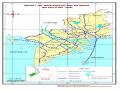 Impact of Socio-Economics and Climate Change on Tourism Resources
 -
 Assessment of surface water resources in Dong Nai river basin to serve sustainable development goals in the context of climate change - 2
 -
 Research on resources, current situation, and solutions to exploit the humanistic ecological tourism route in Hai Duong. Building the route Hanoi - Cam Giang - Thanh Mien - Ninh Giang - Chi Linh - Hai Duong City - 8
 -
 Group of Research Projects on Assessment of Geographical Conditions and Tourism Resources
[ 172] with additional climate index for DL activities ( MCIT) – using dataThe weather contrasts between the states of Florida and Alaska. [ 195]
With the role of climate change in tourism development, more and more international conferences and seminars have addressed this issue, for example, the 1st International Conference on Climate, Tourism and Recreation held in Greece in October 2001 attracted many scientists to give assessments of the current state of climate change [149, 162]. The International Geographic Conference in Kraków, the Netherlands (2014) had a number of notable research works such as " Assessing the temperature threshold and tourism potential based on climate change in some cities of the Netherlands" [182]. In the 2nd/2014 global conference on trade, economics, management and tourism in Prague (Czechoslovakia), the TCI index was also used to assess the tourism development of a specific region (Amir Gandomkar [134]). Conference
9
The 4th/2015 International Conference on Environment, Energy and Biotechnology in Madrid (Spain) [165] also had some studies evaluating the climate indicators TCI and THI. In the past 10 years, there have been more specific and detailed studies on applied SKH, in which the general trend is the assessment of human adaptation to climate change. The World Tourism Organization (UNWTO) in conjunction with other international organizations has studied the relationship between climate change and tourism [205], mitigation policies and measures to adapt to climate change in tourism activities [206]. Typically, A. Madhumathi and MC Sundarraja [132] used a geographic information system (GIS) on meteorological data such as solar radiation, wind, cloud cover in the Talminadu area (India) to evaluate the level of adaptation of the human body living in the humid tropics. Daniel Scott, G.Mc Boyle (2004) [157] assessed the impact of climate change on tourism in North America, B, Jones, D.Scott studied in Canada [148]. Studies on the impact of climate change on tourism activities are increasingly specific and popular, John Wash (2009) [180], Jacqueline M. Hamilton (2005)
[178], Gongmei yu, John Wash (2009) [172], Francesco Musco (2016) [165], Tervo-Kankare, Kaarina (2016) [202] with many different approaches to the impact of climate change and challenges to the tourism industry. Researchers also assess the impact of climate change on many aspects such as predicting the flow of tourists to the UK by Maddison (2001) [187], predicting the flow of tourists by Andrea Bigano (2006) [136], Agnew (2006) assessed the impact of short-term climate factors in the UK to meet the needs of tourists [128], or providing necessary tourism information such as A. Matzakits (2001) [138]; (2006) [142], assessment of acclimatization for DK by day [143], Baruch Givoni (2002), Ch. Brandenburg (2001) [152] assessment of outdoor DL acclimatization [146]
1.1.2. In Vietnam
1.1.2.1. Studies on comprehensive assessment of resources for tourism development
Most of the research works on comprehensive assessment are mainly based on the theoretical foundation of landscape studies with works on zoning of natural resources, landscape assessment research and comprehensive assessment of natural resources and natural resources. Comprehensive assessment of natural resources and natural resources serving socio-economic development in general has had many research works that have both methodological significance and high practical significance. Research and comprehensive assessment of natural resources serving tourism development have made important progress in both terms of
10
quantity and quality of works. Some typical works such as: Nguyen Duc Chinh - Vu Tu Lap [16] ; Pham Hoang Hai, Nguyen Thuong Hung, Nguyen Ngoc Khanh [28]; Nguyen Van Nhung, Nguyen Van Vinh [64]; Le Duc An and others [1], Vu Tuan Canh (editor) [13], Le Thong [89], Pham Trung Luong, Dang Duy Loi [49], Nguyen Minh Tue and others (2003) [100] have systematized the basic concepts of tourism, tourism resources and orientations for exploiting tourism potential in tourism regions of Vietnam. Vietnam National Administration of Tourism (2012)[9] also comprehensively assessed resources and strategic orientations in exploiting these types of resources through the " Vietnam Tourism Development Strategy to 2020, vision to 2030 "[12] and " Vietnam Tourism Development Master Plan to 2020, vision to 2030"
٭ The direction of assessing resources for economic development mainly in some specific territories and localities in our country has been invested in research very early, there have been many works, for example: Pham Hoang Hai and nnk [27]; Do Trong Dung (2009) [21]; Nguyen Huu Xuan (2009) [123]. These works have introduced concepts of DL, TNDL, theoretical and practical basis in assessing TNDL and have assessed the potential to serve tourism development planning on a national scale or each territory with very high theoretical and practical values.
1.1.2.2. Studies on assessing SKH conditions for tourism development
First of all, we must mention the basic climate works of researchers: Pham Ngoc Toan, Phan Tat Dac (1975) [95]; Nguyen Duc Ngu, Nguyen Trong Hieu (2004) [60]; Mai Trong Thong, Hoang Xuan Co (2002) [91]; Tran Cong Minh (2007) [52]; Pioneers are medical scientists such as Dao Ngoc Phong, Trinh Binh Di with works: " Nature and health" (1987 ) [70], analyzing the relationship between climate and health, physical training to adapt to environmental conditions. In " Some issues on Biometeorology" [71], the author, in addition to analyzing the impact of each weather and climate factor on the human body, summarizes some experimental research results, some indicators and biometeorological models. In [72], [73], [69], the author also analyzed each climate factor and the body's adaptation methods to weather and climate conditions. Studies by climatologists and geographers such as Pham Ngoc Toan and Phan Tat Dac in the works: "Climate and health" [94]; "Climate and life" [ 95] have clearly shown the impact of each factor.
11
weather, climate on the human body, with specific experimental results. Another direction in human SKH research is the research works on SKH of construction and urban areas such as [43], [45] Tran Viet Lien has provided a scientific basis for selecting and building criteria for zoning construction climate to serve in construction. The work "Vietnam climate architecture solutions" (2006) [58]; "Bioclimatic architecture - Bioclimatic design in Vietnamese architecture" (2011) [59] - Pham Duc Nguyen and others have analyzed and evaluated climate from the perspective of architects.
٭Researching human health status for tourism service, some authors have gone into depth in research such as Vu Boi Kiem [37], Tran Viet Lien [43]; starting from the viewpoint that the health status index not only reflects the total impact of the surrounding environment on the body but also determines the level of energy that needs to be compensated for the body to reach a state of complete comfort. For the research on human health status for people serving people's lives and rest, there have been many research works. Associate Professor, Dr. Nguyen Minh Tue (editor-in-chief) and nnk [100], also presented human health status indexes but have not yet presented research results on human health status for tourism activities of each specific region. Nguyen Tham and Nguyen Hoang Son [83] evaluated human health status for tourism service in Thua Thien - Hue using the DI index. With many contributions to the applied health status research direction, Nguyen Khanh Van
[111] published a very important reference document on SKH - "Basic SKH Textbook" , which presents the most general information about SKH of natural vegetation, SKH of livestock and SKH of humans, as well as the relationship between SKH and other sciences. Similarly, the work "Research on the application of climate information for health and tourism" (2011) [119] also mentioned the indexes: TCI; RSI. Nguyen Khanh Van also carried out SKH topics related to tourism such as "Assessment of SKH conditions for nursing care in mountainous areas of Vietnam" (1995) [116] "SKH conditions after the coastal strip of Vietnam" (1998); "Rational use of SKH resources for production development and for people's lives, tourism in Hoa Binh lake area" (1993) [115]; “Research on human climate for tourism, recreation and people's livelihood in Vietnam” (2000) [114]. Many doctoral theses are also carried out in this direction such as research on TNDL and SKH Tay Nguyen (Nguyen Thu Nhung, 2018) [63], Quang Ninh - Hai Phong area (Nguyen Dang Tien, 2016) [81], Da Lat city (Nguyen Huu Xuan, 2009) [123]. Through these studies, climate resources for tourism development are analyzed in many different directions. Nguyen Dang Tien used
12
using the weather complex - this is the combination of the main weather characteristics that have an important impact on human health - to be determined at 13 o'clock every day. Nguyen Huu Xuan uses the climate index I of Due'rout and Clauses based on three factors: average temperature, average monthly daylight hours, and daily rainfall to evaluate for sightseeing tourism and effective temperature to evaluate for resort tourism. Nguyen Thu Nhung uses the TCI index to evaluate tourism in the Central Highlands. In which, most of these authors use a combination of tourism SKH maps to help DK choose the best time and area for tourism.
In general, these studies have not only built a scientific basis for the role of SKH factors in each specific tourism industry, but also provided detailed assessments with maps and statistical tables, contributing to arguments on SKH research applied to tourism development.
1.1.2.3. Research projects in the Southern territory
To promote tourism development, many tourism development planning projects have been developed: "TNB tourism development project to 2020" [12], Summary report " Master plan for tourism development in the Southeast region to 2020, vision to 2030 " [9], is a step to concretize socio-economic development orientations to link tourism development in the Southern provinces to promote strengths, enhance the competitiveness of the whole region, and build unique tourism products. The project report "TNNB master plan" [108] focused on studying land and water resources and necessary economic sectors for the region to achieve high growth. Currently, there are many scientific conferences that have attracted the attention of many authors, including the International Conference " Mekong - The River Connecting Culture, Tourism and Economy ", the Conference " Linking the Development of Special Tourism Products in the Mekong Delta " held in Can Tho in 2014 chaired by the General Department of Tourism. Communist Magazine and Binh Phuoc Provincial Party Committee jointly organized the Scientific Conference [103] in October 2016 in Binh Phuoc with many presentations by authors on the current status of tourism and special products of the southern provinces of Vietnam.
With the meaning of synthesis and orientation for regional tourism development, some authors such as Nguyen Minh Tue [100]; Vu Tuan Canh and nnk [13]; Bui Thi Hai Yen [124]; Tran Huy, Hung Cuong [33], Buu Ngon (2004) [56] ... have highlighted the potential resources of the region, with comparisons of advantages compared to other regions. Besides, there are many studies on tourism of each locality in the South, each work is
experiences about culture and ethnicity, bringing diverse perspectives on the tourism potential of specific localities. Some typical works are: "Vung Tau, the coastal city of the East [ 121] "Temples of Uncle Ho in the Southwest" [55] ; "Vietnam tourism through 26 world heritages" [85] "Sa Dec - Love of land and love of people" [93] "Sacred temples and folk festivals in the South" [53]; "Travel Guide - Ba Chua Xu Sam Mountain Tourism Festival and Chau Doc An Giang tourism " [79]. The publications aim to describe in detail about the climate, weather and entertainment areas, means of transport, landscapes, restaurants, folk festivals, traditional craft villages in the Southern region.
There have been some studies on climate change for tourism in the South, however, they are still limited and the studies are mainly local, not yet classified and established a tourism bioclimate classification map for the whole South. Dang Van Phan, To Hoang Kia used the climate index RSI and DI to evaluate the impact of climate change on tourism development in some provinces in the South such as Ho Chi Minh City, Tay Ninh, Con Dao, Phu Quoc, Can Tho, etc. [66]. Most recently, Nguyen Khanh Van and colleagues [118] evaluated the separate impacts of climate factors on human health, pointing out the differences in some climate change conditions between the east coast (Vung Tau, Con Dao) and the west coast (Rach Gia, Phu Quoc), that difference has caused different seasonality of tourism between the east and west coasts of the South.
Thus, from the historical overview of the research problem shows:
In the world and in Vietnam, research projects on assessing natural resources and environment for tourism development have existed for a long time and are quite diverse; demonstrated through assessment methods, research scales and more importantly, the approaches to assessment research are also not the same. In assessing synthetic natural resources and environment indicators for tourism development, in addition to specific climate factors such as temperature, rainfall, number of rainy days, length of dry season, there are many synthetic natural resources and environment indicators applied with increasingly improved models, with a wide range of applications in large territories; in addition, for each specific tourism purpose, there are different weights for each climate factor.
For the Southern research area, many projects, workshops and seminars have been implemented, on a regional or local scale, in the direction of comprehensive assessment of natural resources. The authors have outlined the characteristics of natural resources, the basis for building tourist routes, tourist spots, and tourist regions with tourist centers.
specific to Vietnam, including Southern tourism. Many works are oriented, introducing and providing a diverse picture of the tourism potential of the South. However, these assessments are mainly general, some assessments are still qualitative, in some specific localities; there has not been any work classifying and evaluating tourism resources and tourism development in a specific and detailed manner for the South. The thesis has used a semi-quantitative assessment method for each Southern tourism region, for each tourism sector, this research and assessment direction is new, it determines the level of favorable tourism resources and tourism development for 4 specific tourism sectors in the South.
Along with the development of tourism in the whole country, in the South, although the tourism sectors are quite diverse, tourism products are still quite similar between regions, tourism development is not sustainable. With the requirement of developing tourism in the South on a new level (tourism products must be unique, exploiting the strengths of tourism resources in each locality, organizing tourism territories on the basis of combining tourism sectors in the region, between regions in a scientific manner...), the assessment of tourism resources and tourism potential for each tourism sector is very necessary. The results of resource assessment and tourism potential will provide additional scientific arguments necessary for localities in the South to comprehensively develop tourism in a sustainable manner.
1.2. Overview of theoretical issues related to the thesis content
1.2.1. Concepts related to tourism
1.2.1.1. Concept of tourism
In 1811, the first definition of tourism was in England. According to the Vietnam Tourism Law 2017: " Tourism is activities related to human trips outside of their usual place of residence for a period of no more than 01 consecutive year to meet the needs of sightseeing, relaxation, entertainment, learning, exploring tourism resources or in combination with other legitimate purposes " [109].
1.2.1.2. Concept of tourism products
Tourism products are services and goods provided to tourists based on the exploitation of available tourism potentials, aiming to provide tourists with an enjoyable time and complete satisfaction. Vietnam Tourism Law 2017 stipulates: "Tourism products are a set of services based on the exploitation of tourism resource values to satisfy the needs of tourists " [109]. Thus, the most common point that