
43.Khamphone Phimmalath (2014), “The current state of state management of training and fostering of cadres and civil servants in the Lao People's Democratic Republic”, Party Building Magazine , No. 157/2014.
44.Khamxay Dalavong (2015), “Roles, responsibilities and capacities of lecturers in training and fostering cadres and civil servants”, Research Journal of the Lao National Academy of Politics and Public Administration .
45.Sengaloun Bounkham (2008), “Training and fostering cadres and civil servants is a key task of administrative reform in the current period”, A Lun Mai Magazine , No. 06/2008.
46.Soutchay Khampay (2013), “Solutions for training and fostering district-level officials and civil servants to meet the requirements of title standards”, Research Journal of the Lao National Academy of Politics and Public Administration , No. 204∕ 2013.
47.Sonexay Phommalath (2014), “Innovation in training and fostering cadres and civil servants: approaches according to job titles and positions”, Research Journal of the Lao National Academy of Politics and Public Administration .
48.Thoongchan Phetbounmy (2011), “Paying special attention to training and fostering future generations of cadres and civil servants”, Alunmai Magazine , No. 5, Lao PDR.
49.Vongsavan Xaynhavong (2014), “Theoretical and practical basis for building a team of provincial-level administrative civil servants according to the requirements of building a rule-of-law state in the Lao People's Democratic Republic”, PhD thesis in law , Ho Chi Minh National Academy of Politics, Hanoi.
C. English Documents
50.Human Resource Management, John M.Ivacevich Mc. Hill, 1997 51.Civil Service Reform: A review of world bank assistance (Washington
DC), 1997
52.Human Resource Strategies in local government: A survey of Progrees and Future Directions (American Review of Public Administration).
53. Michael Armstrong (1996), A Handbook of Personnel management Practice.
D. Legal documents of Laos
54. Lao People's Revolutionary Party (2001), Human resource strategy to 2020 , Central Party Organization Department Publishing House, Vientiane.
55. Lao People's Revolutionary Party (2005), Leadership strategy for organizational work, Party building, and personnel work , Central Party Organization Department Publishing House, Vientiane.
56. Lao People's Revolutionary Party (2016), Documents of the 10th National Congress of Delegates , State Publishing House, Vientiane.
57. Central Propaganda Department of the Lao People's Revolutionary Party (2015), Handbook for studying the moral qualities of revolutionary cadres , Publishing House of Propaganda Department, Vientiane.
58. Directive on planning and orientation of national leaders and managers No. 08/BCT of the Party Central Committee dated August 21, 2007
59. Strategy on human resource development to 2020, Central Party Organizing Committee published in 2002
60. Leadership strategy of the Lao People's Revolutionary Party on organizing training of Party cadres, published by the Central Organizing Committee in 2005
61. Law on cadres and civil servants of the Lao People's Democratic Republic, No. 025/2015/QH, Vientiane.
62. Government of the Lao PDR (2010), Socio-economic Development Strategy VII, State Publishing House, Vientiane .
63. People's Committee of Savanakhet province (2020) Report No. 534/UBND dated November 25, 2020 on summarizing the work of training and fostering civil servants in the period 2015-2020 of Savanakhet province
64. Department of Home Affairs of Savanakhet Province (2019), Report No. 267/SNV dated
December 27, 2019 on the work of training civil servants and public employees of the province in 2019
E. Legal documents of Vietnam
65. National Assembly (2008), Law on Cadres and Civil Servants, Hanoi.
66. Government (2017), Decree No. 101/2017/ND-CP dated September 1, 2017 of the Government on training and fostering of cadres, civil servants and public employees.
67. Ministry of Home Affairs, ADB Project (2009), Training documents, professional development for training and fostering cadres and civil servants , Hanoi.
68. Ministry of Home Affairs (2011), Report on the assessment of the implementation of the overall program of state administrative reform in the period 2001-2010 , Hanoi.
LIST OF AUTHOR'S WORKS
STT
Title | Magazine | |
1 | Training and fostering staff and workers The position in Savannakhet province is the revolutionary mission in Savannakhet province. | Savanpathana 2017 |
2 | Training and development activities for staff and workers office in Savannakhet province in Lao PDR | State Management No. 7/2019 |
3 | Training and fostering of cadres and civil servants in Savanakhet province, Democratic Republic of Vietnam Laos | Vietnam Integration No. 147/2020 |
4 | Training and development of staff, civil servant in Savannakhet province, Lao PDR | Economics and Forecast, No. 34 (December 2020) |
Maybe you are interested!
-
 Training and fostering civil servants doing emulation and reward work in Dak Lak province - 1
 -
 Training and fostering civil servants in vocational education institutions in Dak Lak province - 1
 -
 Management of training of cadres and civil servants of the Party and Youth Union of Bac Kan province - 14
 -
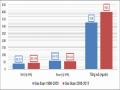 Number of Participants in the Training of Key Cadres at the Grassroots Level in Binh Duong Province in the Periods of 1998-2005 and 2005-2015
 -
 Concept, Characteristics and Role of Training and Development of Staff and Civil Servants
APPENDIX
Appendix 1
SURVEY FORM ON TRAINING AND DEVELOPMENT OF CADRES AND CIVIL SERVANTS IN SANAVAKHET PROVINCE, LAO PEOPLE'S DEMOCRATIC REPUBLIC
Dear comrade,
We would like to respectfully introduce the research topic "Training and fostering of cadres and civil servants in Sanavakhet province, Lao People's Democratic Republic" and respectfully ask you to give your opinions according to the questionnaire below. The information you provide will only be used for research purposes and will be kept confidential. Thank you very much!
ANSWER GUIDE
Please answer the questions in turn by marking ( ) in the box with the answer that best fits your opinion (or write in the blank box corresponding to other contributions).
Thanks a lot!
I. GENERAL INFORMATION
a. Full name (MAY NOT ANSWER) ...................................................................
b. Age: (MAY NOT ANSWER) ..........................................................
c. Professional qualifications: (check the box corresponding to the highest qualification)
□ Postgraduate □ University □ College □ Secondary □ Other (please specify)…..
d. Field of specialized training:……………………………………….
e. Current job position: ...............................................................................
f. Number of years of professional experience in the current field:
□ under 1 year □ 1-3 years □ 3-10 years □ 10-20 years □ over 20 years II QUESTION CONTENT:
Question 1. Please give your assessment of professional competence.
Subjects and professions of cadres and civil servants where you are working?


1. Weak, poor 2. Average 3. Fair 4. Good Question 2. Please let us know your assessment of the number of civil servants and public employees where you work in terms of professional competence and technical skills suitable for the job position:
Over 80%
From 70% - 80%
From 50% - 70%
Below 50%
Question 3. Please let us know your assessment of the necessity of training and development activities for officials and civil servants where you are working?
Very necessary
Less necessary
Not necessary
Question 4. Could you please give your assessment of the suitability of the training courses for civil servants and public employees with the job position of the agency where you are working?
1. Not suitable  2. Suitable
Question 5. Please let us know which teaching and learning methods for the training courses you think are the most effective.
Question and answer, discussion
Traditional presentation
Combination of theory and practice
Other comments:………………………………………………… Question 6. Please let us know your opinion on which training course duration is most suitable for you?
Course duration less than 3 days
Course duration 5-7 days
Course duration 10-14 days
Course duration of 14 days or more
Question 7. Please give your assessment of the documents and curriculum of the training courses you have attended?
Regular updates
Lack of updates
Question 8. Could you please tell us about the practicality of the documents and curriculum of the training courses you have attended?
High
Average
Low
Question 9. Please tell us your level of satisfaction with the materials and curriculum of the training courses you have attended?
Satisfied
Partially satisfied
Not Satisfied
Question 10. Please tell us your assessment of the ability to apply the knowledge and skills you have learned into practice and work?
Many
Quite a lot
Few
Very few
Question 11. Please give your assessment of the quality of the content design of the training and development program you have participated in?
Content
Good | Rather | Medium | Weak | |
a) Training content, training schedule reported leak | ||||
b) Is the training and development schedule suitable? working conditions | ||||
c) The rationality of the content of the arrangement sequence of training and development topics | ||||
d) Reasonableness of total duration Training and development program |
Question 12. Please give your assessment of the organization of the training and development program you have participated in?
Content
Good | Rather | Medium | Weak | |
a) Suitable training and development location/place fit | ||||
b) Document quality (photocopy, print) | ||||
c) Classroom facilities (lights, air conditioning, furniture…) | ||||
d) Quality of training equipment (Computers, projector, sound…) |
Question 13. Please let me know which lecturer teaches the training classes in your opinion most effectively?
Lecturers at universities and professional colleges
Central expert
Local Reporter
Other comments:……………………………………………………
Question 14. Could you please give your assessment of the treatment for civil servants participating in the province's training courses?


1. Weak, poor 2. Average 3. Fair 4. Good Question 15. Could you please give your assessment of the job placement of civil servants after participating in the provincial training courses?
Suitable
Not suitable
Other comments:……………………………………………………
----------------------------
Thank you very much for your help!