
The door of Pho Minh pagoda (Ha Nam)... are strong evidences of the sculpting talent of artisans in that glorious Ly dynasty. Dong Giao craftsmen specialize in making all kinds of wooden worshiping objects and decorative objects such as: thrones, thrones, tablets, dragon pavilions, incense tables, bowls, knives, swords, palanquins, double-winged cranes, hammocks, scrolls, horizontal lacquered boards, elephant-horse parallel sentences... and some household items: cabinets, and organs. Most of the worshiping objects in the province and the northeastern provinces are carved by Dong Giao village craftsmen.
The carvings on some worship objects are usually the four sacred animals: dragon, unicorn, turtle, phoenix; the four noble animals: pine, mai, chrysanthemum, bamboo, or excerpts from Buddhist scriptures or ancient stories. The motifs must be symmetrical and balanced. Many carved works of our country have gone through 3 or 4 centuries of tropical heat and humidity, but the wood is still strong, the paint is smooth, and the color is fresh as new.
Although the ancient Bronze Giao carvers were skilled, they were rarely honored.
Tea cabinets are the main product of Dong Giao today.
Maybe you are interested!
-
 Potential, current situation and orientation of exploiting tourism resources of Long An province towards sustainable development - 2
 -
 Research on potential, current situation and proposed solutions for sustainable tourism development in Van Long Wetland Nature Reserve, Ninh Binh province - 13
 -
 Identify Rating Levels and Rating Scales
zt2i3t4l5ee
zt2a3gstourism,quan lan,quang ninh,ecology,ecotourism,minh chau,van don,geography,geographical basis,tourism development,science
zt2a3ge
zc2o3n4t5e6n7ts
of the islanders. Therefore, this indicator will be divided into two sub-indicators:
a1. Natural tourism attractiveness a2. Cultural tourism attractiveness
b. Tourist capacity
The two island communes in Quan Lan have different capacities to receive tourists. Minh Chau Commune is home to many standard hotels and resorts, attracting high-income domestic and international tourists. Meanwhile, Quan Lan Commune has many motels mainly built and operated by local people, so the scale and quality are not high, and will be suitable for ordinary tourists such as students.
c. Time of exploitation of Quan Lan Island Commune:
Quan Lan tourism is seasonal due to weather and climate conditions and festivals only take place on certain days of the year, specifically in spring. In Quan Lan commune, the period from April to June and from September to November is considered the best time to visit Quan Lan because the cultural tourism activities are mainly associated with festivals taking place during this time.
Minh Chau island commune:
Tourism exploitation time is all year round, because this is a place with a number of tourist attractions with diverse ecosystems such as Bai Tu Long National Park Research Center, Tram forest, Turtle Laying Beach, so besides coming to the beach for tourism and vacation in the summer, Minh Chau will attract research groups to come for tourism combined with research at other times of the year.
d. Sustainability
The sustainability of ecotourism sites in Quan Lan and Minh Chau communes depends on the sensitivity of the ecosystems to climate changes.
landscape. In general, these tourist destinations have a fairly high level of sustainability, because they are natural ecosystems, planned and protected. However, if a large number of tourists gather at certain times, it can exceed the carrying capacity and affect the sustainability of the environment (polluted beaches, damaged trees, animals moving away from their habitats, etc.), then the sustainability of the above ecosystems (natural ecosystems, human ecosystems) will also be affected and become less sustainable.
e. Location and accessibility
Both island communes have ports to take tourists to visit from Van Don wharf:
- Quan Lan – Van Don traffic route:
Phuc Thinh – Viet Anh high-speed boat and Quang Minh high-speed boat, depart at 8am and 2pm from Van Don to Quan Lan, and at 7am and 1pm from Quan Lan to Van Don. There are also wooden boats departing at 7am and 1pm.
- Van Don - Minh Chau traffic route:
Chung Huong high-speed train, Minh Chau train, morning 7:30 and afternoon 13:30 from Van Don to Minh Chau, morning 6:30 and afternoon 13:00 from Minh Chau to Van Don.
f. Infrastructure
Despite receiving investment attention, the issue of infrastructure and technical facilities for tourism on Quan Lan Island is still an issue that needs to be resolved because it has a direct impact on the implementation of ecotourism activities. The minimum conditions for serving tourists such as accommodation, electricity, water, communication, especially medical services, and security work need to be given top priority. Ecotourism spots in Minh Chau commune are assessed to have better infrastructure and technical facilities for tourism because there are quite complete and synchronous conditions for serving tourists, meeting many needs of domestic and foreign tourists.
3.2.1.4. Determine assessment levels and assessment scales
Corresponding to the levels of each criterion, the index is the score of those levels in the order of 4, 3, 2, 1 decreasing according to the standard of each level: very attractive (4), attractive (3), average (2), less attractive (1).
3.2.1.5. Determining the coefficients of the criteria
For the assessment of DLST in the two communes of Quan Lan and Minh Chau islands, the students added evaluation coefficients to show the importance of the criteria and indicators as follows:
Coefficient 3 with criteria: Attractiveness, Exploitation time. These are the 2 most important criteria for attracting tourists to tourism in general and eco-tourism in particular, so they have the highest coefficient.
Coefficient 2 with criteria: Capacity, Infrastructure, Location and accessibility . Because the assessment area is an island commune of Van Don district, the above criteria are selected by the author with appropriate coefficients at the average level.
Coefficient 1 with criteria: Sustainability. Quan Lan has natural and human-made ecotourism sites, with high biodiversity and little impact from local human factors. Most of the ecotourism sites are still wild, so they are highly sustainable.
3.2.1.6. Results of DLST assessment on Quan Lan island
a. Assessment of the potential for natural tourism development
For Minh Chau commune:
+ Natural tourism attractiveness is determined to be very attractive (4 points) and the most important coefficient (coefficient 3), so the score of the Attractiveness criterion is 4 x 3 = 12.
+ Capacity is determined as average (2 points) and the coefficient is quite important (coefficient 2), then the score of Capacity criterion is 2 x 2 = 4.
+ Exploitation time is long (4 points), the most important coefficient (coefficient 3) so the score of the Exploitation time criterion is 4 x 3 = 12.
+ Sustainability is determined as sustainable (4 points), the important coefficient is the average coefficient (coefficient 1), so the score of the Sustainability criterion is 4 x 1 = 4 points
+ Location and accessibility are determined to be quite favorable (2 points), the coefficient is quite important (coefficient 2), the criterion score is 2 x 2 = 4 points.
+ Infrastructure is assessed as good (3 points), the coefficient is quite important (coefficient 2), then the score of the Infrastructure criterion is 3 x 2 = 6 points.
The total score for evaluating DLST in Minh Chau commune according to 6 evaluation criteria is determined as: 12 + 4 + 12 + 4 + 4 + 6 = 42 points
Similar assessment for Quan Lan commune, we have the following table:
Table 3.3: Assessment of the potential for natural ecotourism development in Quan Lan and Minh Chau communes
Attractiveness of self-tourismof course
Capacity
Mining time
Sustainability
Location and accessibility
Infrastructure
Result
Point
DarkMulti
Point
DarkMulti
Point
DarkMulti
Point
DarkMulti
Point
DarkMulti
Point
DarkMulti
CommuneMinh Chau
12
12
4
8
12
12
4
4
4
8
6
8
42/52
Quan CommuneLan
6
12
6
8
9
12
4
4
4
8
4
8
33/52
b. Assessment of the potential for humanistic tourism development
For Quan Lan commune:
+ The attractiveness of human tourism is determined to be very attractive (4 points) and the most important coefficient (coefficient 3), so the score of the Attractiveness criterion is 4 x 3 = 12.
+ Capacity is determined to be large (3 points) and the coefficient is quite important (coefficient 2), then the score of the Capacity criterion is 3 x 2 = 6.
+ Mining time is average (3 points), the most important coefficient (coefficient 3) so the score of the Mining time criterion is 3 x 3 = 9.
+ Sustainability is determined as sustainable (4 points), the important coefficient is the average coefficient (coefficient 1), so the score of the Sustainability criterion is 4 x 1 = 4 points.
+ Location and accessibility are determined to be quite favorable (2 points), the coefficient is quite important (coefficient 2), the criterion score is 2 x 2 = 4 points.
+ Infrastructure is rated as average (2 points), the coefficient is quite important (coefficient 2), then the score of the Infrastructure criterion is 2 x 2 = 4 points.
The total score for evaluating DLST in Quan Lan commune according to 6 evaluation criteria is determined as: 12 + 6 + 6 + 4 + 4 + 4 = 36 points.
Similar assessment with Minh Chau commune we have the following table:
Table 3.4: Assessment of the potential for developing humanistic eco-tourism in Quan Lan and Minh Chau communes
Attractiveness of human tourismliterature
Capacity
Mining time
Sustainability
Location and accessibility
Infrastructure
Result
Point
DarkMulti
Point
DarkMulti
Point
DarkMulti
Point
DarkMulti
Point
DarkMulti
Point
DarkMulti
Quan CommuneLan
12
12
6
8
9
12
4
4
4
8
4
8
39/52
Minh CommuneChau
6
12
4
8
12
12
4
4
4
8
6
8
36/52
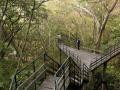
Basically, both Minh Chau and Quan Lan localities have quite favorable conditions for developing ecotourism. However, Quan Lan commune has more advantages to develop ecotourism in a humanistic direction, because this is an area with many famous historical relics such as Quan Lan Communal House, Quan Lan Pagoda, Temple worshiping the hero Tran Khanh Du, ... along with local festivals held annually such as the wind praying ceremony (March 15), Quan Lan festival (June 10-19); due to its location near the port and long exploitation time, the beaches in Quan Lan commune (especially Quan Lan beach) are no longer hygienic and clean to ensure the needs of tourists coming to relax and swim; this is also an area with many beautiful landscapes such as Got Beo wind pass, Ong Phong head, Voi Voi cave, but the ability to access these places is still very limited (dirt hill road, lots of gravel and rocks), especially during rainy and windy times; In addition, other natural resources such as mangrove forests and sea worms have not been really exploited for tourism purposes and ecotourism development. On the contrary, Minh Chau commune has more advantages in developing ecotourism in the direction of natural tourism, this is an area with diverse ecosystems such as at Rua De Beach, Bai Tu Long National Park Conservation Center...; Minh Chau beach is highly appreciated for its natural beauty and cleanliness, ranked in the top ten most beautiful beaches in Vietnam; Minh Chau commune is also home to Tram forest with a large area and a purity of up to 90%, suitable for building bridges through the forest (a very effective type of natural ecotourism currently applied by many countries) for tourists to sightsee, as well as for the purpose of studying and researching.
Figure 3.1: Thenmala Forest Bridge (India) Source: https://www.thenmalaecotourism.com/(August 21, 2019)
3.2.2. Using SWOT matrix to evaluate Quan Lan island tourism
General assessment of current tourism activities of Quan Lan island is shown through the following SWOT matrix:
Table 3.5: SWOT matrix evaluating tourism activities on Quan Lan island
Internal agent
Strengths- There is a lot of potential for tourism development, especially natural ecotourism and humanistic ecotourism.- The unskilled labor force is relatively abundant.- resource environmentunpolluted, still
Weaknesses- Poorly developed infrastructure, especially traffic routes to tourist destinations on the island.- The team of professional staff is still weak.- Tourism products in general
quite wild, originalintact
general and DLST in particularalone is monotonous.
External agents
Opportunity- Tourism is a key industry in the socio-economic development strategy of the province and Van Don economic zone.- Quan Lan was selected as a pilot area for eco-tourism development within the framework of the green growth project between Quang Ninh province and the Japanese organization JICA.- The flow of tourists and especially ecotourism in the world tends toincreasing
Challenge- Weather and climate change abnormally.- Competition in tourism products is increasingly fierce, especially with other localities in the province such as Ha Long, Mong Cai...- Awareness of tourists, especially domestic tourists, about ecotourism and nature conservation is not high.
Through summary analysis using SWOT matrix we see that:
To exploit strengths and take advantage of opportunities, it is necessary to:
- Diversify products and service types (build more tourism routes aimed at specific needs of tourists: experiential tourism immersed in nature, spiritual cultural tourism...)
- Effective exploitation of resources and differentiated products (natural resources and human resources)
div.maincontent .p { color: black; font-family:"Times New Roman", serif; font-style: normal; font-weight: normal; text-decoration: none; font-size: 14pt; margin:0pt; } div.maincontent p { color: black; font-family:"Times New Roman", serif; font-style: normal; font-weight: normal; text-decoration: none; font-size: 14pt; margin:0pt; } div.maincontent .s1 { color: black; font-family:"Times New Roman", serif; font-style: normal; font-weight: normal; text-decoration: none; font-size: 13pt; } div.maincontent .s2 { color: black; font-family:"Times New Roman", serif; font-style: normal; font-weight: normal; text-decoration: none; font-size: 13pt; } div.maincontent .s3 { color: #0D0D0D; font-family:"Times New Roman", serif; font-style: normal; font-weight: bold; text-decoration: none; font-size: 14pt; } div.maincontent .s4 { color: black; font-family:"Times New Roman", serif; font-style: italic; font-weight: normal; text-decoration: none; font-size: 14pt; } div.maincontent .s5 { color: black; font-family:"Times New Roman", serif; font-style: italic; font-weight: bold; text-decoration: none; font-size: 14pt; } div.maincontent .s6 { color: black; font-family:"Times New Roman", serif; font-style: italic; font-weight: normal; text-decoration: none; font-size: 14pt; vertical-align: -3pt; } div.maincontent .s7 { color: black; font-family:"Times New Roman", serif; font-style: italic; font-weight: normal; text-decoration: none; font-size: 14pt; vertical-align: -2pt; } div.maincontent .s8 { color: black; font-family:"Times New Roman", serif; font-style: italic; font-weight: normal; text-decoration: none; font-size: 14pt; vertical-align: -1pt; } div.maincontent .s9 { color: black; font-family:"Times New Roman", serif; font-style: normal; font-weight: normal; text-decoration: none; font-size: 14pt; } div.maincontent .s10 { color: black; font-family:"Times New Roman", serif; font-style: normal; font-weight: bold; text-decoration: none; font-size: 14pt; } div.maincontent .s11 { color: black; font-family:"Times New Roman", serif; font-style: normal; font-weight: normal; text-decoration: none; font-size: 14pt; } div.maincontent .s12 { color: black; font-family:Symbol, serif; font-style: normal; font-weight: normal; text-decoration: none; font-size: 14pt; } div.maincontent .s13 { color: black; font-family:Wingdings; font-style: normal; font-weight: normal; text-decoration: none; font-size: 14pt; } div.maincontent .s14 { color: black; font-family:"Times New Roman", serif; font-style: normal; font-weight: normal; text-decoration: none; font-size: 9pt; vertical-align: 5pt; } div.maincontent .s15 { color: black; font-family:"Times New Roman", serif; font-style: normal; font-weight: normal; text-decoration: none; font-size: 9pt; vertical-align: 5pt; } div.maincontent .s16 { color: black; font-family:Cambria, serif; font-style: italic; font-weight: normal; text-decoration: none; font-size: 14pt; } div.maincontent .s17 { color: #080808; font-family:"Times New Roman", serif; font-style: normal; font-weight: bold; text-decoration: none; font-size: 14pt; } div.maincontent .s18 { color: #080808; font-family:"Times New Roman", serif; font-style: normal; font-weight: normal; text-decoration: none; font-size: 14pt; } div.maincontent .s19 { color: black; font-family:"Times New Roman", serif; font-style: normal; font-weight: normal; text-decoration: none; font-size: 11pt; } div.maincontent .s20 { color: black; font-family:"Times New Roman", serif; font-style: normal; font-weight: normal; text-decoration: none; font-size: 10pt; } div.maincontent .s21 { color: black; font-family:"Times New Roman", serif; font-style: normal; font-weight: bold; text-decoration: none; font-size: 11pt; } div.maincontent .s22 { color: black; font-family:"Times New Roman", serif; font-style: normal; font-weight: normal; text-decoration: none; font-size: 11pt; } div.maincontent .s23 { color: black; font-family:"Times New Roman", serif; font-style: italic; font-weight: normal; text-decoration: none; font-size: 14pt; } div.maincontent .s24 { color: #212121; font-family:"Times New Roman", serif; font-style: normal; font-weight: normal; tex
Identify Rating Levels and Rating Scales
zt2i3t4l5ee
zt2a3gstourism,quan lan,quang ninh,ecology,ecotourism,minh chau,van don,geography,geographical basis,tourism development,science
zt2a3ge
zc2o3n4t5e6n7ts
of the islanders. Therefore, this indicator will be divided into two sub-indicators:
a1. Natural tourism attractiveness a2. Cultural tourism attractiveness
b. Tourist capacity
The two island communes in Quan Lan have different capacities to receive tourists. Minh Chau Commune is home to many standard hotels and resorts, attracting high-income domestic and international tourists. Meanwhile, Quan Lan Commune has many motels mainly built and operated by local people, so the scale and quality are not high, and will be suitable for ordinary tourists such as students.
c. Time of exploitation of Quan Lan Island Commune:
Quan Lan tourism is seasonal due to weather and climate conditions and festivals only take place on certain days of the year, specifically in spring. In Quan Lan commune, the period from April to June and from September to November is considered the best time to visit Quan Lan because the cultural tourism activities are mainly associated with festivals taking place during this time.
Minh Chau island commune:
Tourism exploitation time is all year round, because this is a place with a number of tourist attractions with diverse ecosystems such as Bai Tu Long National Park Research Center, Tram forest, Turtle Laying Beach, so besides coming to the beach for tourism and vacation in the summer, Minh Chau will attract research groups to come for tourism combined with research at other times of the year.
d. Sustainability
The sustainability of ecotourism sites in Quan Lan and Minh Chau communes depends on the sensitivity of the ecosystems to climate changes.
landscape. In general, these tourist destinations have a fairly high level of sustainability, because they are natural ecosystems, planned and protected. However, if a large number of tourists gather at certain times, it can exceed the carrying capacity and affect the sustainability of the environment (polluted beaches, damaged trees, animals moving away from their habitats, etc.), then the sustainability of the above ecosystems (natural ecosystems, human ecosystems) will also be affected and become less sustainable.
e. Location and accessibility
Both island communes have ports to take tourists to visit from Van Don wharf:
- Quan Lan – Van Don traffic route:
Phuc Thinh – Viet Anh high-speed boat and Quang Minh high-speed boat, depart at 8am and 2pm from Van Don to Quan Lan, and at 7am and 1pm from Quan Lan to Van Don. There are also wooden boats departing at 7am and 1pm.
- Van Don - Minh Chau traffic route:
Chung Huong high-speed train, Minh Chau train, morning 7:30 and afternoon 13:30 from Van Don to Minh Chau, morning 6:30 and afternoon 13:00 from Minh Chau to Van Don.
f. Infrastructure
Despite receiving investment attention, the issue of infrastructure and technical facilities for tourism on Quan Lan Island is still an issue that needs to be resolved because it has a direct impact on the implementation of ecotourism activities. The minimum conditions for serving tourists such as accommodation, electricity, water, communication, especially medical services, and security work need to be given top priority. Ecotourism spots in Minh Chau commune are assessed to have better infrastructure and technical facilities for tourism because there are quite complete and synchronous conditions for serving tourists, meeting many needs of domestic and foreign tourists.
3.2.1.4. Determine assessment levels and assessment scales
Corresponding to the levels of each criterion, the index is the score of those levels in the order of 4, 3, 2, 1 decreasing according to the standard of each level: very attractive (4), attractive (3), average (2), less attractive (1).
3.2.1.5. Determining the coefficients of the criteria
For the assessment of DLST in the two communes of Quan Lan and Minh Chau islands, the students added evaluation coefficients to show the importance of the criteria and indicators as follows:
Coefficient 3 with criteria: Attractiveness, Exploitation time. These are the 2 most important criteria for attracting tourists to tourism in general and eco-tourism in particular, so they have the highest coefficient.
Coefficient 2 with criteria: Capacity, Infrastructure, Location and accessibility . Because the assessment area is an island commune of Van Don district, the above criteria are selected by the author with appropriate coefficients at the average level.
Coefficient 1 with criteria: Sustainability. Quan Lan has natural and human-made ecotourism sites, with high biodiversity and little impact from local human factors. Most of the ecotourism sites are still wild, so they are highly sustainable.
3.2.1.6. Results of DLST assessment on Quan Lan island
a. Assessment of the potential for natural tourism development
For Minh Chau commune:
+ Natural tourism attractiveness is determined to be very attractive (4 points) and the most important coefficient (coefficient 3), so the score of the Attractiveness criterion is 4 x 3 = 12.
+ Capacity is determined as average (2 points) and the coefficient is quite important (coefficient 2), then the score of Capacity criterion is 2 x 2 = 4.
+ Exploitation time is long (4 points), the most important coefficient (coefficient 3) so the score of the Exploitation time criterion is 4 x 3 = 12.
+ Sustainability is determined as sustainable (4 points), the important coefficient is the average coefficient (coefficient 1), so the score of the Sustainability criterion is 4 x 1 = 4 points
+ Location and accessibility are determined to be quite favorable (2 points), the coefficient is quite important (coefficient 2), the criterion score is 2 x 2 = 4 points.
+ Infrastructure is assessed as good (3 points), the coefficient is quite important (coefficient 2), then the score of the Infrastructure criterion is 3 x 2 = 6 points.
The total score for evaluating DLST in Minh Chau commune according to 6 evaluation criteria is determined as: 12 + 4 + 12 + 4 + 4 + 6 = 42 points
Similar assessment for Quan Lan commune, we have the following table:
Table 3.3: Assessment of the potential for natural ecotourism development in Quan Lan and Minh Chau communes
Attractiveness of self-tourismof course
Capacity
Mining time
Sustainability
Location and accessibility
Infrastructure
Result
Point
DarkMulti
Point
DarkMulti
Point
DarkMulti
Point
DarkMulti
Point
DarkMulti
Point
DarkMulti
CommuneMinh Chau
12
12
4
8
12
12
4
4
4
8
6
8
42/52
Quan CommuneLan
6
12
6
8
9
12
4
4
4
8
4
8
33/52
b. Assessment of the potential for humanistic tourism development
For Quan Lan commune:
+ The attractiveness of human tourism is determined to be very attractive (4 points) and the most important coefficient (coefficient 3), so the score of the Attractiveness criterion is 4 x 3 = 12.
+ Capacity is determined to be large (3 points) and the coefficient is quite important (coefficient 2), then the score of the Capacity criterion is 3 x 2 = 6.
+ Mining time is average (3 points), the most important coefficient (coefficient 3) so the score of the Mining time criterion is 3 x 3 = 9.
+ Sustainability is determined as sustainable (4 points), the important coefficient is the average coefficient (coefficient 1), so the score of the Sustainability criterion is 4 x 1 = 4 points.
+ Location and accessibility are determined to be quite favorable (2 points), the coefficient is quite important (coefficient 2), the criterion score is 2 x 2 = 4 points.
+ Infrastructure is rated as average (2 points), the coefficient is quite important (coefficient 2), then the score of the Infrastructure criterion is 2 x 2 = 4 points.
The total score for evaluating DLST in Quan Lan commune according to 6 evaluation criteria is determined as: 12 + 6 + 6 + 4 + 4 + 4 = 36 points.
Similar assessment with Minh Chau commune we have the following table:
Table 3.4: Assessment of the potential for developing humanistic eco-tourism in Quan Lan and Minh Chau communes
Attractiveness of human tourismliterature
Capacity
Mining time
Sustainability
Location and accessibility
Infrastructure
Result
Point
DarkMulti
Point
DarkMulti
Point
DarkMulti
Point
DarkMulti
Point
DarkMulti
Point
DarkMulti
Quan CommuneLan
12
12
6
8
9
12
4
4
4
8
4
8
39/52
Minh CommuneChau
6
12
4
8
12
12
4
4
4
8
6
8
36/52
Basically, both Minh Chau and Quan Lan localities have quite favorable conditions for developing ecotourism. However, Quan Lan commune has more advantages to develop ecotourism in a humanistic direction, because this is an area with many famous historical relics such as Quan Lan Communal House, Quan Lan Pagoda, Temple worshiping the hero Tran Khanh Du, ... along with local festivals held annually such as the wind praying ceremony (March 15), Quan Lan festival (June 10-19); due to its location near the port and long exploitation time, the beaches in Quan Lan commune (especially Quan Lan beach) are no longer hygienic and clean to ensure the needs of tourists coming to relax and swim; this is also an area with many beautiful landscapes such as Got Beo wind pass, Ong Phong head, Voi Voi cave, but the ability to access these places is still very limited (dirt hill road, lots of gravel and rocks), especially during rainy and windy times; In addition, other natural resources such as mangrove forests and sea worms have not been really exploited for tourism purposes and ecotourism development. On the contrary, Minh Chau commune has more advantages in developing ecotourism in the direction of natural tourism, this is an area with diverse ecosystems such as at Rua De Beach, Bai Tu Long National Park Conservation Center...; Minh Chau beach is highly appreciated for its natural beauty and cleanliness, ranked in the top ten most beautiful beaches in Vietnam; Minh Chau commune is also home to Tram forest with a large area and a purity of up to 90%, suitable for building bridges through the forest (a very effective type of natural ecotourism currently applied by many countries) for tourists to sightsee, as well as for the purpose of studying and researching.
Figure 3.1: Thenmala Forest Bridge (India) Source: https://www.thenmalaecotourism.com/(August 21, 2019)
3.2.2. Using SWOT matrix to evaluate Quan Lan island tourism
General assessment of current tourism activities of Quan Lan island is shown through the following SWOT matrix:
Table 3.5: SWOT matrix evaluating tourism activities on Quan Lan island
Internal agent
Strengths- There is a lot of potential for tourism development, especially natural ecotourism and humanistic ecotourism.- The unskilled labor force is relatively abundant.- resource environmentunpolluted, still
Weaknesses- Poorly developed infrastructure, especially traffic routes to tourist destinations on the island.- The team of professional staff is still weak.- Tourism products in general
quite wild, originalintact
general and DLST in particularalone is monotonous.
External agents
Opportunity- Tourism is a key industry in the socio-economic development strategy of the province and Van Don economic zone.- Quan Lan was selected as a pilot area for eco-tourism development within the framework of the green growth project between Quang Ninh province and the Japanese organization JICA.- The flow of tourists and especially ecotourism in the world tends toincreasing
Challenge- Weather and climate change abnormally.- Competition in tourism products is increasingly fierce, especially with other localities in the province such as Ha Long, Mong Cai...- Awareness of tourists, especially domestic tourists, about ecotourism and nature conservation is not high.
Through summary analysis using SWOT matrix we see that:
To exploit strengths and take advantage of opportunities, it is necessary to:
- Diversify products and service types (build more tourism routes aimed at specific needs of tourists: experiential tourism immersed in nature, spiritual cultural tourism...)
- Effective exploitation of resources and differentiated products (natural resources and human resources)
div.maincontent .p { color: black; font-family:"Times New Roman", serif; font-style: normal; font-weight: normal; text-decoration: none; font-size: 14pt; margin:0pt; } div.maincontent p { color: black; font-family:"Times New Roman", serif; font-style: normal; font-weight: normal; text-decoration: none; font-size: 14pt; margin:0pt; } div.maincontent .s1 { color: black; font-family:"Times New Roman", serif; font-style: normal; font-weight: normal; text-decoration: none; font-size: 13pt; } div.maincontent .s2 { color: black; font-family:"Times New Roman", serif; font-style: normal; font-weight: normal; text-decoration: none; font-size: 13pt; } div.maincontent .s3 { color: #0D0D0D; font-family:"Times New Roman", serif; font-style: normal; font-weight: bold; text-decoration: none; font-size: 14pt; } div.maincontent .s4 { color: black; font-family:"Times New Roman", serif; font-style: italic; font-weight: normal; text-decoration: none; font-size: 14pt; } div.maincontent .s5 { color: black; font-family:"Times New Roman", serif; font-style: italic; font-weight: bold; text-decoration: none; font-size: 14pt; } div.maincontent .s6 { color: black; font-family:"Times New Roman", serif; font-style: italic; font-weight: normal; text-decoration: none; font-size: 14pt; vertical-align: -3pt; } div.maincontent .s7 { color: black; font-family:"Times New Roman", serif; font-style: italic; font-weight: normal; text-decoration: none; font-size: 14pt; vertical-align: -2pt; } div.maincontent .s8 { color: black; font-family:"Times New Roman", serif; font-style: italic; font-weight: normal; text-decoration: none; font-size: 14pt; vertical-align: -1pt; } div.maincontent .s9 { color: black; font-family:"Times New Roman", serif; font-style: normal; font-weight: normal; text-decoration: none; font-size: 14pt; } div.maincontent .s10 { color: black; font-family:"Times New Roman", serif; font-style: normal; font-weight: bold; text-decoration: none; font-size: 14pt; } div.maincontent .s11 { color: black; font-family:"Times New Roman", serif; font-style: normal; font-weight: normal; text-decoration: none; font-size: 14pt; } div.maincontent .s12 { color: black; font-family:Symbol, serif; font-style: normal; font-weight: normal; text-decoration: none; font-size: 14pt; } div.maincontent .s13 { color: black; font-family:Wingdings; font-style: normal; font-weight: normal; text-decoration: none; font-size: 14pt; } div.maincontent .s14 { color: black; font-family:"Times New Roman", serif; font-style: normal; font-weight: normal; text-decoration: none; font-size: 9pt; vertical-align: 5pt; } div.maincontent .s15 { color: black; font-family:"Times New Roman", serif; font-style: normal; font-weight: normal; text-decoration: none; font-size: 9pt; vertical-align: 5pt; } div.maincontent .s16 { color: black; font-family:Cambria, serif; font-style: italic; font-weight: normal; text-decoration: none; font-size: 14pt; } div.maincontent .s17 { color: #080808; font-family:"Times New Roman", serif; font-style: normal; font-weight: bold; text-decoration: none; font-size: 14pt; } div.maincontent .s18 { color: #080808; font-family:"Times New Roman", serif; font-style: normal; font-weight: normal; text-decoration: none; font-size: 14pt; } div.maincontent .s19 { color: black; font-family:"Times New Roman", serif; font-style: normal; font-weight: normal; text-decoration: none; font-size: 11pt; } div.maincontent .s20 { color: black; font-family:"Times New Roman", serif; font-style: normal; font-weight: normal; text-decoration: none; font-size: 10pt; } div.maincontent .s21 { color: black; font-family:"Times New Roman", serif; font-style: normal; font-weight: bold; text-decoration: none; font-size: 11pt; } div.maincontent .s22 { color: black; font-family:"Times New Roman", serif; font-style: normal; font-weight: normal; text-decoration: none; font-size: 11pt; } div.maincontent .s23 { color: black; font-family:"Times New Roman", serif; font-style: italic; font-weight: normal; text-decoration: none; font-size: 14pt; } div.maincontent .s24 { color: #212121; font-family:"Times New Roman", serif; font-style: normal; font-weight: normal; tex -
 Exporting tourism services in Vietnam: Current situation and solutions - 2
 -
 Current Situation of Tourism in Lang Son Province in the Period of 2012 - 2018
Thanks to the restoration of traditional crafts with new ways of doing business in agriculture, the life of Dong Giao village workers has improved rapidly. They work enthusiastically all day long.
Engraving is a profession with high economic and cultural value, which needs to be restored and promoted in the right direction. The revival of the carving profession in Dong Giao is very commendable, but it is still spontaneous, lacking the guidance and organization of the collective and the State.
Through the carving craft in Dong Giao, it proves that, with modern cultural knowledge, we are capable of restoring and promoting the traditional crafts of the nation. The important thing is to know how to organize, exploit in the right direction and pay the workers appropriately.
* Evaluate:
Hai Duong's traditional crafts and villages are very rich and diverse, many of which are famous both domestically and internationally: Xuan Neo embroidery (Tu Ky), Dong Giao wood carving, making green bean cakes, gai cakes, Chu Dau pottery... the products of the craft villages have shown the features of the traditional craft villages.
rich in culture and art. Reflecting the life, thoughts and feelings of Hai Duong people. Therefore, it is very attractive to tourists, especially foreign tourists. Therefore, Hai Duong tourism industry has surveyed 20 craft villages in the province to establish a craft village tourism route (the highlight is Chu Dau) to meet the needs of tourists for sightseeing and learning. The province has also planned key tourist destinations: Chi Linh district, Kim Mon district, Nam Sach district, Hai Duong city, including the Hai Duong craft village tourism route. However, to bring these craft villages into tourism service, it is necessary to invest in technical facilities: parking lots, exhibition houses, production workshops, re-planning of craft villages, and at the same time, building brands for craft villages so that the products of the craft villages stand firm and develop more and more.
1.3.2.3.Culture and arts.
Located in the middle of the Red River Delta, Hai Duong is a cultural homeland with many traditional art forms such as: Cheo singing, Tuong singing, Trong Quan singing, water puppetry...
Art of rowing:
Hai Duong is considered one of the cradles of Cheo art. This place has produced many excellent artists such as: Nguyen Dinh Nghi, Trinh Thi Lan, Nguyen Thi Minh Ly, Hoa Tam...
Hai Duong has the art of Cheo that appeared very early, according to legend: in the ancient land of Hong Chau, there was a lady named Pham Thi Tran (926-976), who was talented in singing, dancing and performing. King Dinh Tien Hoang summoned her to Hoa Lu and appointed her as U Ba, teaching soldiers to dance, sing, play the zither, beat the drum, and perform plays (plays = Cheo singing). The art of Cheo was born from then, when she passed away, she was honored as the founder of Cheo.
Through research and collection, Xu Dong used to be a region with a very developed Cheo art and a famous Cheo village, Kim Uyen village, Thach Loi commune (Tu Ky). Cheo artists often performed all three genres: Cheo singing, Ca Tru singing (A Dao, Nha To) and Tuong (Tuong Pho).
In the past, Cheo was often performed during village festivals and organized into Cheo troupes in which the boss was the leader who gathered the artists, spent money to buy props, costumes, backdrops, and the actors included 2-3 male actors playing the roles of mandarins, scholars, military officials, loyal men, flatterers... 2-3 female actors playing the main female roles, female side characters, 2-3 musicians. Musical instruments included: two-stringed fiddle, small drum, 1 big gong, wooden fish, and big drum.
The plays include: Tuong plays such as Giang Ta Cau Hon, Tru Vuong Dac Ky, Trieu Tu Long Doat A Dau, Quan Van Truong. Cheo plays include Luu Binh Duong Le, Quan Am Thi Kinh, Tong Chan Cuc Hoa... Currently in Hai Duong, the art of Cheo is still preserved with Cheo troupes in cultural villages and in the Hai Duong Cheo troupe.
Cheo is a long-standing and unique art form of the nation that attracts foreign tourists. They are very interested in learning about Vietnamese culture through the art of Cheo. However, this art form in the whole country in general and in Hai Duong in particular is in danger of fading away, the tastes of young people are changing, artists who are passionate about the art of Cheo are getting older, and Cheo plays performed in festivals are almost gone. Currently, Cheo plays are mainly only available in theaters. The number of audiences is also not large. Therefore, measures must be taken to preserve this unique art form.
The art of Ca Tru in the East
Ca Tru is a type of singing that originated from folklore and was later favored by mandarins, scholars, and aristocrats, and elevated to a “scholarly” singing style, with sophisticated performance techniques that require elaborate practice. Initially, Ca Tru was performed at communal houses, then spread into everyday life such as singing khao vong, singing cong len lao, and then appeared in restaurants serving customers who love the art of Ca Tru. Ca Tru singing is also called hat a dao, hat co dau, hat cua dinh, hat nha to… with singing styles such as hat tho (singing at communal houses when the village is on a festival night), hat choi (singing during a longing ceremony), and hat thi, usually reserved for
The old female singers and musicians. Some famous melodies are “Hong Hong, Tuyet Tuyet”, “Ty Ba Hanh”, “Huong Son Phong Canh Ca”…
The art of Ca Tru has existed and developed in the East for a long time. In the late 19th and early 20th centuries, Ca Tru singing in Hai Duong was very active. Many places established guilds and opened geisha houses with many famous male and female singers. A typical example is the guild of Mr. Nguyen Phu Tang in Dan Chu commune (Tu Ky). Among them are famous male singers such as: Le Bon, Nguyen The Lang, Nguyen Phu Do... Up to now, in the province, there are about 60 people who know how to sing and play Chau drums, with 5 clubs operating in the provincial cultural and information center. The whole province has 2 people who have been awarded the title of folk artist: Mr. Nguyen Phu De, a Dan Day artist, and Mr. Truong Quang Hien, a Chau drum artist.
Recently, the art of Ca Tru of our country has been recognized by the world as an intangible cultural heritage in need of urgent protection. This is a recognition of the unique traditional cultural capital of the nation but also poses a great challenge in preserving and promoting the ancient capital of our ancestors.
Hong Phong water puppetry art :
Water puppetry is a unique product of the Red River Delta with its wet rice civilization. In recent years, the preservation and promotion of water puppetry has been of interest to many localities, including the Hong Phong Water Puppetry Troupe.
Puppets by Thuy Dinh pond Through many changes of the times, Hong Phong commune still maintains its pristine, peaceful beauty. There are still banyan trees, wells in the communal house yard, and the sound of kites whistling over the vast fields... But what is special is that Hong Phong still maintains a traditional folk art form, which is water puppetry. In the village today, even the oldest people no longer remember who the founder of water puppetry in the ward is. And no one knows when water puppetry first appeared here. But according to the traces on the beams in the communal house (where
worshiping General Cao Xuan Huu, an official at the end of the Le Dynasty), there are carved patterns of puppets such as: Teu stroking a dragon's beard, fairy, wrestler, fox climbing a pole... carved so delicately, one can affirm that water puppetry has existed here since before the 17th century. Thus, until today, the art of water puppetry has existed in Hong Phong commune for more than 300 years.
The stories and plays of the water puppet troupe originate from the love of life, nature and creation. Water puppetry often reflects the real life of the villagers, it is close to life such as the plays depicting agricultural production, watering, plowing, planting. Although it simulates the daily work of farmers, the audience seems to be immersed in it, to have their own work recreated on the water puppet stage during lunch breaks, entertaining and relaxing very interestingly.
In addition, there are also the "four sacred animals" dance, "lion dance", dragon dance, snake dance, buffalo fighting... the audience feels the nuances of the village festival, faintly admiring and worshiping the most sacred and mysterious things of human beings. They do not forget to pray to heaven and earth, from praying for luck, praying for blessings to dreaming of a good harvest. The image of the "teu" - the intelligent and humorous teacher character. He is the shadow of the farmers in the Northern Delta under feudalism, with a rustic and innocent nature but sometimes majestic like a judge convicting a bad guy but sometimes being a victim being bitterly accused.
Musical instruments supporting simple performances include drums, horns, wooden fish and combined with various types of fireworks.
To have a play, it is necessary to create a standard and beautiful puppet shape. This is the first and most important step for each puppet troupe. And to have a puppet, it must go through many preparation steps such as making a water pavilion, driving stakes, guiding strings, and then creating the puppet image suitable for each play. The steps are not very complicated but require the skill, aesthetic sense, and perseverance of the puppet artists. The
The puppets of Hong Phong ward are always more vivid than many other places, because they are made by artisans of Cuc Bo carpentry village, famous for their exquisite craftsmanship.
Puppets are made of fig wood, which is light, floats on water, is not susceptible to termites, does not bruise, does not break and is easy to carve. After the carving and drying stage, the most important stage of the puppets is the assembly of the hands and feet with the control machine, before they are "dressed" with layers of waterproof paint and their faces are painted according to each play. To control the puppets to perform gracefully on the water as they wish, the artisans have to practice their hands very elaborately for months for each play. Therefore, the plays performed by the troupe always leave special impressions in the hearts of tourists and international friends.
About the technique of making the puppet house: the puppet house is built on the water surface with overlapping roofs, 4m long and 2.5m wide, the total area is 10m², the stage has 2 balconies 20cm high floating on the water surface extending from the curtain door 5m out. Between the 2 roofs there is a space to look out from the inside. The house has a roof painted with a dragon facing the moon, the 2 ends of the balcony are a squirrel door consisting of 2 columns 2m high, above there is a crossbar to hold the system of poles to control the strings of the puppets, the performance technique combines the system of poles, strings to control the puppets with supporting singing.
At Thuy Dinh pond of Hong Phong commune, visitors can not only watch water puppetry but also enjoy colorful dances of sacred animals: dragon, unicorn, turtle, phoenix; watch folk games such as: releasing sky lanterns, playing firecrackers, setting off fireworks...
Preserving and promoting the traditional arts of the nation is one of the tasks for the culture and tourism industry and especially the task of the young generation. In order to continue the traditional values of our ancestors, enrich the cultural and artistic life, and bring these arts into tourism activities to serve tourists.
1.3.2.4. Culinary arts.
Each dish not only demonstrates the ingenuity and resourcefulness of the housewife, the unique features of each locality, moreover, culinary art is also a highlight expressing the cultural identity and level of civilization of each nation. As a tropical agricultural country, a "paradise" of thousands of unique agricultural products, since ancient times, Vietnamese people have known how to prepare many typical dishes. Legend also records the origin of banh chung and banh day, symbolizing the concept of "round sky, square earth" created by agricultural products from the time Prince Lang Lieu offered to King Hung . Along with economic development
- Regarding culture - always preserving the traditional beauty of Vietnamese people from ancient times. One of those cultural beauties that the people of "Hai Duong, the heroic and resilient homeland" still maintain and develop is culinary culture.
Hai Duong people have a tradition of loving work, diligence, intelligence, and dexterity. They are not only good at growing rice, beans, and potatoes, but also know how to process them into famous specialties at home and abroad, and they have become a unique symbol of Hai Duong.
When mentioning Hai Duong, people cannot help but mention: Hai Duong green bean cake, Ninh Giang gai cake, Khao cake, Thanh Ha lychee. And when visiting Hai Duong, tourists certainly also want to enjoy the cuisine here such as Han Giang rice rolls, Thanh Ha crab, Ke Sat rice paper or banh canh with Phu Loc wine yeast...
Who has been to Hai Duong?
Unsavory Rươi dish - Untouched paradise.
These specialties have long been a gift for tourists who come to Hai Duong to bring back to their relatives. Currently, these specialties are sold in all neighborhoods and tourist areas of the province to help tourists buy more conveniently and there are many brands for customers to choose from.
Other human resources:
Mo Trach Village - village of doctors
Tan Hong commune, Binh Giang district, Hai Duong province, according to legend, was established by Vu Hon (804-853) with the original hopeful name of Kha Mo Trang.
Legend has it that Vu Hon considered this place to be a land with good feng shui, keeping this village as his hometown would lead to a prosperous future in the imperial examinations. In the eyes of a talented feng shui master, Vu Hon believed that the entire Hai Duong region was a great event, Duong An district was the main point and Cham Thuong village was the final point. Therefore, he decided to set up camp and named the village Kha Mo. That means the land was still barren and poor at that time but could become more prosperous and would be admired in the future. Mo Trach means the land is admired. The imperial examination tradition of Mo Trach village. At that time, Mo Trach village had become crowded and had developed a brilliant imperial examination, during the Le dynasty (1428 - 1789), Mo Trach village had 36 doctors, dozens of others passed the provincial examinations, students, and bachelors; many held high positions in the royal court at that time. There were families with several brothers who passed the imperial examinations; There are branches, such as the Vu Khac branch, that have passed the imperial examinations generation after generation. Since then, the name Mo Trach village has existed for nearly eight hundred years, until today.
Star Golf Course (Chi Linh)
Chi Linh Star Golf Course is known as " the most challenging golf course in Vietnam" and professional golfers cannot ignore this interesting competition venue.
Chi Linh Star Golf Course (Star Golf Chi Linh) is located in Sao Do town, Chi Linh district, Hai Duong, 48km from Hanoi, on the way to Ha Long Bay.
Chi Linh Golf Course is located right in the center of the economic and tourism development triangle in the North and is evaluated. The first impression of Chi Linh Golf Course is a large course, covering an area of 325 hectares in the heart of a beautiful valley with a natural lake nestled among the majestic green hills surrounding it. Ngoi Golf Course