
However, issues of professionalism, humanity, and ethics between medical students and doctors have always been of concern to medical educators and the Japanese public [82].
2.1.3. United States
Medical ethics education is included in the main curriculum of medical schools in the United States to train medical students from a very early age. The authors believe that the core or compulsory curriculum in ethics education for medical students should include lectures on ethics, law, humanities, values or professional attitudes. The program is classified and managed according to the main contents such as: Descriptive research on medical ethics curriculum, goals of medical ethics education, empirical research on the results of medical ethics education, testing of teaching methods and evaluation in medical ethics education [50].
Teaching medical ethics is now a common element in the curriculum of US medical schools and is considered a preclinical education element as required by the Committee on Medical Education [65]. The Committee on Medical Education requires training not only in medical ethics but also in humanistic and medical professional skills... Therefore, the curriculum in medical schools will contribute directly to the development of competency-based curricula required by the LCME and the Accreditation Council for Medical Education (ACGME) [78].
Maybe you are interested!
-
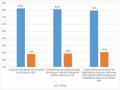
 Managing medical ethics education for nursing students in medical colleges - 32
 -
 Strengthening Inspection, Evaluation, and Experience Sharing in Medical Ethics Education for Students
 -
 Concept of Medical Ethics and Professional Ethical Standards of Physicians
 -
 The role of law in building medical ethics, current situation and solutions - 1
 -
 Organizing Various Forms of Medical Ethics Education for Students Through Extracurricular Activities
Medical schools in the United States have built their medical ethics education programs on four basic ethical principles in medical practice, which are: Respect for patient autonomy; acting in the best interests of the patient; causing no harm to the patient; and fairness in treatment. Other values expected from medical staff are respect for patient dignity and honesty [61].
The management of medical ethics education for students is described in the medical ethics curriculum at medical universities in the United States as [66]:
Describe medical ethics curricula.
Discuss the goals of medical ethics education.
Describe teaching methods for medical ethics education.
Survey of teaching methods in medical ethics education
Survey of assessment methods in medical ethics education.
The American Medical Association adopted the “Principles of Medical Ethics ” in 2001. These principles of medical ethics are intended to assist physicians and the community in
in maintaining a high level of ethical behavior. Although not laws, they are standards by which physicians can determine their proper behavior in their relationships with patients, colleagues, members of related professions, and the public. These principles of medical ethics are the ethical standards required of physicians [60].
2.1.4. United Kingdom
Following the recommendation of the British General Practitioner Council, in 1984, British medical schools began training medical ethics for medical students [62]. Medical educators in this country have found that to achieve the training goals, they recommend combining different types such as: Integrating medical ethics teaching throughout the medical training program; Separate courses on medical ethics and integrated modules in the program; organizing seminars combined with clinical practice. The common point of these types of programs is to develop a foundation of knowledge and analytical skills for students before going to clinical practice at the hospital and the students' knowledge and skills continue to be developed through accumulation during clinical study. The content of medical ethics training for medical students is rich and follows the "learning principle" that represents all the basic principles of medical ethics [56],[75]. At Nottingham, Southampton, and King's College (UK), the methods of presentation, seminar, and small group discussion are used [62].
The General Medical Council (GMC) requires medical graduates to act in accordance with ethical and legal principles and to know and adhere to ethical standards. These standards can only be achieved through the teaching and learning of medical ethics, law and professionalism and are integrated into the medical school curriculum.
The Association for the Teaching and Assessment of Medical Ethics and Law in Medical Schools in the UK states that: “Medical ethics and law should be a core component of the medical curriculum. Teachers of medical ethics and law in medical schools across the UK now produce a consensus statement on the issues, concepts, theories, skills and attitudes that medical students should understand and be able to apply in practice in line with the stated aims of the British Medical Council. The teaching of medical ethics should reinforce the overall aim of medical education: to produce good doctors who will care for the health of the community.
and health care of the people they serve in ways that respect their dignity, autonomy and rights in a fair and just manner [56].
2.1.5. Canada
In Canadian medical schools, medical ethics education has been included as a mandatory content in the main curriculum for medical students. According to author Lehmann SL and colleagues, who studied at 91 medical universities in the United States and Canada in 2004, the medical ethics education program for students was organized into courses in three forms: Preclinical ethics course; Clinical ethics course and Extracurricular course. The content of medical ethics education is quite rich and is studied throughout the course. The main methods of teaching medical ethics are theoretical lectures, group discussions, role-playing, videos and case discussions [73].
The Canadian Nurses Association has developed a “Code of Ethics for Nurses,” which is a statement of the ethical values of nursing and the commitment of nurses to those in need of health care and those receiving care. These statements are based on nurses, their professional relationships with those receiving care, their nursing colleagues, and other health care providers. Nursing values and ethical responsibilities in nursing practice are articulated through seven values and a statement of responsibilities. The seven core values are:
- Provide safe, compassionate, competent and ethical care;
- Improve health and happiness;
- Promote and respect decision making;
- Honoring human dignity;
- Maintain privacy and confidentiality;
- Fair;
- Responsibility.
This Code is important for all nurses working towards adherence to the Code values for the people they care for – regardless of age, race, gender, gender expression, disability and others. Nurses are responsible for their ethical practice. Given the diversity and complexity of ethical issues when dealing with situations [63]. At the same time, it outlines the ethical issues that need to be learned in medical school that are [64]:
- Security;
- Respect the patient's right to autonomy in choosing and agreeing to treatment;
- Tell the truth;
- Resource allocation;
- Ethics in research;
- Nursing relationship with patients;
- Ethical and professional behavior
- In-depth ethical topics;
- Controversial and real-life ethical issues.
With the trend of globalization and international integration taking place all over the world and especially, the strong development of world medicine has opened up opportunities for progress, science and technology in the medical field in general and nursing in particular. Nursing has been developing into a multidisciplinary field of study, with many postgraduate specialties. Nursing has developed into an essential public service, needed by everyone, every family. The demand for quality care services is increasing in every country, especially developed countries. In addition, when the market economy develops at a rapid pace, the productivity and efficiency of economic and social activities are increasingly high, science and technology are applied in many fields, creating an increased demand for high-quality nursing labor markets in the country, region and internationally.
On the basis of the " International Code of Ethics for Nurses" which was revised, supplemented and issued by the International Nursing Association (ICN) in 2012 and the Vietnam Nursing Association issued the "Professional Ethics Standards for Vietnamese Nurses" . It shows that the work of medical ethics education is of interest to the Ministry of Health, the Vietnam Nursing Association and medical training institutions to train high-quality nursing human resources with extensive knowledge, proficient professional skills and the right attitude to provide for this market. Therefore, the work of medical ethics education and management of medical ethics education for nursing students needs to be improved in quality by medical colleges and meet professional competency standards in the country, region and internationally. To achieve that goal, Vietnamese medical colleges need to apply some lessons learned in medical ethics education and management of medical ethics education for nursing students from some countries in the world.
- The issue of medical ethics education and management of medical ethics education for nursing students must be included in the official training program to train nursing students right from the beginning of the course.
- The goal of medical ethics education for nursing students in medical colleges needs to focus on emphasizing the necessary knowledge of human ethics, social culture, knowledge of life, communication, behavior, study, work, social activities, so that students can practice according to ethical standards appropriate to the nursing profession recognized by society and form correct awareness, attitudes, and behaviors in how to behave in performing the task of protecting and caring for people's health.
- Medical ethics education and management of medical ethics education for nursing students are carried out in many ways, ways, methods and specific conditions. However, it is necessary to choose and combine methods based on each goal and content of medical ethics education to improve the effectiveness of medical ethics education for nursing students in medical colleges. To achieve better results, in addition to using traditional methods such as: Presentation, role-playing, situation handling... it is necessary to refer to and apply some methods in medical ethics education for nursing students in countries around the world.
This is a lesson in medical ethics education and management of medical ethics education for nursing students from some countries in the world that needs to be widely disseminated to medical colleges and lecturers so that they can refer to and apply it to medical ethics education for nursing students in accordance with the characteristics and conditions of each school.
2.2. Overview of the medical college system
2.2.1. Number of schools and size of nursing students
Currently, the network of schools training medical human resources, including the system of medical colleges (vocational education institutions) training medical human resources, is evenly and widely distributed throughout the provinces and cities in the country with a total of 98 colleges, including 57 public schools (accounting for 58.16%) and 41 non-public schools (accounting for 41.84%). Of which, there are 83 schools training in nursing (according to data up to March 2020 from the Department of Science, Technology and Training - Ministry of Health) [13].
The scale of nursing enrollment has increased every year, especially in the transfer training from intermediate to college, focusing mainly on nursing.
In 2020, the nursing enrollment scale nationwide is 15,900 college-level students.
Training programs and facilities of many schools have been improved. The Ministry of Health has paid attention to ensuring training quality, has developed and issued Nursing Profession Competency Standards, and the Ministry of Labor, Invalids and Social Affairs has issued Circular No. 54/2018/TT-BLDTBXH dated December 28, 2018, promulgating regulations on the minimum amount of knowledge and requirements for learners' competencies after graduating from intermediate and college levels in the fields of health and social services. Accordingly, many vocational training institutions have developed and implemented innovative training programs according to output standards and a number of public vocational training institutions (Bach Mai Medical College, Hanoi Medical College, Thai Binh Medical College, Quang Nam Medical College, Dong Thap Medical College...) with the support of the project and international experts have been developing innovative programs for training nursing at college level according to professional competency standards. The policy of joint training and training by address has contributed positively to providing medical human resources for localities and the whole country [13].
Hanoi Medical College, Ha Dong Medical College, Ha Tinh Medical College, Phu Tho Medical College, Son La Medical College, Hue Medical College and Can Tho Medical College all have a long history and experience in training and fostering medical human resources at college level and lower levels for the whole country. Each school has its own history of formation and development according to the requirements of the province and city in each historical period and the requirements of the cause of building and defending the Fatherland. The Medical Colleges have trained a large number of medical staff with capacity, professional skills and moral qualities to perform well the task of protecting and caring for people's health, making an important contribution to building and defending the Socialist Republic of Vietnam.
Up to now, medical colleges have been identified as public service units under the direct management of the People's Committees of provinces and cities and carry out the central political task of training medical human resources in medical and pharmaceutical specialties at college and intermediate levels with specific majors such as: Nursing, midwifery, nutrition, medical testing techniques, medical imaging techniques, rehabilitation techniques and pharmacy. Implementing innovation in the operating mechanism in vocational training institutions,
Some schools have switched to implementing autonomy in regular expenditure, which also creates new opportunities in training medical human resources. To diversify training types, expand and increase scale reasonably with the immediate goal of serving the health care strategy for the people of localities and the whole country, moving towards providing high-quality medical human resources for the labor market of Japan and the Federal Republic of Germany.
Through each stage of development and up to now, medical colleges have expanded in scale, professions and training quality has been improved day by day.
2.2.2. Organizational structure
Medical colleges are vocational training institutions, so the organizational structure of the schools is implemented in accordance with the Law on Vocational Education and the College Charter issued by the Ministry of Labor, Invalids and Social Affairs. Specifically: the schools are under the management of the General Department of Vocational Education for all vocational training activities; under the management of the Department of Science, Technology and Training - Ministry of Health for training quality and expertise; under the management of the People's Committee of the province/city in terms of state management. In the schools, there are School Councils, Boards of Directors, functional departments/offices such as: Department of Training - Science Management, Department of General Administration, Department of Planning and Finance, Department of Personnel Organization, Department of Student Affairs, Inspection & Quality Assurance of Education... In addition, the schools also have faculties/departments depending on the scale, goals, and training requirements of each school [see table 2.1].
2.2.3. Training subjects, teaching staff and facilities
* About training subjects
Currently, the training subjects of medical colleges are very rich and diverse; mainly students who have graduated from high school; regardless of ethnicity, religion, gender, living in all regions of the country. In addition, some medical colleges also train medical staff for Laos. In addition, the schools also have subjects who are medical staff who have been working at medical facilities but have just graduated from intermediate/primary level and wish to be trained at a higher level, which is college.
* About the teaching staff
In general, the managers and lecturers of medical colleges all have good moral qualities, pedagogical capacity and teaching methods, and meet quality standards.
The number of lecturers is increasing, with the majority of them being university graduates; over 50% of lecturers have postgraduate qualifications, many of whom have received basic training at prestigious medical academies and universities at home and abroad; the proportion of those with doctoral degrees is increasing, many lecturers have experience in practice, treatment and patient care at medical facilities and scientific research.
* Training program
The content and training programs are focused on by the medical colleges to ensure they are advanced and modern, keeping up with the development trends of the country and international integration as well as the specific requirements of colleges training medical human resources at the college level. The training programs of the schools mainly focus on training skills for students with 70% of the knowledge volume for practice, internship, linking theory with practice, linking school learning with clinical practice at medical facilities. In particular, the training programs are built according to the professional competency standards issued by the Ministry of Health. Therefore, the training programs are always updated and suitable for the training of medical human resources to meet the requirements of society and international integration.
* About facilities
With the attention of the People's Committees of provinces/cities, the facilities of medical colleges have been invested in and built spaciously and modernly. Many schools have large campuses, living environment landscapes with theoretical lecture halls, practice areas and some schools have invested in nursing skills practice centers as practice places for students at the school. Basic requirements on the number, area of classrooms, pre-clinical practice rooms, teaching model, facilities, teaching equipment in each school are regularly upgraded to be modern, meeting the needs of teaching, learning and scientific research according to international standards of competence and integration; The landscape, environment, and campus are always kept green, clean, and beautiful to meet the requirements of teaching, learning, training, and scientific research of students. In particular, medical colleges closely coordinate with medical facilities in organizing clinical practice teaching and instructing students in using modern medical equipment in departments and functional rooms of these medical facilities to serve the clinical practice process and practical teaching for students.