
Giang has had nearly 1,400 people go to work abroad and sent home nearly one hundred billion dong [87].
On September 9, 2009, the Ministry of Labor, War Invalids and Social Affairs issued Official Letter 3354/LĐTBXH-QLLDĐNN on the cost ceiling for poor district workers borrowing capital to work abroad. The loan amount is based on the borrower's needs, up to the cost that the borrower must contribute according to each market. The specific cost ceiling depends on the market (See Appendix 4).
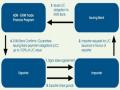
In order to facilitate workers to borrow capital to work abroad, on April 21, 2010, in Hanoi, the Vietnam Bank for Agriculture and Rural Development and the Vietnam Association of Overseas Labor signed a cooperation agreement on lending to work abroad. The two sides committed to supporting and advising labor export enterprises and workers to choose the bank with the best service to borrow capital, deposit money, transfer money safely, quickly and cost-effectively.
3.4. Improve the effectiveness of management of labor working abroad
Maybe you are interested!
-

 Improving business efficiency of import-export cargo insurance business transported by sea at Petrolimex Insurance Joint Stock Company - 11
 -
 Improving the effectiveness of credit risk management at the Bank for Agriculture and Rural Development - Hanoi Branch - 2
 -
 Experience in Improving Export Credit Quality and Lessons Learned for Vietnam Bank for Agriculture and Rural Development
 -
 Limitations in Vietnam's labor export - 15
 -
 Training, Fostering, and Improving Labor Qualifications in the Tourism Industry
- Strengthen propaganda and education on labor law, labor export law, and immigration law.
Do a good job of disseminating and educating about labor export laws, fully conveying information about the overseas labor market; State regulations on labor export; contracts that enterprises implement so that workers voluntarily comply.
- Strengthen inspection and examination of enterprises' activities of sending workers to work abroad. Focus on inspecting and examining enterprises with many violations. Strengthen inspection and examination by topic, for example: Training topics, labor selection topics, financial topics related to the activities of sending workers to work abroad, at the same time, through inspection, examination, dissemination, and guidance on policies and laws related to this activity.
Each ministry, sector and locality needs to arrange the labor export enterprises under their management, and at the same time have measures and mechanisms to manage and handle violating enterprises, select and appoint labor export enterprises.
Supplementing good staff for enterprises. Strengthening management, inspection and supervision of the activities of affiliated labor export enterprises in signing, organizing the implementation of contracts and compliance with laws and regulations on sending laborers to work abroad to promptly correct or handle violations to protect the interests of laborers.
Innovate inspection and examination methods by sending self-inspection forms to labor export enterprises to enhance the responsibility for self-inspection, review and correction of the enterprises' own operations.
Strengthen professional training to improve the capacity of inspection officers of the Ministry, Department, and inspectors in both inspection skills and methods. Officers and inspectors must have strong political qualities, a high sense of responsibility, honesty, objectivity, and a firm grasp of the policies, regimes, and laws of the State within the scope of State management on activities of sending laborers to work abroad.
Along with inspections and checks, there should be strict sanctions for violations. Sanctions should be specified in the Decrees guiding the Law on Vietnamese workers working abroad under contracts. It is necessary to combine administrative sanctions and fines because in the market mechanism, economic benefits are the most immediate. When suffering losses in economic benefits, enterprises will be forced to adjust their business activities. In addition, it is necessary to promptly resolve disputes and complaints related to the activities of sending workers to work abroad.
At the same time, through inspections and examinations, it is necessary to organize summaries and assessments to grasp the situation of law implementation in this field and recommendations of enterprises and localities to promptly adjust and supplement the system of legal documents to suit the practical requirements of management work.
- Closely coordinate and enhance the responsibility of Vietnamese representative agencies abroad.
Vietnamese diplomatic missions, consulates, representatives of enterprises with exported laborers, especially labor management agencies in foreign countries have a special role.
important and direct in consular protection, protecting the rights and legitimate interests of Vietnamese workers working in host countries in accordance with Vietnamese law, host country law and international treaties. Coordinate with domestic agencies and organizations to handle arising issues related to workers.
In case the employee violates the law and is forced to return home, the Vietnamese representative agency abroad is responsible for providing the necessary documents according to the provisions of law; coordinating with the competent authorities of the host country, the labor export enterprise and the family of the fined employee to buy a plane ticket for the employee to return home in case the fined employee does not have the financial capacity (the fined employee must reimburse the cost after returning home).
In addition, workers must be clearly informed about who they should contact to report problems and request assistance when they have problems abroad. In cases where workers' interests are violated, the state must take timely measures through diplomatic channels.
- Create favorable conditions for employees to borrow capital and transfer money home.
water
Banks need to create more favorable conditions for employees to borrow money.
Preferential interest rates, no mortgages are easier, loan levels are also applied to each market, close to reality; research to eliminate the deposit or guarantee payment regime because in reality, this amount of money in the past has not had the effect of reducing the situation of workers running away to work outside, but only increased the debt pressure on workers.
- Labor export enterprises need to pay attention to the legitimate aspirations of workers and closely manage them during their time working abroad . This management should not be heavily administrative but mainly through organized cultural and spiritual activities. For markets with a large number of Vietnamese workers, labor export enterprises should cooperate with the Embassy to organize group and cultural activities in the Vietnamese labor community so that workers can bond and
support each other when in trouble, help each other progress and avoid social evils...
- Carefully research information before signing a contract with a foreign partner. The best way to protect the legitimate interests of Vietnamese workers working abroad is that labor export enterprises should not sign contracts with foreign partners at all costs, but should carefully research the jobs that workers will have to do and the appropriate working conditions. On the other hand, it is necessary to try to include in the contract terms that are most beneficial to the workers. For example, in Malaysia, there are irregular jobs so the workers' income is unstable, but in their free time, workers are not allowed to work outside. If they sneak out to work and the employer finds out, they can be beaten and treated harshly. Therefore, when signing contracts, labor export enterprises must also take these situations into account to avoid disadvantages for workers.
- Strengthen information and international cooperation with countries with workers working abroad.
Annually or when there is an emergency situation, the Ministry of Labor, Invalids and Social Affairs shall coordinate with relevant ministries, branches and the Vietnam General Confederation of Labor to organize meetings, exchanges and dialogues with a number of countries where a large number of Vietnamese workers work such as Japan, Korea, Taiwan, Malaysia, etc. On that basis, information about the labor market, labor relations and arising issues will be grasped to share and contribute to handling in order to protect the rights of workers; at the same time, contributing to strengthening solidarity and friendship between workers and trade unions of the countries.
- Trade unions need to study to organize the establishment of trade unions in foreign countries in places with a large concentration of Vietnamese workers. For places with few workers, they can participate in activities with other trade unions. In countries with a large number of Vietnamese workers such as Malaysia, Japan, Korea, Taiwan, etc., it is necessary to consider establishing a trade union executive committee early, assigning specialized staff to coordinate with the Embassy, the Labor Management Board and labor export enterprises to grasp information about jobs and life.
living conditions, working conditions, income of employees; participate in handling arising issues in labor relations to protect employees' rights.
3.5. Support job creation and rational use of labor resources after returning home
Reintegration support program, aiming to re-utilize human resources returning from working abroad; helping them quickly reintegrate into society. Some labor exporting countries have paid attention to this issue, but this is still a relatively new field that needs more careful research to find reasonable solutions. Supporting job creation or helping workers develop production and business after returning home will mobilize and take advantage of the skills and technological know-how that workers bring back home.
There are many countries in the world that effectively use capital, skills and expertise brought by overseas workers, and Korea is a typical example. More than 3 decades ago, when the economy was not yet developed, this country considered overseas labor export as a strategy to create jobs and income for workers. In addition to accumulating foreign currency to enrich the country, overseas workers also set the goal of learning management skills, vocational training, and acquiring high technical and scientific qualifications in heavy industries to return home to develop the economy. In addition, the Government of this country also has incentive policies for workers who work abroad to return home, such as: Allocating 10% of the newly built housing fund for workers who complete their contracts and return home; Establishing consulting companies to take care of workers' families working abroad at medical facilities where the workers' families live... From those far-sighted policies, many workers after returning home have become factory owners, small and medium-sized enterprises - the main components of the current Korean economy.
The Philippine government is also very interested in reintegration policies for repatriated workers such as: building a policy system to ensure that workers receive back unpaid wages or benefits.
After the contract is terminated, the company providing overseas labor must also be responsible to the foreign employer for their violations. The company's deposit money is used to pay the workers if the company does not pay it itself, and once the deposit money in the bank is confiscated, the company's operations will be suspended until the full amount is deposited into the bank deposit account. The Philippines also pays great attention to livelihood support and career development, business consulting or business training for those who have enough capital and want to open a business when they return home (through the Department of Small and Medium Enterprises Development). The Overseas Employment Administration also coordinates with the International Labor Organization (ILO) to have projects to establish training centers in areas with many overseas laborers, with credit policies to support reintegration. In addition, housing loans and lump sums are also available to employees who are members of the Housing Mutual Development Fund.
Therefore, the State needs to issue policies to receive back workers who have completed their contracts abroad; policies to encourage workers to use their income from abroad for production and business; and provide job counseling and retraining for workers after returning home.
According to experts, only about 20% of workers who return from overseas find jobs, the rest are unemployed or do small business due to lack of orientation information and no policy to properly use the resources of workers returning from overseas. To overcome this situation, it is necessary to:
- Institutionalize the right of workers to receive social assistance in the process of finding a job and integrating into the community; enterprises, state agencies and social organizations are responsible for supporting workers when they return home.
- The State builds support programs for workers after completing their contracts and returning home, especially for female workers recovering from mental trauma during their work abroad, and providing psychological counseling.
changes in life, helping employees quickly integrate into the community.
- Local authorities need to have a specific grasp of the number of returning workers to create conditions to help them reintegrate and avoid falling into unemployment again, coordinate with mass organizations such as the Women's Union, Youth Union, Farmers' Association... in disseminating and propagating policies, proposing specific support solutions for workers who have completed their contracts and returned to their country to help them develop production right in their homeland.
- To help workers find jobs, the State can build a linkage program between domestic manufacturing enterprises and labor export enterprises (possibly through the Labor Export Association or other Associations). Through that, workers can quickly grasp information about the needs of the labor market and have more opportunities to find suitable jobs.
- For workers who want to create their own jobs through establishing production and business enterprises, the State needs to have policies to support taxes and business capital.
In recent times, many localities have taken the lead in providing information for overseas workers to find jobs, encouraging them to do business, and creating conditions for them to invest in agricultural production. For example, Hai Duong province has established the website vieclamhaiduong.net to attract overseas workers to register to find jobs; Bac Giang and Phu Tho provinces have encouraged overseas workers to temporarily put aside building houses and buying furniture, focusing on developing their businesses, creating jobs for themselves and others, and making money grow. The Agricultural Extension Association of Lang Giang district, Bac Giang province has a policy for households returning from overseas workers who do not have enough capital to do business to borrow capital with a preferential interest rate of 0.65%/month (in 2008). The vocational training centers of this district continue to provide vocational training for them so that they can develop their family economy [61].
These examples need to be replicated to create maximum conditions for workers to stabilize production and business after returning home, while helping domestic enterprises' demand for labor quickly meet market supply, avoiding the "brain drain" of exported labor.