
+ Natural green food: Natural green food is green food harvested from plants that grow in nature, not through cultivation such as: grass, aquatic plants...
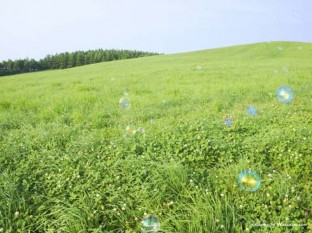
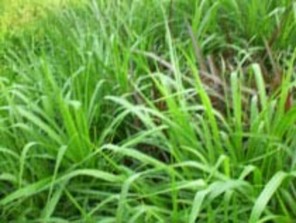
Figure 3.16. Natural grassland Figure 3.17. Wild grass
Maybe you are interested!
-
 Identify Rating Levels and Rating Scales
zt2i3t4l5ee
zt2a3gstourism,quan lan,quang ninh,ecology,ecotourism,minh chau,van don,geography,geographical basis,tourism development,science
zt2a3ge
zc2o3n4t5e6n7ts
of the islanders. Therefore, this indicator will be divided into two sub-indicators:
a1. Natural tourism attractiveness a2. Cultural tourism attractiveness
b. Tourist capacity
The two island communes in Quan Lan have different capacities to receive tourists. Minh Chau Commune is home to many standard hotels and resorts, attracting high-income domestic and international tourists. Meanwhile, Quan Lan Commune has many motels mainly built and operated by local people, so the scale and quality are not high, and will be suitable for ordinary tourists such as students.
c. Time of exploitation of Quan Lan Island Commune:
Quan Lan tourism is seasonal due to weather and climate conditions and festivals only take place on certain days of the year, specifically in spring. In Quan Lan commune, the period from April to June and from September to November is considered the best time to visit Quan Lan because the cultural tourism activities are mainly associated with festivals taking place during this time.
Minh Chau island commune:
Tourism exploitation time is all year round, because this is a place with a number of tourist attractions with diverse ecosystems such as Bai Tu Long National Park Research Center, Tram forest, Turtle Laying Beach, so besides coming to the beach for tourism and vacation in the summer, Minh Chau will attract research groups to come for tourism combined with research at other times of the year.
d. Sustainability
The sustainability of ecotourism sites in Quan Lan and Minh Chau communes depends on the sensitivity of the ecosystems to climate changes.
landscape. In general, these tourist destinations have a fairly high level of sustainability, because they are natural ecosystems, planned and protected. However, if a large number of tourists gather at certain times, it can exceed the carrying capacity and affect the sustainability of the environment (polluted beaches, damaged trees, animals moving away from their habitats, etc.), then the sustainability of the above ecosystems (natural ecosystems, human ecosystems) will also be affected and become less sustainable.
e. Location and accessibility
Both island communes have ports to take tourists to visit from Van Don wharf:
- Quan Lan – Van Don traffic route:
Phuc Thinh – Viet Anh high-speed boat and Quang Minh high-speed boat, depart at 8am and 2pm from Van Don to Quan Lan, and at 7am and 1pm from Quan Lan to Van Don. There are also wooden boats departing at 7am and 1pm.
- Van Don - Minh Chau traffic route:
Chung Huong high-speed train, Minh Chau train, morning 7:30 and afternoon 13:30 from Van Don to Minh Chau, morning 6:30 and afternoon 13:00 from Minh Chau to Van Don.
f. Infrastructure
Despite receiving investment attention, the issue of infrastructure and technical facilities for tourism on Quan Lan Island is still an issue that needs to be resolved because it has a direct impact on the implementation of ecotourism activities. The minimum conditions for serving tourists such as accommodation, electricity, water, communication, especially medical services, and security work need to be given top priority. Ecotourism spots in Minh Chau commune are assessed to have better infrastructure and technical facilities for tourism because there are quite complete and synchronous conditions for serving tourists, meeting many needs of domestic and foreign tourists.
3.2.1.4. Determine assessment levels and assessment scales
Corresponding to the levels of each criterion, the index is the score of those levels in the order of 4, 3, 2, 1 decreasing according to the standard of each level: very attractive (4), attractive (3), average (2), less attractive (1).
3.2.1.5. Determining the coefficients of the criteria
For the assessment of DLST in the two communes of Quan Lan and Minh Chau islands, the students added evaluation coefficients to show the importance of the criteria and indicators as follows:
Coefficient 3 with criteria: Attractiveness, Exploitation time. These are the 2 most important criteria for attracting tourists to tourism in general and eco-tourism in particular, so they have the highest coefficient.
Coefficient 2 with criteria: Capacity, Infrastructure, Location and accessibility . Because the assessment area is an island commune of Van Don district, the above criteria are selected by the author with appropriate coefficients at the average level.
Coefficient 1 with criteria: Sustainability. Quan Lan has natural and human-made ecotourism sites, with high biodiversity and little impact from local human factors. Most of the ecotourism sites are still wild, so they are highly sustainable.
3.2.1.6. Results of DLST assessment on Quan Lan island
a. Assessment of the potential for natural tourism development
For Minh Chau commune:
+ Natural tourism attractiveness is determined to be very attractive (4 points) and the most important coefficient (coefficient 3), so the score of the Attractiveness criterion is 4 x 3 = 12.
+ Capacity is determined as average (2 points) and the coefficient is quite important (coefficient 2), then the score of Capacity criterion is 2 x 2 = 4.
+ Exploitation time is long (4 points), the most important coefficient (coefficient 3) so the score of the Exploitation time criterion is 4 x 3 = 12.
+ Sustainability is determined as sustainable (4 points), the important coefficient is the average coefficient (coefficient 1), so the score of the Sustainability criterion is 4 x 1 = 4 points
+ Location and accessibility are determined to be quite favorable (2 points), the coefficient is quite important (coefficient 2), the criterion score is 2 x 2 = 4 points.
+ Infrastructure is assessed as good (3 points), the coefficient is quite important (coefficient 2), then the score of the Infrastructure criterion is 3 x 2 = 6 points.
The total score for evaluating DLST in Minh Chau commune according to 6 evaluation criteria is determined as: 12 + 4 + 12 + 4 + 4 + 6 = 42 points
Similar assessment for Quan Lan commune, we have the following table:
Table 3.3: Assessment of the potential for natural ecotourism development in Quan Lan and Minh Chau communes
Attractiveness of self-tourismof course
Capacity
Mining time
Sustainability
Location and accessibility
Infrastructure
Result
Point
DarkMulti
Point
DarkMulti
Point
DarkMulti
Point
DarkMulti
Point
DarkMulti
Point
DarkMulti
CommuneMinh Chau
12
12
4
8
12
12
4
4
4
8
6
8
42/52
Quan CommuneLan
6
12
6
8
9
12
4
4
4
8
4
8
33/52
b. Assessment of the potential for humanistic tourism development
For Quan Lan commune:
+ The attractiveness of human tourism is determined to be very attractive (4 points) and the most important coefficient (coefficient 3), so the score of the Attractiveness criterion is 4 x 3 = 12.
+ Capacity is determined to be large (3 points) and the coefficient is quite important (coefficient 2), then the score of the Capacity criterion is 3 x 2 = 6.
+ Mining time is average (3 points), the most important coefficient (coefficient 3) so the score of the Mining time criterion is 3 x 3 = 9.
+ Sustainability is determined as sustainable (4 points), the important coefficient is the average coefficient (coefficient 1), so the score of the Sustainability criterion is 4 x 1 = 4 points.
+ Location and accessibility are determined to be quite favorable (2 points), the coefficient is quite important (coefficient 2), the criterion score is 2 x 2 = 4 points.
+ Infrastructure is rated as average (2 points), the coefficient is quite important (coefficient 2), then the score of the Infrastructure criterion is 2 x 2 = 4 points.
The total score for evaluating DLST in Quan Lan commune according to 6 evaluation criteria is determined as: 12 + 6 + 6 + 4 + 4 + 4 = 36 points.
Similar assessment with Minh Chau commune we have the following table:
Table 3.4: Assessment of the potential for developing humanistic eco-tourism in Quan Lan and Minh Chau communes
Attractiveness of human tourismliterature
Capacity
Mining time
Sustainability
Location and accessibility
Infrastructure
Result
Point
DarkMulti
Point
DarkMulti
Point
DarkMulti
Point
DarkMulti
Point
DarkMulti
Point
DarkMulti
Quan CommuneLan
12
12
6
8
9
12
4
4
4
8
4
8
39/52
Minh CommuneChau
6
12
4
8
12
12
4
4
4
8
6
8
36/52
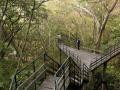
Basically, both Minh Chau and Quan Lan localities have quite favorable conditions for developing ecotourism. However, Quan Lan commune has more advantages to develop ecotourism in a humanistic direction, because this is an area with many famous historical relics such as Quan Lan Communal House, Quan Lan Pagoda, Temple worshiping the hero Tran Khanh Du, ... along with local festivals held annually such as the wind praying ceremony (March 15), Quan Lan festival (June 10-19); due to its location near the port and long exploitation time, the beaches in Quan Lan commune (especially Quan Lan beach) are no longer hygienic and clean to ensure the needs of tourists coming to relax and swim; this is also an area with many beautiful landscapes such as Got Beo wind pass, Ong Phong head, Voi Voi cave, but the ability to access these places is still very limited (dirt hill road, lots of gravel and rocks), especially during rainy and windy times; In addition, other natural resources such as mangrove forests and sea worms have not been really exploited for tourism purposes and ecotourism development. On the contrary, Minh Chau commune has more advantages in developing ecotourism in the direction of natural tourism, this is an area with diverse ecosystems such as at Rua De Beach, Bai Tu Long National Park Conservation Center...; Minh Chau beach is highly appreciated for its natural beauty and cleanliness, ranked in the top ten most beautiful beaches in Vietnam; Minh Chau commune is also home to Tram forest with a large area and a purity of up to 90%, suitable for building bridges through the forest (a very effective type of natural ecotourism currently applied by many countries) for tourists to sightsee, as well as for the purpose of studying and researching.
Figure 3.1: Thenmala Forest Bridge (India) Source: https://www.thenmalaecotourism.com/(August 21, 2019)
3.2.2. Using SWOT matrix to evaluate Quan Lan island tourism
General assessment of current tourism activities of Quan Lan island is shown through the following SWOT matrix:
Table 3.5: SWOT matrix evaluating tourism activities on Quan Lan island
Internal agent
Strengths- There is a lot of potential for tourism development, especially natural ecotourism and humanistic ecotourism.- The unskilled labor force is relatively abundant.- resource environmentunpolluted, still
Weaknesses- Poorly developed infrastructure, especially traffic routes to tourist destinations on the island.- The team of professional staff is still weak.- Tourism products in general
quite wild, originalintact
general and DLST in particularalone is monotonous.
External agents
Opportunity- Tourism is a key industry in the socio-economic development strategy of the province and Van Don economic zone.- Quan Lan was selected as a pilot area for eco-tourism development within the framework of the green growth project between Quang Ninh province and the Japanese organization JICA.- The flow of tourists and especially ecotourism in the world tends toincreasing
Challenge- Weather and climate change abnormally.- Competition in tourism products is increasingly fierce, especially with other localities in the province such as Ha Long, Mong Cai...- Awareness of tourists, especially domestic tourists, about ecotourism and nature conservation is not high.
Through summary analysis using SWOT matrix we see that:
To exploit strengths and take advantage of opportunities, it is necessary to:
- Diversify products and service types (build more tourism routes aimed at specific needs of tourists: experiential tourism immersed in nature, spiritual cultural tourism...)
- Effective exploitation of resources and differentiated products (natural resources and human resources)
div.maincontent .p { color: black; font-family:"Times New Roman", serif; font-style: normal; font-weight: normal; text-decoration: none; font-size: 14pt; margin:0pt; } div.maincontent p { color: black; font-family:"Times New Roman", serif; font-style: normal; font-weight: normal; text-decoration: none; font-size: 14pt; margin:0pt; } div.maincontent .s1 { color: black; font-family:"Times New Roman", serif; font-style: normal; font-weight: normal; text-decoration: none; font-size: 13pt; } div.maincontent .s2 { color: black; font-family:"Times New Roman", serif; font-style: normal; font-weight: normal; text-decoration: none; font-size: 13pt; } div.maincontent .s3 { color: #0D0D0D; font-family:"Times New Roman", serif; font-style: normal; font-weight: bold; text-decoration: none; font-size: 14pt; } div.maincontent .s4 { color: black; font-family:"Times New Roman", serif; font-style: italic; font-weight: normal; text-decoration: none; font-size: 14pt; } div.maincontent .s5 { color: black; font-family:"Times New Roman", serif; font-style: italic; font-weight: bold; text-decoration: none; font-size: 14pt; } div.maincontent .s6 { color: black; font-family:"Times New Roman", serif; font-style: italic; font-weight: normal; text-decoration: none; font-size: 14pt; vertical-align: -3pt; } div.maincontent .s7 { color: black; font-family:"Times New Roman", serif; font-style: italic; font-weight: normal; text-decoration: none; font-size: 14pt; vertical-align: -2pt; } div.maincontent .s8 { color: black; font-family:"Times New Roman", serif; font-style: italic; font-weight: normal; text-decoration: none; font-size: 14pt; vertical-align: -1pt; } div.maincontent .s9 { color: black; font-family:"Times New Roman", serif; font-style: normal; font-weight: normal; text-decoration: none; font-size: 14pt; } div.maincontent .s10 { color: black; font-family:"Times New Roman", serif; font-style: normal; font-weight: bold; text-decoration: none; font-size: 14pt; } div.maincontent .s11 { color: black; font-family:"Times New Roman", serif; font-style: normal; font-weight: normal; text-decoration: none; font-size: 14pt; } div.maincontent .s12 { color: black; font-family:Symbol, serif; font-style: normal; font-weight: normal; text-decoration: none; font-size: 14pt; } div.maincontent .s13 { color: black; font-family:Wingdings; font-style: normal; font-weight: normal; text-decoration: none; font-size: 14pt; } div.maincontent .s14 { color: black; font-family:"Times New Roman", serif; font-style: normal; font-weight: normal; text-decoration: none; font-size: 9pt; vertical-align: 5pt; } div.maincontent .s15 { color: black; font-family:"Times New Roman", serif; font-style: normal; font-weight: normal; text-decoration: none; font-size: 9pt; vertical-align: 5pt; } div.maincontent .s16 { color: black; font-family:Cambria, serif; font-style: italic; font-weight: normal; text-decoration: none; font-size: 14pt; } div.maincontent .s17 { color: #080808; font-family:"Times New Roman", serif; font-style: normal; font-weight: bold; text-decoration: none; font-size: 14pt; } div.maincontent .s18 { color: #080808; font-family:"Times New Roman", serif; font-style: normal; font-weight: normal; text-decoration: none; font-size: 14pt; } div.maincontent .s19 { color: black; font-family:"Times New Roman", serif; font-style: normal; font-weight: normal; text-decoration: none; font-size: 11pt; } div.maincontent .s20 { color: black; font-family:"Times New Roman", serif; font-style: normal; font-weight: normal; text-decoration: none; font-size: 10pt; } div.maincontent .s21 { color: black; font-family:"Times New Roman", serif; font-style: normal; font-weight: bold; text-decoration: none; font-size: 11pt; } div.maincontent .s22 { color: black; font-family:"Times New Roman", serif; font-style: normal; font-weight: normal; text-decoration: none; font-size: 11pt; } div.maincontent .s23 { color: black; font-family:"Times New Roman", serif; font-style: italic; font-weight: normal; text-decoration: none; font-size: 14pt; } div.maincontent .s24 { color: #212121; font-family:"Times New Roman", serif; font-style: normal; font-weight: normal; tex
Identify Rating Levels and Rating Scales
zt2i3t4l5ee
zt2a3gstourism,quan lan,quang ninh,ecology,ecotourism,minh chau,van don,geography,geographical basis,tourism development,science
zt2a3ge
zc2o3n4t5e6n7ts
of the islanders. Therefore, this indicator will be divided into two sub-indicators:
a1. Natural tourism attractiveness a2. Cultural tourism attractiveness
b. Tourist capacity
The two island communes in Quan Lan have different capacities to receive tourists. Minh Chau Commune is home to many standard hotels and resorts, attracting high-income domestic and international tourists. Meanwhile, Quan Lan Commune has many motels mainly built and operated by local people, so the scale and quality are not high, and will be suitable for ordinary tourists such as students.
c. Time of exploitation of Quan Lan Island Commune:
Quan Lan tourism is seasonal due to weather and climate conditions and festivals only take place on certain days of the year, specifically in spring. In Quan Lan commune, the period from April to June and from September to November is considered the best time to visit Quan Lan because the cultural tourism activities are mainly associated with festivals taking place during this time.
Minh Chau island commune:
Tourism exploitation time is all year round, because this is a place with a number of tourist attractions with diverse ecosystems such as Bai Tu Long National Park Research Center, Tram forest, Turtle Laying Beach, so besides coming to the beach for tourism and vacation in the summer, Minh Chau will attract research groups to come for tourism combined with research at other times of the year.
d. Sustainability
The sustainability of ecotourism sites in Quan Lan and Minh Chau communes depends on the sensitivity of the ecosystems to climate changes.
landscape. In general, these tourist destinations have a fairly high level of sustainability, because they are natural ecosystems, planned and protected. However, if a large number of tourists gather at certain times, it can exceed the carrying capacity and affect the sustainability of the environment (polluted beaches, damaged trees, animals moving away from their habitats, etc.), then the sustainability of the above ecosystems (natural ecosystems, human ecosystems) will also be affected and become less sustainable.
e. Location and accessibility
Both island communes have ports to take tourists to visit from Van Don wharf:
- Quan Lan – Van Don traffic route:
Phuc Thinh – Viet Anh high-speed boat and Quang Minh high-speed boat, depart at 8am and 2pm from Van Don to Quan Lan, and at 7am and 1pm from Quan Lan to Van Don. There are also wooden boats departing at 7am and 1pm.
- Van Don - Minh Chau traffic route:
Chung Huong high-speed train, Minh Chau train, morning 7:30 and afternoon 13:30 from Van Don to Minh Chau, morning 6:30 and afternoon 13:00 from Minh Chau to Van Don.
f. Infrastructure
Despite receiving investment attention, the issue of infrastructure and technical facilities for tourism on Quan Lan Island is still an issue that needs to be resolved because it has a direct impact on the implementation of ecotourism activities. The minimum conditions for serving tourists such as accommodation, electricity, water, communication, especially medical services, and security work need to be given top priority. Ecotourism spots in Minh Chau commune are assessed to have better infrastructure and technical facilities for tourism because there are quite complete and synchronous conditions for serving tourists, meeting many needs of domestic and foreign tourists.
3.2.1.4. Determine assessment levels and assessment scales
Corresponding to the levels of each criterion, the index is the score of those levels in the order of 4, 3, 2, 1 decreasing according to the standard of each level: very attractive (4), attractive (3), average (2), less attractive (1).
3.2.1.5. Determining the coefficients of the criteria
For the assessment of DLST in the two communes of Quan Lan and Minh Chau islands, the students added evaluation coefficients to show the importance of the criteria and indicators as follows:
Coefficient 3 with criteria: Attractiveness, Exploitation time. These are the 2 most important criteria for attracting tourists to tourism in general and eco-tourism in particular, so they have the highest coefficient.
Coefficient 2 with criteria: Capacity, Infrastructure, Location and accessibility . Because the assessment area is an island commune of Van Don district, the above criteria are selected by the author with appropriate coefficients at the average level.
Coefficient 1 with criteria: Sustainability. Quan Lan has natural and human-made ecotourism sites, with high biodiversity and little impact from local human factors. Most of the ecotourism sites are still wild, so they are highly sustainable.
3.2.1.6. Results of DLST assessment on Quan Lan island
a. Assessment of the potential for natural tourism development
For Minh Chau commune:
+ Natural tourism attractiveness is determined to be very attractive (4 points) and the most important coefficient (coefficient 3), so the score of the Attractiveness criterion is 4 x 3 = 12.
+ Capacity is determined as average (2 points) and the coefficient is quite important (coefficient 2), then the score of Capacity criterion is 2 x 2 = 4.
+ Exploitation time is long (4 points), the most important coefficient (coefficient 3) so the score of the Exploitation time criterion is 4 x 3 = 12.
+ Sustainability is determined as sustainable (4 points), the important coefficient is the average coefficient (coefficient 1), so the score of the Sustainability criterion is 4 x 1 = 4 points
+ Location and accessibility are determined to be quite favorable (2 points), the coefficient is quite important (coefficient 2), the criterion score is 2 x 2 = 4 points.
+ Infrastructure is assessed as good (3 points), the coefficient is quite important (coefficient 2), then the score of the Infrastructure criterion is 3 x 2 = 6 points.
The total score for evaluating DLST in Minh Chau commune according to 6 evaluation criteria is determined as: 12 + 4 + 12 + 4 + 4 + 6 = 42 points
Similar assessment for Quan Lan commune, we have the following table:
Table 3.3: Assessment of the potential for natural ecotourism development in Quan Lan and Minh Chau communes
Attractiveness of self-tourismof course
Capacity
Mining time
Sustainability
Location and accessibility
Infrastructure
Result
Point
DarkMulti
Point
DarkMulti
Point
DarkMulti
Point
DarkMulti
Point
DarkMulti
Point
DarkMulti
CommuneMinh Chau
12
12
4
8
12
12
4
4
4
8
6
8
42/52
Quan CommuneLan
6
12
6
8
9
12
4
4
4
8
4
8
33/52
b. Assessment of the potential for humanistic tourism development
For Quan Lan commune:
+ The attractiveness of human tourism is determined to be very attractive (4 points) and the most important coefficient (coefficient 3), so the score of the Attractiveness criterion is 4 x 3 = 12.
+ Capacity is determined to be large (3 points) and the coefficient is quite important (coefficient 2), then the score of the Capacity criterion is 3 x 2 = 6.
+ Mining time is average (3 points), the most important coefficient (coefficient 3) so the score of the Mining time criterion is 3 x 3 = 9.
+ Sustainability is determined as sustainable (4 points), the important coefficient is the average coefficient (coefficient 1), so the score of the Sustainability criterion is 4 x 1 = 4 points.
+ Location and accessibility are determined to be quite favorable (2 points), the coefficient is quite important (coefficient 2), the criterion score is 2 x 2 = 4 points.
+ Infrastructure is rated as average (2 points), the coefficient is quite important (coefficient 2), then the score of the Infrastructure criterion is 2 x 2 = 4 points.
The total score for evaluating DLST in Quan Lan commune according to 6 evaluation criteria is determined as: 12 + 6 + 6 + 4 + 4 + 4 = 36 points.
Similar assessment with Minh Chau commune we have the following table:
Table 3.4: Assessment of the potential for developing humanistic eco-tourism in Quan Lan and Minh Chau communes
Attractiveness of human tourismliterature
Capacity
Mining time
Sustainability
Location and accessibility
Infrastructure
Result
Point
DarkMulti
Point
DarkMulti
Point
DarkMulti
Point
DarkMulti
Point
DarkMulti
Point
DarkMulti
Quan CommuneLan
12
12
6
8
9
12
4
4
4
8
4
8
39/52
Minh CommuneChau
6
12
4
8
12
12
4
4
4
8
6
8
36/52
Basically, both Minh Chau and Quan Lan localities have quite favorable conditions for developing ecotourism. However, Quan Lan commune has more advantages to develop ecotourism in a humanistic direction, because this is an area with many famous historical relics such as Quan Lan Communal House, Quan Lan Pagoda, Temple worshiping the hero Tran Khanh Du, ... along with local festivals held annually such as the wind praying ceremony (March 15), Quan Lan festival (June 10-19); due to its location near the port and long exploitation time, the beaches in Quan Lan commune (especially Quan Lan beach) are no longer hygienic and clean to ensure the needs of tourists coming to relax and swim; this is also an area with many beautiful landscapes such as Got Beo wind pass, Ong Phong head, Voi Voi cave, but the ability to access these places is still very limited (dirt hill road, lots of gravel and rocks), especially during rainy and windy times; In addition, other natural resources such as mangrove forests and sea worms have not been really exploited for tourism purposes and ecotourism development. On the contrary, Minh Chau commune has more advantages in developing ecotourism in the direction of natural tourism, this is an area with diverse ecosystems such as at Rua De Beach, Bai Tu Long National Park Conservation Center...; Minh Chau beach is highly appreciated for its natural beauty and cleanliness, ranked in the top ten most beautiful beaches in Vietnam; Minh Chau commune is also home to Tram forest with a large area and a purity of up to 90%, suitable for building bridges through the forest (a very effective type of natural ecotourism currently applied by many countries) for tourists to sightsee, as well as for the purpose of studying and researching.
Figure 3.1: Thenmala Forest Bridge (India) Source: https://www.thenmalaecotourism.com/(August 21, 2019)
3.2.2. Using SWOT matrix to evaluate Quan Lan island tourism
General assessment of current tourism activities of Quan Lan island is shown through the following SWOT matrix:
Table 3.5: SWOT matrix evaluating tourism activities on Quan Lan island
Internal agent
Strengths- There is a lot of potential for tourism development, especially natural ecotourism and humanistic ecotourism.- The unskilled labor force is relatively abundant.- resource environmentunpolluted, still
Weaknesses- Poorly developed infrastructure, especially traffic routes to tourist destinations on the island.- The team of professional staff is still weak.- Tourism products in general
quite wild, originalintact
general and DLST in particularalone is monotonous.
External agents
Opportunity- Tourism is a key industry in the socio-economic development strategy of the province and Van Don economic zone.- Quan Lan was selected as a pilot area for eco-tourism development within the framework of the green growth project between Quang Ninh province and the Japanese organization JICA.- The flow of tourists and especially ecotourism in the world tends toincreasing
Challenge- Weather and climate change abnormally.- Competition in tourism products is increasingly fierce, especially with other localities in the province such as Ha Long, Mong Cai...- Awareness of tourists, especially domestic tourists, about ecotourism and nature conservation is not high.
Through summary analysis using SWOT matrix we see that:
To exploit strengths and take advantage of opportunities, it is necessary to:
- Diversify products and service types (build more tourism routes aimed at specific needs of tourists: experiential tourism immersed in nature, spiritual cultural tourism...)
- Effective exploitation of resources and differentiated products (natural resources and human resources)
div.maincontent .p { color: black; font-family:"Times New Roman", serif; font-style: normal; font-weight: normal; text-decoration: none; font-size: 14pt; margin:0pt; } div.maincontent p { color: black; font-family:"Times New Roman", serif; font-style: normal; font-weight: normal; text-decoration: none; font-size: 14pt; margin:0pt; } div.maincontent .s1 { color: black; font-family:"Times New Roman", serif; font-style: normal; font-weight: normal; text-decoration: none; font-size: 13pt; } div.maincontent .s2 { color: black; font-family:"Times New Roman", serif; font-style: normal; font-weight: normal; text-decoration: none; font-size: 13pt; } div.maincontent .s3 { color: #0D0D0D; font-family:"Times New Roman", serif; font-style: normal; font-weight: bold; text-decoration: none; font-size: 14pt; } div.maincontent .s4 { color: black; font-family:"Times New Roman", serif; font-style: italic; font-weight: normal; text-decoration: none; font-size: 14pt; } div.maincontent .s5 { color: black; font-family:"Times New Roman", serif; font-style: italic; font-weight: bold; text-decoration: none; font-size: 14pt; } div.maincontent .s6 { color: black; font-family:"Times New Roman", serif; font-style: italic; font-weight: normal; text-decoration: none; font-size: 14pt; vertical-align: -3pt; } div.maincontent .s7 { color: black; font-family:"Times New Roman", serif; font-style: italic; font-weight: normal; text-decoration: none; font-size: 14pt; vertical-align: -2pt; } div.maincontent .s8 { color: black; font-family:"Times New Roman", serif; font-style: italic; font-weight: normal; text-decoration: none; font-size: 14pt; vertical-align: -1pt; } div.maincontent .s9 { color: black; font-family:"Times New Roman", serif; font-style: normal; font-weight: normal; text-decoration: none; font-size: 14pt; } div.maincontent .s10 { color: black; font-family:"Times New Roman", serif; font-style: normal; font-weight: bold; text-decoration: none; font-size: 14pt; } div.maincontent .s11 { color: black; font-family:"Times New Roman", serif; font-style: normal; font-weight: normal; text-decoration: none; font-size: 14pt; } div.maincontent .s12 { color: black; font-family:Symbol, serif; font-style: normal; font-weight: normal; text-decoration: none; font-size: 14pt; } div.maincontent .s13 { color: black; font-family:Wingdings; font-style: normal; font-weight: normal; text-decoration: none; font-size: 14pt; } div.maincontent .s14 { color: black; font-family:"Times New Roman", serif; font-style: normal; font-weight: normal; text-decoration: none; font-size: 9pt; vertical-align: 5pt; } div.maincontent .s15 { color: black; font-family:"Times New Roman", serif; font-style: normal; font-weight: normal; text-decoration: none; font-size: 9pt; vertical-align: 5pt; } div.maincontent .s16 { color: black; font-family:Cambria, serif; font-style: italic; font-weight: normal; text-decoration: none; font-size: 14pt; } div.maincontent .s17 { color: #080808; font-family:"Times New Roman", serif; font-style: normal; font-weight: bold; text-decoration: none; font-size: 14pt; } div.maincontent .s18 { color: #080808; font-family:"Times New Roman", serif; font-style: normal; font-weight: normal; text-decoration: none; font-size: 14pt; } div.maincontent .s19 { color: black; font-family:"Times New Roman", serif; font-style: normal; font-weight: normal; text-decoration: none; font-size: 11pt; } div.maincontent .s20 { color: black; font-family:"Times New Roman", serif; font-style: normal; font-weight: normal; text-decoration: none; font-size: 10pt; } div.maincontent .s21 { color: black; font-family:"Times New Roman", serif; font-style: normal; font-weight: bold; text-decoration: none; font-size: 11pt; } div.maincontent .s22 { color: black; font-family:"Times New Roman", serif; font-style: normal; font-weight: normal; text-decoration: none; font-size: 11pt; } div.maincontent .s23 { color: black; font-family:"Times New Roman", serif; font-style: italic; font-weight: normal; text-decoration: none; font-size: 14pt; } div.maincontent .s24 { color: #212121; font-family:"Times New Roman", serif; font-style: normal; font-weight: normal; tex -
 Research on combining nano additives to enhance the physical and technical properties of natural rubber materials and some of its blends - 2
 -
 Sources of Impact from Tourism Activities on the Natural Environment
 -
 Study on natural regeneration characteristics of Lim xet tree species Peltophorum tonkinensis A.Chev in Lam Binh district, Tuyen Quang province - 13
 -
 Natural Features, Flood Control and Drainage Dyke System of the Study Area
+ Nutritional ingredients :
- Green food contains a lot of water (80 - 90%), the fiber ratio in the young stage is 2 - 3%, in the mature stage is 6 - 8%. However, green food is easy to digest, has high palatability, is easy to grow and has high productivity (1 hectare of water spinach gives 50 - 70 tons, 1 hectare of duckweed gives 350 tons).
- Green foods are rich in vitamins such as: Vitamin A, vitamin B 12 and vitamin E.
- The nutrient content in green food is low, the nutritional value is low, only some types of vegetables have higher nutritional value such as: cabbage, kohlrabi, water fern, water spinach...
- The nutrient content in naturally grown green food is lower than that of cultivated food.
- Minerals in green food vary depending on the food, soil, fertilization regime and harvest time.
+ Use green food:
- Feed live with young green foods of the right age.
- Silage to store green food in winter or during lean season.
- Bulls and cows use green foods: Elephant grass, Ruri grass, water spinach, water spinach, sweet potatoes, thick corn... The appropriate amount of fresh grass is from 2 - 2.5 kg/100 kg body weight/day and night. Ideally, 50% of the green grass is fed in the form of re-dried grass.
2. Identify concentrated feed
2.1. Determination of grain and by-product feed
Cereal grains include: rice, corn, wheat, sorghum... By-products of cereal grains include: Bran, broken rice...
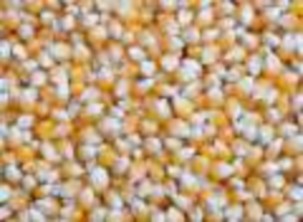
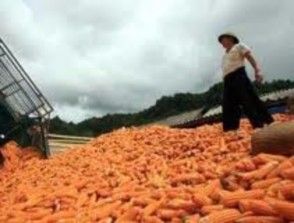
Figure 3.18. Corn kernels Figure 3.19. Drying corn for storage
+ Corn kernels : Corn kernels are a very good concentrated food that provides energy for buffaloes and cows. Yellow corn has a lot of carotene, is rich in vitamin E but is poor in vitamin D, B1 and low in Ca, P, and trace minerals. If buffaloes and cows eat a lot of corn, they must supplement with minerals and protein.
+ Rice grain : This is a product widely used in raising buffalo and bulls. The composition of rice includes crude protein 8.2%, crude fiber 9.2%, minerals 6.5%, non-protein derivatives 64.2%, rice has a husk that accounts for 20% of the rice grain mass, the husk contains a high fiber content of 40%, when using crushed rice for buffalo and cows, it should be fed less.
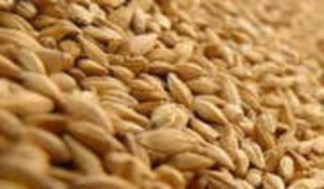
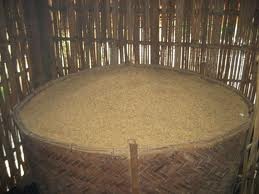
Figure 3.20. Dry rice grains
+ Cassava flour : Is a popular food in the tropics, it provides a lot of energy, however cassava contains toxins so it needs to be processed before feeding to buffaloes and cows.
+ Rice bran : Is an essential food for buffaloes and cows. Rice bran contains many nutrients, vitamin B, and sugar, which help buffaloes and cows grow and develop well. The amount of concentrated feed for 100kg of male body weight is about 0.4-0.5kg/day and night. Concentrated feed should be fed in the form of a complete mixture or a mixture of many ingredients, but it is necessary to ensure the content.
protein
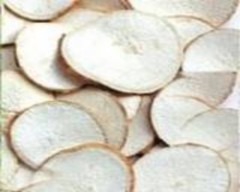
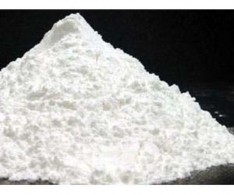
Figure 3.21. Dried cassava slices Figure 3.22. Cassava flour
2.2. Identify vegetable foods
- Root and tuber food is a relatively common food for cattle.
Common vegetables and fruits in our country are: cassava, sweet potatoes, pumpkin, carrots...
- Vegetables and fruits have the characteristics of containing a lot of water, rich in starch, low in fiber, easy to digest, but poor in protein and minerals.
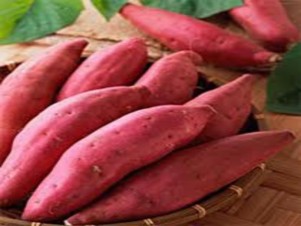
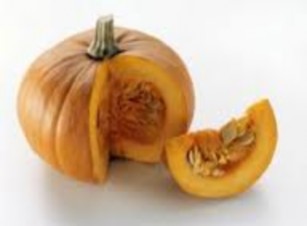
Figure 2.23. Sweet potato Figure 3.24. Pumpkin
- For breeding bulls, you can feed them 6-10kg of vegetables/male/day and night.
- During the heavy mating period, using carrots in the male's diet helps promote digestion and metabolism, which is very good for semen quality. Carrots are rich in carotene (a precursor of vitamin A) and can be fed 4-6 kg/head/day and night.
2.3. Determine mixed feed
- Mixed feed is a combination of two or more types of feed together including: corn flour, rice bran, wheat flour, cassava flour, dried oils, fish meal... primix minerals and vitamins.
- The common characteristics of mixed foods are: low water and fiber content, containing many important nutrients such as protein, carbohydrates, fat, minerals and vitamins, and a fairly high nutrient digestibility rate.
Industrial animal feed factories often produce mixed feed for cattle in two forms:
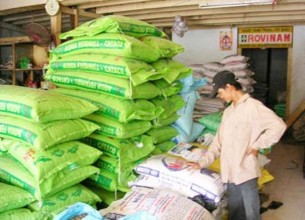
- Protein-rich concentrate mixture (concentrated) mainly consists of oil cake, urea, minerals and vitamins. This type of feed must be mixed with other concentrates such as rice bran, corn flour, wheat flour... according to the manufacturer's instructions to form a complete mixed feed before feeding to breeding buffaloes and bulls.
- Complete mixed concentrate feed is mixed by the manufacturer and used immediately for breeding buffaloes and bulls.
Figure 3.25. Mixed feed
Farmers can mix their own mixed feed for breeding buffaloes and bulls from ingredients available in the family such as rice bran, cassava flour, corn flour... The procedure is as follows:
Step 1 Determine the formula and ingredients:
+ Formula 1:
- Tapioca flour: 65 kg
- Rice bran: 20 kg
- Fish meal (salinity below 15%): 10kg
- Urea: 4 kg
- Bone meal: 1 kg
+ Formula 2:
- Tapioca flour: 45 kg;
- Corn flour: 50 kg;
- Urea: 3 kg;
- Salt: 1 kg;
- Bone meal: 1 kg
+ Ingredients: Cassava flour, corn flour, bone meal, fish meal, salt, urea... the above substances must be dry, smooth, not moldy, have no strange smell and be weighed in sufficient quantity.
Step 2: Mix ingredients
- Pour all types of food ingredients evenly onto the floor or brick yard in the order of large amount first, small amount last.
- For salt, bone meal, urea, minerals, vitamins in small quantities... must be mixed first with a little corn flour or rice bran to increase the mass, then mixed with other ingredients.
- Use a shovel or your hands to mix thoroughly, then put it in a bag, tie it tightly and place it on a shelf, store in a dry, cool, covered place.
- Anti-rat damage.
36
Step 3: Feed the buffalo and bulls.
- Feed the male cattle the correct amount of food in the ration (1-2 kg/cattle).
- Feed mixed concentrate before feeding raw and green food.
3. Identify supplementary foods
3.1. Urea
Urea is a source of inorganic protein supplement in the diet for buffaloes and bulls. Use urea according to the following principles:
- Only use urea for buffaloes and cows when the diet is deficient in protein with the amount used carefully calculated.
- Add urea with concentrated or green feed to avoid poisoning for buffaloes and cows.
- Feed a small amount every day to get the buffalo and cows used to it, lasting from 5 to 10 days.
- Use urea only for adult cows, do not use for calves.
- Urea must be fed several times a day, a little at a time. It should be mixed well with other foods to feed evenly.
- Do not feed buffaloes or cows with urea or give it directly to them or feed it with squash or pumpkins as it will cause poisoning.
toxic.
- Dosage can range from 70 - 100g urea/head/day.
- In case of urea poisoning: if there is vinegar or acetic acid, use at a concentration of 6%, give orally.
about 13.65 liters.
3.2. Minerals and vitamins
Minerals such as calcium (Ca), phosphorus (P), copper ( Cu ), zinc (Zn), manganese (Mn), iron (Fe) and sulfur (S ) . Vitamins, especially vitamins A, D3 and E, are especially important for buffaloes and bulls. Minerals can be supplemented for buffaloes and cows in two ways:
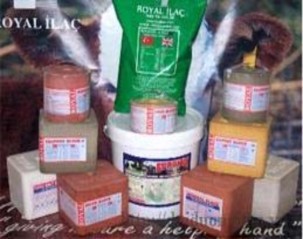
+ Mix mineral premix (mixture of many minerals) into concentrated feed, at a rate of 0.2-0.3% or add to the daily ration with an amount of 10 - 40g for each animal, depending on the subject and exploitation regime.
+ Mix the mineral ingredients together and with carriers (fillers) such as clay, cement... Then the mixture is formed into cakes, dried and called lick stones. These lick stones are placed in the barn, on the grazing land (under the roots of the trees).
tree) for cattle to lick freely. Figure 3.26. Licking stone - Mineral supplement for breeding buffaloes and bulls
3.3. Seed sprouts
- Seed sprouts such as bean sprouts, cotton sprouts, and sprouted rice are foods rich in vitamins A, D, and E, which are essential for buffaloes and bulls. Feed the animals 0.3-0.5kg/head/day.
B. Questions and practice exercises:
I. Questions
1. What is roughage? Types of roughage. Describe the method of softening dry straw for breeding buffaloes and bulls.
2. Describe the characteristics and uses of green feed for breeding buffaloes and bulls. 3. Describe the characteristics and uses of concentrated feed for breeding buffaloes and bulls. 4. Describe the characteristics and uses of mixed feed for breeding buffaloes and bulls.
5. Describe the principle of urea supplementation in the diet of breeding buffaloes and bulls. 6. Describe the characteristics and uses of supplementary feed for breeding buffaloes and bulls.
II. Practice exercises
Lesson 1: Practice composting dry straw with urea and lime.
+ Objective: After completing this lesson, students will be able to:
- Recognize the characteristics of straw used as food for buffaloes and cows.
male
- Carry out composting of straw and stubble with urea and lime properly.
+ Content
* Process of composting straw and rice husk with urea.
- Step 1: Prepare ingredients and tools.
- Step 2: Carry out straw composting
- Step 3: Feed the buffalo and bulls
* Compost straw with lime.
- Step 1: Prepare ingredients and tools.
- Step 2: Carry out straw composting
- Step 3: Feed the buffalo and bulls
+ Resources:
- Pictures, models, slides, videos of straw and methods of composting straw as feed for breeding buffaloes and bulls.
- Straw and tools, urea and lime needed.
- Buffalo and cattle breeding facilities.
- Laptop, Projector..
+ Organization method:
- Introductory instructions: teachers guide the process of composting straw with urea and lime through images and videos.
- Regular guidance: divide the class into small groups of 3-5 students, each group composts a certain amount of straw with urea and lime. The teacher monitors the implementation and corrects students' mistakes.
+ Completion time: 8 hours.
+ Evaluation method: Teachers give out multiple choice questions for students to fill in the answer boxes and compare with the answers.
+ Results and products to be achieved: to properly compost straw with urea and lime to feed breeding buffaloes and bulls.
Lesson 2: Practice of fermenting corn stalks and leaves as food for breeding buffaloes and bulls.
+ Objective: After completing this lesson, students will be able to:
- Recognize the characteristics of corn stalks and leaves used as food for breeding buffalo and bulls.
- Can make silage from corn stalks and leaves as food for breeding buffaloes and bulls
technically correct.
+ Content
* Process of fermenting corn stalks and leaves
- Step 1: Prepare ingredients and tools.
- Step 2: Make green food silage
- Step 3: Feed the buffalo and bulls
+ Resources:
- Pictures, models, slides, and videos of corn plants and methods of fermenting corn stalks and leaves as food for breeding buffaloes and bulls.
- Straw and tools, urea and lime needed.
- Buffalo and cattle breeding facilities.
- Laptop, Projector..
+ Organization method:
- Introductory instructions: the teacher guides the process of fermenting corn stalks and leaves through pictures and videos.
- Regular guidance: divide the class into small groups of 3-5 students, each group performs silage of a certain amount of corn stalks and leaves. The teacher monitors the implementation and corrects the students' mistakes.
+ Completion time: 8 hours.
+ Evaluation method: Teachers give out multiple choice questions for students to fill in the answer boxes and compare with the answers.
+ Results and products to be achieved: to properly ferment corn stalks and leaves as feed for breeding buffaloes and bulls.
Lesson 3: Practice mixing concentrated feed for breeding buffaloes and bulls.
+ Objective: After completing this lesson, students will be able to:
- Recognize the characteristics of concentrated feed and mixed feed for breeding buffaloes and bulls.
- Able to mix compound feed for buffalo and bulls properly.
+ Content
- Determine the mixing formula
- Step 1: Prepare ingredients and tools.
- Step 2: Mix ingredients.
- Step 3: Feed the buffalo and bulls
+ Resources:
- Pictures, models, slides, videos of ingredients and methods of mixing mixed feed for breeding buffaloes and bulls.
- Necessary materials.
- Buffalo and cattle breeding facilities.
- Laptop, Projector..
+ Organization method:
- Introductory instructions: teachers guide the formula and steps for mixing mixed feed for buffaloes and cows through models, pictures and videos.
- Regular guidance: divide the class into small groups of 3-5 students, each group mixes a certain amount of mixed feed. The teacher monitors the implementation and corrects the students' mistakes.
+ Completion time: 4 hours.
+ Evaluation method: Teachers give out multiple choice questions for students to fill in the answer boxes and compare with the answers.
+ Results and products to be achieved: to be able to mix compound feed for buffaloes and bulls with the correct technique.
C. Remember:
- Cover the compost pit carefully, do not let water flow into the compost pit as it will cause the food to rot.
- Do not feed or drink urea directly to buffaloes or cows as it will cause poisoning to the animals.
- Green food plants need to be compacted before filling the compost pit to create an aerated environment.
Lesson 4: Raising buffalo and bulls for breeding
Target:
- Present the content of breeding male cattle.
- Carry out the proper technical breeding of male cattle.
A. Content:
1. Determine nutritional needs
1.1. Determine energy needs
Energy requirements for bulls and buffaloes depend on the mating period and are calculated as follows: Resting period requires 0.8 - 1.2 food units/100kg body weight, Average mating period: 0.9 - 1.3 food units/100kg body weight. Heavy mating period: 1.0 - 1.4 food units/100kg body weight (1 unit of food is equivalent to 2500 Kcal of exchangeable energy)
1.2. Protein requirements.
Protein requirements are determined based on the needs for maintenance, weight gain and semen production. The requirement for digestible protein during the resting period is 100 grams/day.