
leading to respiratory diseases, dry mucous membranes, rheumatism, colds and dry mucous membranes...
- Noise and vibration: Noise is a factor that directly affects people. This is a very unpleasant sound due to collision, friction or movement, transmission of machine mechanisms, which can be machine parts or parts of mechanical equipment. Vibration is a physical factor that is often caused by hand-held tools and equipment that use compressed air, springs or internal combustion engines. In the construction industry, workers are often exposed to activities and operations with high noise levels of pumps, concrete mixers, mortar mixers, drilling machines, pile drivers and vehicles transporting materials and supplies with high frequency and quantity. For reinforced concrete chisels, demolition machines, vibrating rollers, etc., there are both high noise and vibration levels. Working in conditions with noise and vibration exceeding the allowable limit can easily cause occupational diseases such as: deafness, autonomic neuritis, sensory disorders, sexual disorders, damage to bones, joints and muscles; or reduce the ability to concentrate in production work, reduce the ability to be alert... People are tired, irritable, sleepy... Prolonged exposure to noise will cause hearing loss, occupational deafness or neurological disease. The above condition can easily lead to work accidents.
1.2.3. Investment resources for occupational safety and hygiene
In Circular 04/2017/TT-BXD, which regulates occupational safety management in construction works, costs include: Construction and implementation of technical safety measures; Training and propaganda; Providing tools and PPE for workers; Fire prevention and fighting; Improving working conditions, preventing and combating dangerous and harmful factors; Responding to emergency situations and incidents that cause occupational safety loss. However, in order to compete when participating in bidding, contractors often cut investment costs for safety work to lower the value of the bid package. Many construction works do not separate the costs of occupational safety and health but only include them in the construction costs. In particular, contractors
Maybe you are interested!
-
 Solutions to Mobilize Investment Resources for Tourism Human Resource Development
 -
 Research, evaluate and propose measures to minimize occupational safety and health risks when working at height for workers at some construction sites in Hanoi - 19
 -
 Occupational Safety and Health Management System According to Ohasas 18001:2007 Standard
 -
 Applying Vietnam tourism occupational skills standards VTOS to research on security and safety in 4-star hotels in Hai Phong - 20
 -
 Financial Safety Assessment of Investment Projects
Small contractors spend too little on occupational safety and health work and do not fully comply with legal regulations.
1.2.4. Management apparatus for occupational safety and hygiene in the construction industry
The Ministry of Construction assigned the State Appraisal Department of Construction Quality, in which the Labor Safety Department is responsible for implementing occupational safety and health work.
In Decision No. 492/QD-GD dated July 30, 2015 of the Director of the State Appraisal Department of Construction Quality, on the regulation of functions, tasks, powers and organizational structure of the Labor Safety Department. The Labor Safety Department has the function of advising and assisting the Director in enforcing the law and state management of labor safety and hygiene in construction activities. The Labor Safety Department has the task of advising the Ministry to promulgate regulations on labor safety and hygiene, standards, technical regulations, inspection procedures for machinery and equipment with strict requirements on labor safety and hygiene, organizing inspections of labor safety and hygiene of construction projects...
1.2.5. Situation of occupational accidents, occupational diseases, causes
1.2.5.1. Situation of occupational accidents
+ In the construction sector, the number of deaths due to occupational accidents is still higher than in other industries, even the highest. According to the Labor Accident Situation Notice of the Ministry of Labor, War Invalids and Social Affairs, in 2019, there were 8,150 occupational accidents nationwide, killing 979 people. The number of deaths in the construction sector in 2019 was approximately 18%, ranking second compared to other industries. Below is a chart of the sectors with deaths due to occupational accidents by industry:
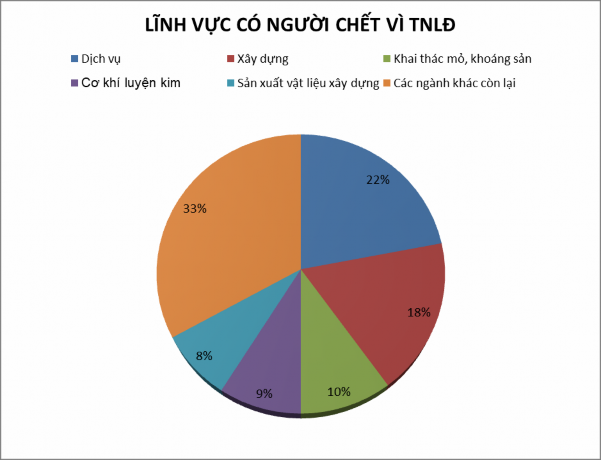
Chart 1.1. Fields with deaths due to work accidents
Source: Notice of Labor Accidents in 2019 - Ministry of Labor, Invalids and Social Affairs
Main causes of occupational accidents:
- Factors causing injuries and deaths in the construction industry are falls from heights, electric shock, flying objects, falling and collapsing objects, rolling over construction machinery and equipment, etc.
1.2.5.2. Occupational diseases in construction
In the construction industry, there are some common occupational diseases such as: occupational deafness, occupational skin disease, and silicosis. The construction materials manufacturing industry has the highest rate of people with silicosis, accounting for 33.41% of the total number of people diagnosed with this disease nationwide.
Main causes of BNN in construction:
- Working in uncomfortable microclimate conditions: Too hot, too cold, causing heatstroke, sunstroke, cold, fainting. Workers work
Working in crane cabs, excavators, outdoor construction work in summer, very cold days in winter.
- Working in conditions of pressure difference higher or lower than atmospheric pressure, causing congestion, with construction work in high mountains, working deep underground, in wells...
- Working in production and construction noise conditions that regularly exceed the limit of 75 dB, sounds that are too loud, causing hearing loss, deafness, with jobs using compressed air tools, mechanical woodworking in the workshop, driving piles, sheet piles with pneumatic hammers, blasting, working near vibrating machines.
- Working in conditions of frequent exposure to dust in the production of construction materials, especially toxic dust such as silica dust, coal dust, radioactive ore, chromium dust... causing diseases that destroy the respiratory system, pneumoconiosis alone or in combination with tuberculosis, with jobs such as: Grinding, transporting loose materials, drilling and blasting, quarrying, electric welding, sandblasting, spray painting...
- Working in conditions with frequent exposure to high intensity energy rays (infrared rays, high frequency currents) can cause eye pain and eye inflammation, with jobs such as electric welding, gas welding, and working with high frequency currents.
- Working in conditions of frequent visual stress when lighting is inadequate, causing eye diseases, reducing vision, causing myopia, with construction work indoors during the day or construction work outdoors at night when there is insufficient illumination (lack of light or inappropriate light).
- Working in conditions where the muscles are constantly strained, standing in one position for a long time, and in a cramped working posture, can cause varicose veins, neuralgia, hemorrhoids, with manual lifting and unloading of heavy objects, forging, roofing, sawing, and manual wood planing...
The purpose of the above classification is to help workers easily understand the harmful effects of the above factors, thereby choosing and implementing appropriate occupational safety and health prevention measures in production labor.
1.3. General assessment
In recent years, the management of occupational safety and health in our country has had positive changes, achieved many significant achievements and gradually met the goals of socio-economic development and international integration. In terms of state management, laws and sub-law documents have been increasingly improved, the state management apparatus has been consolidated from the central to local levels and especially closer and more practical to enterprises and production and business establishments.
In particular, in recent years, ministries in general and the Ministry of Construction in particular have focused on completing technical legal documents to manage safety in areas with high risks of occupational accidents and diseases, including the construction industry. This shows that state management of occupational safety and health is a more effective and practical tool.
Enterprises have also paid more attention and care, creating a working environment and conditions for employees. Moreover, employees themselves have also become more aware and knowledgeable about their rights and obligations in occupational safety and health, so they are more conscious, comply with the law and protect their own safety first, then contribute to reducing occupational accidents occurring in enterprises.
However, in addition to the above achievements, there are still limitations and shortcomings. The legal system related to occupational safety and health is still overlapping and scattered; the issuance of guiding documents is slow, causing difficulties in implementing occupational safety and health regulations; the state management apparatus in this field is weak and lacks the number of field inspectors. For enterprises, many employers have not paid attention to and invested in improving working conditions for employees. There is a shortage of employees working in occupational safety and health and taking care of employees' health and have not been trained and provided with adequate professional skills to promptly respond to modern advanced technology and techniques. Therefore, although the number of occupational accidents has decreased in recent years, the complexity has become more serious.
In summary, the OSH management system of our country compared to other countries in the world is being applied, all are built on a management cycle consisting of four steps: "Planning - Implementation - Inspection - Action". The effectiveness of the management system requires hazard identification and risk assessment. Enterprises in general and construction enterprises in particular must create a working environment and conditions to minimize occupational accidents and acceptable incidents, contributing positively to protecting the lives and health of employees in the enterprise and the whole society.
Chapter 2
CURRENT STATUS OF LABOR SAFETY AND HYGIENE MANAGEMENT AT SOME CONSTRUCTION PROJECTS OF MIK GROUP VIETNAM JOINT STOCK COMPANY
2.1. Company Introduction
2.1.1. Formation and development
MIK Vietnam Group Joint Stock Company (abbreviated as MIKGroup) specializes in the field of Investment, Business and Real Estate Development in Vietnam, with Head Office on 6th Floor, Hong Ha Center Building, 25 Ly Thuong Kiet - Phan Chu Trinh Ward - Hoan Kiem District - Hanoi City.
Date of establishment: 03/06/2014
Phone/Fax: 024- 7308 2828
E-mail: info@mik.vn Website: http://mik.vn/
With a team of experienced managers and experts, MIKGroup is cooperating with many leading prestigious domestic and international partners in design, supervision, construction and real estate management to build & develop high-end real estate projects such as: Imperia Garden, Imperia Sky Garden, Park Riverside, Villa Park, Mövenpick Resort Waverly Phu Quoc,
2.1.2. Mission, vision and core values
Mission: Pioneer in creating projects with outstanding class and quality, while building a sustainable, prestigious and classy Vietnamese brand in the region and internationally.
Vision: To become the leading real estate development group in Vietnam with high-quality, high-end products, accompanying the prosperity of customers and partners, actively contributing to the development of the country. MIKGroup aims to create prosperous and sustainable values for the community. Core values: SAFETY - QUALITY - PROGRESS - CLASS are
Core values that MIK Group puts first throughout its journey
path of formation and development. These are also important value systems that guide MIKGroup on the journey of creating products with unique marks.
2.1.3. Awards, brands
MIKGroup's creativity and dedication over the years have been recognized and honored with many prestigious awards and titles at home and abroad. This demonstrates MIKGroup's constant efforts in creating high-quality products that contribute to the sustainable development of the whole society. Awards achieved:
- 2016: Top 10 leading investment companies in Vietnam awarded by BIC Asia. BCI Asia Awards is one of the most prestigious awards in the construction industry to honor architectural firms and major investors with outstanding achievements in developing unique and valuable projects in 7 countries in the Asia region, including: Hong Kong, Indonesia, Malaysia, Philippines, Singapore, Thailand and Vietnam.
- 2017: Best Green Project Award in Vietnam by Dot Property Award Vietnam 2017. The meaning of this award is the subtle combination of green elements and modern amenities.
- 2017: Twice in a year, received the title of Top 10 "Typical Brands - Trademarks of the Construction Industry in 2017" organized by Construction Newspaper - the mouthpiece of the Ministry of Construction and voted by readers of Construction Newspaper.
- 2018: PropertyGuru Vietnam Property Awards.
- 2019: Strong Vietnamese Brand 2018, MIKGroup Corporation was honored as one of the 10 prestigious brands in the field of real estate development at the Golden Dragon Enterprise Festival. The program is organized annually by Vietnam Economic Times to honor enterprises with impressive achievements in production and business activities, building and developing Vietnamese brands to reach the international market.