
For the children public:
- Understand and grasp one's rights and obligations under the CRC and the Law on Child Protection, Care and Education, especially the right to access information. Actively participate in social activities, "young reporter" clubs, propaganda for Young Pioneers, school radio, and participate in communication activities about children.
- Reflect children's thoughts on social issues and children's issues; exercise the right to supervise children's information activities. Seize opportunities to participate in the production of information products. Actively monitor, propagate and disseminate information obtained from communication programs for children to know their rights and obligations, have necessary life skills and solve their own problems well.
Maybe you are interested!
-
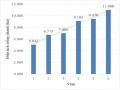
 Lemon Area Chart of Long An Province from 2014 ÷ 2020. (Source: Compiled from Sources of Long An Provincial People's Committee, 2014, 2016, 2020)
 -
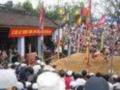 Solutions for tourism development in Tien Lang - 10
zt2i3t4l5ee
zt2a3gstourism, tourism development
zt2a3ge
zc2o3n4t5e6n7ts
- District People's Committees and authorities of communes with tourist attractions should support, promote, and provide necessary information to people, helping them improve their knowledge about tourism. Raise tourism awareness for local people.
*
* *
Due to limited knowledge and research time, the thesis inevitably has shortcomings. Therefore, I look forward to receiving guidance from teachers, experts as well as your comments to make the thesis more complete.
Chapter III Conclusion
Through the issues presented in Chapter II, we can come to some conclusions:
Based on the strengths of available tourism resources, the types of tourism in Tien Lang that need to be promoted in the coming time are sightseeing and resort tourism, discovery tourism, weekend tourism. To improve the quality and diversify tourism products, Tien Lang district needs to combine with local cultural tourism resources, at the same time combine with surrounding areas, build rich tourism products. The strengths of Tien Lang tourism are eco-tourism and cultural tourism, so developing Tien Lang tourism must always go hand in hand with restoring and preserving types of cultural tourism resources. Some necessary measures to support and improve the efficiency of exploiting tourism resources in Tien Lang are: strengthening the construction of technical facilities and labor force serving tourism, actively promoting and advertising tourism, and expanding forms of capital mobilization for tourism development.
CONCLUDE
I Conclusion
1. Based on the results achieved within the framework of the thesis's needs, some basic conclusions can be drawn as follows:
Tien Lang is a locality with great potential for tourism development. The relatively abundant cultural tourism resources and ecological tourism resources have great appeal to tourists. Based on this potential, Tien Lang can build a unique tourism industry that is competitive enough with other localities within Hai Phong city and neighboring areas.
In recent years, the exploitation of the advantages of resources to develop tourism and build tourist routes in Tien Lang has not been commensurate with the available potential. In terms of quantity, many resource objects have not been brought into the purpose of tourism development. In terms of time, the regular service time has not been extended to attract more visitors. Infrastructure and technical facilities are still weak. The labor force is still thin and weak in terms of expertise. Tourism programs and routes have not been organized properly, the exploitation content is still monotonous, so it has not attracted many visitors. Although resources have not been mobilized much for tourism development, they are facing the risk of destruction and degradation.
2. Based on the results of investigation, analysis, synthesis, evaluation and selective absorption of research results of related topics, the thesis has proposed a number of necessary solutions to improve the efficiency of exploiting tourism resources in Tien Lang such as: promoting the restoration and conservation of tourism resources, focusing on investment and key exploitation of ecotourism resources, strengthening the construction of infrastructure and tourism workforce. Expanding forms of capital mobilization. In addition, the thesis has built a number of tourist routes of Hai Phong in which Tien Lang tourism resources play an important role.
Exploiting Tien Lang tourism resources for tourism development is currently facing many difficulties. The above measures, if applied synchronously, will likely bring new prospects for the local tourism industry, contributing to making Tien Lang tourism an important economic sector in the district's economic structure.
REFERENCES
1. Nhuan Ha, Trinh Minh Hien, Tran Phuong, Hai Phong - Historical and cultural relics, Hai Phong Publishing House, 1993
2. Hai Phong City History Council, Hai Phong Gazetteer, Hai Phong Publishing House, 1990.
3. Hai Phong City History Council, History of Tien Lang District Party Committee, Hai Phong Publishing House, 1990.
4. Hai Phong City History Council, University of Social Sciences and Humanities, VNU, Hai Phong Place Names Encyclopedia, Hai Phong Publishing House. 2001.
5. Law on Cultural Heritage and documents guiding its implementation, National Political Publishing House, Hanoi, 2003.
6. Tran Duc Thanh, Lecture on Tourism Geography, Faculty of Tourism, University of Social Sciences and Humanities, VNU, 2006
7. Hai Phong Center for Social Sciences and Humanities, Some typical cultural heritages of Hai Phong, Hai Phong Publishing House, 2001
8. Nguyen Ngoc Thao (editor-in-chief, Tourism Geography, Hai Phong Publishing House, two volumes (2001-2002)
9. Nguyen Minh Tue and group of authors, Hai Phong Tourism Geography, Ho Chi Minh City Publishing House, 1997.
10. Nguyen Thanh Son, Hai Phong Tourism Territory Organization, Associate Doctoral Thesis in Geological Geography, Hanoi, 1996.
11. Decision No. 2033/QD – UB on detailed planning of Tien Lang town, Hai Phong city until 2020.
12. Department of Culture, Information, Hai Phong Museum, Hai Phong relics
- National ranked scenic spot, Hai Phong Publishing House, 2005. 13. Tien Lang District People's Committee, Economic Development Planning -
Culture - Society of Tien Lang district to 2010.
14.Website www.HaiPhong.gov.vn
APPENDIX 1
List of national ranked monuments
STT
Name of the monument
Number, year of decisiondetermine
Location
1
Gam Temple
938 VH/QĐ04/08/1992
Cam Khe Village- Toan Thang commune
2
Doc Hau Temple
9381 VH/QĐ04/08/1992
Doc Hau Village –Toan Thang commune
3
Cuu Doi Communal House
3207 VH/QĐDecember 30, 1991
Zone II of townTien Lang
4
Ha Dai Temple
938 VH/QĐ04/08/1992
Ha Dai Village –Tien Thanh commune
APPENDIX II
STT
Name of the monument
Number, year of decision
Location
1
Phu Ke Pagoda Temple
178/QD-UBJanuary 28, 2005
Zone 1 - townTien Lang
2
Trung Lang Temple
178/QD-UBJanuary 28, 2005
Zone 4 – townTien Lang
3
Bao Khanh Pagoda
1900/QD-UBAugust 24, 2006
Nam Tu Village -Kien Thiet commune
4
Bach Da Pagoda
1792/QD-UB11/11/2002
Hung Thang Commune
5
Ngoc Dong Temple
177/QD-UBNovember 27, 2005
Tien Thanh Commune
6
Tomb of Minister TSNhu Van Lan
2848/QD-UBSeptember 19, 2003
Nam Tu Village -Kien Thiet commune
7
Canh Son Stone Temple
2160/QD-UBSeptember 19, 2003
Van Doi Commune –Doan Lap
8
Meiji Temple
2259/QD-UBSeptember 19, 2002
Toan Thang Commune
9
Tien Doi Noi Temple
477/QD-UBSeptember 19, 2005
Doan Lap Commune
10
Tu Doi Temple
177/QD-UBJanuary 28, 2005
Doan Lap Commune
11
Duyen Lao Temple
177/QD-UBJanuary 28, 2005
Tien Minh Commune
12
Dinh Xuan Uc Pagoda
177/QD-UBJanuary 28, 2005
Bac Hung Commune
13
Chu Khe Pagoda
177/QD-UBJanuary 28, 2005
Hung Thang Commune
14
Dong Dinh
2848/QD-UBNovember 21, 2002
Vinh Quang Commune
15
President's Memorial HouseTon Duc Thang
177/QD-UBJanuary 28, 2005
NT Quy Cao
Ha Dai Temple
Ben Vua Temple
Tien Lang hot spring
div.maincontent .p { color: black; font-family:"Times New Roman", serif; font-style: normal; font-weight: normal; text-decoration: none; font-size: 14pt; margin:0pt; } div.maincontent p { color: black; font-family:"Times New Roman", serif; font-style: normal; font-weight: normal; text-decoration: none; font-size: 14pt; margin:0pt; } div.maincontent .s1 { color: black; font-family:"Times New Roman", serif; font-style: normal; font-weight: normal; font-size: 16pt; } div.maincontent .s2 { color: black; font-family:"Times New Roman", serif; font-style: italic; font-weight: bold; text-decoration: none; font-size: 14pt; } div.maincontent .s3 { color: black; font-family:"Times New Roman", serif; font-style: italic; font-weight: normal; text-decoration: none; font-size: 14pt; } div.maincontent .s4 { color: black; font-family:"Times New Roman", serif; font-style: normal; font-weight: normal; font-size: 14pt; } div.maincontent .s5 { color: black; font-family:"Times New Roman", serif; font-style: normal; font-weight: bold; font-size: 14pt; } div.maincontent .s6 { color: black; font-family:"Times New Roman", serif; font-style: normal; font-weight: normal; text-decoration: none; font-size: 14pt; } div.maincontent .s7 { color: black; font-family:"Times New Roman", serif; font-style: normal; font-weight: bold; text-decoration: none; font-size: 14pt; } div.maincontent .s8 { color: black; font-family:"Times New Roman", serif; font-style: normal; font-weight: normal; text-decoration: none; font-size: 9pt; vertical-align: 6pt; } div.maincontent .s9 { color: black; font-family:"Times New Roman", serif; font-style: normal; font-weight: bold; text-decoration: none; font-size: 12pt; } div.maincontent .s11 { color: black; font-family:"Times New Roman", serif; font-style: normal; font-weight: normal; tex
Solutions for tourism development in Tien Lang - 10
zt2i3t4l5ee
zt2a3gstourism, tourism development
zt2a3ge
zc2o3n4t5e6n7ts
- District People's Committees and authorities of communes with tourist attractions should support, promote, and provide necessary information to people, helping them improve their knowledge about tourism. Raise tourism awareness for local people.
*
* *
Due to limited knowledge and research time, the thesis inevitably has shortcomings. Therefore, I look forward to receiving guidance from teachers, experts as well as your comments to make the thesis more complete.
Chapter III Conclusion
Through the issues presented in Chapter II, we can come to some conclusions:
Based on the strengths of available tourism resources, the types of tourism in Tien Lang that need to be promoted in the coming time are sightseeing and resort tourism, discovery tourism, weekend tourism. To improve the quality and diversify tourism products, Tien Lang district needs to combine with local cultural tourism resources, at the same time combine with surrounding areas, build rich tourism products. The strengths of Tien Lang tourism are eco-tourism and cultural tourism, so developing Tien Lang tourism must always go hand in hand with restoring and preserving types of cultural tourism resources. Some necessary measures to support and improve the efficiency of exploiting tourism resources in Tien Lang are: strengthening the construction of technical facilities and labor force serving tourism, actively promoting and advertising tourism, and expanding forms of capital mobilization for tourism development.
CONCLUDE
I Conclusion
1. Based on the results achieved within the framework of the thesis's needs, some basic conclusions can be drawn as follows:
Tien Lang is a locality with great potential for tourism development. The relatively abundant cultural tourism resources and ecological tourism resources have great appeal to tourists. Based on this potential, Tien Lang can build a unique tourism industry that is competitive enough with other localities within Hai Phong city and neighboring areas.
In recent years, the exploitation of the advantages of resources to develop tourism and build tourist routes in Tien Lang has not been commensurate with the available potential. In terms of quantity, many resource objects have not been brought into the purpose of tourism development. In terms of time, the regular service time has not been extended to attract more visitors. Infrastructure and technical facilities are still weak. The labor force is still thin and weak in terms of expertise. Tourism programs and routes have not been organized properly, the exploitation content is still monotonous, so it has not attracted many visitors. Although resources have not been mobilized much for tourism development, they are facing the risk of destruction and degradation.
2. Based on the results of investigation, analysis, synthesis, evaluation and selective absorption of research results of related topics, the thesis has proposed a number of necessary solutions to improve the efficiency of exploiting tourism resources in Tien Lang such as: promoting the restoration and conservation of tourism resources, focusing on investment and key exploitation of ecotourism resources, strengthening the construction of infrastructure and tourism workforce. Expanding forms of capital mobilization. In addition, the thesis has built a number of tourist routes of Hai Phong in which Tien Lang tourism resources play an important role.
Exploiting Tien Lang tourism resources for tourism development is currently facing many difficulties. The above measures, if applied synchronously, will likely bring new prospects for the local tourism industry, contributing to making Tien Lang tourism an important economic sector in the district's economic structure.
REFERENCES
1. Nhuan Ha, Trinh Minh Hien, Tran Phuong, Hai Phong - Historical and cultural relics, Hai Phong Publishing House, 1993
2. Hai Phong City History Council, Hai Phong Gazetteer, Hai Phong Publishing House, 1990.
3. Hai Phong City History Council, History of Tien Lang District Party Committee, Hai Phong Publishing House, 1990.
4. Hai Phong City History Council, University of Social Sciences and Humanities, VNU, Hai Phong Place Names Encyclopedia, Hai Phong Publishing House. 2001.
5. Law on Cultural Heritage and documents guiding its implementation, National Political Publishing House, Hanoi, 2003.
6. Tran Duc Thanh, Lecture on Tourism Geography, Faculty of Tourism, University of Social Sciences and Humanities, VNU, 2006
7. Hai Phong Center for Social Sciences and Humanities, Some typical cultural heritages of Hai Phong, Hai Phong Publishing House, 2001
8. Nguyen Ngoc Thao (editor-in-chief, Tourism Geography, Hai Phong Publishing House, two volumes (2001-2002)
9. Nguyen Minh Tue and group of authors, Hai Phong Tourism Geography, Ho Chi Minh City Publishing House, 1997.
10. Nguyen Thanh Son, Hai Phong Tourism Territory Organization, Associate Doctoral Thesis in Geological Geography, Hanoi, 1996.
11. Decision No. 2033/QD – UB on detailed planning of Tien Lang town, Hai Phong city until 2020.
12. Department of Culture, Information, Hai Phong Museum, Hai Phong relics
- National ranked scenic spot, Hai Phong Publishing House, 2005. 13. Tien Lang District People's Committee, Economic Development Planning -
Culture - Society of Tien Lang district to 2010.
14.Website www.HaiPhong.gov.vn
APPENDIX 1
List of national ranked monuments
STT
Name of the monument
Number, year of decisiondetermine
Location
1
Gam Temple
938 VH/QĐ04/08/1992
Cam Khe Village- Toan Thang commune
2
Doc Hau Temple
9381 VH/QĐ04/08/1992
Doc Hau Village –Toan Thang commune
3
Cuu Doi Communal House
3207 VH/QĐDecember 30, 1991
Zone II of townTien Lang
4
Ha Dai Temple
938 VH/QĐ04/08/1992
Ha Dai Village –Tien Thanh commune
APPENDIX II
STT
Name of the monument
Number, year of decision
Location
1
Phu Ke Pagoda Temple
178/QD-UBJanuary 28, 2005
Zone 1 - townTien Lang
2
Trung Lang Temple
178/QD-UBJanuary 28, 2005
Zone 4 – townTien Lang
3
Bao Khanh Pagoda
1900/QD-UBAugust 24, 2006
Nam Tu Village -Kien Thiet commune
4
Bach Da Pagoda
1792/QD-UB11/11/2002
Hung Thang Commune
5
Ngoc Dong Temple
177/QD-UBNovember 27, 2005
Tien Thanh Commune
6
Tomb of Minister TSNhu Van Lan
2848/QD-UBSeptember 19, 2003
Nam Tu Village -Kien Thiet commune
7
Canh Son Stone Temple
2160/QD-UBSeptember 19, 2003
Van Doi Commune –Doan Lap
8
Meiji Temple
2259/QD-UBSeptember 19, 2002
Toan Thang Commune
9
Tien Doi Noi Temple
477/QD-UBSeptember 19, 2005
Doan Lap Commune
10
Tu Doi Temple
177/QD-UBJanuary 28, 2005
Doan Lap Commune
11
Duyen Lao Temple
177/QD-UBJanuary 28, 2005
Tien Minh Commune
12
Dinh Xuan Uc Pagoda
177/QD-UBJanuary 28, 2005
Bac Hung Commune
13
Chu Khe Pagoda
177/QD-UBJanuary 28, 2005
Hung Thang Commune
14
Dong Dinh
2848/QD-UBNovember 21, 2002
Vinh Quang Commune
15
President's Memorial HouseTon Duc Thang
177/QD-UBJanuary 28, 2005
NT Quy Cao
Ha Dai Temple
Ben Vua Temple
Tien Lang hot spring
div.maincontent .p { color: black; font-family:"Times New Roman", serif; font-style: normal; font-weight: normal; text-decoration: none; font-size: 14pt; margin:0pt; } div.maincontent p { color: black; font-family:"Times New Roman", serif; font-style: normal; font-weight: normal; text-decoration: none; font-size: 14pt; margin:0pt; } div.maincontent .s1 { color: black; font-family:"Times New Roman", serif; font-style: normal; font-weight: normal; font-size: 16pt; } div.maincontent .s2 { color: black; font-family:"Times New Roman", serif; font-style: italic; font-weight: bold; text-decoration: none; font-size: 14pt; } div.maincontent .s3 { color: black; font-family:"Times New Roman", serif; font-style: italic; font-weight: normal; text-decoration: none; font-size: 14pt; } div.maincontent .s4 { color: black; font-family:"Times New Roman", serif; font-style: normal; font-weight: normal; font-size: 14pt; } div.maincontent .s5 { color: black; font-family:"Times New Roman", serif; font-style: normal; font-weight: bold; font-size: 14pt; } div.maincontent .s6 { color: black; font-family:"Times New Roman", serif; font-style: normal; font-weight: normal; text-decoration: none; font-size: 14pt; } div.maincontent .s7 { color: black; font-family:"Times New Roman", serif; font-style: normal; font-weight: bold; text-decoration: none; font-size: 14pt; } div.maincontent .s8 { color: black; font-family:"Times New Roman", serif; font-style: normal; font-weight: normal; text-decoration: none; font-size: 9pt; vertical-align: 6pt; } div.maincontent .s9 { color: black; font-family:"Times New Roman", serif; font-style: normal; font-weight: bold; text-decoration: none; font-size: 12pt; } div.maincontent .s11 { color: black; font-family:"Times New Roman", serif; font-style: normal; font-weight: normal; tex -
 Recruitment of civil servants at the People's Committee of Luc Nam district, Bac Giang province - Current situation and solutions - 9
 -
 Policy of Ha Tinh Provincial Party Committee on Building Grassroots Party Organizations in Enterprises
 -
 Ha Nam Provincial Party Committee led the restoration and development of craft villages from 1997 to 2014 - 6
Chapter 4 Summary
Chapter 4 analyzed a number of factors affecting the role of Binh Phuoc Provincial Information Center in implementing children's rights. The province's policies on children's rights, information centers and the role of information centers in implementing children's rights as well as the local economic, cultural and social development conditions have an impact on the role of Binh Phuoc Provincial Information Center in implementing children's rights in the locality. Characteristics of media agencies with the principles, purposes and organizational structure of information centers; types of media, time of communication; views of the governing agency greatly affect the communication process on children's rights. Socio-demographic characteristics; awareness, attitude, working behavior; support of media agencies and the attention and facilitation of relevant groups and individuals have a not too great impact on the attention of communication staff on communication work on children's rights.
In the coming time, the roles of the Center for Child Rights in implementing children's rights will progress better, creating many models of awareness, attitudes and behaviors to properly implement children's rights, although there are still differences between the roles.
Based on the current situation, influencing factors, changing trends in roles and some issues raised with the role of the Binh Phuoc Provincial Information and Communications Agency in implementing children's rights, the author of the thesis has proposed a system of solutions for the Information and Communications Agency, for communication staff, for leadership and management agencies, for the adult public and the child public.
CONCLUSION AND RECOMMENDATIONS
CONCLUDE
The thesis has combined the approach of the sociology of mass media (Roman Jakobson's cyclical communication model theory), the social constructivism of Peter L. Berger, the mediation theory of the collective role of R. Merton and the approach to the role of mass media based on children's rights, to analyze the current situation and factors affecting the role of mass media in Binh Phuoc province in implementing children's rights at the local level today. Below are some main research results of the thesis:
1. Communication to promote the implementation of children's rights has been paid attention to by agencies and types of mass media in Binh Phuoc province, contributing to bringing the Party's guidelines, policies and laws of the State on children's rights into life, mobilizing and gathering social resources to participate in solving children's issues. However, it has not really met the requirements of child protection, care and education. Children's issues have not become one of the important contents of mass media in Binh Phuoc province, often having to take a back seat to political, economic and other urgent issues. Children's rights have not been mentioned directly and clearly in mass media, but are often expressed under related concepts.
2. The role of the Binh Phuoc Provincial Information Center in implementing children's rights currently has a negligible difference between the actual role; in the opinions of media officers and the opinions and expectations of the public. The Information Center has relatively fully performed the five roles in implementing children's rights. However, there are still many limitations in terms of content and form, but it has been received and evaluated quite positively by the public, basically satisfying the public's information needs and being applied by the public in practice. However, there is still a relatively large difference between each agency, type of Information Center and between the roles. That is also the point that the Information Center agencies in Binh Phuoc need to consider and continue to adjust.
The role of advocacy, encouragement and the role of information, propaganda and education on the implementation of children's rights are best implemented; then the role of entertainment for children and the role of monitoring the implementation of children's rights; the most limited role is the role of forming and expressing public opinion. Binh Phuoc Radio and Television Station performs the best roles in the implementation of children's rights; second is Binh Phuoc Newspaper; third is Bu Gia Map District Radio; then Dong Phu District Radio, Dong Xoai Town; limited
especially Bu Dang District Radio. Television performs the best roles; second is district radio, print newspapers; third is online newspapers; the most limited is radio.
3. The TTDC has tried to bring to the public a not-so-dismal picture of the situation of children in Binh Phuoc. However, that picture is not comprehensive and does not speak for the voice of local children. The best interests of children and their participation have not been ensured by the TTDC in the province. Children do not have the opportunity to access much information, especially rural children and ethnic minority children.
4. Binh Phuoc Media Center has few violations in reporting and reflecting on children's issues, does not abuse children, does not exploit children's topics to sensationalize and attract readers. However, it avoids many pressing issues in children's lives. The information is monotonous and boring, does not have a strong impact on public opinion, and does not have a strategy for communicating children's rights. It has not really paid attention to participating in perfecting policies on children's rights and serving children's entertainment needs. The communication process is still one-way. Media houses have not complied well with the principles of access to rights and related laws. Training and fostering communication skills on children have not received due attention. Awareness of children's rights among media staff and the public is still limited. The implementation of children's rights is still a long-term process, full of difficulties and challenges.
5. Compare experimental results with research hypotheses:
The first hypothesis has been verified. Binh Phuoc Provincial People's Committee has indeed played an important role in implementing children's rights and has performed relatively well the five roles (information, propaganda, education; forming and guiding public opinion; mobilizing and encouraging the implementation of children's rights; monitoring the implementation of children's rights and serving children's entertainment needs). However, the level of implementation of the roles has significant differences. The role of mobilizing and encouraging and the role of informing, propagating, and educating the implementation of children's rights have been performed best; then the role of entertaining children; then the role of monitoring the implementation of children's rights; the role of forming and expressing public opinion has been the most limited.
The second hypothesis was tested. The characteristics of media agencies with their mission, objectives and organizational structure; types of media, timing of media; and the views of the governing agency greatly influence communication activities on children's rights. The characteristics of media officers with their personal characteristics
Social attitudes and perceptions, working attitudes and behaviors; support from media agencies and the attention and facilitation of relevant agencies, organizations and individuals have insignificant impact on this situation.
The third hypothesis has been verified. The province's policies on children's rights, the role of the Center for Social Affairs in implementing children's rights as well as the local economic, cultural and social development conditions have significantly impacted the current status of the role of the Center for Social Affairs in Binh Phuoc province in implementing children's rights.
6. Comparison of experimental results with research theories:
- Roman Jakobson's cyclical communication model only refers to the general public as the recipient of communication messages, never taking into account the specific public group with rights, which is children. Therefore, this communication model needs to analyze and emphasize the child public group with its own requirements, taking into account children's rights for higher communication effectiveness.
- Peter L.Berger's social constructivism theory has shown the extremely important position and role of the mass media in implementing children's rights. This theory shows great practical significance if the mass media creates correct models of awareness, attitudes and behaviors to implement children's rights. The danger is terrible if the mass media creates incorrect models, lacking an approach to children's rights. However, if the public is equipped with knowledge and understanding of children's rights, has qualifications and experience, they can be selective in the reception process. Therefore, improving people's knowledge is extremely necessary, closely linked to communication activities. At the same time, it is necessary to orient the content and political ideology for communication activities as well as equip communication staff with communication skills about children. This theory needs to continue to be applied and verified in other studies.
- R.Merton's theory of collective role average explains the difference and tension in the role of the collective role of the media in implementing children's rights. By extension, we can explain the tension and conflict in the roles of organizations and individuals associated with certain positions.
7. The thesis affirms that the role of the Center for Child Rights is extremely important in the process of implementing children's rights. The Center for Child Rights has the capacity to create models of awareness, attitudes and behaviors to implement children's rights according to the Party's guidelines, policies and laws of the State and CRC. Therefore, it is necessary to strengthen the role of the Center for Child Rights in implementing children's rights.
children's rights, protection and promotion of human rights in Vietnam, especially when
Our country is a member of the United Nations Human Rights Council.
RECOMMENDATION
1. For the Ministry of Labor, War Invalids and Social Affairs
Preside over and coordinate with the Ministry of Information and Communications to develop and implement the Communication Strategy on Children's Rights and the National Strategy for Developing Information and Communications for Children; supplement regulations on communication work on children's rights (communication content, approaches to children's rights) in the latest amendment of the Law on Child Protection, Care and Education, and submit to the National Assembly for approval.
2. For the Ministry of Information and Communications
Preside over and coordinate with the Ministry of Labor, War Invalids and Social Affairs to monitor, inspect and handle cases of mass media violating children's rights and violations in the process of communicating children's rights; supplement regulations on communication activities on children's rights in the latest amendments to the Press Law and Publishing Law, and submit them to the National Assembly for approval.
3. For Vietnam Journalists Association
Early establishment of a professional ethics standard for journalists on children's topics, supplementing the regulations on professional ethics for Vietnamese journalists. Have a press award on children and children's rights.
4. For the Provincial Party Committee and People's Committee of Binh Phuoc province
- Directing the increase of budget and facilities for the protection, care and education of children; directing state agencies, organizations and individuals to be responsible for resolving urgent issues related to children and cases of violations of children's rights reported on the Internet; strictly and promptly handling violations in communication about children.
- Have a project on communication on children's rights. Build a team of professional reporters and editors on children's topics. Implement well the policy of training and fostering staff, attracting talented people and young students with qualifications to supplement the current weak and lacking staff of TTDC.
- Organize annual training on communication skills for children, ensuring that 100% of leaders and staff of the TTDC agencies participate. Regulations on royalties encourage authors with works for and about children with an incentive level of 10-30% of the royalties of that work.
- Increase propaganda budget for the TTDC agencies, with a rate of 20-30% of the entire program, project, and activity period and equal to 20% of the regular budget for child protection and care work annually.
- Supplement and adjust the Press Development Plan of Binh Phuoc province to 2020, with a vision to 2030, in terms of investment in building television channels and newspapers specifically for children.
- Direct the Provincial Youth Union to preside over and coordinate with press agencies and the Journalists Association to establish small reporter clubs at the provincial and district levels. Binh Phuoc Radio and Television Station and District Radio and Television Stations provide technical guidance and communication skills on children to these clubs.
5. For mass media agencies of Binh Phuoc province
- Binh Phuoc Radio and Television needs to include children's rights content in ethnic language programs; increase self-production of entertainment and educational programs for children; move towards having a television and radio channel dedicated to children. Balance the roles in implementing children's rights, pay attention to the roles of monitoring and forming, expressing public opinion on implementing children's rights. Radio newspapers need to increase media products that perform well in these two roles.
- Binh Phuoc Newspaper, both print and online, needs to have a section for children, and move towards building a separate newspaper for children; pay attention to the role of entertainment for children and propaganda for ethnic minorities about children's rights in the photo news.
- District radio and television stations have special sections for children; pay attention to the role of entertainment for children, monitor the implementation of children's rights and form and express public opinion; propagate to the ethnic minority public about children's rights in ethnic language programs. Bu Gia Map district radio station needs to increase the number of news articles; Bu Dang district radio station needs to increase the number and improve the quality of news articles about children.
- The provincial media must closely follow reality and actively communicate about children, not allowing other media channels that do not fully understand the situation to report inaccurate, unoriented news that is not beneficial to children, negatively affecting children and the province's work of protecting, caring for and educating children.
In this thesis, the author has made efforts to research but has not yet verified the impact of the media alone and the media of Binh Phuoc province on the awareness, attitude and behavior of implementing children's rights of the people of Binh Phuoc. In reality, doing this is extremely difficult, because the knowledge and skills of implementing children's rights of the people in the province do not come from just one source but are a complex combination of many sources. The thesis also does not have the conditions to deeply analyze the quality of content and form of each media product about children from the perspective of the press and media; there are no conditions to measure the change in awareness, attitude and behavior of the people before and after accessing information about children's rights from the media. The author of the thesis will continue to research these issues in the future.
LIST OF PUBLISHED WORKS OF THE THESIS AUTHOR
1. Nguyen Thi Minh Nham (2009), “Some comments on the role of grassroots leaders and managers in Dong Phu district - Binh Phuoc in implementing children's rights”, Theoretical Education, (8), pp.57-61.
2. Nguyen Thi Minh Nham (2009), “The relationship between gender equality in the family and the issue of implementing children's rights”, Human Studies, (5), pp.50-58.
3. Nguyen Thi Minh Nham (2009), “Strengthening the role of leaders and managers
“The grassroots level in implementing children's rights”, Theoretical Education, (11), pp.50-53.
4. Nguyen Thi Minh Nham, Dang Anh Tuyet (2009), “The role of grassroots leaders and managers in implementing children's rights: reality in Binh Phuoc”, Population and Development, (96), pp.26-28.
5. Nguyen Thi Minh Nham (2009-2011), Head of the provincial scientific research project "Strengthening the role of grassroots leaders and managers in ensuring the implementation of children's rights in Binh Phuoc province today", Binh Phuoc. The project was accepted and classified as Good.
6. Nguyen Thi Minh Nham (2010), “Some comments on the role of grassroots leaders and managers in implementing children's rights (Through a case study of Dong Phu district, Binh Phuoc province”, Sociology, (02), pp.52-60.
7. Nguyen Thi Minh Nham (2010), “The role of grassroots leaders and managers in implementing children's rights - through public opinion”, Political Science, (4), pp.61-67.
8. Nguyen Thi Minh Nham (2012), “The role of the Center in implementing children's rights”, Theoretical activities, (5), pp.44-48.
9. Nguyen Thi Minh Nham (2013), “The role of the Center in implementing children's rights”, Theoretical Education, (11), pp.144-146 and 154.
10. Nguyen Thi Minh Nham (2013), “Communication on the situation of children in Binh Phuoc province”, Population and Development, (151), pp. 6-9.
11. Nguyen Thi Minh Nham (2014), “The role of the Center for Child Rights in implementing children's rights in Binh Phuoc province today, through public opinion”, Political Science, (01), pp.62-66.