
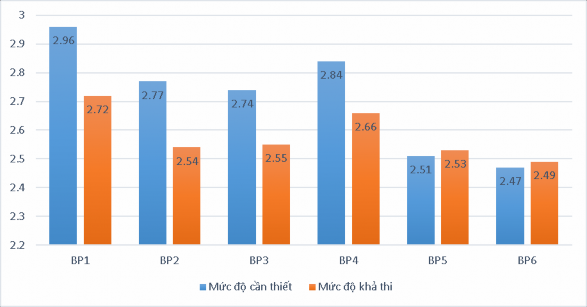
Figure 3.1. Relationship between measures
Chapter 3 Summary
Maybe you are interested!
-

 Ministry of Education and Training. Document Introducing the Credit System, Developing University and College Training Programs.
 -
 Ministry of Education and Training (2014), "Training Materials for Teaching and Testing, Evaluating Learning Outcomes Based on the Orientation of Developing Student Capacity in the Subject"
 -
 Ministry of Education and Training Coordinates with the General Department of Vocational Training in Educating and Training Workers
 -
 Manufacturer Name: Ministry of Education and Training/Primary School Teacher Development Project
 -
 Diep Thi Phuong Thao (2011). The Effect Some Marketing Mix Elements On Brand Awareness And Brank Image . Msc. Thesis, Ministry Of Education And Training University Of Economics Ho Chi Minh City.
Inheriting theoretical research on management, aesthetic education and aesthetic education to meet the development needs of preschool children, on the basis of complying with the principles of proposed measures, management measures are designed to impact all elements of the aesthetic education process, from raising awareness of school managers and teachers about aesthetic education activities to designing educational programs and content, fostering the educational capacity of lecturers, enhancing facilities and learning materials to serve the educational process to directing the design of teaching aids to serve the educational process of children. The proposed measures are closely related to each other and support each other so that the process of managing aesthetic education activities in schools achieves the desired results.
Specifically, the 6 measures proposed are:
Measure 1: Organize training to raise awareness for managers and teachers about aesthetic education activities for preschool children in kindergartens.
Measure 2: Complete the management plan for aesthetic education activities for preschool children in kindergartens.
Measure 3: Direct professional groups and homeroom teachers to diversify forms of aesthetic education activities for preschool children.
Measure 4: Strengthen material facilities and create favorable conditions for aesthetic education activities for preschool children in kindergartens.
Measure 5: Mobilize educational forces to participate in implementing aesthetic education activities for preschool children in kindergartens.
Measure 6: Directing innovation in the inspection and evaluation of aesthetic education activities for preschool children in kindergartens.
The above measures have all been tested and shown to be necessary and feasible.
CONCLUSION AND RECOMMENDATIONS
1. Conclusion
With the aim of researching and proposing aesthetic education measures for preschool children in Nam Po district, Dien Bien province at present, the thesis has carried out 3 key tasks:
1.1. About theory
The thesis has systematized and clarified some theoretical issues of the concepts: Aesthetic education, Aesthetic education for preschool children and clarified the components of the aesthetic education process. The thesis also presented the management functions that the Principal must perform to manage Aesthetic education for preschool children including:
- Planning for preschool education for preschool children
- Organizing the apparatus and personnel for aesthetic education for preschool children in kindergartens
- Directing vocational education for preschool children in kindergartens
- Testing and evaluating vocational education for preschool children in kindergartens Factors affecting vocational education for preschool children in kindergartens:
- Factors belonging to the management subject
- Factors belonging to the management object
- Factors of management environment
Hopefully, the research contents that the thesis has conducted will contribute positively to the research on the application of preschool education theory into preschool education practice.
1.2. About the current situation
Aesthetic education in kindergartens in Nam Po district in terms of objectives, content, methods, current status of means and organizational forms is only at an average level. Therefore, this situation requires appropriate and effective management measures to improve the quality of aesthetic education.
Aesthetic education management is the purposeful and organized impact of the principal or school management staff on all contents of the aesthetic education process in the school to achieve the desired educational results. Through a survey of the current status of aesthetic education management through activities at preschools in Nam Po district, it can be seen that the implementation of aesthetic education contents has been carried out, but the level is not regular and the results do not meet the set goals. The management of preschool education has fully implemented the contents from planning, content development, organization and implementation of activities to professional training and inspection and evaluation of aesthetic education activities. However, the implementation level of the contents is not high, the results achieved are low, on that basis, propose appropriate management measures to improve the effectiveness of this work.
There are many factors affecting preschool education, but the factor belonging to the management subject has the strongest influence and needs to be overcome.
1.3. Measures to manage preschool education
In the new stage of educational development and together with the practical educational activities of each school, it is necessary to carry out specific and appropriate management measures. Based on the scientific basis of educational management, theory and practice of aesthetic education management, we have proposed 6 measures to manage aesthetic education activities in a synchronous manner, suitable to the actual conditions of the school. These are:
Measure 1: Organize training to raise awareness for managers and teachers about aesthetic education activities for preschool children in kindergartens.
Measure 2: Complete the management plan for aesthetic education activities for preschool children in kindergartens.
Measure 3: Direct professional groups and homeroom teachers to diversify forms of aesthetic education activities for preschool children.
Measure 4: Strengthen material facilities and create favorable conditions for aesthetic education activities for preschool children in kindergartens.
Measure 5: Mobilize educational forces to participate in implementing aesthetic education activities for preschool children in kindergartens.
Measure 6: Directing innovation in the inspection and evaluation of aesthetic education activities for preschool children in kindergartens.
The results of scientific research show that the measures for aesthetic education management are all assessed as being highly necessary and feasible. This is an important basis for school leaders to research, consider, and apply the above measures to aesthetic education management in order to promote the effectiveness of aesthetic education and education in general in preschools today.
2. Recommendations
2.1. For the Ministry of Education and Training; Department of Education and Training; People's Committee; Department of Education and Training of Nam Po district, Dien Bien province
- There is a mechanism for recruiting civil servants for teachers specializing in subjects such as: Dance; Music; Physical Education; Information Technology.
- Increase the annual target for excellent teachers and staff (30% of total teachers and staff) to meet team standards.
- Continue to let cadres, teachers and staff participate in many professional training courses, and visit and study model schools in the country and abroad.
- There is a financial mechanism (the State budget provides for the salary of cadres, teachers and employees) so that the lives of cadres, teachers and employees are stable and they can confidently contribute to education.
- Create conditions for investment in modern facilities and equipment for schools to provide high-quality preschool education, focusing on aesthetic education activities.
2.2. For kindergartens
- Research, study and gain experience in managing preschool education for preschool children. Seriously and effectively apply the above proposed measures to school practice.
- Strengthen your proactive and direct leadership role in improving the quality of education in schools.
- Develop policies for teachers with good achievements in the process of aesthetic education.
- Strengthen the proactive role in connecting and creating information channels with young parents to have full conditions to implement aesthetic education through creative activities.
- Strengthening the socialization of education to attract investment, cooperation and modernization of facilities and equipment serving education in schools.
2.3. For the teaching staff
- Clearly define that managing preschool education for preschool children is not only for managers but is the responsibility of all members of the school.
- Must be truly passionate about the profession, always flexible and creative in organizing creative activities for children.
- Clearly recognize the importance of aesthetic education and aesthetic education management measures, actively and proactively participate effectively in contributing to the successful deployment and implementation of proposed management measures.
- Actively foster and improve professional qualifications, innovate methods of organizing creative activities to promote children's active participation.
REFERENCES
1. Dao Thanh Am (editor) (2007), Preschool Education (Volume I, Volume II, Volume III). Hanoi Pedagogical University Publishing House, Hanoi.
2. Dang Quoc Bao (1997), Some experiences in management , Hanoi
3. Dang Quoc Bao - Nguyen Thi My Loc (2009), Educational management, school management . Lecture for Master of Management students.
4. Dang Quoc Bao (2010), Issues on school management and administration . Lecture for Master of Management students.
5. Le Dinh Binh (2005), Modeling and methods of guiding creative activities for children (Volume I) , National University Publishing House, Hanoi.
6. Nguyen Lang Binh, Phan Viet Hoa (1996), Formation and methods of guiding creative activities, Ministry of Education and Training , Center for Teacher Training Research (Volume I, Volume II), Hanoi.
7. Ministry of Education and Training (2009), Preschool education program, issued with Circular No. 17/2009/TT-BGDDT dated July 25, 2009 of the Minister of Education and Training.
8. Ministry of Education and Training, Preschool Regulations - 2008, Education Publishing House
9. Pham Khac Chuong, Management theory - general education management, General , Teaching material for students of graduate classes in education management.
10.EAKôtxakopxkaia (1979), Teaching modeling in kindergarten , ND: Ta Thi Ngoc Thanh, Education Publishing House
11. Do Xuan Ha (1997), Aesthetic education - A great debt to the young generation , Education Publishing House.
12. Pham Minh Hac, 1998, Some issues on educational management and educational science , Education Publishing House, Hanoi.
13.Harol Koontz (1998), Essential issues of management , Education Publishing House.. 14.Nguyen Trong Hau, Management of subjects and levels , Teaching materials for
for students of the Master of Education Management class.
15. Bui Minh Hien (editor-in-chief) - Dang Quoc Bao, Vu Ngoc Hai (2006), Educational Management , Hanoi Pedagogical University Publishing House
16. Bui Minh Hien, Vu Ngoc Hai, Dang Quoc Bao (2006), Educational Management, University of Education Publishing House , Hanoi.
17. Ngo Tu Hien (1998), Aesthetic education - An important tool to build a cultured personality, in educational culture - Education and culture , Education Publishing House, Hanoi.
18.Phan Thi Viet Hoa (1996), Some measures to foster aesthetic emotions for preschool children through creative activities . PhD thesis in Pedagogical Psychology, Institute of Educational Sciences.
19. Dr. Phan Thi Viet Hoa, Dr. Nguyen Thi Hoang Yen (2005), Aesthetics and aesthetic education , Publishing House of Education.
20. Nguyen Thi Hoa, Organizing educational activities in preschools , Master's thesis.
21. Le Xuan Hong (editor) (2002), Art education for preschool children , Women's Publishing House.
22. Dang Thanh Hung (2010), Characteristics of educational management and school management in the context of modernization and international integration , Journal of Educational Management, No. 22/10, Hanoi.
23. Do Huy (1987), Aesthetic education - Some theoretical and practical issues , Theoretical Information Publishing House
24. Do Huy (1994), Truth - Goodness - Beauty: Unity and Diversity in Art and Culture , Institute of Philosophy, Social Sciences Publishing House.
25. Science, VNN (2010), Vietnamese Dictionary, Encyclopedia Publishing House.
26. Tran Kiem (2006), Modern approaches in educational management , Hanoi Pedagogical University Publishing House