
Water sports, windsurfing on the river, boat racing, sightseeing on yachts, discovery games: bailing out ponds to catch fish, rowing on small canals, visiting traditional agricultural production, cultural introduction areas of the three regions, traditional folk music festivals, folk games, hotel and motel services for relaxation, seminars, composition, convalescence, souvenir shops, specialty products. Diversifying and improving the quality of tourism services according to the motto of friendliness and politeness also contributes to attracting visitors.
3.2.5. Solutions for tourism human resources
Developing quality human resources is a very important issue, crucial to the development of the tourism industry. Tourism is an economic sector that requires extensive communication, communication style and attitude of officials and employees in the industry, especially tour guides, receptionists, etc., is very high. However, currently, the team of officials and employees in the tourism industry of the district is still weak and lacking, so it is necessary to have a selection plan to train, foster, and improve professional and technical qualifications to meet the increasing demands of tourists.
In the immediate future, it is necessary to conduct a survey to classify the professional qualifications of tourism workers and industry managers, then continue to train and improve professional qualifications and management methods.
Maybe you are interested!
-
 Solutions to Mobilize Investment Resources for Tourism Human Resource Development
 -
 Some Solutions for Human Resource Development in the Tourism Industry of the Central Highlands and Central Highlands Region:
 -
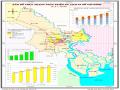 Current Status of Exploiting Human Resources to Serve Tourism Development in Ho Chi Minh City in the Period 2006 - 2011
 -
 Group of Direct Solutions for Training and Developing Human Resources for Tourism in Thua Thien Hue Province
 -
 Key Solutions for Developing Tourism Human Resources in Da Nang City
Regularly organize competitions to learn about people, history, lifestyle, customs and practices of the locality to improve professional skills for staff in the tourism industry.
There is annual coordination with tourism training facilities for tourism workers to attend training courses to improve their tourism knowledge and skills.
Strengthening the coordination between gardeners, investors and people participating in community tourism will contribute to preserving the traditional cultural beauty of the countryside, the ecological environment, maintaining environmental hygiene in the area, and creating a harmonious coordination between the community.
3.2.6. Environmental protection solutions
In the process of tourism development, negative impacts on the natural environment cannot be avoided; however, it is necessary to limit these impacts through measures to protect the environment:
The Department of Natural Resources and Environment and the Department of Urban Management need to coordinate closely to enforce environmental laws, manage and treat waste, promote waste classification at source, guide registration and compliance with environmental standards, and inspect and supervise compliance with environmental laws.
Organize propaganda on mass media, print and disseminate documents on anti-pollution and environmental protection. Form a team of reporters to propagate and disseminate experiences in reducing environmental pollution in agencies and enterprises. Educate the community and support mass programs to participate in environmental protection.
Keep the locality civilized and clean, especially at tourist attractions and spots.
At each tourist destination, there should be banners and posters about the current state of environmental pollution to raise tourists' awareness of environmental protection.
Equip appropriate garbage containers at tourist attractions such as: trash cans decorated and painted in wood color, or trash cans with funny shapes of cartoon characters with instructions for garbage classification,... In particular, toilets must be designed reasonably, cleaning and maintenance work needs to be focused on.
Maintain annual tree planting for the environment, especially in areas planned for nature conservation such as the National Cultural and Historical Park. Areas along the Dong Nai River also need to be planted with suitable trees to maintain the landscape and avoid landslides.
3.2.7. Solutions on organization and management
There needs to be synchronization in management at all levels in exploiting and developing the district's tourism potential, so all relevant authorities need to actively and proactively implement the following solutions:
The Economic Department advises the District Party Committee and the District People's Committee in drafting and completing the project. Seeks support from the city's departments and branches, including the Ho Chi Minh City Department of Culture, Sports and Tourism, the Department of Transport, etc., to connect travel and tourism businesses with tourist destinations. Advises the District People's Committee in managing the activities of buying and selling souvenirs and other industrial and commercial products according to state management functions.
Urban Management: provide guidance to businesses and gardeners in applying for licenses and implementing investment in ferry terminals. Advise the District in investing and maintaining roads in the area, investing in expanding clean water supply, public lighting systems for the area and licensing the placement of signs indicating tourist locations.
Resources – Environment: effective land use management. Guidance on handling and collecting household waste, taking measures to prevent and handle environmental pollution caused by tourism activities.
Urban order team: strengthen inspection and supervision of construction of eco-tourism projects in accordance with the detailed planning 1/2000 approved by the District People's Committee.
District Police: strengthen the management of security and order in the area. Ensure absolute safety for visitors to enjoy sightseeing, relax and manage overnight guests in the area, including contracted tourism staff.
District 9 Hospital: organizes vehicles and equipment including doctors and staff on duty to provide quick first aid to residents and tourists who are sick or have unexpected accidents.
Health Department: strengthen coordination with the interdisciplinary team on food hygiene and safety to strengthen inspection and supervision of food in restaurants and gardens to ensure clear origin and quarantine certificate from veterinary agencies to ensure consumer health.
Preventive Medicine Center: Strengthen state management of propaganda and mobilization of people to maintain environmental hygiene to prevent infectious diseases from arising in the area. Distribute documents on hygiene and epidemic prevention to raise people's awareness of sources of infectious diseases that may arise due to the increasing number of visitors. Provide instructions on environmental disinfection to ensure that the tourist environment is always clean and safe for visitors. Instruct local people, tourism staff, and restaurants to have regular health check-ups. Do not let people with infectious diseases provide direct tourism services to visitors.
Information Culture: advise the District in calling for telecommunications enterprises to invest in Internet and cable TV networks for the area. Strengthen state management of tourism services, ensuring healthy development in the right direction. Advise the District in orienting cultural, artistic and festival activities organized in the area in accordance with regulations to diversify types of tourism in the area to attract visitors.
CONCLUSION AND RECOMMENDATIONS
1. Conclusion
District 9 is in the process of rapid urbanization. Currently, there are more than 200 residential projects, High-Tech Park projects, universities, new Eastern bus station, Long Thanh - Dau Giay Expressway, Ben Thanh - Suoi Tien Metro, etc. On the other hand, in addition to the population in District 9, the tourism needs of people in Ho Chi Minh City and neighboring areas, along with a large number of students, pupils, workers in industrial parks in these areas, etc., are increasing. These are favorable conditions to promote tourism development in the district.
District 9, with its strengths in natural resources and human resources, is making strides in the tourism sector. Although the district’s tourism development is still slow and limited, it has been exploiting its inherent advantages and attracting investment from many economic sectors. In the future, if well invested and exploited, District 9 will become an attractive destination that tourists cannot ignore when coming to Ho Chi Minh City.
Based on the analysis of the potential and current status of tourism development in District 9 in the period of 2005 - 2013, the thesis has proposed specific orientations for tourism development in District 9 until 2020. To implement these orientations, it is necessary to synchronously implement groups of solutions on: Planning; Investment capital; Marketing and tourism promotion; Diversifying and improving the quality of tourism products; Human resources; Environmental protection; Organization and management.
2. Recommendations
Through the research results of the topic, we would like to propose some recommendations as follows:
- For the Department of Culture, Sports and Tourism of Ho Chi Minh City and local authorities:
+ Implement master and detailed plans for tourism development on the basis of ensuring harmonious economic, social and environmental development.
+ Strengthen the promotion of tourism in District 9; actively call for investment in tourist destinations to encourage infrastructure development; pay more attention to human resource training.
+ Clearly assign functions and tasks of all levels and sectors in the District in organizing and implementing tourism development plans.
- For the Management Board of tourist attractions in operation:
+ Currently, at tourist destinations, especially eco-tourism areas along the Dong Nai River, there are no road signs installed, causing difficulties for tourists to move around. Therefore, it is necessary to quickly build a system of signs in tourist areas to guide and promote images and information to attract tourists.
+ At some tourist attractions, the staff does not have uniforms, so visitors have difficulty when they need guidance from the staff, and at the same time, it does not create a beautiful image and lacks professionalism. Therefore, for eco-tourism areas, it is necessary to design uniforms for different professional departments such as reception, service, tour guides, security guards, etc. with regional characteristics and traditional values. At historical and cultural relics when welcoming groups of visitors, because of the solemn nature, tour guides should choose traditional ao dai.
- Further development direction of the topic:
To continue developing and perfecting the topic, the author would like to recommend some further research directions as follows:
+ Continue to analyze and forecast the tourism development of District 9 until 2020 to propose solutions for tourism development planning.
+ Focus on analyzing tourism strengths in some prominent areas in District 9, especially the 100ha Long Phuoc garden house area and the National Cultural and Historical Park.
+ Research and develop more tourist routes to increase the ability to exploit tourism tours linked to development with neighboring regions, especially Dong Nai and Binh Duong.
REFERENCES
1. Nguyen Thi Cuc (2007), Current status and orientation of tourism development in Ho Chi Minh City , Summary report of school-level scientific research project, University of Social Sciences and Humanities, Ho Chi Minh City (Ho Chi Minh City National University), Ho Chi Minh City.
2. Ho Chi Minh City Statistical Office (2013), Statistical Yearbook 2013 , Ho Chi Minh City.
3. Vu Ngoc Khanh (2006), Ancient Vietnamese Pagodas , Thanh Nien Publishing House, Ho Chi Minh City.
4. Suoi Tien Cultural Tourism Area (2013), Report on development achievements of Suoi Tien Cultural Tourism Area Suoi Tien , Ho Chi Minh City.
5. Economic Department of District 9 (2012), Tourism potential in District 9 , Ho Chi Minh City.
6. Urban Management Department of District 9 (2012), Planning orientation for tourism development in District 9, Ho Chi Minh City.
7. District 9 Party Committee (2010), Documents of the 4th District 9 Party Congress, term 2010 - 2015 , Ho Chi Minh City.
8. Nguyen Van Que (1998), Cultural tourism potential of Ho Chi Minh City, Master's thesis, Hanoi University of Culture, Hanoi.
9. Phan Thanh Quoi (2012), Sustainable development of Suoi Tien cultural tourism area (HCMC) , Master's thesis in Geography, HCMC.
10. Department of Culture, Sports and Tourism of Ho Chi Minh City (2014), Comments on the project of planning tourism development of 130ha in District 9, Ho Chi Minh City.
11. Department of Culture, Sports and Tourism of Ho Chi Minh City (2014), Summary of the implementation of the instructions of the City People's Committee on the development of waterway tourism, Ho Chi Minh City.
12. Prime Minister (2011), Vietnam Tourism Development Strategy to 2020, vision to 2030 , Hanoi.