
2.2. Current status of human resources and human resource development in the tourism industry of Ho Chi Minh City 44
2.2.1. Developing human resources in the tourism industry in terms of quantity 44
2.2.2. Developing human resources in the tourism industry in terms of quality 48
2.2.3. Current status of factors affecting human resource development in Ho Chi Minh City tourism industry 53
2.3. General assessment of human resource development in the tourism industry of Ho Chi Minh City 64
Maybe you are interested!
-
 Developing human resources for Ho Chi Minh City's tourism industry in international integration - 2
 -
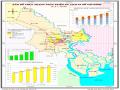 Current Status of Exploiting Human Resources to Serve Tourism Development in Ho Chi Minh City in the Period 2006 - 2011
 -
 Social capital in developing young human resources in Hanoi and Ho Chi Minh City - 27
 -
 Solutions for tourism development in Tien Lang - 10
zt2i3t4l5ee
zt2a3gstourism, tourism development
zt2a3ge
zc2o3n4t5e6n7ts
- District People's Committees and authorities of communes with tourist attractions should support, promote, and provide necessary information to people, helping them improve their knowledge about tourism. Raise tourism awareness for local people.
*
* *
Due to limited knowledge and research time, the thesis inevitably has shortcomings. Therefore, I look forward to receiving guidance from teachers, experts as well as your comments to make the thesis more complete.
Chapter III Conclusion
Through the issues presented in Chapter II, we can come to some conclusions:
Based on the strengths of available tourism resources, the types of tourism in Tien Lang that need to be promoted in the coming time are sightseeing and resort tourism, discovery tourism, weekend tourism. To improve the quality and diversify tourism products, Tien Lang district needs to combine with local cultural tourism resources, at the same time combine with surrounding areas, build rich tourism products. The strengths of Tien Lang tourism are eco-tourism and cultural tourism, so developing Tien Lang tourism must always go hand in hand with restoring and preserving types of cultural tourism resources. Some necessary measures to support and improve the efficiency of exploiting tourism resources in Tien Lang are: strengthening the construction of technical facilities and labor force serving tourism, actively promoting and advertising tourism, and expanding forms of capital mobilization for tourism development.
CONCLUDE
I Conclusion
1. Based on the results achieved within the framework of the thesis's needs, some basic conclusions can be drawn as follows:
Tien Lang is a locality with great potential for tourism development. The relatively abundant cultural tourism resources and ecological tourism resources have great appeal to tourists. Based on this potential, Tien Lang can build a unique tourism industry that is competitive enough with other localities within Hai Phong city and neighboring areas.
In recent years, the exploitation of the advantages of resources to develop tourism and build tourist routes in Tien Lang has not been commensurate with the available potential. In terms of quantity, many resource objects have not been brought into the purpose of tourism development. In terms of time, the regular service time has not been extended to attract more visitors. Infrastructure and technical facilities are still weak. The labor force is still thin and weak in terms of expertise. Tourism programs and routes have not been organized properly, the exploitation content is still monotonous, so it has not attracted many visitors. Although resources have not been mobilized much for tourism development, they are facing the risk of destruction and degradation.
2. Based on the results of investigation, analysis, synthesis, evaluation and selective absorption of research results of related topics, the thesis has proposed a number of necessary solutions to improve the efficiency of exploiting tourism resources in Tien Lang such as: promoting the restoration and conservation of tourism resources, focusing on investment and key exploitation of ecotourism resources, strengthening the construction of infrastructure and tourism workforce. Expanding forms of capital mobilization. In addition, the thesis has built a number of tourist routes of Hai Phong in which Tien Lang tourism resources play an important role.
Exploiting Tien Lang tourism resources for tourism development is currently facing many difficulties. The above measures, if applied synchronously, will likely bring new prospects for the local tourism industry, contributing to making Tien Lang tourism an important economic sector in the district's economic structure.
REFERENCES
1. Nhuan Ha, Trinh Minh Hien, Tran Phuong, Hai Phong - Historical and cultural relics, Hai Phong Publishing House, 1993
2. Hai Phong City History Council, Hai Phong Gazetteer, Hai Phong Publishing House, 1990.
3. Hai Phong City History Council, History of Tien Lang District Party Committee, Hai Phong Publishing House, 1990.
4. Hai Phong City History Council, University of Social Sciences and Humanities, VNU, Hai Phong Place Names Encyclopedia, Hai Phong Publishing House. 2001.
5. Law on Cultural Heritage and documents guiding its implementation, National Political Publishing House, Hanoi, 2003.
6. Tran Duc Thanh, Lecture on Tourism Geography, Faculty of Tourism, University of Social Sciences and Humanities, VNU, 2006
7. Hai Phong Center for Social Sciences and Humanities, Some typical cultural heritages of Hai Phong, Hai Phong Publishing House, 2001
8. Nguyen Ngoc Thao (editor-in-chief, Tourism Geography, Hai Phong Publishing House, two volumes (2001-2002)
9. Nguyen Minh Tue and group of authors, Hai Phong Tourism Geography, Ho Chi Minh City Publishing House, 1997.
10. Nguyen Thanh Son, Hai Phong Tourism Territory Organization, Associate Doctoral Thesis in Geological Geography, Hanoi, 1996.
11. Decision No. 2033/QD – UB on detailed planning of Tien Lang town, Hai Phong city until 2020.
12. Department of Culture, Information, Hai Phong Museum, Hai Phong relics
- National ranked scenic spot, Hai Phong Publishing House, 2005. 13. Tien Lang District People's Committee, Economic Development Planning -
Culture - Society of Tien Lang district to 2010.
14.Website www.HaiPhong.gov.vn
APPENDIX 1
List of national ranked monuments
STT
Name of the monument
Number, year of decisiondetermine
Location
1
Gam Temple
938 VH/QĐ04/08/1992
Cam Khe Village- Toan Thang commune
2
Doc Hau Temple
9381 VH/QĐ04/08/1992
Doc Hau Village –Toan Thang commune
3
Cuu Doi Communal House
3207 VH/QĐDecember 30, 1991
Zone II of townTien Lang
4
Ha Dai Temple
938 VH/QĐ04/08/1992
Ha Dai Village –Tien Thanh commune
APPENDIX II
STT
Name of the monument
Number, year of decision
Location
1
Phu Ke Pagoda Temple
178/QD-UBJanuary 28, 2005
Zone 1 - townTien Lang
2
Trung Lang Temple
178/QD-UBJanuary 28, 2005
Zone 4 – townTien Lang
3
Bao Khanh Pagoda
1900/QD-UBAugust 24, 2006
Nam Tu Village -Kien Thiet commune
4
Bach Da Pagoda
1792/QD-UB11/11/2002
Hung Thang Commune
5
Ngoc Dong Temple
177/QD-UBNovember 27, 2005
Tien Thanh Commune
6
Tomb of Minister TSNhu Van Lan
2848/QD-UBSeptember 19, 2003
Nam Tu Village -Kien Thiet commune
7
Canh Son Stone Temple
2160/QD-UBSeptember 19, 2003
Van Doi Commune –Doan Lap
8
Meiji Temple
2259/QD-UBSeptember 19, 2002
Toan Thang Commune
9
Tien Doi Noi Temple
477/QD-UBSeptember 19, 2005
Doan Lap Commune
10
Tu Doi Temple
177/QD-UBJanuary 28, 2005
Doan Lap Commune
11
Duyen Lao Temple
177/QD-UBJanuary 28, 2005
Tien Minh Commune
12
Dinh Xuan Uc Pagoda
177/QD-UBJanuary 28, 2005
Bac Hung Commune
13
Chu Khe Pagoda
177/QD-UBJanuary 28, 2005
Hung Thang Commune
14
Dong Dinh
2848/QD-UBNovember 21, 2002
Vinh Quang Commune
15
President's Memorial HouseTon Duc Thang
177/QD-UBJanuary 28, 2005
NT Quy Cao
Ha Dai Temple
Ben Vua Temple
Tien Lang hot spring
div.maincontent .p { color: black; font-family:"Times New Roman", serif; font-style: normal; font-weight: normal; text-decoration: none; font-size: 14pt; margin:0pt; } div.maincontent p { color: black; font-family:"Times New Roman", serif; font-style: normal; font-weight: normal; text-decoration: none; font-size: 14pt; margin:0pt; } div.maincontent .s1 { color: black; font-family:"Times New Roman", serif; font-style: normal; font-weight: normal; font-size: 16pt; } div.maincontent .s2 { color: black; font-family:"Times New Roman", serif; font-style: italic; font-weight: bold; text-decoration: none; font-size: 14pt; } div.maincontent .s3 { color: black; font-family:"Times New Roman", serif; font-style: italic; font-weight: normal; text-decoration: none; font-size: 14pt; } div.maincontent .s4 { color: black; font-family:"Times New Roman", serif; font-style: normal; font-weight: normal; font-size: 14pt; } div.maincontent .s5 { color: black; font-family:"Times New Roman", serif; font-style: normal; font-weight: bold; font-size: 14pt; } div.maincontent .s6 { color: black; font-family:"Times New Roman", serif; font-style: normal; font-weight: normal; text-decoration: none; font-size: 14pt; } div.maincontent .s7 { color: black; font-family:"Times New Roman", serif; font-style: normal; font-weight: bold; text-decoration: none; font-size: 14pt; } div.maincontent .s8 { color: black; font-family:"Times New Roman", serif; font-style: normal; font-weight: normal; text-decoration: none; font-size: 9pt; vertical-align: 6pt; } div.maincontent .s9 { color: black; font-family:"Times New Roman", serif; font-style: normal; font-weight: bold; text-decoration: none; font-size: 12pt; } div.maincontent .s11 { color: black; font-family:"Times New Roman", serif; font-style: normal; font-weight: normal; tex
Solutions for tourism development in Tien Lang - 10
zt2i3t4l5ee
zt2a3gstourism, tourism development
zt2a3ge
zc2o3n4t5e6n7ts
- District People's Committees and authorities of communes with tourist attractions should support, promote, and provide necessary information to people, helping them improve their knowledge about tourism. Raise tourism awareness for local people.
*
* *
Due to limited knowledge and research time, the thesis inevitably has shortcomings. Therefore, I look forward to receiving guidance from teachers, experts as well as your comments to make the thesis more complete.
Chapter III Conclusion
Through the issues presented in Chapter II, we can come to some conclusions:
Based on the strengths of available tourism resources, the types of tourism in Tien Lang that need to be promoted in the coming time are sightseeing and resort tourism, discovery tourism, weekend tourism. To improve the quality and diversify tourism products, Tien Lang district needs to combine with local cultural tourism resources, at the same time combine with surrounding areas, build rich tourism products. The strengths of Tien Lang tourism are eco-tourism and cultural tourism, so developing Tien Lang tourism must always go hand in hand with restoring and preserving types of cultural tourism resources. Some necessary measures to support and improve the efficiency of exploiting tourism resources in Tien Lang are: strengthening the construction of technical facilities and labor force serving tourism, actively promoting and advertising tourism, and expanding forms of capital mobilization for tourism development.
CONCLUDE
I Conclusion
1. Based on the results achieved within the framework of the thesis's needs, some basic conclusions can be drawn as follows:
Tien Lang is a locality with great potential for tourism development. The relatively abundant cultural tourism resources and ecological tourism resources have great appeal to tourists. Based on this potential, Tien Lang can build a unique tourism industry that is competitive enough with other localities within Hai Phong city and neighboring areas.
In recent years, the exploitation of the advantages of resources to develop tourism and build tourist routes in Tien Lang has not been commensurate with the available potential. In terms of quantity, many resource objects have not been brought into the purpose of tourism development. In terms of time, the regular service time has not been extended to attract more visitors. Infrastructure and technical facilities are still weak. The labor force is still thin and weak in terms of expertise. Tourism programs and routes have not been organized properly, the exploitation content is still monotonous, so it has not attracted many visitors. Although resources have not been mobilized much for tourism development, they are facing the risk of destruction and degradation.
2. Based on the results of investigation, analysis, synthesis, evaluation and selective absorption of research results of related topics, the thesis has proposed a number of necessary solutions to improve the efficiency of exploiting tourism resources in Tien Lang such as: promoting the restoration and conservation of tourism resources, focusing on investment and key exploitation of ecotourism resources, strengthening the construction of infrastructure and tourism workforce. Expanding forms of capital mobilization. In addition, the thesis has built a number of tourist routes of Hai Phong in which Tien Lang tourism resources play an important role.
Exploiting Tien Lang tourism resources for tourism development is currently facing many difficulties. The above measures, if applied synchronously, will likely bring new prospects for the local tourism industry, contributing to making Tien Lang tourism an important economic sector in the district's economic structure.
REFERENCES
1. Nhuan Ha, Trinh Minh Hien, Tran Phuong, Hai Phong - Historical and cultural relics, Hai Phong Publishing House, 1993
2. Hai Phong City History Council, Hai Phong Gazetteer, Hai Phong Publishing House, 1990.
3. Hai Phong City History Council, History of Tien Lang District Party Committee, Hai Phong Publishing House, 1990.
4. Hai Phong City History Council, University of Social Sciences and Humanities, VNU, Hai Phong Place Names Encyclopedia, Hai Phong Publishing House. 2001.
5. Law on Cultural Heritage and documents guiding its implementation, National Political Publishing House, Hanoi, 2003.
6. Tran Duc Thanh, Lecture on Tourism Geography, Faculty of Tourism, University of Social Sciences and Humanities, VNU, 2006
7. Hai Phong Center for Social Sciences and Humanities, Some typical cultural heritages of Hai Phong, Hai Phong Publishing House, 2001
8. Nguyen Ngoc Thao (editor-in-chief, Tourism Geography, Hai Phong Publishing House, two volumes (2001-2002)
9. Nguyen Minh Tue and group of authors, Hai Phong Tourism Geography, Ho Chi Minh City Publishing House, 1997.
10. Nguyen Thanh Son, Hai Phong Tourism Territory Organization, Associate Doctoral Thesis in Geological Geography, Hanoi, 1996.
11. Decision No. 2033/QD – UB on detailed planning of Tien Lang town, Hai Phong city until 2020.
12. Department of Culture, Information, Hai Phong Museum, Hai Phong relics
- National ranked scenic spot, Hai Phong Publishing House, 2005. 13. Tien Lang District People's Committee, Economic Development Planning -
Culture - Society of Tien Lang district to 2010.
14.Website www.HaiPhong.gov.vn
APPENDIX 1
List of national ranked monuments
STT
Name of the monument
Number, year of decisiondetermine
Location
1
Gam Temple
938 VH/QĐ04/08/1992
Cam Khe Village- Toan Thang commune
2
Doc Hau Temple
9381 VH/QĐ04/08/1992
Doc Hau Village –Toan Thang commune
3
Cuu Doi Communal House
3207 VH/QĐDecember 30, 1991
Zone II of townTien Lang
4
Ha Dai Temple
938 VH/QĐ04/08/1992
Ha Dai Village –Tien Thanh commune
APPENDIX II
STT
Name of the monument
Number, year of decision
Location
1
Phu Ke Pagoda Temple
178/QD-UBJanuary 28, 2005
Zone 1 - townTien Lang
2
Trung Lang Temple
178/QD-UBJanuary 28, 2005
Zone 4 – townTien Lang
3
Bao Khanh Pagoda
1900/QD-UBAugust 24, 2006
Nam Tu Village -Kien Thiet commune
4
Bach Da Pagoda
1792/QD-UB11/11/2002
Hung Thang Commune
5
Ngoc Dong Temple
177/QD-UBNovember 27, 2005
Tien Thanh Commune
6
Tomb of Minister TSNhu Van Lan
2848/QD-UBSeptember 19, 2003
Nam Tu Village -Kien Thiet commune
7
Canh Son Stone Temple
2160/QD-UBSeptember 19, 2003
Van Doi Commune –Doan Lap
8
Meiji Temple
2259/QD-UBSeptember 19, 2002
Toan Thang Commune
9
Tien Doi Noi Temple
477/QD-UBSeptember 19, 2005
Doan Lap Commune
10
Tu Doi Temple
177/QD-UBJanuary 28, 2005
Doan Lap Commune
11
Duyen Lao Temple
177/QD-UBJanuary 28, 2005
Tien Minh Commune
12
Dinh Xuan Uc Pagoda
177/QD-UBJanuary 28, 2005
Bac Hung Commune
13
Chu Khe Pagoda
177/QD-UBJanuary 28, 2005
Hung Thang Commune
14
Dong Dinh
2848/QD-UBNovember 21, 2002
Vinh Quang Commune
15
President's Memorial HouseTon Duc Thang
177/QD-UBJanuary 28, 2005
NT Quy Cao
Ha Dai Temple
Ben Vua Temple
Tien Lang hot spring
div.maincontent .p { color: black; font-family:"Times New Roman", serif; font-style: normal; font-weight: normal; text-decoration: none; font-size: 14pt; margin:0pt; } div.maincontent p { color: black; font-family:"Times New Roman", serif; font-style: normal; font-weight: normal; text-decoration: none; font-size: 14pt; margin:0pt; } div.maincontent .s1 { color: black; font-family:"Times New Roman", serif; font-style: normal; font-weight: normal; font-size: 16pt; } div.maincontent .s2 { color: black; font-family:"Times New Roman", serif; font-style: italic; font-weight: bold; text-decoration: none; font-size: 14pt; } div.maincontent .s3 { color: black; font-family:"Times New Roman", serif; font-style: italic; font-weight: normal; text-decoration: none; font-size: 14pt; } div.maincontent .s4 { color: black; font-family:"Times New Roman", serif; font-style: normal; font-weight: normal; font-size: 14pt; } div.maincontent .s5 { color: black; font-family:"Times New Roman", serif; font-style: normal; font-weight: bold; font-size: 14pt; } div.maincontent .s6 { color: black; font-family:"Times New Roman", serif; font-style: normal; font-weight: normal; text-decoration: none; font-size: 14pt; } div.maincontent .s7 { color: black; font-family:"Times New Roman", serif; font-style: normal; font-weight: bold; text-decoration: none; font-size: 14pt; } div.maincontent .s8 { color: black; font-family:"Times New Roman", serif; font-style: normal; font-weight: normal; text-decoration: none; font-size: 9pt; vertical-align: 6pt; } div.maincontent .s9 { color: black; font-family:"Times New Roman", serif; font-style: normal; font-weight: bold; text-decoration: none; font-size: 12pt; } div.maincontent .s11 { color: black; font-family:"Times New Roman", serif; font-style: normal; font-weight: normal; tex -
 Exploiting human tourism resources to develop tourism in Ho Chi Minh City - 29
2.3.1. Achievements and causes 64
2.3.2. Limitations, issues that need to be resolved and causes 65
Chapter 3: SOLUTIONS TO DEVELOP HUMAN RESOURCES IN THE TOURISM INDUSTRY OF HCMC IN THE PERIOD 2013-2020 69
3.1. Viewpoints on human resource development in the tourism industry of Ho Chi Minh City 69
3.1. Perspectives on Vietnam tourism development 69
3.1. Viewpoints on human resource development in the tourism industry of Ho Chi Minh City 69
3.2. Human resource development goals for the tourism industry in Ho Chi Minh City 70
3.2.1. General objectives 70
3.2.2. Specific objectives 70
3.3. Orientation for human resource development in Ho Chi Minh City tourism industry 71
3.4. Solutions for developing human resources for the tourism industry in Ho Chi Minh City by 2020 72
3.4.1. Group of solutions to perfect policy mechanisms and strengthen state management of tourism human resource development 72
3.4.2. Group of solutions on education and training 79
3.4.3. Solution group: Linking, cooperating and promoting international cooperation for development
human resource development 86
3.4.4. Solution group Mobilizing resources for human resource development 88
3.4.5. Solution group for developing human resources 89
3.4.6. Solution group on Remuneration Policy 90
3.4. 7. Solution group Improving ethics and working style 93
PROPOSAL 97
CONCLUSION 99
REFERENCES APPENDIX
INTRODUCTION
1. Urgency of the topic
Nowadays, besides monetary resources, natural resources, etc., human resources are considered a special type of capital for economic and social development. While other resources are limited, human resources have the ability to regenerate.
In the theory of Marxism, Lenin always affirmed the role and strength of human beings, especially workers, in the development and progress of society. Lenin affirmed, "The leading productive force of all mankind is the worker, the laborer" and "while material things can be completely destroyed, human skills such as technology, organizational secrets and working will remain forever".
Inheriting the viewpoint of Marxism-Leninism, the 11th National Party Congress identified the rapid development of human resources, especially high-quality human resources, as one of the three breakthroughs to effectively exploit resources for rapid and sustainable development, building our country into a basically socialist-oriented industrialized country. The Resolution of the 9th Ho Chi Minh City Party Congress also identified that improving the quality of human resources and rapidly building human resources to meet the requirements of construction, development and international economic integration is one of the six breakthrough programs for socio-economic development in the 2011-2015 period.
As the largest and most dynamic economic, political and cultural center of the country, with rich tourism resources, Ho Chi Minh City is always at the forefront of attracting tourists. The goal of the city is to make tourism a spearhead economic sector, a tool to promote economic restructuring, stimulate the development of other economic sectors and contribute to the sustainable economic development of the city.
To make tourism truly a spearhead economic sector, we need many synchronous solutions. In the tourism industry, each person participating in the process of creating service products has a decisive influence on the quality of tourism services. We have many beautiful, attractive places that attract tourists, but whether or not to attract tourists to the city depends on the tourism workers. Therefore, developing human resources for the tourism industry
Tourism is extremely important. In fact, in recent times, the city's tourism industry has developed strongly, the number of international and domestic visitors to the city is very large, the demand of tourists is increasing, while the city's tourism human resources only meet about 60% of the demand, technical expertise, foreign language proficiency is still lacking and weak. From that reality, developing human resources in the tourism industry is both urgent and strategic, requiring attention and investment so that tourism becomes the city's spearhead economic sector, serving the socio-economic development of the city.
Therefore, I chose and researched the topic: "Developing human resources for the tourism industry in Ho Chi Minh City in the period of 2013-2020" as my graduation thesis.
2. Research status of the topic
In Ho Chi Minh City as well as in the whole country, there have been many documents, scientific research works, and graduation theses on human resources and tourism development from many different perspectives and scopes such as:
* Situation of human resource development research
- Human resource development: world experience and our country's practice , Associate Professor Tran Van Tung, Le Ai Lam (World Economic Institute) (1996), National Political Publishing House, Hanoi. The book provides an overview of the role of human resources in the innovative economy and human resource development experience in the aspect of educational development.
in some countries.
- Human resources in the process of industrialization and modernization in Vietnam, Dr. Doan Van Khai (2005), Political Theory Publishing House, Hanoi. Based on clarifying some general issues on industrialization and modernization, the author proposes directions, guiding viewpoints and basic solutions: a group of solutions on rational and effective exploitation of human resources; a group of solutions on human resource development; a group of solutions on building a favorable social environment to effectively exploit and develop human resources to meet the requirements of industrialization and modernization in Vietnam.
- Developing human resources for higher education in Vietnam, Dr. Do Minh Cuong, Associate Professor, Dr. Nguyen Thi Doan (2001), National Political Publishing House, Hanoi. The book mentions some contents about higher education, proposing solutions to develop
University human resources, highly qualified human resources in our country's human resources serving industrialization and modernization.
In 2011, in Ho Chi Minh City, the scientific workshop “High-quality human resources - urgent need” was held by the Ho Chi Minh City University of Economics and Law. At the workshop, delegates focused on analyzing and evaluating the current state of human resources; training, fostering and developing human resources; coordination between training institutions, employers and management agencies in training, fostering and developing; demand and forecast of demand for high-quality human resources... and proposed solutions for human resource development.
- The issue of developing high-quality female human resources in Vietnam today, Nguyen Thi Giang Huong, (2013) Doctoral thesis in Philosophy of the Academy of Politics
-National Administration. The thesis approaches from a philosophical perspective, assessing the current status of female human resources in Vietnam to propose groups of solutions on objective and subjective conditions for the development of high-quality female human resources such as: sustainable economic development, building a progressive social environment, building a cultural family, health care, enhancing positivity, striving to rise up, innovating training, innovating recruitment and treatment policies, etc.
Along with many theses and dissertations on improving the quality of human resources.
* Situation of research and development of human resources in tourism industry:
- Some solutions to improve Human Resource Management in tourism enterprises in Ho Chi Minh City , Tran Thi Kim Dung, (2001), PhD thesis in Economics of Ho Chi Minh City University of Economics. The thesis comprehensively evaluated human resources in tourism enterprises in Ho Chi Minh City in terms of human resource functions, organizational mechanisms and corporate culture, evaluated and found existing problems, and their causes, thereby proposing some solutions to fundamentally improve human resource management activities for tourism enterprises such as:
Perfecting the function of attracting and arranging human resources in the enterprise through specifying job titles, preparing successors for important positions...; perfecting the function of training and development
human resources according to planning and applying training processes according to ISO 9001 quality standards; perfecting the function of maintaining human resources through proposing new employee evaluation methods and recommendations on developing an organizational culture suitable for the business environment...
- “Developing human resources for the tourism industry in the South Central Coast and Central Highlands”, Tran Son Hai (2006), PhD thesis of the National Academy of Public Administration. In the thesis, the author assessed that the human resources for the tourism industry in the provinces of the South Central Coast and Central Highlands have grown rapidly in quantity, along with the quality of the tourism workforce has also been significantly improved, but still cannot meet the requirements of rapid and sustainable development of the tourism industry in the region. The tourism workforce in the region has uneven cultural and professional qualifications, limited in many aspects, especially in foreign languages and high technical expertise; There is not much stability in the workforce directly serving tourism; The distribution of tourism workers is uneven in the provinces of the region. From there, the author proposes a number of solutions such as: Strengthening state management; Perfecting the mechanism for developing human resources for the tourism industry; Building a strategy for developing human resources for the tourism industry; Training human resources in the tourism industry according to social needs,...
- Improving the quality of human resources in the tourism industry in Ninh Binh province , Duong Duc Khanh, (2010), Master's thesis in economics of the National Economics University, Hanoi. The thesis has outlined the theoretical basis, objective trends in the quality of human resources in the tourism industry and the specific characteristics of the tourism industry. The thesis focuses on presenting an overview of the situation of human resources in the tourism industry in Ninh Binh province. Based on the collected data, the thesis proposes a number of specific solutions to improve the quality of human resources in the tourism industry in Ninh Binh province such as: Completing the planning strategy and plan for developing human resources in the tourism industry, Developing education and training thereby improving the qualifications of workers in the tourism industry, Developing the health system and improving the quality of health care
Human resources, Perfecting recruitment, employment, treatment, reward and discipline policies for employees,...
In addition, there were 2 national seminars on tourism human resource development in Ho Chi Minh City and Hanoi. The first seminar in March 2008 in Ho Chi Minh City on training tourism human resources according to social needs was to assess the current situation and the need to innovate training programs to suit, businesses to innovate management style, support for tourism human resource training. In August 2010, the 2nd National Seminar on training tourism human resources according to social needs was held in Hanoi. The seminar emphasized the need to innovate and improve the quality of tourism human resource training, linking the training process with the practical activities of the industry, creating links and coordination between training institutions and businesses.
3. Research objectives
3.1. General objectives
Based on theoretical research and practical summary, the thesis analyzes the current status of human resources in the tourism industry of Ho Chi Minh City in the period of 2001-2013, thereby building a system of solutions to promote human resource development for the tourism industry of Ho Chi Minh City until 2020.
3.2. Specific objectives
- Researching the theoretical basis of human resource development and tourism human resources creates a scientific basis for analyzing the current status of human resource development in the tourism industry of Ho Chi Minh City.
- Research and analyze the current status of human resource development in the tourism industry of Ho Chi Minh City in the period 2001-2013.
- Propose solutions to develop human resources for the tourism industry to meet tourism development needs and contribute to the socio-economic development of Ho Chi Minh City in general by 2020.
4. Research object and scope
4.1. Research subjects
The topic focuses on researching human resource development in state management agencies on tourism and in tourism businesses in Ho Chi Minh City.
4.2. Scope of research
The thesis researches from the perspective of Political Economy and the scope of research is limited to human resources in the tourism industry of Ho Chi Minh City.
5. Research methods
The topic used the following main methods:
+ Dialectical materialism aims to objectively and scientifically analyze research issues such as: the current status of human resource development in the tourism industry in Ho Chi Minh City, the role of tourism human resources in particular and the tourism industry in general for the socio-economic development of Ho Chi Minh City.
+ Historical materialism method: based on scientific categories, concepts, viewpoints and the development of socio-economy to study the development of human resources in the city's tourism industry.
+ Method of collecting documents and synthesizing to clarify the theoretical basis of human resources; statistical method, using secondary data to analyze data on the current situation and propose solutions to develop human resources for the tourism industry of Ho Chi Minh City in the period of 2013-2020.
6. Significance of the topic
- Clarifying theoretical and practical issues on human resources in the tourism industry.
calendar.
- Raise awareness of human resources in general and of development in particular.
Developing human resources for the tourism industry in Ho Chi Minh City in particular.
- Propose solutions for researchers and city policy makers to refer to, and at the same time, serve as reference materials for learning and teaching.
7. Structure of the topic
In addition to the introduction, conclusion and list of references, the thesis consists of 3 chapters: