
Nguyen Binh Khiem, the temple relic was invested in by the city to be renovated, the bridge and road leading to the relic were repaired. In 1991, on the occasion of the 500th anniversary of the famous person's birth held in Vinh Bao and the Temple of Literature - Quoc Tu Giam in Hanoi, the relic site was repaired and supplemented. The Ministry of Culture and Information recognized Trinh Quoc Cong temple as a national historical and cultural relic. Since then, the city has continued to invest hundreds of billions of VND to expand the tourist area, erect stone statues, establish squares, build crescent lakes, make asphalt roads, areca gardens, kim tree gardens... the scale of the temple is commensurate with a cultural celebrity - a giant tree - a Khue star of the 16th century.
In the 14th year of Minh Mang (1833), the Doanh Dien Su, Nguyen Cong Tru, went to reclaim land in the area bordering Hai Duong and Thai Binh. One day, he saw that it was necessary to have a river running through Trung Am village and thus the Trang temple would be destroyed. Although the villagers begged, Nguyen Cong Tru still decided to have the temple demolished to make room for the river. But when he started cleaning the altar, under the incense bowl there was a stone stele covered with red cloth, with the following sentences:
Minh Mang, the fourteenth Thang Tru destroyed the temple - If you destroy a temple, you must build a new one.
Who touched your business property?
After reading the above verses, Nguyen Cong Tru had to stop his work and did not dare to think about destroying the Temple to dig a river anymore. [10, p.59]
Maybe you are interested!
-
 Historical relic and festival of Trang Trinh Nguyen Binh Khiem Temple in Vinh Bao district, Hai Phong - 9
 -
 Trinh Trinh Nguyen Binh Khiem in the Consciousness of Vietnamese People
 -
 Relic Site of Trinh Trinh Nguyen Binh Khiem:
 -
 Solutions for tourism development in Tien Lang - 10
zt2i3t4l5ee
zt2a3gstourism, tourism development
zt2a3ge
zc2o3n4t5e6n7ts
- District People's Committees and authorities of communes with tourist attractions should support, promote, and provide necessary information to people, helping them improve their knowledge about tourism. Raise tourism awareness for local people.
*
* *
Due to limited knowledge and research time, the thesis inevitably has shortcomings. Therefore, I look forward to receiving guidance from teachers, experts as well as your comments to make the thesis more complete.
Chapter III Conclusion
Through the issues presented in Chapter II, we can come to some conclusions:
Based on the strengths of available tourism resources, the types of tourism in Tien Lang that need to be promoted in the coming time are sightseeing and resort tourism, discovery tourism, weekend tourism. To improve the quality and diversify tourism products, Tien Lang district needs to combine with local cultural tourism resources, at the same time combine with surrounding areas, build rich tourism products. The strengths of Tien Lang tourism are eco-tourism and cultural tourism, so developing Tien Lang tourism must always go hand in hand with restoring and preserving types of cultural tourism resources. Some necessary measures to support and improve the efficiency of exploiting tourism resources in Tien Lang are: strengthening the construction of technical facilities and labor force serving tourism, actively promoting and advertising tourism, and expanding forms of capital mobilization for tourism development.
CONCLUDE
I Conclusion
1. Based on the results achieved within the framework of the thesis's needs, some basic conclusions can be drawn as follows:
Tien Lang is a locality with great potential for tourism development. The relatively abundant cultural tourism resources and ecological tourism resources have great appeal to tourists. Based on this potential, Tien Lang can build a unique tourism industry that is competitive enough with other localities within Hai Phong city and neighboring areas.
In recent years, the exploitation of the advantages of resources to develop tourism and build tourist routes in Tien Lang has not been commensurate with the available potential. In terms of quantity, many resource objects have not been brought into the purpose of tourism development. In terms of time, the regular service time has not been extended to attract more visitors. Infrastructure and technical facilities are still weak. The labor force is still thin and weak in terms of expertise. Tourism programs and routes have not been organized properly, the exploitation content is still monotonous, so it has not attracted many visitors. Although resources have not been mobilized much for tourism development, they are facing the risk of destruction and degradation.
2. Based on the results of investigation, analysis, synthesis, evaluation and selective absorption of research results of related topics, the thesis has proposed a number of necessary solutions to improve the efficiency of exploiting tourism resources in Tien Lang such as: promoting the restoration and conservation of tourism resources, focusing on investment and key exploitation of ecotourism resources, strengthening the construction of infrastructure and tourism workforce. Expanding forms of capital mobilization. In addition, the thesis has built a number of tourist routes of Hai Phong in which Tien Lang tourism resources play an important role.
Exploiting Tien Lang tourism resources for tourism development is currently facing many difficulties. The above measures, if applied synchronously, will likely bring new prospects for the local tourism industry, contributing to making Tien Lang tourism an important economic sector in the district's economic structure.
REFERENCES
1. Nhuan Ha, Trinh Minh Hien, Tran Phuong, Hai Phong - Historical and cultural relics, Hai Phong Publishing House, 1993
2. Hai Phong City History Council, Hai Phong Gazetteer, Hai Phong Publishing House, 1990.
3. Hai Phong City History Council, History of Tien Lang District Party Committee, Hai Phong Publishing House, 1990.
4. Hai Phong City History Council, University of Social Sciences and Humanities, VNU, Hai Phong Place Names Encyclopedia, Hai Phong Publishing House. 2001.
5. Law on Cultural Heritage and documents guiding its implementation, National Political Publishing House, Hanoi, 2003.
6. Tran Duc Thanh, Lecture on Tourism Geography, Faculty of Tourism, University of Social Sciences and Humanities, VNU, 2006
7. Hai Phong Center for Social Sciences and Humanities, Some typical cultural heritages of Hai Phong, Hai Phong Publishing House, 2001
8. Nguyen Ngoc Thao (editor-in-chief, Tourism Geography, Hai Phong Publishing House, two volumes (2001-2002)
9. Nguyen Minh Tue and group of authors, Hai Phong Tourism Geography, Ho Chi Minh City Publishing House, 1997.
10. Nguyen Thanh Son, Hai Phong Tourism Territory Organization, Associate Doctoral Thesis in Geological Geography, Hanoi, 1996.
11. Decision No. 2033/QD – UB on detailed planning of Tien Lang town, Hai Phong city until 2020.
12. Department of Culture, Information, Hai Phong Museum, Hai Phong relics
- National ranked scenic spot, Hai Phong Publishing House, 2005. 13. Tien Lang District People's Committee, Economic Development Planning -
Culture - Society of Tien Lang district to 2010.
14.Website www.HaiPhong.gov.vn
APPENDIX 1
List of national ranked monuments
STT
Name of the monument
Number, year of decisiondetermine
Location
1
Gam Temple
938 VH/QĐ04/08/1992
Cam Khe Village- Toan Thang commune
2
Doc Hau Temple
9381 VH/QĐ04/08/1992
Doc Hau Village –Toan Thang commune
3
Cuu Doi Communal House
3207 VH/QĐDecember 30, 1991
Zone II of townTien Lang
4
Ha Dai Temple
938 VH/QĐ04/08/1992
Ha Dai Village –Tien Thanh commune
APPENDIX II
STT
Name of the monument
Number, year of decision
Location
1
Phu Ke Pagoda Temple
178/QD-UBJanuary 28, 2005
Zone 1 - townTien Lang
2
Trung Lang Temple
178/QD-UBJanuary 28, 2005
Zone 4 – townTien Lang
3
Bao Khanh Pagoda
1900/QD-UBAugust 24, 2006
Nam Tu Village -Kien Thiet commune
4
Bach Da Pagoda
1792/QD-UB11/11/2002
Hung Thang Commune
5
Ngoc Dong Temple
177/QD-UBNovember 27, 2005
Tien Thanh Commune
6
Tomb of Minister TSNhu Van Lan
2848/QD-UBSeptember 19, 2003
Nam Tu Village -Kien Thiet commune
7
Canh Son Stone Temple
2160/QD-UBSeptember 19, 2003
Van Doi Commune –Doan Lap
8
Meiji Temple
2259/QD-UBSeptember 19, 2002
Toan Thang Commune
9
Tien Doi Noi Temple
477/QD-UBSeptember 19, 2005
Doan Lap Commune
10
Tu Doi Temple
177/QD-UBJanuary 28, 2005
Doan Lap Commune
11
Duyen Lao Temple
177/QD-UBJanuary 28, 2005
Tien Minh Commune
12
Dinh Xuan Uc Pagoda
177/QD-UBJanuary 28, 2005
Bac Hung Commune
13
Chu Khe Pagoda
177/QD-UBJanuary 28, 2005
Hung Thang Commune
14
Dong Dinh
2848/QD-UBNovember 21, 2002
Vinh Quang Commune
15
President's Memorial HouseTon Duc Thang
177/QD-UBJanuary 28, 2005
NT Quy Cao
Ha Dai Temple
Ben Vua Temple
Tien Lang hot spring
div.maincontent .p { color: black; font-family:"Times New Roman", serif; font-style: normal; font-weight: normal; text-decoration: none; font-size: 14pt; margin:0pt; } div.maincontent p { color: black; font-family:"Times New Roman", serif; font-style: normal; font-weight: normal; text-decoration: none; font-size: 14pt; margin:0pt; } div.maincontent .s1 { color: black; font-family:"Times New Roman", serif; font-style: normal; font-weight: normal; font-size: 16pt; } div.maincontent .s2 { color: black; font-family:"Times New Roman", serif; font-style: italic; font-weight: bold; text-decoration: none; font-size: 14pt; } div.maincontent .s3 { color: black; font-family:"Times New Roman", serif; font-style: italic; font-weight: normal; text-decoration: none; font-size: 14pt; } div.maincontent .s4 { color: black; font-family:"Times New Roman", serif; font-style: normal; font-weight: normal; font-size: 14pt; } div.maincontent .s5 { color: black; font-family:"Times New Roman", serif; font-style: normal; font-weight: bold; font-size: 14pt; } div.maincontent .s6 { color: black; font-family:"Times New Roman", serif; font-style: normal; font-weight: normal; text-decoration: none; font-size: 14pt; } div.maincontent .s7 { color: black; font-family:"Times New Roman", serif; font-style: normal; font-weight: bold; text-decoration: none; font-size: 14pt; } div.maincontent .s8 { color: black; font-family:"Times New Roman", serif; font-style: normal; font-weight: normal; text-decoration: none; font-size: 9pt; vertical-align: 6pt; } div.maincontent .s9 { color: black; font-family:"Times New Roman", serif; font-style: normal; font-weight: bold; text-decoration: none; font-size: 12pt; } div.maincontent .s11 { color: black; font-family:"Times New Roman", serif; font-style: normal; font-weight: normal; tex
Solutions for tourism development in Tien Lang - 10
zt2i3t4l5ee
zt2a3gstourism, tourism development
zt2a3ge
zc2o3n4t5e6n7ts
- District People's Committees and authorities of communes with tourist attractions should support, promote, and provide necessary information to people, helping them improve their knowledge about tourism. Raise tourism awareness for local people.
*
* *
Due to limited knowledge and research time, the thesis inevitably has shortcomings. Therefore, I look forward to receiving guidance from teachers, experts as well as your comments to make the thesis more complete.
Chapter III Conclusion
Through the issues presented in Chapter II, we can come to some conclusions:
Based on the strengths of available tourism resources, the types of tourism in Tien Lang that need to be promoted in the coming time are sightseeing and resort tourism, discovery tourism, weekend tourism. To improve the quality and diversify tourism products, Tien Lang district needs to combine with local cultural tourism resources, at the same time combine with surrounding areas, build rich tourism products. The strengths of Tien Lang tourism are eco-tourism and cultural tourism, so developing Tien Lang tourism must always go hand in hand with restoring and preserving types of cultural tourism resources. Some necessary measures to support and improve the efficiency of exploiting tourism resources in Tien Lang are: strengthening the construction of technical facilities and labor force serving tourism, actively promoting and advertising tourism, and expanding forms of capital mobilization for tourism development.
CONCLUDE
I Conclusion
1. Based on the results achieved within the framework of the thesis's needs, some basic conclusions can be drawn as follows:
Tien Lang is a locality with great potential for tourism development. The relatively abundant cultural tourism resources and ecological tourism resources have great appeal to tourists. Based on this potential, Tien Lang can build a unique tourism industry that is competitive enough with other localities within Hai Phong city and neighboring areas.
In recent years, the exploitation of the advantages of resources to develop tourism and build tourist routes in Tien Lang has not been commensurate with the available potential. In terms of quantity, many resource objects have not been brought into the purpose of tourism development. In terms of time, the regular service time has not been extended to attract more visitors. Infrastructure and technical facilities are still weak. The labor force is still thin and weak in terms of expertise. Tourism programs and routes have not been organized properly, the exploitation content is still monotonous, so it has not attracted many visitors. Although resources have not been mobilized much for tourism development, they are facing the risk of destruction and degradation.
2. Based on the results of investigation, analysis, synthesis, evaluation and selective absorption of research results of related topics, the thesis has proposed a number of necessary solutions to improve the efficiency of exploiting tourism resources in Tien Lang such as: promoting the restoration and conservation of tourism resources, focusing on investment and key exploitation of ecotourism resources, strengthening the construction of infrastructure and tourism workforce. Expanding forms of capital mobilization. In addition, the thesis has built a number of tourist routes of Hai Phong in which Tien Lang tourism resources play an important role.
Exploiting Tien Lang tourism resources for tourism development is currently facing many difficulties. The above measures, if applied synchronously, will likely bring new prospects for the local tourism industry, contributing to making Tien Lang tourism an important economic sector in the district's economic structure.
REFERENCES
1. Nhuan Ha, Trinh Minh Hien, Tran Phuong, Hai Phong - Historical and cultural relics, Hai Phong Publishing House, 1993
2. Hai Phong City History Council, Hai Phong Gazetteer, Hai Phong Publishing House, 1990.
3. Hai Phong City History Council, History of Tien Lang District Party Committee, Hai Phong Publishing House, 1990.
4. Hai Phong City History Council, University of Social Sciences and Humanities, VNU, Hai Phong Place Names Encyclopedia, Hai Phong Publishing House. 2001.
5. Law on Cultural Heritage and documents guiding its implementation, National Political Publishing House, Hanoi, 2003.
6. Tran Duc Thanh, Lecture on Tourism Geography, Faculty of Tourism, University of Social Sciences and Humanities, VNU, 2006
7. Hai Phong Center for Social Sciences and Humanities, Some typical cultural heritages of Hai Phong, Hai Phong Publishing House, 2001
8. Nguyen Ngoc Thao (editor-in-chief, Tourism Geography, Hai Phong Publishing House, two volumes (2001-2002)
9. Nguyen Minh Tue and group of authors, Hai Phong Tourism Geography, Ho Chi Minh City Publishing House, 1997.
10. Nguyen Thanh Son, Hai Phong Tourism Territory Organization, Associate Doctoral Thesis in Geological Geography, Hanoi, 1996.
11. Decision No. 2033/QD – UB on detailed planning of Tien Lang town, Hai Phong city until 2020.
12. Department of Culture, Information, Hai Phong Museum, Hai Phong relics
- National ranked scenic spot, Hai Phong Publishing House, 2005. 13. Tien Lang District People's Committee, Economic Development Planning -
Culture - Society of Tien Lang district to 2010.
14.Website www.HaiPhong.gov.vn
APPENDIX 1
List of national ranked monuments
STT
Name of the monument
Number, year of decisiondetermine
Location
1
Gam Temple
938 VH/QĐ04/08/1992
Cam Khe Village- Toan Thang commune
2
Doc Hau Temple
9381 VH/QĐ04/08/1992
Doc Hau Village –Toan Thang commune
3
Cuu Doi Communal House
3207 VH/QĐDecember 30, 1991
Zone II of townTien Lang
4
Ha Dai Temple
938 VH/QĐ04/08/1992
Ha Dai Village –Tien Thanh commune
APPENDIX II
STT
Name of the monument
Number, year of decision
Location
1
Phu Ke Pagoda Temple
178/QD-UBJanuary 28, 2005
Zone 1 - townTien Lang
2
Trung Lang Temple
178/QD-UBJanuary 28, 2005
Zone 4 – townTien Lang
3
Bao Khanh Pagoda
1900/QD-UBAugust 24, 2006
Nam Tu Village -Kien Thiet commune
4
Bach Da Pagoda
1792/QD-UB11/11/2002
Hung Thang Commune
5
Ngoc Dong Temple
177/QD-UBNovember 27, 2005
Tien Thanh Commune
6
Tomb of Minister TSNhu Van Lan
2848/QD-UBSeptember 19, 2003
Nam Tu Village -Kien Thiet commune
7
Canh Son Stone Temple
2160/QD-UBSeptember 19, 2003
Van Doi Commune –Doan Lap
8
Meiji Temple
2259/QD-UBSeptember 19, 2002
Toan Thang Commune
9
Tien Doi Noi Temple
477/QD-UBSeptember 19, 2005
Doan Lap Commune
10
Tu Doi Temple
177/QD-UBJanuary 28, 2005
Doan Lap Commune
11
Duyen Lao Temple
177/QD-UBJanuary 28, 2005
Tien Minh Commune
12
Dinh Xuan Uc Pagoda
177/QD-UBJanuary 28, 2005
Bac Hung Commune
13
Chu Khe Pagoda
177/QD-UBJanuary 28, 2005
Hung Thang Commune
14
Dong Dinh
2848/QD-UBNovember 21, 2002
Vinh Quang Commune
15
President's Memorial HouseTon Duc Thang
177/QD-UBJanuary 28, 2005
NT Quy Cao
Ha Dai Temple
Ben Vua Temple
Tien Lang hot spring
div.maincontent .p { color: black; font-family:"Times New Roman", serif; font-style: normal; font-weight: normal; text-decoration: none; font-size: 14pt; margin:0pt; } div.maincontent p { color: black; font-family:"Times New Roman", serif; font-style: normal; font-weight: normal; text-decoration: none; font-size: 14pt; margin:0pt; } div.maincontent .s1 { color: black; font-family:"Times New Roman", serif; font-style: normal; font-weight: normal; font-size: 16pt; } div.maincontent .s2 { color: black; font-family:"Times New Roman", serif; font-style: italic; font-weight: bold; text-decoration: none; font-size: 14pt; } div.maincontent .s3 { color: black; font-family:"Times New Roman", serif; font-style: italic; font-weight: normal; text-decoration: none; font-size: 14pt; } div.maincontent .s4 { color: black; font-family:"Times New Roman", serif; font-style: normal; font-weight: normal; font-size: 14pt; } div.maincontent .s5 { color: black; font-family:"Times New Roman", serif; font-style: normal; font-weight: bold; font-size: 14pt; } div.maincontent .s6 { color: black; font-family:"Times New Roman", serif; font-style: normal; font-weight: normal; text-decoration: none; font-size: 14pt; } div.maincontent .s7 { color: black; font-family:"Times New Roman", serif; font-style: normal; font-weight: bold; text-decoration: none; font-size: 14pt; } div.maincontent .s8 { color: black; font-family:"Times New Roman", serif; font-style: normal; font-weight: normal; text-decoration: none; font-size: 9pt; vertical-align: 6pt; } div.maincontent .s9 { color: black; font-family:"Times New Roman", serif; font-style: normal; font-weight: bold; text-decoration: none; font-size: 12pt; } div.maincontent .s11 { color: black; font-family:"Times New Roman", serif; font-style: normal; font-weight: normal; tex -
 Binh Nguyen Loc and His Wandering Steps on the Sidewalks
After the Yen Bai uprising failed, the French colonialists used planes to destroy Co Am and the surrounding area. The “Trang Prophecy” appeared among the people about the above incident and also about the collapse of the Trang temple. When the villagers went to repair it, they saw a small stele that no one had ever seen before at the foot of the collapsed wall. On the stele were engraved three lines of Chinese characters, written in seal script:
The year of Canh destroys the year of Tuat, the year of Hoi is restored. The year of Nhi Ngu is still peaceful.
According to the above saying, perhaps Trang knew in advance that in the year "canh" (canh Ngo - 1930), Co Am and the temple would be destroyed. However, this year it was destroyed but in the year Tuat, Hoi, meaning four or five years later, it would be restored, so Trang said "Tuat, Hoi revived". As for the saying "nhi ngu du binh", nhi ngu is two years, and two years is ten, or twenty years later, it will be restored or not (this is also just a prediction).
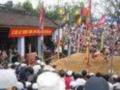
Currently, the entire complex of Trang Trinh Nguyen Binh Khiem temple is planned on an area of 5.7 hectares, in his hometown Trung Am village. All architectural items are arranged reasonably, scientifically, the harmonious landscape makes anyone who comes here feel like they are visiting a famous place. In 1991, this relic was ranked as a national relic by the State.
The relic site of Trang Trinh Nguyen Binh Khiem Temple currently includes many constructions: Main Temple, Bach Van Am, Quan Trung Tan, Song Mai Pagoda, Nguyen Van Dinh's tomb, Kinh Thien Pen Tower, Nguyen Binh Khiem monument, artifact exhibition house, Ban Nguyet Lake, and the shrine of Trang Trinh Nguyen Binh Khiem's parents. In addition, there are a number of related relic sites in Hanoi, Thai Binh, the South...
2.1.2. Relic site of Trang Trinh Nguyen Binh Khiem temple
2.1.2.1. Main church
Trung Am Temple is now also known as the main temple. The temple was built on the land of the old Bach Van Temple, the final residence of Trang Trinh Nguyen Binh Khiem. The temple was built in 1927, and in 1985, the people
On the occasion of the 400th anniversary of Nguyen Binh Khiem's death, it was renovated. The temple consists of 3 rooms where the statue and tablet of Nguyen Binh Khiem are placed. The statue of him is made of wood, sitting on the throne, wearing a dragon robe given by the king, a dragon-winged hat on his head, and holding a notebook in his right hand as if he were lecturing his students on poetry.
The sculptor of the statue was artisan Hoang Sam (Bao Ha - Dong Minh) who completed it on the occasion of the 500th anniversary of the birth of the Scholar (1991) (Previously, in the temple there was only a memorial tablet and a folk painting "An Nam Ly Hoc" depicting Nguyen Binh Khiem sitting and writing). In the middle of the temple is a large horizontal lacquered board: An Nam Ly Hoc has great historical value, "An Nam Ly Hoc" is taken from the sentence: "An Nam Ly Hoc huu Trinh truyen". (meaning: In Vietnam, there is a Trinh Tuyen Marquis - the title of Nguyen Binh Khiem) by Doctor Chu San, a Qing Dynasty envoy, who dedicated it to him. In particular, there are some parallel sentences of later generations praising his talent, virtue and character:
Trinh Quoc Dai is famous in the South and the North, Trung Am is a beautiful place where trees grow and learn.
(Meaning: Trinh Quoc Cong's reputation resounded throughout the North and South. Trung Am's beautiful scenery was famous, and his lecture hall became a temple.)
Around the temple of Trang, there are many legends about its miraculous effects that are still passed down among the people.
In front of the temple is Thai Nham Lake, on the land in the middle of the lake there is a bridge across and a stone stele made in Vinh Huu year of Le dynasty (1736) records the construction of the temple to worship Trang and the names of those who contributed to the temple's construction. Over a long period of time, the words on the stele have faded and are difficult to read.
2.1.2.2. Bach Van Am
After 8 years of serving as the father of the Mac dynasty, when his petition to behead 18 corrupt officials was not accepted by the Mac king, Nguyen Binh Khiem asked to retire and return to his hometown.
It was the second year of Quang Hoa (1542) under the reign of Mac Hien Tong, when he was 52 years old. After hanging up his hat, he built Bach Van Hermitage in the East of Trung Am village and took the nickname Bach Van hermitage.
Bach Van Am is a place to escape from court affairs to teach, spread the light of religion to the world, help the king govern the country, bring peace to the people so that everyone can enjoy long-lasting happiness.
According to Professor Bui Van Nguyen, Bach Van Am was built in the style of four pillars, with the main pillar hidden, the upper part facing the lower part, similar to the worshiping hall in the Temple of Literature. The materials were made of mahogany, jackfruit and some guava leaves, the roof was thatched with coconut leaves, covered with anti-cyclone bamboo blinds. In addition to the two eastern and western wings, the hermitage also had three fairly large middle rooms used as classrooms. Inside the middle room, there was a rosewood bed with kneeling legs, left bare in the summer, and covered with a red mat in the winter, with the word "longevity" engraved on it. On the bed was a red ink pen for commenting on papers and marking books. There are also two large and medium-sized folding pillows for the Mandarin to lean on when lecturing, or listening to the students commenting on and reciting literature... Outside, in front of the teacher's bed, there are two bamboo couches, embracing a round table in the middle (also made of mahogany) on which there are pipes, bowls, teapots, cups, glasses... The rest of the middle room and the two sides are all placed with benches (lowered one step) for the students to take turns sitting, or sometimes lying down with one hand propped up to write, or sitting cross-legged with a vase and reciting literature.
Through Nguyen Binh Khiem's Autobiography, we can understand the location and beautiful scenery of Bach Van Hermitage:
Bach Van Am, Bach Van Huong, Near the river tower, facing the setting sun, Sitting on the river, talking about spring, the spring breeze is so nice. Reciting poems in the gate, the pen gives birth to fragrance. The bright moon and flowers reflect in the mirror.
Poetry translation:
The pillow is clean and the bamboo is cool. The mountains and rivers also follow people's wisdom.
Price of the product is reasonable.
Am Van next to May village
The river tower reflects the western sky in the afternoon. Spring laughter and talk add to the excitement.
The poetic lines of the pen are filled with fragrance, the moon shines on the golden cup.
The bamboo breeze gently blows past the bed, the wise man has salty mountains and rivers.
In such joy, who can understand my heart?
( Nguyen Van Bach translated) [13, p.33]
Why is it called Bach Van Am? According to the theory of the Five Elements corresponding to the Eight Trigrams, the color white (bach) belongs to the Ton trigram, the trigram of wind. Thanks to the wind blowing away the dust, it becomes white and bright. It implies that his soul, his whole life was pure and noble, he did not write dirty words, and did not do anything wrong. Bach Van Am is also a pre-existing name. In China, there is a branch called Bach Van Dong in the Thien Tong sect. Zen practitioners built a temple called Bach Van Am. In Vietnam, during the Tran Dynasty, monk Phap Loa practiced at Hun Pagoda, Ky Lan Mountain (now called Con Son).
– Chi Linh – Hai Duong) built Bach Van Am by the stream to read books and recite sutras. Later Huyen Quang also lived there and later the Tu Do Tran Nguyen Han and Nguyen Trai also came there when they were in hiding.
Why did he take the nickname Bai Yun Cu Si? The word “Chu Si” is a Buddhist term that first appeared in Buddhist literature in the Duy Mat Sutra. “Chu Si” in the Duy Mat Sutra refers to a person of great wisdom who, although not a monk, practices the Bodhisattva path to save people and the world. When he called himself “Chu Si”, he
I want to consider myself a lay Buddhist, a person who does not become a monk or live in a temple, but accepts and lives according to the Buddhist ideals, Buddhist cosmology, and Buddhist philosophy of life.
Bach Van Am became the place to train the country's talents at that time. It was from this Bach Van Am that he trained and cultivated a series of talents for the country with names that will forever be in history: Phung Khac Khoan, Nguyen Quyen, Dinh Thoi Trung, Luong Huu Khanh... It was also here that his famous works were born such as: Bach Van Am Thi Tap, Bach Van Quoc Ngu Thi Tap...
From the roof of the Bach Van Hermitage in a rustic countryside, he once met with envoys of feudal powers at that time such as Mac, Trinh, Nguyen. Here, with his strategic vision, humanistic thoughts, and desire for peace, he made accurate predictions and interpretations for the most powerful political powers at that time, the most important and vital issues. Especially with the Mac Dynasty, when he fell ill, the Mac King sent a royal envoy to visit and ask about national affairs. He replied:
Forgive the national incident
Cao Bang is small, but has many people.
(Meaning: In the future, if the country has any problems, then Cao Bang land, although small, can still last for several more generations) [10, p.52]
Indeed, when he lost power (1952), the Mac dynasty occupied Cao Bang and existed for several generations, a total of more than 70 years. Therefore, the scholars and the people called him a prophet, "A person who is well-versed in philosophy, understands fortune and misfortune, knows the past and the future, and for hundreds of generations to come, no one will be better than him" (Doctor On Dinh Hau Vu Kham Lan - Genealogy)
The old Bach Van Hermitage no longer exists, and has now been rebuilt on the old foundation. The hermitage consists of three wooden rooms with thatched roofs. In front of the hermitage door,
Bach Van is a group of statues that vividly recreate the scene when Nguyen Binh Khiem opened a class to teach, many people came to ask for the teacher (Trang Trinh Nguyen Binh Khiem). Children and parents also came to ask for their children to study, there are also some statues of students who, after passing the exam, returned to visit the teacher as well as some mandarins representing the feudal dynasties at that time came to ask for the teacher's opinion.
2.1.2.3. The temple of the parents of Trang Trinh Nguyen Binh Khiem . With the contributions of visitors from near and far, there are more and more
Many structures were built on the relic site of Trang Trinh Nguyen Binh Khiem's temple, including the temple to his parents. The temple was inaugurated in 2011.
From ancient times to the present, scholars studying Nguyen Binh Khiem have always highly appreciated the role of Mrs. Nhu Thi Thuc, the mother of Nguyen Binh Khiem, who influenced his character, talent and intelligence. To this day, people still pass down many anecdotes about the talent, virtue and ambition of Mrs. Nhu Thi Thuc. She was well-educated, intelligent, good at poetry and literature, well-versed in astrology and astronomy, and was the daughter of the mandarin Nhu Van Lan. If the women of the past only wished to get married, "how can I get a husband worth the effort of making my cheeks and teeth black?", she had an unusual will. Although she lived during the prosperous Le Dynasty, she predicted that 40 years later the Le Dynasty would decline. Her wish was to give birth to a wise king. Therefore, after nearly 20 years of choosing a husband, she married the father of Trang because she saw that he was a good teacher with the appearance of giving birth to a noble son. After giving birth to Trang, she saw that her son had an unusually handsome appearance and devoted herself to educating him with the hope that he would become a talented person to help the people and the country. She hoped that Nguyen Binh Khiem would grow up to become king. Trang's father, on the other hand, had a loyal ideology to King Le. Therefore, the two had different opinions.
in the way of raising children. After many disagreements, she returned to her mother's hometown. Her grave is buried in Mang Nghe area, Kien Thiet commune, Tien Lang district, next to the grave of her maternal grandfather, the Minister Nguyen Van Lan.
This project was completed on the occasion of the 520th anniversary of the birth of Trang Trinh Nguyen Binh Khiem and was invested with a budget of about 45 billion VND, all made of ironwood. The temple has a T-shaped architecture with 5 front rooms and 2 back rooms.
2.1.2.4. Tomb of Nguyen Van Dinh
Mr. Nguyen Van Dinh was the father of Nguyen Binh Khiem, whose name was Mr. Cu Xuyen. He was given the title of Thai Bao district duke and Nghiem title by King Mac. He was a Confucian scholar, a teacher, and studied at the Imperial Academy.
When he passed away, his grave was buried in his hometown, right in the middle of Trung Am village field (behind the current relic site). The grave has recently been rebuilt to a moderate and solemn scale.
Legend has it that the land for the tomb of the old man was chosen by the mandarin Nguyen Binh Khiem himself. It was a piece of land with prosperous and sacred energy. The legend of the mandarin's hometown recounts that: Quan Thuong Tu - the governor of Hai Duong, was also a famous person in geomancy and feng shui. Once when he visited the mandarin's hometown, after visiting the temple, the mandarin went to see the tomb of the mandarin's father. Knowing that the mandarin was a master of geomancy, but when he looked at the terrain, the shape of the tree, and the land, the mandarin thought: perhaps the mandarin was wrong, why did he put the tomb in a place with a risk of landslide like that, so he wanted to reset the tomb - secretly correcting the mistake of the ancients. With the villagers' consent, the patrol proceeded to dig the tomb. When approaching the coffin, he saw a stone placed right on it, turned it over to see a stele with the inscription:
Eighty years of immortality end up on the left, Eighty years later, immortality end up in the middle