
Built in 1902, it is still intact and has been renovated and expanded to welcome visitors.
With a natural area of about 10 hectares, Hon Dau Island has a rare old tropical primeval forest along the northern coast. The forest is monolithic with dense coverage, untouched by human hands. The forest here has 3 layers of vegetation, including ancient trees that 4-5 people cannot hug around. Although not as mysterious and wild as other primeval forests, Hon Dau primeval forest has a pleasant, fresh space, truly becoming an attractive destination for tourists visiting the island.
Not only a tourist destination, Hon Dau is also a historical relic of Hai Phong. Every year on the 8th, 9th, and 10th of the second lunar month, the island holds the Dau Island Festival of Do Son fishermen at the Nam Hai Than Vuong Temple to pray for good luck. The Nam Hai Than Vuong Temple is located right at the pier to the island. Legend has it that around the 13th century, villagers recovered the body of a man wearing the armor of a Tran Dynasty general. The body was placed at the foot of the island's hill to be embalmed the next morning. But the next morning, termites had covered the body into a large grave. The villagers saw a strange sign and built a temple to worship it. The temple is very sacred, fishermen often come here to pray for safety when going fishing. Every year, during the thanksgiving festival, the village holds a festival and the villagers go to the island to sleep overnight to enjoy the gods' blessings.
It is also said that if anyone takes away a branch or a rock on the island, they will become sick and their whole family will be in trouble. Perhaps because of this belief, the island has been preserved intact until today.
General assessment of natural tourism resources:
Maybe you are interested!
-
 Historical relic and festival of Trang Trinh Nguyen Binh Khiem Temple in Vinh Bao district, Hai Phong - 9
 -
 Trinh Trinh Nguyen Binh Khiem in the Consciousness of Vietnamese People
 -
 The Temple of the Parents of Trinh Trinh Nguyen Binh Khiem, With the Contribution of Visitors from Near and Far, Is Increasingly
 -
 Solutions for tourism development in Tien Lang - 10
zt2i3t4l5ee
zt2a3gstourism, tourism development
zt2a3ge
zc2o3n4t5e6n7ts
- District People's Committees and authorities of communes with tourist attractions should support, promote, and provide necessary information to people, helping them improve their knowledge about tourism. Raise tourism awareness for local people.
*
* *
Due to limited knowledge and research time, the thesis inevitably has shortcomings. Therefore, I look forward to receiving guidance from teachers, experts as well as your comments to make the thesis more complete.
Chapter III Conclusion
Through the issues presented in Chapter II, we can come to some conclusions:
Based on the strengths of available tourism resources, the types of tourism in Tien Lang that need to be promoted in the coming time are sightseeing and resort tourism, discovery tourism, weekend tourism. To improve the quality and diversify tourism products, Tien Lang district needs to combine with local cultural tourism resources, at the same time combine with surrounding areas, build rich tourism products. The strengths of Tien Lang tourism are eco-tourism and cultural tourism, so developing Tien Lang tourism must always go hand in hand with restoring and preserving types of cultural tourism resources. Some necessary measures to support and improve the efficiency of exploiting tourism resources in Tien Lang are: strengthening the construction of technical facilities and labor force serving tourism, actively promoting and advertising tourism, and expanding forms of capital mobilization for tourism development.
CONCLUDE
I Conclusion
1. Based on the results achieved within the framework of the thesis's needs, some basic conclusions can be drawn as follows:
Tien Lang is a locality with great potential for tourism development. The relatively abundant cultural tourism resources and ecological tourism resources have great appeal to tourists. Based on this potential, Tien Lang can build a unique tourism industry that is competitive enough with other localities within Hai Phong city and neighboring areas.
In recent years, the exploitation of the advantages of resources to develop tourism and build tourist routes in Tien Lang has not been commensurate with the available potential. In terms of quantity, many resource objects have not been brought into the purpose of tourism development. In terms of time, the regular service time has not been extended to attract more visitors. Infrastructure and technical facilities are still weak. The labor force is still thin and weak in terms of expertise. Tourism programs and routes have not been organized properly, the exploitation content is still monotonous, so it has not attracted many visitors. Although resources have not been mobilized much for tourism development, they are facing the risk of destruction and degradation.
2. Based on the results of investigation, analysis, synthesis, evaluation and selective absorption of research results of related topics, the thesis has proposed a number of necessary solutions to improve the efficiency of exploiting tourism resources in Tien Lang such as: promoting the restoration and conservation of tourism resources, focusing on investment and key exploitation of ecotourism resources, strengthening the construction of infrastructure and tourism workforce. Expanding forms of capital mobilization. In addition, the thesis has built a number of tourist routes of Hai Phong in which Tien Lang tourism resources play an important role.
Exploiting Tien Lang tourism resources for tourism development is currently facing many difficulties. The above measures, if applied synchronously, will likely bring new prospects for the local tourism industry, contributing to making Tien Lang tourism an important economic sector in the district's economic structure.
REFERENCES
1. Nhuan Ha, Trinh Minh Hien, Tran Phuong, Hai Phong - Historical and cultural relics, Hai Phong Publishing House, 1993
2. Hai Phong City History Council, Hai Phong Gazetteer, Hai Phong Publishing House, 1990.
3. Hai Phong City History Council, History of Tien Lang District Party Committee, Hai Phong Publishing House, 1990.
4. Hai Phong City History Council, University of Social Sciences and Humanities, VNU, Hai Phong Place Names Encyclopedia, Hai Phong Publishing House. 2001.
5. Law on Cultural Heritage and documents guiding its implementation, National Political Publishing House, Hanoi, 2003.
6. Tran Duc Thanh, Lecture on Tourism Geography, Faculty of Tourism, University of Social Sciences and Humanities, VNU, 2006
7. Hai Phong Center for Social Sciences and Humanities, Some typical cultural heritages of Hai Phong, Hai Phong Publishing House, 2001
8. Nguyen Ngoc Thao (editor-in-chief, Tourism Geography, Hai Phong Publishing House, two volumes (2001-2002)
9. Nguyen Minh Tue and group of authors, Hai Phong Tourism Geography, Ho Chi Minh City Publishing House, 1997.
10. Nguyen Thanh Son, Hai Phong Tourism Territory Organization, Associate Doctoral Thesis in Geological Geography, Hanoi, 1996.
11. Decision No. 2033/QD – UB on detailed planning of Tien Lang town, Hai Phong city until 2020.
12. Department of Culture, Information, Hai Phong Museum, Hai Phong relics
- National ranked scenic spot, Hai Phong Publishing House, 2005. 13. Tien Lang District People's Committee, Economic Development Planning -
Culture - Society of Tien Lang district to 2010.
14.Website www.HaiPhong.gov.vn
APPENDIX 1
List of national ranked monuments
STT
Name of the monument
Number, year of decisiondetermine
Location
1
Gam Temple
938 VH/QĐ04/08/1992
Cam Khe Village- Toan Thang commune
2
Doc Hau Temple
9381 VH/QĐ04/08/1992
Doc Hau Village –Toan Thang commune
3
Cuu Doi Communal House
3207 VH/QĐDecember 30, 1991
Zone II of townTien Lang
4
Ha Dai Temple
938 VH/QĐ04/08/1992
Ha Dai Village –Tien Thanh commune
APPENDIX II
STT
Name of the monument
Number, year of decision
Location
1
Phu Ke Pagoda Temple
178/QD-UBJanuary 28, 2005
Zone 1 - townTien Lang
2
Trung Lang Temple
178/QD-UBJanuary 28, 2005
Zone 4 – townTien Lang
3
Bao Khanh Pagoda
1900/QD-UBAugust 24, 2006
Nam Tu Village -Kien Thiet commune
4
Bach Da Pagoda
1792/QD-UB11/11/2002
Hung Thang Commune
5
Ngoc Dong Temple
177/QD-UBNovember 27, 2005
Tien Thanh Commune
6
Tomb of Minister TSNhu Van Lan
2848/QD-UBSeptember 19, 2003
Nam Tu Village -Kien Thiet commune
7
Canh Son Stone Temple
2160/QD-UBSeptember 19, 2003
Van Doi Commune –Doan Lap
8
Meiji Temple
2259/QD-UBSeptember 19, 2002
Toan Thang Commune
9
Tien Doi Noi Temple
477/QD-UBSeptember 19, 2005
Doan Lap Commune
10
Tu Doi Temple
177/QD-UBJanuary 28, 2005
Doan Lap Commune
11
Duyen Lao Temple
177/QD-UBJanuary 28, 2005
Tien Minh Commune
12
Dinh Xuan Uc Pagoda
177/QD-UBJanuary 28, 2005
Bac Hung Commune
13
Chu Khe Pagoda
177/QD-UBJanuary 28, 2005
Hung Thang Commune
14
Dong Dinh
2848/QD-UBNovember 21, 2002
Vinh Quang Commune
15
President's Memorial HouseTon Duc Thang
177/QD-UBJanuary 28, 2005
NT Quy Cao
Ha Dai Temple
Ben Vua Temple
Tien Lang hot spring
div.maincontent .p { color: black; font-family:"Times New Roman", serif; font-style: normal; font-weight: normal; text-decoration: none; font-size: 14pt; margin:0pt; } div.maincontent p { color: black; font-family:"Times New Roman", serif; font-style: normal; font-weight: normal; text-decoration: none; font-size: 14pt; margin:0pt; } div.maincontent .s1 { color: black; font-family:"Times New Roman", serif; font-style: normal; font-weight: normal; font-size: 16pt; } div.maincontent .s2 { color: black; font-family:"Times New Roman", serif; font-style: italic; font-weight: bold; text-decoration: none; font-size: 14pt; } div.maincontent .s3 { color: black; font-family:"Times New Roman", serif; font-style: italic; font-weight: normal; text-decoration: none; font-size: 14pt; } div.maincontent .s4 { color: black; font-family:"Times New Roman", serif; font-style: normal; font-weight: normal; font-size: 14pt; } div.maincontent .s5 { color: black; font-family:"Times New Roman", serif; font-style: normal; font-weight: bold; font-size: 14pt; } div.maincontent .s6 { color: black; font-family:"Times New Roman", serif; font-style: normal; font-weight: normal; text-decoration: none; font-size: 14pt; } div.maincontent .s7 { color: black; font-family:"Times New Roman", serif; font-style: normal; font-weight: bold; text-decoration: none; font-size: 14pt; } div.maincontent .s8 { color: black; font-family:"Times New Roman", serif; font-style: normal; font-weight: normal; text-decoration: none; font-size: 9pt; vertical-align: 6pt; } div.maincontent .s9 { color: black; font-family:"Times New Roman", serif; font-style: normal; font-weight: bold; text-decoration: none; font-size: 12pt; } div.maincontent .s11 { color: black; font-family:"Times New Roman", serif; font-style: normal; font-weight: normal; tex
Solutions for tourism development in Tien Lang - 10
zt2i3t4l5ee
zt2a3gstourism, tourism development
zt2a3ge
zc2o3n4t5e6n7ts
- District People's Committees and authorities of communes with tourist attractions should support, promote, and provide necessary information to people, helping them improve their knowledge about tourism. Raise tourism awareness for local people.
*
* *
Due to limited knowledge and research time, the thesis inevitably has shortcomings. Therefore, I look forward to receiving guidance from teachers, experts as well as your comments to make the thesis more complete.
Chapter III Conclusion
Through the issues presented in Chapter II, we can come to some conclusions:
Based on the strengths of available tourism resources, the types of tourism in Tien Lang that need to be promoted in the coming time are sightseeing and resort tourism, discovery tourism, weekend tourism. To improve the quality and diversify tourism products, Tien Lang district needs to combine with local cultural tourism resources, at the same time combine with surrounding areas, build rich tourism products. The strengths of Tien Lang tourism are eco-tourism and cultural tourism, so developing Tien Lang tourism must always go hand in hand with restoring and preserving types of cultural tourism resources. Some necessary measures to support and improve the efficiency of exploiting tourism resources in Tien Lang are: strengthening the construction of technical facilities and labor force serving tourism, actively promoting and advertising tourism, and expanding forms of capital mobilization for tourism development.
CONCLUDE
I Conclusion
1. Based on the results achieved within the framework of the thesis's needs, some basic conclusions can be drawn as follows:
Tien Lang is a locality with great potential for tourism development. The relatively abundant cultural tourism resources and ecological tourism resources have great appeal to tourists. Based on this potential, Tien Lang can build a unique tourism industry that is competitive enough with other localities within Hai Phong city and neighboring areas.
In recent years, the exploitation of the advantages of resources to develop tourism and build tourist routes in Tien Lang has not been commensurate with the available potential. In terms of quantity, many resource objects have not been brought into the purpose of tourism development. In terms of time, the regular service time has not been extended to attract more visitors. Infrastructure and technical facilities are still weak. The labor force is still thin and weak in terms of expertise. Tourism programs and routes have not been organized properly, the exploitation content is still monotonous, so it has not attracted many visitors. Although resources have not been mobilized much for tourism development, they are facing the risk of destruction and degradation.
2. Based on the results of investigation, analysis, synthesis, evaluation and selective absorption of research results of related topics, the thesis has proposed a number of necessary solutions to improve the efficiency of exploiting tourism resources in Tien Lang such as: promoting the restoration and conservation of tourism resources, focusing on investment and key exploitation of ecotourism resources, strengthening the construction of infrastructure and tourism workforce. Expanding forms of capital mobilization. In addition, the thesis has built a number of tourist routes of Hai Phong in which Tien Lang tourism resources play an important role.
Exploiting Tien Lang tourism resources for tourism development is currently facing many difficulties. The above measures, if applied synchronously, will likely bring new prospects for the local tourism industry, contributing to making Tien Lang tourism an important economic sector in the district's economic structure.
REFERENCES
1. Nhuan Ha, Trinh Minh Hien, Tran Phuong, Hai Phong - Historical and cultural relics, Hai Phong Publishing House, 1993
2. Hai Phong City History Council, Hai Phong Gazetteer, Hai Phong Publishing House, 1990.
3. Hai Phong City History Council, History of Tien Lang District Party Committee, Hai Phong Publishing House, 1990.
4. Hai Phong City History Council, University of Social Sciences and Humanities, VNU, Hai Phong Place Names Encyclopedia, Hai Phong Publishing House. 2001.
5. Law on Cultural Heritage and documents guiding its implementation, National Political Publishing House, Hanoi, 2003.
6. Tran Duc Thanh, Lecture on Tourism Geography, Faculty of Tourism, University of Social Sciences and Humanities, VNU, 2006
7. Hai Phong Center for Social Sciences and Humanities, Some typical cultural heritages of Hai Phong, Hai Phong Publishing House, 2001
8. Nguyen Ngoc Thao (editor-in-chief, Tourism Geography, Hai Phong Publishing House, two volumes (2001-2002)
9. Nguyen Minh Tue and group of authors, Hai Phong Tourism Geography, Ho Chi Minh City Publishing House, 1997.
10. Nguyen Thanh Son, Hai Phong Tourism Territory Organization, Associate Doctoral Thesis in Geological Geography, Hanoi, 1996.
11. Decision No. 2033/QD – UB on detailed planning of Tien Lang town, Hai Phong city until 2020.
12. Department of Culture, Information, Hai Phong Museum, Hai Phong relics
- National ranked scenic spot, Hai Phong Publishing House, 2005. 13. Tien Lang District People's Committee, Economic Development Planning -
Culture - Society of Tien Lang district to 2010.
14.Website www.HaiPhong.gov.vn
APPENDIX 1
List of national ranked monuments
STT
Name of the monument
Number, year of decisiondetermine
Location
1
Gam Temple
938 VH/QĐ04/08/1992
Cam Khe Village- Toan Thang commune
2
Doc Hau Temple
9381 VH/QĐ04/08/1992
Doc Hau Village –Toan Thang commune
3
Cuu Doi Communal House
3207 VH/QĐDecember 30, 1991
Zone II of townTien Lang
4
Ha Dai Temple
938 VH/QĐ04/08/1992
Ha Dai Village –Tien Thanh commune
APPENDIX II
STT
Name of the monument
Number, year of decision
Location
1
Phu Ke Pagoda Temple
178/QD-UBJanuary 28, 2005
Zone 1 - townTien Lang
2
Trung Lang Temple
178/QD-UBJanuary 28, 2005
Zone 4 – townTien Lang
3
Bao Khanh Pagoda
1900/QD-UBAugust 24, 2006
Nam Tu Village -Kien Thiet commune
4
Bach Da Pagoda
1792/QD-UB11/11/2002
Hung Thang Commune
5
Ngoc Dong Temple
177/QD-UBNovember 27, 2005
Tien Thanh Commune
6
Tomb of Minister TSNhu Van Lan
2848/QD-UBSeptember 19, 2003
Nam Tu Village -Kien Thiet commune
7
Canh Son Stone Temple
2160/QD-UBSeptember 19, 2003
Van Doi Commune –Doan Lap
8
Meiji Temple
2259/QD-UBSeptember 19, 2002
Toan Thang Commune
9
Tien Doi Noi Temple
477/QD-UBSeptember 19, 2005
Doan Lap Commune
10
Tu Doi Temple
177/QD-UBJanuary 28, 2005
Doan Lap Commune
11
Duyen Lao Temple
177/QD-UBJanuary 28, 2005
Tien Minh Commune
12
Dinh Xuan Uc Pagoda
177/QD-UBJanuary 28, 2005
Bac Hung Commune
13
Chu Khe Pagoda
177/QD-UBJanuary 28, 2005
Hung Thang Commune
14
Dong Dinh
2848/QD-UBNovember 21, 2002
Vinh Quang Commune
15
President's Memorial HouseTon Duc Thang
177/QD-UBJanuary 28, 2005
NT Quy Cao
Ha Dai Temple
Ben Vua Temple
Tien Lang hot spring
div.maincontent .p { color: black; font-family:"Times New Roman", serif; font-style: normal; font-weight: normal; text-decoration: none; font-size: 14pt; margin:0pt; } div.maincontent p { color: black; font-family:"Times New Roman", serif; font-style: normal; font-weight: normal; text-decoration: none; font-size: 14pt; margin:0pt; } div.maincontent .s1 { color: black; font-family:"Times New Roman", serif; font-style: normal; font-weight: normal; font-size: 16pt; } div.maincontent .s2 { color: black; font-family:"Times New Roman", serif; font-style: italic; font-weight: bold; text-decoration: none; font-size: 14pt; } div.maincontent .s3 { color: black; font-family:"Times New Roman", serif; font-style: italic; font-weight: normal; text-decoration: none; font-size: 14pt; } div.maincontent .s4 { color: black; font-family:"Times New Roman", serif; font-style: normal; font-weight: normal; font-size: 14pt; } div.maincontent .s5 { color: black; font-family:"Times New Roman", serif; font-style: normal; font-weight: bold; font-size: 14pt; } div.maincontent .s6 { color: black; font-family:"Times New Roman", serif; font-style: normal; font-weight: normal; text-decoration: none; font-size: 14pt; } div.maincontent .s7 { color: black; font-family:"Times New Roman", serif; font-style: normal; font-weight: bold; text-decoration: none; font-size: 14pt; } div.maincontent .s8 { color: black; font-family:"Times New Roman", serif; font-style: normal; font-weight: normal; text-decoration: none; font-size: 9pt; vertical-align: 6pt; } div.maincontent .s9 { color: black; font-family:"Times New Roman", serif; font-style: normal; font-weight: bold; text-decoration: none; font-size: 12pt; } div.maincontent .s11 { color: black; font-family:"Times New Roman", serif; font-style: normal; font-weight: normal; tex -
 Binh Nguyen Loc and His Wandering Steps on the Sidewalks
Hai Phong's natural tourism resources are quite diverse and rich, formed by the combined characteristics of geological factors - topography, climate, hydrology, vegetation cover and animal world. With this resource, Hai Phong has created a strength in tourism such as eco-tourism, tourism
vacation, sightseeing tour...
2.2.2 Human tourism resources :
Tourists coming to Hai Phong not only go to Cat Ba and Do Son, but also have the opportunity to admire the beauty of historical relics, thereby understanding more about the land and people of Hai Phong.
2.2.2.1 Nghe Temple:
This is the temple of Lady Le Chan, located in the city center, about 600m southwest of the City Theater.
At first, the temple was just a small shrine with a thatched roof. In 1919, the Nghe Temple was rebuilt as it is today. The temple has two main buildings: the Front Hall and the Back Hall. The roof of the Front Hall has a prominent Chinese character "An Bien Ancient Temple". Between the Front Hall and the Back Hall is a two-story incense burning house with a roof of a curved roof. In the Back Hall is a statue of Lady Le Chan, with her parents worshipped on both sides.
When visiting Nghe Temple, visitors often pay attention to two unique relics: the stone gong and the stone bed. The gong is made from a 5cm thick stone slab that is split into the shape of a gong (1m high and 1.6m wide). The front of the gong is engraved with two dragons facing the moon and clouds flying around. The back of the gong is engraved with clouds flying and water waves, both sides have two round, high knobs and a mounded base. The sound of the stone gong resonates softly, spreading, leading us to the mysterious and sacred spiritual whistle.
Every year, there are two festivals held at the temple. The festival on the 8th of the 2nd lunar month celebrates her birthday, and the offerings always include crab and vermicelli. The festival on the 25th of the 12th lunar month commemorates her death. The offerings usually include a beautiful multi-layered flower tray.
Every New Year's Eve, many people in the city flock to the temple to burn incense and buy salt packages shaped like thorns wrapped in red paper for good luck.
2.2.2.2 Du Hang Pagoda:
Du Hang Pagoda, whose Chinese name is Phuc Lam Tu, is now in Ho Nam ward.
Le Chan district, 2km southwest of the city center.
If based on the stele records of the pagoda, Du Hang pagoda originated from the Tien Le dynasty (980 - 1009). At the end of the reign of King Le Dai Hanh, a founder monk came here to preach and enlighten the Buddhist doctrine. During the Tran dynasty (1225 - 1400), the founder monks of the Truc Lam Zen sect founded by Tran Nhan Tong in Yen Tu Son had a relationship with Du Hang pagoda. Therefore, from the past until now, Du Hang pagoda still traditionally commemorates the birthday of the first founder monk "Den Ngu Giac Hoang Tinh Tue Zen Master", namely King Tran Nhan Tong on the 2nd day of the 11th lunar month. The third founder of the Truc Lam Zen sect was Zen master Huyen Quang Ly Dao Tai, on the 3rd day of the 11th lunar month. During the reign of King Le Gia Long (1672), monk Nguyen Dinh Sach (nicknamed Chan Huyen) spent money to buy land to build a large pagoda, with a bell tower, ancestral shrine, and a monk's house. Since then, despite many historical ups and downs, the pagoda has been renovated by generations of monks, nuns, and local Buddhists to become more and more spacious and beautiful.
Compared to many Buddhist temples in Hai Phong, Du Hang Pagoda has a majestic architecture, a complete campus, including a 7-room Buddha hall, a 3-storey bell tower, a curved roof, a large bronze bell with the inscription "Phuc Lam Tu chung" meaning Phuc Lam Pagoda bell. The Buddha hall still preserves many ancient Buddha statues with precise shaping value such as the Tam The set, the Cuu Long - Infant Sakyamuni throne, protecting good, eliminating evil, the "Ten Kings of the Palace" statue set. The interior of the Buddha hall is decorated with many horizontal lacquered boards, parallel sentences, and round doors gilded with brilliant red lacquer, soft lines, and sophisticated techniques expressed through the themes of flowers, leaves, plants, and animals, in the Nguyen Dynasty art style of the late 19th and early 20th centuries. The front hall of the Buddha hall is decorated with many familiar themes such as Mai Dieu, Ngu Phuc, Dragon and Cloud... expressing the people's wishes for "favorable weather, lush vegetation" and a wooden carving depicting the scene of Tang Monk and his disciples on their way to the West to obtain Buddhist scriptures. Currently, Du Hang Pagoda still preserves many precious relics such as bells, gongs, bronze censer, decorative art objects made of ceramics, green stone, and sets of
The ancient "A Ham" golden book has been passed down from many generations of abbots.
In the quiet tower garden, shaded by the cool shade of ancient green trees, in addition to the group of tower tombs of the deceased monks, the pagoda also has tower tombs containing the relics of the founders of the Truc Lam Yen Tu Zen sect, the tower of Master Chan Huyen and many monks who once presided at Du Hang pagoda.
In 1962, an important event took place at the pagoda, associated with the patriotic struggle movement, demanding people's rights and democracy of Buddhist monks and nuns, along with a large number of students, teachers, and workers. They gathered at Du Hang pagoda to hold a memorial service for patriot Phan Chau Trinh when the whole country heard that he had passed away in Saigon after the August Revolution (1945). The Hai Phong Buddhist Sangha Association held a launching ceremony at the pagoda, the venue for the "Golden Week" and at the same time, revolutionary mass organizations met to discuss welcoming President Ho Chi Minh on his way back to Vietnam from France, visiting the Hai Phong compatriots and soldiers. During the 9 years of resistance, Du Hang pagoda expanded meditation sessions to shelter cadres, supported the resistance through the "warm winter clothes" movement for soldiers and food for the army. Many monks at the pagoda enthusiastically joined the army to save the country, notably the late monk Dinh Quang Lac, who was awarded the Third Class Resistance Medal by the Government. Du Hang Pagoda was ranked as a historical and cultural relic by the State in 1986.
2.2.2.3 Relic site of Trinh Trang Nguyen Binh Khiem:
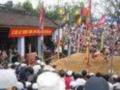
The relic site of Trang Trinh Nguyen Binh Khiem was built in Trung Am village, Ly Hoc commune, Vinh Bao district, Hai Phong city. The relic site includes 9 attractions: Kinh Thien pen tower, Trang Trinh temple, exhibition house, Trang Trinh's father's tomb, Bach Van hermitage, Trang Trinh statue, Ban Nguyet lake, Song Mai pagoda, the pagoda's ancestral house with a statue of Minh Nguyet, stele and Trung Tan restaurant. The total area is 4 hectares from the temple to the Han river bank.
According to legend, Kinh Thien Pen Tower was built by his students to praise Trang Trinh's talent as a pillar supporting the sky.
The Temple was built on the old foundation of the Trang Trinh's house in 1765. Over time,
During the war, the temple was destroyed and rebuilt many times. Today, the temple has 3 rooms: the Front Hall and 2 rooms: the Back Hall. In front of the temple, there are 2 round and square lakes symbolizing heaven and earth. In the temple, there is a statue of Trang Trinh in court clothes. The large horizontal lacquered board in the middle has 4 words "An Nam ly hoc" from the sentence "An Nam ly hoc huu trinh tuyen" meaning that those who understand the philosophy of An Nam have Trinh Tuyen Marquis (the Marquis of Nguyen Binh Khiem) given by Chu San, an envoy of the Qing Dynasty (China). In particular, there are some parallel sentences that reveal his political views on world affairs and later generations praise his merits.
The exhibition introduces his life, career, contributions to literature, philosophy, education and the honor of posterity. Notably, there is the book Bach Van Thi Tap.
The statue of Trang Trinh is 5.7m high, weighs 8.5 tons and is made of cast granite. The statue is in a sitting position, holding a book in his hand, contemplating the state of human affairs. The statue's clothes are those of a Confucian scholar who lived simply and was close to the people. The crescent-shaped lake is about 1000m2 wide. The tomb of Trang Trinh's father is not far from the temple. These three works were recently built on the occasion of the 415th anniversary of Trang Trinh's death. Song Mai Pagoda is said to be the pagoda where Nguyen Binh Khiem often visited and once answered the messenger of Lord Trinh "In the middle of the pagoda, you can eat oan" "meaning that you should not usurp the throne of the King of the Le Dynasty".
Next to the pagoda is the Ancestor's house with a statue of Mrs. Minh Nguyet, wife of Trang Trinh, a native of Do Son, who contributed to the founding of this pagoda with famous people.
Bach Van Temple: After serving as a mandarin in the court for 8 years, he submitted a petition denouncing 18 corrupt officials. King Mac did not listen, so he resigned and returned to his hometown to open a school, using his own money to build Bach Van Temple. Many scholars of the past and present consider Bach Van Temple to be the largest and most advanced private university in the country at that time.
Finally, there is Quan Trung Tan. Trung means in the middle, Tan means wharf. Ben Giua means no left, no right, must act correctly to be successful. The stone stele is 1.5m high, weighs 4 tons and was completely re-engraved on December 21, 2000 by
Presented by the Vietnam National Administration of Tourism. The content of the stele explains that loyalty is goodness, reflecting the main philosophy of life of Trang Trinh, which is "Goodness".
2.2.2.4 Trang Kenh archaeological site :
Trang Kenh archaeological site is located in Trang Kenh village, Minh Duc town, Thuy Nguyen district, belonging to a ranked scenic relic area. This is the largest stone jewelry workshop site in the Northeast of the country, reflecting the technical progress of the ancient Vietnamese people in the transition period from the late Neolithic period to the early Bronze Age, dating back over 3,400 years ago. Trang Kenh site has an area of tens of thousands of square meters divided into 2 areas: Area A and Area B. Area A is the valley of 3 limestone mountains: Hoang Ton, Ao Non, Ang Rong, in which the cultural layer is concentrated in the east of the foot of Hoang Ton mountain. Area B is located in the northeast of the foot of Ao Non mountain. This area has houses of Trang Kenh village residents and a traffic road along the site.
The cultural layer of Trang Kenh site is homogeneous. The cultural layer in area A is 1.6 to 1.9m thick, while area B has a thicker cultural layer, from 1.7 to 2.1m. The color of the cultural soil in area A is dark, with many cobblestones in the upper layer, while the soil in area B is dark brown, containing many pebbles in the upper layer, and ash and mollusk shells in the lower layer. The cultural layer at Trang Kenh site shows the long-term residence of prehistoric people over many generations at Trang Kenh.
Excavating the cultural layer of Trang Kenh site, archaeologists discovered a large number of artifacts of many different types and materials, typically pottery, stone and bronze. Pottery excavated in Trang Kenh bears the strong identity of the prehistoric Trang Kenh people. The most characteristic feature of this type of relic is porous pottery. The ceramic bone is mixed with a lot of sand and mollusk shells, has a gray-white, pink color, and low firing temperature. Decorative patterns on pottery are very rich, bold lines and embossed belt patterns are unique features of Trang Kenh pottery. Regarding types, in addition to the popular flared mouth type, there are also curved mouths, thick-walled mouths, especially the unique roofed mouth pottery type only found in
Trang Kenh and Bai Tu (Ha Bac)
Besides pottery, the stone relics in Trang Kenh are the most characteristic features of the Trang Kenh site. This is a very large-scale stone jewelry workshop with techniques reaching the peak of prehistoric civilization in Hai Phong in particular and Vietnam in general. With production tools such as quadrangular axes, small-sized shoulderless chisels, drill bits, saw blades and grinding tables, the ancient people of Trang Kenh made jewelry products to beautify life such as bracelets, earrings, rings, beads... The special thing is that the jewelry here is very beautiful and elaborate. That shows that the need for aesthetics and enjoyment of beauty of people was formed and developed very early.
Bronze objects were not found in large quantities in Trang Kenh, mainly distributed in the top layer. Types of bronze objects include square-heeled axes, balance axes, chisels, daggers, and spears. The owners of these relics belonged to the Dong Son culture, who settled here after the owners of Trang Kenh, who belonged to the Phung Nguyen culture.
Since its discovery and research, Trang Kenh archaeological site has always been evaluated by domestic and international archaeologists as a valuable cultural heritage in many aspects, a typical site of the type of late Neolithic and early Bronze Age workshop site in Vietnam.
2.2.2.5 City Museum:
Hai Phong Museum is located in the city center, at 65 Dien Bien Phu. This is a gothic-style building, built in 1919 on an area of about 1 hectare. Surrounding the museum is a fence imitating a type of weapon of medieval knights.
The museum displays models of artifacts that represent an overview of the history of formation and development of the land and people of Hai Phong. Currently, the Hai Phong Museum's display system consists of 14 galleries, representing 9 main themes.
Topic 1: Natural conditions and natural resources of Hai Phong.
Topic 2: Hai Phong from prehistoric times to the Bach Dang victory in 1945.
938
Topic 3: Hai Phong from the 10th to the 14th century.
Topic 4: Hai Phong - the country's seaport city (1874, 1888, 1930). Topic 5: Patriotic and Revolutionary movements in Hai Phong from the end of the 19th century.
19th century to August Revolution 1945.
Topic 6: Hai Phong 30 years of resistance against foreign invaders, building and defending the Fatherland under the leadership of the Party (1945-1975).
Topic 7: Hai Phong City in the period of national reunification and innovation (1975 to present)
Topic 8: Traditional cultural identity of Hai Phong. Topic 9: Hai Phong in the hearts of international friends.
In addition, the museum also has a regular exhibition room with changing contents to create attraction for visitors. The exhibition topics are often paintings, statues, ceramic and porcelain antiques, metal objects or in collaboration with museums nationwide to display and introduce the cultural traditions of provinces and cities across the country.
In the museum grounds, there are many ancient trees and many artifacts displayed outdoors such as steles, cannons, Mic 17 aircraft that once fought to protect the city's sky; and the minesweeper and destroyer that blockaded Hai Phong port during the fierce years of fighting against the US.
2.2.2.6 City Theater:
The city theater, often called the grand theater, is located in the center of the city square. The theater is the pride of the people of Hai Phong. Here, on August 23, 1946, the city's Provisional Revolutionary People's Committee was launched and on November 20, 1946, comrade Dang Kim No and 39 soldiers fought to protect the theater. They heroically sacrificed their lives after 4 days and nights of fighting against the enemy.
The theater was built in 1904 by a French architect.