
Introduce:
LESSON 10. DIAGNOSIS OF TECHNICAL CONDITION OF MOVING SYSTEM.
Article code: MD 38 - 10
Car diagnostics is a complex task, requiring the person performing the diagnostics to have a firm grasp of the specific structure. Therefore, in order to diagnose accurately, completely and logically, we will conduct diagnostics on each system of the car. In this article, we will learn about the content of diagnosing the technical status of the moving system.
Target:
- Correctly state the tasks and requirements of diagnosing the technical status of the moving system.
- Correctly analyze the types of moving system failures and methods for diagnosing those failures.
- Select appropriate methods and use equipment to diagnose the technical condition of the moving system.
- Comply with procedures and regulations in the automotive technology profession.
- Practice discipline, carefulness and meticulousness.
Main content:
1. TASKS, REQUIREMENTS AND METHODS OF DIAGNOSING THE TECHNICAL CONDITION OF THE MOVING SYSTEM.
Target:
Correctly state the tasks and requirements of diagnosing the technical status of the moving system.
Correctly analyze the types of moving system failures and methods for diagnosing those failures.
1.1 Mission.
- To mount vehicle systems, machines and lift the weight of goods and passengers.
- Moving in different traffic terrains as well as agricultural work is stable and reliable.
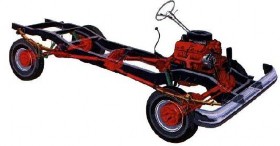
Depending on the classification, the moving system can include: frame, hub, tires and wheels, leaf springs, ...
1.2 Requirements.
Good adhesion, high elasticity, does not affect human psychology or health, is highly reliable, durable, less damaged, easy to control and easy to care for and repair.
When operating in places without roads (sand fields, fields, cultivation, horizontal and vertical hills, ...) must have good grip, overcome obstacles, meet the requirements of the work to be completed (agronomic requirements, compaction, looseness, ...) and be safe at work.
Mobility: can work in places with or without roads, terrain with or without slopes, towing and not towing trailers, ...
2. PROCEDURES AND PRACTICES OF USING EQUIPMENT TO DIAGNOSE THE TECHNICAL CONDITION OF THE MOVING SYSTEM.
Target:
Select appropriate methods and use equipment to diagnose the technical condition of the moving system.
Content | Reason |
Check the chassis. Deformed, cracked, bent. | Long-term work, chemical corrosion, overload, vehicle overturning. |
| |
Tweezers. The tweezers are worn, cracked, warped, lose elasticity, and the bushings and tweezer pins are worn. Bolts, springs, locating pins are worn, broken bolts, damaged threads. | Long-term work, chemical corrosion, overloading. Lack of oil or grease. Tweezers not tightly fitted. |
Maybe you are interested!
-

 Innovation in the Content and Leadership Methods of Provincial Party Committees in the Red River Delta to Meet the Requirements of Building Defense Areas in the Current Stage
 -
 Purpose, Requirements, Tasks, Organizing Principles, Experimental Content
 -
 Directing Innovation in Training Methods for Engineering Technology Industry According to Competency Approach
 -
 Viewpoints, Goals, Tasks and Methods of Organizing Physical Education
 -
 Methods of Testing and Diagnosing the Abs Brake System
Comply with the correct procedures and regulations in the automotive technology profession. Practice discipline, carefulness and meticulousness.
Shock absorber.
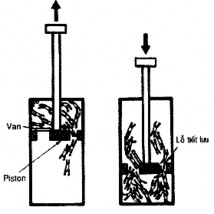
Worn pistons, cylinders, cones, valves. Seals are hardened or torn.
Valve worn, misaligned, valve spring broken.
Due to friction, poor oil quality. Strong impact (operation on bad road). | |
Wheel. | |
Tire height, cracks, breaks. | Long-term, quality work |
Puncture | poor traffic |
Wrong wheel alignment. | |
A- Bias tire. B- Cord tire | |
round. | |
1. Tire flower. | |
2. Reinforced wire (hard barrier layer). | |
3. Fabric layer (twill fabric). | |
4. Inner lining. | |
5. Tire edge wire. |
3. ANALYZE RESULTS AND MAKE CONCLUSIONS AFTER DIAGNOSIS.
Target:
Check the completed assessment of the travel system diagnostics.
After checking the moving system, the actual values will be determined; compared with the standard values (according to the documents or repair manuals) to make conclusions about repairing or replacing the details.
CONTENT, REQUIREMENTS FOR ASSESSMENT
1. Check assessment before doing the lesson.
- Knowledge: assessed through multiple choice and essay tests;
- Skills: refer to the results of the practical exercise assessment of lesson 9.
2. Test and evaluate during the lesson implementation.
Instructors observe during regular instruction on preparation, basic operations, workplace arrangement, etc. Keep a logbook to combine with evaluation of module implementation results in terms of knowledge, skills, and attitudes.
3. Test after finishing the lesson.
3.1 About knowledge.
Based on the module objectives, evaluate the results through written tests, oral tests, or multiple-choice tests that meet the following requirements:
- Correctly state the concepts, requirements and methods for diagnosing technical conditions of movement;
- Present the steps and content of the process of diagnosing the technical status of the moving system;
- Distinguish methods of diagnosing the technical condition of the moving system.
3.2 About skills.
Evaluated by direct testing of machine operations, through the quality of practical exercises that meet the following requirements:
- Prepare materials, equipment and diagnostic tools according to the established plan;
- Operate and use diagnostic equipment and machines according to correct procedures;
- Correctly detect vehicle defects (if any) using diagnostic equipment and machines;
- Arrange equipment and tools reasonably, arrange the workplace scientifically.
Suggested practice exercises for students:
- Exercises to apply learned knowledge: concepts, requirements and methods to diagnose technical status of moving systems;
- Practice exercises for individuals and small groups: identifying and operating diagnostic equipment and machines according to procedures;
- Resources and time required to perform the job: sufficient equipment, common diagnostic machines for car manufacturers, time according to the training program;
- Results and products to be achieved: identify and operate diagnostic equipment and machines, detect errors on cars through diagnostic methods;
- Standardized presentation of the product.
3.3 About attitude.
Evaluated through observation and through the monitoring book to meet the following requirements:
- Comply with labor protection regulations;
- Comply with internship regulations;
- Organize the workplace reasonably and scientifically;
- Awareness of savings and discipline;
- Spirit of cooperation in working in teams and groups.
4. Requirements for assessment of learning outcomes:.
- Provide main contents and products: concepts, requirements and methods for diagnosing the moving system; operating diagnostic devices and machines to detect errors on cars;
- Assessment methods and approaches: through multiple-choice, essay or oral tests to test theory, practical exercises to assess skills;
- Suggested study materials: references are at the end of the book.
LESSON 11. DIAGNOSTIC OF TECHNICAL CONDITION OF STEERING SYSTEM.
Article code: MD 38 - 11
Introduce:
Car diagnostics is a complex task, requiring the person performing the diagnostics to have a firm grasp of the specific structure. Therefore, in order to diagnose accurately, completely and logically, we will perform diagnostics on each system of the car. In this article, we will learn about the content of the diagnosis of the technical condition of the steering system.
Target:
- Correctly state the tasks and requirements of diagnosing the technical status of the steering system.
- Correctly analyze the types of steering system failures and methods for diagnosing those failures.
- Select appropriate methods and use equipment to diagnose the technical condition of the steering system.
- Comply with procedures and regulations in the automotive technology profession.
- Practice discipline, carefulness and meticulousness.
Main content:
1. TASKS, REQUIREMENTS AND METHODS OF DIAGNOSTICING THE TECHNICAL CONDITION OF THE STEERING SYSTEM.
Target:
Correctly state the tasks and requirements of diagnosing the technical status of the steering system.
Correctly analyze the types of steering system failures and methods for diagnosing those failures.
1.1 Mission.
The steering system of a car is used to change and maintain the direction of movement of the car in a certain direction.
1.2 Requirements.
- Short rotation over a small area;
- Smooth and convenient control;
- The dynamics must be correct so that the wheels do not slip when turning;
- Avoid impacts from the guide wheel transmitted to the steering wheel;
- Maintain stable straight motion.
2. PROCEDURES AND PRACTICES OF USING DIAGNOSTIC EQUIPMENT FOR TECHNICAL CONDITION OF STEERING SYSTEM.
Target:
Select the appropriate method and use the equipment to diagnose the technical condition of the steering system.
Comply with the correct procedures and regulations in the automotive technology profession. Practice discipline, carefulness and meticulousness.
Some steering system diagnostic content.
- Steering mechanism: worn, cracked, broken; lack of oil, grease; loose connections between the steering mechanism housing and the frame, vehicle body.
- Mechanical steering: worn, loose ball joints, cylinder joints; deformation of guide wheel guide arms; damaged nuts that limit guide wheel rotation; deformation of guide beams; heavy steering, uneven steering force in both directions; loss of ability to move straight.
Phenomena | Reason |
Heavy steering. | - Line up too far forward. - Flat tire. - Lack of power steering fluid. |
The steering wheel is difficult to return to the straight (balanced) position. | - Lack of lubrication at the steering system joints. - Steering wheel is too tight. - Endless screw (screw gear and rack) not adjusted properly. - Wheel angle is incorrect. |
Steering wheel is shaking. | - The wheel nut is loose. - The steering system joint is not tight. - Worn steering column bearing. - Worn silver steering rod. - The steering balance rack is bent or the balance rubber is degraded. - The wheel is not balanced. - Due to the tire being twisted or a rock being stuck in the tire tread. - Uneven tire pressure. - Uneven tire wear. - Air leaks into the power steering system oil line. |
Steering wheel is shaking (left or right). | - Uneven tire pressure. - Steering wheel rubber is degraded. - Steering wheel angle is incorrect. |
- Power steering: worn hydraulic or pneumatic pump; damaged oil distribution valve; damaged power steering cylinder; loose and misaligned linkages.
- Incorrect wheel alignment.
- Dirty steering wheel.
- The steering tie rod is broken due to long-term use.
The common failures mentioned above can be summarized through common symptoms and are called diagnostic parameters as follows:
- Increased steering wheel clearance.
- The force on the steering wheel increases or decreases unevenly.
- The vehicle loses its ability to move steadily in a straight line.
- Loss of control.
- Steering wheel vibration, must always hold the steering wheel tight.
- Fast tire wear.
3. ANALYZE RESULTS AND MAKE CONCLUSIONS AFTER DIAGNOSIS.
Target:
Check and evaluate the completion of the steering system technical condition diagnosis.
After checking the steering system, the actual values will be determined; compared with the standard values (according to the documents or repair manual) to make conclusions about repairing or replacing the details.