
Coordination between the Department of Tourism and districts, villages, communes and localities in the management of scenic spots and historical relics.
Activities that harm the personality and culture of the province and the country cannot be allowed to exist, such as prostitution and drug tourism... Especially in hotels, restaurants, karaoke and massage parlors in the city and tourist destinations. This is really a hot issue that is very worrying, implementing Directive 159/CP of the Government, Bo Keo province. The government and sectors have made many improvements in exit and entry procedures. However, administrative procedures and state management methods for tourists are still cumbersome and troublesome. Tourists often complain, this has a significant impact on the tourism environment of the province. Along with the open-door policy of the Party and the State, state management in general and state management of tourism in particular in Bo Keo province are showing signs of improvement.
- Management of landscape and environment of tourist attractions.
+ The province and other sectors pay attention to environmental protection management and making the environment greener, cleaner and more beautiful. On the one hand, tourism development is the driving force for the construction of infrastructure, technical facilities, nature reserves, conservation forests, sports and entertainment grounds... which are good conditions for protecting rare animals and plants to protect the environment. On the other hand, tourism development risks destroying and disrupting the environmental ecosystem, polluting water sources, destroying scenic spots, and gradually depleting natural resources. Therefore, environmental protection management is focused on, aiming to develop tourism in a sustainable manner.
+ Tourism is an industry that requires a large environment and space, which are internal factors of the tourism industry. Culture and environment are raw materials of the tourism industry. The problem for leaders, managers, and business people is to have the right tourism development strategy to strongly promote the advantages and minimize the negative aspects caused by development.
Maybe you are interested!
-

 Identify Rating Levels and Rating Scales
zt2i3t4l5ee
zt2a3gstourism,quan lan,quang ninh,ecology,ecotourism,minh chau,van don,geography,geographical basis,tourism development,science
zt2a3ge
zc2o3n4t5e6n7ts
of the islanders. Therefore, this indicator will be divided into two sub-indicators:
a1. Natural tourism attractiveness a2. Cultural tourism attractiveness
b. Tourist capacity
The two island communes in Quan Lan have different capacities to receive tourists. Minh Chau Commune is home to many standard hotels and resorts, attracting high-income domestic and international tourists. Meanwhile, Quan Lan Commune has many motels mainly built and operated by local people, so the scale and quality are not high, and will be suitable for ordinary tourists such as students.
c. Time of exploitation of Quan Lan Island Commune:
Quan Lan tourism is seasonal due to weather and climate conditions and festivals only take place on certain days of the year, specifically in spring. In Quan Lan commune, the period from April to June and from September to November is considered the best time to visit Quan Lan because the cultural tourism activities are mainly associated with festivals taking place during this time.
Minh Chau island commune:
Tourism exploitation time is all year round, because this is a place with a number of tourist attractions with diverse ecosystems such as Bai Tu Long National Park Research Center, Tram forest, Turtle Laying Beach, so besides coming to the beach for tourism and vacation in the summer, Minh Chau will attract research groups to come for tourism combined with research at other times of the year.
d. Sustainability
The sustainability of ecotourism sites in Quan Lan and Minh Chau communes depends on the sensitivity of the ecosystems to climate changes.
landscape. In general, these tourist destinations have a fairly high level of sustainability, because they are natural ecosystems, planned and protected. However, if a large number of tourists gather at certain times, it can exceed the carrying capacity and affect the sustainability of the environment (polluted beaches, damaged trees, animals moving away from their habitats, etc.), then the sustainability of the above ecosystems (natural ecosystems, human ecosystems) will also be affected and become less sustainable.
e. Location and accessibility
Both island communes have ports to take tourists to visit from Van Don wharf:
- Quan Lan – Van Don traffic route:
Phuc Thinh – Viet Anh high-speed boat and Quang Minh high-speed boat, depart at 8am and 2pm from Van Don to Quan Lan, and at 7am and 1pm from Quan Lan to Van Don. There are also wooden boats departing at 7am and 1pm.
- Van Don - Minh Chau traffic route:
Chung Huong high-speed train, Minh Chau train, morning 7:30 and afternoon 13:30 from Van Don to Minh Chau, morning 6:30 and afternoon 13:00 from Minh Chau to Van Don.
f. Infrastructure
Despite receiving investment attention, the issue of infrastructure and technical facilities for tourism on Quan Lan Island is still an issue that needs to be resolved because it has a direct impact on the implementation of ecotourism activities. The minimum conditions for serving tourists such as accommodation, electricity, water, communication, especially medical services, and security work need to be given top priority. Ecotourism spots in Minh Chau commune are assessed to have better infrastructure and technical facilities for tourism because there are quite complete and synchronous conditions for serving tourists, meeting many needs of domestic and foreign tourists.
3.2.1.4. Determine assessment levels and assessment scales
Corresponding to the levels of each criterion, the index is the score of those levels in the order of 4, 3, 2, 1 decreasing according to the standard of each level: very attractive (4), attractive (3), average (2), less attractive (1).
3.2.1.5. Determining the coefficients of the criteria
For the assessment of DLST in the two communes of Quan Lan and Minh Chau islands, the students added evaluation coefficients to show the importance of the criteria and indicators as follows:
Coefficient 3 with criteria: Attractiveness, Exploitation time. These are the 2 most important criteria for attracting tourists to tourism in general and eco-tourism in particular, so they have the highest coefficient.
Coefficient 2 with criteria: Capacity, Infrastructure, Location and accessibility . Because the assessment area is an island commune of Van Don district, the above criteria are selected by the author with appropriate coefficients at the average level.
Coefficient 1 with criteria: Sustainability. Quan Lan has natural and human-made ecotourism sites, with high biodiversity and little impact from local human factors. Most of the ecotourism sites are still wild, so they are highly sustainable.
3.2.1.6. Results of DLST assessment on Quan Lan island
a. Assessment of the potential for natural tourism development
For Minh Chau commune:
+ Natural tourism attractiveness is determined to be very attractive (4 points) and the most important coefficient (coefficient 3), so the score of the Attractiveness criterion is 4 x 3 = 12.
+ Capacity is determined as average (2 points) and the coefficient is quite important (coefficient 2), then the score of Capacity criterion is 2 x 2 = 4.
+ Exploitation time is long (4 points), the most important coefficient (coefficient 3) so the score of the Exploitation time criterion is 4 x 3 = 12.
+ Sustainability is determined as sustainable (4 points), the important coefficient is the average coefficient (coefficient 1), so the score of the Sustainability criterion is 4 x 1 = 4 points
+ Location and accessibility are determined to be quite favorable (2 points), the coefficient is quite important (coefficient 2), the criterion score is 2 x 2 = 4 points.
+ Infrastructure is assessed as good (3 points), the coefficient is quite important (coefficient 2), then the score of the Infrastructure criterion is 3 x 2 = 6 points.
The total score for evaluating DLST in Minh Chau commune according to 6 evaluation criteria is determined as: 12 + 4 + 12 + 4 + 4 + 6 = 42 points
Similar assessment for Quan Lan commune, we have the following table:
Table 3.3: Assessment of the potential for natural ecotourism development in Quan Lan and Minh Chau communes
Attractiveness of self-tourismof course
Capacity
Mining time
Sustainability
Location and accessibility
Infrastructure
Result
Point
DarkMulti
Point
DarkMulti
Point
DarkMulti
Point
DarkMulti
Point
DarkMulti
Point
DarkMulti
CommuneMinh Chau
12
12
4
8
12
12
4
4
4
8
6
8
42/52
Quan CommuneLan
6
12
6
8
9
12
4
4
4
8
4
8
33/52
b. Assessment of the potential for humanistic tourism development
For Quan Lan commune:
+ The attractiveness of human tourism is determined to be very attractive (4 points) and the most important coefficient (coefficient 3), so the score of the Attractiveness criterion is 4 x 3 = 12.
+ Capacity is determined to be large (3 points) and the coefficient is quite important (coefficient 2), then the score of the Capacity criterion is 3 x 2 = 6.
+ Mining time is average (3 points), the most important coefficient (coefficient 3) so the score of the Mining time criterion is 3 x 3 = 9.
+ Sustainability is determined as sustainable (4 points), the important coefficient is the average coefficient (coefficient 1), so the score of the Sustainability criterion is 4 x 1 = 4 points.
+ Location and accessibility are determined to be quite favorable (2 points), the coefficient is quite important (coefficient 2), the criterion score is 2 x 2 = 4 points.
+ Infrastructure is rated as average (2 points), the coefficient is quite important (coefficient 2), then the score of the Infrastructure criterion is 2 x 2 = 4 points.
The total score for evaluating DLST in Quan Lan commune according to 6 evaluation criteria is determined as: 12 + 6 + 6 + 4 + 4 + 4 = 36 points.
Similar assessment with Minh Chau commune we have the following table:
Table 3.4: Assessment of the potential for developing humanistic eco-tourism in Quan Lan and Minh Chau communes
Attractiveness of human tourismliterature
Capacity
Mining time
Sustainability
Location and accessibility
Infrastructure
Result
Point
DarkMulti
Point
DarkMulti
Point
DarkMulti
Point
DarkMulti
Point
DarkMulti
Point
DarkMulti
Quan CommuneLan
12
12
6
8
9
12
4
4
4
8
4
8
39/52
Minh CommuneChau
6
12
4
8
12
12
4
4
4
8
6
8
36/52
Basically, both Minh Chau and Quan Lan localities have quite favorable conditions for developing ecotourism. However, Quan Lan commune has more advantages to develop ecotourism in a humanistic direction, because this is an area with many famous historical relics such as Quan Lan Communal House, Quan Lan Pagoda, Temple worshiping the hero Tran Khanh Du, ... along with local festivals held annually such as the wind praying ceremony (March 15), Quan Lan festival (June 10-19); due to its location near the port and long exploitation time, the beaches in Quan Lan commune (especially Quan Lan beach) are no longer hygienic and clean to ensure the needs of tourists coming to relax and swim; this is also an area with many beautiful landscapes such as Got Beo wind pass, Ong Phong head, Voi Voi cave, but the ability to access these places is still very limited (dirt hill road, lots of gravel and rocks), especially during rainy and windy times; In addition, other natural resources such as mangrove forests and sea worms have not been really exploited for tourism purposes and ecotourism development. On the contrary, Minh Chau commune has more advantages in developing ecotourism in the direction of natural tourism, this is an area with diverse ecosystems such as at Rua De Beach, Bai Tu Long National Park Conservation Center...; Minh Chau beach is highly appreciated for its natural beauty and cleanliness, ranked in the top ten most beautiful beaches in Vietnam; Minh Chau commune is also home to Tram forest with a large area and a purity of up to 90%, suitable for building bridges through the forest (a very effective type of natural ecotourism currently applied by many countries) for tourists to sightsee, as well as for the purpose of studying and researching.
Figure 3.1: Thenmala Forest Bridge (India) Source: https://www.thenmalaecotourism.com/(August 21, 2019)
3.2.2. Using SWOT matrix to evaluate Quan Lan island tourism
General assessment of current tourism activities of Quan Lan island is shown through the following SWOT matrix:
Table 3.5: SWOT matrix evaluating tourism activities on Quan Lan island
Internal agent
Strengths- There is a lot of potential for tourism development, especially natural ecotourism and humanistic ecotourism.- The unskilled labor force is relatively abundant.- resource environmentunpolluted, still
Weaknesses- Poorly developed infrastructure, especially traffic routes to tourist destinations on the island.- The team of professional staff is still weak.- Tourism products in general
quite wild, originalintact
general and DLST in particularalone is monotonous.
External agents
Opportunity- Tourism is a key industry in the socio-economic development strategy of the province and Van Don economic zone.- Quan Lan was selected as a pilot area for eco-tourism development within the framework of the green growth project between Quang Ninh province and the Japanese organization JICA.- The flow of tourists and especially ecotourism in the world tends toincreasing
Challenge- Weather and climate change abnormally.- Competition in tourism products is increasingly fierce, especially with other localities in the province such as Ha Long, Mong Cai...- Awareness of tourists, especially domestic tourists, about ecotourism and nature conservation is not high.
Through summary analysis using SWOT matrix we see that:
To exploit strengths and take advantage of opportunities, it is necessary to:
- Diversify products and service types (build more tourism routes aimed at specific needs of tourists: experiential tourism immersed in nature, spiritual cultural tourism...)
- Effective exploitation of resources and differentiated products (natural resources and human resources)
div.maincontent .p { color: black; font-family:"Times New Roman", serif; font-style: normal; font-weight: normal; text-decoration: none; font-size: 14pt; margin:0pt; } div.maincontent p { color: black; font-family:"Times New Roman", serif; font-style: normal; font-weight: normal; text-decoration: none; font-size: 14pt; margin:0pt; } div.maincontent .s1 { color: black; font-family:"Times New Roman", serif; font-style: normal; font-weight: normal; text-decoration: none; font-size: 13pt; } div.maincontent .s2 { color: black; font-family:"Times New Roman", serif; font-style: normal; font-weight: normal; text-decoration: none; font-size: 13pt; } div.maincontent .s3 { color: #0D0D0D; font-family:"Times New Roman", serif; font-style: normal; font-weight: bold; text-decoration: none; font-size: 14pt; } div.maincontent .s4 { color: black; font-family:"Times New Roman", serif; font-style: italic; font-weight: normal; text-decoration: none; font-size: 14pt; } div.maincontent .s5 { color: black; font-family:"Times New Roman", serif; font-style: italic; font-weight: bold; text-decoration: none; font-size: 14pt; } div.maincontent .s6 { color: black; font-family:"Times New Roman", serif; font-style: italic; font-weight: normal; text-decoration: none; font-size: 14pt; vertical-align: -3pt; } div.maincontent .s7 { color: black; font-family:"Times New Roman", serif; font-style: italic; font-weight: normal; text-decoration: none; font-size: 14pt; vertical-align: -2pt; } div.maincontent .s8 { color: black; font-family:"Times New Roman", serif; font-style: italic; font-weight: normal; text-decoration: none; font-size: 14pt; vertical-align: -1pt; } div.maincontent .s9 { color: black; font-family:"Times New Roman", serif; font-style: normal; font-weight: normal; text-decoration: none; font-size: 14pt; } div.maincontent .s10 { color: black; font-family:"Times New Roman", serif; font-style: normal; font-weight: bold; text-decoration: none; font-size: 14pt; } div.maincontent .s11 { color: black; font-family:"Times New Roman", serif; font-style: normal; font-weight: normal; text-decoration: none; font-size: 14pt; } div.maincontent .s12 { color: black; font-family:Symbol, serif; font-style: normal; font-weight: normal; text-decoration: none; font-size: 14pt; } div.maincontent .s13 { color: black; font-family:Wingdings; font-style: normal; font-weight: normal; text-decoration: none; font-size: 14pt; } div.maincontent .s14 { color: black; font-family:"Times New Roman", serif; font-style: normal; font-weight: normal; text-decoration: none; font-size: 9pt; vertical-align: 5pt; } div.maincontent .s15 { color: black; font-family:"Times New Roman", serif; font-style: normal; font-weight: normal; text-decoration: none; font-size: 9pt; vertical-align: 5pt; } div.maincontent .s16 { color: black; font-family:Cambria, serif; font-style: italic; font-weight: normal; text-decoration: none; font-size: 14pt; } div.maincontent .s17 { color: #080808; font-family:"Times New Roman", serif; font-style: normal; font-weight: bold; text-decoration: none; font-size: 14pt; } div.maincontent .s18 { color: #080808; font-family:"Times New Roman", serif; font-style: normal; font-weight: normal; text-decoration: none; font-size: 14pt; } div.maincontent .s19 { color: black; font-family:"Times New Roman", serif; font-style: normal; font-weight: normal; text-decoration: none; font-size: 11pt; } div.maincontent .s20 { color: black; font-family:"Times New Roman", serif; font-style: normal; font-weight: normal; text-decoration: none; font-size: 10pt; } div.maincontent .s21 { color: black; font-family:"Times New Roman", serif; font-style: normal; font-weight: bold; text-decoration: none; font-size: 11pt; } div.maincontent .s22 { color: black; font-family:"Times New Roman", serif; font-style: normal; font-weight: normal; text-decoration: none; font-size: 11pt; } div.maincontent .s23 { color: black; font-family:"Times New Roman", serif; font-style: italic; font-weight: normal; text-decoration: none; font-size: 14pt; } div.maincontent .s24 { color: #212121; font-family:"Times New Roman", serif; font-style: normal; font-weight: normal; tex
Identify Rating Levels and Rating Scales
zt2i3t4l5ee
zt2a3gstourism,quan lan,quang ninh,ecology,ecotourism,minh chau,van don,geography,geographical basis,tourism development,science
zt2a3ge
zc2o3n4t5e6n7ts
of the islanders. Therefore, this indicator will be divided into two sub-indicators:
a1. Natural tourism attractiveness a2. Cultural tourism attractiveness
b. Tourist capacity
The two island communes in Quan Lan have different capacities to receive tourists. Minh Chau Commune is home to many standard hotels and resorts, attracting high-income domestic and international tourists. Meanwhile, Quan Lan Commune has many motels mainly built and operated by local people, so the scale and quality are not high, and will be suitable for ordinary tourists such as students.
c. Time of exploitation of Quan Lan Island Commune:
Quan Lan tourism is seasonal due to weather and climate conditions and festivals only take place on certain days of the year, specifically in spring. In Quan Lan commune, the period from April to June and from September to November is considered the best time to visit Quan Lan because the cultural tourism activities are mainly associated with festivals taking place during this time.
Minh Chau island commune:
Tourism exploitation time is all year round, because this is a place with a number of tourist attractions with diverse ecosystems such as Bai Tu Long National Park Research Center, Tram forest, Turtle Laying Beach, so besides coming to the beach for tourism and vacation in the summer, Minh Chau will attract research groups to come for tourism combined with research at other times of the year.
d. Sustainability
The sustainability of ecotourism sites in Quan Lan and Minh Chau communes depends on the sensitivity of the ecosystems to climate changes.
landscape. In general, these tourist destinations have a fairly high level of sustainability, because they are natural ecosystems, planned and protected. However, if a large number of tourists gather at certain times, it can exceed the carrying capacity and affect the sustainability of the environment (polluted beaches, damaged trees, animals moving away from their habitats, etc.), then the sustainability of the above ecosystems (natural ecosystems, human ecosystems) will also be affected and become less sustainable.
e. Location and accessibility
Both island communes have ports to take tourists to visit from Van Don wharf:
- Quan Lan – Van Don traffic route:
Phuc Thinh – Viet Anh high-speed boat and Quang Minh high-speed boat, depart at 8am and 2pm from Van Don to Quan Lan, and at 7am and 1pm from Quan Lan to Van Don. There are also wooden boats departing at 7am and 1pm.
- Van Don - Minh Chau traffic route:
Chung Huong high-speed train, Minh Chau train, morning 7:30 and afternoon 13:30 from Van Don to Minh Chau, morning 6:30 and afternoon 13:00 from Minh Chau to Van Don.
f. Infrastructure
Despite receiving investment attention, the issue of infrastructure and technical facilities for tourism on Quan Lan Island is still an issue that needs to be resolved because it has a direct impact on the implementation of ecotourism activities. The minimum conditions for serving tourists such as accommodation, electricity, water, communication, especially medical services, and security work need to be given top priority. Ecotourism spots in Minh Chau commune are assessed to have better infrastructure and technical facilities for tourism because there are quite complete and synchronous conditions for serving tourists, meeting many needs of domestic and foreign tourists.
3.2.1.4. Determine assessment levels and assessment scales
Corresponding to the levels of each criterion, the index is the score of those levels in the order of 4, 3, 2, 1 decreasing according to the standard of each level: very attractive (4), attractive (3), average (2), less attractive (1).
3.2.1.5. Determining the coefficients of the criteria
For the assessment of DLST in the two communes of Quan Lan and Minh Chau islands, the students added evaluation coefficients to show the importance of the criteria and indicators as follows:
Coefficient 3 with criteria: Attractiveness, Exploitation time. These are the 2 most important criteria for attracting tourists to tourism in general and eco-tourism in particular, so they have the highest coefficient.
Coefficient 2 with criteria: Capacity, Infrastructure, Location and accessibility . Because the assessment area is an island commune of Van Don district, the above criteria are selected by the author with appropriate coefficients at the average level.
Coefficient 1 with criteria: Sustainability. Quan Lan has natural and human-made ecotourism sites, with high biodiversity and little impact from local human factors. Most of the ecotourism sites are still wild, so they are highly sustainable.
3.2.1.6. Results of DLST assessment on Quan Lan island
a. Assessment of the potential for natural tourism development
For Minh Chau commune:
+ Natural tourism attractiveness is determined to be very attractive (4 points) and the most important coefficient (coefficient 3), so the score of the Attractiveness criterion is 4 x 3 = 12.
+ Capacity is determined as average (2 points) and the coefficient is quite important (coefficient 2), then the score of Capacity criterion is 2 x 2 = 4.
+ Exploitation time is long (4 points), the most important coefficient (coefficient 3) so the score of the Exploitation time criterion is 4 x 3 = 12.
+ Sustainability is determined as sustainable (4 points), the important coefficient is the average coefficient (coefficient 1), so the score of the Sustainability criterion is 4 x 1 = 4 points
+ Location and accessibility are determined to be quite favorable (2 points), the coefficient is quite important (coefficient 2), the criterion score is 2 x 2 = 4 points.
+ Infrastructure is assessed as good (3 points), the coefficient is quite important (coefficient 2), then the score of the Infrastructure criterion is 3 x 2 = 6 points.
The total score for evaluating DLST in Minh Chau commune according to 6 evaluation criteria is determined as: 12 + 4 + 12 + 4 + 4 + 6 = 42 points
Similar assessment for Quan Lan commune, we have the following table:
Table 3.3: Assessment of the potential for natural ecotourism development in Quan Lan and Minh Chau communes
Attractiveness of self-tourismof course
Capacity
Mining time
Sustainability
Location and accessibility
Infrastructure
Result
Point
DarkMulti
Point
DarkMulti
Point
DarkMulti
Point
DarkMulti
Point
DarkMulti
Point
DarkMulti
CommuneMinh Chau
12
12
4
8
12
12
4
4
4
8
6
8
42/52
Quan CommuneLan
6
12
6
8
9
12
4
4
4
8
4
8
33/52
b. Assessment of the potential for humanistic tourism development
For Quan Lan commune:
+ The attractiveness of human tourism is determined to be very attractive (4 points) and the most important coefficient (coefficient 3), so the score of the Attractiveness criterion is 4 x 3 = 12.
+ Capacity is determined to be large (3 points) and the coefficient is quite important (coefficient 2), then the score of the Capacity criterion is 3 x 2 = 6.
+ Mining time is average (3 points), the most important coefficient (coefficient 3) so the score of the Mining time criterion is 3 x 3 = 9.
+ Sustainability is determined as sustainable (4 points), the important coefficient is the average coefficient (coefficient 1), so the score of the Sustainability criterion is 4 x 1 = 4 points.
+ Location and accessibility are determined to be quite favorable (2 points), the coefficient is quite important (coefficient 2), the criterion score is 2 x 2 = 4 points.
+ Infrastructure is rated as average (2 points), the coefficient is quite important (coefficient 2), then the score of the Infrastructure criterion is 2 x 2 = 4 points.
The total score for evaluating DLST in Quan Lan commune according to 6 evaluation criteria is determined as: 12 + 6 + 6 + 4 + 4 + 4 = 36 points.
Similar assessment with Minh Chau commune we have the following table:
Table 3.4: Assessment of the potential for developing humanistic eco-tourism in Quan Lan and Minh Chau communes
Attractiveness of human tourismliterature
Capacity
Mining time
Sustainability
Location and accessibility
Infrastructure
Result
Point
DarkMulti
Point
DarkMulti
Point
DarkMulti
Point
DarkMulti
Point
DarkMulti
Point
DarkMulti
Quan CommuneLan
12
12
6
8
9
12
4
4
4
8
4
8
39/52
Minh CommuneChau
6
12
4
8
12
12
4
4
4
8
6
8
36/52
Basically, both Minh Chau and Quan Lan localities have quite favorable conditions for developing ecotourism. However, Quan Lan commune has more advantages to develop ecotourism in a humanistic direction, because this is an area with many famous historical relics such as Quan Lan Communal House, Quan Lan Pagoda, Temple worshiping the hero Tran Khanh Du, ... along with local festivals held annually such as the wind praying ceremony (March 15), Quan Lan festival (June 10-19); due to its location near the port and long exploitation time, the beaches in Quan Lan commune (especially Quan Lan beach) are no longer hygienic and clean to ensure the needs of tourists coming to relax and swim; this is also an area with many beautiful landscapes such as Got Beo wind pass, Ong Phong head, Voi Voi cave, but the ability to access these places is still very limited (dirt hill road, lots of gravel and rocks), especially during rainy and windy times; In addition, other natural resources such as mangrove forests and sea worms have not been really exploited for tourism purposes and ecotourism development. On the contrary, Minh Chau commune has more advantages in developing ecotourism in the direction of natural tourism, this is an area with diverse ecosystems such as at Rua De Beach, Bai Tu Long National Park Conservation Center...; Minh Chau beach is highly appreciated for its natural beauty and cleanliness, ranked in the top ten most beautiful beaches in Vietnam; Minh Chau commune is also home to Tram forest with a large area and a purity of up to 90%, suitable for building bridges through the forest (a very effective type of natural ecotourism currently applied by many countries) for tourists to sightsee, as well as for the purpose of studying and researching.
Figure 3.1: Thenmala Forest Bridge (India) Source: https://www.thenmalaecotourism.com/(August 21, 2019)
3.2.2. Using SWOT matrix to evaluate Quan Lan island tourism
General assessment of current tourism activities of Quan Lan island is shown through the following SWOT matrix:
Table 3.5: SWOT matrix evaluating tourism activities on Quan Lan island
Internal agent
Strengths- There is a lot of potential for tourism development, especially natural ecotourism and humanistic ecotourism.- The unskilled labor force is relatively abundant.- resource environmentunpolluted, still
Weaknesses- Poorly developed infrastructure, especially traffic routes to tourist destinations on the island.- The team of professional staff is still weak.- Tourism products in general
quite wild, originalintact
general and DLST in particularalone is monotonous.
External agents
Opportunity- Tourism is a key industry in the socio-economic development strategy of the province and Van Don economic zone.- Quan Lan was selected as a pilot area for eco-tourism development within the framework of the green growth project between Quang Ninh province and the Japanese organization JICA.- The flow of tourists and especially ecotourism in the world tends toincreasing
Challenge- Weather and climate change abnormally.- Competition in tourism products is increasingly fierce, especially with other localities in the province such as Ha Long, Mong Cai...- Awareness of tourists, especially domestic tourists, about ecotourism and nature conservation is not high.
Through summary analysis using SWOT matrix we see that:
To exploit strengths and take advantage of opportunities, it is necessary to:
- Diversify products and service types (build more tourism routes aimed at specific needs of tourists: experiential tourism immersed in nature, spiritual cultural tourism...)
- Effective exploitation of resources and differentiated products (natural resources and human resources)
div.maincontent .p { color: black; font-family:"Times New Roman", serif; font-style: normal; font-weight: normal; text-decoration: none; font-size: 14pt; margin:0pt; } div.maincontent p { color: black; font-family:"Times New Roman", serif; font-style: normal; font-weight: normal; text-decoration: none; font-size: 14pt; margin:0pt; } div.maincontent .s1 { color: black; font-family:"Times New Roman", serif; font-style: normal; font-weight: normal; text-decoration: none; font-size: 13pt; } div.maincontent .s2 { color: black; font-family:"Times New Roman", serif; font-style: normal; font-weight: normal; text-decoration: none; font-size: 13pt; } div.maincontent .s3 { color: #0D0D0D; font-family:"Times New Roman", serif; font-style: normal; font-weight: bold; text-decoration: none; font-size: 14pt; } div.maincontent .s4 { color: black; font-family:"Times New Roman", serif; font-style: italic; font-weight: normal; text-decoration: none; font-size: 14pt; } div.maincontent .s5 { color: black; font-family:"Times New Roman", serif; font-style: italic; font-weight: bold; text-decoration: none; font-size: 14pt; } div.maincontent .s6 { color: black; font-family:"Times New Roman", serif; font-style: italic; font-weight: normal; text-decoration: none; font-size: 14pt; vertical-align: -3pt; } div.maincontent .s7 { color: black; font-family:"Times New Roman", serif; font-style: italic; font-weight: normal; text-decoration: none; font-size: 14pt; vertical-align: -2pt; } div.maincontent .s8 { color: black; font-family:"Times New Roman", serif; font-style: italic; font-weight: normal; text-decoration: none; font-size: 14pt; vertical-align: -1pt; } div.maincontent .s9 { color: black; font-family:"Times New Roman", serif; font-style: normal; font-weight: normal; text-decoration: none; font-size: 14pt; } div.maincontent .s10 { color: black; font-family:"Times New Roman", serif; font-style: normal; font-weight: bold; text-decoration: none; font-size: 14pt; } div.maincontent .s11 { color: black; font-family:"Times New Roman", serif; font-style: normal; font-weight: normal; text-decoration: none; font-size: 14pt; } div.maincontent .s12 { color: black; font-family:Symbol, serif; font-style: normal; font-weight: normal; text-decoration: none; font-size: 14pt; } div.maincontent .s13 { color: black; font-family:Wingdings; font-style: normal; font-weight: normal; text-decoration: none; font-size: 14pt; } div.maincontent .s14 { color: black; font-family:"Times New Roman", serif; font-style: normal; font-weight: normal; text-decoration: none; font-size: 9pt; vertical-align: 5pt; } div.maincontent .s15 { color: black; font-family:"Times New Roman", serif; font-style: normal; font-weight: normal; text-decoration: none; font-size: 9pt; vertical-align: 5pt; } div.maincontent .s16 { color: black; font-family:Cambria, serif; font-style: italic; font-weight: normal; text-decoration: none; font-size: 14pt; } div.maincontent .s17 { color: #080808; font-family:"Times New Roman", serif; font-style: normal; font-weight: bold; text-decoration: none; font-size: 14pt; } div.maincontent .s18 { color: #080808; font-family:"Times New Roman", serif; font-style: normal; font-weight: normal; text-decoration: none; font-size: 14pt; } div.maincontent .s19 { color: black; font-family:"Times New Roman", serif; font-style: normal; font-weight: normal; text-decoration: none; font-size: 11pt; } div.maincontent .s20 { color: black; font-family:"Times New Roman", serif; font-style: normal; font-weight: normal; text-decoration: none; font-size: 10pt; } div.maincontent .s21 { color: black; font-family:"Times New Roman", serif; font-style: normal; font-weight: bold; text-decoration: none; font-size: 11pt; } div.maincontent .s22 { color: black; font-family:"Times New Roman", serif; font-style: normal; font-weight: normal; text-decoration: none; font-size: 11pt; } div.maincontent .s23 { color: black; font-family:"Times New Roman", serif; font-style: italic; font-weight: normal; text-decoration: none; font-size: 14pt; } div.maincontent .s24 { color: #212121; font-family:"Times New Roman", serif; font-style: normal; font-weight: normal; tex -
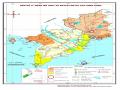 Comprehensive Assessment Results for Sightseeing Tourism Development
 -
 Completing the accounting of revenue, expenses and determining business results at Huong Duong Tourism Development and Service Company - 10
 -
 Results of Tourism Development in An Giang Province Over the Past Time:
 -
 Tourism development strategy of Ba Ria - Vung Tau province to 2020 - 15
tourism development brings. At the same time, this is also the responsibility of the managers, the people and the common responsibility of the whole society. [21]
In fact, Bo Keo tourism is currently posing many problems, tourism development can damage the environment, destroy ecological resources in many areas, degrade cultural and historical works, and give rise to many social evils. The situation of waste, damaged roads... is also a fairly common phenomenon. Analyzing according to a category of "cause and effect" between tourism and the environment, tourism is the cause of environmental pollution and in turn tourism must suffer the consequences of environmental pollution, limiting the development potential of the tourism industry. The tourism environment can be understood as both the ecological environment and the social environment. The province also has a slogan for green, clean, beautiful, civilized programs; maintaining security and order in tourism activities so that the destination is safe, attractive, and convenient for tourists.
State management of tourism in Bo Keo has recently mobilized the participation of many sectors such as the Interior, Customs, Transport, Aviation, and Post. However, the Institute has not clearly defined the functions and tasks of each sector in tourism management. The reality is that tourism activities still have many shortcomings, as shown by: the phenomenon of arbitrarily raising and lowering service prices during the tourist season among economic sectors as well as businesses to attract customers for themselves; arbitrarily squeezing customers, causing frustration for tourists; chaos in organizing "tours"; squeezing customers by local people at the destination, causing negative socio-economic consequences.
Some consequences of tourism such as prostitution, ecstasy use in restaurants, bars, and nightclubs have begun to appear. This is not a risk but in fact tends to increase, especially in hotels, motels, karaoke and massage parlors in the city and tourist destinations. This is really a hot issue that is very worrying.
- Managing relics and preserving national cultural identity
In recent times, with the attention and direction of the Party, the State and the people's organizations, the culture of ethnic groups in Laos in general and in Bo Keo province in particular has been restored. Traditional craft villages of ethnic groups in localities, unique festivals, have been restored and developed. Many historical and cultural relics have been restored and embellished. For this work, the provincial Department of Tourism has recently coordinated regularly with the Department of Culture and Information to inspect and embellish relics and antiques.
Cultural heritage is a matter of concern for all humanity and must be preserved. Appropriate solutions to preserve cultural heritage are essential, in order to transfer precious heritages in their original form to future generations... To do this, we must have a full and correct awareness of preserving tangible cultural heritages, historical witnesses in a scientific manner with the highest sense of responsibility. Along with that, we must constantly influence other departments, sectors, and the entire community to share the same awareness of contributing to the best preservation and maintenance of cultural heritages, in order to transfer the historical, cultural, scientific and artistic values... that are latent in the cultural heritages that our ancestors created and left to future generations. However, without proper and proper state management, tourism can cause losses that degrade both material and spiritual cultural heritages.
- Tour guide management
Tour guides are individuals who work on tourist routes and tours, directly accompanying or traveling with individuals or groups of tourists according to a tour program, to ensure the program is implemented according to plan, explain about tourist attractions and create positive impressions for tourists. It can be understood that tour guides are professional staff working for travel businesses, performing the task of guiding tourists to visit according to the signed tour program.
The management of tour guides requires compliance with the requirements of the tourist guide ordinance. Tour guides must meet the standards and conditions required by the ordinance. Nowadays, tourists not only visit the landscape, but also explore the cultural traditions and customs of local people. Therefore, those who manage tour guides in Bo Keo province must build a team that is truly professional, qualified, properly and fully propagated and creates a good impression on tourists. Explaining to tourists the cultural and historical values of destinations is extremely important, especially for international visitors to Bo Keo. The strengths of tourism in Bo Keo province are cultural tourism, community tourism, discovery tourism, and wildlife tourism, which are increasingly affirmed and developed. Currently, the tour guide team has not met the needs of tourists when they want to explore and learn about the cultural values, history, and customs of the local people. Thus, the team of tour guides is quite important and necessary, but it can be seen that the team of tour guides and tour guides in Bo Keo province still has certain limitations. Specifically, their cultural level is not high, not uniform, their professional skills and foreign language proficiency are still limited, most of them have not received formal training. However, they have the strength of being local people, people who deeply understand the value of relics and the cultural features, customs and practices of their locality and especially they will explain with all the pride of their locality, homeland and country. The tour guide profession itself is an open profession, so management must also be flexible and not rigidly stereotyped like other professions. That does not mean that the management of this team is too loose, affecting the quality of the tour, leading to the guides being inactive, not creative, not promoting the trained abilities, gaining experience, not bringing satisfaction to tourists.
Managing tour guides in Laos in general, and in Bo Keo province in particular, faces many difficulties such as the low level of general tour guides, weak foreign language skills, and lack of experience. Moreover, they take tourists far from the operating center, so management largely depends on the self-awareness, professional conscience, and compliance with industry regulations and legal regulations of this team.
+ Process and provide tourism statistics for use in planning and reporting to competent authorities. Specifically, statistics on the number of tourists, hotels, restaurants, motels, tourist areas and attractions, tourism revenue, budget contributions, length of stay of tourists, etc.
+ Carry out tourism promotion and advertising work. Specifically, propaganda, large and small posters, photos, videos, building websites, tourism billboards. Promoting and encouraging the production of local souvenirs, etc.
+ Establish and strengthen local communication offices where there are famous tourist areas and spots.
+ Provide information to radio stations and newspapers to promote Bo Candy's image to other provinces as well as friends around the world.
- Inspection and supervision work.
The inspection and supervision of tourism activities in the province are maintained regularly, solving current problems and having plans to prevent and not allow illegal tourism activities. Ensuring that the state law in general and tourism law in particular are strictly complied with. Especially the regulations to ensure security, order, environmental sanitation, food safety, safety of life and property for tourists.
However, through inspections and audits, violations of laws, regulations and rules on tourism are still few. The reason for these results is because: i) The Department of Tourism has received close direction from the provincial leaders and the General Department of Tourism; ii) The Department of Tourism
has done good propaganda and education work, and coordinated well with relevant authorities in the process of conducting inspections and audits.
2.2.7. Results of the tourism development plan strategy of Bo Keo province
Based on the general strategy of the General Department of Tourism and based on the 4th Congress of the Lao People's Revolutionary Party since 1986, which proposed a comprehensive renovation policy and expanded international cooperation, tourism has gradually played a role in the country's socio-economic development. The Government has regulated the implementation of tourism development, cultural tourism, natural tourism and historical tourism to serve tourists and other services. The Government has invested in very large infrastructure such as: roads from North to South. In the past 4-5 years, the Government has made great efforts to expand international border gates to integrate with countries around the world, creating favorable conditions for ASEAN member countries, exempting VISA and expanding international airports (capital Vientiane, Luang Prabang province, Pakse, Champasak province). Currently, Laos has 16 international border gates in all provinces, with on-site VISAs available at 13 border gates [25, p.4].
Based on the open-door policy of the Party, the State and the tourism development strategy from 2010 - 2015 of Bo Keo province, consolidate and rearrange the apparatus of the provincial Department of Tourism to suit each position and organize the implementation of policies in accordance with reality. Regarding human resource development, pay attention to short-term and long-term professional training, including: training on each topic assigned by the General Department of Tourism and short-term training on administration, communication, and cooking.
Regarding propaganda, build a newsroom : (magazines, newspapers, travel books), provide tourists to advertise the province's tourist attractions and have a reading room (News Library).
Regarding tourism business management : comply with Government Office Regulation No. 1150 on tourism business organization and operation according to strict regulations, inspect and reorganize tourism companies in the province to be able to compete.
compete in terms of quality, legal operation, how to research and find ways to increase the number of tourists resting and visiting tourist attractions (culture, sports, history, nature) to 5% in 2007 and 10% in 2010 of visitors to the province. Promote and manage hotel, motel, and restaurant businesses well, ensure and operate in accordance with the laws of the Lao PDR. Regarding statistics and planning : The Department of Tourism has compiled quite accurately,
on time (month, quarter, year), clearly analyze the structure of tourists... Appraise the project of traffic routes to tourist destinations in all 5 districts of the province by 2010, at the same time encourage tourism companies in the province (state and private), invest in tourist destinations to continuously generate revenue from tourism for the district or local budget. The Nam Tha river tourist route from Huoi Sai - Luang Nam Tha and the Mekong river from Huoi Sai - Pac Beng in U Dom Say - Luang Pra Bang province, and the car route from Huoi Sai to Luang Nam Tha in coordination with units that have accommodation and food at least 3 places before arriving in Luang Nam Tha. Encourage the state and individuals to invest in preserving the Khai U Pa Tham tourist area into a historical tourist destination in the center of Bo Keo province.
Regarding cooperation with neighboring provinces and internationally : Based on the agreement signed in the conference of 4 Northern provinces, Bo Keo has implemented cooperation with neighboring provinces. The content of cooperation and experience sharing on tourism management, connecting passenger transport routes, promoting tourism market exchange, connecting information relationships and jointly advertising hotels, motels, and places to eat.
Cooperate with Luang Pra Bang province, a province recognized as a world heritage site, to create a tourist service plan from Bo Keo - Luang Pra Bang, in coordination with 8 northern provinces.
With international, especially neighboring countries, there will be regulations on common traffic routes between Bo Keo province of Lao PDR and Xieng Rai, Thailand, Bo Keo province - Son La (Vietnam), Bo Keo 12 Pan Na - Xieng Hung (China), Tha Khi Lech province (Myanmar), planning to go on field trips to cooperate on tourism with officials.
Northern Thailand tourism management to facilitate and create opportunities for passenger transport exchange.
Regarding tourism investment: The Department of Tourism uses the central budget, through the General Department of Tourism, to plan and expand tourism development. This budget is invested in the production and development of tourism products, development of media, printing of documents, publishing of magazines, newspapers, posters, brochures, brochures, videos, etc. In addition, the provincial budget invests in building roads to tourist areas and destinations and investing in the construction of Nam Kang hot spring and some other tourist destinations.
Coordinate with relevant agencies : The Department of Tourism has coordinated with the Customs, the Tourist Police, the International Relations Office at the international border gate to check tourists entering and leaving, creating favorable conditions for statistics on social security and order; coordinate with the Department of Transport to ensure the construction of infrastructure that can meet the needs of tourist areas. Coordinate with the Department of Environmental Protection and the Department of Health to consider factors affecting tourist destinations. Coordinate with the Department of Trade and Industry to promote the production of products in the province and handicraft products as souvenirs... to meet the demand for these items for tourists. Coordinate with the Department of Agriculture and Forestry of the province to preserve and promote the natural resources that the province has. Coordinate with the Department of Culture and Information to protect historical tourist destinations, antiques... In addition, coordinate with other agencies and business units...
Cooperate with other provinces to develop tourism products. In particular, examine tourist spots connecting with 4 northern provinces to inform each province of the rest stops along the road connecting the provinces. Bo Keo province has 2 international border gates such as Huoi Sai international border gate in Bo Keo province, Laos connecting with Xieng Khoong international border gate, Xieng Rai province, Thailand, two Lang Mom border gates in Tong Phang district, Laos connecting with Tha Khi Lech border gate, Myanmar. Regarding infrastructure, the Party and State are very interested in developing the electricity grid, 60% of the