
Festivals are cultural expressions of behavior towards nature, towards the divine and especially towards the social community. Festivals are also considered as “mother’s milk” that nurture art forms. Festivals blend the cultural layers of ethnic groups and cultural elements of ethnic groups in the historical process. Festivals have preserved, nurtured and developed many cultural traditions of village communities. Festivals are also a spiritual support for farmers, expressing their concept of beauty and their aspiration to achieve beauty [33].
Furthermore, the festival has three major functions:
- Religious function : All attendees are comforted spiritually and satisfied.
Maybe you are interested!
-
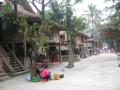
 Some Pictures of the Transformation of Traditional Culture of Thai People in Mai Chau
 -
 Housing changes of the Black Thai people in Binh Son commune since the renovation until now - Vu Thi Dieu - 3
 -
 Impact of tourism on the cultural and social life of Thai people in Mai Chau - Hoa Binh and development solutions Case study of 4 villages: Lac village, Pom Coong village, Van village, Nhot village - 1
 -
 Impact of tourism on the cultural and social life of Thai people in Mai Chau - Hoa Binh and development solutions Case study of 4 villages: Lac village, Pom Coong village, Van village, Nhot village - 18
 -
 Research on the effectiveness of algimun on Cobb 500 chickens and Ri x Luong Phuong hybrid chickens raised in open cages in Thai Nguyen - 1
satisfy the spirit, pray for peace and prosperity...
- Entertainment function : The public enjoys art and culture, and is able to satisfy their wild laughter...
- Economic function : Festivals attract trading activities, exchange of goods and local products between villages and towns, making the urban economy prosperous.
From another perspective, some research works on the economic perspective and the impact of the market economy on festivals, notably the work "The impact of the market economy on religious festivals". In this study, the author believes that until the renovation, life became more and more prosperous, the economy developed, cultural life improved, and cultural needs increased. Along with the construction of communal houses, temples, pagodas, and shrines, there was the restoration of village festivals that had long been forgotten. Village festivals are held to re-determine the location of relics to return to the old image of village culture. The festival has revived the consciousness of returning to the origin, many ethnic cultural values are sought and updated for descendants in the context of the market economy. The festival also creates huge economic benefits for the village community, creating jobs.
for villagers. However, the negative aspects of the market economy are also expressed.
clearly visible in today's festivals [58, pp.8, 10, 380, 382].
Some other studies by Quinn [136] and Richards [138] have studied the trend of festival commercialization, connecting event tourism, consumption, through exploiting the effective features of communication and advertising and marketing programs. These studies mainly observe consumer behavior and marketing methods to attract and motivate people to participate in festivals. The studies also observe the relationship and connection between festival quality, satisfaction, and future behavior or intentions of participating tourists, as well as investors and sponsors.
From the process of festival modernization beyond the management scope of the “host community”, the negative impacts of festivals on the ecological and human environment, have also been noted in the observations and analyses of scholars within and outside the field of anthropology. This field has the works of Getz, D, & Frisby, W. [128], Hall [129], Hall and Sharples [130].
1.1.3. Studies on Thai festivals in Western Nghe An
Up to now, the study of festivals, traditional festivals of ethnic minorities in general and traditional festivals of the Thai people in particular have been of interest to researchers. Some typical works include: "Plant-praying festivals of ethnic groups in Vietnam" edited by Phan Huu Dat [19]. This research work presents the main rituals in the agricultural production cycle of ethnic groups in the Northwest, Viet Bac, Central Highlands regions, etc.; "Rain-praying festival of the Thai people in the Northwest of Vietnam" by Vu Thi Hoa (1997) presents the basic features of the rain-praying festival of rice-growing agricultural residents in the valley; Ministry-level topic "Traditional festivals of the Thai people in the Northwest of our country today" by
Associate Professor, Dr. Do Dinh Hang, as the head, presented the current status of traditional festivals and proposed a number of solutions to preserve and promote the values of traditional festivals of the Thai people in the Northwest of our country. The work "Thai Culture in Vietnam" by Cam Trong and Phan Huu Dat (1995) outlined the cultural characteristics of the Thai people in Vietnam and presented some basic features of traditional festivals of the Thai people [102].
In particular, the work "Traditional festivals of the Thai people in the Northwest in the present period" by the group of authors Do Dinh Hang and Vu Truong Giang has generalized the festivals of the Thai people into two main groups: festivals related to the belief of praying for a good harvest and festivals related to commemorating the merits of historical heroes. Moreover, the authors have pointed out the characteristics of the traditional festivals of the Thai people in the Northwest such as: traditional festivals of the Thai people are a true reflection of the circumstances and lives of the residents of the valley, taking wet rice farming as the main economic activity; traditional festivals of the Thai people reflect community activities, community cohesion; traditional festivals of the Thai people demonstrate the spirit of democracy and equality in life; traditional festivals of the Thai people preserve and reflect many forms of primitive beliefs; traditional festivals of the Thai people rarely worship human gods. In particular, the authors have analyzed the current status of traditional festivals of the Thai people in the Northwest from 1986 to present. This is a valuable work for the author to refer to when comparing traditional festivals of the Thai people in the Northwest and the Thai people in Western Nghe An [36].
Author Vi Van Bien has a work: "Some traditional customs and festivals of the Thai people in Thanh Hoa and Nghe An" [6]. This is one of the rare works researching the Thai people in the scope of two localities Thanh Hoa and Nghe An, and is also a work that has a general analysis of the steps
about cultural values, customs and practices in Thai people's life
North Central Vietnam.
Regarding the customs of the Thai people, there are many works that have collected and introduced the funeral customs, weddings, and folk knowledge of the Thai people, for example: "Traditional marriage of the Thai ethnic group in Dien Bien" by the group of authors Luong Thi Dai, Lo Xuan Hinh [25]; "Marriage and family of the Tay, Nung, and Thai ethnic groups in Vietnam" by Do Thuy Binh [7]; "Funeral customs of the ancient Black Thai people" by Luong Van Trung [107]; or the book "Thai culture, folk knowledge" by Dang Thi Oanh [73].
The following work has introduced in detail the worship of the soul of the Thai people, that is the book "Learning about some worshiping customs of the Black Thai people in Muong Lo" [37]. The content of the book presents the worship of the soul - a cultural feature of the Thai people in general, the Black Thai people in Muong Lo in particular. Worshiping the soul is a form of religious practice in the Thai community. Worshiping the soul, that is, calling the soul, calling the soul, a religious ritual. According to the concept of the Thai people, the living have the soul of the living (called phi ngang in Thai), the dead have the soul, called phi tai in Thai, some animals, trees, forests, mountains, land... are believed to have souls. And according to custom, worshiping the soul can be done periodically, cyclically or suddenly due to different happy or sad events arising in daily life. Up to now, this custom is being maintained quite popularly in the Thai community in Vietnam.
There are also a number of master's theses and doctoral dissertations researching specific festivals of the Thai people such as: Thesis "Survey of the Xen Ban and Xen Muong festivals of the Thai ethnic group in the Northwest" by author Hoang Thi Linh (2014). The work surveyed the time of organizing the festival, an overview of the Xen Ban and Xen Muong festivals of the Thai people in Muong Lo, Muong La, Muong Thanh, and Mai
Chau. In-depth research analyzing poetic and narrative elements in the Xen Ban and Xen Muong festivals. The research project on the Xen Ban and Xen Muong festivals of the Thai people in the Northwest of Vietnam from the perspective of culture and literature. The research results of the thesis provide a general and vivid view of the traditional festivals of the Thai people and interwoven with it are literary elements expressed through stories and poems related to the characters worshiped in the festival. The thesis has collected, assembled in a relatively complete way, introduced and described the Xen Ban and Xen Muong festivals of the Thai people in the Northwest. The research of the topic has helped us understand more clearly one of the characteristics of folk literature - that is, the synthesis: Stories are often associated with festivals. It is both a literary phenomenon and a cultural phenomenon [49].
“Tham Bua Festival of the Thai people in Chau Tien commune, Quy Chau district, Nghe An province” by Hoang Thi Thanh Loan (2003). This study has outlined the legend and origin of the Tham Bua festival, the steps of organizing the festival, the process of the festival and analyzed the values of the Tham Bua festival. Furthermore, the author also analyzed the issue of preserving and promoting the Tham Bua festival to serve the current local tourism development [52]. In 2006, author Hoang Hung published the study “Xang Khan Festival of the Thai people in Western Nghe An” in the Proceedings of the Ethnology Announcement Conference. The author presented quite detailed information about the origin and progress of the Xang Khan festival [41]. The thesis “Customary law of the Thai people and its application in state management of the Thai community in the north central provinces of Vietnam” by author Vi Van Son. The author mentioned a number of customary laws related to the traditional festival of the Thai people in Nghe An [83]. Vi Van Bien (2009), Some traditional customs and festivals of Thai people in Thanh Hoa, Nghe An. The author mentions customs in the life cycle including birth, wedding, funeral and other customs.
other religious customs such as festivals, folk customs. In particular, the project introduced a number of festivals such as Xang Khan festival, Kin Chieng Booc May festival, and Hang playing festival [6].
Through the above analysis, the results show that, up to now, there have not been many research works on traditional festivals of the Thai people in general and the Thai people in Western Nghe An. Although there are some studies mentioned above, these works only study a few aspects or a specific festival. The author can affirm that up to now, there has not been any work that has fully and comprehensively researched the traditional festivals of the Thai people in Western Nghe An.
1.1.4. Studies on the transformation of traditional festivals
Up to now, many scholars have researched the issue of cultural change in general and change in traditional festivals in particular. The cultural evolution theory of E. Taylor [142], of L. Morgan [135] studies the model of social change and cultural change. The theory of cultural diffusion (represented by G. Elliot, Smith [140], W.Rivers [139]) argues that the key issue of cultural change is the borrowing or diffusion of cultural characteristics from one society to another. The theory of cultural regions (represented by CLWissler, ALKroeber...) has put forward basic concepts of cultural regions, cultural types, cultural centers, and cultural complexes. Cultural change occurs in many dimensions and at many levels depending on whether the community is a center, a periphery, or a transitional area, and what is the environment and specialization of that community? The Acculturation Theory (represented by Redfield [137] and Barnett…[126]) points out the cultural changes in Western societies and especially the influence of dominant societies on indigenous people.
Nowadays, anthropologists place cultural change in the strong transformation of globalization, of the processes of exchange beyond national boundaries, of societies in transition. To study the dimensions of
Cultural change is often associated with development, globalization, urbanization, industrialization, and of course with social transformation. Development planning policies, social management arrangements and adjustments have become direct and indirect causes of social change.
In our country, there have been a number of authors who have researched the transformation of traditional festivals such as: Traditional festivals in modern social life by the group of authors Dinh Gia Khanh and Le Huu Tang (1993), Doctoral thesis Traditional festivals of coastal residents in Hai Phong and their transformation in the current period by author Le Thanh Tung.
When studying traditional festivals, author Pham Cao Quy believes that festivals always tend to move according to the changing environment of society, economy, culture... but always maintain the core/cultural identity, and the activities in the festival can change to adapt to the endogenous and exogenous factors of real life. Festivals are always changing, lively entities and are operated by the community, with principles, structures, and institutions that are both fixed and changing. The author affirms that no matter how or in what way a traditional festival changes, it must be suitable for the people and society that nurtures it [77].
Furthermore, the transformation of festivals follows a rule. This is confirmed in the research work on the transformation of urban festivals - observations from Hanoi by Professor, Dr. Le Hong Ly. The author based on Haviland's theoretical perspective on the process of going through four stages of transformation of a cultural phenomenon (Innovation, Cultural diffusion, Cultural decline, and Cultural adaptation) and concluded that the transformation process of traditional festivals in Hanoi took place quite completely and consistently everywhere and in accordance with the rule [57]. Thus, we see that cultural transformation in general and the transformation of traditional festivals in particular are inevitable. The issue that needs to be studied here is the direction of transformation of traditional festivals.
How does the system change? Does it change by itself? Is it affected to change? Does it change according to or without rules/principles?
1.2. Theoretical basis
1.2.1. Some basic concepts
+ Festival
From ancient times to the present, festivals have always played a role as a bond connecting the community, creating a cultural space that is both solemn and sacred, yet jubilant and exciting. Festivals have become a place for the public to come to the history of their ancestors, return to the roots of the nation, remember the merits of their predecessors, and pray for good things. At the same time, it is a place for people to have fun, relax, and compensate for their spirit. It carries within itself the role of a multi-purpose cultural tool that takes place at selected times in localities based on relevant historical, economic, cultural and social conditions.
There are many different ways of calling and explaining the term Festival: calling festivals as "Hoi le", "Hoi he", "Hoi he dinh luan", "Le, tet, hoi". According to Sino-Vietnamese, "Lê festival" is a combination of two elements, in which "le" is the rules of conduct, the way of worship, religious rituals; "hoi" is the fun, the crowded party. According to Latin, "lê festival" comes from Festum, meaning the fun, the joy of the public. According to English, "Festival" is a kind of performance to harvest a special crop, a period of time of a sacred or successive activity.
Author Duong Van Sau defines: “A festival is a form of community cultural activity taking place in a residential area within a specific time and space; to recall an event, historical figure or legend; at the same time, it is an opportunity to express people's cultural behavior towards nature - gods and people in society” [79, p.35].