
belonging to the state management agency of culture, local government...). Role
The role of the community seems to have not received due attention.
From another perspective, the community today is also developing more diversely and complexly because many modern elements are penetrating into daily activities, cultural, spiritual, religious and festival activities. A part of the community seems to easily accept new things, following what is considered "convenient" for life. On the other hand, the organization of festivals today still bears the characteristics of "interest groups". Festival organizers are often those who directly benefit, especially economic benefits, so they have somewhat overlooked the benefits, especially the spiritual benefits of the community.
Maybe you are interested!
-
 Impact of tourism on the cultural and social life of Thai people in Mai Chau - Hoa Binh and development solutions Case study of 4 villages: Lac village, Pom Coong village, Van village, Nhot village - 1
 -
 Impact of tourism on the cultural and social life of Thai people in Mai Chau - Hoa Binh and development solutions Case study of 4 villages: Lac village, Pom Coong village, Van village, Nhot village - 18
 -
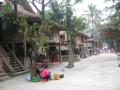 Some Pictures of the Transformation of Traditional Culture of Thai People in Mai Chau
 -
 Housing changes of the Black Thai people in Binh Son commune since the renovation until now - Vu Thi Dieu - 3
 -
 The Birth and Current Status of Social and Professional Organizations in Thai Nguyen City
Since the renovation, traditional festivals have been "exploding" strongly, on the one hand, it has affirmed that traditional cultural values are still preserved and promoted in today's society. On the other hand, in the new context, festivals are being used and exploited with a new goal - serving tourism to develop the local economy. In the new context, traditional festivals have a new look with the transformation and adaptation of ethnic cultures in integration and development, many new rituals and services have been born. This is also an issue that needs to be paid close attention to in social management, because new adaptation and integration factors are tending to fade and dissolve traditional cultural values imbued with ethnic identity.
Therefore, to innovate the management method of Thai festivals, there needs to be a change in the organizing entity. That is to mobilize more participation of prestigious people with experience in organizing in the community. The main role of organizing festivals needs to be handed over to the Thai community in the localities with the methods and forms of organization that best suit the customs and needs of festival activities of each community and each locality. It is necessary to maintain the
The composition of the Organizing Committee according to the regulations of the 2001 Festival Organization Regulations includes: Local authorities, social organizations in the community, but also pays great attention to the role of the Community Festival Committee established by the people themselves.
Regarding the space and time of the festival, expanding the festival space for visitors is extremely necessary, but it is also necessary to pay attention to the ritual space inside the festival to ensure the solemnity and sacredness of the festival ceremony is maintained. For the Thai festival, the rituals held in the worship are tending to be reduced or simplified, the ceremony time is shortened, the ceremony is administratively made... to make it more convenient for officials doing state management work. However, the managers have "forgotten" an important goal of the festival and to meet the needs of the majority of people in the community, which is to organize folk games, traditional cultural exchange activities such as folk singing, folk dance performances... This is also one of the premises affecting the preservation of ethnic cultural values that have been and are being strongly affected by the market economy, cultural exchange and integration.
Along with the restoration and development of festival activities, localities in Nghe An province have plans to plan and expand the festival area at relics in mountainous ethnic minority areas. The State needs to support funding to restore relics and expand grounds to serve the increasing number of tourists attending the festival. In addition, there should also be a plan to restore traditional activities such as pounding rice by hand, cooking bamboo rice, traditional dishes, organizing rituals to pray for crops and peace... during the festival days so that tourists can enjoy and participate.
Through research on Thai festivals in Western Nghe An, it can be seen that,
Community participation in festival organization and management is essential.
The festival's ceremonial is that prestigious people in the community will have the most practical activities in organizing the festival in accordance with the needs, wishes and psychology of the people in the community. In addition, the management of donation boxes and festival expenses are managed publicly and transparently with close supervision of the community. Some current views believe that organizing festivals is to develop the local economy, attract tourists and by all means have the highest revenue from festival activities. However, these views have not paid attention to the main goal of organizing festivals, which is to honor the values of the festival to serve the cultural and spiritual needs of the people in the community. Therefore, the management role of the state is very important and has an orientation for the festival, but must be closely coordinated with the local community. Only then can the role of the cultural subject of the Thai community in managing their local festivals be clearly demonstrated.
4.2. Festivals in the social life of the Thai community
4.2.1. Positive and negative aspects
Festivals in Western Nghe An demonstrate a high sense of community and community cohesion. This is a typical feature in the cultural life of the Thai people in Nghe An. People attending the festival feel like they are both witnesses and participants in the exciting fun. They come to the festival to satisfy the burning desire in each person for excitement, to release the pent-up desire after months of "working hard in the sun and dew". The festival is almost unique in displaying community cultural activities, from love dances and songs, performances, customs, entertainment... containing many ethnic cultural values.
The nature of returning to the source is the eternal need of people in all walks of life.
era. Every festival carries within it the essence of returning to the origin. The origin
That source is: "birds look for their nests, people look for their ancestors". Festival activities, from the rituals as well as the performances, especially the performances of a customary nature, always contain historical documents, looking back to the roots of the community. The memorial rituals, sacrifices, and performances all revive the lives of the gods, whether they are angels or human gods. The human gods have contributed to creating the land, people, fields, villages... This is an occasion to "remember the source of water" to express gratitude to those who have contributed to building the villages and towns that the people are worshiping. The rituals as well as the performances in general all reveal a close relationship with agriculture and fertility beliefs.
The festival contains all the aspirations, spiritual desires, both worldly and sacred, of everyone. Over time, many layers of cultural, historical and religious sediments have been deposited in the rituals and performances, making it a cultural phenomenon that attracts and captivates many generations of people. They come to the festival with their own sincerity, gratitude and secrets. Each member of the community does not need any intermediary class. They directly communicate and sympathize with the gods to give thanks and pray for the protection of supernatural forces for themselves and their community.
They also directly participate in creating and enjoying cultural values, immersing themselves in the cool water of the source of national culture.
Enjoy the sacred moments, live in the joyful moments of communion filled with community spirit. People themselves display all the best and most beautiful things of themselves through competitions.
On the contemporary level, gods are not a bad sign for us to reject the historical figures hidden in them, and the ancient beliefs hidden in the performances and rituals. The vestiges of ancient beliefs have sunk into the past so
People can easily recognize it in another form such as superstition. Hau bong and len dong (similar to the len dong of the Kinh people) in the form of performances and rituals in festivals. The shell may be superstition, but the core of the phenomenon is probably not superstition at all. This is a phenomenon that is difficult to distinguish, whether it is superstition or not, culture or non-culture, we need to study and examine it on a scientific basis.
The relationship between humans and gods, a means of entering the gods, a form of entering the souls of gods into the bodies of people who follow the folk beliefs of agricultural residents living on wet rice farming. This is a rather primitive form of folk theater, which is a form of spiritual theater performance, where humans not only enter the body but also transform into gods and live the life of gods.
Each type of religion and belief arises and exists in a certain social environment. It reflects the will and level of thinking of people. Therefore, like all other forms of social consciousness, it changes slowly compared to the economic and social foundation in which it was born. Backwardness, inadequacy and obsolescence cause many forms of religion and belief to reveal their anti-value and anti-cultural aspects and become a force that hinders social development. Types of magic, especially healing magic (praying), had some value in primitive society, but are no longer suitable for the current state of civilized society. Not all religions and beliefs advocate that people sit still and wait for miracles from the gods. However, the lack of self-confidence and the expectation of help from supernatural forces are also significant obstacles to social progress.
The boundary between belief and superstition is often difficult to distinguish. There are cases where the same phenomenon, from one perspective, is considered belief, but from another perspective, it is considered superstition. In essence, superstition is
Superstition is the manifestation of religion being exploited, sometimes it hides under the name of religion to facilitate its activities. We must consider the past as the flesh and blood of the phenomenon. Beliefs all have spiritual elements, accepted by the people since ancient times.
Culturally, we must evaluate it in the national cultural treasure. Therefore, we need to have the right behavior towards religious beliefs and have appropriate solutions. To push back and eliminate superstition, we need to promote the movement to build a civilized lifestyle, cultural families, and build cultural villages and hamlets. Respect the freedom of belief and faith of each individual, as long as those religions and beliefs do not harm the spirit of national solidarity, do not hinder national affairs, human life and social morality.
4.2.2. Consequences of changes in traditional festivals
Currently, the restoration and organization of traditional festivals of the Thai people in Nghe An are increasingly receiving attention from authorities at all levels and local people. In addition to the efforts of authorities at all levels, localities as well as festival managers to bring the community and tourists a festival space that both meets the spiritual and cultural needs and meets the needs of healthy entertainment.
The transformation of traditional festivals of the Thai people in Western Nghe An has created some positive impacts on the cultural and social environment; has the meaning of educating the community about traditions and ethics of drinking water and remembering its source; helping to balance and develop spiritual culture; and developing the local economy and politics.
In terms of cultural and social environment, the restoration of traditional ceremonies
Traditional festivals today have helped preserve and promote the value of cultural heritage.
The intangible cultural heritage of the Thai people is the customs, practices, and folk art forms. The festival has created conditions for connecting and attracting the attention of the local community and tourists. This is an opportunity for the Thai ethnic people to exchange and express the spirit of community solidarity through collective activities such as sacrifices, ceremonies, throwing con, singing folk songs such as Nhuon, Xuoi, Lam, Khap, and musical and folk dance forms such as xoe dance, fan dance, bamboo pole dancing, blowing the reed pipes, playing gongs, carving the beds. It is also through this festival that visitors from all over have the opportunity to learn more about the Thai people and Thai culture in the Western part of Nghe An.
In terms of politics and economy, the restoration of traditional festivals of the Thai people in Nghe An has contributed to building and promoting the local brand. Through these festivals, tens of thousands of domestic and foreign tourists learn about the unique cultural values of the Thai people here, thereby attracting and promoting investment from local authorities at all levels as well as domestic enterprises. Currently, many projects to develop community tourism, spirituality and ecology have been invested in Que Phong.
In terms of the value of nurturing and developing spiritual culture, the traditional festivals of the Thai people in Western Nghe An are an opportunity for the people here to show their respect and gratitude to their ancestors who reclaimed the wild forest land in the northwest of Nghe An, established the village and pray for a new year of favorable weather, good crops, a prosperous and happy life for the people and for national peace and prosperity. In addition to the spiritual factor, the restoration of traditional festivals also has the meaning of educating the younger generation to be aware of preserving, maintaining and promoting traditional cultural values, the morality of drinking water and remembering its source, the spirit of solidarity and national pride.
However, in terms of community bonding value, preserving and promoting national cultural identity, restoring festivals in the direction of staged production is incorrect.
Applying a general model without paying due attention to the specific elements of each festival makes the current Chin Gian Temple and Hang Bua festivals still heavily formalistic, mainly serving the needs of entertainment and festivities rather than the needs of education and community bonding.
At the same time, the re-enactment of the festival in the direction of “unification” and “eventization” makes the festival lose its diversity and uniqueness. On the other hand, when the community no longer participates in the festival as a subject but only as a participant, it has developed a mentality of indifference and apathy towards the festival taking place in their homeland and of their people. Tourists attending the festival are also not informed and do not feel the exact meaning of the festival.
4.2.3. Directions for preserving and promoting festivals in Western Nghe An
Festival activities are mass cultural and artistic activities. Through the festival, traditional folk performances are restored. Rituals and customs recreate the beliefs and expressions of the spiritual world. Gong music, dances, games, traditional dishes, and soulful prayers full of folk art... carry the unique characteristics of the ethnic group.
The language of festivals is a symbolic language, transcending everyday life. Some recreational activities and competitions take place in festivals. Even fertility games are still ritualistic and customary, not purely mundane, but have become the customs of the sacred world. Therefore, the practical consequence is that when we are currently restoring and promoting traditional festivals, we must always understand that festivals belong to the category of sacredness, symbols, transcending the mundane world and reality. If we turn festivals into mundane things, festivals in their true sense will no longer exist.
In traditional festivals, folk performances are understood with a fairly broad meaning. They include actions and words that express a