
Cement materials, construction sand, etc. Potential for mineral exploitation to serve local economic development needs.
- Biology: The climate, terrain and soil conditions make the local natural flora and fauna have high conservation value. In 2004, the Nature Reserve
– Dong Nai cultural area was established with an area of 100,303 hectares, becoming the core area of Dong Nai Biosphere Reserve.
- Agricultural ecological landscape : The landscape along the Dong Nai riverbank has the value of becoming a tourism product. Besides the forest ecosystem, lakes, rivers, rocky beaches, etc., they become local tourism destinations to serve tourists. Orchards of fruits such as grapefruit, orange, tangerine, mango, etc. in Tan Binh, Hieu Liem, Phu Ly communes create landscapes that attract tourists to visit and experience. The Southern region has the potential to be a destination for developing agricultural tourism when using local agricultural products to become agricultural tourism products.
2.1.2. Socio-economic conditions
Vinh Cuu District is a district located on the left bank of Dong Nai River in Dong Nai province, with a relatively high urbanization rate of about 18.4% (2017), behind Bien Hoa City (84.8%) and Long Khanh town (40.9%).
Including 12 administrative units including: Vinh An Town and 11 communes (Tri An, Thieu Tan, Tan An, Binh Hoa, Binh Loi, Tan Binh, Vinh Tan, Thanh Phu, Hieu Liem, Phu My, Ma Da).
The population density of the southern communes is quite high, averaging 500 - 700 people/km2 . Vinh Cuu district has many different ethnic groups living together, but the Kinh (Vietnamese) ethnic group accounts for the majority of > 95%, along with 19 ethnic minorities such as Choro, Tay, Nung, Hoa, Khmer, Muong, Tho... with more than 1,2000 people, accounting for about 5% of the district's population. Each ethnic group has its own unique customs and practices, contributing to the cultural diversity of the locality.
The population (2019) of the district is 164,882 people. The population distribution is uneven, mainly concentrated in rural areas at 84.1% (138.68 thousand people), urban areas at 15.9% (26.21 thousand people). The population growth rate is slow, the reason is that the district is purely agricultural, implementing population policy with family planning.
good. However, although the natural population rate has decreased, the population growth rate has continued to increase due to the activities of industrial and commercial zones that have attracted a number of workers from outside the locality to reside.
The intellectual level of the people is increasingly improving, focusing on the quality of training qualified and skilled labor. However, the majority of the population in the area is attached to the agricultural sector, so there is still a gap between urban and rural areas. In terms of gender, in Vinh Cuu district, there is a balance when the proportion of men and women is 50%.
Table 2.1. Population of administrative units of Vinh Cuu district (2019)
ST
T
Administrative unit | Acreage (km 2 ) | Average population vase (person) | Population density (people/ km2 ) | |
1 | Vinh An Town | 32.94 | 26,207 | 796 |
2 | Binh Hoa Commune | 6.68 | 7,132 | 1,068 |
3 | Tan Binh Commune | 11.10 | 12,571 | 1,133 |
4 | Binh Loi Commune | 15.20 | 7,939 | 522 |
5 | Thanh Phu Commune | 14.36 | 39,984 | 2,784 |
6 | Thien Tan Commune | 22.45 | 10,867 | 484 |
7 | Tan An Commune | 52.70 | 12,230 | 23 |
8 | Tri An Commune | 18.32 | 4,193 | 229 |
9 | Vinh Tan Commune | 27.28 | 21,509 | 788 |
10 | Phu Ly Commune | 28.00 | 11,097 | 396 |
11 | Ma Da Commune | 40.19 | 2,029 | 50 |
12 | Hieu Liem Commune | 20.94 | 3,913 | 187 |
District-wide | 1089.14 | 164,882 | 151 | |
Maybe you are interested!
-

 Perfecting the organization of accounting to strengthen financial management in administrative units of the Labor - Invalids and Social Affairs sector - 35
 -
 Organizing Accounting Inspection Work in Administrative and Career Units.
 -
 Analysis of Credit Situation and Credit Risk Management of Vietnam Bank for Agriculture and Rural Development, Vinh Thuan Branch - Kien Giang
 -
 Geographical Location and Administrative Units.
 -
 Regulations on Administrative Penalties for Population Violations
Source: Author's calculation based on data from Vinh Cuu District Department of Natural Resources and Environment
Young labor force, constantly improving education level, improved life, many economic activities contributing to local socio-economic development:
Average annual gross domestic product (GRDP) growth rate is 8.12%.
Gross regional domestic product (GRDP) per capita in 2019 reached 64.6 million VND/person/year.
In 2019, budget revenue in Vinh Cuu district reached 434.5 billion VND.
Economic structure in 2019: Industry: 74.15%; Services - trade: 16.4%; Agriculture: 9.45%.
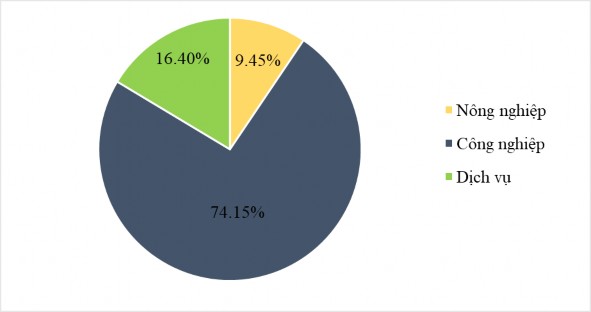
Figure 2.1. Economic structure chart of Vinh Cuu district in 2019
* Agricultural production activities
The structure of rural industries is changing, gradually breaking down pure agricultural production to shift to other industries to solve employment problems, increase income and improve people's quality of life.
The policy of developing agriculture and rural areas has brought about effective changes in the structure of agricultural production and significantly improved the lives of rural residents.
The agricultural sector of Vinh Cuu district continues to develop in the direction of commodity-scale production, with an average growth rate of 10.77%/year. The value of harvested products in 2019 reached 141.50 million VND/ha of cultivated land and aquaculture, an increase of over 2.28% compared to 2015 (129.30 million VND/person/year).
In 2019, the value of the crop production sector still accounted for a high proportion of 73.8% (1,315 billion VND) in agricultural production (1,783 billion VND), in addition to the livestock sector accounting for 23.4% (418 billion VND) and agricultural services accounting for only 2.8% (50 billion VND). The locality has developed specialized areas for crops with high productivity, quality and economic value. Some economic models combining crop production and livestock production have been initially successful and are being expanded.
Average income per capita has increased significantly: in 2017 it reached 53.5 million VND/person/year, estimated to reach 64.6 million VND/person/year in 2019, an increase of 3.15 times compared to 2011 which was 20.5 million VND/person/year. The number of poor households in rural areas is currently 0.3%, down 7.3% compared to 2011 which was 7.6%.
Table 2.2. Agricultural, forestry and fishery production value calculated at current prices for the period 2017-2019
Year
2017 | 2018 | 2019 | ||||
Value (billion VND) | Structure (%) | Value (billion VND) | Structure (%) | Value (billion VND) | Structure (%) | |
Total | 2,077 | 100 | 2.129 | 100 | 2,188 | 100 |
In there: - Agriculture + Cultivation + Animal husbandry + Services | 1,762 1,275 450 37 | 84.84 - - - | 1,772 1,284 449 39 | 83.23 - - - | 1,783 1,315 418 50 | 81.51 - - - |
- Forestry | 115 | 5.54 | 156 | 7.33 | 205 | 9.36 |
- Fisheries | 200 | 9.62 | 201 | 9.44 | 200 | 9.13 |
Source: Department of Agriculture and Rural Development of Vinh Cuu district
- Cultivation:
According to the report of the Department of Agriculture and Rural Development of Vinh Cuu district (Dong Nai province) in 2019, the types of trees grown locally include annual, perennial and fruit trees. Of which, fruit trees such as grapefruit and mango play a key role in the district with a very fast growing planting area.
In addition, farmers have invested in an energy-saving irrigation system for about 1,500 hectares of crops in the district; improved intensive farming skills, and applied high technology to agricultural production in the direction of commodities.
Especially in the mango and grapefruit harvest season, Vinh Cuu farmers grow grapefruit with a bumper crop with revenue of billions of dong, and mango alone earns hundreds of millions of dong for each household. However, farmers only sell fresh products or some households with small-scale tourist attractions use home-grown agricultural products to process into delicious, unique dishes to meet the enjoyment needs of tourists. Thus, the potential for exploiting agriculture-based tourism is still very large.
+ Mango growing area
The total area of mango cultivation in 2019 reached 3,018 hectares, of which 320 hectares were newly planted (in 2017), the area for products was 2,940 hectares with a harvest output of 24,990 tons and a yield of 85 quintals/ha. The average growth rate was 1.31 hectares, the yield increased by 1.73 tons compared to 2015 (planting area 2,865 hectares; product area 2,578 hectares; harvest output 23,331 hectares; yield 90.5 quintals/ha). Currently, the gardens mainly grow 3 varieties of Taiwanese mango: yellow, green and red. After harvest, agricultural products are classified and packaged to supply the domestic market and export.
Harvest prices vary depending on the type, specifically: Green Taiwanese mangoes cost 20-25 thousand VND/kg, yellow and red Taiwanese mangoes cost around 30-35 thousand VND/kg. The purchase price of traders will fluctuate according to the annual harvest yield. Farmers can get an increase or decrease in purchase price within 5
– 10 thousand VND/kg.
+ Grapefruit growing area
Specifically, the total grapefruit growing area in 2019 of the district is currently 1,190 hectares, of which 183 hectares were newly planted (in 2017), the area for products is 908 hectares, the harvested output is 14,165 tons with a yield of 156 quintals/ha. The average growth rate reached 30.41 hectares, the output increased by 24.77 tons with a yield of 9.16 quintals/ha compared to 2015 (planting area 731 hectares; product area 554 hectares; harvested output 8,615 hectares; yield 155.5 quintals/ha).
The price after harvest depends on the weight of the grapefruit. Grapefruit is purchased in dozens, with 1 dozen being 12 fruits based on the weight of the grapefruit, usually divided as follows: Type 600 - 700 grams/fruit, price is about 300 thousand VND/dozen; Type 800 - under 1.0 kg/fruit, price is about 550 thousand VND/dozen; Type 1.1 - over 1.3 kg/fruit, price is 700,000 VND/dozen. During Tet, the price of grapefruit fluctuates between 450 - 1 million 200 thousand VND/box (12 fruits). Thus, the average price of each kg of fresh grapefruit fluctuates between 38 - 80 thousand VND/kg.
+ Orange and tangerine growing area
In 2019, the area for growing oranges and tangerines in the district was 431 hectares, including a product area of 324 hectares, the harvested output reached 4,142 hectares with a yield of 128 hectares. The growth rate was 30.41 hectares, the output increased by 24.77 tons with a yield of 9.16 quintals/ha compared to 2015 (planting area 149 hectares; product area 91 hectares; harvested output reached 1,709 hectares; yield was 188 quintals/ha).
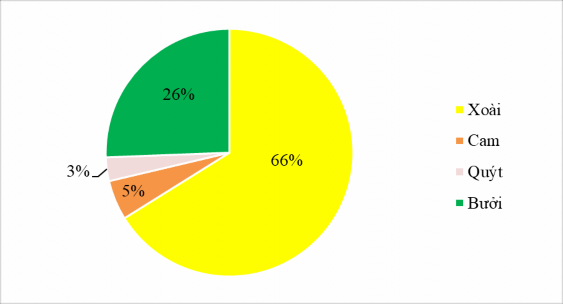
Figure 2.2. Structure of main crops of Vinh Cuu district
Source: People's Committee of Vinh Cuu district
In Vinh Cuu district, Tan Binh commune has nearly 28 hectares of grapefruit and Phu Ly commune has about 27.8 hectares of mango, both of which are certified for production according to VietGAP standards.
The value of fruit trees not only contributes to the economic efficiency of local farmers. In recent years, Vinh Cuu district has ensured the values of agricultural production alongside the industry that accounts for a high proportion in the local economic structure.
In recent years, the area of mango cultivation has expanded rapidly. However, the economic value as well as the history of grapefruit development in the locality is longer. More importantly, grapefruit has the advantage of specialized production areas, the growing experience of the community, along with the unique soil factor of the riverside island, creating the reputation of Tan Trieu grapefruit.
Therefore, the combination of tourism and local Tan Trieu grapefruit specialties will create a new direction for tourism exploitation, both unique and reflecting the characteristics of people's lives, a potential product with higher economic value than pure agricultural production.
2.2. Factors affecting the development of DLNN in Tan Trieu grapefruit village
2.2.1. Geographical location
Tan Trieu grapefruit village (formerly known as Bien Hoa grapefruit village) is located on an island along the Dong Nai river, formerly in Tan Trieu commune, Bien Hoa province, now Tan Binh commune, Vinh Cuu district, Dong Nai province. About 10km northwest of Bien Hoa city center and more than 2 hours from Ho Chi Minh City on National Highway 24, visitors can take a day trip. This place is famous for many types of grapefruit with unique flavors such as orange leaf grapefruit, smooth skin grapefruit, pink grapefruit, etc. These grapefruit varieties are quite rare in the agricultural market today.
2.2.2. Tourism resources
2.2.2.1. Natural resources
+ Terrain
Tan Trieu village has low terrain but is not flooded, on the contrary, this is a well-drained area. The terrain is not strongly fragmented, the slope is relatively low and is deposited with alluvium from the Dong Nai River. The riverside plain has an average height of about 10 - 20 m, the lowest point is < 1 m. The terrain is relatively flat, suitable for agricultural production activities, especially focusing on developing specialized areas.
growing Tan Trieu grapefruit - a specialty of Vinh Cuu district. On the other hand, the ground is quite weak, so infrastructure construction is difficult. Communes such as Thien Tan, Binh Loi and Tan Binh rely on ancient alluvial soil along the Dong Nai river, so the area is very suitable for the growth and development of grapefruit trees.
+ Climate
It is a geographical area with a unique climate with an average temperature ranging from 26.8 o C to 27.5 o C, the average total number of sunshine hours per year is about 2,150 hours to
2,450 hours facilitate intensive farming to increase productivity and increase crops.
The average annual rainfall is 330 - 630 mm/year, with a very large evaporation of about 1,250 mm/year. The average annual humidity ranges from 78% to 80.5%. The area of land with suitable irrigation regime accounts for 97.11% (2,801.16 ha) and only about 2.89% is unsuitable (83.26 ha).
+ Terrain
The terrain is low but not flooded, has a relatively small slope, and good drainage. In particular, the area is not strongly divided and is deposited by alluvium. The slope in the study area is <80 , mostly in the range of 0-30 and the cultivated layer is over 70cm. The total area suitable for growing grapefruit trees is up to 2,884.42 ha.
+ Soil
The typical soil for growing grapefruit is alluvial soil and a small part of grey soil. Of which, the acidic, deeply concretionary alluvial soil is 12.7 ha; acidic, waterlogged alluvial soil is 94.24 ha; typical alluvial soil, medium texture is 206.9 ha; slightly acidic alluvial soil is 920.55 ha; A part of lightly textured grey soil, poor in base is 71.76 ha.
+ Hydrology
Located along the Dong Nai River, it provides water and alluvium, without flooding, salinity or acidity. Good drainage for cultivation while always ensuring enough water for irrigation of crops.
+ Ecological landscape
Environmental quality is guaranteed with fresh air and beautiful agricultural ecological landscape. The area focuses on garbage collection and contracts it out to the