
Synthesize accounting reports in the whole industry, organize accounting inspections and
financial audit of subordinate units.
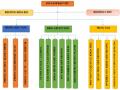
Level II budget unit : Directly under the level I budget unit, it is under the direct financial leadership and capital allocation relationship of the level I budget unit. The level II budget unit manages the budget capital distributed by the level I unit, including the unit's own budget and the budget of the subordinate level III units. The unit must periodically summarize the expenditure of the unit and of the level III budget unit and report to the level I budget unit and the financial agency at the same level.
Level III budget unit : Directly under the level II budget unit, under the direct financial leadership and capital allocation relationship of the level II budget unit, is the last unit to implement the budget. The level III budget unit directly uses budget funds, complies with policies on targets, accounting, synthesizes budget targets and reports to the level II unit and the financial agency at the same level periodically.
Maybe you are interested!
-

 Characteristics of the Practice of the Right to Prosecute During the Investigation Stage of a Case of Intentionally Causing Injury or Harm to the Health of Another Person.
 -
 Current Status of Human Resource Training at the Institute of Occupational Health and Environment
 -
 Global financial crisis and its impact on the operations of Vietnamese small and medium enterprises - 1
 -
 Investment Resources for Occupational Safety and Health
 -
 General Financial Operations Issues
A budget unit (BUN) may have only one level or two levels. In units with only one level, this level must perform the tasks of levels I and III. In units organized into two levels, the upper-level BUN performs the tasks of the level I BUN, and the lower-level BUN performs the tasks of the level III BUN.
According to the self-financing capacity of administrative units

Purely administrative units: these are public agencies in the state apparatus (or in other words, administrative units performing state management functions) funded 100% by the state budget such as: People's Committees at commune, district, provincial levels, etc.
Administrative units with revenue sources : these units still receive support from the State budget, but in addition, they have activities that generate revenue for their own units. For example, units and agencies: schools, hospitals, scientific research units, etc.
In which, schools are self-sufficient in part of their operating costs, while scientific research institutes are guaranteed 100% of their funding support from the State.
Thus, the HCSN unit is very diverse, has a wide scope, and its operating expenses are mainly implemented through state-funded funds. The outstanding feature of the HCSN unit is that it is not an economic accounting unit, its main function is not production and business but operates according to the goals and tasks of the state.
1.2. Characteristics of operations and financial management of administrative units
1.2.1. Characteristics of administrative and career units
These are units that do not directly produce material but are extremely necessary for society, aiming to stabilize and maintain the State management apparatus at all levels, ensuring socio-political stability and national security and defense.
Rich, diverse, complex activities of a service nature, for administrative agencies, most have no revenue, or very little, expenditures for activities are mainly provided by the State Budget.
Expenditures for career activities contain many social factors related to many different policies in the economy, which are both an objective necessity and a demonstration of social superiority, aiming to improve people's material life, spiritual culture, and health.
The operational characteristics of administrative units can be divided as follows:
- Based on the field of operation, HCSN units are divided into:
+ Educational administrative units include: Schools from kindergarten to university (excluding private schools).
+ Medical administrative units include: Institutes, medical examination and treatment facilities, preventive medical centers (excluding private institutes).
+ Cultural and sports administrative units include cultural and sports research institutes, art troupes, film centers, cultural houses, libraries, museums, radio and television stations, information centers, press and publishing, sports training centers, sports clubs, etc.
+ Economic administrative units include administrative units that support economic development such as economic research institutes, plant and animal breed research centers, etc.
Administrative units have the common characteristic of operating with funds provided by the state budget or self-financing with career revenue. This characteristic has a great impact on accounting work in administrative units, which is shown in the following aspects:
- Firstly, to serve the purpose of control and settlement with the budget, accountants of administrative and public service units must comply with the accounting regime prescribed by competent authorities.
- Second, to serve the synthesis of data on budget expenditures, expenditures in administrative units must be accounted for in detail by chapter and item in accordance with the budget table of contents.
1.2.2. Characteristics of financial management of administrative units
In the administrative career unit, the State is the management entity, the management object is the finance of the administrative career unit. The finance of the administrative career unit includes financial activities and relations related to the management and operation of the State in the career field.
As a management entity, the State can use a combination of methods, forms and tools to manage the financial activities of administrative and public service units under specific conditions to achieve certain goals. To achieve the set goals, the financial management of administrative and public service units includes three stages of work: First, preparing the state budget revenue and expenditure estimates within the scope assigned by the competent authority each year; Second, organizing the implementation of the annual financial revenue and expenditure estimates according to the State's regime and policies; Third, finalizing the state budget revenue and expenditure.
- Prepare budget estimates
Budgeting is the process of analyzing and evaluating the ability and needs of financial resources to build annual budget revenue and expenditure targets correctly, scientifically and practically. The method of making estimates based on the past is the method of determining targets in the estimate based on the actual performance of the previous period and adjusting according to the expected growth rate and inflation rate. Thus, this method is very clear, easy to understand and easy to use, is built relatively stable, creating conditions and a sustainable basis for managers in the unit in operating all activities. The method of making zero-level estimates is the method of determining targets in the estimate based on the tasks and operational goals in the planning year, suitable to the specific existing conditions of the unit, not based on the actual performance of the previous year. Thus, this is the method of making estimates
The calculation is more complicated because it is not based on available data and experience. However, if the unit uses this method, it will be able to evaluate in detail the effectiveness of the unit's operating costs, ending the imbalance between the workload and implementation costs, and helping the unit choose the most optimal way to achieve the set goals.
The method of making estimates based on the past is a traditional method, simple, easy to implement and suitable for relatively stable activities of the unit. Meanwhile, the method of making estimates at the non-complex level is more complicated, requiring a high level of assessment, analysis, and comparison between the tasks and specific conditions of the unit, so it is only suitable for irregular activities, with separate accounting of costs and benefits.
- Organize the implementation of revenue and expenditure estimates
Budget implementation is the process of using a combination of economic, financial and administrative measures to turn the revenue and expenditure targets recorded in the unit's budget estimate into reality. Based on the assigned budget estimate, the public service units organize implementation, propose necessary measures to ensure the successful completion of the assigned revenue and expenditure tasks, and at the same time have a plan to use the budget funds in accordance with the right purposes, regimes, and economically and effectively. To monitor the implementation of the revenue and expenditure estimate, the public service units need to conduct detailed and specific monitoring of each source of revenue and each expenditure item in the unit's period.
In reality, in administrative units, revenue is often generated from the following sources:
+ Funding source allocated from the State budget to carry out assigned political and professional tasks. This is a traditional source of revenue and plays an important role in ensuring financial resources for the operations of administrative units. However, with the policy of innovation to enhance financial autonomy for public service units, the proportion of this source of revenue in units will tend to decrease gradually to reduce the burden on the State budget.
+ Revenue from career activities: includes fees and charges collected from the State budget according to the provisions of law, according to the regime allowed to be left to the unit. For example, in the health sector, career revenues include hospital fees, examination service fees, etc.
treatment, revenue from implementing contraceptive measures, revenue from selling disease prevention vaccines... Along with the transition to financial autonomy, the proportion of this source of revenue in public service units tends to increase. This requires units to organize the exploitation of these legal sources of revenue to enhance the financial capacity of the unit.
+ Revenues from aid, donations, and other revenues that are not required to be paid to the budget according to regulations. These are irregular revenues that cannot be accurately predicted in advance, but they support the unit in the process of performing its tasks.
+ Other sources such as loans from credit institutions, capital mobilized from officers and employees in the unit; joint venture and association capital of domestic and foreign organizations and individuals according to the provisions of law.
With the above sources of revenue, administrative units are autonomous in performing the task of collecting correctly and fully according to the collection levels and collection objects prescribed by competent state agencies. In cases where competent state agencies prescribe collection levels, the unit shall base on the expenditure needs for its activities and the ability of society to contribute to decide on specific collection levels appropriate to each type of activity and each object, but shall not exceed the collection levels prescribed by competent agencies. For service activities under contracts with domestic and foreign organizations and individuals, joint ventures and associations, the unit shall decide on specific collection items and collection levels according to the principle of ensuring sufficient compensation for expenses and having accumulation.
- Final settlement of income and expenditure
Finalizing revenue and expenditure is the final step in the financial management cycle. This is the process of checking and synthesizing data on budget implementation in the period and is the basis for analyzing and evaluating budget implementation results, thereby drawing lessons for the following periods. In order to conduct finalizing revenue and expenditure, units must complete the financial reporting system and budget settlement report.
1.3. General overview of accounting organization in administrative units
1.3.1. Concept and role of accounting organization
1.3.1.1. Concept of accounting organization
There are many concepts of accounting organization given. Specifically:
The Law on Accounting (2015) defines the organization of accounting work as organizing the implementation of accounting standards and regimes to reflect the financial situation, results of production and business activities, organizing the implementation of accounting inspection regimes, regimes for preserving and storing accounting documents, providing accounting information and documents and other accounting tasks to users [12].
Dr. Nguyen Thi Dong (2004) with the textbook " Public accounting in administrative units " of the National Economics University, organizing accounting work is the creation of a relationship in a certain order between the elements of corresponding accounts, costing (collection of expenses) and summary-balance accounting in each specific accounting work content to collect necessary information to provide for management [7].
The University of Labor and Social Affairs (2007) proposed the concept of organizing accounting work as creating a certain sequential relationship between the elements of the accounting system. The elements of the accounting system include: accounting staff with professional capacity; system of accounting documents, books and reports; accounting methods; equipment used for accounting. Organizing accounting is creating a relationship between the above elements to perform well the functions and tasks of the accounting apparatus [10].
In short, according to the author himself, organizing accounting work is simply understood as organizing the recording and reflection of economic transactions arising in the unit in a scientific and legal manner, organizing the accounting apparatus structure in accordance with the scale and characteristics of the unit to bring about the highest accounting efficiency with the most economical cost.
1.3.1.2. The role of accounting organization
The accounting organization at the HCSN unit has the following main roles:
- Collect, reflect, process and synthesize information on funding sources, sponsored funds, funds generated from other sources and the use of funds and revenues at the unit in accordance with accounting standards and regimes.
- Conduct inspection and control of the implementation of revenue and expenditure estimates, the implementation of economic and financial indicators and state standards and norms, inspect the management and use of the unit's assets and materials, inspect the implementation of budget collection and payment discipline, and the implementation of state policies and regimes.
- Monitor and control the budget distribution situation for lower-level budget units, the implementation of revenue and expenditure estimates and final settlement of lower-level units.
- Fully, accurately and comprehensively reflect all capital, funds, expenses, assets and all economic and financial activities arising in the unit.
1.3.2. Requirements and principles of accounting organization
1.3.2.1. Accounting organization requirements
In management, accounting is considered as the collection, processing, checking, analysis and provision of economic and financial information in the form of value, physical objects and working time. Accounting is the science of collecting, processing and providing all information about assets, asset movements, economic and financial activities in the unit, in order to check and monitor all economic and financial activities of the unit. For accounting to truly become an effective management tool, the issue of organizing accounting reasonably and scientifically is one of the prerequisites of the units. Therefore, the accounting organization must ensure the following requirements:
- Firstly, the reasonable organization of the accounting apparatus in the unit must be suitable to the characteristics, conditions of the organization of activities, the organization of management and the decentralization of financial management in the unit, ensuring sufficient quantity, quality, ensuring the completion of all accounting work contents of the unit at the most economical cost. Implement accounting work planning, with clear assignment and division of tasks for each accounting staff. Determine the working relationship between the accounting department and other management departments in the unit.
- Second, identify the relationship between departments in the accounting system and other management departments in the unit regarding accounting-related work and collecting and providing relevant economic and financial information to managers.
- Third, the organization applies the accounting regime, accounting practices, and the issued and recognized Accounting Law by choosing an accounting form suitable to the specific conditions of the unit.
The accounting organization in the administrative unit has the task of organizing the implementation of accounting methods, organizing the implementation and application of accounting principles, the Accounting Law, and the prescribed accounting regime to the unit correctly and appropriately to collect, process and provide accounting information to meet the unit's management requirements, ensuring that accountants perform their tasks well. Choosing an accounting form suitable for the specific conditions of the unit is also one of the tasks of the accounting organization, in order to help the unit collect, process and provide information most appropriately and effectively.
- Fourth, organize the application of scientific and technical achievements, management science; gradually equip and use modern technical means of calculation. Organize training to improve management level and professional level for accounting staff. Organize the dissemination of instructions on financial and accounting regulations for civil servants in the unit. Organize internal accounting inspection.
In the current conditions, information technology develops very quickly and information technology has penetrated deeply into management science, becoming an important and indispensable factor and means. Therefore, when organizing accounting in administrative units, it is necessary to thoroughly grasp the task of applying advanced and modern scientific achievements, using software programs, technical equipment to support calculations, establishing information systems, exploiting and storing information effectively.
On the other hand, accounting is a management science, it is always improved and perfected with the change of economic and financial policies and mechanisms in each stage and period, therefore, accountants need to have understanding, update knowledge, mechanisms, policies, new regimes, as well as other related scientific and technical fields. Besides, the accounting organization also needs to pay attention to fostering professional skills, updating new knowledge about related science and technology for accounting officers and employees.
At the same time, the unit's operation process is the process of implementing the State's economic and financial management policies and regimes. To effectively implement the State's policies and regimes, when organizing accounting in the unit, it is necessary to carry out the tasks of disseminating, guiding and inspecting the implementation of economic and financial management policies and regimes in the unit, in order to bring the accounting work and management work of the unit together.