
- Adventure tourism: Phong Nha-Ke Bang is a region with diverse structures and stratigraphy, a synthesis of the formation and development of the Earth's crust. These are the conditions to create diversity of landscapes with unique karst terrain, majestic cave systems, and high biodiversity. With these potentials, Phong Nha-Ke Bang can build comprehensive adventure tourism routes. These adventure tourism routes can be designed within 1 day or from 3 to 5 days. Some attractive and highly feasible adventure tourism routes include: Phong Nha cave adventure tourism route (currently, Phong Nha cave has only been exploited for 700m out of a total length of over 7,000m+ surveyed); Ban Doong - Dong cave - Khe Ry cave route; Toi cave tourism route; Ban Ban - Ruc Ca Roong cave route, E cave route - Sinh Ton valley...
3.2. Solutions for sustainable tourism development in Phong Nha-Ke Bang
To develop sustainable tourism in the World Natural Heritage National Park
Phong Nha-Ke Bang has three main groups of solutions: group of solutions for sustainable economic tourism development, group of solutions for sustainable environmental tourism development and group of solutions for sustainable social tourism development.
Maybe you are interested!
-
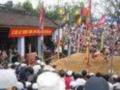
 Solutions for tourism development in Tien Lang - 10
zt2i3t4l5ee
zt2a3gstourism, tourism development
zt2a3ge
zc2o3n4t5e6n7ts
- District People's Committees and authorities of communes with tourist attractions should support, promote, and provide necessary information to people, helping them improve their knowledge about tourism. Raise tourism awareness for local people.
*
* *
Due to limited knowledge and research time, the thesis inevitably has shortcomings. Therefore, I look forward to receiving guidance from teachers, experts as well as your comments to make the thesis more complete.
Chapter III Conclusion
Through the issues presented in Chapter II, we can come to some conclusions:
Based on the strengths of available tourism resources, the types of tourism in Tien Lang that need to be promoted in the coming time are sightseeing and resort tourism, discovery tourism, weekend tourism. To improve the quality and diversify tourism products, Tien Lang district needs to combine with local cultural tourism resources, at the same time combine with surrounding areas, build rich tourism products. The strengths of Tien Lang tourism are eco-tourism and cultural tourism, so developing Tien Lang tourism must always go hand in hand with restoring and preserving types of cultural tourism resources. Some necessary measures to support and improve the efficiency of exploiting tourism resources in Tien Lang are: strengthening the construction of technical facilities and labor force serving tourism, actively promoting and advertising tourism, and expanding forms of capital mobilization for tourism development.
CONCLUDE
I Conclusion
1. Based on the results achieved within the framework of the thesis's needs, some basic conclusions can be drawn as follows:
Tien Lang is a locality with great potential for tourism development. The relatively abundant cultural tourism resources and ecological tourism resources have great appeal to tourists. Based on this potential, Tien Lang can build a unique tourism industry that is competitive enough with other localities within Hai Phong city and neighboring areas.
In recent years, the exploitation of the advantages of resources to develop tourism and build tourist routes in Tien Lang has not been commensurate with the available potential. In terms of quantity, many resource objects have not been brought into the purpose of tourism development. In terms of time, the regular service time has not been extended to attract more visitors. Infrastructure and technical facilities are still weak. The labor force is still thin and weak in terms of expertise. Tourism programs and routes have not been organized properly, the exploitation content is still monotonous, so it has not attracted many visitors. Although resources have not been mobilized much for tourism development, they are facing the risk of destruction and degradation.
2. Based on the results of investigation, analysis, synthesis, evaluation and selective absorption of research results of related topics, the thesis has proposed a number of necessary solutions to improve the efficiency of exploiting tourism resources in Tien Lang such as: promoting the restoration and conservation of tourism resources, focusing on investment and key exploitation of ecotourism resources, strengthening the construction of infrastructure and tourism workforce. Expanding forms of capital mobilization. In addition, the thesis has built a number of tourist routes of Hai Phong in which Tien Lang tourism resources play an important role.
Exploiting Tien Lang tourism resources for tourism development is currently facing many difficulties. The above measures, if applied synchronously, will likely bring new prospects for the local tourism industry, contributing to making Tien Lang tourism an important economic sector in the district's economic structure.
REFERENCES
1. Nhuan Ha, Trinh Minh Hien, Tran Phuong, Hai Phong - Historical and cultural relics, Hai Phong Publishing House, 1993
2. Hai Phong City History Council, Hai Phong Gazetteer, Hai Phong Publishing House, 1990.
3. Hai Phong City History Council, History of Tien Lang District Party Committee, Hai Phong Publishing House, 1990.
4. Hai Phong City History Council, University of Social Sciences and Humanities, VNU, Hai Phong Place Names Encyclopedia, Hai Phong Publishing House. 2001.
5. Law on Cultural Heritage and documents guiding its implementation, National Political Publishing House, Hanoi, 2003.
6. Tran Duc Thanh, Lecture on Tourism Geography, Faculty of Tourism, University of Social Sciences and Humanities, VNU, 2006
7. Hai Phong Center for Social Sciences and Humanities, Some typical cultural heritages of Hai Phong, Hai Phong Publishing House, 2001
8. Nguyen Ngoc Thao (editor-in-chief, Tourism Geography, Hai Phong Publishing House, two volumes (2001-2002)
9. Nguyen Minh Tue and group of authors, Hai Phong Tourism Geography, Ho Chi Minh City Publishing House, 1997.
10. Nguyen Thanh Son, Hai Phong Tourism Territory Organization, Associate Doctoral Thesis in Geological Geography, Hanoi, 1996.
11. Decision No. 2033/QD – UB on detailed planning of Tien Lang town, Hai Phong city until 2020.
12. Department of Culture, Information, Hai Phong Museum, Hai Phong relics
- National ranked scenic spot, Hai Phong Publishing House, 2005. 13. Tien Lang District People's Committee, Economic Development Planning -
Culture - Society of Tien Lang district to 2010.
14.Website www.HaiPhong.gov.vn
APPENDIX 1
List of national ranked monuments
STT
Name of the monument
Number, year of decisiondetermine
Location
1
Gam Temple
938 VH/QĐ04/08/1992
Cam Khe Village- Toan Thang commune
2
Doc Hau Temple
9381 VH/QĐ04/08/1992
Doc Hau Village –Toan Thang commune
3
Cuu Doi Communal House
3207 VH/QĐDecember 30, 1991
Zone II of townTien Lang
4
Ha Dai Temple
938 VH/QĐ04/08/1992
Ha Dai Village –Tien Thanh commune
APPENDIX II
STT
Name of the monument
Number, year of decision
Location
1
Phu Ke Pagoda Temple
178/QD-UBJanuary 28, 2005
Zone 1 - townTien Lang
2
Trung Lang Temple
178/QD-UBJanuary 28, 2005
Zone 4 – townTien Lang
3
Bao Khanh Pagoda
1900/QD-UBAugust 24, 2006
Nam Tu Village -Kien Thiet commune
4
Bach Da Pagoda
1792/QD-UB11/11/2002
Hung Thang Commune
5
Ngoc Dong Temple
177/QD-UBNovember 27, 2005
Tien Thanh Commune
6
Tomb of Minister TSNhu Van Lan
2848/QD-UBSeptember 19, 2003
Nam Tu Village -Kien Thiet commune
7
Canh Son Stone Temple
2160/QD-UBSeptember 19, 2003
Van Doi Commune –Doan Lap
8
Meiji Temple
2259/QD-UBSeptember 19, 2002
Toan Thang Commune
9
Tien Doi Noi Temple
477/QD-UBSeptember 19, 2005
Doan Lap Commune
10
Tu Doi Temple
177/QD-UBJanuary 28, 2005
Doan Lap Commune
11
Duyen Lao Temple
177/QD-UBJanuary 28, 2005
Tien Minh Commune
12
Dinh Xuan Uc Pagoda
177/QD-UBJanuary 28, 2005
Bac Hung Commune
13
Chu Khe Pagoda
177/QD-UBJanuary 28, 2005
Hung Thang Commune
14
Dong Dinh
2848/QD-UBNovember 21, 2002
Vinh Quang Commune
15
President's Memorial HouseTon Duc Thang
177/QD-UBJanuary 28, 2005
NT Quy Cao
Ha Dai Temple
Ben Vua Temple
Tien Lang hot spring
div.maincontent .p { color: black; font-family:"Times New Roman", serif; font-style: normal; font-weight: normal; text-decoration: none; font-size: 14pt; margin:0pt; } div.maincontent p { color: black; font-family:"Times New Roman", serif; font-style: normal; font-weight: normal; text-decoration: none; font-size: 14pt; margin:0pt; } div.maincontent .s1 { color: black; font-family:"Times New Roman", serif; font-style: normal; font-weight: normal; font-size: 16pt; } div.maincontent .s2 { color: black; font-family:"Times New Roman", serif; font-style: italic; font-weight: bold; text-decoration: none; font-size: 14pt; } div.maincontent .s3 { color: black; font-family:"Times New Roman", serif; font-style: italic; font-weight: normal; text-decoration: none; font-size: 14pt; } div.maincontent .s4 { color: black; font-family:"Times New Roman", serif; font-style: normal; font-weight: normal; font-size: 14pt; } div.maincontent .s5 { color: black; font-family:"Times New Roman", serif; font-style: normal; font-weight: bold; font-size: 14pt; } div.maincontent .s6 { color: black; font-family:"Times New Roman", serif; font-style: normal; font-weight: normal; text-decoration: none; font-size: 14pt; } div.maincontent .s7 { color: black; font-family:"Times New Roman", serif; font-style: normal; font-weight: bold; text-decoration: none; font-size: 14pt; } div.maincontent .s8 { color: black; font-family:"Times New Roman", serif; font-style: normal; font-weight: normal; text-decoration: none; font-size: 9pt; vertical-align: 6pt; } div.maincontent .s9 { color: black; font-family:"Times New Roman", serif; font-style: normal; font-weight: bold; text-decoration: none; font-size: 12pt; } div.maincontent .s11 { color: black; font-family:"Times New Roman", serif; font-style: normal; font-weight: normal; tex
Solutions for tourism development in Tien Lang - 10
zt2i3t4l5ee
zt2a3gstourism, tourism development
zt2a3ge
zc2o3n4t5e6n7ts
- District People's Committees and authorities of communes with tourist attractions should support, promote, and provide necessary information to people, helping them improve their knowledge about tourism. Raise tourism awareness for local people.
*
* *
Due to limited knowledge and research time, the thesis inevitably has shortcomings. Therefore, I look forward to receiving guidance from teachers, experts as well as your comments to make the thesis more complete.
Chapter III Conclusion
Through the issues presented in Chapter II, we can come to some conclusions:
Based on the strengths of available tourism resources, the types of tourism in Tien Lang that need to be promoted in the coming time are sightseeing and resort tourism, discovery tourism, weekend tourism. To improve the quality and diversify tourism products, Tien Lang district needs to combine with local cultural tourism resources, at the same time combine with surrounding areas, build rich tourism products. The strengths of Tien Lang tourism are eco-tourism and cultural tourism, so developing Tien Lang tourism must always go hand in hand with restoring and preserving types of cultural tourism resources. Some necessary measures to support and improve the efficiency of exploiting tourism resources in Tien Lang are: strengthening the construction of technical facilities and labor force serving tourism, actively promoting and advertising tourism, and expanding forms of capital mobilization for tourism development.
CONCLUDE
I Conclusion
1. Based on the results achieved within the framework of the thesis's needs, some basic conclusions can be drawn as follows:
Tien Lang is a locality with great potential for tourism development. The relatively abundant cultural tourism resources and ecological tourism resources have great appeal to tourists. Based on this potential, Tien Lang can build a unique tourism industry that is competitive enough with other localities within Hai Phong city and neighboring areas.
In recent years, the exploitation of the advantages of resources to develop tourism and build tourist routes in Tien Lang has not been commensurate with the available potential. In terms of quantity, many resource objects have not been brought into the purpose of tourism development. In terms of time, the regular service time has not been extended to attract more visitors. Infrastructure and technical facilities are still weak. The labor force is still thin and weak in terms of expertise. Tourism programs and routes have not been organized properly, the exploitation content is still monotonous, so it has not attracted many visitors. Although resources have not been mobilized much for tourism development, they are facing the risk of destruction and degradation.
2. Based on the results of investigation, analysis, synthesis, evaluation and selective absorption of research results of related topics, the thesis has proposed a number of necessary solutions to improve the efficiency of exploiting tourism resources in Tien Lang such as: promoting the restoration and conservation of tourism resources, focusing on investment and key exploitation of ecotourism resources, strengthening the construction of infrastructure and tourism workforce. Expanding forms of capital mobilization. In addition, the thesis has built a number of tourist routes of Hai Phong in which Tien Lang tourism resources play an important role.
Exploiting Tien Lang tourism resources for tourism development is currently facing many difficulties. The above measures, if applied synchronously, will likely bring new prospects for the local tourism industry, contributing to making Tien Lang tourism an important economic sector in the district's economic structure.
REFERENCES
1. Nhuan Ha, Trinh Minh Hien, Tran Phuong, Hai Phong - Historical and cultural relics, Hai Phong Publishing House, 1993
2. Hai Phong City History Council, Hai Phong Gazetteer, Hai Phong Publishing House, 1990.
3. Hai Phong City History Council, History of Tien Lang District Party Committee, Hai Phong Publishing House, 1990.
4. Hai Phong City History Council, University of Social Sciences and Humanities, VNU, Hai Phong Place Names Encyclopedia, Hai Phong Publishing House. 2001.
5. Law on Cultural Heritage and documents guiding its implementation, National Political Publishing House, Hanoi, 2003.
6. Tran Duc Thanh, Lecture on Tourism Geography, Faculty of Tourism, University of Social Sciences and Humanities, VNU, 2006
7. Hai Phong Center for Social Sciences and Humanities, Some typical cultural heritages of Hai Phong, Hai Phong Publishing House, 2001
8. Nguyen Ngoc Thao (editor-in-chief, Tourism Geography, Hai Phong Publishing House, two volumes (2001-2002)
9. Nguyen Minh Tue and group of authors, Hai Phong Tourism Geography, Ho Chi Minh City Publishing House, 1997.
10. Nguyen Thanh Son, Hai Phong Tourism Territory Organization, Associate Doctoral Thesis in Geological Geography, Hanoi, 1996.
11. Decision No. 2033/QD – UB on detailed planning of Tien Lang town, Hai Phong city until 2020.
12. Department of Culture, Information, Hai Phong Museum, Hai Phong relics
- National ranked scenic spot, Hai Phong Publishing House, 2005. 13. Tien Lang District People's Committee, Economic Development Planning -
Culture - Society of Tien Lang district to 2010.
14.Website www.HaiPhong.gov.vn
APPENDIX 1
List of national ranked monuments
STT
Name of the monument
Number, year of decisiondetermine
Location
1
Gam Temple
938 VH/QĐ04/08/1992
Cam Khe Village- Toan Thang commune
2
Doc Hau Temple
9381 VH/QĐ04/08/1992
Doc Hau Village –Toan Thang commune
3
Cuu Doi Communal House
3207 VH/QĐDecember 30, 1991
Zone II of townTien Lang
4
Ha Dai Temple
938 VH/QĐ04/08/1992
Ha Dai Village –Tien Thanh commune
APPENDIX II
STT
Name of the monument
Number, year of decision
Location
1
Phu Ke Pagoda Temple
178/QD-UBJanuary 28, 2005
Zone 1 - townTien Lang
2
Trung Lang Temple
178/QD-UBJanuary 28, 2005
Zone 4 – townTien Lang
3
Bao Khanh Pagoda
1900/QD-UBAugust 24, 2006
Nam Tu Village -Kien Thiet commune
4
Bach Da Pagoda
1792/QD-UB11/11/2002
Hung Thang Commune
5
Ngoc Dong Temple
177/QD-UBNovember 27, 2005
Tien Thanh Commune
6
Tomb of Minister TSNhu Van Lan
2848/QD-UBSeptember 19, 2003
Nam Tu Village -Kien Thiet commune
7
Canh Son Stone Temple
2160/QD-UBSeptember 19, 2003
Van Doi Commune –Doan Lap
8
Meiji Temple
2259/QD-UBSeptember 19, 2002
Toan Thang Commune
9
Tien Doi Noi Temple
477/QD-UBSeptember 19, 2005
Doan Lap Commune
10
Tu Doi Temple
177/QD-UBJanuary 28, 2005
Doan Lap Commune
11
Duyen Lao Temple
177/QD-UBJanuary 28, 2005
Tien Minh Commune
12
Dinh Xuan Uc Pagoda
177/QD-UBJanuary 28, 2005
Bac Hung Commune
13
Chu Khe Pagoda
177/QD-UBJanuary 28, 2005
Hung Thang Commune
14
Dong Dinh
2848/QD-UBNovember 21, 2002
Vinh Quang Commune
15
President's Memorial HouseTon Duc Thang
177/QD-UBJanuary 28, 2005
NT Quy Cao
Ha Dai Temple
Ben Vua Temple
Tien Lang hot spring
div.maincontent .p { color: black; font-family:"Times New Roman", serif; font-style: normal; font-weight: normal; text-decoration: none; font-size: 14pt; margin:0pt; } div.maincontent p { color: black; font-family:"Times New Roman", serif; font-style: normal; font-weight: normal; text-decoration: none; font-size: 14pt; margin:0pt; } div.maincontent .s1 { color: black; font-family:"Times New Roman", serif; font-style: normal; font-weight: normal; font-size: 16pt; } div.maincontent .s2 { color: black; font-family:"Times New Roman", serif; font-style: italic; font-weight: bold; text-decoration: none; font-size: 14pt; } div.maincontent .s3 { color: black; font-family:"Times New Roman", serif; font-style: italic; font-weight: normal; text-decoration: none; font-size: 14pt; } div.maincontent .s4 { color: black; font-family:"Times New Roman", serif; font-style: normal; font-weight: normal; font-size: 14pt; } div.maincontent .s5 { color: black; font-family:"Times New Roman", serif; font-style: normal; font-weight: bold; font-size: 14pt; } div.maincontent .s6 { color: black; font-family:"Times New Roman", serif; font-style: normal; font-weight: normal; text-decoration: none; font-size: 14pt; } div.maincontent .s7 { color: black; font-family:"Times New Roman", serif; font-style: normal; font-weight: bold; text-decoration: none; font-size: 14pt; } div.maincontent .s8 { color: black; font-family:"Times New Roman", serif; font-style: normal; font-weight: normal; text-decoration: none; font-size: 9pt; vertical-align: 6pt; } div.maincontent .s9 { color: black; font-family:"Times New Roman", serif; font-style: normal; font-weight: bold; text-decoration: none; font-size: 12pt; } div.maincontent .s11 { color: black; font-family:"Times New Roman", serif; font-style: normal; font-weight: normal; tex -
 Solutions on Organization, Planning and Exploiting the Potential for Tourism Business Development
 -
 Tourism Development Planning in the Socio-Economic Development Strategy of An Giang Province to 2020, Vision 2030
 -
 Building and Deploying Planning and Economic Development Plan for Tourism in Hanoi Capital
 -
 Building Strategy and Planning for Tourism Development in the Province According to Sustainable Development Criteria
3.2.1. Group of solutions for sustainable economic tourism development:
3.2.1.1. Planning, management and organization of planning implementation:

Planning is one of the first important factors to ensure sustainable tourism development. We cannot invest in building any tourist area without planning. The State needs to strictly manage tourism development investment projects and only allow investment when there is a plan.
approved by competent authorities. In the process of master planning, detailed planning, and establishing feasible investment projects for tourism development, there needs to be close cooperation between tourism planning experts and experts in the areas.
related fields, with the National Park Management Board, with the government and the community
local currency
For PN-KB, this solution is extremely important and urgent. Although the General Department of Tourism has included PN-KB in one of 31 specialized tourist areas,
national issue. However, up to now, the Master Plan and Detailed Plan for tourism development here have not been implemented. During the visit and working session of Prime Minister Phan Van Khai after PN-KB was recognized as a World Natural Heritage (in 2002), the Prime Minister instructed the General Department of Tourism and the People's Committee of Quang Binh province to soon implement the PN-KB tourism development plan with the participation of foreign consultants. Up to now, due to many administrative procedures that have not been resolved, the PN-KB tourism development plan is still in the initial stage.
The lack of tourism development planning for PN-KB is greatly affecting the sustainable development here. After PN-KB was recognized as a World Natural Heritage, many infrastructure construction projects and tourism development investment projects have been registered to be implemented here. Due to the lack of planning, the projects have not been approved by competent authorities for construction. Currently, there are only a few infrastructure construction projects at Phong Nha Reception Center (which have been planned in detail, consulted and are waiting for approval by the Provincial People's Committee) such as: boat dock, parking lot, waste storage area, clean water supply system and are under construction. However, Phong Nha Reception Center is only a very small area and is mostly located outside the area of PN-KB National Park.
In addition to infrastructure construction projects, many investment projects to develop eco-tourism, accommodation facilities, entertainment areas, animal and plant conservation areas... have been registered for investment by enterprises inside and outside the province. Due to pressure from many sides, the People's Committee of Quang Binh province has granted licenses to 2 investment projects.
tourism development in PN-KB. That is the PN-KB Ecological Resort and Entertainment project invested by the Urban Civilization Development Company (CIVIDEC) with a total capital of over 300 billion VND on an area of 50 hectares along the Son River. The expected items of the project are: hotel area (4-star standard), maze area and stone park and tropical rainforest. In addition, the Company is also preparing the d+ Primitive Plant and Semi-Wild Animal Conservation Tourism Area project in Survival Valley (Thung Tre) on a total area of 180 hectares (including the Scientific Research-Care-Introduction Sub-area, the Sightseeing-Enjoyment Sub-area and the Conservation-Development Sub-area). The second project is the Phong Nha-Ke Bang Ecological Tourism Area Project of the Phong Nha-Ke Bang Ecological Tourism Company on an area of 30 hectares in Son Trach x+. The expected investment items of the project
The project includes hotel area, entertainment area, service area.
Allowing projects to be implemented without a master plan raises a big question mark for sustainable tourism development in Phong Nha-Ke Bang. Although the master plans must be made by the companies themselves and approved by competent authorities, it is clear that the projects cover a very large area and whether these projects will later be consistent with the Master Plan and the Detailed Plan for Tourism Development in Phong Nha-Ke Bang is still a question mark.
3.2.1.2. Diversify tourism products:
The PN-KB World Natural Heritage has great potential to develop many unique and attractive types of tourism. However, up to now, PN-KB only has one tourism product, which is cave tourism (Phong Nha Cave and Tien Son Cave). Tourism businesses focus on exploiting these two caves based on available natural resources, easy to exploit, low investment capital, and quick payback period. The "boom" of tourism in PN-KB in recent times has put great pressure on the sustainable tourism development of the province.
This National Park. Therefore, the solution to develop tourism products
The unique and attractive products in PN-KB have a great significance; contributing to making tourism more sustainable. New tourism products not only attract tourists but also increase the length of stay of tourists, expand the space to increase the capacity of the tourist area, and improve the efficiency of tourism business.
Develop specific tourism products such as: Cave tourism (in the immediate future, it is possible to open conditional cave tourism routes such as Dark Cave, Thien Cave).
The road often goes deeper into Phong Nha cave about 700m more); Eco-tourism, Visiting cultural-historical relics (especially route 20 Quyet Thang), Visiting ethnic minority villages (Ma Coong, Ruc, Arem); Adventure tourism according to the development orientation of tourism products mentioned above.
To develop unique, attractive and special tourism products in PN-KB, there needs to be appropriate investment and incentive policies for research. With the advantage of being a World Natural Heritage, it is necessary to attract sponsors and scientists from Vietnam and abroad to participate in scientific research; considering this also a form of tourism (tourism combined with scientific research). There needs to be reasonable compensation policies to attract talents, experts and artisans to actively participate in building tourism products that are unique to PN-KB and highly competitive.
Because ecotourism is a type of tourism product that does not prioritize purely business but also aims to contribute positively to the conservation of World Natural Heritage values, it is necessary to have initial support policies. For ethnic minority village tourism, it is necessary to encourage the community to actively participate in activities.
tourism and service activities, and must support propaganda and training to raise people's awareness of sustainable tourism development. It is necessary to
build mechanisms and policies to preserve and promote their unique cultural identity.
3.2.1.3. Increase investment in tourism development:
To achieve high economic efficiency, business activities in general and business activities in particular
Tourism business in particular needs adequate investment. Ability
The higher and more stable the investment, the more sustainable the development from an economic perspective is guaranteed.
From the tourism development investment activities in PN-KB in recent times, some specific policies and activities need to be considered and implemented to ensure sustainable tourism development here, including:
- Urgently complete the Master Plan and Detailed Plan for tourism development in PN-KB as a basis for building investment projects. It is necessary to invite experienced domestic and international consultants to build these plans.
- Have a reasonable investment policy for infrastructure. PN-KB has great tourism potential, but it is a remote area with poor infrastructure. In recent years, the General Department of Tourism and the People's Committee of Quang Binh province have paid great attention to investing in infrastructure in PN-KB. Many projects have been built from the central and local budgets such as: roads, parking lots, boat docks, waste storage areas, clean water supply systems... However, due to limited capital, many necessary projects have not been built yet such as: waste and wastewater treatment systems; laboratories for scientific research; postal and telecommunications systems... In the process of investing in infrastructure construction, it is necessary to invest synchronously to improve investment efficiency. It is necessary to avoid patchwork, unsynchronized, and inappropriate investment leading to waste of investment capital and inefficiency.
- Focus on building clean energy sources such as solar energy
Solar energy, small hydropower. Have policies to support the supply and dissemination of new fuel-saving technologies. Replace wood stoves with improved stoves, kerosene or liquefied petroleum gas.
- Invest in building walking paths in the forest. However, it is necessary to minimize the impact of construction on wildlife, build anti-erosion support structures, and minimize or completely eliminate the use of motor vehicles in the strictly protected areas of the National Park.
- There are special preferential policies to attract domestic and foreign investment. Quang Binh is a poor province, most of the enterprises in the province are not large in scale, and the investment capital is not much. On the other hand, Quang Binh tourism has only developed in recent years, and the experience is still limited. Therefore, attracting investment from domestic and foreign partners to develop tourism is very important. Calling for investment capital from domestic and foreign enterprises to develop tourism is not only about attracting capital but also experience in operating, managing, doing tourism business, and building unique tourism products. These are really the conditions that Quang Binh tourism in general and PN-KB National Park in particular are currently lacking. Quang Binh
d+ offers many preferential policies to attract investment such as building essential infrastructure (roads, electricity, water supply to the fence); supporting costs
compensation for site clearance and leveling for projects; financial support
training for workers who will work on the projects; rewards for individuals who have
important contribution to investment promotion. Quang Binh also focuses on
to reform administrative procedures, creating favorable conditions for investors; d+ establishing an Investment Promotion Center to help investors quickly complete necessary procedures.
3.2.1.4. Promote tourism promotion and advertising and expand the market:
As a new address in the tourism industry, tourism promotion, propaganda and market expansion play a very important and necessary role for sustainable tourism development in PN-KB. In recent years, Quang Binh in general and PN-KB National Park in particular have made many efforts in promoting and expanding the tourism market. However, due to lack of experience, limited budget and especially the team doing this work is weak in professional expertise, the image of tourism in PN-KB is not really well known. The number of international visitors to Quang Binh and PN-KB accounts for less than 1% of the total number of visitors, showing that tourism here has not been widely promoted abroad.
For tourism promotion and propaganda, it is necessary to focus on the following activities:
- Quickly establish a department for advertising and tourism promotion of the National Park. Arrange stable funding (from tourism revenue), assign competent and specialized staff for this work. In the immediate future, it is necessary to hire experienced and highly specialized experts to advise on this work, and at the same time, immediately train a team of local specialized staff.
- Strengthen relations with news agencies, newspapers, radio and television to support promotion and propaganda activities. Coordinate with domestic and foreign enterprises, organizations and localities to promote together, especially the tourist routes "World Heritage Road", "Legendary Ho Chi Minh Trail", "East-West Corridor Tourist Route".
- Participate in fairs, exhibitions; organize domestic and international tourism conferences and seminars. Take advantage of resources and support from international organizations, non-governmental organizations, sponsors, and forums of the UNESCO World Heritage Committee in tourism promotion activities.
- Propagating to local communities the values of Heritage and the benefits of sustainable tourism development in many effective forms, suitable to the level and customs of local people.
- In the long term, it is necessary to establish representative offices in some important markets.
places with high potential to attract tourists. Representative offices play a role in creating a stable and long-term source of tourists; are the place to convey necessary information to customers in the fastest way, and are also the place to advise tourists on tours. On the other hand, representative offices are also the place to receive information from tourists and travel agencies to help edit tours accordingly, adjust activities to serve tourists in the best way. In the immediate future, the domestic market is still the main market.
Therefore, it is necessary to open representative offices of the National Park in Hanoi and Ho Chi Minh City.
In recent years, Quang Binh tourism has been favored by domestic tourists.
of interest, especially tourists from the southern provinces. According to statistics from the Department of Trade and Tourism of Quang Binh, the number of tourists coming to PN-KB from the southern provinces accounts for about 72% of the total number of visitors. For the domestic market, it is necessary to expand the market to the northern provinces, focusing on tourists traveling by road, rail and air in the coming years. For the foreign tourist market, focus on the Lao and Thai markets via Highway 12, Highway 8, Highway 9 in the East-West corridor tourist route. In addition to visiting scenic spots and cultural and historical relics, for this market, it is necessary to pay attention to the type of tourism combined with visiting relatives, because in Laos and Thailand there is a very large number of overseas Vietnamese who are children of Quang Binh. Besides the Lao and Thai markets, it is necessary to expand the market
for Chinese tourists and especially for high-spending markets such as Japan, Korea, the US, Northern Europe. For example, for the market