
(iii) Develop and improve the quality of human resources for bond investment activities; (iv) Review, supplement and complete state management documents and strengthen control of investment activities to ensure safety in bond investment of commercial banks; (v) Complete and develop the system of market makers.
5. Thesis structure
In addition to the introduction, conclusion, list of articles publishing the author's thesis research results, list of references, appendices, the Thesis consists of 04 chapters:
Chapter 1: Overview of research situation and research methods
Maybe you are interested!
-

 Overview of Research Works in the Overview of Research Situation and Issues to be Solved in the Thesis
 -
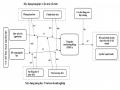 Research Model From Overview of Related Research Situation
 -
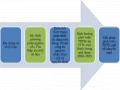 Conclusions Drawn From the Overview of the Research Situation
 -
 Evaluation of Research Situation and Issues Raised for the Thesis
 -
 Research on the treatment of seafood wastewater by electrocoagulation method combined with USBF - 19 tank
Chapter 2: Theoretical basis of bond investment activities of commercial banks
Chapter 3: Current status of bond investment of Vietnamese commercial banks

Male
Chapter 4: Bond investment orientation of Vietnamese commercial banks
South and some solutions and recommendations
CHAPTER 1:
OVERVIEW OF RESEARCH SITUATION AND RESEARCH METHODS
1.1. OVERVIEW OF RESEARCH WORKS RELATED TO THE THESIS TOPIC
Theoretical and practical issues on bond investment activities of commercial banks have not really been a research direction that has received much attention from scholars in the world as well as in Vietnam. As a component of the securities investment portfolio of commercial banks, bond investment activities have not been studied independently and separately, although this is an important financial investment tool and accounts for the largest proportion of commercial banks today. Research in this field mainly revolves around the general securities investment activities of commercial banks, which has recently attracted the attention of not only academics but also policy makers. This research trend has really increased since the 2007-2009 global financial crisis, originating from the crisis in the mortgage loan market for sub-prime customers in the US and spreading to other countries in the world. Its impact did not stop there but spread and erupted into a financial crisis and economic recession of great devastation on a global scale.
The crisis is believed to have its roots in the imbalance of credit capital between the real demand of the economy and the abundant capital from the loose monetary policy with low interest rates. The pressure to use excess capital when credit demand decreased along with financial innovations led to the subprime lending boom (Mac Quang Huy, 2009, p. 43). The deep involvement of banks in investment and speculative activities in the financial market was also the source of the cause of the exhaustion of the banking system in this credit crisis, in which the center was the investment banking industry.
From that context, the securities trading and buying and selling activities of commercial banks
is becoming an increasingly important issue than in the past. Studies often revolve around the concern that the development of investment activities has undermined traditional banking activities through two channels: the development of the financial system and banking activities that prove to be less profitable. With this concern, many studies on investment activities in general and bond investment activities in particular of commercial banks have been conducted on both theoretical and empirical aspects. According to the survey of NCS, the studies focus on three interrelated issues:
Firstly , many studies have focused on exploring the relationship between investment activities and traditional banking activities of commercial banks, especially lending activities. The authors have studied the impact of banks pursuing investment strategies on resource allocation as well as the efficiency of lending activities in commercial banks.
Second, a number of studies have been conducted to explore how the level of investment participation in commercial banks affects bank risk and profitability.
Third , with many valid evidences of the negative impact of investment activities on other banking activities, the question is whether commercial banks should participate in this activity, how to participate, the operating model, and how to organize and manage securities investment activities in general and bonds in particular in commercial banks? From this perspective, many authors have conducted studies on the participation of commercial banks in the securities market, the organizational model, and management of investment activities in general and bond investment in particular in commercial banks in order to control and simultaneously take advantage of the undeniable benefits from diversifying the business activities of commercial banks.
The following overview will present typical theoretical and empirical studies that have been published domestically and internationally in the two above-mentioned problem areas.
1.1.1. Studies on the relationship between commercial banks' investment/bond investment activities and traditional banking activities
Since the global financial crisis in 2007, banks’ proprietary trading activities have been closely monitored. This activity occurs when a commercial bank chooses to make a profit from the market rather than charging fees for its customers’ trading activities. Proprietary trading can be trading stocks, bonds, commodities, currencies or other financial instruments. The Volcker rule in the US, Vickers in the UK, Liikanen and the European Commission’s proposals in the EU all aim to limit the perceived risks arising from these trading activities of banks by separating proprietary trading activities from the traditional activities of commercial banks (Lehmann, 2016; Krahnen, Noth and Schüwer, 2017). The underlying concern for these rules is that banks are engaging in risky investments based on the cheap capital they have acquired through their franchises, and then threatening to stop providing traditional banking services. In particular, in times of crisis, banks may be more inclined to speculate by buying securities at fire-sale prices in the hope of rising prices during the economic recovery, rather than providing credit to businesses. On the one hand, investment by commercial banks may contribute to increasing market liquidity. On the other hand, it may lead to spillovers of stock price shocks to the real economy in the form of credit crunches.
From these concerns, research and debate among academics and policy makers tend to increase around the impact of commercial banks' securities investment activities on credit supply and the stock market. One point of view put forward in many studies during this period is that the increase in securities investment activities by commercial banks leads to a decrease in credit supply (Stein, 2013). In agreement with this point of view, Shleifer and Vishny (2010) and Diamond and Rajan (2011) argue that during the economic crisis, opportunities from sell-offs in the stock market can motivate banks to increase their investment levels and reduce resources for lending activities.
lending to the real economy. When capital is scarce, this trend can also occur when banks allocate capital from lending activities to earn income from investing. Arping (2013) makes a similar point and argues that while this behavior is optimal for banks from a profit-maximizing perspective, the lack of access to credit by firms can hinder real growth in the economy. Even beyond crisis periods, the theoretical model proposed by Boot and Ratnovski (2016) suggests that under conditions of capital scarcity, the allocation of resources to short-term securities trading tends to reduce the supply of credit for long-term lending activities. This allocation reduces the incentive for commercial banks to build and maintain long-term lending relationships. Furthermore, Krahnen, Noth, and Schüwer (2017) show that banks will calculate their cost of capital by averaging the cost of capital for investing (high risk) and lending (low risk) activities, rather than using separate funding costs. This leads to a relative shift in the returns of investing and lending activities, where the returns of investing increase when the average funding cost is lower than the separate funding cost of investing, and vice versa. As a result, banks will have an increased incentive to reduce lending while increasing funding for securities trading.
In general, the above studies focus on arguing the relationship between commercial banks increasing their investment in securities and the reduction in the scale of credit into the economy. One of the first typical empirical studies to test the above theory was conducted by Abbassi et al. (2015). The authors studied the investment and securities trading activities of commercial banks and their spillover effects on the scale of credit supply. The authors used a data set on the proprietary trading activities of banks detailed down to the stock code and detailed credit information down to each loan in the period 2005-2012 for each quarter in Germany. Through analyzing the detailed data down to the traded stock code, the authors found that during the crisis, banks with investment advantages increased the scale of securities trading, especially those securities with a decrease in price.
This is most pronounced for banks with strong investment power and large capitalization, and they concentrate on low-rated, long-term securities. This empirical evidence is consistent with the theory of synergies between bank capital and assets that has been shown in many previous studies (Diamond and Dybvig, 1983; Diamond and Rajan, 2001; Kashyap, Stein, and Rajan, 2002; Gennaioli, Shleifer, and Vishny, 2013; Hanson, Shleifer, Stein, and Vishny, 2014). This synergy is demonstrated by banks with large capitalization investing in high-risk securities during economic crises (securities with deep price declines, especially low-rated, long-term securities). Furthermore, banks with a strong investment profile tend to reduce their lending during the crisis, with corresponding borrowers, i.e. the decline in lending occurs at the corporate level. Since in Germany the credit supply from banks with a strong investment profile accounts for a large proportion, and commercial banks hold a key position in the national financial system, this fact implies significant impacts on the ability to supply credit to businesses during the crisis.
The question is whether banks should engage in securities investment activities. Although there have been moves by some regulatory agencies to restrict banks’ proprietary trading activities, the positive impacts of this policy are not really clear. The authors’ research shows that while securities trading can create crowding out of lending activities, during the crisis, banks’ speculation in deeply discounted securities (especially long-term and low-rated securities) acts as a risk-mitigation measure. Given their role as important investors in this market, restrictions on banks’ securities trading may affect the liquidity of the markets. These are issues that the authors leave open for further research.
In 2019, the study of Kurz, M. and Kleimeier, S. with the expansion of research space and time compared to the study of Abbassi (2015) contributed
in-depth and multidimensional explorations of commercial banks' proprietary trading activities in relation to credit activities. The aim of the study is to test two hypotheses: the first hypothesis, banks with expertise and experience in investment provide less credit to the economy than other banks, especially during the crisis; the second hypothesis: lower credit supply leads to reduced investment and reduced employment growth for businesses that depend on capital from banks. The study uses a global sample of 135 banks from 21 countries and their loans to 8,242 companies from 81 emerging and developed economies during the period 2003-2016. The banks in the study are based in the United States, Canada, the United Kingdom, Austria, Belgium, Denmark, France, Germany, Ireland, Italy, the Netherlands, Spain, Sweden, Switzerland, China, Hong Kong, Taiwan, South Korea, Singapore, Japan, Brazil, and Australia. The study uses the Thomson Reuters LPC DealScan database, which the authors manually combined with the Standard & Poor's Compustat database to create a dataset with synchronized information between banks and their respective borrowers. This allows the authors to provide estimates of the actual economic impacts on investment and employment growth. The data analysis shows that banks with heavy exposure to securities trading provide about 19% less credit to businesses than banks with little exposure to securities trading, a ratio that increases by 3.25% during the crisis. The quantitative results also provide strong evidence that the reduced supply of credit from banks heavily involved in securities activities has had a negative impact on their borrowers. Firms tend to invest less capital and expand their workforces at a lower rate when they rely heavily on these banks for financing. With a global scope, the authors have made new discoveries about the lending and investment activities of banks in international markets. Overall, banks heavily involved in securities investment activities lend less, but they tend to provide more credit in international markets. However, during the crisis, these banks cut back
The scale of foreign lending is larger than that of banks with less involvement in securities investment activities. In addition, the author points out that there is a significant difference between US banks and other banks in the research sample. Non-US banks with a large involvement in securities trading activities only narrow their credit supply during the crisis period, however, for US banks with a large involvement in securities trading activities, the research results record a narrowing of credit scale during both the crisis and the economic stability period.
Finally, the author points out that the spillover effects from securities investment activities to credit activities lead to adverse consequences for the economy because enterprises reduce their ability to expand investment capital and labor. This last point has contributed important information to the debate on new regulations to separate securities investment activities from traditional activities of commercial banks, opening up a research direction on the trade-off problem between costs and benefits of regulations restricting securities investment activities of commercial banks. However, the author's research also has data limitations, as the borrower group only includes enterprises listed on the stock exchanges, which implies that these borrowers are fully capable of compensating for the decline in bank credit supply with other sources of funding.
1.1.2. Studies on the impact of investment activities/bond investment on bank business results
The debates on the impact of new regulations issued after the 2007-2008 global economic crisis (Volcker Rule, Vickers, Liikanen...) to prohibit or restrict the trading activities of commercial banks in the financial market have promoted studies on the impact of investment activities in general and bond investment activities in particular on the business results of banks. Previously, many studies have explored the relationship between diversification of activities and business performance of commercial banks but recorded many contradictory results on the relationship between these two factors. Some previous studies suggested that diversification