
Firstly, the mechanism of decentralization of the health sector should be reconsidered in the direction that the entire infrastructure for health activities from the commune/ward/town level up should be the responsibility of the Central Committee. This will ensure uniformity in medical equipment and fairness for people between localities in using health services.
Second, gradually conduct pilot studies on the application of the PPP model in infrastructure investment for medical facilities at different administrative levels. On that basis, evaluate and gain experience and widely apply this model nationwide to both reduce the burden on the state budget and increase the capacity to provide services in both quantity and quality for the people. However, there should be strict regulations, supervision and inspection in signing contracts with investors to avoid cases of law evasion, distortion and collusion when signing PPP contracts.
Third, the management of public investment capital for health care must aim at the goal of investment efficiency. Therefore, it is necessary to study and include in the public investment management process the requirement to monitor and evaluate the effectiveness of public investment in health care at each investor, at the Project Management Board of health care construction projects, at the Ministry of Health, and at the state agencies responsible for public investment management (Ministry of Planning and Investment, Ministry of Finance). All reports on the evaluation of public investment effectiveness must be made public to the people and it is necessary to collect full feedback from the people on the authenticity and completeness of these reports.
Fourth, tighten and synchronously implement the public investment management process and the state budget management process. Through that, ensure close connection between the medium-term public investment plan with the 5-year financial plan, the 3-year state budget financial plan, and the annual state budget estimate. Any violations by organizations and individuals in the management of public investment capital for health care must be handled and the handling results must be widely publicized in the mass media.
Maybe you are interested!
-
 General Assessment of the Current Situation of Public Investment Capital Management at the Ministry of Health in the Period 2016 - 2020
 -
 Public Investment Is Implemented Within a Strict Legal Framework
 -
 Management of public investment capital in Quoc Oai district, Hanoi - 12
 -
 Some Solutions to Improve Public Investment Capital Management of Quoc Oai District:
 -
 Criteria for Evaluating Public Investment Management for Health Care
Fifth, it is necessary to implement more quickly and fully the delegation of autonomy to heads of public health facilities and continuously promote the transformation of the autonomy model of these facilities from low to high after each autonomy period.
Sixth, the Ministry of Health, as the state management agency for health nationwide, needs to take the initiative and coordinate with relevant ministries in developing a plan to calculate and apply medical service prices for medical examination and treatment facilities. This will be the legal basis for medical facilities to collect medical examination and treatment service prices; state agencies will inspect and evaluate compliance with service prices; people will consider each time they consume services and monitor the level of compliance when applying medical service prices of medical examination and treatment facilities where they have used the services. Once consumers accept the service price, medical facilities will have the opportunity to recover investment capital to accumulate and reinvest in the following cycles with their own capital.
Experiences in managing public investment capital for health care in countries and regions around the world provide us with useful lessons in the process of perfecting public investment capital management for health care in Vietnam. However, it is also necessary to prevent stereotypes and mechanical approaches when approaching practical experiences in managing public investment capital for health care in a country or region and applying them in Vietnam in general and the Ministry of Health in particular.
CONCLUSION OF CHAPTER I
With the aim of collecting, synthesizing, and generalizing issues on public investment and public investment capital management as a theoretical basis for research and evaluation of the current status of public investment capital management and proposing feasible solutions to improve public investment capital management in programs and projects managed by the Ministry of Health; Chapter 1 discusses and presents the following issues:
Firstly, an overview of healthcare and its role in the socio-economic development process; on that basis, it is necessary to pay attention to and continuously invest in infrastructure to meet the increasing demand of healthcare activities. Among the financial resources that can be mobilized to invest in infrastructure for healthcare, the financial source from the state - the State budget, must always play a leading role.
Second, based on theories on public financial management and the organic relationship between public financial management and the State, the thesis has generalized into theoretical issues on public financial management for health, including: concepts, characteristics; principles, management processes; and criteria for evaluating public financial management for health.
Third, the thesis has presented factors affecting the management of public investment capital for health care from both subjective and objective perspectives, to serve as a basis for determining causes when analyzing the current situation, and finding appropriate solutions for the management subject.
Fourth, based on the research on the experience of managing public investment capital for health care in some countries and regions, some lessons can be drawn for Vietnam to refer to when it wants to improve the management of public investment capital for health care; directly in the programs and projects managed by the Ministry of Health.
Chapter 2
CURRENT STATUS OF PUBLIC INVESTMENT CAPITAL MANAGEMENT AT THE MINISTRY OF HEALTH IN VIETNAM
2.1. MINISTRY OF HEALTH AND LEGAL BASIS FOR MANAGING PUBLIC INVESTMENT CAPITAL AT THE MINISTRY OF HEALTH
2.1.1. Functions, tasks and organizational structure of the Ministry of Health
2.1.1.1. Functions and tasks of the Ministry of Health
The Ministry of Health is a government agency, performing the function of state management of health, including the following areas: preventive medicine; medical examination, treatment, rehabilitation; medical examination, forensic medicine, forensic psychiatry; traditional medicine and pharmacy; reproductive health; medical equipment; pharmaceuticals and cosmetics; food safety; health insurance; population; state management of public services in the areas under the state management of the Ministry.
Regarding preventive medicine, the Ministry of Health is responsible for developing, promulgating under its authority or submitting to competent authorities for promulgation legal documents, professional regulations, national standards, national technical regulations in the following areas: monitoring, prevention and control of infectious diseases, HIV/AIDS, non-communicable diseases, occupational diseases, accidents and injuries; vaccination; biosafety in medical laboratories; border medical quarantine; environmental health and hygiene, occupational hygiene, school health and hygiene; hygiene and quality of drinking water and domestic water; community nutrition; tobacco; chemicals, insecticides and disinfectants used in the household and medical sectors. Organizing the implementation of surveillance for infectious diseases, non-communicable diseases, diseases of unknown cause, risk factors affecting health, other public health issues; early detection of infectious diseases causing epidemics and organizing the implementation of epidemic declaration and declaration of the end of epidemics according to the provisions of law; preside over and coordinate with relevant agencies
provide accurate and timely information on infectious diseases; ...
Regarding medical examination, treatment and rehabilitation, the Ministry of Health is responsible for developing, promulgating under its authority or submitting to competent authorities for promulgation legal documents, professional regulations, national standards, national technical regulations, economic and technical norms in the fields of medical examination, treatment, blood transfusion safety, nursing, rehabilitation, clinical nutrition, cosmetic surgery, medical examination, forensic examination, forensic psychiatric examination according to the provisions of law; uniformly managing the issuance, re-issuance and revocation of practice certificates and operating licenses in the field of medical examination and treatment; ...
In addition, the Ministry of Health is also responsible for managing the quality of drugs, pharmaceutical ingredients and cosmetics; deciding on the suspension of circulation and recall of drugs, pharmaceutical ingredients and cosmetics according to the provisions of law; coordinating with relevant agencies to prevent and combat acts of manufacturing and circulating fake and poor-quality drugs, pharmaceutical ingredients and cosmetics and preventing and combating the smuggling of drugs, pharmaceutical ingredients and cosmetics; managing food safety throughout the production, preliminary processing, processing, preservation, transportation, export, import and business processes; ...
2.1.1.2. Organizational structure of the Ministry of Health
The organizational structure of the Ministry of Health is established as shown in Figure 2.1.
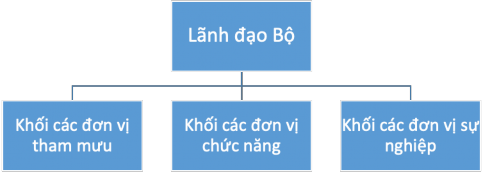
Figure 2.1- Organizational structure of the Ministry of Health
Source : [30]
The advisory unit block includes 10 units: Department of Communications and Emulation and Reward; Department of Maternal and Child Health; Department of Medical Equipment and Supplies; Department of Health Insurance; Department of Science and Technology; Department of Organization and Personnel; Department of International Cooperation; Department of Legal Affairs; Ministry Office; Ministry Inspectorate.
The functional unit block includes 10 units: Department of Preventive Medicine; Department of HIV/AIDS Prevention and Control; Department of Food Safety; Department of Medical Environment Management; Department of Science, Technology and Training; Department of Medical Examination and Treatment Management; Department of Traditional Medicine and Pharmacy Management; Department of Pharmaceutical Management; Department of Information Technology; General Department of Population and Family Planning.
The block of public service units includes 03 units: Institute of Health Strategy and Policy; Health and Life Newspaper; Journal of Medicine and Pharmacy.
In addition to the 23 units under and directly under the Ministry's organizational structure as above, the Ministry of Health is also the managing agency of nearly 50 public service units operating under the mechanism of public service units under the Ministry, distributed throughout the regions of the country. While most of these units are classified as public service units that are self-sufficient in part of their regular expenses. Therefore, the capital for the public service facilities of these public service units is allocated by the central government in the medium-term and annual capital plan of the Ministry of Health. Therefore, the Ministry of Health is not only the managing agency for investment in projects implemented at the Ministry, but also the managing agency for investment in projects using public service capital for health implemented nationwide.
2.1.2. Legal basis for public investment capital management at the Ministry of Health
2.1.2.1. For planning public investment capital, one is to plan medium-term public investment capital [49].
Pursuant to the regulations of the Prime Minister and the instructions of the Ministry of Planning and Investment and the Ministry of Health: (i) Assign specialized agencies in charge of investment management to guide the preparation of medium-term investment plans; (ii) Assign affiliated agencies and units to use capital.
The Ministry of Planning and Investment shall prepare a medium-term investment plan for the next period within the scope of assigned tasks, report to the superior agency for review according to the schedule prescribed by the Prime Minister and instructions of the Ministry of Planning and Investment; (iii) Assign the specialized agency in charge of investment management to organize the appraisal of the medium-term investment plan for the next period according to the schedule prescribed by the Prime Minister and instructions of the Ministry of Planning and Investment; (iv) Assign the specialized agency in charge of investment management to prepare a medium-term investment plan for submission to the competent authority for review, completion and sending to the Ministry of Planning and Investment and the Ministry of Finance according to the schedule prescribed by the Prime Minister and instructions of the Ministry of Planning and Investment, but must be completed no later than December 31 of the fourth year of the medium-term investment plan for the previous period.
After receiving comments from the Ministry of Planning and Investment, the Ministry of Health shall complete the medium-term public investment plan for the next period and send it to the Ministry of Planning and Investment and the Ministry of Finance before June 30 of the fifth year of the medium-term public investment plan for the previous period.
Based on the medium-term public investment plan decided by the National Assembly, the Prime Minister shall assign the medium-term public investment plan, including the total capital and capital structure of the State budget to the Ministry of Health; the list and capital levels of public investment programs and projects, capital levels for planning tasks, investment preparation tasks and public investment objects other than those funded by the State budget. This work must be completed immediately after the end of the 5th year-end session of the National Assembly term.
Second, plan the annual capital expenditure [49].
Before June 30 every year, the Ministry of Health guides subordinate agencies and units to make the following year's health insurance plan.
Before July 31 every year, the Ministry of Health completes the draft plan for the following year and sends it to the Ministry of Planning and Investment and the Ministry of Finance.
Before August 15 every year, the Ministry of Finance shall preside over and coordinate with the Ministry of Planning and Investment to estimate the state budget revenue and expenditure and the state budget investment capital expenditure plan for the following year. The Ministry of Planning and Investment shall announce the estimated central budget investment capital.
allocated to the Ministry of Health under next year's plan.
Before August 25 every year, the Ministry of Health shall complete the following year's investment plan and send it to the Ministry of Planning and Investment and the Ministry of Finance.
Based on the next year's public investment plan decided by the National Assembly, the Prime Minister shall assign the next year's state budget public investment plan according to the total capital and capital structure decided by the National Assembly to the Ministry of Health no later than November 31 of the current budget year.
Before December 31 of each year, the Ministry of Health shall allocate in detail the capital plan for the following year's central budget investment, the list and capital allocation level of each project to affiliated agencies and units, and send the detailed allocation plan to the Ministry of Planning and Investment for synthesis, reporting to the Government and monitoring implementation.
2.1.2.2. Implementation of public investment plan capital
Implementation of the capital investment plan for health care at the central level is understood as the process in which the Minister of Health, as the owner of the capital investment account for health care at the central level, must direct the implementation of the investment programs and projects in the assigned plan in accordance with the provisions of law and continuously improve the investment efficiency of those programs and projects. Towards the above two goals, the activities that need to be organized and implemented in the process of implementing the capital investment plan for health care at the central level include:
First, plan quarterly working capital.
The quarterly capital planning for public investment mainly comes from the requirements of the public investment law - on the assessment of the annual public investment plan, divided into quarters [49]. In particular, the level of completion of the public investment plan is significantly affected by the level of meeting the capital needs for each activity during the implementation of the public investment plan. In addition, the public investment capital for health care at the central level is mainly guaranteed from the capital source of the central government, with the State Treasury controlling the budget. Therefore, the payment needs for public investment capital for health care at the central level are timely.