
According to Zeithaml & Bitner (2000), customer satisfaction is a general concept that expresses their satisfaction when consuming a service, while service quality is concerned with specific components of the service.
According to Kotler and Keller (2006), satisfaction is the level of a person's emotional state resulting from comparing the perception of a product to that person's expectations. Accordingly, satisfaction has the following three levels:
- If customer perception is less than expectation, customer feels dissatisfied.
- If perception equals expectation, the customer feels satisfied.
Maybe you are interested!
-

 Tourists' Reviews of Local People's Service Quality of Homestay Tourism in Binh Ba Island
 -
 Improving service quality at DMZ Bar – DMZ Tourism Joint Stock Company - 18
 -
 The Relationship Between Quality, Customer Service and Marketing
 -
 Factors affecting tourists' satisfaction with tourism service quality in Ca Mau province - 2
 -
 The Relationship Between Service Quality and Customer Satisfaction:
- If perception is greater than expectation, the customer feels satisfied or delighted.
In the tourism field, according to Pizam, Neumann and Reichel (1978), tourist satisfaction is the result of a comparison between tourists' experiences at the tourist destinations visited and their expectations about the destinations.
According to Chon (1989), tourist satisfaction depends on whether tourists' expectations: pre-arrival feelings and experiences at the tourist destination (what tourists see, feel and achieve) are consistent with each other.
In summary, tourist satisfaction used in the study is tourist satisfaction through perception, evaluation, and feedback on the experience of using tourism products and services in the research location.
2.3.3. The relationship between service quality and tourist satisfaction
Up to now, there have been many studies on the relationship between service quality and customer satisfaction in many different fields. According to Zeithaml and Bitner
(2000), although service quality and customer satisfaction are two different concepts, while service quality focuses specifically on service components, customer satisfaction is a general concept but is closely related.
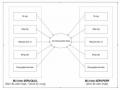
Figure 2.2- Causal model between quality and customer satisfaction (
Situational factors
Zeithaml & Bitner 2000)
Satisfaction
Quality of service
Product quality
Price
Personal factors
According to Parasuraman et al. (1988); Cronin and Taylor (1992) and many studies by other authors also show that there is a relationship between service quality and customer satisfaction, service quality is the cause and satisfaction is the result, the relationship between service quality and customer satisfaction is a positive relationship, service quality has a positive influence on customer perception. The causal relationship between these two factors is a key issue in most studies on customer satisfaction. In the study of the relationship between these two factors, Spreng and Mackoy (1996) pointed out that service quality is the antecedent of customer satisfaction .
Figure 2.3 - Relationship between service quality and customer satisfaction (Spreng and Mackoy, 1996)
Quality
expectation
Quality
service
Quality
feel
Quality
expectation
Satisfaction
Need to meet
Unmet needs
2.3.4. Some previous studies
Akbaba (2006) evaluated the quality of accommodation services in the Turkish tourism industry in 2006. The study was conducted by surveying tourists staying at hotels on the west coast of Turkey with a sample size of 250 by analyzing customers' expectations and perceptions of accommodation services in Turkey. The study showed that tangible factors are the most important factors affecting tourists' perceptions of accommodation service quality.
Mukhles Al-Ababneh et al. (2013) “Tourism Service Quality Model and Its Impact on Tourist Satisfaction at Petra” pointed out that there are three service quality factors namely (1) facilities, (2) accessibility, (3) attraction which have positive impact on tourist satisfaction.
Nguyen Cao Tri (2011) "Improving the competitiveness of tourism enterprises in Ho Chi Minh City by 2020" has raised some concepts of competition, competitive advantage, and competitiveness, thereby identifying 9 factors affecting the competitiveness of tourism enterprises in Ho Chi Minh City, including: (1) Facilities; (2) Management organization; (3) Information system; (4) Human resources; (5) Market; (6) Marketing; (7) Capital; (8) Internal competition situation in the industry; (9) Guidelines and policies. On that basis, the author analyzes the current situation of the operations of these enterprises and conducts a general assessment of the above 9 factors to find out the weaknesses and strengths as a basis for developing solutions. However, the topic did not conduct a survey to determine the level of influence on NLCT and the relationship between these factors, in order to develop appropriate solutions for each factor.
Nguyen Thi Cam Phu (2016) "Factors affecting customer satisfaction using tourism services in the Mekong Delta provinces". Research results within the scope of 244 samples, using Cronbach alpha analysis, factor analysis, multivariate regression analysis, thereby finding 4 factors affecting tourist satisfaction (1) Trust and response (2) Facilities (3) Empathy, (4) Tangible means. Through 19 observed variables, the factor "Trust and response" is the strongest factor, respectively affecting the factors: Facilities, empathy, tangible means.
Luu Thanh Duc Hai (2012) on "Solutions to improve the quality of tourism services in Can Tho city". The research results within the scope of 350 tourists surveyed in Can Tho show that tourist satisfaction is related to 5 factors: (1) "Ability to provide services", (2) "Facilities", (3) "Local characteristics", (4) "Safety", (5) "People", through 27 observed variables. Based on the results of exploratory factor analysis, it shows that all 5 factors have an impact on tourist satisfaction with service quality.
service quality, in which the factor "Local characteristics" has the strongest impact, on that basis the author proposes solutions to improve the quality of local tourism services.
Luu Thanh Duc Hai (2014) "Analysis of factors affecting tourist satisfaction with the quality of tourism services in Tien Giang". The research results show that within the scope of 1,384 surveyed tourists to Tien Giang, including 588 international visitors and 796 domestic visitors, tourist satisfaction is related to 3 factors: (1) "Tourism service facilities and security issues", (2) "Staff quality and service prices", and (3) "Food service quality", through 17 observed variables. Based on the results of exploratory factor analysis and binary regression analysis, it shows that the above 3 components have a causal relationship with tourist satisfaction. In which, the factor "Food service quality" has the strongest impact on tourist satisfaction, followed by "Tourism service facilities and security issues" and finally "Staff quality and service prices".
Tran Thi Hoai Thuong (2013) "Improving tourist satisfaction with tourism service quality in Ho Chi Minh City" researched and concluded that 4 factors of tourism service quality have positive and equal impacts on tourist satisfaction: (1) Responsiveness of tourism products and services, (2) infrastructure, transportation, tourism resources, (3) Tourism image, (4) problem solving.
2.4. Overview of Ho Chi Minh City tourism industry
2.4.1. Resources for tourism development in Ho Chi Minh City
Ho Chi Minh City has many conditions and advantages in terms of natural conditions, infrastructure, transportation, human resources, capital, etc., which have made the City become the leading tourist center of the country, contributing significantly to the development of Vietnam tourism.
1. Natural conditions
Ho Chi Minh City is located at the geographical coordinates 10º22'13"- 11º22'17" North latitude and 106º01'25"- 107º01'10" East longitude, bordering Tay Ninh and Binh Duong to the North, Dong Nai to the East, the East Sea and Tien Giang to the South, and Long An to the West. This location is one of the factors that helps the City become a transit center between provinces in the region and connect the region with the world.
The City has two distinct seasons. The rainy season is from May to November. The dry season is from December to April of the following year. The city is located in a storm-free area. The average annual temperature is 27.55ºC. This is an ideal climate for year-round tourism.
The city has hundreds of rivers and canals; Can Gio mangrove forest with 15km of coastline and 69 large and small islands containing ecosystems with high biodiversity; Thu Duc stork garden with up to 2,000 birds at its peak, etc. However, perhaps due to inadequate investment in development and promotion, these natural resources have not really attracted domestic and foreign tourists. In addition to natural tourist destinations, the city has cooperated with investors to build parks and ecological areas such as the Zoo, Suoi Tien, Dam Sen Cultural Park, Binh Quoi-Thanh Da Tourist Area, Van Thanh Tourist Area. Along with Cu Chi Tunnels, the system of 11 museums, religious architectural works such as Notre Dame Cathedral and Ngoc Hoang Pagoda, public architecture before the 1970s such as Ben Thanh Market, City People's Committee, Independence Palace, and modern architectural works such as Phu My Hung urban area, Thu Thiem tunnel, Financial tower, etc. are favorite destinations of domestic and foreign tourists.
Besides visiting natural landscapes and cultural works, the presence of high-end shopping centers such as Vincom, Diamond Plaza, Parkson Plaza; supermarket systems such as Coopmart, Big C, popular market systems in all districts; systems of fashion and souvenir stores spread across the streets;
Music tea rooms, bars, dance halls, stages, restaurant systems, eateries... have satisfied the shopping and entertainment needs of tourists coming to the City.
To add its own cultural highlights, the City government has organized cultural exchange programs such as Tourism Festival, Southern Fruit Festival, International Food Festival, "Ho Chi Minh City - 100 interesting things" program, Nguyen Hue Flower Street (Nguyen Lan Huong, Social Science Journal No. 5 (177) - 2013).
2. Tourism infrastructure
Ho Chi Minh City has a system of restaurants and hotels with diverse quality and prices, fully meeting the needs of customers with standards from 1 to 5 stars. According to statistics of the City Department of Tourism, as of June 2017, the city has:
- Total number of restaurants meeting standards to serve tourists: 128 establishments
- Total number of shopping establishments granted the tourism standard shopping service sign: 47 establishments
- Total number of tourist accommodation establishments: 2,128 establishments with 50,261 rooms. Of which:
+ 5-star hotels: 20 facilities with 6,033 rooms
+ 4-star hotels: 19 facilities with 2,826 rooms
+ 3-star hotels: 82 establishments with 6,142 rooms
+ 2-star hotels: 287 establishments with 9,112 rooms
+ 1 star hotel: 1,533 establishments with 24,616 rooms
+ Luxury tourist apartments: 02 facilities with 366 rooms,
+ Tourist accommodation (under 10 rooms): 185 establishments with 1,166 rooms.
Typical examples include large hotels such as Renaissance Riverside, Ommi, Legend, Sofitel Plaza, Saigon Prince, New World, Sheraton, Park Hyatt... all of which have global booking systems, modern facilities, rich and diverse services, and the ability to organize large conferences and seminars.
3. Resources for tourism development
Ho Chi Minh City is also the leading educational center of the country, has trained a large number of quality tour guides for the industry, besides, in the City there are many qualified businesses operating in tourism. According to statistics up to June 2017 of the Ho Chi Minh City Department of Tourism:
- Total number of businesses qualified to operate tourism: 1,194. Of which:
+ Enterprises, branches of international travel businesses: 594.
+ Domestic travel business: 537.
+ Travel agents: 53.
+ Representative offices of foreign tourism enterprises in the City: 10.
- Total number of tour guides granted cards: 4,840. Of which:
+ Tour guide with international card: 2,649.
+ Tour guide with domestic card: 2,191.
4. Transportation system
Thanks to its favorable geographical location combined with a developed road, air and waterway transport system, Ho Chi Minh City has become a traffic hub for the entire South and a leading transit center in the country.
The city has Tan Son Nhat International Airport - the largest airport in Vietnam in terms of both area and terminal capacity, welcoming millions of international and domestic passengers every year. The city has a railway system connecting traffic from the South to the North with two main stations, Song Than and Saigon, and several smaller stations such as Thu Duc and Binh Trieu.
Road traffic with 6 inter-provincial bus stations located at the gateways. The inter-provincial traffic system has been heavily invested in recent years, such as the Long Thanh - Dau Giay Expressway, Trung Luong Expressway, and overpasses, underpasses, etc. In addition to the road system being invested in upgrading and newly building, the City's traffic management has also seen many improvements in recent years.