
On average, the total amount of solid waste generated each year is divided into the following proportions: 44% of household waste, 1% of medical waste, and 55% of industrial waste. Approximately 15 million tons of solid waste are generated each year and it is predicted that this amount will continue to increase rapidly in the coming decade. The process of urbanization and the strong development of industry and the modernization of medical facilities will significantly increase the amount of toxic waste generated. And if not treated properly, it will have the potential to cause significant impacts on human health and the environment (Ministry of Science, Technology and Environment, 2004).
Medical waste should in principle be burned in hospital incinerators, but in practice this is not the case. For example, in Hanoi there are 36 hospitals but only one hospital has an incinerator. And of course this waste is also dumped in household landfills.
Industrial solid waste, like the situation of medical waste, is going into domestic landfills. According to the report of the Ministry of Science, Technology and Environment (2004), the whole country has 465 important polluting facilities that need to be treated immediately. Some figures on industrial waste to have more concept about the situation of solid waste in Vietnam. Currently, Ha Tien Cement Company in Thu Duc contains over 30 tons of PCBs, an equivalent dioxin chemical, the average amount of solid waste discharged annually in Ho Chi Minh City is over 45 thousand tons, Dong Nai province, nearly 35 thousand tons, Hanoi City 18 thousand tons...
According to statistics of 4 big cities: Hanoi, Hai Phong, Da Nang and Ho Chi Minh City, the total amount of industrial solid waste accounts for 15 - 26% of the city's solid waste. In industrial solid waste, about 35 - 41% is hazardous. The composition of hazardous industrial waste is very complex, depending on the raw materials used, the products created by each related technology and services (Statistical Yearbook, 2005).
Maybe you are interested!
-
 Environmental impact assessment of Thanh Minh industrial cluster infrastructure investment project, Phu Tho town, Phu Tho Province - 2
 -
 Assessing the impact of ecotourism development on environmental components at My Le ecotourism area - 1
 -
 Proposing Some Solutions for Solid Waste Control in Long Bien District
 -
 Vietnamese Law on Public Consultation in Environmental Impact Assessment - 5
 -
 Environmental impact assessment of Thanh Minh industrial cluster infrastructure investment project, Phu Tho town, Phu Tho province - 1
VI.2 HARMFUL EFFECTS OF SOLID WASTE ON THE ENVIRONMENT AND HUMANS
Since the beginning, humans have known how to use natural resources to serve their living needs. When those natural resources are no longer of use, humans will discard them. As society develops, the population increases, and the quality of life improves, the amount of waste produced is also proportional to that development. Narrow land, crowded people, and large amounts of waste have directly affected the environment and human health. The negative impacts that waste brings to humans and the environment when it is not well managed and treated (Figure 6.5). Waste will cause traffic jams, obstruct urban drainage, and be a place where many pathogenic microorganisms are concentrated as well as a shelter for organisms and disease-causing hosts (WHO, 1995). This affects public health and destroys urban aesthetics. This is also a source of soil and air pollution. Currently, the collection and recycling of waste in urban areas is generally spontaneous, the materials that can be sold in the transfer vehicles, public trash bins are picked up by workers, garbage collectors, and street children. This situation has affected the cultural life of the community and certainly has a certain impact on the health of those who are regularly exposed to solid waste every day, especially hospital waste.
The impacts of improper waste disposal
Bad environment
Harmful to human health
Traffic congestion
Destroying urban beauty
Limiting production and business results


Create uncivilized lifestyle
Negative impact on cultural tourism
Create an epidemic environment
Figure 6.5 Impact of improper solid waste disposal
(Source: Tran Hieu Nhue & CTV, 2001)
VI.2.1 Public health
The discharge of organic matter and animal carcasses through disease vectors can cause many diseases, sometimes becoming epidemics. The impact of solid waste on human health can directly affect the respiratory tract and the skin. In addition, when solid waste enters the environment, it can affect health through the food chain (Figure 6.6).
Air environment
Waste (Solid Waste)
- Activities
- Production (industry, agriculture, ...)
- Commerce
- Recycle
Dust, CH 4 , NH 3 , H 2 S, VOC
Surface water
Groundwater


Soil environment
Heavy metals,
Through the respiratory tract
poison
Eating, skin contact
Through the food chain
People, animals
Figure 6. 6 Diagram of the harmful effects of solid waste on human health .
VI.2.2 Soil pollution due to waste
Waste in the soil environment decomposes in two forms: anaerobic and aerobic. When there is suitable humidity, waste will decompose to produce a series of intermediate products, eventually simple minerals, H 2 O and CO 2. In anaerobic conditions, the final products of waste are mainly CH 4 , H 2 S and CO 2 which are toxic to the environment. Thanks to the self-cleaning ability of the soil environment, the substances from waste will not become pollution. However, with too much waste, the soil environment will become overloaded and cause environmental pollution (Figure 6.7). In addition, heavy metals and toxic substances in waste will flow into the groundwater with soil water and pollute the groundwater.
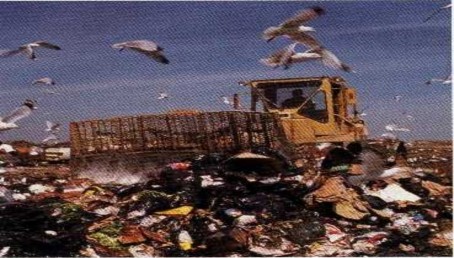
Figure 6.7 Soil environment polluted by open landfill (Bui Thi Nga, 2004)
VI.2.3 Water pollution due to waste
Organic waste in the water environment will decompose quickly. The part that floats on the water surface will undergo organic mineralization to create intermediate products; then the final products are minerals and water. The part that sinks in the water will undergo anaerobic decomposition to create intermediate compounds and the final products are CH 4 , H 2 S, H 2 O and CO 2 . All intermediate products cause bad odors and toxins, in addition to bacteria and viruses that pollute the water source (Figure 6.8).
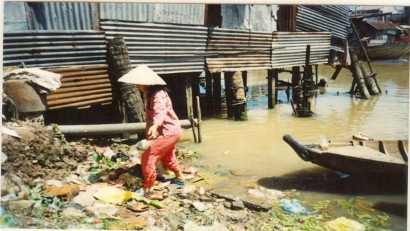
Figure 6.8 Water environment polluted by waste dumped into the river (Bui Thi Nga & colleagues, 2008)
In addition, if the waste is metal, it will cause corrosion in the water environment, the oxidation process of these substances will pollute the water. Toxic substances such as Hg, Pb or radioactive substances will be very dangerous to humans and aquatic species.
VI.2.4 Air pollution due to waste
Garbage has components that can evaporate and carry odors that pollute the air. There are substances that can sublimate and disperse into the air, causing direct environmental pollution. In suitable temperature and humidity conditions (temperature 35 0 C , humidity 70-80%) there will be a transformation process thanks to the activity of microorganisms, resulting in the creation of gases such as H 2 S, CO, CH 4 , NH 3 , H 2 ,.. with high content, causing air pollution. In which, the main gases produced in landfills are CH 4 and CO 2
In addition to the harmful effects of garbage on the soil and water environment, garbage also causes other effects such as losing the beauty of public and urban areas, obstructing the flow of water, causing stagnation in residential areas, and being a habitat for disease-causing microorganisms (Figure 6.9).
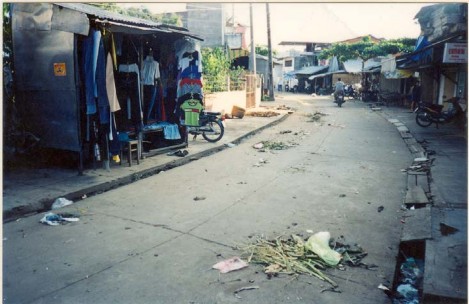
Figure 6.9 Garbage is thrown haphazardly on the streets by people (Bui Thi Nga & colleagues, 2007)
VI.3 SOLID WASTE MANAGEMENT SYSTEM
In principle, all types of solid toxic waste need to be treated and currently in Vietnam there is no facility with a solid waste treatment system nor a factory specializing in the treatment of toxic chemicals . Construction of treatment facilities in large centers or urban areas with many industrial zones. Facilities only have to bring solid waste to be treated to a central treatment plant and the cost is calculated according to the standards of toxicity of each type of waste from different technologies.
First of all, Vietnam needs to classify solid waste according to toxicity standards so that managers and facility owners have clear documents to enforce the law. Establish solid waste treatment plants and complete the law on classifying the toxicity level of waste.
VI.3.1 Collection
According to Tran Hieu Nhue & CSV (2001), waste collection is the process of collecting waste from homes, offices or collection points, loading them onto vehicles and transporting them to processing, transfer, transit or landfill sites. Waste collection services are often divided into two types: primary collection and secondary collection.
- Primary collection (initial collection): waste is collected from its source (houses, commercial establishments, etc.) and transported to common dumps, meeting points or transfer sites, so primary collection will be needed in every collection and transportation system. Usually, the primary collection system uses small garbage trucks and handcarts to collect waste. This process can directly affect people as well as urban aesthetics and the consequences of the following stages.
- Secondary collection: waste is collected from common dumps, meeting points and transferred to the treatment site. This process depends on the type of collection vehicle and the transport distance, and has little impact on the people.
VI.3.1.1. The efficiency of collection is characterized by the following criteria:
- Tons of waste collected in one hour.
- Total number of households served in one working hour of one shift.
- Cost of one day of collection.
- Cost per stop for collection.
- Number of people served by one vehicle in one week.
VI.3.1.2. Other forms of collection
- Block collection: in this form of collection, these collection vehicles will run according to a regular process according to the previously prescribed frequency (from 2-3 times/week or by day,..). These vehicles will stop at certain intersections or meeting points and ring the bell. According to this signal, the surrounding residents bring their trash to dump into the vehicles. There are many different forms of this collection form, but the common point is that every family is required to have their own trash can in the house and bring it to the garbage collector on time according to the prescribed signal.
- Curbside collection: this is a form of collection that requires a regular service and a relatively precise timetable. Households need to replace the bins after the rubbish has been emptied. The important point is that these bins need to be standard, otherwise the amount of rubbish put in the bin will be excess or will only occupy a small part of the volume of the bin. Under these conditions, rubbish can be blown away by the wind or scattered by animals or people digging through the rubbish, making the collection process ineffective or wasteful.
VI.3.2 Transportation and transit
In the waste treatment system, transportation and transfer is a very important step, including vehicles, equipment and related items. Transfer and transportation activities include transferring waste from the sorting place to recycling facilities or transferring the final product of the treatment process to the landfill.
According to Tran Hieu Nhue & CTV, (2001), transit and transportation activities can be described by the following diagram:
Figure 6.10 Flowchart of waste collection, transfer and transportation activities (Bui Thi Nga & colleagues, 2008)
The operation of the transfer system will effectively support the waste collection activities and is becoming increasingly necessary for the following reasons:
- The distance from the collection site to the treatment site is too far, if a transfer station is not used, the collection will not be economically efficient.
- The presence of sparsely populated areas.
- Use medium sized containers to contain waste in places where waste is generated in large quantities.
In which the type of transport operation is divided into:
- Mobile container system: is a collection system in which full containers are transported to the disposal site and empty containers are returned to their original location for replacement. This system is suitable for transporting waste from sources that generate large amounts of waste.
- Fixed vehicle system: is a collection system in which the full garbage containers remain fixed, the workers just lift them up, dump them into the large vehicle and then put them back in their original position.
However, no matter what means of transport we use, we must satisfy the following conditions:
- Transport garbage at the cheapest price.
- Garbage must be covered carefully during transportation.
- These vehicles must be designed to fit into the current traffic system.
- Vehicle load does not exceed the allowable load of the current road system.
- The method for removing garbage from the vehicle must be simple and convenient,...
Scrap collection group
Garbage collection team at the landfill
Mobile Garbage Collectors
-
Filled foot beach
Street
Scrap waste source
Temporary staging area of transfer station
Hand push garbage truck
Trash can, trash container
Households
Hotel
School authority
Restaurants, lodging
Garbage collection at landfill
Scrap purchase at warehouse
Scrap purchasing group
Industrial manufacturing facilities
Export
Mobile scrap buyers
Street procurement activities
Scrap trading and recycling group
Agents and dealers
Figure 6.11 Diagram of private solid waste collection network
(Source: Tran Hieu Nhue & CSV, 2001)