
Sheets are produced for other factories. According to workers in the village, they produce paper for bills in restaurants and shops that do not require very high quality. The paper production process requires a lot of water. Suitable processing facilities are not available.
Survey related to Minh Khai village shows:
- There are more than 100 manufacturing facilities in the village. One workshop interviewed said it employs more than 30 workers and has a capacity to produce about 1 ton of recycled paper per day.
- The conditions for trading recycled paper are proving to be unsustainable. The average price of collected scrap paper is around 3,000-6,000 VND/kg from wholesalers or retailers to the manufacturing plant, while the final product selling price is around 6,000-
7,000 VND/kg.
- From the perspective of a production facility owner, it can be said that the recycled paper market has fluctuated little or increased slightly over the past 6 years. He hopes that this trend will continue to stabilize in the coming time.
e. Trieu Khuc wholesale village
Another village that is involved in waste recycling is Trieu Khuc village. There are many wholesalers and collectors of secondary recyclable materials in the village. They buy these materials illegally from the market in the city. They do not carry out any manufacturing and are not affected by serious environmental pollution. Activities in this type of village may not be possible in a more efficient waste recycling cycle in the future.
f. Around landfills
According to the survey at the landfills in the study area, there is no active collection around the landfill because the opening hours for scavengers according to URENCO regulations are very limited. In addition, during the rice season, scavengers have to take care of farming.
Many types of materials are collected manually from the waste stored in the villages where the waste pickers live. These types of waste are very different from the waste collected in the city. Recyclable materials that we can easily see
In the inner city, good plastic bottles, glass jars and metal cans are rare here. Of course, they still collect these types of trash, but besides that, they also collect dirty plastic bags, tire belts, animal bones... All of the above activities depend mainly on human labor. Of course, this process is inefficient.
Dirty plastic bags and other items need to be washed before being sold. This reduces the quality or pollutes the river water.
4. General recycling stream:
The following model will describe the general waste recycling flow in Hanoi based on the above research results and the information collected in the study. The prices of recyclable materials and products listed in Table 25 are based on information from suppliers as well as secondary information. Further interviews with recycling-related trade and related market issues will be needed to examine the marketability and the necessary role of the public sector.
Table 24 Prices of recyclable materials
Village/location
Economic role | Ingredient | Purchase price | Selling price | |
Multi-Association | manufacturer | metal | 2,000-2,500 VND/kg | 4,000-4,500 VND/kg |
Black market | Broker | steel tank | 200 VND/bar | |
Minh Khai | manufacturer | plastic (sheet) | 10,000-12,500 VND/kg * depending on quality | |
Yang Wu | Broker | paper | 2,000-2,200 VND/kg | 2,302,500 VND/kg |
manufacturer | paper | 3,000-6,000 VND/kg | 6,000-7,500 VND/kg | |
Dynasty Song | Broker | plastic | 2,700 VND/kg | 3,000 VND/kg |
5,000- 8,000 VND/kg * after crumbling |
Maybe you are interested!
-
 Overview of Materials Used in the Project
 -
 Completing the management and supply of raw materials at the training equipment manufacturing factory X55 - 7
 -
 15th-18th century architectural materials in the Kinh Thien Hoang Palace area of Thang Long citadel through excavation documents in 2017-2019 - 16
 -
 Types of Literary Materials That Can Be Used in Teaching Vietnamese History Grade 10 in High Schools
 -
 Completing the management and supply of raw materials at the training equipment manufacturing factory X55 - 5
Source: According to ECFA report (September 2003)
Table 25 Materials collected at Nam Son landfill
Number of replies | Mass collection (kg/month) | Selling price (VND/kg) | ||
According to the garbage collectors | URENCO data | |||
1. Bottles, jars plastic | 42 | 25-65 | 1,500 | NA |
2. Other plastics | 42 | 5-60 | 150-200 | 1,000-2,000 |
3. Glass bottle | 41 | 10-150 | 150 | |
4. Aluminum | 36 | 1-15 | 10,000-12,000 | 14,000- 15,000 |
5. Steel | 33 | 4 | 400-800 | 1,000 |
6. Cement bags | 2 | 6 | 400-1000 | 1,000 |
7. Vegetables and fruits, wood | 29 | NA | used in home family | NA |
8. Bones | 1 | NA | 150 | NA |
9. Paper board, card | 20 | 300 | 100-400 | 1,000-2,000 |
10. Clothing | 3 | NA | 2,000 | NA |
11. Hair | 1 | NA | 2,000 | 8,000 |
12. Copper | 1 | NA | 15,000 | 12,000- 17,000 |
13. Hemp bag | 3 | NA | 200-700 | NA |
14. Tires | 4 | NA | 200 VND/tire | |
15. Nylon | NA | NA | NA | 500 |
16. Double-woven slippers | NA | NA | NA | 150 |
Note : NA: (no answer) no answer, no data from URENCO
Source: Basic design study report on the project to equip waste management facilities for Hanoi city, 2002, JICA and Nippon Koei company .
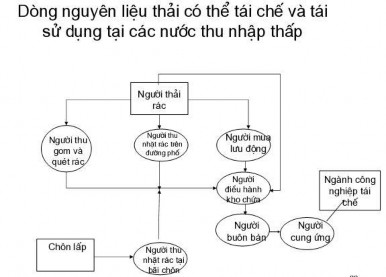
Figure 18 Recycling stage – General recycling flow
V. Project model with support from non-governmental organizations (NGOs) – 3R HN
In Vietnam, there are many groups and organizations implementing projects related to the environment in general and waste in particular such as WASTE - ECON, CIDA, DANIDA, UEPP... In the short duration of the thesis, the author will present a project on Waste Classification at Source conducted by the Japan International Cooperation Agency JICA in Hanoi called 3R HN. In this section, we will look at the birth, objectives and evaluate a small part of the effectiveness of the project.
1. General introduction to 3R HN project:
Hanoi City with a population of 3,145,300 people (2005), discharges approximately 2,500 tons of household waste every day. That means on average each Hanoi resident discharges 0.79 kg of waste per day.
Most of the above waste will be sent to the Nam Son Waste Treatment Complex for landfill. If this continues without any restrictions, we will soon run out of landfill space. Therefore, the goal of many
Many NGO projects today are aimed at changing people's awareness and turning it into action to reduce the amount of waste sent to landfills.
“Garbage will only be garbage if it is mixed, but garbage will become a resource if you classify it properly!” This is an impressive quote from Professor Kitano - a famous professor in the field of environment in Japan.
The 3R HN project ( www.3r-hn.vn ) is the result of cooperation between the governments of Vietnam and Japan. In December 2006, the Japan International Cooperation Agency (JICA) and the State-owned Urban Environment One Member Company Limited (URENCO) began to cooperate in implementing the 3R-HN project to develop a sustainable society. This is a 3-year project, including environmental education and propaganda activities, waste sorting at source, establishing regulations to reduce waste and increasing the efficiency of organic fertilizer production from organic waste.
3R is an acronym for the first 3 letters in English: Reduce- Reuse-Recycle
Reduce: Reduce the amount of waste through changing lifestyle and/or consumption, improving production processes, buying cleanly... For example: Using baskets or cloth bags to go to the market instead of plastic bags to reduce the amount of waste generated from plastic bags...
Reuse: Reusing products or parts of products for the same purpose or for a different purpose. For example: reusing mineral water bottles to hold water...
Recycle: Using waste as raw materials to produce other useful materials.
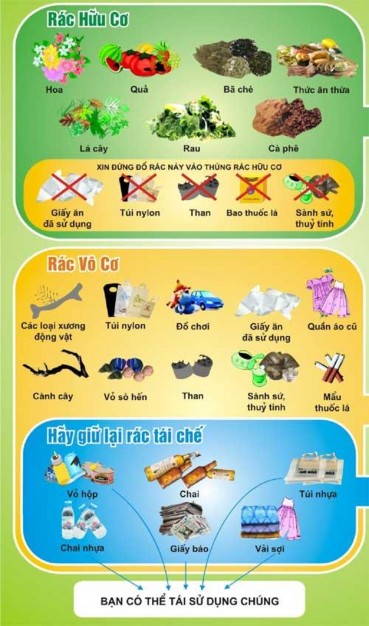
Figure 19 Waste classification at source
(source: www.3r-hn.vn)
The project began pilot implementation in Phan Chu Trinh ward, Hoan Kiem district, Hanoi from June 20, 2008.
2. Project operational objectives:
Like other environmental projects in Vietnam, the general goal of the 3R HN project is to contribute to the sustainable development of Vietnam, through changing people's behaviors and habits.
The more specific goal that 3R HN aims for is to reduce the amount of waste transported to landfills in Hanoi through waste classification at
source. From there, 3R HN can also help prevent environmental degradation problems, save natural resources, save costs for waste collection and treatment, and reduce land for landfills.
Waste is divided into 3 types: organic waste, recyclable waste and inorganic waste.
Organic waste can be recycled into organic fertilizer, an effective fertilizer for plants and safe for users. The effect of organic fertilizer is to increase crop yield, help plants absorb nutrients better, increase the effectiveness of chemical fertilizers, improve the soil, maintain soil pH at a reasonable neutral level; increase humus for the soil, contain hormones to help plant roots grow faster; contain antibiotics, antagonistic microorganisms or vitamins to increase the resistance of plants in adverse conditions. Therefore, the production of organic fertilizer from organic waste has a double impact on society. Organic waste is recycled to produce organic fertilizer, which significantly reduces the amount of waste taken to landfills. Organic fertilizer not only helps farmers prevent and treat plant diseases, reduce production costs, but also contributes to building and developing a safe and sustainable agriculture.
Recyclable waste can be recycled into raw materials for production. Inorganic waste: cannot be recycled and must be landfilled. If recyclable waste and organic waste are separated from inorganic waste, the amount of waste that needs to be landfilled will decrease.
To achieve this goal, 3R Hanoi is being piloted in Nguyen Du and Phan Chu Trinh wards, and in September 2008, it will continue to be piloted in two more wards, Lang Ha and Thanh Cong.
The target audience of 3R HN includes: farms, schools, households... For each target, 3R HN has a different approach. For households, 3R HN aims to increase awareness of the role of waste classification at source and shows them how to classify household waste. For farms, 3R HN helps farmers understand the value of organic fertilizers and how to produce from organic waste. In schools, 3R HN educates children - the future owners of the country - to change their awareness and behavior to limit emissions in even the smallest activities such as limiting the use of plastic bags,
Dispose of garbage in the right place. At the grassroots level (commune, ward...), 3R HN aims to educate the community environment and create environmentally friendly consumption habits.
3. Evaluation of results achieved:
After a period of pilot implementation, 3R HN is currently reporting and summarizing phase 1. 3R HN has successfully educated children and households on the importance and methods of waste classification in two pilot areas, Nguyen Du ward and Phan Chu Trinh ward. 3R HN has also implemented many different programs such as "3R Hanoi stars", "garbage weighing survey program", "eco-bag usage campaign", "Let's make a difference with eco-bag for a green Hanoi" contest, eco-bag design, "visit to Cau Dien waste treatment plant", "Mottainai festival"... attracting a large number of local communities in the two pilot wards in particular and the interest of the capital's people in general in waste classification at source.
In March 2008, the Project Management Board of Nguyen Du and Phan Chu Trinh wards coordinated with the Urban Environment Enterprises to organize a regular weekly inspection team to classify waste at source and maintain environmental hygiene in the area, contributing significantly to urging and reminding residential groups to actively classify waste. Local people and authorities as well as grassroots officials also realized the need to carry out parallel punishment for cases of intentional violations. People's awareness has been significantly improved, the environment in the area is also better. The projects also contribute to increasing people's confidence and positivity, initiative in community activities.
The thesis writer personally believes that the great success of the 3R Hanoi project is the communication effects that the project has achieved. With the specific goal of changing people's awareness of waste classification at source, the project has focused on education and sustainability when focusing on educating children. In addition, the project's ability to be replicated is very large, with not too high costs, mainly for editing documents, media publications and using volunteers for propaganda. With creative and diverse communication tools, from videos, photos, songs, poems, comics, propaganda, extracurricular activities... the project has attracted the attention of the entire community and left an impression on the subconscious of each citizen.