
Tra Su Melaleuca Forest
(Tinh Bien), American Tourist Area
Hoa Hung, Pho Ba islet (Long An city)
Xuyen) and Oc Eo Ba The relic site (Thoai Son).
Aiming to complete infrastructure and tourism infrastructure at tourist destinations and areas in a modern direction. Upgrade and complete traffic routes connecting tourist destinations and areas. Specifically, for National Highway 91 connecting Can Tho City with An Giang (Long Xuyen - Chau Doc - Tinh Bien), speed up the progress of upgrading according to current projects such as expanding and upgrading TL 948 (Nha Bang Tri Ton); TL 941 (Tri Ton - An Chau); TL 943 (Tri Ton - Nui Sap); Road N2 (Tinh Bien - Tri Ton - Kien Giang); TL953 (Chau Doc - Tan Chau); TL 957 (Chau Doc - An Phu
– Khanh Binh); TL 945 (Chau Phu – Tri Ton); TL 955A (Chau Doc – Tinh Bien).
Focus on attracting domestic and foreign investment in completing a number of key infrastructure projects in the 2020-2030 period, such as the National Highway 91 system connecting An Giang with neighboring localities, upgrading the province to improve the ability to connect tourist destinations and routes inside and outside the province; completing and soon putting into use the bridge and ferry system to increase the ability to attract visitors.
Initial upgrade of river routes serving tourism. Specifically: survey and construction of river tourism routes along Hau River (from Long Xuyen - My Hoa Hung - Cho Moi; Long Xuyen - Chau Doc) on the basis of building pick-up and drop-off points on the river.
Assess the demand for guests in developing the number of accommodation establishments (Table 4.3). In the hotel chain with the same system (for example, Hoa Binh hotel, Victoria hotel system in An Giang, Can Tho, Kien Giang, Dong Nai)
Tower), need to apply flexible management methods to meet the quantity and quality of accommodation facilities.
both numbers
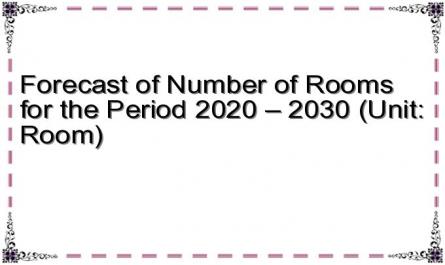
Table 4.3. Forecast of number of rooms in the period 2020 - 2030 (Unit: room)
Category
2020 | 2030 | |
Total demand | 3429 | 9458 |
Room demand for international guests | 540 | 1562 |
Room demand for domestic guests | 2889 | 7896 |
Maybe you are interested!
-

 Identify Rating Levels and Rating Scales
zt2i3t4l5ee
zt2a3gstourism,quan lan,quang ninh,ecology,ecotourism,minh chau,van don,geography,geographical basis,tourism development,science
zt2a3ge
zc2o3n4t5e6n7ts
of the islanders. Therefore, this indicator will be divided into two sub-indicators:
a1. Natural tourism attractiveness a2. Cultural tourism attractiveness
b. Tourist capacity
The two island communes in Quan Lan have different capacities to receive tourists. Minh Chau Commune is home to many standard hotels and resorts, attracting high-income domestic and international tourists. Meanwhile, Quan Lan Commune has many motels mainly built and operated by local people, so the scale and quality are not high, and will be suitable for ordinary tourists such as students.
c. Time of exploitation of Quan Lan Island Commune:
Quan Lan tourism is seasonal due to weather and climate conditions and festivals only take place on certain days of the year, specifically in spring. In Quan Lan commune, the period from April to June and from September to November is considered the best time to visit Quan Lan because the cultural tourism activities are mainly associated with festivals taking place during this time.
Minh Chau island commune:
Tourism exploitation time is all year round, because this is a place with a number of tourist attractions with diverse ecosystems such as Bai Tu Long National Park Research Center, Tram forest, Turtle Laying Beach, so besides coming to the beach for tourism and vacation in the summer, Minh Chau will attract research groups to come for tourism combined with research at other times of the year.
d. Sustainability
The sustainability of ecotourism sites in Quan Lan and Minh Chau communes depends on the sensitivity of the ecosystems to climate changes.
landscape. In general, these tourist destinations have a fairly high level of sustainability, because they are natural ecosystems, planned and protected. However, if a large number of tourists gather at certain times, it can exceed the carrying capacity and affect the sustainability of the environment (polluted beaches, damaged trees, animals moving away from their habitats, etc.), then the sustainability of the above ecosystems (natural ecosystems, human ecosystems) will also be affected and become less sustainable.
e. Location and accessibility
Both island communes have ports to take tourists to visit from Van Don wharf:
- Quan Lan – Van Don traffic route:
Phuc Thinh – Viet Anh high-speed boat and Quang Minh high-speed boat, depart at 8am and 2pm from Van Don to Quan Lan, and at 7am and 1pm from Quan Lan to Van Don. There are also wooden boats departing at 7am and 1pm.
- Van Don - Minh Chau traffic route:
Chung Huong high-speed train, Minh Chau train, morning 7:30 and afternoon 13:30 from Van Don to Minh Chau, morning 6:30 and afternoon 13:00 from Minh Chau to Van Don.
f. Infrastructure
Despite receiving investment attention, the issue of infrastructure and technical facilities for tourism on Quan Lan Island is still an issue that needs to be resolved because it has a direct impact on the implementation of ecotourism activities. The minimum conditions for serving tourists such as accommodation, electricity, water, communication, especially medical services, and security work need to be given top priority. Ecotourism spots in Minh Chau commune are assessed to have better infrastructure and technical facilities for tourism because there are quite complete and synchronous conditions for serving tourists, meeting many needs of domestic and foreign tourists.
3.2.1.4. Determine assessment levels and assessment scales
Corresponding to the levels of each criterion, the index is the score of those levels in the order of 4, 3, 2, 1 decreasing according to the standard of each level: very attractive (4), attractive (3), average (2), less attractive (1).
3.2.1.5. Determining the coefficients of the criteria
For the assessment of DLST in the two communes of Quan Lan and Minh Chau islands, the students added evaluation coefficients to show the importance of the criteria and indicators as follows:
Coefficient 3 with criteria: Attractiveness, Exploitation time. These are the 2 most important criteria for attracting tourists to tourism in general and eco-tourism in particular, so they have the highest coefficient.
Coefficient 2 with criteria: Capacity, Infrastructure, Location and accessibility . Because the assessment area is an island commune of Van Don district, the above criteria are selected by the author with appropriate coefficients at the average level.
Coefficient 1 with criteria: Sustainability. Quan Lan has natural and human-made ecotourism sites, with high biodiversity and little impact from local human factors. Most of the ecotourism sites are still wild, so they are highly sustainable.
3.2.1.6. Results of DLST assessment on Quan Lan island
a. Assessment of the potential for natural tourism development
For Minh Chau commune:
+ Natural tourism attractiveness is determined to be very attractive (4 points) and the most important coefficient (coefficient 3), so the score of the Attractiveness criterion is 4 x 3 = 12.
+ Capacity is determined as average (2 points) and the coefficient is quite important (coefficient 2), then the score of Capacity criterion is 2 x 2 = 4.
+ Exploitation time is long (4 points), the most important coefficient (coefficient 3) so the score of the Exploitation time criterion is 4 x 3 = 12.
+ Sustainability is determined as sustainable (4 points), the important coefficient is the average coefficient (coefficient 1), so the score of the Sustainability criterion is 4 x 1 = 4 points
+ Location and accessibility are determined to be quite favorable (2 points), the coefficient is quite important (coefficient 2), the criterion score is 2 x 2 = 4 points.
+ Infrastructure is assessed as good (3 points), the coefficient is quite important (coefficient 2), then the score of the Infrastructure criterion is 3 x 2 = 6 points.
The total score for evaluating DLST in Minh Chau commune according to 6 evaluation criteria is determined as: 12 + 4 + 12 + 4 + 4 + 6 = 42 points
Similar assessment for Quan Lan commune, we have the following table:
Table 3.3: Assessment of the potential for natural ecotourism development in Quan Lan and Minh Chau communes
Attractiveness of self-tourismof course
Capacity
Mining time
Sustainability
Location and accessibility
Infrastructure
Result
Point
DarkMulti
Point
DarkMulti
Point
DarkMulti
Point
DarkMulti
Point
DarkMulti
Point
DarkMulti
CommuneMinh Chau
12
12
4
8
12
12
4
4
4
8
6
8
42/52
Quan CommuneLan
6
12
6
8
9
12
4
4
4
8
4
8
33/52
b. Assessment of the potential for humanistic tourism development
For Quan Lan commune:
+ The attractiveness of human tourism is determined to be very attractive (4 points) and the most important coefficient (coefficient 3), so the score of the Attractiveness criterion is 4 x 3 = 12.
+ Capacity is determined to be large (3 points) and the coefficient is quite important (coefficient 2), then the score of the Capacity criterion is 3 x 2 = 6.
+ Mining time is average (3 points), the most important coefficient (coefficient 3) so the score of the Mining time criterion is 3 x 3 = 9.
+ Sustainability is determined as sustainable (4 points), the important coefficient is the average coefficient (coefficient 1), so the score of the Sustainability criterion is 4 x 1 = 4 points.
+ Location and accessibility are determined to be quite favorable (2 points), the coefficient is quite important (coefficient 2), the criterion score is 2 x 2 = 4 points.
+ Infrastructure is rated as average (2 points), the coefficient is quite important (coefficient 2), then the score of the Infrastructure criterion is 2 x 2 = 4 points.
The total score for evaluating DLST in Quan Lan commune according to 6 evaluation criteria is determined as: 12 + 6 + 6 + 4 + 4 + 4 = 36 points.
Similar assessment with Minh Chau commune we have the following table:
Table 3.4: Assessment of the potential for developing humanistic eco-tourism in Quan Lan and Minh Chau communes
Attractiveness of human tourismliterature
Capacity
Mining time
Sustainability
Location and accessibility
Infrastructure
Result
Point
DarkMulti
Point
DarkMulti
Point
DarkMulti
Point
DarkMulti
Point
DarkMulti
Point
DarkMulti
Quan CommuneLan
12
12
6
8
9
12
4
4
4
8
4
8
39/52
Minh CommuneChau
6
12
4
8
12
12
4
4
4
8
6
8
36/52
Basically, both Minh Chau and Quan Lan localities have quite favorable conditions for developing ecotourism. However, Quan Lan commune has more advantages to develop ecotourism in a humanistic direction, because this is an area with many famous historical relics such as Quan Lan Communal House, Quan Lan Pagoda, Temple worshiping the hero Tran Khanh Du, ... along with local festivals held annually such as the wind praying ceremony (March 15), Quan Lan festival (June 10-19); due to its location near the port and long exploitation time, the beaches in Quan Lan commune (especially Quan Lan beach) are no longer hygienic and clean to ensure the needs of tourists coming to relax and swim; this is also an area with many beautiful landscapes such as Got Beo wind pass, Ong Phong head, Voi Voi cave, but the ability to access these places is still very limited (dirt hill road, lots of gravel and rocks), especially during rainy and windy times; In addition, other natural resources such as mangrove forests and sea worms have not been really exploited for tourism purposes and ecotourism development. On the contrary, Minh Chau commune has more advantages in developing ecotourism in the direction of natural tourism, this is an area with diverse ecosystems such as at Rua De Beach, Bai Tu Long National Park Conservation Center...; Minh Chau beach is highly appreciated for its natural beauty and cleanliness, ranked in the top ten most beautiful beaches in Vietnam; Minh Chau commune is also home to Tram forest with a large area and a purity of up to 90%, suitable for building bridges through the forest (a very effective type of natural ecotourism currently applied by many countries) for tourists to sightsee, as well as for the purpose of studying and researching.
Figure 3.1: Thenmala Forest Bridge (India) Source: https://www.thenmalaecotourism.com/(August 21, 2019)
3.2.2. Using SWOT matrix to evaluate Quan Lan island tourism
General assessment of current tourism activities of Quan Lan island is shown through the following SWOT matrix:
Table 3.5: SWOT matrix evaluating tourism activities on Quan Lan island
Internal agent
Strengths- There is a lot of potential for tourism development, especially natural ecotourism and humanistic ecotourism.- The unskilled labor force is relatively abundant.- resource environmentunpolluted, still
Weaknesses- Poorly developed infrastructure, especially traffic routes to tourist destinations on the island.- The team of professional staff is still weak.- Tourism products in general
quite wild, originalintact
general and DLST in particularalone is monotonous.
External agents
Opportunity- Tourism is a key industry in the socio-economic development strategy of the province and Van Don economic zone.- Quan Lan was selected as a pilot area for eco-tourism development within the framework of the green growth project between Quang Ninh province and the Japanese organization JICA.- The flow of tourists and especially ecotourism in the world tends toincreasing
Challenge- Weather and climate change abnormally.- Competition in tourism products is increasingly fierce, especially with other localities in the province such as Ha Long, Mong Cai...- Awareness of tourists, especially domestic tourists, about ecotourism and nature conservation is not high.
Through summary analysis using SWOT matrix we see that:
To exploit strengths and take advantage of opportunities, it is necessary to:
- Diversify products and service types (build more tourism routes aimed at specific needs of tourists: experiential tourism immersed in nature, spiritual cultural tourism...)
- Effective exploitation of resources and differentiated products (natural resources and human resources)
div.maincontent .p { color: black; font-family:"Times New Roman", serif; font-style: normal; font-weight: normal; text-decoration: none; font-size: 14pt; margin:0pt; } div.maincontent p { color: black; font-family:"Times New Roman", serif; font-style: normal; font-weight: normal; text-decoration: none; font-size: 14pt; margin:0pt; } div.maincontent .s1 { color: black; font-family:"Times New Roman", serif; font-style: normal; font-weight: normal; text-decoration: none; font-size: 13pt; } div.maincontent .s2 { color: black; font-family:"Times New Roman", serif; font-style: normal; font-weight: normal; text-decoration: none; font-size: 13pt; } div.maincontent .s3 { color: #0D0D0D; font-family:"Times New Roman", serif; font-style: normal; font-weight: bold; text-decoration: none; font-size: 14pt; } div.maincontent .s4 { color: black; font-family:"Times New Roman", serif; font-style: italic; font-weight: normal; text-decoration: none; font-size: 14pt; } div.maincontent .s5 { color: black; font-family:"Times New Roman", serif; font-style: italic; font-weight: bold; text-decoration: none; font-size: 14pt; } div.maincontent .s6 { color: black; font-family:"Times New Roman", serif; font-style: italic; font-weight: normal; text-decoration: none; font-size: 14pt; vertical-align: -3pt; } div.maincontent .s7 { color: black; font-family:"Times New Roman", serif; font-style: italic; font-weight: normal; text-decoration: none; font-size: 14pt; vertical-align: -2pt; } div.maincontent .s8 { color: black; font-family:"Times New Roman", serif; font-style: italic; font-weight: normal; text-decoration: none; font-size: 14pt; vertical-align: -1pt; } div.maincontent .s9 { color: black; font-family:"Times New Roman", serif; font-style: normal; font-weight: normal; text-decoration: none; font-size: 14pt; } div.maincontent .s10 { color: black; font-family:"Times New Roman", serif; font-style: normal; font-weight: bold; text-decoration: none; font-size: 14pt; } div.maincontent .s11 { color: black; font-family:"Times New Roman", serif; font-style: normal; font-weight: normal; text-decoration: none; font-size: 14pt; } div.maincontent .s12 { color: black; font-family:Symbol, serif; font-style: normal; font-weight: normal; text-decoration: none; font-size: 14pt; } div.maincontent .s13 { color: black; font-family:Wingdings; font-style: normal; font-weight: normal; text-decoration: none; font-size: 14pt; } div.maincontent .s14 { color: black; font-family:"Times New Roman", serif; font-style: normal; font-weight: normal; text-decoration: none; font-size: 9pt; vertical-align: 5pt; } div.maincontent .s15 { color: black; font-family:"Times New Roman", serif; font-style: normal; font-weight: normal; text-decoration: none; font-size: 9pt; vertical-align: 5pt; } div.maincontent .s16 { color: black; font-family:Cambria, serif; font-style: italic; font-weight: normal; text-decoration: none; font-size: 14pt; } div.maincontent .s17 { color: #080808; font-family:"Times New Roman", serif; font-style: normal; font-weight: bold; text-decoration: none; font-size: 14pt; } div.maincontent .s18 { color: #080808; font-family:"Times New Roman", serif; font-style: normal; font-weight: normal; text-decoration: none; font-size: 14pt; } div.maincontent .s19 { color: black; font-family:"Times New Roman", serif; font-style: normal; font-weight: normal; text-decoration: none; font-size: 11pt; } div.maincontent .s20 { color: black; font-family:"Times New Roman", serif; font-style: normal; font-weight: normal; text-decoration: none; font-size: 10pt; } div.maincontent .s21 { color: black; font-family:"Times New Roman", serif; font-style: normal; font-weight: bold; text-decoration: none; font-size: 11pt; } div.maincontent .s22 { color: black; font-family:"Times New Roman", serif; font-style: normal; font-weight: normal; text-decoration: none; font-size: 11pt; } div.maincontent .s23 { color: black; font-family:"Times New Roman", serif; font-style: italic; font-weight: normal; text-decoration: none; font-size: 14pt; } div.maincontent .s24 { color: #212121; font-family:"Times New Roman", serif; font-style: normal; font-weight: normal; tex
Identify Rating Levels and Rating Scales
zt2i3t4l5ee
zt2a3gstourism,quan lan,quang ninh,ecology,ecotourism,minh chau,van don,geography,geographical basis,tourism development,science
zt2a3ge
zc2o3n4t5e6n7ts
of the islanders. Therefore, this indicator will be divided into two sub-indicators:
a1. Natural tourism attractiveness a2. Cultural tourism attractiveness
b. Tourist capacity
The two island communes in Quan Lan have different capacities to receive tourists. Minh Chau Commune is home to many standard hotels and resorts, attracting high-income domestic and international tourists. Meanwhile, Quan Lan Commune has many motels mainly built and operated by local people, so the scale and quality are not high, and will be suitable for ordinary tourists such as students.
c. Time of exploitation of Quan Lan Island Commune:
Quan Lan tourism is seasonal due to weather and climate conditions and festivals only take place on certain days of the year, specifically in spring. In Quan Lan commune, the period from April to June and from September to November is considered the best time to visit Quan Lan because the cultural tourism activities are mainly associated with festivals taking place during this time.
Minh Chau island commune:
Tourism exploitation time is all year round, because this is a place with a number of tourist attractions with diverse ecosystems such as Bai Tu Long National Park Research Center, Tram forest, Turtle Laying Beach, so besides coming to the beach for tourism and vacation in the summer, Minh Chau will attract research groups to come for tourism combined with research at other times of the year.
d. Sustainability
The sustainability of ecotourism sites in Quan Lan and Minh Chau communes depends on the sensitivity of the ecosystems to climate changes.
landscape. In general, these tourist destinations have a fairly high level of sustainability, because they are natural ecosystems, planned and protected. However, if a large number of tourists gather at certain times, it can exceed the carrying capacity and affect the sustainability of the environment (polluted beaches, damaged trees, animals moving away from their habitats, etc.), then the sustainability of the above ecosystems (natural ecosystems, human ecosystems) will also be affected and become less sustainable.
e. Location and accessibility
Both island communes have ports to take tourists to visit from Van Don wharf:
- Quan Lan – Van Don traffic route:
Phuc Thinh – Viet Anh high-speed boat and Quang Minh high-speed boat, depart at 8am and 2pm from Van Don to Quan Lan, and at 7am and 1pm from Quan Lan to Van Don. There are also wooden boats departing at 7am and 1pm.
- Van Don - Minh Chau traffic route:
Chung Huong high-speed train, Minh Chau train, morning 7:30 and afternoon 13:30 from Van Don to Minh Chau, morning 6:30 and afternoon 13:00 from Minh Chau to Van Don.
f. Infrastructure
Despite receiving investment attention, the issue of infrastructure and technical facilities for tourism on Quan Lan Island is still an issue that needs to be resolved because it has a direct impact on the implementation of ecotourism activities. The minimum conditions for serving tourists such as accommodation, electricity, water, communication, especially medical services, and security work need to be given top priority. Ecotourism spots in Minh Chau commune are assessed to have better infrastructure and technical facilities for tourism because there are quite complete and synchronous conditions for serving tourists, meeting many needs of domestic and foreign tourists.
3.2.1.4. Determine assessment levels and assessment scales
Corresponding to the levels of each criterion, the index is the score of those levels in the order of 4, 3, 2, 1 decreasing according to the standard of each level: very attractive (4), attractive (3), average (2), less attractive (1).
3.2.1.5. Determining the coefficients of the criteria
For the assessment of DLST in the two communes of Quan Lan and Minh Chau islands, the students added evaluation coefficients to show the importance of the criteria and indicators as follows:
Coefficient 3 with criteria: Attractiveness, Exploitation time. These are the 2 most important criteria for attracting tourists to tourism in general and eco-tourism in particular, so they have the highest coefficient.
Coefficient 2 with criteria: Capacity, Infrastructure, Location and accessibility . Because the assessment area is an island commune of Van Don district, the above criteria are selected by the author with appropriate coefficients at the average level.
Coefficient 1 with criteria: Sustainability. Quan Lan has natural and human-made ecotourism sites, with high biodiversity and little impact from local human factors. Most of the ecotourism sites are still wild, so they are highly sustainable.
3.2.1.6. Results of DLST assessment on Quan Lan island
a. Assessment of the potential for natural tourism development
For Minh Chau commune:
+ Natural tourism attractiveness is determined to be very attractive (4 points) and the most important coefficient (coefficient 3), so the score of the Attractiveness criterion is 4 x 3 = 12.
+ Capacity is determined as average (2 points) and the coefficient is quite important (coefficient 2), then the score of Capacity criterion is 2 x 2 = 4.
+ Exploitation time is long (4 points), the most important coefficient (coefficient 3) so the score of the Exploitation time criterion is 4 x 3 = 12.
+ Sustainability is determined as sustainable (4 points), the important coefficient is the average coefficient (coefficient 1), so the score of the Sustainability criterion is 4 x 1 = 4 points
+ Location and accessibility are determined to be quite favorable (2 points), the coefficient is quite important (coefficient 2), the criterion score is 2 x 2 = 4 points.
+ Infrastructure is assessed as good (3 points), the coefficient is quite important (coefficient 2), then the score of the Infrastructure criterion is 3 x 2 = 6 points.
The total score for evaluating DLST in Minh Chau commune according to 6 evaluation criteria is determined as: 12 + 4 + 12 + 4 + 4 + 6 = 42 points
Similar assessment for Quan Lan commune, we have the following table:
Table 3.3: Assessment of the potential for natural ecotourism development in Quan Lan and Minh Chau communes
Attractiveness of self-tourismof course
Capacity
Mining time
Sustainability
Location and accessibility
Infrastructure
Result
Point
DarkMulti
Point
DarkMulti
Point
DarkMulti
Point
DarkMulti
Point
DarkMulti
Point
DarkMulti
CommuneMinh Chau
12
12
4
8
12
12
4
4
4
8
6
8
42/52
Quan CommuneLan
6
12
6
8
9
12
4
4
4
8
4
8
33/52
b. Assessment of the potential for humanistic tourism development
For Quan Lan commune:
+ The attractiveness of human tourism is determined to be very attractive (4 points) and the most important coefficient (coefficient 3), so the score of the Attractiveness criterion is 4 x 3 = 12.
+ Capacity is determined to be large (3 points) and the coefficient is quite important (coefficient 2), then the score of the Capacity criterion is 3 x 2 = 6.
+ Mining time is average (3 points), the most important coefficient (coefficient 3) so the score of the Mining time criterion is 3 x 3 = 9.
+ Sustainability is determined as sustainable (4 points), the important coefficient is the average coefficient (coefficient 1), so the score of the Sustainability criterion is 4 x 1 = 4 points.
+ Location and accessibility are determined to be quite favorable (2 points), the coefficient is quite important (coefficient 2), the criterion score is 2 x 2 = 4 points.
+ Infrastructure is rated as average (2 points), the coefficient is quite important (coefficient 2), then the score of the Infrastructure criterion is 2 x 2 = 4 points.
The total score for evaluating DLST in Quan Lan commune according to 6 evaluation criteria is determined as: 12 + 6 + 6 + 4 + 4 + 4 = 36 points.
Similar assessment with Minh Chau commune we have the following table:
Table 3.4: Assessment of the potential for developing humanistic eco-tourism in Quan Lan and Minh Chau communes
Attractiveness of human tourismliterature
Capacity
Mining time
Sustainability
Location and accessibility
Infrastructure
Result
Point
DarkMulti
Point
DarkMulti
Point
DarkMulti
Point
DarkMulti
Point
DarkMulti
Point
DarkMulti
Quan CommuneLan
12
12
6
8
9
12
4
4
4
8
4
8
39/52
Minh CommuneChau
6
12
4
8
12
12
4
4
4
8
6
8
36/52
Basically, both Minh Chau and Quan Lan localities have quite favorable conditions for developing ecotourism. However, Quan Lan commune has more advantages to develop ecotourism in a humanistic direction, because this is an area with many famous historical relics such as Quan Lan Communal House, Quan Lan Pagoda, Temple worshiping the hero Tran Khanh Du, ... along with local festivals held annually such as the wind praying ceremony (March 15), Quan Lan festival (June 10-19); due to its location near the port and long exploitation time, the beaches in Quan Lan commune (especially Quan Lan beach) are no longer hygienic and clean to ensure the needs of tourists coming to relax and swim; this is also an area with many beautiful landscapes such as Got Beo wind pass, Ong Phong head, Voi Voi cave, but the ability to access these places is still very limited (dirt hill road, lots of gravel and rocks), especially during rainy and windy times; In addition, other natural resources such as mangrove forests and sea worms have not been really exploited for tourism purposes and ecotourism development. On the contrary, Minh Chau commune has more advantages in developing ecotourism in the direction of natural tourism, this is an area with diverse ecosystems such as at Rua De Beach, Bai Tu Long National Park Conservation Center...; Minh Chau beach is highly appreciated for its natural beauty and cleanliness, ranked in the top ten most beautiful beaches in Vietnam; Minh Chau commune is also home to Tram forest with a large area and a purity of up to 90%, suitable for building bridges through the forest (a very effective type of natural ecotourism currently applied by many countries) for tourists to sightsee, as well as for the purpose of studying and researching.
Figure 3.1: Thenmala Forest Bridge (India) Source: https://www.thenmalaecotourism.com/(August 21, 2019)
3.2.2. Using SWOT matrix to evaluate Quan Lan island tourism
General assessment of current tourism activities of Quan Lan island is shown through the following SWOT matrix:
Table 3.5: SWOT matrix evaluating tourism activities on Quan Lan island
Internal agent
Strengths- There is a lot of potential for tourism development, especially natural ecotourism and humanistic ecotourism.- The unskilled labor force is relatively abundant.- resource environmentunpolluted, still
Weaknesses- Poorly developed infrastructure, especially traffic routes to tourist destinations on the island.- The team of professional staff is still weak.- Tourism products in general
quite wild, originalintact
general and DLST in particularalone is monotonous.
External agents
Opportunity- Tourism is a key industry in the socio-economic development strategy of the province and Van Don economic zone.- Quan Lan was selected as a pilot area for eco-tourism development within the framework of the green growth project between Quang Ninh province and the Japanese organization JICA.- The flow of tourists and especially ecotourism in the world tends toincreasing
Challenge- Weather and climate change abnormally.- Competition in tourism products is increasingly fierce, especially with other localities in the province such as Ha Long, Mong Cai...- Awareness of tourists, especially domestic tourists, about ecotourism and nature conservation is not high.
Through summary analysis using SWOT matrix we see that:
To exploit strengths and take advantage of opportunities, it is necessary to:
- Diversify products and service types (build more tourism routes aimed at specific needs of tourists: experiential tourism immersed in nature, spiritual cultural tourism...)
- Effective exploitation of resources and differentiated products (natural resources and human resources)
div.maincontent .p { color: black; font-family:"Times New Roman", serif; font-style: normal; font-weight: normal; text-decoration: none; font-size: 14pt; margin:0pt; } div.maincontent p { color: black; font-family:"Times New Roman", serif; font-style: normal; font-weight: normal; text-decoration: none; font-size: 14pt; margin:0pt; } div.maincontent .s1 { color: black; font-family:"Times New Roman", serif; font-style: normal; font-weight: normal; text-decoration: none; font-size: 13pt; } div.maincontent .s2 { color: black; font-family:"Times New Roman", serif; font-style: normal; font-weight: normal; text-decoration: none; font-size: 13pt; } div.maincontent .s3 { color: #0D0D0D; font-family:"Times New Roman", serif; font-style: normal; font-weight: bold; text-decoration: none; font-size: 14pt; } div.maincontent .s4 { color: black; font-family:"Times New Roman", serif; font-style: italic; font-weight: normal; text-decoration: none; font-size: 14pt; } div.maincontent .s5 { color: black; font-family:"Times New Roman", serif; font-style: italic; font-weight: bold; text-decoration: none; font-size: 14pt; } div.maincontent .s6 { color: black; font-family:"Times New Roman", serif; font-style: italic; font-weight: normal; text-decoration: none; font-size: 14pt; vertical-align: -3pt; } div.maincontent .s7 { color: black; font-family:"Times New Roman", serif; font-style: italic; font-weight: normal; text-decoration: none; font-size: 14pt; vertical-align: -2pt; } div.maincontent .s8 { color: black; font-family:"Times New Roman", serif; font-style: italic; font-weight: normal; text-decoration: none; font-size: 14pt; vertical-align: -1pt; } div.maincontent .s9 { color: black; font-family:"Times New Roman", serif; font-style: normal; font-weight: normal; text-decoration: none; font-size: 14pt; } div.maincontent .s10 { color: black; font-family:"Times New Roman", serif; font-style: normal; font-weight: bold; text-decoration: none; font-size: 14pt; } div.maincontent .s11 { color: black; font-family:"Times New Roman", serif; font-style: normal; font-weight: normal; text-decoration: none; font-size: 14pt; } div.maincontent .s12 { color: black; font-family:Symbol, serif; font-style: normal; font-weight: normal; text-decoration: none; font-size: 14pt; } div.maincontent .s13 { color: black; font-family:Wingdings; font-style: normal; font-weight: normal; text-decoration: none; font-size: 14pt; } div.maincontent .s14 { color: black; font-family:"Times New Roman", serif; font-style: normal; font-weight: normal; text-decoration: none; font-size: 9pt; vertical-align: 5pt; } div.maincontent .s15 { color: black; font-family:"Times New Roman", serif; font-style: normal; font-weight: normal; text-decoration: none; font-size: 9pt; vertical-align: 5pt; } div.maincontent .s16 { color: black; font-family:Cambria, serif; font-style: italic; font-weight: normal; text-decoration: none; font-size: 14pt; } div.maincontent .s17 { color: #080808; font-family:"Times New Roman", serif; font-style: normal; font-weight: bold; text-decoration: none; font-size: 14pt; } div.maincontent .s18 { color: #080808; font-family:"Times New Roman", serif; font-style: normal; font-weight: normal; text-decoration: none; font-size: 14pt; } div.maincontent .s19 { color: black; font-family:"Times New Roman", serif; font-style: normal; font-weight: normal; text-decoration: none; font-size: 11pt; } div.maincontent .s20 { color: black; font-family:"Times New Roman", serif; font-style: normal; font-weight: normal; text-decoration: none; font-size: 10pt; } div.maincontent .s21 { color: black; font-family:"Times New Roman", serif; font-style: normal; font-weight: bold; text-decoration: none; font-size: 11pt; } div.maincontent .s22 { color: black; font-family:"Times New Roman", serif; font-style: normal; font-weight: normal; text-decoration: none; font-size: 11pt; } div.maincontent .s23 { color: black; font-family:"Times New Roman", serif; font-style: italic; font-weight: normal; text-decoration: none; font-size: 14pt; } div.maincontent .s24 { color: #212121; font-family:"Times New Roman", serif; font-style: normal; font-weight: normal; tex -
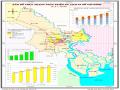 Current Status of Exploiting Human Resources to Serve Tourism Development in Ho Chi Minh City in the Period 2006 - 2011
 -
 Current situation and tourism development strategy of Binh Duong province in the period 2011-2020 - 3
 -
 Total Number of Employees Recruited by Do Son Tourism Joint Stock Company in the Period 2011-2015
 -
 The role of tourism in the socio-economic development of Binh Thuan in the period 2001-2020 - 1
(Source: Department of Culture - Sports - Tourism of An Giang)
4.2.2.5. Orientation for effective exploitation of tourism territorial space
Orienting priority key tourist spots and areas of the province and locality, identifying areas associated with specific tourism products, regional and inter-regional tourism products;
Orientation of space exploitation in accordance with the socio-economic development planning of the province and locality;
Re-plan tourism spots across the province, classify spots according to scientific evaluation criteria, thereby establishing key tourism centers and routes with high connectivity to focus on investment and completion;
Identify intra-regional, inter-regional and international tourism networks, inter-regional tourism routes, thereby establishing potential areas for linkage. On the basis of developing these areas, it is possible to focus on investment to increase the spread to the remaining areas in the province;
The orientation of TCLT DL needs to be in harmony with the spatial planning of the entire Mekong Delta region to 2030 of the Ministry of Culture, Sports and Tourism in 2016.
4.2.2.6. Orientation of tourism development linkage
Focus on investing in 4 areas with great potential, which can promote the spread of development to other areas as well as enhance the ability to connect tourism. These are Chau Doc, Tinh Bien, Tri Ton; Long Xuyen and surrounding areas; Thoai Son area. This is where many valuable tourist destinations and areas are concentrated, with a good infrastructure system and service provision, and can be linked with tourist destinations and areas in VPC localities.
Initially, link and build specific inter-regional tourism routes with differences in tourism resources and tourism products, creating attraction and increasing tourists' feelings. Identify routes and points that need to be built in cooperation in VPC to gain competitive advantages;
Orientation to build an alliance model and apply it to An Giang and localities in the Western Mekong Delta tourism cluster (including Can Tho and Kien Giang);
Promote vertical and horizontal linkages between stakeholders in PTDL based on the principle of mutual benefit;
Linking investment attraction in completing infrastructure and technical infrastructure such as transportation,
stay,… Attract attention
participation of travel businesses
action in formation
into specific SPDL for linked localities;
In terms of territory, in addition to localities in the cluster, attention should be paid to satellites that can support or promote local tourism development based on perfect coordination;
Perfecting the system of linkage policies in the Tourism Association, including moving towards building a common action program for common interests and local interests.
4.2.2.7. Orientation for sustainable tourism development in An Giang province
It is necessary to identify sustainable development as a long-term orientation and priority in planning and tourism development in An Giang;
Pay attention to using environmental protection solutions, measuring and evaluating negative impacts of tourism activities on ecosystems and resources;
Linking the responsibility of the community and local authorities in protecting the value of natural resources with the benefits that tourism brings;
Prioritize the application of environmentally friendly and least harmful tourism models;
For the social environment: minimize conflicts of interest among parties participating in tourism activities, prioritize protecting the long-term interests of local communities; pay attention to protecting and preserving cultural identity.
4.3. Solutions for tourism development in An Giang province in connecting neighboring regions
4.3.1. Group of solutions to promote tourism development in An Giang province
4.3.1.1. Solutions to perfect tourism development policy mechanisms
a. Reasons for choosing the solution
In PTDL, policy mechanisms play an extremely important role, having the effect of guiding and promoting the development of the tourism industry. Mechanisms and policies are also the legal corridor for building other solutions. The results of EFA and MLRA analysis (Appendix 2.3.4) and SWOT model (Table 4.1) also show that the requirements
The need to perfect the policy mechanism for An Giang tourism development in the context of limited effectiveness and practicality of the policy. In the new conditions and context, the policy mechanism needs to be perfected to promote An Giang tourism development in the VPC linkage effectively.
. b. Content and method of implementing the solution
* For An Giang province
+ Perfecting the system of mechanisms and policies towards cooperation, integration and modernization.
Priority is given to attracting projects and support from experts, corporations, and units.
Consultant with domestic and international experience in building tourism development policy mechanisms; implementing EU and ESRT support for 3 provinces and cities (An Giang, Kien Giang, Can Tho) on outlining action plans for destination development; Project of Dutch experts on An Giang tourism development policy in the direction of "concentricity - diffusion";
Develop mechanisms and policies to encourage businesses to invest, especially in tourism infrastructure in the forms of BOT, PPP, BT, including flexible application mechanisms for each type of project calling for investment; research and issue special preferential policies on taxes, land rents... to attract investment in tourism infrastructure, especially in key tourism areas and spots of the province such as Sam Mountain Tourist Area, Cam Mountain Tourist Area, Ong Ho Islet, Oc Eo...;
Step by step perfecting the state management mechanism and policies on tourism, clearly decentralizing the system to each locality;
Well implement the planning and tourism development strategy of the province in a modern and synchronous direction, regularly update tourism development trends in the context of linkage, and at the same time effectively promote the province's comparative advantages in tourism development;
Develop a policy to prioritize budget allocation for tourism planning activities, investment support activities, research and application of scientific and technological topics and projects related to tourism;
There are policies to encourage the application of science and technology in the 4.0 era, especially technology in state management of tourism (Destination Management).
System), implementing the application of satellite account statistics (STS) methods
according to UNWTO regulations to better serve state management and
Planning tourism development policy in An Giang, moving towards implementing the "Electronic An Giang" project, including the tourism industry.
+ Encourage muscle
regime
socialization in PTDL
(about
capital, lower
floor,
CSVCKT, management, etc.) with the goal of attracting more than 60-70% of enterprise capital to invest in the tourism human resource development program; 60-70% of enterprise capital to participate in the investment program to upgrade the system of tourist sites, tourist areas and tourism products; mobilizing 100% of enterprises to participate in the tourism promotion program by simplifying administrative procedures, improving the investment environment, enhancing competitiveness, having appropriate incentive mechanisms (on land, taxes, policies), and perfecting the one-stop mechanism. These policies will mobilize capital, technology, and experts from for investment, protection, and restoration of relics and landscapes; Preserve and restore typical cultural works, provincial and national historical and cultural relics such as Tuc Dup hill, Ba Chuc tomb area, churches, cathedrals, Khmer pagodas, key festivals such as Bay Nui Bull Racing Festival, Ky Yen Festival, craft villages serving tourism such as Chau Phong Cham craft village, Phung Soai weaving, Tan Chau weaving, etc. in the Western region, which are unique and have been included in the planning but have not yet received effective investment.
+ Supplement, complete and implement regional linkage policies in tourism.
Through the Western cluster (including Can Tho, Kien Giang) and the Mekong Delta Tourism Association, develop provincial tourism development policies that are suitable to the realities of the cluster and the entire region. For Dong Thap province, it is possible to link in policy development through annual seminars, exchanges, and discussions of the Tourism Association as well as between the two localities.
* For VPC
+ Coordinate and link in supplementing and perfecting the tourism development policy system in Can Tho, Kien Giang and Dong Thap with An Giang. For the fields of planning, human resource training and some key areas, localities can exchange through organizing annual scientific conferences and seminars in
clusters to ensure effective implementation of local tourism goals, while creating consistency in regional development policies.
+ Through the Mekong Delta Tourism Association and the annual conferences of the Cluster, organize assessments and summarize planning and policy activities. On that basis, localities orient planning solutions specific to each locality, while ensuring the implementation of regional goals.
+ Building an online inter-regional policy system according to standards that ensure convenient interaction requirements to meet the connection requirements between localities in the era of the 4.0 revolution. This policy can shorten the implementation time as well as create updates and efficiency at each time in each locality.
c. Implementing agency
This is a solution that connects An Giang with VPC. Therefore, there needs to be a synchronous combination of state management agencies on tourism, mainly the Department of Culture - Sports - Tourism. In addition, there are relevant agencies related to tourism such as the Department of Planning - Investment, Department of Transport, Department of Information and Communications, Department of Natural Resources and Environment. Specifically:
* In An Giang
An Giang Provincial People's Committee, Department of Culture - Sports - Tourism: The presiding agency, coordinating with relevant departments and branches to develop a detailed policy system, and at the same time organize the implementation of the linkage policy between An Giang and VPC localities.
The Department of Planning and Investment coordinates with the Department of Finance to balance and support the arrangement.
annual capital, and at the same time advise the Department of Culture - Sports - Tourism on policies and mechanisms to ensure socio-economic goals.
The Department of Information and Communications coordinates and supports the Department of Culture, Sports and Tourism in exchanging, supplementing and implementing tourism development and linkage policies.
The Department of Natural Resources and Environment coordinates and guides the development of policies and tourism planning chaired by the Department of Culture, Sports and Tourism.
* At VPC
The Departments of Culture, Sports and Tourism of Can Tho, Kien Giang and Dong Thap coordinate with An Giang in the process of developing and implementing policies and implementing joint linkage projects. Further enhance the role of MDTA in supporting the development of tourism linkage development policies of these localities.
4.3.1.2. Solutions for tourism investment capital
a. Reasons for choosing the solution:
Capital plays a very important role in An Giang province's tourism development, especially in linkage. Through investment capital, the capacity of infrastructure and tourism technical infrastructure is improved, thereby contributing to the development of the province's tourism industry. On the other hand, attracting capital will create opportunities for the tourism industry to promote linkages with regional and national tourism centers, while solving outstanding issues and challenges mentioned in the SWOT analysis results (Table 4.1).
b. Content and method of implementing the solution
* For An Giang
Develop and implement an open investment policy mechanism suitable to actual conditions, especially prioritizing the development of policies to attract investment in infrastructure in 4 key areas identified in the planning, especially investment in infrastructure and technical infrastructure in Sam Mountain - Ba Chua Xu Temple Tourist Area (Chau Doc), Cam Mountain - Tra Su Melaleuca Forest Tourist Area (Tinh Bien), My Hoa Hung - Pho Ba Islet Tourist Area (Long Xuyen City) and Oc Eo Ba The Relic Site (Thoai Son). Continue to implement policies to support the construction of tourist accommodation facilities, restaurants combined with selling specialties... according to Resolution No. 19/2018/NQHDND dated July 19, 2018 to support the implementation of investment projects to develop tourism services, support the development of community tourism;
Promote administrative reform, improve the investment environment, simplify administrative procedures and develop investment support services (land, credit, tax); Build a model of Business Support Board in which open dialogue is implemented to remove obstacles and difficulties of businesses in the investment process;
Improve the business and investment environment, enhance competitiveness for An Giang and localities in the VPC; share experiences between An Giang and localities to enhance the management capacity of the
The government has approved the improvement of the PCI index; encouraged businesses to
Enterprises, tourism associations between An Giang and localities in the region link together to form large-scale enterprises with strong brands; participate in the national supply chain;
Actively integrate national target programs and projects of other sectors related to tourism development in An Giang to reduce capital difficulties in An Giang. Specific programs and projects such as the program to restore and develop handicraft villages, the program to transform the economic structure towards exploiting the comparative advantages of An Giang in tourism;
Promote socialization of tourism investment, encourage and create all favorable conditions to call on economic sectors to participate in investing in building cultural, ecological, resort, and entertainment tourism models;
Coordinate investment linkages to promote investment in the whole region through organizing investment promotion forums to boost foreign investment, especially investment from international corporations; perfect the investment promotion system of the province and VPC, create coordination links between these organizations, industries; and businesses together, both ensuring the harmony of interests of each locality and promoting the combined strength of the region;
* For VPC
Coordinate and participate with An Giang in organizing promotional conferences.
tourism investment, in which, combining to create relevant attraction policies
regions, for example, attracting investment in inter-regional products, investing in joint tourism promotion programs, etc.
c. Implementing agency
* For An Giang