
MINISTRY OF EDUCATION AND TRAINING MINISTRY OF HEALTH
NATIONAL INSTITUTE OF HYGIENE AND EPIDEMIOLOGY
Maybe you are interested!
-
 Status of Hearing Loss and Some Related Factors in Armored Corps in 2017
 -
 Research Works Related to the Current Status of Transformation of Socialist Production Relations in the Renovation Period in Vietnam
 -
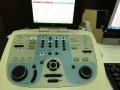 Effectiveness of Preventing Hearing Loss with Mg-B6 in Armored Corps Cadets in 2017-2018
 -
 Analysis of Current Status of Tourism Activities in Phong Dien District
 -
 Management Status of Tcm Results Evaluation Through NCBH Form Table 2.9: Current Status of Evaluation of Professional Team Performance Results Through Form
NGUYEN TAI DUNG
CURRENT STATUS OF HEARING IMPAIRMENT, SOME RELATED FACTORS AND EFFECTIVENESS OF PREVENTION BY Mg-B6 SUPPLEMENTATION IN SOLDIERS
ARMOR 2017-2018
Major: Sociology and Health Organization Code: 62 72 01 64
DOCTORAL THESIS IN MEDICINE
Scientific instructor:
1. Prof. Dr. Nguyen Tran Hien
2. Dr. Doan Thi Thanh Ha
HANOI – 2022
COMMITMENT
I hereby certify that this is my research work with the cooperation of my colleagues and has been approved by the Head of the Ministry of National Defense-level project to publish this thesis.
The research results in the thesis are honest and have never been published in any other work.
I take full responsibility for these guarantees.
Hanoi, December 30, 2021 Thesis author
Nguyen Tai Dung
ACKNOWLEDGEMENTS
With deep gratitude, I would like to sincerely thank: Prof. Dr. Nguyen Tran Hien - Former Director of the Central Institute of Hygiene and Epidemiology and Colonel Dr. Doan Thi Thanh Ha - Head of the Department of Otorhinolaryngology, 108 Central Military Hospital, who have wholeheartedly guided, helped and encouraged me throughout the process of studying, building outlines, collecting and analyzing data, writing reports and completing the thesis.
I would like to express my deep gratitude to Lieutenant General, Prof. Dr. Mai Hong Bang - Director of the 108 Military Central Hospital, the ENT Department - 108 Military Central Hospital, the Armored Corps Command, the Center for Training and Scientific Management - Central Institute of Hygiene and Epidemiology for supporting, creating all favorable conditions, helping me throughout the process of studying, implementing field research and completing the thesis.
I would like to express my gratitude for the boundless love of my parents, wife and children who have helped and encouraged me during my days of study and research.
Hanoi, December 30, 2021 PhD student
Nguyen Tai Dung
INDEX
Page
PROBLEM STATEMENT 1
CHAPTER 1: OVERVIEW 3
1.1. Concept of hearing loss 3
1.1.1. Anatomy and physiology of hearing 3
1.1.2. Noise-induced hearing loss 5
1.1.3. Pathogenesis 7
1.2. Hearing loss in military operations 14
1.2.1. Abroad 14
1.2.2. Domestic 19
1.3. Factors related to hearing loss 21
1.3.1. In general populations 21
1.3.2. In the 23rd Armored Corps
1.4. Measures to prevent hearing loss 27
1.4.1. Personal measures 28
1.4.2. Collective measures 29
1.4.3. Medical measures 29
1.4.4. Use of drugs to prevent hearing loss 30
1.4.5. Introduction to research area 38
CHAPTER 2: RESEARCH SUBJECTS AND METHODS 41
2.1. Current situation and some factors related to hearing loss in armored troops in 2017 41
2.1.1. Subject 41
2.1.2. Research location and time 42
2.1.3. Research design 42
2.1.4. Sample size 42
2.1.5. Select sample 42
2.1.6. Research variables 43
2.1.7. Information collection tools and techniques 43
2.1.8. Means 45
2.1.9. Implementation organization 50
2.2. The effectiveness of Mg-B6 in preventing hearing loss in armored cadets in 2017-2018 51
2.2.1. Research subjects 51
2.2.2 Time and place of research 51
2.2.3. Research design 51
2.2.4. Sample size and sampling method 51
2.2.5. Data collection method 53
2.2.6. Data processing and analysis 54
2.2.7. Error control 54
2.2.8. Research ethics 55
CHAPTER 3: RESEARCH RESULTS 56
3.1. Description of the current status of hearing loss and some related factors in armored troops in 2017 56
3.1.1. Current status of noise from armored vehicles 56
3.1.2. General characteristics of the research group 57
3.1.3. The current status of hearing loss in armored personnel carriers. 59
3.1.4. Relationship between hearing loss and some factors 72
3.2. Evaluation of the effectiveness of hearing loss prevention with Mg-b6 supplementation in the study group of 75
3.2.1. General characteristics of intervention group and control group 75
3.2.2. Clinical characteristics after intervention of the two study groups 76
3.2.3. Average hearing change of the study group before and after intervention
.......................................................................................................................... 76
3.2.4. Rate of increase in hearing threshold of each ear at each frequency before and after intervention
.......................................................................................................................... 77
3.2.5. Degree of hearing loss in each ear in the study groups before and after intervention 78
3.2.6. Tympanometry before and after intervention 79
3.2.7. Hearing loss levels in groups before and after intervention 79
CHAPTER 4: DISCUSSION 81
4.1. Current status of noise, hearing loss and related factors in armored forces in 2017 81
4.1.1. Current status of noise 81
4.1.2. Current status of hearing loss 85
4.1.3. Some factors related to hearing loss 93
4.2. The effectiveness of preventive intervention for hearing loss using Mg-B6 in cadets of the 98th Armored Corps
4.2.1. Characteristics of intervention group and control group 98
4.2.2. The effectiveness of Mg-B6 in the prevention of noise-induced hearing loss 99
1. The current status of hearing loss and some related factors in armored troops in 2017 103
1.1. Current status of noise of armored tank 103
1.2. General characteristics of the research group 103
1.3. The current status of hearing loss in armored personnel carriers.. 103
1.4. Knowledge, attitude and practice of armored personnel are generally high, but there are still some limitations.
1.5. Factors related to hearing loss 104
2. Mg-b6 supplementation is effective in preventing hearing loss in the study group of 104
RECOMMENDATION 106
List of author's works related to the thesis REFERENCES
APPENDIX 1: English – Vietnamese terminology
APPENDIX 2: Interview form for research subjects APPENDIX 3: Medical examination form for new recruits before training APPENDIX 4: Medical examination form after training
APPENDIX 5: List of research subjects
LIST OF ABBREVIATIONS
dB Decibel
Occupational deafness
Research Object
PhD student
Hz Hertz
PTA Average pure tone hearing
SGTL Hearing loss
SL Quantity
TCCP Permissible Standards
TCVN Vietnam Standard
TCVSLD Labor hygiene standards
PNTO Noise Exposure
LIST OF IMAGES
Figure 1.1. Ear anatomy 3
Figure 1.2. A: Normal outer hair cells. B: Damaged outer hair cells 10
Figure 1.3. Progression of noise-induced hearing loss 13
Figure 1.4. Factors affecting hearing loss 27
Figure 1.5: Pathogenesis of noise-induced cochlear damage and effects of drugs 31
Figure 2.6. Larson Davis (USA) 824-A602 Sound Meter 45
Figure 2.7. Tympanometer and stapedial reflex meter, GSI, USA 45
Figure 2.8. American AuDX cochlear sound meter 46
Figure 2.9. GSI Pello Base audiometer (USA) 46
Figure 2.10. Karl – Storz (Germany) ENT endoscopy system 46
Figure 2.11. 350S Acoustic Booth - Amplivox (UK)
.......................................................................................................................... 46
Figure 2.12. Audiogram patterns 48
Figure 2.13. Tympanometry classification according to Jerger 50