
In this study, the following measures were taken to attempt to limit errors:
- The person conducting the hearing test is a technician from 108 Military Central Hospital who has been trained and practiced in hearing test procedures according to a unified process.
- Audiometers are highly accurate and are calibrated before each measurement.
- Investigators were trained and practiced interviewing: The interviewers were directly postgraduate students and doctors of the 108 Central Military Hospital who were thoroughly trained in the approach, interviewing methods and interviewing practice according to a unified process.
Maybe you are interested!
-
 Current status of hearing loss, some related factors and preventive effectiveness of Mg-B6 supplementation in armored troops in 2017-2018 - 1
 -
 Some characteristics and risk factors of hearing loss in children from 2 to 5 years old in inner-city kindergartens in Hanoi - 1
 -
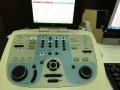 Effectiveness of Preventing Hearing Loss with Mg-B6 in Armored Corps Cadets in 2017-2018
 -
 HIV-STI infection status, some related factors and effectiveness of preventive intervention among Dao ethnic group in 3 communes of Yen Bai province, 2006-2012 - 18
 -
 Review of Research Status Related to the Topic
However, our study still has some limitations: The time to monitor hearing loss is short due to the training course being limited to 6 months, the oral dose of Mg-B6 is only applied to the dose currently used in clinical practice, no testing with doses lower than 4 tablets/day, no conditions to test with other drugs. The specific work position, vibration, temperature factors, etc. have not been taken into account.
CONCLUDE
1. The current status of hearing loss and some related factors in armored troops in 2017
1.1. Current status of armored tank noise
- The average general noise intensity measured on the armored vehicle training ground was 76.08 ± 25.66 dB.
- The highest noise level was when the vehicle was running and measured inside the vehicle, at 111 dB, followed by when the vehicle was running on the spot and measured inside the vehicle, at 102 dB. At the time of live ammunition firing, the noise level measured at all frequencies exceeded the measuring range of the device (> 120dB), all at a level that is harmful to hearing.
1.2. General characteristics of the research group
- The average age of the study group was 38.67 ± 5.8 years, with the highest being 52 years old and the lowest being 21 years old. The majority of the study group was between 31 and 50 years old (92.7%).
- The average military age of the research group was 18.94 ± 5.6 years, with the highest being 35 years and the lowest being 2 years. The majority of soldiers in the research group had more than 10 years of military service, with 94.28%.
1.3. The current status of hearing loss in armored personnel
- The rate of hearing loss in one ear is 17.78% and in both ears is 45.08%, hearing loss in at least one ear is 62.86%. The rate of hearing loss in both ears is nearly 3 times that of hearing loss in one ear.
- The rate of hearing loss in both ears increases with age and military age. Hearing loss at all frequencies is mild, however, at 4000Hz the hearing threshold has the greatest reduction. Moderate monotone hearing loss (PTA) in both ears is mild. Hearing loss between the right ear
and the left ear had no difference with p > 0.05. The majority of the group with hearing loss were mild (21 - 40dB) > 49%.
- The most common clinical symptoms were tinnitus 78.4%, sore throat 69.8%, and dizziness 61%.
1.4. Knowledge, attitude and practice of armored personnel are generally high, but there are still some limitations:
- The rate of understanding about the harmful effects of occupational deafness on general health and hearing in particular is high at 88 - 89%, however 26.03% are aware that occupational deafness can be cured.
- Although the research subjects thought that it was necessary to have a regular annual health check-up, accounting for a high percentage of 97.78%, the percentage that thought that regular hearing check-ups were necessary was very low, accounting for only 0.3%.
- The percentage of research subjects who occasionally or not wear hearing protection while working is still quite high at 30.15%. 15.24% rated the quality of hearing protection as poor.
1.5. Factors related to hearing loss
- The rate of hearing loss increases with age and population size in direct proportion to p
< 0.05.
- Symptoms of tinnitus, insomnia, ear discharge, cardiovascular disease increased the risk of hearing loss, in univariate analysis. With multivariate analysis, only one relevant factor remained, which was manifestations of cardiovascular disease, increasing the risk of hearing loss with OR = 1.63 (OR 95% CI: 1.1 - 2.66)
2. Mg-B6 supplementation is effective in preventing hearing loss in the study group.
- Reduced symptoms of tinnitus, hearing loss, fatigue, headache, stress, insomnia, and dizziness in the study group compared with the control group with p < 0.01.
- Hearing threshold reduction in the intervention group with p < 0.01.
- Reduced hearing loss in each ear after intervention
- Significant reduction in hearing loss: The hearing loss rate in the control group was 26% and in the intervention group was 4% with a difference of p < 0.001. The relative risk of hearing loss was 15.38% (RR 95% CI: 0.06-0.42), or the hearing loss rate was reduced by 84.62% in the intervention group compared to the control group.
RECOMMENDATION
1. It is necessary to strengthen communication to improve knowledge, attitudes and practices of armored soldiers on preventing hearing loss.
2. Soldiers at risk of exposure to high levels of noise should be screened for hearing loss every 6 months, have their records kept and long-term audiometric results monitored to detect early cases with clinical manifestations and hearing loss for timely treatment.
3. Use Mg-B6 for people at risk of exposure to harmful noise to prevent noise-induced hearing loss.
LIST OF PUBLISHED WORKS RELATED TO THE THESIS
1. Nguyen Tai Dung, Doan Thi Thanh Ha, Nguyen Tran Hien. “Current situation and some factors affecting hearing loss in armored personnel in 2017” – Journal of Preventive Medicine, volume 28, number 11, 2018
2. Nguyen Tai Dung, Doan Thi Thanh Ha, Nguyen Tran Hien. “Effectiveness of preventive intervention for hearing loss using Mg-B6 in Armored Corps soldiers” – Journal of Preventive Medicine, Vol. 30, No. 5, 2020
REFERENCES
VIETNAMESE
1. TCVN 3985:1999 (1999), "Acoustics - Allowable noise levels at work locations " , Vietnam Standard .
2. Ministry of Health (2003), Diagnosis of occupational diseases , Institute of Occupational Medicine and Environmental Hygiene.
3. Hoang Minh Thuy (2011), "Research on health characteristics of workers exposed to industrial noise and the effectiveness of intervention solutions " , Doctoral thesis in Medicine .
4. Military Medical Academy (2017), Military Labor Physiology , People's Army Publishing House.
5. Ho Xuan An (2003), Research on the impact of noise from tanks and armored vehicles on the hearing of operating soldiers and proposed protective measures , Doctoral thesis in medicine, Hanoi Medical University.
6. Khuong Van Chu (2015), The impact of noise on hearing of naval sailors at unit X , Military Medicine Journal.
7. Le Trung (1990), Occupational diseases , Medical Publishing House, 3-19.
8. Luong Minh Tuan (2007), Working environment, disease structure and occupational diseases of Hong Ha shipyard workers - General Department of Defense Industry , Master's thesis in medicine.
9. Nguyen Hoang Luyen (2017), Research on working conditions and health of submarine sailors , Doctoral thesis in Medicine, Military Medical Academy.
10. Nguyen Nam Ha (2008), Noise and noise-induced hearing loss , Ear, Nose and Throat, volume 1, Medical Publishing House.
11. Nguyen Thanh Hai, et al. (2016), "Noise and hearing status of workers at a steel factory in Hai Phong in 2015 " , Journal of Preventive Medicine . 26(14), pp. 67-75.
12. Nguyen Thanh Quan (2011), Study on the impact of noise on hearing of employees working in noisy environment at Noi Bai airport , Master's thesis in Medicine, Hanoi Medical University.
13. Nguyen Van Chuyen (2017), Research on working conditions, living conditions and health of sailors of Gepard-class frigates, effectiveness of intervention measures , Doctoral thesis in medicine, Military Medical Academy.
14. Pham Xuan Ninh et al. (1998), Effects of noise on hearing of aircraft repair soldiers , Report at the 3rd National Conference on Occupational Medicine, Institute of Occupational Medicine and Environmental Hygiene.
15. "Circular regulating national technical regulations on noise - permissible noise exposure levels at the workplace " (2016), Ministry of Health .
16. Military Institute of Hygiene and Epidemiology (2012), "Results of measuring and testing the working environment at workshop 32 - Armored Command " (No. 563/KQ-VSPDQD).
17. Vu Van San (2010), "Initial survey of occupational deafness among workers at the Song Cam shipyard and Hai Phong III Waterway Transport Company " , Practical Medicine . 714, pp. 52-56.
ENGLISH
18. Raffin F Abaamrane L, Gal M, Avan P, Sendowski I., (2009), "Long-term administration of magnesium after acoustic trauma caused by gunshot noise in guinea pigs " , Hear Res . 247, pp. 137-145.
19. L. Abaamrane, F. Raffin, and M. Gal (2009), "Long-term administration of magnesium after acoustic trauma by caused gunshot noise in guinea pigs " , Hear Res . 247, pp. 137-145.
20. L. Abaamrane, Raffin, F., Gal, M., Avan, P., & Sendowski, I. (2009), "Long-term administration of magnesium after acoustic trauma caused by gunshot noise in guinea pigs " , Hearing Reserch . 247(2), pp. 137- 145.
21. Weisz G Attias J, Almog S, Shahar A, Wiener M, Joachims Z et al, (1994), "Oral magnesium intake reduces permanent hearing loss induced by noise exposure " , Am J Otolaryngol . 15, pp. 26-32.
22. J. Attias, et al. (2004), "Reduction in noise-induced temporary threshold shift in humans following oral magnesium intake " , Clin Otolaryngol Allied Sci . 29, p. 635.
23. Audrey Collée, et al. (2019), "Longitudinal changes in hearing threshold levels for noise-exposed military personnel " , Int Arch Occup Environ Health . 92(2), pp. 219-226.
24. Aviation and the Environment (2003), "Aircraft noise " , Parliamentary Office of Science and Technology . 197.
25. Cieza A and Chadha S (2017), "Promoting global action on hearing loss: world hearing day " , Int J Audiol . 56(3), pp. 145-147.
26. WW. Clark, BA Bohne, and FA Boettcher (1987), "Effect of periodic rest on hearing loss and cochlear damage following exposure to noise " , J Acoust Soc Am , pp. 1253-1264.
27. A. Collee, et al. (2011), "Occupational exposure to noise and the prevalence of hearing loss in a Belgian military population: a cross-sectional study " , Noise Health . 13, pp. 64-70.