
3.3 ANALYSIS OF CURRENT STATUS OF TOURISM ACTIVITIES IN PHONG DIEN DISTRICT
3.3.1 Overview of the operating situation at tourist attractions
Through the interview results of 15 tourism establishments in the area managed by the tourism industry, it is summarized specifically as follows:
a. My Khanh tourist village
My Khanh tourist village in Phong Dien district - Can Tho city, is an attractive destination and a typical tourist destination in the Mekong Delta, 10km from the center of Can Tho city, on the Vong Cung route and between Cai Rang and Phong Dien floating markets. Phong Dien district is a fertile land with many types of fruit trees, specialties of the Southern garden, a good rural traffic system, a developed community tourism system with many traditional craft villages imbued with Southern culture.
Located on a campus of 15 hectares, the facilities are fully invested and developed with a convenient transportation system, a restaurant system with the number of seats suitable for the needs of tourists, a 350-seat hall with full equipment, a fleet of ships and yachts serving floating market tours and dining on board.
Here, visitors will be able to freely explore and learn about the life of the garden residents such as: visiting the ancient houses of the South with traditional living utensils of the people of the South in the early 20th century; enjoying the "don ca tai tu" art program; trying "A day as a landlord" with a landlord's meal; "a day as a farmer". Entertainment programs such as: fishing in ditches, crocodile fishing, dog racing, pig racing, monkey strangling, visiting the 12 floors of hell. In addition, visitors can also participate in traditional festivals, exciting folk games, picnics, swimming pool services, fishing, boating, visitors can also visit the scenery around My Khanh Tourist Village by horse-drawn carriage, bicycle, pedicab, electric car, ...
My Khanh tourist village is located in a convenient traffic location by both water and road, linked with many travel companies and is a stopover for garden tours: Ninh Kieu Wharf - Cai Rang floating market - Phong Dien floating market - garden
tourism. From 2010 to 2013, My Khanh Tourist Village was voted by the Vietnam Union of UNESCO Associations as "Top 100 impressive destinations in Vietnam".
b. Lung Cot Cau Tourist Area
Lung Cot Cau tourist area is located in Nhon Thanh hamlet, Nhon Nghia commune, Phong Dien district, 6km from Can Tho city center, on the road connecting Can Tho
– Vi Thanh. This eco-tourism area covers an area of over 7 hectares, including over 5 hectares of fruit gardens such as longan, rambutan, durian, Ha Chau strawberry... and over 2 hectares of fish ponds creating a rustic natural landscape, imbued with the Mekong Delta river scene. Lung Cot Cau eco-tourism area is also identified as a cultural site of the Kingdom of Phu Nam.
Coming here, visitors will be able to visit and enjoy dishes made from garden fruits and fish and shrimp of the Southwest region. In addition, visitors will be able to participate in activities such as rowing boats, fishing, walking on monkey bridges, etc. Besides, visitors can also learn more about the river culture of the garden and the ancient Oc Eo cultural relics.
Because it is located on the national highway, visitors can visit the tourist area by road transport depending on each person's ability and preferences.
c. Ecological garden – Ut Dzach rice vermicelli oven
Ecological garden sightseeing spot - Ut Dzach rice vermicelli factory is located on O Mon - Xa No route in Nhon Ai commune, Phong Dien district, 15km from Can Tho city center, 4km from Vam Xang ferry. This is an ideal destination for tourists who love to explore. Coming to Ut Dzach rice vermicelli factory, visitors can not only enjoy the delicious taste of the cake but also learn more about the cake making process with many stages from mixing the flour, boiling and then draining the flour many times, through the owner's homemade press to create a unique hammock-faced rice vermicelli, ... at the same time experience making the cake and enjoy the results of their own efforts.
In addition to banh hoi, visitors can also enjoy many other traditional cakes such as: banh la mit, banh dum, banh xep, banh bo, banh da lon, banh it, banh tet, banh
hand-spun silkworms, etc. Not only that, Ut Dzach eco-garden also serves many rustic dishes with a strong Southern flavor such as grilled snails with pepper, braised eel, fish sauce hotpot, fried field mice, banana flower chicken salad, lotus root salad, etc., especially the dish "love porridge" (stir-fried blood with pig intestines) that can only be found here.
Coming here, visitors can also visit the 1.2-hectare fruit garden with many varieties: Ha Chau strawberry, Gia Bao green strawberry, mangosteen, star apple, durian, longan, plum, etc.
d. My Thom fruit garden
Located in Nhon Tho Hamlet, Nhon Ai Commune, Phong Dien District, Can Tho City, My Thom Fruit Garden is divided into 2 areas, separated by a small road. The area for visitors to stop and rest is located next to a large canal. The remaining area on the other side of the road is a 2-hectare fruit garden, mainly growing fruits such as mangosteen, Thai rambutan, durian and longan.
Coming here, visitors can experience the pleasure of hammock coffee, visit, enjoy fruits in the garden and buy them as gifts, or enjoy the typical delicious dishes of the garden. Visitors can take a boat from the floating market to My Thom garden, which takes about 45 - 60 minutes. Vehicles with 16 seats or less can go by road to the garden.
e. Giao Duong Fruit Garden
Giao Duong Ecotourism Garden is located on Vong Cung Road in Phong Dien Town, 13km from Can Tho City center, about 3km from Phong Dien Town. This is an ecotourism area that was formed very early in Can Tho City (1990). With an area of nearly 3 hectares, Giao Duong Ecotourism Garden at that time attracted many domestic and foreign tourists to visit, relax and especially enjoy the specialty fruits of the western river region.
Giao Duong Ecotourism Garden mainly grows fruits such as grapefruit, jackfruit, mango, durian, but the most abundant and attractive are still mangosteen and Ha Chau strawberry. In addition to visiting and enjoying fruits, visitors can also participate in activities
Recreational fishing, sampan rowing, enjoying river dishes: giant catfish, carp, red tilapia, etc. and can stay overnight if needed.
f. Vam Xang Fruit Garden
Vam Xang Fruit Garden is one of the tourist gardens that many tourists are interested in because of its typical beauty of the Mekong Delta and its convenient transportation - located right on Lo Vong Cung Street, about 1km past My Khanh Tourist Garden, stopping in front of Cao Dai Temple, walking into the garden for about 3 minutes.
With an area of 2.5 hectares, the garden mainly grows Ha Chau strawberries, a famous specialty of Phong Dien. Coming here, visitors will enjoy the fresh air close to nature, experience the gardening profession of the people in the river area, experience the pleasure of "removing the net, bailing the pond to catch fish", fishing for fun, rowing a boat, enjoying the typical delicious dishes of the garden, especially the Hung Hinh fish sauce hotpot.
In addition, you can also visit neighboring gardens, participate in a one-day farmer program, go to the floating market, learn to cook delicious Southern dishes...
g. My Long Homestay – Ba Xinh fruit garden
Tourist attraction in Rach Sau, My Long hamlet, My Khanh commune, 10km from Can Tho city center. On a land with a total area of 1.2 hectares, this fruit garden mainly grows the following types of trees: mulberry, green mulberry, mangosteen, coconut, star apple, mango, rambutan, ... combined with releasing fish in the ditch. Coming here, visitors can not only enjoy the fresh air of the river countryside but also visit and enjoy the fruits available in the garden. In addition, visitors can also participate in cooking activities in the garden, folk games and recreational fishing. In addition, visitors can stay overnight if needed because the garden owner has invested in quite adequate facilities for 02 rooms, serving accommodation services for visitors.
h. Longan garden eco-tourism area - My Thuan Homestay
Located in My Thuan hamlet, My Khanh commune, Phong Dien district, Can Tho city, Longan garden eco-tourism area is a place where domestic and foreign tourists can visit.
sightseeing, entertainment, rest - relaxation after tiring working days and is known by many tourists. With an area of over 5,000 m2 , the garden is planted with many attractive fruits: strawberry, mangosteen, dragon fruit, durian, most of all longan, .... Coming here, visitors can not only visit the fruit garden, enjoy the fruits in the garden but also participate in recreational activities in the garden: fishing, gardening, ... especially visitors will experience cooking and enjoy dishes with very typical flavors here such as: pancakes, curry, hot pot, ....
In addition, visitors can stay overnight in rooms with a strong Southern character to enjoy the peaceful life, enjoy the fresh air of the early morning; to feel the crowing of the rooster signaling the dawn, along with the chirping of birds in the countryside of the river and garden. In the evening, visitors can also enjoy the traditional music to listen to the folk songs and melodies of the river and garden regions.
i. Hoang Anh Fruit Garden
Hoang Anh Fruit Garden is located in My Phung Hamlet, My Khanh Commune, Phong Dien District. The road to the garden is relatively small, so the ideal means of transport is a two-wheeled vehicle. Visitors can also get to the garden by water, but in the dry season, when the tide is low, traveling by water is quite difficult. The tourist destination attracts a large number of international visitors because the garden owner still maintains the simple countryside scenery. Hoang Anh Garden is more than 5,800m2 wide, with a variety of fruit trees, especially mangosteen, guava, and mulberry. In addition, it also serves popular dishes with a strong Southern cultural identity: banh xeo, fried elephant ear fish, grilled snakehead fish, etc.
j. Cacao Muoi Cuong
Located at Ong De canal in My Ai hamlet, My Khanh commune, Phong Dien district, Can Tho city, Muoi Cuong tourist garden has an area of 1.2 hectares, growing all kinds of fruit trees including Ha Chau strawberry, mangosteen, ... The special feature of this garden is that it has more than 200 cocoa trees and annually produces more than 2 tons of fruit. From the cocoa fruits
high, the homeowner has researched and put the process of producing cocoa powder and dark chocolate into practice at home.
Here, visitors have the opportunity to participate in the daily activities of the owner, especially the process of producing handmade cocoa. Visitors visit the garden, have Mr. Muoi Cuong share his experiences in planting trees, how to distinguish cocoa varieties and freely pick ripe cocoa. In addition to enjoying cocoa on the spot, visitors will be guided and experience being a farmer, especially practicing handicrafts to create products from cocoa fruits and enjoy the products they make themselves. From cocoa fruits, the garden owner processes them in the traditional way through the stages of brewing cocoa beans, drying them in a cast iron pot, grinding them into powder, and processing them into finished products: cocoa wine, cocoa butter, cocoa powder and pure cocoa used to make ice cream or cakes. In particular, cocoa wine is an aperitif that is very popular with European tourists. At the same time, visitors can also enjoy traditional dishes of the Mekong Delta region such as: Shrimp vegetable soup, fried elephant ear fish wrapped in rice paper, spring rolls, ... seasonal fruits and stay at his house (traditional Southern architecture) in the form of a homestay.
The garden has 2 homestay rooms for visitors, especially the owners who can communicate fluently in English. This is an advantage to attract international visitors to the garden.
3.3.2 Existing facilities at tourist attractions
Table 3.2 Existing facilities at tourist attractions
Facilities
Frequency | Rate (%) | |
Build a garden path | 12 | 100 |
Food service establishments | 12 | 100 |
Facilities serving entertainment games | 9 | 75 |
Accommodation (rooms, motels) | 8 | 66.67 |
Passenger transport | 9 | 75 |
Maybe you are interested!
-
 Identify Rating Levels and Rating Scales
zt2i3t4l5ee
zt2a3gstourism,quan lan,quang ninh,ecology,ecotourism,minh chau,van don,geography,geographical basis,tourism development,science
zt2a3ge
zc2o3n4t5e6n7ts
of the islanders. Therefore, this indicator will be divided into two sub-indicators:
a1. Natural tourism attractiveness a2. Cultural tourism attractiveness
b. Tourist capacity
The two island communes in Quan Lan have different capacities to receive tourists. Minh Chau Commune is home to many standard hotels and resorts, attracting high-income domestic and international tourists. Meanwhile, Quan Lan Commune has many motels mainly built and operated by local people, so the scale and quality are not high, and will be suitable for ordinary tourists such as students.
c. Time of exploitation of Quan Lan Island Commune:
Quan Lan tourism is seasonal due to weather and climate conditions and festivals only take place on certain days of the year, specifically in spring. In Quan Lan commune, the period from April to June and from September to November is considered the best time to visit Quan Lan because the cultural tourism activities are mainly associated with festivals taking place during this time.
Minh Chau island commune:
Tourism exploitation time is all year round, because this is a place with a number of tourist attractions with diverse ecosystems such as Bai Tu Long National Park Research Center, Tram forest, Turtle Laying Beach, so besides coming to the beach for tourism and vacation in the summer, Minh Chau will attract research groups to come for tourism combined with research at other times of the year.
d. Sustainability
The sustainability of ecotourism sites in Quan Lan and Minh Chau communes depends on the sensitivity of the ecosystems to climate changes.
landscape. In general, these tourist destinations have a fairly high level of sustainability, because they are natural ecosystems, planned and protected. However, if a large number of tourists gather at certain times, it can exceed the carrying capacity and affect the sustainability of the environment (polluted beaches, damaged trees, animals moving away from their habitats, etc.), then the sustainability of the above ecosystems (natural ecosystems, human ecosystems) will also be affected and become less sustainable.
e. Location and accessibility
Both island communes have ports to take tourists to visit from Van Don wharf:
- Quan Lan – Van Don traffic route:
Phuc Thinh – Viet Anh high-speed boat and Quang Minh high-speed boat, depart at 8am and 2pm from Van Don to Quan Lan, and at 7am and 1pm from Quan Lan to Van Don. There are also wooden boats departing at 7am and 1pm.
- Van Don - Minh Chau traffic route:
Chung Huong high-speed train, Minh Chau train, morning 7:30 and afternoon 13:30 from Van Don to Minh Chau, morning 6:30 and afternoon 13:00 from Minh Chau to Van Don.
f. Infrastructure
Despite receiving investment attention, the issue of infrastructure and technical facilities for tourism on Quan Lan Island is still an issue that needs to be resolved because it has a direct impact on the implementation of ecotourism activities. The minimum conditions for serving tourists such as accommodation, electricity, water, communication, especially medical services, and security work need to be given top priority. Ecotourism spots in Minh Chau commune are assessed to have better infrastructure and technical facilities for tourism because there are quite complete and synchronous conditions for serving tourists, meeting many needs of domestic and foreign tourists.
3.2.1.4. Determine assessment levels and assessment scales
Corresponding to the levels of each criterion, the index is the score of those levels in the order of 4, 3, 2, 1 decreasing according to the standard of each level: very attractive (4), attractive (3), average (2), less attractive (1).
3.2.1.5. Determining the coefficients of the criteria
For the assessment of DLST in the two communes of Quan Lan and Minh Chau islands, the students added evaluation coefficients to show the importance of the criteria and indicators as follows:
Coefficient 3 with criteria: Attractiveness, Exploitation time. These are the 2 most important criteria for attracting tourists to tourism in general and eco-tourism in particular, so they have the highest coefficient.
Coefficient 2 with criteria: Capacity, Infrastructure, Location and accessibility . Because the assessment area is an island commune of Van Don district, the above criteria are selected by the author with appropriate coefficients at the average level.
Coefficient 1 with criteria: Sustainability. Quan Lan has natural and human-made ecotourism sites, with high biodiversity and little impact from local human factors. Most of the ecotourism sites are still wild, so they are highly sustainable.
3.2.1.6. Results of DLST assessment on Quan Lan island
a. Assessment of the potential for natural tourism development
For Minh Chau commune:
+ Natural tourism attractiveness is determined to be very attractive (4 points) and the most important coefficient (coefficient 3), so the score of the Attractiveness criterion is 4 x 3 = 12.
+ Capacity is determined as average (2 points) and the coefficient is quite important (coefficient 2), then the score of Capacity criterion is 2 x 2 = 4.
+ Exploitation time is long (4 points), the most important coefficient (coefficient 3) so the score of the Exploitation time criterion is 4 x 3 = 12.
+ Sustainability is determined as sustainable (4 points), the important coefficient is the average coefficient (coefficient 1), so the score of the Sustainability criterion is 4 x 1 = 4 points
+ Location and accessibility are determined to be quite favorable (2 points), the coefficient is quite important (coefficient 2), the criterion score is 2 x 2 = 4 points.
+ Infrastructure is assessed as good (3 points), the coefficient is quite important (coefficient 2), then the score of the Infrastructure criterion is 3 x 2 = 6 points.
The total score for evaluating DLST in Minh Chau commune according to 6 evaluation criteria is determined as: 12 + 4 + 12 + 4 + 4 + 6 = 42 points
Similar assessment for Quan Lan commune, we have the following table:
Table 3.3: Assessment of the potential for natural ecotourism development in Quan Lan and Minh Chau communes
Attractiveness of self-tourismof course
Capacity
Mining time
Sustainability
Location and accessibility
Infrastructure
Result
Point
DarkMulti
Point
DarkMulti
Point
DarkMulti
Point
DarkMulti
Point
DarkMulti
Point
DarkMulti
CommuneMinh Chau
12
12
4
8
12
12
4
4
4
8
6
8
42/52
Quan CommuneLan
6
12
6
8
9
12
4
4
4
8
4
8
33/52
b. Assessment of the potential for humanistic tourism development
For Quan Lan commune:
+ The attractiveness of human tourism is determined to be very attractive (4 points) and the most important coefficient (coefficient 3), so the score of the Attractiveness criterion is 4 x 3 = 12.
+ Capacity is determined to be large (3 points) and the coefficient is quite important (coefficient 2), then the score of the Capacity criterion is 3 x 2 = 6.
+ Mining time is average (3 points), the most important coefficient (coefficient 3) so the score of the Mining time criterion is 3 x 3 = 9.
+ Sustainability is determined as sustainable (4 points), the important coefficient is the average coefficient (coefficient 1), so the score of the Sustainability criterion is 4 x 1 = 4 points.
+ Location and accessibility are determined to be quite favorable (2 points), the coefficient is quite important (coefficient 2), the criterion score is 2 x 2 = 4 points.
+ Infrastructure is rated as average (2 points), the coefficient is quite important (coefficient 2), then the score of the Infrastructure criterion is 2 x 2 = 4 points.
The total score for evaluating DLST in Quan Lan commune according to 6 evaluation criteria is determined as: 12 + 6 + 6 + 4 + 4 + 4 = 36 points.
Similar assessment with Minh Chau commune we have the following table:
Table 3.4: Assessment of the potential for developing humanistic eco-tourism in Quan Lan and Minh Chau communes
Attractiveness of human tourismliterature
Capacity
Mining time
Sustainability
Location and accessibility
Infrastructure
Result
Point
DarkMulti
Point
DarkMulti
Point
DarkMulti
Point
DarkMulti
Point
DarkMulti
Point
DarkMulti
Quan CommuneLan
12
12
6
8
9
12
4
4
4
8
4
8
39/52
Minh CommuneChau
6
12
4
8
12
12
4
4
4
8
6
8
36/52
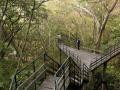
Basically, both Minh Chau and Quan Lan localities have quite favorable conditions for developing ecotourism. However, Quan Lan commune has more advantages to develop ecotourism in a humanistic direction, because this is an area with many famous historical relics such as Quan Lan Communal House, Quan Lan Pagoda, Temple worshiping the hero Tran Khanh Du, ... along with local festivals held annually such as the wind praying ceremony (March 15), Quan Lan festival (June 10-19); due to its location near the port and long exploitation time, the beaches in Quan Lan commune (especially Quan Lan beach) are no longer hygienic and clean to ensure the needs of tourists coming to relax and swim; this is also an area with many beautiful landscapes such as Got Beo wind pass, Ong Phong head, Voi Voi cave, but the ability to access these places is still very limited (dirt hill road, lots of gravel and rocks), especially during rainy and windy times; In addition, other natural resources such as mangrove forests and sea worms have not been really exploited for tourism purposes and ecotourism development. On the contrary, Minh Chau commune has more advantages in developing ecotourism in the direction of natural tourism, this is an area with diverse ecosystems such as at Rua De Beach, Bai Tu Long National Park Conservation Center...; Minh Chau beach is highly appreciated for its natural beauty and cleanliness, ranked in the top ten most beautiful beaches in Vietnam; Minh Chau commune is also home to Tram forest with a large area and a purity of up to 90%, suitable for building bridges through the forest (a very effective type of natural ecotourism currently applied by many countries) for tourists to sightsee, as well as for the purpose of studying and researching.
Figure 3.1: Thenmala Forest Bridge (India) Source: https://www.thenmalaecotourism.com/(August 21, 2019)
3.2.2. Using SWOT matrix to evaluate Quan Lan island tourism
General assessment of current tourism activities of Quan Lan island is shown through the following SWOT matrix:
Table 3.5: SWOT matrix evaluating tourism activities on Quan Lan island
Internal agent
Strengths- There is a lot of potential for tourism development, especially natural ecotourism and humanistic ecotourism.- The unskilled labor force is relatively abundant.- resource environmentunpolluted, still
Weaknesses- Poorly developed infrastructure, especially traffic routes to tourist destinations on the island.- The team of professional staff is still weak.- Tourism products in general
quite wild, originalintact
general and DLST in particularalone is monotonous.
External agents
Opportunity- Tourism is a key industry in the socio-economic development strategy of the province and Van Don economic zone.- Quan Lan was selected as a pilot area for eco-tourism development within the framework of the green growth project between Quang Ninh province and the Japanese organization JICA.- The flow of tourists and especially ecotourism in the world tends toincreasing
Challenge- Weather and climate change abnormally.- Competition in tourism products is increasingly fierce, especially with other localities in the province such as Ha Long, Mong Cai...- Awareness of tourists, especially domestic tourists, about ecotourism and nature conservation is not high.
Through summary analysis using SWOT matrix we see that:
To exploit strengths and take advantage of opportunities, it is necessary to:
- Diversify products and service types (build more tourism routes aimed at specific needs of tourists: experiential tourism immersed in nature, spiritual cultural tourism...)
- Effective exploitation of resources and differentiated products (natural resources and human resources)
div.maincontent .p { color: black; font-family:"Times New Roman", serif; font-style: normal; font-weight: normal; text-decoration: none; font-size: 14pt; margin:0pt; } div.maincontent p { color: black; font-family:"Times New Roman", serif; font-style: normal; font-weight: normal; text-decoration: none; font-size: 14pt; margin:0pt; } div.maincontent .s1 { color: black; font-family:"Times New Roman", serif; font-style: normal; font-weight: normal; text-decoration: none; font-size: 13pt; } div.maincontent .s2 { color: black; font-family:"Times New Roman", serif; font-style: normal; font-weight: normal; text-decoration: none; font-size: 13pt; } div.maincontent .s3 { color: #0D0D0D; font-family:"Times New Roman", serif; font-style: normal; font-weight: bold; text-decoration: none; font-size: 14pt; } div.maincontent .s4 { color: black; font-family:"Times New Roman", serif; font-style: italic; font-weight: normal; text-decoration: none; font-size: 14pt; } div.maincontent .s5 { color: black; font-family:"Times New Roman", serif; font-style: italic; font-weight: bold; text-decoration: none; font-size: 14pt; } div.maincontent .s6 { color: black; font-family:"Times New Roman", serif; font-style: italic; font-weight: normal; text-decoration: none; font-size: 14pt; vertical-align: -3pt; } div.maincontent .s7 { color: black; font-family:"Times New Roman", serif; font-style: italic; font-weight: normal; text-decoration: none; font-size: 14pt; vertical-align: -2pt; } div.maincontent .s8 { color: black; font-family:"Times New Roman", serif; font-style: italic; font-weight: normal; text-decoration: none; font-size: 14pt; vertical-align: -1pt; } div.maincontent .s9 { color: black; font-family:"Times New Roman", serif; font-style: normal; font-weight: normal; text-decoration: none; font-size: 14pt; } div.maincontent .s10 { color: black; font-family:"Times New Roman", serif; font-style: normal; font-weight: bold; text-decoration: none; font-size: 14pt; } div.maincontent .s11 { color: black; font-family:"Times New Roman", serif; font-style: normal; font-weight: normal; text-decoration: none; font-size: 14pt; } div.maincontent .s12 { color: black; font-family:Symbol, serif; font-style: normal; font-weight: normal; text-decoration: none; font-size: 14pt; } div.maincontent .s13 { color: black; font-family:Wingdings; font-style: normal; font-weight: normal; text-decoration: none; font-size: 14pt; } div.maincontent .s14 { color: black; font-family:"Times New Roman", serif; font-style: normal; font-weight: normal; text-decoration: none; font-size: 9pt; vertical-align: 5pt; } div.maincontent .s15 { color: black; font-family:"Times New Roman", serif; font-style: normal; font-weight: normal; text-decoration: none; font-size: 9pt; vertical-align: 5pt; } div.maincontent .s16 { color: black; font-family:Cambria, serif; font-style: italic; font-weight: normal; text-decoration: none; font-size: 14pt; } div.maincontent .s17 { color: #080808; font-family:"Times New Roman", serif; font-style: normal; font-weight: bold; text-decoration: none; font-size: 14pt; } div.maincontent .s18 { color: #080808; font-family:"Times New Roman", serif; font-style: normal; font-weight: normal; text-decoration: none; font-size: 14pt; } div.maincontent .s19 { color: black; font-family:"Times New Roman", serif; font-style: normal; font-weight: normal; text-decoration: none; font-size: 11pt; } div.maincontent .s20 { color: black; font-family:"Times New Roman", serif; font-style: normal; font-weight: normal; text-decoration: none; font-size: 10pt; } div.maincontent .s21 { color: black; font-family:"Times New Roman", serif; font-style: normal; font-weight: bold; text-decoration: none; font-size: 11pt; } div.maincontent .s22 { color: black; font-family:"Times New Roman", serif; font-style: normal; font-weight: normal; text-decoration: none; font-size: 11pt; } div.maincontent .s23 { color: black; font-family:"Times New Roman", serif; font-style: italic; font-weight: normal; text-decoration: none; font-size: 14pt; } div.maincontent .s24 { color: #212121; font-family:"Times New Roman", serif; font-style: normal; font-weight: normal; tex
Identify Rating Levels and Rating Scales
zt2i3t4l5ee
zt2a3gstourism,quan lan,quang ninh,ecology,ecotourism,minh chau,van don,geography,geographical basis,tourism development,science
zt2a3ge
zc2o3n4t5e6n7ts
of the islanders. Therefore, this indicator will be divided into two sub-indicators:
a1. Natural tourism attractiveness a2. Cultural tourism attractiveness
b. Tourist capacity
The two island communes in Quan Lan have different capacities to receive tourists. Minh Chau Commune is home to many standard hotels and resorts, attracting high-income domestic and international tourists. Meanwhile, Quan Lan Commune has many motels mainly built and operated by local people, so the scale and quality are not high, and will be suitable for ordinary tourists such as students.
c. Time of exploitation of Quan Lan Island Commune:
Quan Lan tourism is seasonal due to weather and climate conditions and festivals only take place on certain days of the year, specifically in spring. In Quan Lan commune, the period from April to June and from September to November is considered the best time to visit Quan Lan because the cultural tourism activities are mainly associated with festivals taking place during this time.
Minh Chau island commune:
Tourism exploitation time is all year round, because this is a place with a number of tourist attractions with diverse ecosystems such as Bai Tu Long National Park Research Center, Tram forest, Turtle Laying Beach, so besides coming to the beach for tourism and vacation in the summer, Minh Chau will attract research groups to come for tourism combined with research at other times of the year.
d. Sustainability
The sustainability of ecotourism sites in Quan Lan and Minh Chau communes depends on the sensitivity of the ecosystems to climate changes.
landscape. In general, these tourist destinations have a fairly high level of sustainability, because they are natural ecosystems, planned and protected. However, if a large number of tourists gather at certain times, it can exceed the carrying capacity and affect the sustainability of the environment (polluted beaches, damaged trees, animals moving away from their habitats, etc.), then the sustainability of the above ecosystems (natural ecosystems, human ecosystems) will also be affected and become less sustainable.
e. Location and accessibility
Both island communes have ports to take tourists to visit from Van Don wharf:
- Quan Lan – Van Don traffic route:
Phuc Thinh – Viet Anh high-speed boat and Quang Minh high-speed boat, depart at 8am and 2pm from Van Don to Quan Lan, and at 7am and 1pm from Quan Lan to Van Don. There are also wooden boats departing at 7am and 1pm.
- Van Don - Minh Chau traffic route:
Chung Huong high-speed train, Minh Chau train, morning 7:30 and afternoon 13:30 from Van Don to Minh Chau, morning 6:30 and afternoon 13:00 from Minh Chau to Van Don.
f. Infrastructure
Despite receiving investment attention, the issue of infrastructure and technical facilities for tourism on Quan Lan Island is still an issue that needs to be resolved because it has a direct impact on the implementation of ecotourism activities. The minimum conditions for serving tourists such as accommodation, electricity, water, communication, especially medical services, and security work need to be given top priority. Ecotourism spots in Minh Chau commune are assessed to have better infrastructure and technical facilities for tourism because there are quite complete and synchronous conditions for serving tourists, meeting many needs of domestic and foreign tourists.
3.2.1.4. Determine assessment levels and assessment scales
Corresponding to the levels of each criterion, the index is the score of those levels in the order of 4, 3, 2, 1 decreasing according to the standard of each level: very attractive (4), attractive (3), average (2), less attractive (1).
3.2.1.5. Determining the coefficients of the criteria
For the assessment of DLST in the two communes of Quan Lan and Minh Chau islands, the students added evaluation coefficients to show the importance of the criteria and indicators as follows:
Coefficient 3 with criteria: Attractiveness, Exploitation time. These are the 2 most important criteria for attracting tourists to tourism in general and eco-tourism in particular, so they have the highest coefficient.
Coefficient 2 with criteria: Capacity, Infrastructure, Location and accessibility . Because the assessment area is an island commune of Van Don district, the above criteria are selected by the author with appropriate coefficients at the average level.
Coefficient 1 with criteria: Sustainability. Quan Lan has natural and human-made ecotourism sites, with high biodiversity and little impact from local human factors. Most of the ecotourism sites are still wild, so they are highly sustainable.
3.2.1.6. Results of DLST assessment on Quan Lan island
a. Assessment of the potential for natural tourism development
For Minh Chau commune:
+ Natural tourism attractiveness is determined to be very attractive (4 points) and the most important coefficient (coefficient 3), so the score of the Attractiveness criterion is 4 x 3 = 12.
+ Capacity is determined as average (2 points) and the coefficient is quite important (coefficient 2), then the score of Capacity criterion is 2 x 2 = 4.
+ Exploitation time is long (4 points), the most important coefficient (coefficient 3) so the score of the Exploitation time criterion is 4 x 3 = 12.
+ Sustainability is determined as sustainable (4 points), the important coefficient is the average coefficient (coefficient 1), so the score of the Sustainability criterion is 4 x 1 = 4 points
+ Location and accessibility are determined to be quite favorable (2 points), the coefficient is quite important (coefficient 2), the criterion score is 2 x 2 = 4 points.
+ Infrastructure is assessed as good (3 points), the coefficient is quite important (coefficient 2), then the score of the Infrastructure criterion is 3 x 2 = 6 points.
The total score for evaluating DLST in Minh Chau commune according to 6 evaluation criteria is determined as: 12 + 4 + 12 + 4 + 4 + 6 = 42 points
Similar assessment for Quan Lan commune, we have the following table:
Table 3.3: Assessment of the potential for natural ecotourism development in Quan Lan and Minh Chau communes
Attractiveness of self-tourismof course
Capacity
Mining time
Sustainability
Location and accessibility
Infrastructure
Result
Point
DarkMulti
Point
DarkMulti
Point
DarkMulti
Point
DarkMulti
Point
DarkMulti
Point
DarkMulti
CommuneMinh Chau
12
12
4
8
12
12
4
4
4
8
6
8
42/52
Quan CommuneLan
6
12
6
8
9
12
4
4
4
8
4
8
33/52
b. Assessment of the potential for humanistic tourism development
For Quan Lan commune:
+ The attractiveness of human tourism is determined to be very attractive (4 points) and the most important coefficient (coefficient 3), so the score of the Attractiveness criterion is 4 x 3 = 12.
+ Capacity is determined to be large (3 points) and the coefficient is quite important (coefficient 2), then the score of the Capacity criterion is 3 x 2 = 6.
+ Mining time is average (3 points), the most important coefficient (coefficient 3) so the score of the Mining time criterion is 3 x 3 = 9.
+ Sustainability is determined as sustainable (4 points), the important coefficient is the average coefficient (coefficient 1), so the score of the Sustainability criterion is 4 x 1 = 4 points.
+ Location and accessibility are determined to be quite favorable (2 points), the coefficient is quite important (coefficient 2), the criterion score is 2 x 2 = 4 points.
+ Infrastructure is rated as average (2 points), the coefficient is quite important (coefficient 2), then the score of the Infrastructure criterion is 2 x 2 = 4 points.
The total score for evaluating DLST in Quan Lan commune according to 6 evaluation criteria is determined as: 12 + 6 + 6 + 4 + 4 + 4 = 36 points.
Similar assessment with Minh Chau commune we have the following table:
Table 3.4: Assessment of the potential for developing humanistic eco-tourism in Quan Lan and Minh Chau communes
Attractiveness of human tourismliterature
Capacity
Mining time
Sustainability
Location and accessibility
Infrastructure
Result
Point
DarkMulti
Point
DarkMulti
Point
DarkMulti
Point
DarkMulti
Point
DarkMulti
Point
DarkMulti
Quan CommuneLan
12
12
6
8
9
12
4
4
4
8
4
8
39/52
Minh CommuneChau
6
12
4
8
12
12
4
4
4
8
6
8
36/52
Basically, both Minh Chau and Quan Lan localities have quite favorable conditions for developing ecotourism. However, Quan Lan commune has more advantages to develop ecotourism in a humanistic direction, because this is an area with many famous historical relics such as Quan Lan Communal House, Quan Lan Pagoda, Temple worshiping the hero Tran Khanh Du, ... along with local festivals held annually such as the wind praying ceremony (March 15), Quan Lan festival (June 10-19); due to its location near the port and long exploitation time, the beaches in Quan Lan commune (especially Quan Lan beach) are no longer hygienic and clean to ensure the needs of tourists coming to relax and swim; this is also an area with many beautiful landscapes such as Got Beo wind pass, Ong Phong head, Voi Voi cave, but the ability to access these places is still very limited (dirt hill road, lots of gravel and rocks), especially during rainy and windy times; In addition, other natural resources such as mangrove forests and sea worms have not been really exploited for tourism purposes and ecotourism development. On the contrary, Minh Chau commune has more advantages in developing ecotourism in the direction of natural tourism, this is an area with diverse ecosystems such as at Rua De Beach, Bai Tu Long National Park Conservation Center...; Minh Chau beach is highly appreciated for its natural beauty and cleanliness, ranked in the top ten most beautiful beaches in Vietnam; Minh Chau commune is also home to Tram forest with a large area and a purity of up to 90%, suitable for building bridges through the forest (a very effective type of natural ecotourism currently applied by many countries) for tourists to sightsee, as well as for the purpose of studying and researching.
Figure 3.1: Thenmala Forest Bridge (India) Source: https://www.thenmalaecotourism.com/(August 21, 2019)
3.2.2. Using SWOT matrix to evaluate Quan Lan island tourism
General assessment of current tourism activities of Quan Lan island is shown through the following SWOT matrix:
Table 3.5: SWOT matrix evaluating tourism activities on Quan Lan island
Internal agent
Strengths- There is a lot of potential for tourism development, especially natural ecotourism and humanistic ecotourism.- The unskilled labor force is relatively abundant.- resource environmentunpolluted, still
Weaknesses- Poorly developed infrastructure, especially traffic routes to tourist destinations on the island.- The team of professional staff is still weak.- Tourism products in general
quite wild, originalintact
general and DLST in particularalone is monotonous.
External agents
Opportunity- Tourism is a key industry in the socio-economic development strategy of the province and Van Don economic zone.- Quan Lan was selected as a pilot area for eco-tourism development within the framework of the green growth project between Quang Ninh province and the Japanese organization JICA.- The flow of tourists and especially ecotourism in the world tends toincreasing
Challenge- Weather and climate change abnormally.- Competition in tourism products is increasingly fierce, especially with other localities in the province such as Ha Long, Mong Cai...- Awareness of tourists, especially domestic tourists, about ecotourism and nature conservation is not high.
Through summary analysis using SWOT matrix we see that:
To exploit strengths and take advantage of opportunities, it is necessary to:
- Diversify products and service types (build more tourism routes aimed at specific needs of tourists: experiential tourism immersed in nature, spiritual cultural tourism...)
- Effective exploitation of resources and differentiated products (natural resources and human resources)
div.maincontent .p { color: black; font-family:"Times New Roman", serif; font-style: normal; font-weight: normal; text-decoration: none; font-size: 14pt; margin:0pt; } div.maincontent p { color: black; font-family:"Times New Roman", serif; font-style: normal; font-weight: normal; text-decoration: none; font-size: 14pt; margin:0pt; } div.maincontent .s1 { color: black; font-family:"Times New Roman", serif; font-style: normal; font-weight: normal; text-decoration: none; font-size: 13pt; } div.maincontent .s2 { color: black; font-family:"Times New Roman", serif; font-style: normal; font-weight: normal; text-decoration: none; font-size: 13pt; } div.maincontent .s3 { color: #0D0D0D; font-family:"Times New Roman", serif; font-style: normal; font-weight: bold; text-decoration: none; font-size: 14pt; } div.maincontent .s4 { color: black; font-family:"Times New Roman", serif; font-style: italic; font-weight: normal; text-decoration: none; font-size: 14pt; } div.maincontent .s5 { color: black; font-family:"Times New Roman", serif; font-style: italic; font-weight: bold; text-decoration: none; font-size: 14pt; } div.maincontent .s6 { color: black; font-family:"Times New Roman", serif; font-style: italic; font-weight: normal; text-decoration: none; font-size: 14pt; vertical-align: -3pt; } div.maincontent .s7 { color: black; font-family:"Times New Roman", serif; font-style: italic; font-weight: normal; text-decoration: none; font-size: 14pt; vertical-align: -2pt; } div.maincontent .s8 { color: black; font-family:"Times New Roman", serif; font-style: italic; font-weight: normal; text-decoration: none; font-size: 14pt; vertical-align: -1pt; } div.maincontent .s9 { color: black; font-family:"Times New Roman", serif; font-style: normal; font-weight: normal; text-decoration: none; font-size: 14pt; } div.maincontent .s10 { color: black; font-family:"Times New Roman", serif; font-style: normal; font-weight: bold; text-decoration: none; font-size: 14pt; } div.maincontent .s11 { color: black; font-family:"Times New Roman", serif; font-style: normal; font-weight: normal; text-decoration: none; font-size: 14pt; } div.maincontent .s12 { color: black; font-family:Symbol, serif; font-style: normal; font-weight: normal; text-decoration: none; font-size: 14pt; } div.maincontent .s13 { color: black; font-family:Wingdings; font-style: normal; font-weight: normal; text-decoration: none; font-size: 14pt; } div.maincontent .s14 { color: black; font-family:"Times New Roman", serif; font-style: normal; font-weight: normal; text-decoration: none; font-size: 9pt; vertical-align: 5pt; } div.maincontent .s15 { color: black; font-family:"Times New Roman", serif; font-style: normal; font-weight: normal; text-decoration: none; font-size: 9pt; vertical-align: 5pt; } div.maincontent .s16 { color: black; font-family:Cambria, serif; font-style: italic; font-weight: normal; text-decoration: none; font-size: 14pt; } div.maincontent .s17 { color: #080808; font-family:"Times New Roman", serif; font-style: normal; font-weight: bold; text-decoration: none; font-size: 14pt; } div.maincontent .s18 { color: #080808; font-family:"Times New Roman", serif; font-style: normal; font-weight: normal; text-decoration: none; font-size: 14pt; } div.maincontent .s19 { color: black; font-family:"Times New Roman", serif; font-style: normal; font-weight: normal; text-decoration: none; font-size: 11pt; } div.maincontent .s20 { color: black; font-family:"Times New Roman", serif; font-style: normal; font-weight: normal; text-decoration: none; font-size: 10pt; } div.maincontent .s21 { color: black; font-family:"Times New Roman", serif; font-style: normal; font-weight: bold; text-decoration: none; font-size: 11pt; } div.maincontent .s22 { color: black; font-family:"Times New Roman", serif; font-style: normal; font-weight: normal; text-decoration: none; font-size: 11pt; } div.maincontent .s23 { color: black; font-family:"Times New Roman", serif; font-style: italic; font-weight: normal; text-decoration: none; font-size: 14pt; } div.maincontent .s24 { color: #212121; font-family:"Times New Roman", serif; font-style: normal; font-weight: normal; tex -
 Current Status of State Management Activities for Tourism Enterprises in Hanoi
 -
 Current Status of Implementation of Mechanisms and Policies on Tourism Activities in Dien Bien Province
 -
 Current Status of Exploiting Hai Phong Museum's Activities for Tourism
 -
 Assessment of the Current Status of Seafood Cuisine Business in Tourism Activities in Ha Long
(Source: Results of 2016 survey data processing)
Through table 3.2, we can see that 100% of tourist attractions have invested in building paths in the garden for tourists to visit and sightsee, and 100% of tourist attractions have facilities to serve food and drink for tourists. There are 9 tourist attractions that have invested in facilities to serve entertainment games and
Investment in passenger transport accounted for 75% of the surveyed tourist destinations. There were 8 tourist destinations investing in building accommodation facilities for visitors to stay overnight, accounting for 66.67%.
Through the above analysis, it can be seen that most tourist destinations have invested in developing infrastructure to better serve tourists. This is also due to the support and encouragement from local authorities to promote ecotourism to develop more and more in line with the goal of developing ecotourism in Phong Dien district in particular and Can Tho city in general. However, there are still some small-scale tourist destinations, so they do not have enough conditions to invest much in infrastructure.
3.3.3 Management qualifications and experience of operators at tourist destinations
3.3.3.1 Education level
The level of management at tourist destinations is an important factor affecting the business performance of tourist establishments. Table 3.3 shows the level of management of the interviewed tourist destinations.
Table 3.3 Educational level of tourist area managers
Education level
Frequency | Rate (%) | |
Secondary School | 2 | 16.67 |
High School | 6 | 50 |
Secondary, college | 1 | 8.33 |
University | 1 | 8.33 |
Postgraduate | 2 | 16.67 |
(Source: Results of 2016 survey data processing)
According to the survey data on the educational level of managers and operators at 12 tourist destinations in Phong Dien district, we can see that the majority of managers have a high school degree or higher. Specifically, there are 8 people with high school degrees (12/12) and account for 50% of the total number of respondents. There is 1 person with intermediate and college degrees, accounting for 8.33%. There is 1 person with university degrees, accounting for 8.33%. There are 2 people with postgraduate degrees and accounting for 16.67% of the total number of respondents. There are 2 people with junior high school degrees, accounting for 16.67% of the total number of respondents.
Thus, the proportion of highly qualified operators in tourist facilities is relatively low, most of them have general education. That is because eco-tourism areas in Phong Dien district are mainly developed from existing gardens, combined with entertainment services, food and beverage services and accommodation services for tourists, so the main business operators in the tourist areas are also the owners of the gardens, so their qualifications are not high.
3.3.3.2 Management and operation experience
Management and operational experience is shown in table 4.3 below as the number of years they started managing the business.
Table 3.4 Experience of direct managers and operators
Business year
Frequency | Rate (%) | |
From 1 - 5 years | 9 | 75 |
From 6 - 10 years | 1 | 8.33 |
Over 10 years | 2 | 16.67 |
(Source: Results of 2016 survey data processing)
The actual survey results show that there are 9 tourist destinations whose managers have business experience from 1 to 5 years, accounting for 75%. There are 2 tourist destinations whose managers have experience over 10 years, accounting for 16.67% and only 1 person has management experience from 6 to 10 years, accounting for 8.33%.
Most of the eco-tourism areas in Phong Dien have a small number of years of business, because in the past, garden owners mainly operated in the agricultural sector. Only in the last 5 years has eco-tourism activities developed strongly, to increase family income, people have expanded their business model to the tourism sector by investing in more facilities, planting more types of fruit trees, and combining digging ponds to raise fish to diversify products to attract tourists to visit.