
welcome of tourists. In the late 19th century, American restaurants gradually became the best restaurants in the world. The most memorable restaurant of that time was the Tremont Restaurant, opened in 1829 in Boston. It is revered as the first modern restaurant, setting a clear standard for the entire emerging restaurant industry and promoting the booming development of modern restaurants in other places in the United States. In the late 19th and early 20th centuries, America saw the appearance of a number of luxury restaurants such as the Plaza Restaurant in New York and the restaurant opened by Caesar Rapz, which were typical of these restaurants, worshiping luxury and elegance to adapt to the needs of high society.
- Commercial restaurant period
In the 20th century, the restaurant industry has developed up and down, experiencing many ups and downs. But its target audience has changed from the upper class to the mass, and the business method has changed from luxury to practicality, all of which show its modern commercial nature. Among them, the most famous representative is Ellesworth M. Statler in the United States in the early 20th century. In 1908, the M. Statler restaurant in Buffalo, which he designed, became a milestone of modern commercial restaurants in the world. The M. Statler restaurant designed for customers "only 1 USD to rent a living room with a bathroom" is highly regarded by many business travelers. Ellesworth M. Statler also introduced scientific management methods into restaurant design, combining practicality, comfort and service quality of the restaurant together, focusing on price, lowering room rental prices to satisfy the increasing needs of business travelers. That is why Ellesworth M. Statler is considered the "father of modern restaurant management".
During this period, the automobile hotel also developed along with the development of the automobile industry. However, the early automobile hotels were very rudimentary. In 1025, in the San Luis Alisix area of California, the “Marton” hotel appeared. It is said that this hotel was the first hotel to use the name of a motel. Ten years later, although the hotel went out of business, many other automobile hotels were established all over the United States.
- Modern new style hotel period
Maybe you are interested!
-
 General Introduction About Ba Mien Restaurant In Hilton Hanoi Opera Hotel
 -
 Current situation and solutions to improve the quality of room service at Habana Hotel - 2
 -
 Concept of Hotel Room Service Quality
 -
 Evaluation of human resource training quality at ÊMM Hue Hotel - 17
 -
 The relationship between market orientation, learning orientation and business results of hotel and restaurant enterprises: A case study in Ho Chi Minh City - 36
After World War II, economic development and population growth on a global scale, the further development of industrialization increased the income that could control the majority of people, cars and airplanes became means of tourist transportation.
Mainly, these have provided new demands for the development of the hotel industry. To adapt to this change, the new-style hotel has changed its business strategy from focusing on business travelers as the main target to the mass tourism market, developing diversified business and comprehensive services, hotels can provide accommodation, tourism, information, business, entertainment, shopping services to satisfy the needs of all types of guests. The scale of hotels has been expanded, hotel groups have increasingly dominated the market. From the late 1940s to the present, many American Intercontinental Hotels (Inter-continental Hotels, Co), Hilton International, Sheration Corp, Hyatt International, etc. have been established one after another, demonstrating strong vitality.
In today's world, the hotel industry has become the 7th largest industry. Along with the booming development of the tourism industry, hotels will continuously develop to new heights in both quantity and quality and increasingly tend to become a comprehensive hospitality industry with a modernized, complex, specialized, and standardized commercial character.
Location and role of hotels in tourism
- The hotel is the base of tourist activities.
The hotel is the basis for all tourist activities at the tourist destination, can provide services such as eating, resting, shopping, entertainment for tourists, is called "home outside the home" of tourists and is also an important facility for developing the tourism industry.
- Hotels are an important part of generating tourism income.
Hotels are an important part of generating tourism income, especially foreign exchange. The business income of hotels can often account for more than half of the total income of the tourism industry. For example, in China, in 1995, the total business income of 88% of the tourism enterprises nationwide was 84.153 billion yuan, and the total annual business income of 3,720 hotels related to foreigners nationwide was 63.608 billion yuan, accounting for more than 75% of the total income of tourism enterprises nationwide.
- Hotels are an important way to create jobs for society.
The hotel industry is a labor-intensive service industry that can provide more direct job opportunities than other industries. In addition
The hotel also brings many indirect job opportunities for related industries that supply materials to the hotel. Each guest room of a European and American tourist hotel can provide direct job opportunities for 1.5 people and provide 5 indirect jobs.
- Hotels are important drivers of regional economic development.
The development of hotels can lead to the prosperity of related industries. The construction of hotels has provided a market for the architecture and manufacturing industries. Meanwhile, food, beverages and other consumer goods of hotels are purchased from the countryside, the food and beverage industry and from enterprises supplying water, coal, electricity, etc., so the development of hotels can promote the development of the local economy.
- The hotel is a unique tourist attraction.
Nowadays, many hotels have unique landscapes in terms of architecture, shape, and service nuances, which have become attractions to attract customers, thereby promoting the development of the tourism industry.
The development level of tourist hotels marks the development level of the tourism industry of the host country, and also reflects the level of national economic development and social civilization of that country. Whether the hotel's facilities are complete or not, whether the level of facilities is high or low, and the quality of service is good or bad, not only affects the tourist's travel route, but also affects his evaluation of the general image of a city, a region or even a country, but also occupies a certain position in the entire national economy.
2. Hotel classification
2.1 Classification
* Classification by location
- City hotel (Business hotel)
City hotels are built in the center of large cities, urban centers or densely populated centers to serve guests traveling for business purposes, participating in conferences, seminars, sports, visiting relatives, shopping or cultural tours. These hotels operate all year round. In Vietnam, city hotels
High-ranking cities are concentrated in big cities such as Hanoi, Ho Chi Minh City, Da Nang...
- Resort hotel
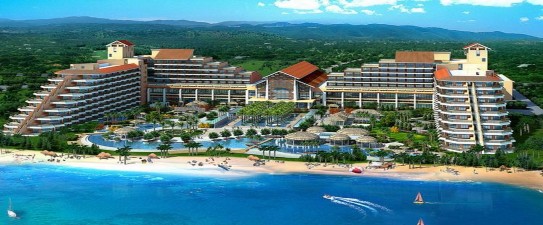
Resort hotels are built in tourist resorts based on natural resources such as beach hotels, mountain hotels. Guests come here mainly for the purpose of relaxation. Resort hotels are often dependent on weather conditions and therefore operate seasonally.
High-ranking resort hotels in our country are often concentrated in coastal tourist areas such as Ha Long, Nha Trang, Da Nang...
Figure 2.1: Vinpearlland Resort Hotel
- Suburban hotel
Suburban hotels are built on the outskirts of cities or urban centers. Their main market is weekend travelers, sometimes including business travelers with medium or low spending power.
In Vietnam, suburban hotels are not yet highly ranked and have not yet developed because the road infrastructure is not yet good, travel takes a lot of time, the environment in the suburbs is dusty...
- Roadside hotel
Roadside hotels are built along national highways to serve customers traveling on national highways using cars and motorbikes as means of transportation.
- Airport hotel
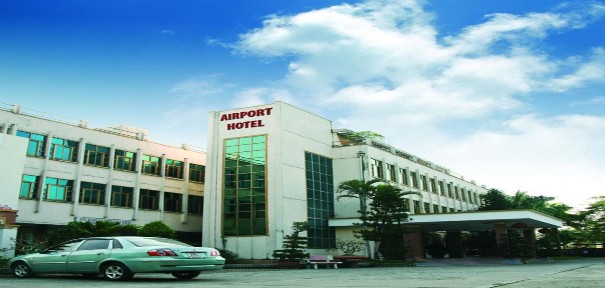
Airport hotels are built near major international airports. The target customers of this type of hotel are airline passengers who stop over at international airports due to mandatory schedules or for any other unexpected reasons. The room rates of most airport hotels in the world are included in the airline's package price.
Figure 2: Noi Bai International Airport Hotel
* Classification by level of service provision
- Luxury hotel
Luxury hotels are the highest ranked hotels, equivalent to 5-star hotels in Vietnam. They are large-scale hotels, equipped with expensive, luxurious facilities and beautifully decorated. They provide the highest level of additional services, especially additional room services, outdoor entertainment services, beauty services, meeting rooms, etc. This hotel has a very large area of common areas, a large parking lot and sells its products at the highest prices in the region.
- Hotel with full service
Full service hotels are hotels that sell their products at the second highest price in the region. This type of hotel corresponds to a 4-star hotel in Vietnam. The customer market of this hotel is a segment with relatively high payment capacity. In addition, full service hotels usually have parking lots.
spacious, offers room service, has a restaurant and offers some limited outdoor amenities.
- The hotel offers a limited number of services.
This type of hotel requires an average scale and corresponds to 3-star hotels in Vietnam, which are hotels that sell accommodation products at the third highest price and target customers with average payment capacity in the market. These types of hotels usually only provide a very limited number of services, in which the mandatory services here are: food and beverage services, some additional services such as laundry services, information services and some other additional services, not necessarily meeting rooms and outdoor entertainment services.
- Low-ranking hotel
Budget hotels are small-scale hotels with low ratings (1-2 stars), with room rates at a low level (below average) in the market. These hotels do not necessarily have food and beverage services, but must have some simple additional services that go along with the main accommodation services such as morning wake-up service, laundry service, and information service.
*Classified by accommodation product price
This classification is only applied to each country because it depends on the level of development of the hotel business in each country. To classify hotel businesses according to this criterion, experts must survey all hotels in the country, study and record the average published room prices and then create a scale, in which: the upper limit of the scale is the highest price of the hotels, and its lower limit is the lowest room price of the hotels in that country. People divide the scale into 100 equal parts with the unit of measurement in money and then mark the room prices of different hotel businesses on the scale. People divide hotels according to this criterion into 5 types: hotels with the highest price, hotels with high prices, hotels with average prices, hotels with low prices.
- Hotel with the highest price
Hotels with prices for accommodation products sold to the market that are in the range of 85th or higher on the scale. Thus, the two criteria for classifying hotels by service level and price must always be considered together.
- Hotel with high price
These are hotels that sell accommodation products to the market at relatively high prices, ranging from the 70th to 85th percentile on the scale.
+ Mid-range hotels
These are hotels that sell accommodation products to the market at an average price, ranging from 40 to 70 on the scale.
- Budget hotel
This type of hotel sells its accommodation products to the market at relatively low prices, ranging from the 20th to the 40th percentile on the scale.
- Hotel with lowest price
Hotels that sell accommodation to the market at the lowest price point, falling in the 20th percentile or lower on the scale.
*Classified by hotel size
Based on the number of bedrooms designed by the hotel, people divide hotels into the following types:
- Large scale hotel
As 5-star hotels, they currently have a design room count of 200 or more.
- Medium scale hotel
Hotels with 50 or more designed rooms up to nearly 200 rooms.
- Small scale hotel
Small hotels are at the lower end of the classification scale according to criteria.
above.
* Classification by form of ownership and management
- Private hotel
Private hotels are hotels that have an investor, either an individual or a limited liability company. The investor operates the hotel business himself and is solely responsible for the hotel's final business results.
- State hotel
State-owned hotels are hotels with initial investment capital from the state, operated and managed by a state-owned organization or company, and during the business process, they must take responsibility for the final business results of the hotel. According to the spirit of the Central Resolution III of the 9th Congress of the Communist Party of Vietnam, in the near future, this type of hotel business will gradually have to be transformed into a type of business with either only one investor or multiple investors, in which the state may be a shareholder.
- Joint venture hotel
Joint venture hotels are hotels in which two or more investors invest money to build the hotel and purchase equipment. In terms of management, two or more partners can participate in the operation and management of the hotel. Business results are divided into the capital contribution ratio of the investors or according to the agreement in the joint venture contract.
In fact, there are many types of joint venture hotels: ownership joint venture, management joint venture, mixed joint venture.
+ The ownership association is called joint stock hotels. These are hotels invested in and built by two or more individuals or two or more organizations. The final business results are divided according to the capital contribution ratio of the investors or shareholders.
+ Exclusive affiliated hotels
A franchised hotel is a privately owned hotel or a joint stock hotel. The hotel investor (called the buyer) must manage the hotel himself and is responsible for the final business results of the hotel. The buyer purchases from a hotel group (called the seller) the exclusive right to use the brand of a type of hotel business of the group in a certain locality for a certain period of time on the basis of a contract clearly stating the rights and obligations of each participating partner. The essence of the joint venture