
2.4.3.2 Local links
2.4.3.2.1 Provincial Links
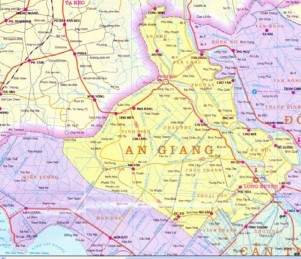
Currently, Chau Doc needs to link with other regions in the province to promote its own strengths as well as the strengths of the whole region for mutual development, such as: Tinh Bien and Tri Ton districts with the diverse culture of the Khmer people (annual bull racing or boat racing festivals); An Phu and Phu Tan districts with the culture of
Maybe you are interested!
-
 Solutions for tourism development in Tien Lang - 10
zt2i3t4l5ee
zt2a3gstourism, tourism development
zt2a3ge
zc2o3n4t5e6n7ts
- District People's Committees and authorities of communes with tourist attractions should support, promote, and provide necessary information to people, helping them improve their knowledge about tourism. Raise tourism awareness for local people.
*
* *
Due to limited knowledge and research time, the thesis inevitably has shortcomings. Therefore, I look forward to receiving guidance from teachers, experts as well as your comments to make the thesis more complete.
Chapter III Conclusion
Through the issues presented in Chapter II, we can come to some conclusions:
Based on the strengths of available tourism resources, the types of tourism in Tien Lang that need to be promoted in the coming time are sightseeing and resort tourism, discovery tourism, weekend tourism. To improve the quality and diversify tourism products, Tien Lang district needs to combine with local cultural tourism resources, at the same time combine with surrounding areas, build rich tourism products. The strengths of Tien Lang tourism are eco-tourism and cultural tourism, so developing Tien Lang tourism must always go hand in hand with restoring and preserving types of cultural tourism resources. Some necessary measures to support and improve the efficiency of exploiting tourism resources in Tien Lang are: strengthening the construction of technical facilities and labor force serving tourism, actively promoting and advertising tourism, and expanding forms of capital mobilization for tourism development.
CONCLUDE
I Conclusion
1. Based on the results achieved within the framework of the thesis's needs, some basic conclusions can be drawn as follows:
Tien Lang is a locality with great potential for tourism development. The relatively abundant cultural tourism resources and ecological tourism resources have great appeal to tourists. Based on this potential, Tien Lang can build a unique tourism industry that is competitive enough with other localities within Hai Phong city and neighboring areas.
In recent years, the exploitation of the advantages of resources to develop tourism and build tourist routes in Tien Lang has not been commensurate with the available potential. In terms of quantity, many resource objects have not been brought into the purpose of tourism development. In terms of time, the regular service time has not been extended to attract more visitors. Infrastructure and technical facilities are still weak. The labor force is still thin and weak in terms of expertise. Tourism programs and routes have not been organized properly, the exploitation content is still monotonous, so it has not attracted many visitors. Although resources have not been mobilized much for tourism development, they are facing the risk of destruction and degradation.
2. Based on the results of investigation, analysis, synthesis, evaluation and selective absorption of research results of related topics, the thesis has proposed a number of necessary solutions to improve the efficiency of exploiting tourism resources in Tien Lang such as: promoting the restoration and conservation of tourism resources, focusing on investment and key exploitation of ecotourism resources, strengthening the construction of infrastructure and tourism workforce. Expanding forms of capital mobilization. In addition, the thesis has built a number of tourist routes of Hai Phong in which Tien Lang tourism resources play an important role.
Exploiting Tien Lang tourism resources for tourism development is currently facing many difficulties. The above measures, if applied synchronously, will likely bring new prospects for the local tourism industry, contributing to making Tien Lang tourism an important economic sector in the district's economic structure.
REFERENCES
1. Nhuan Ha, Trinh Minh Hien, Tran Phuong, Hai Phong - Historical and cultural relics, Hai Phong Publishing House, 1993
2. Hai Phong City History Council, Hai Phong Gazetteer, Hai Phong Publishing House, 1990.
3. Hai Phong City History Council, History of Tien Lang District Party Committee, Hai Phong Publishing House, 1990.
4. Hai Phong City History Council, University of Social Sciences and Humanities, VNU, Hai Phong Place Names Encyclopedia, Hai Phong Publishing House. 2001.
5. Law on Cultural Heritage and documents guiding its implementation, National Political Publishing House, Hanoi, 2003.
6. Tran Duc Thanh, Lecture on Tourism Geography, Faculty of Tourism, University of Social Sciences and Humanities, VNU, 2006
7. Hai Phong Center for Social Sciences and Humanities, Some typical cultural heritages of Hai Phong, Hai Phong Publishing House, 2001
8. Nguyen Ngoc Thao (editor-in-chief, Tourism Geography, Hai Phong Publishing House, two volumes (2001-2002)
9. Nguyen Minh Tue and group of authors, Hai Phong Tourism Geography, Ho Chi Minh City Publishing House, 1997.
10. Nguyen Thanh Son, Hai Phong Tourism Territory Organization, Associate Doctoral Thesis in Geological Geography, Hanoi, 1996.
11. Decision No. 2033/QD – UB on detailed planning of Tien Lang town, Hai Phong city until 2020.
12. Department of Culture, Information, Hai Phong Museum, Hai Phong relics
- National ranked scenic spot, Hai Phong Publishing House, 2005. 13. Tien Lang District People's Committee, Economic Development Planning -
Culture - Society of Tien Lang district to 2010.
14.Website www.HaiPhong.gov.vn
APPENDIX 1
List of national ranked monuments
STT
Name of the monument
Number, year of decisiondetermine
Location
1
Gam Temple
938 VH/QĐ04/08/1992
Cam Khe Village- Toan Thang commune
2
Doc Hau Temple
9381 VH/QĐ04/08/1992
Doc Hau Village –Toan Thang commune
3
Cuu Doi Communal House
3207 VH/QĐDecember 30, 1991
Zone II of townTien Lang
4
Ha Dai Temple
938 VH/QĐ04/08/1992
Ha Dai Village –Tien Thanh commune
APPENDIX II
STT
Name of the monument
Number, year of decision
Location
1
Phu Ke Pagoda Temple
178/QD-UBJanuary 28, 2005
Zone 1 - townTien Lang
2
Trung Lang Temple
178/QD-UBJanuary 28, 2005
Zone 4 – townTien Lang
3
Bao Khanh Pagoda
1900/QD-UBAugust 24, 2006
Nam Tu Village -Kien Thiet commune
4
Bach Da Pagoda
1792/QD-UB11/11/2002
Hung Thang Commune
5
Ngoc Dong Temple
177/QD-UBNovember 27, 2005
Tien Thanh Commune
6
Tomb of Minister TSNhu Van Lan
2848/QD-UBSeptember 19, 2003
Nam Tu Village -Kien Thiet commune
7
Canh Son Stone Temple
2160/QD-UBSeptember 19, 2003
Van Doi Commune –Doan Lap
8
Meiji Temple
2259/QD-UBSeptember 19, 2002
Toan Thang Commune
9
Tien Doi Noi Temple
477/QD-UBSeptember 19, 2005
Doan Lap Commune
10
Tu Doi Temple
177/QD-UBJanuary 28, 2005
Doan Lap Commune
11
Duyen Lao Temple
177/QD-UBJanuary 28, 2005
Tien Minh Commune
12
Dinh Xuan Uc Pagoda
177/QD-UBJanuary 28, 2005
Bac Hung Commune
13
Chu Khe Pagoda
177/QD-UBJanuary 28, 2005
Hung Thang Commune
14
Dong Dinh
2848/QD-UBNovember 21, 2002
Vinh Quang Commune
15
President's Memorial HouseTon Duc Thang
177/QD-UBJanuary 28, 2005
NT Quy Cao
Ha Dai Temple
Ben Vua Temple
Tien Lang hot spring
div.maincontent .p { color: black; font-family:"Times New Roman", serif; font-style: normal; font-weight: normal; text-decoration: none; font-size: 14pt; margin:0pt; } div.maincontent p { color: black; font-family:"Times New Roman", serif; font-style: normal; font-weight: normal; text-decoration: none; font-size: 14pt; margin:0pt; } div.maincontent .s1 { color: black; font-family:"Times New Roman", serif; font-style: normal; font-weight: normal; font-size: 16pt; } div.maincontent .s2 { color: black; font-family:"Times New Roman", serif; font-style: italic; font-weight: bold; text-decoration: none; font-size: 14pt; } div.maincontent .s3 { color: black; font-family:"Times New Roman", serif; font-style: italic; font-weight: normal; text-decoration: none; font-size: 14pt; } div.maincontent .s4 { color: black; font-family:"Times New Roman", serif; font-style: normal; font-weight: normal; font-size: 14pt; } div.maincontent .s5 { color: black; font-family:"Times New Roman", serif; font-style: normal; font-weight: bold; font-size: 14pt; } div.maincontent .s6 { color: black; font-family:"Times New Roman", serif; font-style: normal; font-weight: normal; text-decoration: none; font-size: 14pt; } div.maincontent .s7 { color: black; font-family:"Times New Roman", serif; font-style: normal; font-weight: bold; text-decoration: none; font-size: 14pt; } div.maincontent .s8 { color: black; font-family:"Times New Roman", serif; font-style: normal; font-weight: normal; text-decoration: none; font-size: 9pt; vertical-align: 6pt; } div.maincontent .s9 { color: black; font-family:"Times New Roman", serif; font-style: normal; font-weight: bold; text-decoration: none; font-size: 12pt; } div.maincontent .s11 { color: black; font-family:"Times New Roman", serif; font-style: normal; font-weight: normal; tex
Solutions for tourism development in Tien Lang - 10
zt2i3t4l5ee
zt2a3gstourism, tourism development
zt2a3ge
zc2o3n4t5e6n7ts
- District People's Committees and authorities of communes with tourist attractions should support, promote, and provide necessary information to people, helping them improve their knowledge about tourism. Raise tourism awareness for local people.
*
* *
Due to limited knowledge and research time, the thesis inevitably has shortcomings. Therefore, I look forward to receiving guidance from teachers, experts as well as your comments to make the thesis more complete.
Chapter III Conclusion
Through the issues presented in Chapter II, we can come to some conclusions:
Based on the strengths of available tourism resources, the types of tourism in Tien Lang that need to be promoted in the coming time are sightseeing and resort tourism, discovery tourism, weekend tourism. To improve the quality and diversify tourism products, Tien Lang district needs to combine with local cultural tourism resources, at the same time combine with surrounding areas, build rich tourism products. The strengths of Tien Lang tourism are eco-tourism and cultural tourism, so developing Tien Lang tourism must always go hand in hand with restoring and preserving types of cultural tourism resources. Some necessary measures to support and improve the efficiency of exploiting tourism resources in Tien Lang are: strengthening the construction of technical facilities and labor force serving tourism, actively promoting and advertising tourism, and expanding forms of capital mobilization for tourism development.
CONCLUDE
I Conclusion
1. Based on the results achieved within the framework of the thesis's needs, some basic conclusions can be drawn as follows:
Tien Lang is a locality with great potential for tourism development. The relatively abundant cultural tourism resources and ecological tourism resources have great appeal to tourists. Based on this potential, Tien Lang can build a unique tourism industry that is competitive enough with other localities within Hai Phong city and neighboring areas.
In recent years, the exploitation of the advantages of resources to develop tourism and build tourist routes in Tien Lang has not been commensurate with the available potential. In terms of quantity, many resource objects have not been brought into the purpose of tourism development. In terms of time, the regular service time has not been extended to attract more visitors. Infrastructure and technical facilities are still weak. The labor force is still thin and weak in terms of expertise. Tourism programs and routes have not been organized properly, the exploitation content is still monotonous, so it has not attracted many visitors. Although resources have not been mobilized much for tourism development, they are facing the risk of destruction and degradation.
2. Based on the results of investigation, analysis, synthesis, evaluation and selective absorption of research results of related topics, the thesis has proposed a number of necessary solutions to improve the efficiency of exploiting tourism resources in Tien Lang such as: promoting the restoration and conservation of tourism resources, focusing on investment and key exploitation of ecotourism resources, strengthening the construction of infrastructure and tourism workforce. Expanding forms of capital mobilization. In addition, the thesis has built a number of tourist routes of Hai Phong in which Tien Lang tourism resources play an important role.
Exploiting Tien Lang tourism resources for tourism development is currently facing many difficulties. The above measures, if applied synchronously, will likely bring new prospects for the local tourism industry, contributing to making Tien Lang tourism an important economic sector in the district's economic structure.
REFERENCES
1. Nhuan Ha, Trinh Minh Hien, Tran Phuong, Hai Phong - Historical and cultural relics, Hai Phong Publishing House, 1993
2. Hai Phong City History Council, Hai Phong Gazetteer, Hai Phong Publishing House, 1990.
3. Hai Phong City History Council, History of Tien Lang District Party Committee, Hai Phong Publishing House, 1990.
4. Hai Phong City History Council, University of Social Sciences and Humanities, VNU, Hai Phong Place Names Encyclopedia, Hai Phong Publishing House. 2001.
5. Law on Cultural Heritage and documents guiding its implementation, National Political Publishing House, Hanoi, 2003.
6. Tran Duc Thanh, Lecture on Tourism Geography, Faculty of Tourism, University of Social Sciences and Humanities, VNU, 2006
7. Hai Phong Center for Social Sciences and Humanities, Some typical cultural heritages of Hai Phong, Hai Phong Publishing House, 2001
8. Nguyen Ngoc Thao (editor-in-chief, Tourism Geography, Hai Phong Publishing House, two volumes (2001-2002)
9. Nguyen Minh Tue and group of authors, Hai Phong Tourism Geography, Ho Chi Minh City Publishing House, 1997.
10. Nguyen Thanh Son, Hai Phong Tourism Territory Organization, Associate Doctoral Thesis in Geological Geography, Hanoi, 1996.
11. Decision No. 2033/QD – UB on detailed planning of Tien Lang town, Hai Phong city until 2020.
12. Department of Culture, Information, Hai Phong Museum, Hai Phong relics
- National ranked scenic spot, Hai Phong Publishing House, 2005. 13. Tien Lang District People's Committee, Economic Development Planning -
Culture - Society of Tien Lang district to 2010.
14.Website www.HaiPhong.gov.vn
APPENDIX 1
List of national ranked monuments
STT
Name of the monument
Number, year of decisiondetermine
Location
1
Gam Temple
938 VH/QĐ04/08/1992
Cam Khe Village- Toan Thang commune
2
Doc Hau Temple
9381 VH/QĐ04/08/1992
Doc Hau Village –Toan Thang commune
3
Cuu Doi Communal House
3207 VH/QĐDecember 30, 1991
Zone II of townTien Lang
4
Ha Dai Temple
938 VH/QĐ04/08/1992
Ha Dai Village –Tien Thanh commune
APPENDIX II
STT
Name of the monument
Number, year of decision
Location
1
Phu Ke Pagoda Temple
178/QD-UBJanuary 28, 2005
Zone 1 - townTien Lang
2
Trung Lang Temple
178/QD-UBJanuary 28, 2005
Zone 4 – townTien Lang
3
Bao Khanh Pagoda
1900/QD-UBAugust 24, 2006
Nam Tu Village -Kien Thiet commune
4
Bach Da Pagoda
1792/QD-UB11/11/2002
Hung Thang Commune
5
Ngoc Dong Temple
177/QD-UBNovember 27, 2005
Tien Thanh Commune
6
Tomb of Minister TSNhu Van Lan
2848/QD-UBSeptember 19, 2003
Nam Tu Village -Kien Thiet commune
7
Canh Son Stone Temple
2160/QD-UBSeptember 19, 2003
Van Doi Commune –Doan Lap
8
Meiji Temple
2259/QD-UBSeptember 19, 2002
Toan Thang Commune
9
Tien Doi Noi Temple
477/QD-UBSeptember 19, 2005
Doan Lap Commune
10
Tu Doi Temple
177/QD-UBJanuary 28, 2005
Doan Lap Commune
11
Duyen Lao Temple
177/QD-UBJanuary 28, 2005
Tien Minh Commune
12
Dinh Xuan Uc Pagoda
177/QD-UBJanuary 28, 2005
Bac Hung Commune
13
Chu Khe Pagoda
177/QD-UBJanuary 28, 2005
Hung Thang Commune
14
Dong Dinh
2848/QD-UBNovember 21, 2002
Vinh Quang Commune
15
President's Memorial HouseTon Duc Thang
177/QD-UBJanuary 28, 2005
NT Quy Cao
Ha Dai Temple
Ben Vua Temple
Tien Lang hot spring
div.maincontent .p { color: black; font-family:"Times New Roman", serif; font-style: normal; font-weight: normal; text-decoration: none; font-size: 14pt; margin:0pt; } div.maincontent p { color: black; font-family:"Times New Roman", serif; font-style: normal; font-weight: normal; text-decoration: none; font-size: 14pt; margin:0pt; } div.maincontent .s1 { color: black; font-family:"Times New Roman", serif; font-style: normal; font-weight: normal; font-size: 16pt; } div.maincontent .s2 { color: black; font-family:"Times New Roman", serif; font-style: italic; font-weight: bold; text-decoration: none; font-size: 14pt; } div.maincontent .s3 { color: black; font-family:"Times New Roman", serif; font-style: italic; font-weight: normal; text-decoration: none; font-size: 14pt; } div.maincontent .s4 { color: black; font-family:"Times New Roman", serif; font-style: normal; font-weight: normal; font-size: 14pt; } div.maincontent .s5 { color: black; font-family:"Times New Roman", serif; font-style: normal; font-weight: bold; font-size: 14pt; } div.maincontent .s6 { color: black; font-family:"Times New Roman", serif; font-style: normal; font-weight: normal; text-decoration: none; font-size: 14pt; } div.maincontent .s7 { color: black; font-family:"Times New Roman", serif; font-style: normal; font-weight: bold; text-decoration: none; font-size: 14pt; } div.maincontent .s8 { color: black; font-family:"Times New Roman", serif; font-style: normal; font-weight: normal; text-decoration: none; font-size: 9pt; vertical-align: 6pt; } div.maincontent .s9 { color: black; font-family:"Times New Roman", serif; font-style: normal; font-weight: bold; text-decoration: none; font-size: 12pt; } div.maincontent .s11 { color: black; font-family:"Times New Roman", serif; font-style: normal; font-weight: normal; tex -
 Exploiting the cultural value of Hang Kenh communal house - Hai Phong to serve tourism development - 1
 -
 Restoration and Restoration of Monuments Associated with the Construction and Development of Zen Tourism
 -
 Foreign Studies on Improving Competitiveness for Tourism Development
 -
 Applying Local Marketing in Bac Ninh Tourism Development - 2
The Cham people's characteristics or the Thoai Son region with its long-standing Oc Eo culture.
2.4.3.2.2 Out-of-province links
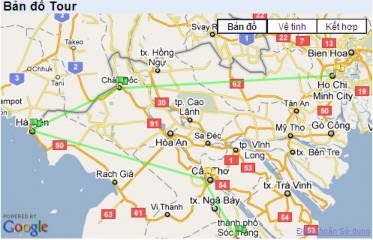
Localities need to expand tourism links with provinces with tourism advantages to build regional tours with large urban centers such as Ho Chi Minh City, Can Tho, or with regions with tourism potential to help supplement tourism.
supplement and support local tourism such as Ha Tien or Soc Trang. In addition, Chau Doc can also link to build the Ho Chi Minh City-Can Tho-Chau Doc-Ha Tien route (see Appendix 5) .
CHAPTER 3: CONCLUSION AND RECOMMENDATIONS
--- oOo ---
Chau Doc town has flourished in recent years and achieved important achievements thanks to infrastructure and facilities investment projects of both the State and private sectors. This is the result of preferential policies to encourage investment and a favorable business environment that has attracted investors to do business in Chau Doc.
Efforts to promote tourist destinations such as the organization of the Mekong Delta Tourism Festival; the annual Ba Chua Xu Festival and Procession have had an impact on tourism development in Chau Doc. The town has achieved steady growth in the number of visitors and tourism revenue. At the same time, efforts in urban construction management over the past year have contributed to creating a new face for Chau Doc tourism. Investment projects in the construction of hotels, restaurants, entertainment areas, sightseeing areas and commercial centers have made Chau Doc tourism products more diverse, with higher quality to meet the diverse needs of the domestic tourist market. Social order and border security have been improved and the "Commercial Civilization" project has been introduced and put into practice, initially creating more trust and reducing anxiety for tourists when coming to Chau Doc, especially during the peak festival season. In particular, the successful organization of the 2nd Mekong Delta Tourism Festival has created a good reputation, contributing to promoting the image of Chau Doc tourism, establishing business cooperation relationships and promoting investment in tourism development.
However, the locality is still confused in developing a complete local strategy, building an attractive local image in which tourism, specifically cultural-spiritual tourism, is the key factor to stimulate other sectors as well as the local economy to develop. In addition, the locality still has many limitations, the weakest point of which is the institutional aspect in the assignment of public servants.
clear and specific functions and tasks as well as coordination of relevant tourism agencies.
To achieve the goals as well as overcome the limitations and shortcomings in local tourism development through local analysis and assessment, it is necessary to quickly and specifically carry out the following urgent priorities:
1. Authorities related to tourism:
Chau Doc Town People's Committee :
To further enhance the effectiveness of tourism promotion and encourage local investment attraction, Chau Doc Town People's Committee, as the highest State management agency at the district level, needs to complete the planning of tourism development, specifically develop a master plan for tourism development in the town and detailed plans for key tourist destinations as well as build unique and distinctive brands for the local tourism industry, including tourist destination brands, brands of tourism businesses, hotels and attractive local tourism products.
Next, the Town People's Committee needs to improve the management organization and capacity of State management officials. Review construction planning projects that are no longer suitable and revise them to incorporate considerations of tourism development needs.
Economic Department :
Due to the weakness of not having a specialized department for tourism management, the Economic Department mainly focuses on statistics and preparing reports to submit to the Town People's Committee according to regulations and when requested by the leaders. Almost all inspections of business units or presiding over tourism development research projects have not been carried out. The Department has not been able to provide much support to business units in consulting and explaining policies and regulations as well as other market information. Therefore, it is necessary to establish a specialized department for tourism under the Economic Department and be directly responsible for a Deputy Department Head. This department needs 2 staff.
or higher, one in charge of tourism statistics and research and the other in charge of implementing regulations, policies and inspections. The economic department should have the following functions and duties:
Functions and duties of the Economic Department:
Advise the Town People's Committee on State management of tourism that can be applied to business units, individuals and other tourism-related agencies and organizations;
Disseminate, educate and provide tourism information to tourists as well as other relevant local organizations and individuals;
Conduct research on solutions to ensure security, safety and hygiene and propose to the Town People's Committee;
Management of local tourism resources;
Carry out statistics and reports on tourism investment situation to the Town People's Committee;
Instructing the town's State officials on issues in State management of tourism;
Inspect organizations and individuals operating in tourism locally in the field of implementing State regulations on tourism.
Tourism Development Management Board:
The Tourism Development Management Board still has many limitations such as not conducting in-depth market research, forecasting demand and potential products and the feasibility of business opportunities right from the planning stage to ensure sustainability in accordance with market demand. In addition, there are some noteworthy points about the functions and tasks of the Management Board.
Therefore, the Tourism Development Management Board needs to overcome the shortcomings in the current organizational structure with the following immediate priorities:
Establish an Interagency Tourism Control Team
In practice, controlling domestic tourists is more difficult than international tourists. Chau Doc needs a separate agency to control the activities of local accommodation establishments. The team will operate under the leadership of the Economic Department (or the Town Police). Strict control of guests will avoid social evils and ensure the safety of guests, national security, better management of tourism activities and service quality, and identification of
more accurately the types and rates of taxes that can be collected, obtain more reliable tourism statistics and increase revenue for the State budget. The headquarters of the Team should be located in a convenient location, on the one hand, so that local hotels and motels can easily come to register temporary residence for guests and declare revenue, on the other hand, the Team's officers can go to inspect accommodation establishments at night. The interdisciplinary tourism control team should have a number of functions and tasks as follows:
Functions and duties of the Interdisciplinary Tourism Control Team
The Team's staff comes from the Tourism Development Management Board, Market Management Board, Town Police and Tax Department, led by the Tourism Development Management Board.
The main function and task is to check and inspect the operation of accommodation establishments regarding the number of rooms occupied, the actual number of guests staying, reports, room rates, taxes and fees, security and safety for guests.
Each unit will make its own record and report to the People's Committee about violations.
Inspections must respect the normal operations of the facility and the guests' need for rest.
Establish a Tourist Information and Guidance Center
The Tourism Development Management Board is the governing body of this center. The center must build good relationships with both government agencies and business units, as well as other interested organizations and individuals outside to update and share the latest and most strategic information. The center needs to build a highly reliable tourism database to serve as a basis for localizing tourism training materials and providing content for promotional advertising activities. The center needs to link central and provincial tourism training programs with local tourism business units and find opportunities to organize training courses for local tourism human resources. The tourism business is not yet developed in Chau Doc. The establishment of a tourism information and guidance center is a good initiative to promote the local tourism business.
Tourist information and guidance centers need to have a number of functions and tasks as follows:
Functions and duties of the Tourist Information and Guidance Center:
The office operates under the management of the Tourism Development Management Board.
The office is responsible for planning and implementing promotional programs and promoting cultural tourism in the town.
The second responsibility is to collect and document the town's tourism information and data.
The third responsibility is to train the application of information technology in guest management and state management of tourism in the town.
2. Cultural-spiritual tourism:
The current chaotic situation of tourism business organization prevents localities from providing quality tourism services and improving tourist satisfaction. Tourism businesses also disrupt the market, especially during peak seasons, by changing service quality and prices to achieve the highest profits without paying attention to tourist satisfaction. In addition, the phenomenon of holy touts during festival seasons or at historical and cultural relics has lost the beauty of visiting the locality (see Appendix 7).
Spiritual culture is a unique type of spiritual culture, expressed in sacred feelings, beliefs, respect and gratitude... This type of tourism has higher spiritual needs than other types of tourism, so it requires local authorities to have appropriate priority policies to improve the current situation.
Management of individual businesses
These households are mainly concentrated in Nui Sam ward, with a total of 450 business households including 260 motels. The operations of these businesses have created a huge source of income and stable jobs for a large number of local people. However, due to the seasonal nature of the business, mainly during the main festival period (from March to May), it has led to low-quality business and an uncontrollable business environment.
Therefore, controlling the business ethics of individual businesses is currently a priority for the locality. The tourism development management board needs to set standards on environmental hygiene and food safety and conduct regular inspections of compliance by accommodation and food businesses. The management board also needs to publicize prices and force businesses to commit to selling at the listed price. In addition, the management board should strictly prohibit and severely punish the phenomena of touts and stalking customers, street vendors, price gouging and other social evils that have harassed visitors during their pilgrimages in the locality.
Ensuring security and order - protecting the landscape
The local government needs to better support the Sam Mountain Temple Management Board in restoring order in the areas around the temple to ensure that the landscape architecture and security are not affected and that visitors to the locality are not affected.
To address the above limitations, there should be more representatives of the local community, especially small tourism businesses, in the Sam Mountain Mausoleum Management Board. Each tourism service group such as funeral services, food, accommodation, transportation, etc. can elect a group leader to lead the tourism service departments of the Board to direct business activities according to the regulations and support programs of local government agencies. It is necessary to add tourism service business conventions to the Board's operating regulations. The scope of the Board's operations also needs to be expanded to the entire ward area. It is necessary to reduce the number of administrative staff. There is still a need for local government intervention in regulating the Board's operations and improving the effectiveness of implementing voluntary conventions.
Organizing events-fairs-trade promotion:
Upgraded to a National Festival, the Management Board of Sam Mountain Mausoleum needs to improve its capacity to organize events such as seminars, exhibitions, trade - tourism and investment promotion, public relations or cultural and artistic performances to better meet higher requirements in organizing the Festival.
In addition, the locality also needs to develop a program combining the festival of the Lady of Sam Mountain, the festival commemorating the famous Thoai Ngoc Hau, the bull racing festival... as well as combining the unique culture of the cultural festival of the four ethnic groups: Kinh, Cham, Hoa, Khmer. The locality also needs to develop programs to introduce the history, famous relic sites of the region, recalling wonderful relics such as Tay An pagoda with the Buu Son Ky Huong religion or Hang pagoda with many mysterious legends... The locality also needs to develop a website to introduce the history, culture, places to eat and stay as well as festivals, folk beliefs, religions of the region... Because tourism is an experience, cultural-spiritual tourism is about trust, increasing the beauty, the good, the understanding, the depth, the experience when coming to the region.
There needs to be synchronous coordination between local government agencies and households.business
Currently, the agencies responsible for building strategies for localities lack synchronous coordination: such as between the Economic Department and the Tourism Development Board (currently transferred to the town's Department of Culture and Information), the town's police department... as well as the lack of coordination between local authorities, businesses and local people, leading to many shortcomings in designing and building local images to attract tourists (see Appendix 7).
Lack of communication between the government and the business sector can lead to unfavorable situations for both sides such as impractical and ineffective regulations and policies and non-compliance by the business sector with government directives and regulations. Therefore, a forum should be established to promote communication and information sharing between the government and the business sector. A working group consisting of the Economic Department, the Tourism Development Management Board and representatives of local tourism businesses should prepare an agenda, invite guests and hold meetings once a month. Report