
After the Law on Tourism was promulgated, Vietnam tourism has developed more strongly and sustainable tourism has been increasingly paid attention to in the general development of tourism activities to improve the quality, scale and efficiency of tourism activities, making tourism a key economic sector of the country.
1.1.2 Tourism resources (TNDL)
TNDL is a type of resource that has the same characteristics as other types of resources in general, but has some unique characteristics associated with the development of the tourism industry.
According to Pirojnik: "Tourism resources are natural, cultural-historical complexes and their components, creating conditions for the restoration and development of human physical and mental strength, their working capacity and health, within the structure of current and future tourism needs, within the economic and technical capabilities, they are used to directly and indirectly produce tourism and leisure services". (19[2]).
Nguyen Minh Tue and nnk. also stated that: “TNDL is the totality of nature and historical culture and their components that contribute to the restoration and development of human physical strength, intelligence, their working ability and health. These resources are used for direct and indirect needs, for the production of tourism services”. (19[2]).
Maybe you are interested!
-
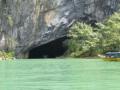
 Tourism potential and solutions for sustainable tourism development in Phong Nha - Ke Bang National Park, Quang Binh - 12
 -
 Research on potential, current situation and proposed solutions for sustainable tourism development in Van Long Wetland Nature Reserve, Ninh Binh province - 13
 -
 Solutions for sustainable tourism development in the Central Highlands - 23
 -
 Current situation and solutions for sustainable tourism development in Thien Cam beach tourist area - Ha Tinh - 1
 -
 Research and propose solutions to protect the environment in the direction of sustainable tourism development in Binh Thuan province - 19
Clause 4 (Article 4, Chapter 1) of the 2005 Law on Tourism of Vietnam stipulates: “Tourism resources are natural landscapes, natural elements, historical and cultural relics, creative works of human labor and other human values that can be used to meet tourism needs, and are basic factors for forming tourist areas, tourist spots, tourist routes and tourist cities”.
Thus, TNDL is considered as the premise for tourism development. The more diverse and unique TNDL is with high concentration, the more attractive it is to tourists and the more effective it is for tourism business.
Natural resources is a historical category, the exploitation of which depends on many economic, social, scientific, technical and political conditions, so it is increasingly expanded. Therefore, natural resources include both natural resources that have been exploited, are being exploited and natural resources that have not been exploited.
1.1.2.1 Natural tourism resources
If planned, protected and exploited reasonably and sustainably, most natural resources are classified as inexhaustible resources, renewable resources or resources with slow degradation.
For example: Water resources, according to the law of circulation, if forests are protected and exploited properly, water resources are not polluted by waste from life and production, water resources are classified as endless resources.
Climate resources are also classified as inexhaustible resources. However, due to waste from economic activities including tourism, unreasonable protection, indiscriminate exploitation of forests, and reduced forest areas, the air can be polluted by dust, toxic emissions, noise, and heat. The temperature of the Earth has increased due to increased emissions and increased greenhouse effect, causing global climate change.
Biological resources, especially in tropical and equatorial regions, have the ability to regenerate quickly. However, only under the condition that these resources are exploited and protected properly, not exceeding their biological limits and regeneration capacity.
If topographic and geological resources are properly exploited and preserved without destroying the landscape, this type of resource can be exploited many times. The time it takes for them to change on their own must be calculated from thousands of years to millions of years.
Most of the exploitation of natural resources is greatly affected by weather conditions. Organizing mountain climbing tours, visiting mountainous areas or going to the beach, visiting rivers depends on many weather conditions. In particular, it is impossible to organize river tours during the flood season, and it is impossible to swim in the cold season. In the dry season, the water reserves of waterfalls, lakes, and river systems dry up, making it difficult for water sports tourism and river tours.
Some landscape and tourism spots based on natural conditions are often far from densely populated areas. This feature is costly and difficult to organize tourism activities, but on the other hand, it is a factor that contributes to making natural tourism attractive and better preserved because it is less negatively affected by economic activities.
– society. For example, some national parks such as Ba Be, Tam Dao, Hoang Lien Son, Pu Mat, Vu Quang, Phong Nha - Ke Bang, Bach Ma, etc. Waterfalls such as: Thac Bac (Tam Dao),
Silver Waterfall (Sa Pa); Ban Gioc Waterfall (Cao Bang); Ponggua Premn Waterfall (Da Lat),...
1.1.2.2 Human tourism resources
Humanistic tourism resources are created by humans and are affected by time, nature and humans themselves. Therefore, they are easily degraded, destroyed and cannot recover even without human intervention. Therefore, historical and cultural relics, when abandoned, will also deteriorate quickly; intangible cultural values such as folk songs, dances, festivals, traditional occupations, customs, practices, etc., when not preserved and promoted effectively, will be lost and disappear. Therefore, when exploiting humanistic tourism resources for tourism development purposes, it is necessary to pay attention to investing in conservation, restoration regularly, scientifically and effectively.
Human tourism resources are created by humans and are therefore universal. Wherever there are humans, there are human resources, many of which are attractive to tourists and have been or will be used for tourism development.
Humanistic natural resources in each region and each country often have their own unique values. Because natural conditions and socio-economic conditions are the factors that nurture and form humanistic natural resources in each locality and each country, humanistic natural resources in each region and each country have their own unique values. Therefore, in the process of exploiting and preserving humanistic natural resources, it is necessary to pay attention to protecting and promoting the unique values of resources.
Humanistic tourism resources are often distributed near residential areas, especially concentrated in densely populated areas. Because they are born in the process of social development and are publications created by humans. Unlike natural tourism resources, the exploitation of most types of humanistic tourism resources is often less affected by weather phenomena such as rain or cold, so the seasonality is also less than that of natural tourism resources.
1.1.3 Tourism classification
In Vietnam, tourism activities can be divided into many different groups depending on the criteria and purposes that we set. Common criteria often used to classify tourism are resource environment, trip purpose and territory of operation. In addition, we can also classify tourism based on the geographical characteristics of the destination.
tourism, means of transport, type of accommodation, age of tourists, length of trip, form of organization or form of contract. Currently, most Vietnamese tourism experts divide tourism types according to the following basic criteria:
 Classification by resource environment:
According to Pirojnik, tourism is a clearly resource-oriented industry. Depending on the resource environment, tourism activities are divided into two large groups: cultural tourism and nature tourism.
People call it cultural tourism when tourism activities take place mainly in a humanistic environment, or the activities focus on exploiting humanistic tourism resources.
Human tourism resources are a group of resources of artificial origin, meaning they are created by humans. According to the current general view, all products of material and spiritual value created by humans are considered cultural products.
Types of human tourism resources: historical and cultural relics, festivals, traditional crafts and craft villages, tourism objects associated with ethnology, cultural and sports activities or event-related activities.
On the contrary, nature tourism takes place to satisfy people's need to return to nature.
Nature tourism is considered a type of tourism activity that brings visitors to places with favorable conditions, fresh natural environment, attractive natural landscapes... to satisfy their specific needs.
To develop natural tourism, there must be natural tourism resources. Natural tourism resources include: terrain (mountainous areas with beautiful landscapes, caves, beaches, natural relics), climate (climate suitable for human health, serving for medical treatment and convalescence), hydrology (water surface and shallow coastal areas, mineral water points, hot springs), biological (national parks, nature reserves, biological attractions, some special ecosystems).
Ecotourism:
According to the general concept in international conferences: Ecotourism is a type of tourism.
Nature-based tourism supports conservation activities and is managed sustainably in terms of ecology (natural elements are still wild, less altered). Tourists are guided to protect the environment and nature, thereby helping tourists improve their understanding and enjoy beautiful landscapes, wildlife as well as local cultural values, thereby awakening tourists' love and responsibility for preserving natural cultural values.
According to the definition in the National workshop on ecotourism in September 1999: Ecotourism is a type of tourism based on nature and indigenous culture associated with environmental education and contributing efforts to conservation and sustainable development with the active participation of local communities.
 Classification by purpose of trip:
- Pure tourism: sightseeing, entertainment, relaxation, discovery, sports, holidays
festival…
-Combined purposes: religion, research, conference, sport, medical treatment, visit
personal, business…
 Classification by territory of operation:
- International travel:
International tourism is the travel of foreigners to visit and travel.
Outbound tourism is a trip of domestic people to visit and travel abroad.
- Domestic travel:
Domestic tourism is understood as activities of organizing and serving domestic people to travel, relax and visit tourist attractions within the national territory, basically without foreign currency transactions.
- National tourism:
National tourism includes all tourism activities of a country from sending tourists abroad to serving domestic and foreign tourists. Tourism within the country.
1.2 Perspectives on sustainable tourism development
1.2.1 Concept of sustainable tourism
Sustainable development has become the goal of economic and social development of all mankind in the 21st century. Sustainable tourism development has become the trend and goal of tourism economic development of many countries in the world as well as Vietnam in the present and future. Therefore, the perspective of tourism development needs to be enlightened and applied in the organization, management, implementation and evaluation of tourism activities and in the research and implementation of tourism planning.
According to the World Commission on Environment and Development (WCED): “Sustainable development is development that meets the needs of the present without compromising the ability of future generations to meet their own needs.” (8[1]).
According to Clause 21, Article 4, Chapter I - Vietnam Tourism Law (2005): "Sustainable tourism is tourism development that meets current needs without harming the ability to meet future tourism needs".
1.2.2 Goals of sustainable development
- Sustainable economic development: Tourism is an economic sector, so sustainable tourism development needs to be economically sustainable, income must be greater than costs, must achieve high and stable growth over a long period of time, optimize the contribution of the tourism sector to national income, and contribute to promoting the development of other economic sectors.
- Sustainable environmental development: Must use and protect tourism resources and environment in an economical and sustainable manner, ensure the regeneration and restoration of resources, improve the quality of resources and environment, attract communities and tourists to participate in activities to preserve and enhance resources.
- Sustainable social development: Attracting the community to participate in tourism activities, creating many jobs, contributing to improving the quality of life of local communities, improving social equity, diversifying and improving the quality of tourism products, highly meeting the needs of tourists.
Thus, planners in the tourism planning process need to consider meeting the sustainable tourism development goals of the planned territories.
To achieve sustainable tourism development, the process of tourism development and tourism planning must be carried out with principles.
1.2.3 Principles of sustainable tourism development
- Using resources sustainably: The conservation and sustainable use of natural, cultural and social resources is essential, it helps businesses develop in the long term. Tourism is an economic sector with a clear resource orientation. Tourism resources are considered the most important tourism product, the purpose of the tourist's trip. However, many types of tourism resources cannot be renewed, recycled or replaced. Tourism activities have brought about efficiency in many aspects, but also caused many negative impacts such as: depletion and degradation of environmental resources... Therefore, in the process of planning tourism development projects, it is necessary to develop methods and strategies to conserve, embellish and exploit tourism resources in a cost-effective and reasonable manner to leave such a resource for future generations.
current generation enjoys.
- Maintaining diversity: Maintaining and enhancing the diversity of nature, culture and society is extremely important for long-term sustainable tourism; it is the basis for the existence and development of the tourism industry. In the process of building and implementing tourism planning projects, as well as tourism development due to many different reasons, it is easy to lose the diversity of nature, culture and society. Therefore, in the process of tourism planning, it is necessary to develop and implement methods and strategies to maintain and preserve the diversity of nature and culture and society.
- Reduce overconsumption and reduce waste: Overconsumption of natural resources and other resources not only leads to environmental destruction, resource depletion but also does not ensure resources for the long-term development of the tourism industry. Waste from passenger transport vehicles, detergents, cooking oil, wastewater from laundry and cooking services, along with other waste from tourist services, as well as from tourists. If they are not collected and treated according to technical requirements, or recycled, they will cause environmental pollution. Therefore, for localities and countries with more developed tourism activities, the amount of tourism will increase.
The more tourists, the more waste from this activity. Planning projects and tourism development plans are implemented without environmental impact assessments or without implementing recommendations on environmental impact assessments, leading to wasteful consumption of resources. This has caused environmental pollution, resource degradation and socio-cultural disruption. Many tourism planning projects are unplanned or poorly planned, leading to local communities and government agencies having to do the work of restoring environmental damage.
Therefore, proper planning for tourism development right from the project establishment must assess the impact of tourism activities on environmental resources, thereby planning effective preventive measures to reduce over-consumption of resources and reduce the amount of waste discharged into the environment.
- Integrating tourism planning into the socio-economic development planning process: Tourism is an interdisciplinary economic sector, it has a close relationship with many socio-economic sectors. The tourism sector brings direct and indirect effects to socio-economic sectors. Therefore, it is necessary to integrate tourism development into the strategic planning framework of the locality and the country. Tourism development planning is a part of socio-economic planning, it increases the ability to survive and develop long-term of the tourism sector.
When tourism development is an integrated part of national or local development planning and plans, if tourism development is considered as a whole, it will bring maximum and longer-term benefits to the national and local socio-economic and tourism development. This will encourage the conservation, restoration and exploitation of tourism environmental resources more effectively, contributing to attracting tourists and improving the lives of local communities. When integrating tourism planning into national and local socio-economic development planning, the tourism industry will be invested and developed appropriately, while creating conditions to promote the development of other economic sectors. Therefore, in the process of tourism planning, it is necessary to take into account the harmony of socio-economic development planning.