
14
Maybe you are interested!
-

 Process of Building an M-Learning System to Support 12th Grade Students in Self-Study Math
 -
 Car body electrical practice - 8
zt2i3t4l5ee
zt2a3gs
zt2a3ge
zc2o3n4t5e6n7ts
If the voltage is out of specification, replace the wire or connector.
If the voltage is within specification, install the front fog light relay and follow step 5.
Step 5 Check the front fog light switch
- Remove the D4 connector of the fog light switch
- Use a multimeter to measure the resistance of the front fog light switch.
Measurement location
Condition
Standard
D4-3 (BFG) -D4-4 (LFG)
Light switchFront Fog OFF
>10kΩ
D4-3 (BFG) -D4-4 (LFG)
Front fog light switchON
<1 Ω
- Standard resistor
D4 connector is located on the combination switch assembly.
If the resistance is out of specification, replace the combination switch (the fog light switch is located in the combination switch).
If the resistance is within specification, follow step 6.
Step 6 Check wiring and connectors (front fog light relay-light selector switch)
- Disconnect connector D4 of the combination switch assembly
- Use a voltmeter to measure the voltage value of jack D4 on the wire side.
Measurement location
Control modecontrol
Standard
D4-3 (BFG) - (-) AQ
TAIL
11 to 14 V
D4 connector for the wiring of the combination switch assembly
If the voltage does not meet the standard, replace the wire or connector.
If the voltage is within standard, there may have been an error in the previous measurements.
Step 7 Check the front fog lights
- Remove the front fog light electrical connector.
- Supply battery voltage to the fog lamp terminals
Jack 8, B9 of front fog lamp on the electrical side
blind first.
Power supply location
Terms and Conditions
Battery positive terminal - Terminal 2Battery negative terminal - Terminal 1
Fog lightsbefore morning
- If the light does not come on, replace the bulb.
If the light is on, re-plug the jack and continue to step 8.
Step 8 Check wiring and connectors (relay and front fog lights)
- Disconnect the B8 and B9 connectors of the front fog lights.
- Use a voltmeter to measure voltage at the following locations:
Measurement location
Switch location
Terms and Conditions
B8-2 - (-) AQ
Electric lock ON TAIL size switchFog switch ON
11 to 14 V
B9-2 - (-) AQ
Electric lock ONTAIL size switch Fog switch ON
11 to 14 V
B8 and B9 connectors on the front fog lamp wiring side
Voltage is not up to standard, repair or replace the jack. If up to standard, there may have been an error in the measurement process.
2.2.4. Procedure for removing, installing and adjusting fog lights 1. Procedure for removing
- Remove the front inner ear pads
Use a screwdriver to remove the 3 screws and remove the front part of the front inner ear liner
-Remove the fog light assembly
+ Disconnect the connector.
+ Use a screwdriver to remove 3 screws to remove the fog light cover
2. Installation sequence
-Rotate the fog lamp bulb in the direction indicated by the arrow as shown in the figure and remove the fog lamp from the fog lamp assembly.
-Rotate the fog light bulb in the direction indicated by the arrow as shown in the figure and install the light into the fog light assembly.
- Use a screwdriver to install the fog light cover
-Install the electrical connector
Attention: Be careful not to damage the plastic thread on the lamp assembly.
- Install the front inner ear pads
Use a screwdriver to install the front inner bumper with 3 screws.
3. Prepare the vehicle to adjust the fog light convergence. Prepare the vehicle:
- Make sure there is no damage or deformation to the vehicle body around the fog lights.
- Add fuel to the fuel tank
- Add oil to standard level.
- Add engine coolant to standard level.
- Inflate the tire to standard pressure.
- Place spare tire, tools and jack in original design position
- Do not leave any load in the luggage compartment.
- Let a person weighing about 75 kg sit in the driver's seat.
4. Prepare to check the fog light convergence
a/ Prepare the vehicle status as follows:
- Place the car in a dark enough place to see the lines. The lines are the dividing line, below which the light from the fog lights can be seen but above which it cannot.
- Place the car perpendicular to the wall.
- Keep a distance of 7.62 m between the center of the fog lamp and the wall.
- Park the car on level ground.
- Press the car down a few times to stabilize the suspension.
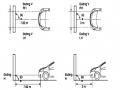
Note: A distance of approximately 7.62 m is required between the vehicle (fog lamp center) and the wall to adjust the convergence correctly. If the distance of 7.62 m cannot be achieved, set the correct distance of 3 m to check and adjust the fog lamp convergence. (Since the target area varies with the distance, please follow the instructions as shown in the figure.)
b/ Prepare a piece of thick white paper about 2 m high and 4 m wide to use as a screen.
c/ Draw a vertical line through the center of the screen (line V).
d/ Set the screen as shown in the picture. Note:
- Keep the screen perpendicular to the ground.
- Align the V line on the screen with the center of the vehicle.
e/Draw the reference lines (H, V LH and V RH lines) on the screen as shown in the figure.HINT:
Mark the center of the fog lamp on the screen. If the center mark cannot be seen on the fog lamp, use the center of the fog lamp or the manufacturer's name mark on the fog lamp as the center mark.
H line (fog light height):
Draw a line across the screen so that it passes through the center mark. Line H should be at the same height as the center mark of the fog light bulb.
Line V LH, V RH (center mark position of left fog lamp LH and right fog lamp RH):
Draw two lines so that they intersect line H at the center marks.
5. Check the fog light convergence
a/ Cover the fog lamp or remove the connector of the other side fog lamp to prevent light from the unchecked fog lamp from affecting the fog lamp convergence test.
b/ Start the engine.
c/ Turn on the fog lights and make sure that the dividing line is outside the standard area as shown in the drawing.
6. Adjust the fog light convergence
Use a screwdriver to adjust the fog light to the standard area by turning the toe adjustment screw.
Note: If the screw is adjusted too far, loosen it and then tighten it again, so that the last rotation of the light adjustment screw is clockwise.
3. Self-study questions
1. Describe the operating principle of the lighting system with automatic headlight function
2. Describe the operating principle of the lighting system with the function of rotating headlights when turning
3. Draw diagram and connect lighting system on Hyundai Porter car
4. Draw diagram and connect lighting system on Honda Accord 1992
5. Draw the lighting circuit on a 1993 Toyota Lexus
LESSON 3 MAINTENANCE AND REPAIR OF SIGNAL SYSTEM
I. IMPLEMENTATION GOAL
After completing this lesson, students will be able to:
- Distinguish between types of signals on cars
- Correctly describe common symptoms and suspected areas causing damage.
- Connecting signal circuits ensures technical requirements
- Disassemble, install, check, maintain and repair the signal system to ensure technical requirements.
- Ensure safety in work and industrial hygiene
II. LESSON CONTENT
1. General description
The signal system equipped on cars aims to create signals to notify other vehicles participating in traffic about the vehicle's operating status such as: stopping, parking, braking, reversing, turning...
Signals are used either by light such as headlamps, brake lights, turn signals….. or by sound such as horns, reverse music….
Just like the lighting system. A signal system circuit usually consists of: battery, fuse, wire, relay, electrical load and control switch. Only some switches of the signal system are on the combination switch. The switches of other signals are usually located in different locations such as in the gearbox or brake pedal……
2. Maintenance and repair
2.1. Turn signals and hazard lights
The installation location of the turn signal is shown in Figure 3.1. The turn signal control switch is located in the combination switch under the steering wheel. Turning this switch to the right or left will make the turn signal turn right or left.
The hazard light switch is used when the vehicle has a problem while participating in traffic. When the hazard light switch is turned on, all the turn signals on the vehicle will light up at a certain frequency. The hazard light switch is usually placed separately from the turn signal switch (some old cars integrate the hazard and turn signal switches on the same combination switch cluster).
Figure 3.1 Turn signal switch Figure 3.2 Hazard switch
The part that generates the flashing frequency for the lights is called a turn signal relay. The turn signal relay usually has 3 terminals: B (positive power supply); E (negative power supply); L (providing the turn signal switch to distribute to the
lamp)
2.1.1. Circuit diagram
To generate the frequency for the turn signal, a turn signal relay is used in the turn signal circuit. The current from the turn signal relay will be sent to the turn signal switch assembly to distribute the current to the turn signal lights for the driver's purpose.
Figure 3.3. Schematic diagram of a turn signal circuit without a hazard switch
1. Battery; 2. Electric lock; 3. Turn signal relay; 4. Turn signal switch; 5. Turn signal lamp; 6. Turn signal lamp; 7. Hazard switch
Figure 3.4 Schematic diagram of turn signal circuit with hazard switch
1. Battery; 2. Combination switch cluster; 3. Turn signal;
4. Turn signal light; 5. Turn signal relay
Today's cars no longer use three-pin turn signal relays (B, L, E) but use eight-pin turn signal relays (figure 3.5) (pin number 8 is used for hazard lights).
For this type, the current supplying the turn signal lights is supplied directly from the turn signal relay to the lights.
div.maincontent .p { color: black; font-family:"Times New Roman", serif; font-style: normal; font-weight: normal; text-decoration: none; font-size: 14pt; margin:0pt; } div.maincontent p { color: black; font-family:"Times New Roman", serif; font-style: normal; font-weight: normal; text-decoration: none; font-size: 14pt; margin:0pt; } div.maincontent .s1 { color: black; font-family:"Times New Roman", serif; font-style: normal; font-weight: normal; text-decoration: none; font-size: 13pt; } div.maincontent .s2 { color: black; font-family:"Times New Roman", serif; font-style: italic; font-weight: normal; text-decoration: none; font-size: 14pt; } div.maincontent .s3 { color: black; font-family:"Times New Roman", serif; font-style: normal; font-weight: normal; text-decoration: none; font-size: 14pt; } div.maincontent .s4 { color: black; font-family:"Times New Roman", serif; font-style: normal; font-weight: normal; text-decoration: none; font-size: 13pt; } div.maincontent .s5 { color: black; font-family:"Times New Roman", serif; font-style: normal; font-weight: normal; text-decoration: none; font-size: 13pt; vertical-align: 1pt; } div.maincontent .s6 { color: black; font-family:"Times New Roman", serif; font-style: normal; font-weight: normal; text-decoration: none; font-size: 11pt; } div.maincontent .s7 { color: black; font-family:"Times New Roman", serif; font-style: normal; font-weight: normal; text-decoration: none; font-size: 14pt; vertical-align: -9pt; } div.maincontent .s8 { color: black; font-family:"Times New Roman", serif; font-style: normal; font-weight: normal; text-decoration: none; font-size: 11pt; } div.maincontent .s9 { color: #008000; font-family:"Times New Roman", serif; font-style: normal; font-weight: normal; text-decoration: none; font-size: 14pt; } div.maincontent .s10 { color: black; font-family:"Times New Roman", serif; font-style: italic; font-weight: normal; te
Car body electrical practice - 8
zt2i3t4l5ee
zt2a3gs
zt2a3ge
zc2o3n4t5e6n7ts
If the voltage is out of specification, replace the wire or connector.
If the voltage is within specification, install the front fog light relay and follow step 5.
Step 5 Check the front fog light switch
- Remove the D4 connector of the fog light switch
- Use a multimeter to measure the resistance of the front fog light switch.
Measurement location
Condition
Standard
D4-3 (BFG) -D4-4 (LFG)
Light switchFront Fog OFF
>10kΩ
D4-3 (BFG) -D4-4 (LFG)
Front fog light switchON
<1 Ω
- Standard resistor
D4 connector is located on the combination switch assembly.
If the resistance is out of specification, replace the combination switch (the fog light switch is located in the combination switch).
If the resistance is within specification, follow step 6.
Step 6 Check wiring and connectors (front fog light relay-light selector switch)
- Disconnect connector D4 of the combination switch assembly
- Use a voltmeter to measure the voltage value of jack D4 on the wire side.
Measurement location
Control modecontrol
Standard
D4-3 (BFG) - (-) AQ
TAIL
11 to 14 V
D4 connector for the wiring of the combination switch assembly
If the voltage does not meet the standard, replace the wire or connector.
If the voltage is within standard, there may have been an error in the previous measurements.
Step 7 Check the front fog lights
- Remove the front fog light electrical connector.
- Supply battery voltage to the fog lamp terminals
Jack 8, B9 of front fog lamp on the electrical side
blind first.
Power supply location
Terms and Conditions
Battery positive terminal - Terminal 2Battery negative terminal - Terminal 1
Fog lightsbefore morning
- If the light does not come on, replace the bulb.
If the light is on, re-plug the jack and continue to step 8.
Step 8 Check wiring and connectors (relay and front fog lights)
- Disconnect the B8 and B9 connectors of the front fog lights.
- Use a voltmeter to measure voltage at the following locations:
Measurement location
Switch location
Terms and Conditions
B8-2 - (-) AQ
Electric lock ON TAIL size switchFog switch ON
11 to 14 V
B9-2 - (-) AQ
Electric lock ONTAIL size switch Fog switch ON
11 to 14 V
B8 and B9 connectors on the front fog lamp wiring side
Voltage is not up to standard, repair or replace the jack. If up to standard, there may have been an error in the measurement process.
2.2.4. Procedure for removing, installing and adjusting fog lights 1. Procedure for removing
- Remove the front inner ear pads
Use a screwdriver to remove the 3 screws and remove the front part of the front inner ear liner
-Remove the fog light assembly
+ Disconnect the connector.
+ Use a screwdriver to remove 3 screws to remove the fog light cover
2. Installation sequence
-Rotate the fog lamp bulb in the direction indicated by the arrow as shown in the figure and remove the fog lamp from the fog lamp assembly.
-Rotate the fog light bulb in the direction indicated by the arrow as shown in the figure and install the light into the fog light assembly.
- Use a screwdriver to install the fog light cover
-Install the electrical connector
Attention: Be careful not to damage the plastic thread on the lamp assembly.
- Install the front inner ear pads
Use a screwdriver to install the front inner bumper with 3 screws.
3. Prepare the vehicle to adjust the fog light convergence. Prepare the vehicle:
- Make sure there is no damage or deformation to the vehicle body around the fog lights.
- Add fuel to the fuel tank
- Add oil to standard level.
- Add engine coolant to standard level.
- Inflate the tire to standard pressure.
- Place spare tire, tools and jack in original design position
- Do not leave any load in the luggage compartment.
- Let a person weighing about 75 kg sit in the driver's seat.
4. Prepare to check the fog light convergence
a/ Prepare the vehicle status as follows:
- Place the car in a dark enough place to see the lines. The lines are the dividing line, below which the light from the fog lights can be seen but above which it cannot.
- Place the car perpendicular to the wall.
- Keep a distance of 7.62 m between the center of the fog lamp and the wall.
- Park the car on level ground.
- Press the car down a few times to stabilize the suspension.
Note: A distance of approximately 7.62 m is required between the vehicle (fog lamp center) and the wall to adjust the convergence correctly. If the distance of 7.62 m cannot be achieved, set the correct distance of 3 m to check and adjust the fog lamp convergence. (Since the target area varies with the distance, please follow the instructions as shown in the figure.)
b/ Prepare a piece of thick white paper about 2 m high and 4 m wide to use as a screen.
c/ Draw a vertical line through the center of the screen (line V).
d/ Set the screen as shown in the picture. Note:
- Keep the screen perpendicular to the ground.
- Align the V line on the screen with the center of the vehicle.
e/Draw the reference lines (H, V LH and V RH lines) on the screen as shown in the figure.HINT:
Mark the center of the fog lamp on the screen. If the center mark cannot be seen on the fog lamp, use the center of the fog lamp or the manufacturer's name mark on the fog lamp as the center mark.
H line (fog light height):
Draw a line across the screen so that it passes through the center mark. Line H should be at the same height as the center mark of the fog light bulb.
Line V LH, V RH (center mark position of left fog lamp LH and right fog lamp RH):
Draw two lines so that they intersect line H at the center marks.
5. Check the fog light convergence
a/ Cover the fog lamp or remove the connector of the other side fog lamp to prevent light from the unchecked fog lamp from affecting the fog lamp convergence test.
b/ Start the engine.
c/ Turn on the fog lights and make sure that the dividing line is outside the standard area as shown in the drawing.
6. Adjust the fog light convergence
Use a screwdriver to adjust the fog light to the standard area by turning the toe adjustment screw.
Note: If the screw is adjusted too far, loosen it and then tighten it again, so that the last rotation of the light adjustment screw is clockwise.
3. Self-study questions
1. Describe the operating principle of the lighting system with automatic headlight function
2. Describe the operating principle of the lighting system with the function of rotating headlights when turning
3. Draw diagram and connect lighting system on Hyundai Porter car
4. Draw diagram and connect lighting system on Honda Accord 1992
5. Draw the lighting circuit on a 1993 Toyota Lexus
LESSON 3 MAINTENANCE AND REPAIR OF SIGNAL SYSTEM
I. IMPLEMENTATION GOAL
After completing this lesson, students will be able to:
- Distinguish between types of signals on cars
- Correctly describe common symptoms and suspected areas causing damage.
- Connecting signal circuits ensures technical requirements
- Disassemble, install, check, maintain and repair the signal system to ensure technical requirements.
- Ensure safety in work and industrial hygiene
II. LESSON CONTENT
1. General description
The signal system equipped on cars aims to create signals to notify other vehicles participating in traffic about the vehicle's operating status such as: stopping, parking, braking, reversing, turning...
Signals are used either by light such as headlamps, brake lights, turn signals….. or by sound such as horns, reverse music….
Just like the lighting system. A signal system circuit usually consists of: battery, fuse, wire, relay, electrical load and control switch. Only some switches of the signal system are on the combination switch. The switches of other signals are usually located in different locations such as in the gearbox or brake pedal……
2. Maintenance and repair
2.1. Turn signals and hazard lights
The installation location of the turn signal is shown in Figure 3.1. The turn signal control switch is located in the combination switch under the steering wheel. Turning this switch to the right or left will make the turn signal turn right or left.
The hazard light switch is used when the vehicle has a problem while participating in traffic. When the hazard light switch is turned on, all the turn signals on the vehicle will light up at a certain frequency. The hazard light switch is usually placed separately from the turn signal switch (some old cars integrate the hazard and turn signal switches on the same combination switch cluster).
Figure 3.1 Turn signal switch Figure 3.2 Hazard switch
The part that generates the flashing frequency for the lights is called a turn signal relay. The turn signal relay usually has 3 terminals: B (positive power supply); E (negative power supply); L (providing the turn signal switch to distribute to the
lamp)
2.1.1. Circuit diagram
To generate the frequency for the turn signal, a turn signal relay is used in the turn signal circuit. The current from the turn signal relay will be sent to the turn signal switch assembly to distribute the current to the turn signal lights for the driver's purpose.
Figure 3.3. Schematic diagram of a turn signal circuit without a hazard switch
1. Battery; 2. Electric lock; 3. Turn signal relay; 4. Turn signal switch; 5. Turn signal lamp; 6. Turn signal lamp; 7. Hazard switch
Figure 3.4 Schematic diagram of turn signal circuit with hazard switch
1. Battery; 2. Combination switch cluster; 3. Turn signal;
4. Turn signal light; 5. Turn signal relay
Today's cars no longer use three-pin turn signal relays (B, L, E) but use eight-pin turn signal relays (figure 3.5) (pin number 8 is used for hazard lights).
For this type, the current supplying the turn signal lights is supplied directly from the turn signal relay to the lights.
div.maincontent .p { color: black; font-family:"Times New Roman", serif; font-style: normal; font-weight: normal; text-decoration: none; font-size: 14pt; margin:0pt; } div.maincontent p { color: black; font-family:"Times New Roman", serif; font-style: normal; font-weight: normal; text-decoration: none; font-size: 14pt; margin:0pt; } div.maincontent .s1 { color: black; font-family:"Times New Roman", serif; font-style: normal; font-weight: normal; text-decoration: none; font-size: 13pt; } div.maincontent .s2 { color: black; font-family:"Times New Roman", serif; font-style: italic; font-weight: normal; text-decoration: none; font-size: 14pt; } div.maincontent .s3 { color: black; font-family:"Times New Roman", serif; font-style: normal; font-weight: normal; text-decoration: none; font-size: 14pt; } div.maincontent .s4 { color: black; font-family:"Times New Roman", serif; font-style: normal; font-weight: normal; text-decoration: none; font-size: 13pt; } div.maincontent .s5 { color: black; font-family:"Times New Roman", serif; font-style: normal; font-weight: normal; text-decoration: none; font-size: 13pt; vertical-align: 1pt; } div.maincontent .s6 { color: black; font-family:"Times New Roman", serif; font-style: normal; font-weight: normal; text-decoration: none; font-size: 11pt; } div.maincontent .s7 { color: black; font-family:"Times New Roman", serif; font-style: normal; font-weight: normal; text-decoration: none; font-size: 14pt; vertical-align: -9pt; } div.maincontent .s8 { color: black; font-family:"Times New Roman", serif; font-style: normal; font-weight: normal; text-decoration: none; font-size: 11pt; } div.maincontent .s9 { color: #008000; font-family:"Times New Roman", serif; font-style: normal; font-weight: normal; text-decoration: none; font-size: 14pt; } div.maincontent .s10 { color: black; font-family:"Times New Roman", serif; font-style: italic; font-weight: normal; te -
 Fostering students' self-study ability in teaching some knowledge of Mechanics and Electromagnetism in high school Physics with the support of social network Facebook - 21
 -
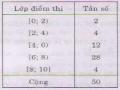 The Average Scores of Grade 10A Students in Semester 1 Are Recorded in the Following Table:
 -
 Proposal and Implementation of Measures to Foster Learning Methods for Students at Military Universities Based on the Idea of "Self-Study as the Core"
is increasingly developing and becoming more effective because ICT has created an environment that allows the integration of individual student self-study with interactive self-study with classmates and teachers remotely via the Internet.
1.2.6. Organizing self-study activities

There are many concepts about organizing self-study activities. Through studying documents [28], [29], [30], [32]... we see that organizing self-study activities is the arrangement of operations, teaching activities with self-study activities. With this point of view, organizing self-study activities for students is the process of designing and arranging teaching organization measures by teachers to guide, control, and direct students' self-design and self-arrangement of self-study and self-research measures, helping students to maximize their self-study and self-research capacity, and to fulfill their learning goals and tasks well. The nature of organizing self-study activities for students is to arrange and carry out teaching measures to maximize students' positivity and self-awareness. Thus, organizing self-study activities is the process of implementing measures to promote students' learning activities in the process of acquiring knowledge in class, at home and in practical and extracurricular activities.
Thus, at high-level self-study, the organization of self-study activities can be led by students or completely independent. In order to achieve the goal of developing students' self-study capacity, teachers will directly organize self-study activities or entrust students to participate in part.
In our opinion, students' self-study activities are highly individual. The effectiveness of self-study depends on internal factors and is also affected by the self-study environment, specifically:
- Learning resources for self-study (printed books, electronic documents);
- Facilities such as library, network, computers;
- Conditions for interaction between students and students and students and teachers...
15
1.2.7. Self-study Math ability
Competence is an important attribute of personality. Currently, the concept of competence is proposed by psychologists in many different approaches.
According to the Vietnamese dictionary, capacity is a psychological and physiological product that gives people the ability to complete a certain type of activity with high quality.
According to Pham Minh Hac [7], capacity is a combination of a person's psychological characteristics, this combination operates according to a certain purpose to create the result of a certain activity.
According to Dang Thanh Hung [12], capacity is made up of basic elements: Knowledge about that activity or relationship; Skills to carry out activities or promote behavior with a certain relationship; Psychological conditions to organize and implement certain knowledge and skills in a unified structure and according to a clear direction.
We see that the above concepts all have one thing in common: Capacity is the ability to perform a certain type of human activity and capacity is formed, developed and can be observed in the process of people solving the requirements.
With the above concept, we can consider self-study capacity as psychological attributes that ensure success in self-study of each individual.
According to experts, self-learning ability is demonstrated through the subject's correct determination of his/her own learning motivation, the ability to self-manage his/her own learning, having a positive attitude in activities to be able to work independently, adjust learning activities and evaluate his/her own learning results to be able to work independently and work cooperatively with others [19].
Based on the systematization of documents, Pham Dinh Khuong [13] proposed the structure of self-study capacity in Mathematics including the following components:
16
Mathematical Cognitive Ability.
Ability to conduct self-study activities in Mathematics.
Ability to self-manage self-learning activities.
In which, the ability to self-study Math is the psychological condition for the self-study Math activity to take place. If students do not have the ability to self-study Math, they cannot have the self-study Math activity. However, if there is only the ability to self-study Math but lacks other factors such as motivation, purpose, will, and interest in self-study, the self-study Math activity will not take place or if it takes place, it will not achieve the desired results.
Thus, the ability to self-study Math is not only a psychological condition for self-study Math activities but also the purpose of self-study Math activities. It should be noted that the ability to self-study Math is formed and developed through self-study Math activities.
In the self-study capacity of high school students in mathematics, we see that the main components are specific skills in the self-study process such as: Listening skills; skills to ask questions; skills to answer questions; skills to research and work with textbooks and learning materials; skills to exploit information on the internet; skills to interact with teachers and fellow students; skills to apply knowledge and experience accumulated in the process of self-studying mathematics into learning and practice... The self-study capacity of students also includes skills that are not expressed visually such as: Skills to determine needs, purposes, and motivations for self-study; skills to perform intellectual activities; skills to collect and process, store and reuse information; skills to build, implement, test and evaluate self-study [13]...
The reality of organizing self-study activities in Mathematics shows that: the results of self-study depend on the self-study capacity of each student. In order for students' self-study activities to achieve their goals, teachers need to focus on fostering and developing students' self-study capacity, for example, they can use the following synchronous pedagogical measures: Motivating learning activities
17
students' practice; develop skills, operations and intellectual activities suitable for students' self-study capacity in Mathematics; practice basic learning skills suitable for students' self-study tasks; organize reasonable self-study activities [13]
In order to exploit some applications on mobile phones to support students in self-studying Math to achieve the purpose and requirements, students' self-studying Math ability is one of the important factors. The research results on self-studying Math ability will be one of the bases for the topic to determine the principles and pedagogical measures for exploiting some applications on mobile phones to support students in self-studying Math.
1.2.8. The issue of fostering students' self-study ability in Mathematics
According to Nguyen Canh Toan [28], Thai Duy Tuyen [32], to foster students' ability to self-study Math, teachers can implement the following measures:
(1). Encourage students to be proactive in developing a self-study plan: Teachers ask students to compare the knowledge and skills they have accumulated with the standards of knowledge and skills in Mathematics so that students can determine their own goals and specific self-study tasks. Next, based on their time and ability, students will develop a suitable self-study plan.
(2). Highly appreciate the results of students' independent work: Students' ability to work independently during self-study is demonstrated through many aspects, for example: Students open the instructions and try to complete the exercises; Students only look at the solutions or "call for help" from teachers and friends after trying their best. Students do not mechanically depend on the problem-solving methods introduced in the HLĐT... In reality, when students study independently, they often tend to want to check their results and whether their problem-solving methods are correct or not? During class, teachers need to encourage students to comment on their results and highly appreciate both their awareness and self-study results in front of the class to increase their motivation for self-study.
18
(3). Require students to perform analysis, synthesis, and comparison: Teachers need to install in the Math self-study task requirements that require students to perform thinking activities such as analysis, synthesis, comparison, etc. When working, on the other hand, because students have access to many different sources of information, students must perform comparison, synthesis, etc. to choose the most appropriate ways to solve problems.
(4). Require students to regularly evaluate their own progress: In addition to teacher evaluation, students need to regularly and voluntarily self-evaluate their own learning results in the following ways:
- Do exercises and tests;
- After completing the assisted exercises, students must continue to solve the exercises in the textbook and workbook to self-check their grasp and application of knowledge to solve the exercises.
(5). Encourage students to debate and present their opinions: In addition to organizing students to debate and present their personal opinions based on self-study results in class, teachers need to encourage students to participate in debates and defend their opinions.
1.3. Self-study with the support of information and communication technology
1.3.1. Impact of information and communication technology on students' self-study
Exploiting IT will create new factors that positively impact students' self-study such as:
(i) Besides receiving knowledge from teachers, textbooks, and reference materials, students can also access knowledge and the objective world through "electronic textbooks", CD-ROMs, the Internet, etc.
(ii) Teaching software (PMDH) will provide timely support and encouragement at necessary times not only during school hours but also during self-study time at home, helping students complete the task of acquiring knowledge and have the conditions to develop their own capacity to the maximum. On the other hand, the implementation of each student's learning tasks does not affect other students.
19
In other words, students who complete their learning tasks early can continue to access new content and new tasks to develop their full potential.
(iii) Teaching aids create a favorable environment, a miniature vivid world to stimulate curiosity, arouse the need to learn, explore... helping students to be proactive and creative in the process of approaching and acquiring knowledge.
(iv) Students proactively plan and implement their own self-study at any time they need, thanks to online instruction programs or distance learning programs.
(v) Along with exploiting IT to "personalize" each student's learning, organizing groups of students to use the network together in group activities and interact with other groups has contributed to forming and developing students' planning and cooperative activities.
(vi) Students can use PMDH to represent models, charts, drawings, virtual experiments... in a visual and vivid way. With just a few simple operations, they can get images of the research object from different angles, or they can change some elements of the object to study the remaining components, thereby discovering their relationships and properties.
In our opinion: ICT has made the teaching and learning process no longer bound by space and time. Students can learn anywhere, anytime, and learn for life. Learning becomes flexible, adaptable, and based on students' needs. Students are allowed to choose effective learning methods, choose lecture content and related documents that are suitable for their own abilities. Students actively exchange and exploit information on the Internet to meet their knowledge needs related to their learning content. ICT has also created an interactive environment for learners to operate and adapt in that environment. Thus, ICT creates conditions for learners to be highly independent and supports learners to improve in the learning process.
20
1.3.2. Exploiting information and communication technology in self-study
Exploiting information and communication technology in the form of self-study with direct guidance from teachers
In the traditional teaching environment, self-study with direct guidance from teachers is understood as the process of self-studying by students, there is always a teacher present to provide support when necessary. Thus, teachers can only directly guide students through class hours. However, the time teachers spend in class is mainly to explain new knowledge, so it is difficult to set aside time to guide students in self-study during regular school hours.
With the support of ICT, the concept of self-directed learning is expanded. Self-directed learning is a form of learning in which students receive direct support from teachers in the classroom or via the Internet (virtual classroom). ICT will help teachers "expand time and space" to guide students in self-study in many forms. Thus, all difficulties of students will receive direct guidance from teachers in a timely manner and students will certainly have more opportunities to complete self-study tasks.
Exploiting information and communication technology in self-study without direct guidance from teachers
In traditional conditions, in order for students to be able to study on their own without direct guidance from teachers, we have to hand them learning materials. The biggest limitation of this form is that the materials can hardly provide all the instructions, so students may encounter difficulties and students are forced to wait for a while to send their difficulties to teachers and also have to continue waiting until they receive support information from teachers. Thus, the process of self-study of students is at risk of not being able to take place continuously according to the planned plan.
21
To promptly support students in self-study in this form, we can fully exploit IT&TT to create a "virtual teacher" who is always by the students' side. The "virtual" teacher will immediately provide support for students to overcome obstacles to continue self-study by the following specific measures:
(i) Design interactive learning materials to set up tasks and provide instructions for students to complete self-study tasks as well as multiple-choice questions to test their self-study results. We can imagine the knowledge content that students need to master structured in the form of an unknown number of repetitions. Self-study content is designed into specific tasks. Only when students complete the task they are doing will the document open a new task. For each self-study task, depending on the student's mistakes, the document will provide corresponding instructions.
(ii) Require students to access the website to receive tasks, research documents and answer questions. During the self-study process, students will interact with the Learning Support System to receive tasks, confirm self-study results and receive supporting information to continue completing self-study tasks.
(iii) Exploit web technology and interactivity so that training courses, in addition to presenting knowledge content, also provide guidance on how to detect problems, collect information, process information, draw conclusions, check and evaluate results...
(iv) Through the website, teachers receive feedback on students' learning outcomes after the self-study process and will help adjust students' learning pace to suit their abilities, guiding students to self-study from low to high levels, from self-studying a part to self-studying most of the content.
(v) With the support of ICT, we not only create a "virtual" teacher to support students in part in the self-study process on behalf of the teacher, but this "virtual" teacher can also make a difference from the teacher in the classroom in that it can be "cloned" into many "virtual" teachers and at the same time provide different assistance to support many students at the same time.