
The transformation of identity, independence, creativity and conformity to the natural laws of life in these two historical periods created a powerful Dai Viet country.
The rulers of the Ly - Tran dynasties knew how to cultivate morality, using Buddhism as a foundation to rely on the people, considering the people as the root. It was not by chance that the people of Dai Viet could support the dynasties at that time, but in fact, it originated from the "moral philosophy" associated with the nation's precious tradition of self-determination. The kings of the Ly - Tran dynasties in the early days were often people from the common people, "entered the nobility through ability and career" and "the combination of politics and religion in the supreme power of the king" became a characteristic of the centralized monarchy [142, pp. 306 - 307]. Bureaucracy on the rise, promoting its strengths "contributed to creating the strength of the regime and the nation, in internal relations as well as in challenges against invading forces" [142, p. 340]. The harmonious relationship between king and subject in the unity of morality and law is the traditional value of this period. Right from the beginning of his reign, Ly Thai To relied on Buddhist ethics to start the Ly dynasty with lenient and generous policies; King Ly Thai Tong exempted taxes to ease the people's burden after the war; King Ly Thanh Tong loved the people like his own children, always attached to farmers and fields; King Ly Nhan Tong drove out the Song army, opened the Imperial Academy, and gave birth to university education; King Ly Than Tong valued agriculture, implemented "ngu binh u nong" (settlement and vocation), bringing a prosperous life to the people; The mandarins and generals were upright, honest, and pure like To Hien Thanh, wholeheartedly devoted to the people and the country, and wisely avoided corrupt officials; King Tran Thai Tong defeated the Mongols for the first time, saw Buddha in his heart, became a monk after becoming king, and practiced at a temple in the imperial city to help the court and the nation; King Tran Thanh Tong was benevolent, generous, took care of the country's affairs, and selected talented people. During his reign, people such as the two-nation champion Mac Dinh Chi, the historian Le Van Huu, and Tran Nhan Tong, the heroic king who organized the Binh Than Conference and the Dien Hong Conference to discuss plans to repel the Mongol-Nguyen invaders.
advised Anh Tong : the way of being a king, know how to see the country as public property, not your own. See the world as your own home, cultivate your character, control your desires, stay away from alcohol and sex, maintain your true heart, practice the 10 good deeds to hone your virtues; King Tran Anh Tong skillfully inherited the career of his ancestors, politics was stable, the country was prosperous; King Tran Minh Tong was kind-hearted, knew how to choose talented people, so he had many wise men such as Pham Ngu Lao, Truong Han Sieu, Chu Van An, Nguyen Trung Ngan, Doan Nhu Hai; The Tran Dynasty also had famous officials such as Tran Thu Do with the saying that strengthened the spirit of the army and people of Dai Viet: "My head has not fallen to the ground, please do not worry, Your Majesty" in the first resistance war against the Mongols; Hung Dao Dai Vuong Tran Quoc Tuan eliminated family enemies, helped the king build the country, defeated the brutal Mongols three times; Tran Nhat Duat understood the languages, customs, and practices of the ethnic groups, and made glorious achievements; Tran Binh Trong is a symbol of patriotism: "I would rather be a ghost in the South than a king in the North"; Tran Quoc Toan is a symbol of Vietnamese patriotic youth: "defeating the powerful enemy and repaying the king's grace"; Yet Kieu is good at swimming and is resourceful; Pham Ngu Lao is filial to his mother and has many achievements for the country.
Maybe you are interested!
-
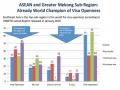
 Major Customer Markets Visiting Hlktdt Over The Past Years
 -
 Managing cultural activities at the Center for Culture, Sports and Tourism of Phu Ninh district, Phu Tho province - 1
 -
 Some Pictures of the Transformation of Traditional Culture of Thai People in Mai Chau
 -
 Concept and Objective Necessity of International Trade Finance Activities:
 -
 Comparison of Geographical Conditions, Structure of Culture and Tourism Activities
Buddhism in general and Buddhist ethics in particular, besides positive values, have certain negative and limited factors. Therefore, positive factors need to be promoted to create peace and tolerance in people's thinking and behavior, along with positive measures to prevent Buddhism from being exploited, especially for political purposes. This means that in order to positively adapt, there must be strong enough endogenous factors to serve as a premise and basis for selection, absorbing exogenous factors and creating new values suitable to the needs of the nation and the times. Each nation and each time must have its own political culture and ethical culture in order to exist and develop sustainably.
The decline of morality in the "late Ly" and "late Tran" periods was both the cause and the consequence of the decline and decline of the Ly - Tran dynasties. The influence of Buddhism on the moral culture of dynasties in general and
The Ly - Tran dynasties in particular also declined, especially in the early 14th century. When social conflicts increased, "the aristocracy took advantage of the name of religion to build pagodas, cast statues, establish countless massive pagoda estates, and donate and sell state funds." Many intellectuals at the end of the Tran dynasty spoke out against Buddhism. This is a lesson that those dynasties and the entire nation had to pay a high price for in history. The problem is not to rest on one's laurels, not to use the glorious past to justify the present. The first kings of the two dynasties created miracles for the country and the nation to create a glorious national culture (including a noble moral culture). However, the following dynasties did not know how to inherit, did not know how to educate themselves, and abused the glory of their ancestors to "thrive for gain" (useless greed), "spend lavishly" as recorded in the Complete Annals of Dai Viet .
The Ly Dynasty to the seventh king - Ly Cao Tong as recorded in official history "The king indulged in excessive debauchery, the government and the law were unclear, bandits arose like bees and famine for many years, the Ly Dynasty's foundation declined from then on" [78, p. 338]. To the Tran Dynasty "from the year Dai Tri onwards (the second reign of Tran Du Tong - NCS), excessive debauchery, the Tran Dynasty's foundation declined from then on" [79, p. 129]. The kings at the end of the dynasty strayed from the noble moral values of the dynasties that their ancestors had built, "The Ly and Tran Dynasties lost their country due to disordered discipline" in which moral standards were disregarded and trampled [78, 125].
Right when the invaders were threatening to invade the country, Tran Khanh Du, a nobleman and general of the Tran Dynasty, put forward a philosophy: "The general is a falcon, the soldiers are ducks, using ducks to feed falcons is nothing strange" [78, p. 74]. Being both a nobleman, an official, a landlord and a merchant, Tran Khanh Du always tried to get rich. His above report to King Anh Tong clearly revealed the thoughts of a "scheming, greedy" businessman. The commodity economy developed, the landlord aristocracy rushed to make money for entertainment. At this time, "the benevolent and democratic manifestations of the aristocracy were only manifestations within the landlord aristocracy. The relationship between the landlord class and the people was often expressed as a relationship
relationship between master and subordinate” [142, p. 275]. Hung Dao Dai Vuong Tran Quoc Tuan harshly criticized the generals: “seeing the master humiliated without knowing how to worry, suffering national humiliation without knowing how to be ashamed”, “only because of selfishness, or worrying about getting rich but forgetting about military and national affairs”, “or liking good wine, or being addicted to singing…” “but neglecting the task of fighting and defending” [79, p. 83].
The above lessons are still valuable for our time today, when President Ho Chi Minh warned that: "A nation, a party and each person, who were great yesterday, had great appeal, are not necessarily loved and praised by everyone today and tomorrow, if their hearts are no longer pure, if they fall into individualism" [86, p. 510]. It is true that degeneration is a law of dynasties, but people can still overcome it.
4.1.2. The need to "review the past to learn the present" - some thoughts
Culture always plays a particularly important role and position in the cause of national construction. Every nation and country that wants to affirm its position, exist and develop must pay attention to maintaining and promoting cultural values. Building and developing culture is a trend, attracting the attention of countries. In the period of innovation, our country has made clear changes in all areas of political, economic, cultural and social life. Industrialization, modernization and international integration have developed strongly, bringing about significant achievements in all areas, while also leading to profound and complex changes in culture in general and ethical culture in particular. New values, standards and ethical models have been formed, many criteria have been re-perceived. The Resolution of the 5th Conference of the 8th Central Executive Committee assessed: "The dynamism and positivity of citizens are promoted, individual strengths and abilities are encouraged; The democratic atmosphere in society increases; the young generation quickly acquires new knowledge and is conscious of establishing themselves, starting a career, building and protecting the Fatherland". In the current period, building a moral culture is increasingly important and urgent. Traditional values are precious, but to have them
Values for today's life is the problem that has been raised. The benefits of cultural development alongside the development of a multi-sector economy need to raise the issue of building a democratic rule of law. Everyone can talk about the decline of social morality. Is that decline the decline of social morality? Or is it the demand of the new era for new social morality. Obviously, in recent years, the value scale of Vietnamese society has changed rapidly, positive traditional values are preserved alongside new values, suitable for development. New values and appropriate standards are thus formed. Personal values and personal awareness are promoted. New ethical value orientations have a basis for formation. The new lifestyle is a lifestyle oriented towards real values. Those are the positive influences from today's social life on Vietnamese ethical culture. However, negative impacts are difficult to avoid, so preserving and promoting traditional cultural and ethical values is extremely important and necessary.
The degradation of political ideology, morality and lifestyle, "self-evolution", "self-transformation" (negative) of a large number of cadres, party members and civil servants, mainly in the ruling apparatus at all levels, is threatening the survival of the Party and the regime. The Communist Party of Vietnam has set out the task of "strengthening the building of a clean and strong Party" in terms of politics and morality (the theme of the 12th Party Congress). That raises the urgent issue of building the ethical culture of the leadership team in our country. It is necessary to absorb the lessons of national history, in which the ethical culture of the Ly - Tran dynasties is of great significance.
In the trend of globalization, we have many favorable conditions for development but also have countless difficulties and challenges. In the period of opening up, world culture is like a wind blowing into our country, bringing many good things but also many bad things. Foreign culture with its bad and negative aspects openly challenges Vietnamese customs and traditions, attacking profound and solemn values. Culture is the soul of a nation. A nation that cannot maintain its own cultural identity and is gradually assimilated will no longer exist. Cultural homogeneity
Assimilation is something that cannot happen in the theory as well as in the practice of culture. The Vietnamese culture in its history of existence and development has shown a strong vitality. The assimilation plot of great cultures, wave after wave, has not erased the spirit of Vietnamese culture. It can be said that Vietnamese culture has been tempered and has high resistance. This gives us confidence in the upcoming development path of the national culture. Political ethics culture is also not an exception in that cultural flow. "Talent is the vital energy of the nation", what kind of people does the leadership team need to be worthy of the people's expectations to have political vision, to be "both red" and "both expert" in response to the requirements of the times is a topical issue.
Culture, or more fully, the culture of each community, each nation in any era, is the spiritual foundation for the existence and development of the nation (including the field of ethical culture). Protected traditions become the foundation for the social community. Therefore, in order to create a solid spiritual foundation for the nation and promote its great role, it is necessary to "regularly assess, adjust and reaffirm" its values. Author Tran Dinh Huou commented: "In cultural creation, each nation seems to have long had habits, preferences, strengths, and shortcomings that make up its uniqueness" and: "By firmly grasping those things, the steps in the present will be less blind and thanks to that, it is possible to somewhat predict and orient the steps in the future" [63, p. 149]. The national character creates cultural identity, the culture of the Ly - Tran period in general and the ethical culture of the Ly - Tran dynasties in particular, has great strength because of the combination of traditional cultural values of the nation with the cultural quintessence of Buddhism, Taoism and Confucianism of India and China. In other words, it is always reaffirmed and adjusted to suit the context of the country and society of Dai Viet in the Ly - Tran period. The lesson learned is that exogenous political, ethical and religious thoughts need to be internalized and traditionalized in the process of exchange and adaptation to become products of the nation in order to become the spiritual foundation of the nation and its strength.
endogenous elements of the nation. If exogenous elements are absorbed in a forced, mechanical or imposed manner, they will have no vitality in national culture in particular and national life in general.
The Vietnamese people today, continuing the tradition, preserving and building the country, entering the integration period, converging all internal and external conditions to be able to join hands in solidarity, build and develop the country, contributing to the peaceful and prosperous development of all humanity. Having this opportunity, we are always grateful for the sacrifices of our ancestors from thousands of years ago that have created great opportunities for us to continue, to enhance our responsibility towards future generations. In addition to the economic development strategy with the motto of active international integration, the Party and the State also have a cultural development strategy. Vietnamese culture proactively selects the quintessence of human culture to enrich, enrich, and modernize the culture of our nation.
4.2. Applying the experiences of the Ly - Tran dynasties in
Building ethical culture of today's leadership team
4.2.1. Viewpoints of Ho Chi Minh, the Party and the State on inheriting and promoting religious and cultural values
4.2.1.1. Ho Chi Minh's viewpoint
President Ho Chi Minh is not only a national liberation hero, an outstanding cultural figure but also a great thinker in the history of the Vietnamese nation. Ho Chi Minh's thought is a comprehensive and profound system of viewpoints on fundamental issues of the Vietnamese revolution, the result of the creative application and development of Marxism-Leninism to the specific conditions of our country, inheriting and developing the fine traditional values of the nation, absorbing the quintessence of human culture; It is an extremely great and valuable spiritual asset of our Party and nation, forever illuminating the path for the revolutionary cause of our people to win victory. His system of thoughts and viewpoints still retains its value today, including thoughts on beliefs, religions, on inheriting and promoting religious ethical values.
Early on, President Ho Chi Minh drew lessons from the history of the nation and revolutionary practice: “Whenever our people unite as one, our country is independent and free. On the contrary, whenever our people are not united, we are invaded by foreign countries” [86, p. 217]. Summarizing the historical lesson: Unity, unity, great unity - Success, success, great success, he clearly saw the role of compatriots of different religions in the revolutionary cause and advocated uniting compatriots of different religions in a united front of that great unity. Ho Chi Minh's ideology respected and guaranteed the people's freedom of belief and religion. Always a shining example, his words matched his actions, Ho Chi Minh always and everywhere treated religions reasonably and sympathetically. President Ho Chi Minh came to congratulate Le Huu Tu in Phat Diem diocese on his ordination as bishop and announced Le Huu Tu as a Government advisor, attended the Buddhist Hanh Nguyen ceremony and had a vegetarian meal at Quan Su pagoda; went to Dinh Bang to attend the commemoration ceremony of the ancestors of Ly Bat De; ... He believed that each religion in Vietnam has a different process of formation and introduction, has different characteristics and roles, but all exist in the heart of the nation, have benefits closely linked to the benefits of the whole community, the whole nation, the duty of believers towards religion is closely linked to the awareness and responsibility of citizens towards the country.
President Ho Chi Minh affirmed that “Only when the Fatherland is independent can religions be free” [87, p. 342] and “Only when the country is independent can Buddhism be easily expanded” [86, p. 197]. He stated that for followers of religions, religious faith and love for the Fatherland and country are not contradictory. Religion can only assert itself when living in the heart of the nation and the Vietnamese people on the path of development must know how to separate the turbid and the clear, must know how to exploit and filter the cultural values and humanity of religion, know how to inherit and promote ethical and religious values.
As a true Marxist with a materialistic viewpoint, no one can find a small expression of rejection or ridicule from Ho Chi Minh towards religion. Approaching religion, he considered religion as a cultural heritage of mankind.