
socio-economic development. The North of the province is about 3070 km from Long Thanh International Airport, the West is about 125 km from Ho Chi Minh City. In addition to its location as the gateway to the East Sea of the provinces in the Southeast region, Ba Ria - Vung Tau also has a prime location in the Southern Key Economic Zone (SEZ) where it creates
the largest GDP
water. highways
51, 55, 56 with system
system
Maybe you are interested!
-

 Identify Rating Levels and Rating Scales
zt2i3t4l5ee
zt2a3gstourism,quan lan,quang ninh,ecology,ecotourism,minh chau,van don,geography,geographical basis,tourism development,science
zt2a3ge
zc2o3n4t5e6n7ts
of the islanders. Therefore, this indicator will be divided into two sub-indicators:
a1. Natural tourism attractiveness a2. Cultural tourism attractiveness
b. Tourist capacity
The two island communes in Quan Lan have different capacities to receive tourists. Minh Chau Commune is home to many standard hotels and resorts, attracting high-income domestic and international tourists. Meanwhile, Quan Lan Commune has many motels mainly built and operated by local people, so the scale and quality are not high, and will be suitable for ordinary tourists such as students.
c. Time of exploitation of Quan Lan Island Commune:
Quan Lan tourism is seasonal due to weather and climate conditions and festivals only take place on certain days of the year, specifically in spring. In Quan Lan commune, the period from April to June and from September to November is considered the best time to visit Quan Lan because the cultural tourism activities are mainly associated with festivals taking place during this time.
Minh Chau island commune:
Tourism exploitation time is all year round, because this is a place with a number of tourist attractions with diverse ecosystems such as Bai Tu Long National Park Research Center, Tram forest, Turtle Laying Beach, so besides coming to the beach for tourism and vacation in the summer, Minh Chau will attract research groups to come for tourism combined with research at other times of the year.
d. Sustainability
The sustainability of ecotourism sites in Quan Lan and Minh Chau communes depends on the sensitivity of the ecosystems to climate changes.
landscape. In general, these tourist destinations have a fairly high level of sustainability, because they are natural ecosystems, planned and protected. However, if a large number of tourists gather at certain times, it can exceed the carrying capacity and affect the sustainability of the environment (polluted beaches, damaged trees, animals moving away from their habitats, etc.), then the sustainability of the above ecosystems (natural ecosystems, human ecosystems) will also be affected and become less sustainable.
e. Location and accessibility
Both island communes have ports to take tourists to visit from Van Don wharf:
- Quan Lan – Van Don traffic route:
Phuc Thinh – Viet Anh high-speed boat and Quang Minh high-speed boat, depart at 8am and 2pm from Van Don to Quan Lan, and at 7am and 1pm from Quan Lan to Van Don. There are also wooden boats departing at 7am and 1pm.
- Van Don - Minh Chau traffic route:
Chung Huong high-speed train, Minh Chau train, morning 7:30 and afternoon 13:30 from Van Don to Minh Chau, morning 6:30 and afternoon 13:00 from Minh Chau to Van Don.
f. Infrastructure
Despite receiving investment attention, the issue of infrastructure and technical facilities for tourism on Quan Lan Island is still an issue that needs to be resolved because it has a direct impact on the implementation of ecotourism activities. The minimum conditions for serving tourists such as accommodation, electricity, water, communication, especially medical services, and security work need to be given top priority. Ecotourism spots in Minh Chau commune are assessed to have better infrastructure and technical facilities for tourism because there are quite complete and synchronous conditions for serving tourists, meeting many needs of domestic and foreign tourists.
3.2.1.4. Determine assessment levels and assessment scales
Corresponding to the levels of each criterion, the index is the score of those levels in the order of 4, 3, 2, 1 decreasing according to the standard of each level: very attractive (4), attractive (3), average (2), less attractive (1).
3.2.1.5. Determining the coefficients of the criteria
For the assessment of DLST in the two communes of Quan Lan and Minh Chau islands, the students added evaluation coefficients to show the importance of the criteria and indicators as follows:
Coefficient 3 with criteria: Attractiveness, Exploitation time. These are the 2 most important criteria for attracting tourists to tourism in general and eco-tourism in particular, so they have the highest coefficient.
Coefficient 2 with criteria: Capacity, Infrastructure, Location and accessibility . Because the assessment area is an island commune of Van Don district, the above criteria are selected by the author with appropriate coefficients at the average level.
Coefficient 1 with criteria: Sustainability. Quan Lan has natural and human-made ecotourism sites, with high biodiversity and little impact from local human factors. Most of the ecotourism sites are still wild, so they are highly sustainable.
3.2.1.6. Results of DLST assessment on Quan Lan island
a. Assessment of the potential for natural tourism development
For Minh Chau commune:
+ Natural tourism attractiveness is determined to be very attractive (4 points) and the most important coefficient (coefficient 3), so the score of the Attractiveness criterion is 4 x 3 = 12.
+ Capacity is determined as average (2 points) and the coefficient is quite important (coefficient 2), then the score of Capacity criterion is 2 x 2 = 4.
+ Exploitation time is long (4 points), the most important coefficient (coefficient 3) so the score of the Exploitation time criterion is 4 x 3 = 12.
+ Sustainability is determined as sustainable (4 points), the important coefficient is the average coefficient (coefficient 1), so the score of the Sustainability criterion is 4 x 1 = 4 points
+ Location and accessibility are determined to be quite favorable (2 points), the coefficient is quite important (coefficient 2), the criterion score is 2 x 2 = 4 points.
+ Infrastructure is assessed as good (3 points), the coefficient is quite important (coefficient 2), then the score of the Infrastructure criterion is 3 x 2 = 6 points.
The total score for evaluating DLST in Minh Chau commune according to 6 evaluation criteria is determined as: 12 + 4 + 12 + 4 + 4 + 6 = 42 points
Similar assessment for Quan Lan commune, we have the following table:
Table 3.3: Assessment of the potential for natural ecotourism development in Quan Lan and Minh Chau communes
Attractiveness of self-tourismof course
Capacity
Mining time
Sustainability
Location and accessibility
Infrastructure
Result
Point
DarkMulti
Point
DarkMulti
Point
DarkMulti
Point
DarkMulti
Point
DarkMulti
Point
DarkMulti
CommuneMinh Chau
12
12
4
8
12
12
4
4
4
8
6
8
42/52
Quan CommuneLan
6
12
6
8
9
12
4
4
4
8
4
8
33/52
b. Assessment of the potential for humanistic tourism development
For Quan Lan commune:
+ The attractiveness of human tourism is determined to be very attractive (4 points) and the most important coefficient (coefficient 3), so the score of the Attractiveness criterion is 4 x 3 = 12.
+ Capacity is determined to be large (3 points) and the coefficient is quite important (coefficient 2), then the score of the Capacity criterion is 3 x 2 = 6.
+ Mining time is average (3 points), the most important coefficient (coefficient 3) so the score of the Mining time criterion is 3 x 3 = 9.
+ Sustainability is determined as sustainable (4 points), the important coefficient is the average coefficient (coefficient 1), so the score of the Sustainability criterion is 4 x 1 = 4 points.
+ Location and accessibility are determined to be quite favorable (2 points), the coefficient is quite important (coefficient 2), the criterion score is 2 x 2 = 4 points.
+ Infrastructure is rated as average (2 points), the coefficient is quite important (coefficient 2), then the score of the Infrastructure criterion is 2 x 2 = 4 points.
The total score for evaluating DLST in Quan Lan commune according to 6 evaluation criteria is determined as: 12 + 6 + 6 + 4 + 4 + 4 = 36 points.
Similar assessment with Minh Chau commune we have the following table:
Table 3.4: Assessment of the potential for developing humanistic eco-tourism in Quan Lan and Minh Chau communes
Attractiveness of human tourismliterature
Capacity
Mining time
Sustainability
Location and accessibility
Infrastructure
Result
Point
DarkMulti
Point
DarkMulti
Point
DarkMulti
Point
DarkMulti
Point
DarkMulti
Point
DarkMulti
Quan CommuneLan
12
12
6
8
9
12
4
4
4
8
4
8
39/52
Minh CommuneChau
6
12
4
8
12
12
4
4
4
8
6
8
36/52
Basically, both Minh Chau and Quan Lan localities have quite favorable conditions for developing ecotourism. However, Quan Lan commune has more advantages to develop ecotourism in a humanistic direction, because this is an area with many famous historical relics such as Quan Lan Communal House, Quan Lan Pagoda, Temple worshiping the hero Tran Khanh Du, ... along with local festivals held annually such as the wind praying ceremony (March 15), Quan Lan festival (June 10-19); due to its location near the port and long exploitation time, the beaches in Quan Lan commune (especially Quan Lan beach) are no longer hygienic and clean to ensure the needs of tourists coming to relax and swim; this is also an area with many beautiful landscapes such as Got Beo wind pass, Ong Phong head, Voi Voi cave, but the ability to access these places is still very limited (dirt hill road, lots of gravel and rocks), especially during rainy and windy times; In addition, other natural resources such as mangrove forests and sea worms have not been really exploited for tourism purposes and ecotourism development. On the contrary, Minh Chau commune has more advantages in developing ecotourism in the direction of natural tourism, this is an area with diverse ecosystems such as at Rua De Beach, Bai Tu Long National Park Conservation Center...; Minh Chau beach is highly appreciated for its natural beauty and cleanliness, ranked in the top ten most beautiful beaches in Vietnam; Minh Chau commune is also home to Tram forest with a large area and a purity of up to 90%, suitable for building bridges through the forest (a very effective type of natural ecotourism currently applied by many countries) for tourists to sightsee, as well as for the purpose of studying and researching.
Figure 3.1: Thenmala Forest Bridge (India) Source: https://www.thenmalaecotourism.com/(August 21, 2019)
3.2.2. Using SWOT matrix to evaluate Quan Lan island tourism
General assessment of current tourism activities of Quan Lan island is shown through the following SWOT matrix:
Table 3.5: SWOT matrix evaluating tourism activities on Quan Lan island
Internal agent
Strengths- There is a lot of potential for tourism development, especially natural ecotourism and humanistic ecotourism.- The unskilled labor force is relatively abundant.- resource environmentunpolluted, still
Weaknesses- Poorly developed infrastructure, especially traffic routes to tourist destinations on the island.- The team of professional staff is still weak.- Tourism products in general
quite wild, originalintact
general and DLST in particularalone is monotonous.
External agents
Opportunity- Tourism is a key industry in the socio-economic development strategy of the province and Van Don economic zone.- Quan Lan was selected as a pilot area for eco-tourism development within the framework of the green growth project between Quang Ninh province and the Japanese organization JICA.- The flow of tourists and especially ecotourism in the world tends toincreasing
Challenge- Weather and climate change abnormally.- Competition in tourism products is increasingly fierce, especially with other localities in the province such as Ha Long, Mong Cai...- Awareness of tourists, especially domestic tourists, about ecotourism and nature conservation is not high.
Through summary analysis using SWOT matrix we see that:
To exploit strengths and take advantage of opportunities, it is necessary to:
- Diversify products and service types (build more tourism routes aimed at specific needs of tourists: experiential tourism immersed in nature, spiritual cultural tourism...)
- Effective exploitation of resources and differentiated products (natural resources and human resources)
div.maincontent .p { color: black; font-family:"Times New Roman", serif; font-style: normal; font-weight: normal; text-decoration: none; font-size: 14pt; margin:0pt; } div.maincontent p { color: black; font-family:"Times New Roman", serif; font-style: normal; font-weight: normal; text-decoration: none; font-size: 14pt; margin:0pt; } div.maincontent .s1 { color: black; font-family:"Times New Roman", serif; font-style: normal; font-weight: normal; text-decoration: none; font-size: 13pt; } div.maincontent .s2 { color: black; font-family:"Times New Roman", serif; font-style: normal; font-weight: normal; text-decoration: none; font-size: 13pt; } div.maincontent .s3 { color: #0D0D0D; font-family:"Times New Roman", serif; font-style: normal; font-weight: bold; text-decoration: none; font-size: 14pt; } div.maincontent .s4 { color: black; font-family:"Times New Roman", serif; font-style: italic; font-weight: normal; text-decoration: none; font-size: 14pt; } div.maincontent .s5 { color: black; font-family:"Times New Roman", serif; font-style: italic; font-weight: bold; text-decoration: none; font-size: 14pt; } div.maincontent .s6 { color: black; font-family:"Times New Roman", serif; font-style: italic; font-weight: normal; text-decoration: none; font-size: 14pt; vertical-align: -3pt; } div.maincontent .s7 { color: black; font-family:"Times New Roman", serif; font-style: italic; font-weight: normal; text-decoration: none; font-size: 14pt; vertical-align: -2pt; } div.maincontent .s8 { color: black; font-family:"Times New Roman", serif; font-style: italic; font-weight: normal; text-decoration: none; font-size: 14pt; vertical-align: -1pt; } div.maincontent .s9 { color: black; font-family:"Times New Roman", serif; font-style: normal; font-weight: normal; text-decoration: none; font-size: 14pt; } div.maincontent .s10 { color: black; font-family:"Times New Roman", serif; font-style: normal; font-weight: bold; text-decoration: none; font-size: 14pt; } div.maincontent .s11 { color: black; font-family:"Times New Roman", serif; font-style: normal; font-weight: normal; text-decoration: none; font-size: 14pt; } div.maincontent .s12 { color: black; font-family:Symbol, serif; font-style: normal; font-weight: normal; text-decoration: none; font-size: 14pt; } div.maincontent .s13 { color: black; font-family:Wingdings; font-style: normal; font-weight: normal; text-decoration: none; font-size: 14pt; } div.maincontent .s14 { color: black; font-family:"Times New Roman", serif; font-style: normal; font-weight: normal; text-decoration: none; font-size: 9pt; vertical-align: 5pt; } div.maincontent .s15 { color: black; font-family:"Times New Roman", serif; font-style: normal; font-weight: normal; text-decoration: none; font-size: 9pt; vertical-align: 5pt; } div.maincontent .s16 { color: black; font-family:Cambria, serif; font-style: italic; font-weight: normal; text-decoration: none; font-size: 14pt; } div.maincontent .s17 { color: #080808; font-family:"Times New Roman", serif; font-style: normal; font-weight: bold; text-decoration: none; font-size: 14pt; } div.maincontent .s18 { color: #080808; font-family:"Times New Roman", serif; font-style: normal; font-weight: normal; text-decoration: none; font-size: 14pt; } div.maincontent .s19 { color: black; font-family:"Times New Roman", serif; font-style: normal; font-weight: normal; text-decoration: none; font-size: 11pt; } div.maincontent .s20 { color: black; font-family:"Times New Roman", serif; font-style: normal; font-weight: normal; text-decoration: none; font-size: 10pt; } div.maincontent .s21 { color: black; font-family:"Times New Roman", serif; font-style: normal; font-weight: bold; text-decoration: none; font-size: 11pt; } div.maincontent .s22 { color: black; font-family:"Times New Roman", serif; font-style: normal; font-weight: normal; text-decoration: none; font-size: 11pt; } div.maincontent .s23 { color: black; font-family:"Times New Roman", serif; font-style: italic; font-weight: normal; text-decoration: none; font-size: 14pt; } div.maincontent .s24 { color: #212121; font-family:"Times New Roman", serif; font-style: normal; font-weight: normal; tex
Identify Rating Levels and Rating Scales
zt2i3t4l5ee
zt2a3gstourism,quan lan,quang ninh,ecology,ecotourism,minh chau,van don,geography,geographical basis,tourism development,science
zt2a3ge
zc2o3n4t5e6n7ts
of the islanders. Therefore, this indicator will be divided into two sub-indicators:
a1. Natural tourism attractiveness a2. Cultural tourism attractiveness
b. Tourist capacity
The two island communes in Quan Lan have different capacities to receive tourists. Minh Chau Commune is home to many standard hotels and resorts, attracting high-income domestic and international tourists. Meanwhile, Quan Lan Commune has many motels mainly built and operated by local people, so the scale and quality are not high, and will be suitable for ordinary tourists such as students.
c. Time of exploitation of Quan Lan Island Commune:
Quan Lan tourism is seasonal due to weather and climate conditions and festivals only take place on certain days of the year, specifically in spring. In Quan Lan commune, the period from April to June and from September to November is considered the best time to visit Quan Lan because the cultural tourism activities are mainly associated with festivals taking place during this time.
Minh Chau island commune:
Tourism exploitation time is all year round, because this is a place with a number of tourist attractions with diverse ecosystems such as Bai Tu Long National Park Research Center, Tram forest, Turtle Laying Beach, so besides coming to the beach for tourism and vacation in the summer, Minh Chau will attract research groups to come for tourism combined with research at other times of the year.
d. Sustainability
The sustainability of ecotourism sites in Quan Lan and Minh Chau communes depends on the sensitivity of the ecosystems to climate changes.
landscape. In general, these tourist destinations have a fairly high level of sustainability, because they are natural ecosystems, planned and protected. However, if a large number of tourists gather at certain times, it can exceed the carrying capacity and affect the sustainability of the environment (polluted beaches, damaged trees, animals moving away from their habitats, etc.), then the sustainability of the above ecosystems (natural ecosystems, human ecosystems) will also be affected and become less sustainable.
e. Location and accessibility
Both island communes have ports to take tourists to visit from Van Don wharf:
- Quan Lan – Van Don traffic route:
Phuc Thinh – Viet Anh high-speed boat and Quang Minh high-speed boat, depart at 8am and 2pm from Van Don to Quan Lan, and at 7am and 1pm from Quan Lan to Van Don. There are also wooden boats departing at 7am and 1pm.
- Van Don - Minh Chau traffic route:
Chung Huong high-speed train, Minh Chau train, morning 7:30 and afternoon 13:30 from Van Don to Minh Chau, morning 6:30 and afternoon 13:00 from Minh Chau to Van Don.
f. Infrastructure
Despite receiving investment attention, the issue of infrastructure and technical facilities for tourism on Quan Lan Island is still an issue that needs to be resolved because it has a direct impact on the implementation of ecotourism activities. The minimum conditions for serving tourists such as accommodation, electricity, water, communication, especially medical services, and security work need to be given top priority. Ecotourism spots in Minh Chau commune are assessed to have better infrastructure and technical facilities for tourism because there are quite complete and synchronous conditions for serving tourists, meeting many needs of domestic and foreign tourists.
3.2.1.4. Determine assessment levels and assessment scales
Corresponding to the levels of each criterion, the index is the score of those levels in the order of 4, 3, 2, 1 decreasing according to the standard of each level: very attractive (4), attractive (3), average (2), less attractive (1).
3.2.1.5. Determining the coefficients of the criteria
For the assessment of DLST in the two communes of Quan Lan and Minh Chau islands, the students added evaluation coefficients to show the importance of the criteria and indicators as follows:
Coefficient 3 with criteria: Attractiveness, Exploitation time. These are the 2 most important criteria for attracting tourists to tourism in general and eco-tourism in particular, so they have the highest coefficient.
Coefficient 2 with criteria: Capacity, Infrastructure, Location and accessibility . Because the assessment area is an island commune of Van Don district, the above criteria are selected by the author with appropriate coefficients at the average level.
Coefficient 1 with criteria: Sustainability. Quan Lan has natural and human-made ecotourism sites, with high biodiversity and little impact from local human factors. Most of the ecotourism sites are still wild, so they are highly sustainable.
3.2.1.6. Results of DLST assessment on Quan Lan island
a. Assessment of the potential for natural tourism development
For Minh Chau commune:
+ Natural tourism attractiveness is determined to be very attractive (4 points) and the most important coefficient (coefficient 3), so the score of the Attractiveness criterion is 4 x 3 = 12.
+ Capacity is determined as average (2 points) and the coefficient is quite important (coefficient 2), then the score of Capacity criterion is 2 x 2 = 4.
+ Exploitation time is long (4 points), the most important coefficient (coefficient 3) so the score of the Exploitation time criterion is 4 x 3 = 12.
+ Sustainability is determined as sustainable (4 points), the important coefficient is the average coefficient (coefficient 1), so the score of the Sustainability criterion is 4 x 1 = 4 points
+ Location and accessibility are determined to be quite favorable (2 points), the coefficient is quite important (coefficient 2), the criterion score is 2 x 2 = 4 points.
+ Infrastructure is assessed as good (3 points), the coefficient is quite important (coefficient 2), then the score of the Infrastructure criterion is 3 x 2 = 6 points.
The total score for evaluating DLST in Minh Chau commune according to 6 evaluation criteria is determined as: 12 + 4 + 12 + 4 + 4 + 6 = 42 points
Similar assessment for Quan Lan commune, we have the following table:
Table 3.3: Assessment of the potential for natural ecotourism development in Quan Lan and Minh Chau communes
Attractiveness of self-tourismof course
Capacity
Mining time
Sustainability
Location and accessibility
Infrastructure
Result
Point
DarkMulti
Point
DarkMulti
Point
DarkMulti
Point
DarkMulti
Point
DarkMulti
Point
DarkMulti
CommuneMinh Chau
12
12
4
8
12
12
4
4
4
8
6
8
42/52
Quan CommuneLan
6
12
6
8
9
12
4
4
4
8
4
8
33/52
b. Assessment of the potential for humanistic tourism development
For Quan Lan commune:
+ The attractiveness of human tourism is determined to be very attractive (4 points) and the most important coefficient (coefficient 3), so the score of the Attractiveness criterion is 4 x 3 = 12.
+ Capacity is determined to be large (3 points) and the coefficient is quite important (coefficient 2), then the score of the Capacity criterion is 3 x 2 = 6.
+ Mining time is average (3 points), the most important coefficient (coefficient 3) so the score of the Mining time criterion is 3 x 3 = 9.
+ Sustainability is determined as sustainable (4 points), the important coefficient is the average coefficient (coefficient 1), so the score of the Sustainability criterion is 4 x 1 = 4 points.
+ Location and accessibility are determined to be quite favorable (2 points), the coefficient is quite important (coefficient 2), the criterion score is 2 x 2 = 4 points.
+ Infrastructure is rated as average (2 points), the coefficient is quite important (coefficient 2), then the score of the Infrastructure criterion is 2 x 2 = 4 points.
The total score for evaluating DLST in Quan Lan commune according to 6 evaluation criteria is determined as: 12 + 6 + 6 + 4 + 4 + 4 = 36 points.
Similar assessment with Minh Chau commune we have the following table:
Table 3.4: Assessment of the potential for developing humanistic eco-tourism in Quan Lan and Minh Chau communes
Attractiveness of human tourismliterature
Capacity
Mining time
Sustainability
Location and accessibility
Infrastructure
Result
Point
DarkMulti
Point
DarkMulti
Point
DarkMulti
Point
DarkMulti
Point
DarkMulti
Point
DarkMulti
Quan CommuneLan
12
12
6
8
9
12
4
4
4
8
4
8
39/52
Minh CommuneChau
6
12
4
8
12
12
4
4
4
8
6
8
36/52
Basically, both Minh Chau and Quan Lan localities have quite favorable conditions for developing ecotourism. However, Quan Lan commune has more advantages to develop ecotourism in a humanistic direction, because this is an area with many famous historical relics such as Quan Lan Communal House, Quan Lan Pagoda, Temple worshiping the hero Tran Khanh Du, ... along with local festivals held annually such as the wind praying ceremony (March 15), Quan Lan festival (June 10-19); due to its location near the port and long exploitation time, the beaches in Quan Lan commune (especially Quan Lan beach) are no longer hygienic and clean to ensure the needs of tourists coming to relax and swim; this is also an area with many beautiful landscapes such as Got Beo wind pass, Ong Phong head, Voi Voi cave, but the ability to access these places is still very limited (dirt hill road, lots of gravel and rocks), especially during rainy and windy times; In addition, other natural resources such as mangrove forests and sea worms have not been really exploited for tourism purposes and ecotourism development. On the contrary, Minh Chau commune has more advantages in developing ecotourism in the direction of natural tourism, this is an area with diverse ecosystems such as at Rua De Beach, Bai Tu Long National Park Conservation Center...; Minh Chau beach is highly appreciated for its natural beauty and cleanliness, ranked in the top ten most beautiful beaches in Vietnam; Minh Chau commune is also home to Tram forest with a large area and a purity of up to 90%, suitable for building bridges through the forest (a very effective type of natural ecotourism currently applied by many countries) for tourists to sightsee, as well as for the purpose of studying and researching.
Figure 3.1: Thenmala Forest Bridge (India) Source: https://www.thenmalaecotourism.com/(August 21, 2019)
3.2.2. Using SWOT matrix to evaluate Quan Lan island tourism
General assessment of current tourism activities of Quan Lan island is shown through the following SWOT matrix:
Table 3.5: SWOT matrix evaluating tourism activities on Quan Lan island
Internal agent
Strengths- There is a lot of potential for tourism development, especially natural ecotourism and humanistic ecotourism.- The unskilled labor force is relatively abundant.- resource environmentunpolluted, still
Weaknesses- Poorly developed infrastructure, especially traffic routes to tourist destinations on the island.- The team of professional staff is still weak.- Tourism products in general
quite wild, originalintact
general and DLST in particularalone is monotonous.
External agents
Opportunity- Tourism is a key industry in the socio-economic development strategy of the province and Van Don economic zone.- Quan Lan was selected as a pilot area for eco-tourism development within the framework of the green growth project between Quang Ninh province and the Japanese organization JICA.- The flow of tourists and especially ecotourism in the world tends toincreasing
Challenge- Weather and climate change abnormally.- Competition in tourism products is increasingly fierce, especially with other localities in the province such as Ha Long, Mong Cai...- Awareness of tourists, especially domestic tourists, about ecotourism and nature conservation is not high.
Through summary analysis using SWOT matrix we see that:
To exploit strengths and take advantage of opportunities, it is necessary to:
- Diversify products and service types (build more tourism routes aimed at specific needs of tourists: experiential tourism immersed in nature, spiritual cultural tourism...)
- Effective exploitation of resources and differentiated products (natural resources and human resources)
div.maincontent .p { color: black; font-family:"Times New Roman", serif; font-style: normal; font-weight: normal; text-decoration: none; font-size: 14pt; margin:0pt; } div.maincontent p { color: black; font-family:"Times New Roman", serif; font-style: normal; font-weight: normal; text-decoration: none; font-size: 14pt; margin:0pt; } div.maincontent .s1 { color: black; font-family:"Times New Roman", serif; font-style: normal; font-weight: normal; text-decoration: none; font-size: 13pt; } div.maincontent .s2 { color: black; font-family:"Times New Roman", serif; font-style: normal; font-weight: normal; text-decoration: none; font-size: 13pt; } div.maincontent .s3 { color: #0D0D0D; font-family:"Times New Roman", serif; font-style: normal; font-weight: bold; text-decoration: none; font-size: 14pt; } div.maincontent .s4 { color: black; font-family:"Times New Roman", serif; font-style: italic; font-weight: normal; text-decoration: none; font-size: 14pt; } div.maincontent .s5 { color: black; font-family:"Times New Roman", serif; font-style: italic; font-weight: bold; text-decoration: none; font-size: 14pt; } div.maincontent .s6 { color: black; font-family:"Times New Roman", serif; font-style: italic; font-weight: normal; text-decoration: none; font-size: 14pt; vertical-align: -3pt; } div.maincontent .s7 { color: black; font-family:"Times New Roman", serif; font-style: italic; font-weight: normal; text-decoration: none; font-size: 14pt; vertical-align: -2pt; } div.maincontent .s8 { color: black; font-family:"Times New Roman", serif; font-style: italic; font-weight: normal; text-decoration: none; font-size: 14pt; vertical-align: -1pt; } div.maincontent .s9 { color: black; font-family:"Times New Roman", serif; font-style: normal; font-weight: normal; text-decoration: none; font-size: 14pt; } div.maincontent .s10 { color: black; font-family:"Times New Roman", serif; font-style: normal; font-weight: bold; text-decoration: none; font-size: 14pt; } div.maincontent .s11 { color: black; font-family:"Times New Roman", serif; font-style: normal; font-weight: normal; text-decoration: none; font-size: 14pt; } div.maincontent .s12 { color: black; font-family:Symbol, serif; font-style: normal; font-weight: normal; text-decoration: none; font-size: 14pt; } div.maincontent .s13 { color: black; font-family:Wingdings; font-style: normal; font-weight: normal; text-decoration: none; font-size: 14pt; } div.maincontent .s14 { color: black; font-family:"Times New Roman", serif; font-style: normal; font-weight: normal; text-decoration: none; font-size: 9pt; vertical-align: 5pt; } div.maincontent .s15 { color: black; font-family:"Times New Roman", serif; font-style: normal; font-weight: normal; text-decoration: none; font-size: 9pt; vertical-align: 5pt; } div.maincontent .s16 { color: black; font-family:Cambria, serif; font-style: italic; font-weight: normal; text-decoration: none; font-size: 14pt; } div.maincontent .s17 { color: #080808; font-family:"Times New Roman", serif; font-style: normal; font-weight: bold; text-decoration: none; font-size: 14pt; } div.maincontent .s18 { color: #080808; font-family:"Times New Roman", serif; font-style: normal; font-weight: normal; text-decoration: none; font-size: 14pt; } div.maincontent .s19 { color: black; font-family:"Times New Roman", serif; font-style: normal; font-weight: normal; text-decoration: none; font-size: 11pt; } div.maincontent .s20 { color: black; font-family:"Times New Roman", serif; font-style: normal; font-weight: normal; text-decoration: none; font-size: 10pt; } div.maincontent .s21 { color: black; font-family:"Times New Roman", serif; font-style: normal; font-weight: bold; text-decoration: none; font-size: 11pt; } div.maincontent .s22 { color: black; font-family:"Times New Roman", serif; font-style: normal; font-weight: normal; text-decoration: none; font-size: 11pt; } div.maincontent .s23 { color: black; font-family:"Times New Roman", serif; font-style: italic; font-weight: normal; text-decoration: none; font-size: 14pt; } div.maincontent .s24 { color: #212121; font-family:"Times New Roman", serif; font-style: normal; font-weight: normal; tex -
 Building a Research Model of Factors Affecting Agribank's Brand Value
 -
 Academic Quality Characteristics of Tn and DC Classes
 -
 VNPT brand building strategy in the process of international economic integration - 10
 -
 Local radio news (Survey on radio and television stations in Bac Giang, Bac Ninh, Lang Son from October 2014 to April 2015) - 15
Provincial and district roads are the main arteries connecting the province with other provinces in the region, and are the hubs for trade of goods between the Region and other countries in the region and with other regions in the world.
Geographical potential also brings absolute advantages in terms of
BRVT country. The province is located in the transition zone between the South Central and Southern regions of the country. The trans-Asian route has a system of seaports, airports and a convenient network of rivers and sea routes. The province's location plays a functional role
irreplaceable gateway connecting the Southern Key Economic Zone with economic zones
other key points
Internationally, Ba Ria - Vung Tau is located at the main maritime gateway of the South East - West economic corridor, connecting Vietnam, Cambodia, Thailand, Myanmar. In addition, this province also owns a leading deep-water port system in Vietnam, Vung Tau Cai Mep Thi Vai Port, with rare favorable natural conditions in the region, the port is deep inland, windproof, and almost not sedimented. This seaport system is considered to have "geographical advantages", meeting all the prerequisites to become an international transit port of Vietnam. The system is located on the main international maritime axis, connecting maritime routes from West to East, linking West Asia with Asia - Pacific, with many especially important maritime routes to Northeast Asia, America and Europe.
It can be seen that BRVT is a province that converges outstanding geographical advantages in the region, as well as in the whole country with great potential for developing marine economic sectors such as: offshore oil and gas exploitation, seaport exploitation and maritime transport, seafood exploitation and processing, resort and beach tourism development, and at the same time has conditions to develop all road, air, waterway, and railway routes and is a transit point to places in the country and the world. In the location
With this geographical location, BRVT holds the irreplaceable functional role of a national gateway and an open door connecting the region's economy with the world and the region.
In addition to the long coastline with smooth golden sand beaches that are the top choice of domestic and foreign tourists, BRVT also possesses an extremely convenient geographical location, connecting all roads, waterways, airways, and railways; connecting the main routes in the region, providing diverse choices of means of transportation for tourists when visiting and relaxing. When coming here to relax, tourists can also choose other famous tourist destinations in Southern Vietnam with short distances, low travel costs and extremely convenient. That is one of the reasons why BRVT welcomes a large number of tourists to visit and relax every year.
On the business side, it is undeniable that the geographical location of any locality has a strong impact and influence on the production and business activities of that business. Businesses in Ba Ria-Vung Tau province are no exception.
Thus, with great potential for developing marine economic sectors such as exploitation and processing; service and tourism industries and the continuous growth of various types of transportation, this geographical position has partly satisfied the requirements of businesses in the province today.
Local characteristics
In addition to the advantages of natural conditions, BRVT possesses many outstanding local advantages. In particular, BRVT has the advantage of a border gate - port, playing the role of a maritime "open door" for the whole region and the whole country. In the context of globalization and openness - integration, the more "open" the BRVT border gate is (in the sense that it is more open, more free, the more developed the institution is closer to modern international standards), the greater the spillover effect, promoting economic development for the region and the country. Vung Tau Cai Mep Thi Vai port cluster with absolute natural advantages, considered at the regional, national and international levels, has now been identified and recognized as a "national gateway port", contributing significantly to the development of BRVT in the direction of
modern economic center, stimulating the development of the entire Southern Key Economic Zone in an effort to enhance national competitiveness and shorten the economic gap of the entire economy.
In addition, Ba Ria Vung Tau possesses excellent natural factors and conditions for the development of industries and services. The province is located in the tropical monsoon climate zone, influenced by the ocean but with few storms. The average annual rainfall is low, the rain and sunshine regime is moderate, droughts and floods rarely occur, favorable for agricultural development, creating the premise for the development of the processing industry. The year-round moderate weather and sea climate are ideal conditions for the development of tourism and resorts.
Among all the Southern provinces, Ba Ria Vung Tau is almost the only locality with beautiful beaches with golden sand suitable for tourism, sea bathing and relaxation. This is the province's "exclusive" advantage compared to other Southern provinces in the region. A distinct spatial feature of Ba Ria Vung Tau compared to many other localities is a large sea and island space, rich in resources and outstanding in its uniqueness. The coastal and sea-facing spatial structure of Ba Ria Vung Tau is highly unique as it forms the basis for the formation of two distinct development functional lines based on two different groups of potential advantages.
Secondary line
the most spread along the shore
sea of words
Vung Tau to Binh Chau (next to Binh Chau)
Thuan) with beautiful beaches, spread out over a wide open space, connected to the forest. This is a route with the advantage of developing high-class tourism and services.
The second route runs along the river from Vung Tau to Cai Mep Thi Vai, with an almost absolute advantage for developing a deep-water port system facing the mainland, sheltered from the wind, less prone to silting, running along a strip of land that allows the development of industrial corridors, logistics systems and seaport urban areas.
These two routes embrace the “mainland” of Ba Ria Vung Tau with a river on one side and the sea on the other. Because they are spread out on two “wings”, these two routes, although performing two different development functions, almost do not conflict with each other (between industrial port development and tourism development, high-end services). Another important feature of Ba Ria Vung Tau is that it is located between these two development routes.
the entire “continental space” of the province. This is a large and fairly flat area, large enough to develop agriculture, develop new industrial and urban facilities, ensure “land fund” to build connecting infrastructure, support the development of the two economic “wings” towards the sea and towards the river.
To quantify the above characteristics, the Department of Industry and Trade of Ba Ria - Vung Tau province has conducted a survey on the quality assessment of local typical products obtained thanks to their geographical origin. The product criteria are very diverse, including 9 types of local typical products: Typical agricultural products, Typical aquatic products (with rivers, seas), Raw materials originating from forest resources, Products with advantages from land resources, Products from mineral resources, Typical products due to climate characteristics, Human resources with specific skills and expertise, Local exclusive technology, Handicraft products. Most people rate the given products at average and good levels, however, there are relative differences between the types of products.
Chart 2.1: Survey on the quality of local characteristics
(Source: Department of Industry and Trade of Ba Ria - Vung Tau Province, 2015)
According to local people, with characteristic 1, 64.48% rated Good; 18.15% rated Average; characteristic 2: 55.98% rated Average; 33.59% rated Good; characteristic 3: 55.21% rated Average; 34.75% rated Good; characteristic 4: 54.83% rated Average; 35.14% rated Good; characteristic 5: 57.14% rated Average; 26.64% rated Good; characteristic 6: 59.07% rated Average; 24.71% rated Good; characteristic 7: 54.83% rated Average; 32.43% rated Good; characteristic 8: 54.9% rated Average, 33.73% rated Good; Feature 9: 65.49% rated Average; 24.71% rated Good.
Excellent natural conditions, suitable for cultivation and agricultural development; abundant natural resources, providing a source of seafood
not small and of good quality for the locality. Most of the agricultural and aquatic products are highly appreciated by the locals and tourists when coming here. The remaining products are rated average, because the province has not yet had a large-scale investment plan and the province does not have advantages in these areas.
Environment
Factors that cannot be ignored when referring to the environment of Ba Ria - Vung Tau are factors related to land resources, minerals, and agricultural, forestry and fishery products...
Ba Ria - Vung Tau province has a natural land fund including land fund favorable for agricultural and forestry production with types such as alluvial soil, gray soil, black soil, ... and land fund less favorable for agricultural and forestry production with saline soil, sandy soil, eroded soil. Currently, the land area put into use accounts for 99.09% of the natural land area, therefore, the ability to exploit unused land for additional purposes is still very low. However, Ba Ria - Vung Tau is also one of the provinces that is strongly industrializing and modernizing, so the demand for specialized land will increase rapidly, inevitably agricultural land will have to decrease accordingly.
In addition, there are peat, glass sand and some other minerals. The most important resources of the province are oil, natural gas and some minerals used as construction materials (stone, construction sand, pozzolan, brick clay, filling materials). Although in recent years, oil and gas companies have put some new mines into exploitation, the output is not large, while the oil reserves in large mines are decreasing, leading to a decrease in crude oil production. The decrease in production has affected the budget revenue and industrial production value of the province. Minerals used as construction materials in Ba Ria - Vung Tau are relatively diverse, including: paving stones, construction, cement additives, bentonite, glass sand, kaolin, brick clay, construction sand.
Thus, if we consider the local characteristics of Ba Ria - Vung Tau province, there are 3 main aspects to consider: geographical location, local characteristics and environment. The province is assessed as relatively favorable in terms of geographical location. Regarding local characteristics,
The province is mainly associated with famous places, with local events and entertainment areas. Regarding the environment, the environment is heavily affected by pollution from water pollution, air pollution, and soil pollution. Up to now, Ba Ria Vung Tau province has had some distinct changes compared to 2015, but these changes are not too big. The geographical position of the province is still highly appreciated; local people and
Tourists appreciate the impact of this strategic location more than businesses.
industry. Inherent local characteristics such as favorable natural conditions continue to bring potential to the economic sector; new industries continue to expand and bring many opportunities to the province. Regarding the environment, environmental quality has been significantly improved compared to 2015, environmental pollution still exists but is gradually being controlled more strictly.
b. People
High quality human resources and sufficient to meet the needs of economic development are urgent requirements of the locality. In the long term, natural population growth leads to an increase in the general GDP, however, Ba Ria Vung Tau province has a decreasing birth rate, so in the long term, there is a shortage of population for the urbanization target. The natural population growth rate reached 1.03%, down 0.05% compared to 2015. The province must solve internal problems of population growth and the quality of the population and must have a strategy to attract the labor force.
high quality intellectuals to work and live in Ba Ria Vung Tau for the
spearhead economic sector that the province focuses on calling for investment for development.
The population in Ba Ria - Vung Tau province (2019) is 1,152,218 people, an increase of 1.22% compared to 2018; of which the urban population is 675,599 people, accounting for 58.6%; the rural population is 476,619.
people, accounting for 41.4%; female population
573,972 people, accounting for 49.8%; population
male 578,246
people, accounting for 50.2%. The estimated labor force aged 15 and over in 2019 was 615,200 people, an increase of 1.79% compared to 2018; of which women increased by 1.83%, men increased by 1.75%; urban areas increased by 1.64%, rural areas increased by 1.94%. The estimated number of working workers aged 15 and over in 2019 was 610,270 people, an increase of 3.12% compared to 2018, accounting for 52.96% of the population in the area; of which workers in industry were 192,267 people, an increase of 5.62%; services were 268,281.
people, up 1.18%; agriculture is 149,722 people, up 3.53%. In 2020, the rate of trained workers reached 80%, up 12% compared to 2015.
c. Infrastructure
Infrastructure is an important internal factor contributing to the successful process of building a local brand. It is almost a prerequisite for economic development and life.
Due to population density, localities such as Ho Chi Minh City, Hai Phong, Tien Giang, Tay Ninh have more pressure and stress on the public transport system, traffic jams are more common. On the contrary, BRVT, Dong Nai, Binh Duong are under less stress, in which the urbanization speed of BRVT is slower. Thus, to become a true port city, BRVT must attract residents and take advantage of the transport infrastructure to meet long-term development needs. Avoid the development situation like Nha Trang (Khanh Hoa) leading to urban development but causing traffic jams due to poor traffic planning. Besides the port city, BRVT also has a great need for infrastructure development for seaport services because currently businesses have not completely transferred seaport services from Saigon Port to Cai Mep Port. Moreover, infrastructure is not only quality, but also the ability to connect the road system with surrounding provinces and areas.
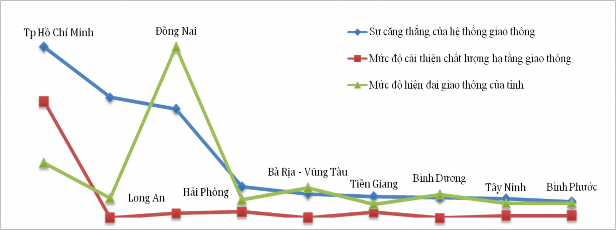
Figure 2.27: Assessment of the local transport system
(Source: BCSI, 2018)
To enhance the connectivity of transport infrastructure requires synchronization with destinations on the same route, secondly, it must be convenient for traffic with a full system of instructions, signs, toll stations, communications, lighting, internet, emergency, repair services and finally, attention must be paid to space and breaks for the transport system to operate.
BRVT mainly exports crude oil exploited by Vietxopetro. The two gas clusters Dinh Vu - Cat Hai and Cai Mep - Thi Vai are the two main gateways of Vietnam connecting
with the world. Cai Mep International Port is a deep-water container port in the Cai Mep area.
Mep, Tan Thanh district, Ba Ria - Vung Tau province has a 600m long wharf, capable of receiving large container ships with a capacity of 160,000 DWT. The World Bank and S&P Global Market Intelligence announced the CPPI (Container Port Performance Index) ranking Cai Mep Port 11th out of 370 global container ports (2022), including Hub port.
international transit center and national import-export gateway port for
average statistics all
5 sizes
ship. At the same time, Cai Mep ranked No.
13/370 according to the popular ship size at the port. What is special is that Cai Mep is ranked
higher than famous ports in the world
world is Yokohama - Japan (Thu)
12), PTP
Malaysia (16th), Singapore (31st), Hong Kong (38th).
However, Cai Mep – Thi Vai is not yet operating at full capacity. Firstly, although there is a plan to relocate Saigon port, in reality, Ho Chi Minh City and businesses have not implemented it and are very slow to do so. Secondly, the price of logistics services has increased during the crisis, with the lack of enough containers for transportation or the rental price being too high. In addition, due to the insufficient volume of goods, transportation costs are high. At the same time, many shipping lines have stopped routes or skipped Vietnam to go directly to international routes.