
- Dry, clean, disposable wipes for each wipe. Do not use damp, hanging wipes.
available on the tree.
- Do not use the towel to wipe this area to wipe another area.
- When cleaning the floor, you should divide the floor in half and place signs to reserve half of the path.
- Zigzag wiping technique, each wipe should not overlap the previous wipe, no areas should be left uncleaned, areas that have been wiped should not be wiped again, and towels should be changed at the end of each patient room.
- Do not use a broom in high-risk areas such as operating rooms, intensive care units, or rooms with immunocompromised patients. Use only a dehumidifier.
b. Clean beds, tables, mattresses, and chairs
- For beds, tables, mattresses, and chairs used for non-infectious patients:
+ Wipe off dust with a damp cloth,
+ Clean the brush with soapy water, wipe again with clean water and use a clean cloth to wipe.
- For beds, tables, mattresses, chairs used for people with infectious diseases
+ Wipe off dust with a damp cloth with disinfectant solution, then wipe again with soapy water.
+ Rinse with water and dry with a clean towel.
+ Remove gloves, wash hands
c. Clean ceiling, walls, doors and other tools: 1 week / time.
- Prepare tools
- Take the patient out of the room. Put the items on the table in the bedside table or cover it to avoid dust. Turn off the fan.
- Gently and carefully sweep the ceiling and walls from top to bottom to remove dust and cobwebs, being careful to avoid dust getting into your eyes.
- Clean glass doors, enamel walls, appliances such as ceiling fans, lights, etc. with soapy water or disinfectant solution, then wipe again with clean water and dry.
- Use a brush and soap to clean and wipe away stains on the wall, then
Rinse with clean water.
- Clean the floor according to the process.
- Clean up tools
- Remove gloves and wash hands
minute.
d. Toilet:
* Staff: 2 times/day.
* Patients : 4 times/day and as needed.
- Wear protective equipment.
- Clean up all the trash.
- Spray disinfectant solution on the bathroom floor, toilet surface and leave for 10 minutes.
- Rinse with water until clean.
- Clean up the tools.
- Remove gloves and wash hands.
e. Corridors, stairs: Clean twice a day or when dirty.
Note: Have a monthly plan to clean floors, hallways, and stairs.
... each small area and dry immediately. Avoid spilling water and using a broom to sweep away the water, making it wet and slippery.
g. Cleaning surfaces contaminated with blood and body fluids:
- Wear protective clothing: Gloves, mask, boots, goggles (if needed).
- Mix a disinfectant solution containing 1% sodium concentration.
- Irrigate with 1% sodium disinfectant solution for at least 10 minutes.
- Use a rag or absorbent paper to absorb blood and fluid on the floor surface or object and put it in a yellow medical waste bag.
- Wipe with a wet cloth with soap or disinfectant where there is blood or fluid.
pour.
- Wash the towel or change the load and wipe again with clean water to remove all soap, then wipe
dry floor
- After cleaning, the mop must be washed, dried and stored properly or put in the trash.
bag for washing. Do not leave wet mop in corners of the house.
- Clean and put cleaning tools in the right place.
- Wash hands immediately after removing sanitary gloves.
g. Clean the wires and waste containers.
Replace the mop or wash the mop in a bucket of clean water, wring it dry and mop the floor again to remove soap or disinfectant solution following the above procedure.
- Clean up tools, clean cleaning tools and put them in the right place.
- Wash the mop and dry it. Do not leave the wet mop in the corners of the house.
- Wash hands regularly and move to another cleaning area. Dispose of tools after cleaning:
- All tools after cleaning are washed and stored in a dry place.
- After cleaning, the mop must be washed in the sun and stored properly or put in a bag for washing. Do not leave wet mops in corners of the house.
- Use separate cleaning tools for each area and department.
- Hands must be washed immediately after removing sanitary gloves.
III. WATER ENVIRONMENT SANITATION
- Clean water is a valuable resource for humans, especially in hospital environments, water plays an important role in ensuring hygiene, contributing effectively to saving the lives of patients. The use and maintenance of clean water environments in medical facilities must comply with the following principles:
- All medical facilities must use clean water according to regulations (tap water).
- Water tanks are paved with cement, have lids and are periodically cleaned and scrubbed.
contain water as prescribed.
- Water used in the operating room and obstetrics department must be tap water and filtered.
through ultrafiltration membrane before use.
- Medical facilities need to plan for the Center for Preventive Medicine to periodically collect water samples for testing of physical, chemical and microbiological factors. When the test results of domestic water samples are not guaranteed, timely intervention measures must be taken to ensure the safety of patients and medical staff.
IV. AIR SANITATION
Air is one of the basic components of the hospital environment. Clean air, ensuring patient safety is a very important factor in the practice of care and treatment. In addition to the clean and tidy surface of the department environment, the patient rooms must be cool in the summer and warm in the winter. Ensuring reasonable patient arrangement is one of the nine practice contents.
of standard precautions. To avoid hospital-acquired infections, operating rooms and intensive care units need to be equipped with proper ventilation systems: install ventilation systems on the ceiling or close to the ceiling and exhaust fans 10 cm from the floor to create air flow from high to low and exit near the floor. The ventilation system needs filters that can filter dust and pathogens at 97 - 99% efficiency (such as HEPA filters 97 - 99% effective). The exhaust fan cover needs to have a screen to prevent insects and rodents. The air conditioner filter needs to be cleaned and disinfected periodically according to regulations. The operating room door must always be closed during the entire surgery except when transporting equipment, instruments or when surgical team members enter and exit the operating room. It is necessary to periodically check the air environment in key areas such as operating rooms and recovery rooms to have timely solutions when the air is polluted, ensuring the safety of patients during hospitalization.
SELF-ASSESSMENT:
Fill in the blanks in the following sentences:
1. List all 10 principles of cleaning patient rooms, surfaces, and departments:
A. Medical staff must bring full equipment when performing cleaning duties.
personal protection: masks, gloves, hats, gowns, boots, etc.
B. ………………………………………………………………………………………………………………
C. Collect trash before wiping and cleaning the surface.
D. ………………………………………………………………………………………………………………
E. Use separate cleaning tools for each area.
G. ……………………………………………………………………………..
H. Do not clean the patient's room while medical staff are performing examination and treatment.
I. …………………………………………………………………………..
K. High-risk areas should use disposable mops with separate washing machines. L. Use the correct type of cleaning and disinfecting solution at the correct concentration as specified.
2. How to use a floor cleaning cloth:
A. Use disposable towels and throw them away. Always use a dry towel for each wipe. Do not reuse.
damp towel, hanging on the tree.
B. …………………………………………………………………………….
C. When cleaning the floor, divide the floor in half and place signs to reserve half the path.
D. ………………………………………………………………….………………
3. List the necessary tools and equipment for cleaning hospital environmental surfaces.
…………………..……………………………………………………………………
…………………..……………………………………………………………………
…………………..……………………………………………………………………
4. List the steps for disease prevention and cleaning in infected areas:
…………………..……………………………………………………………………
…………………..……………………………………………………………………
…………………..……………………………………………………………………
5. List the steps for cleaning surfaces contaminated with blood and body fluids:
…………………..……………………………………………………………………
…………………..……………………………………………………………………
…………………..……………………………………………………………………
Mark an X in the appropriate box for how to partition the surface of the care environment.
Care for the sick according to regulations:
CONTENT | Clean Area | Region unclean | Region infection | |
6 | Rooms directly involved in the activity medical examination and treatment such as clinic, changing room bandage, preparation room, sick room. | |||
7 | Administrative room, meeting room, staff room factory, warehouse. | |||
8 | Toilet, douche, dirty room. |
Maybe you are interested!
-
 Some Solutions to Improve Internal Control in Lending Activities for Household and Individual Customers at Agribank Quang Tri
 -
 Studying the current status of rural environment and proposing some solutions to implement environmental criteria in new rural construction in San Thang commune, Lai Chau city, Lai Chau province - 2
 -
 Research and propose solutions to protect the environment in the direction of sustainable tourism development in Binh Thuan province - 19
 -
 Solutions to Improve the Efficiency of Internal Control System
 -
 Proposing Some Solutions for Solid Waste Control in Long Bien District
Mark an X in the appropriate box to correctly partition the environmental surface by color:
Color red | Green | Yellow | ||
9 | Safe, clean, low risk area. | |||
10 | Care and treatment area, medium risk. | |||
11 | Infectious area, high risk. |
Choose the best answer to the following questions by circling the first letter of the sentence:
12. The purpose of environmental sanitation is to
A. Cleaning the hospital environment
B. Reduce the risk of infection for patients, health workers and the community.
C. Ensuring safety in patient care and treatment
D. All are correct.
13. Classification of sanitary areas in hospital environments is carried out according to the following criteria:
A. Classification by area: clean, unclean, contaminated area
B. Classification by risk: low risk, medium risk, high risk
C. Classified by color: blue, yellow, red
D. All are correct.
14. Regulations on cleaning frequency of patient care environment surfaces are as follows:
A. Mop the floor twice a day, scrub the sink three times a day, and clean the bathroom.
shower, toilet 4 times/day and when needed.
B. Mop the floor 3 times/day, scrub the sink 2 times/day, scrub the bathroom
shower, toilet 4 times/day and when needed.
C. Mop the floor twice a day, scrub the sink twice a day, scrub the bathroom
shower, toilet 4 times/day and when needed.
D. Mop the floor twice a day, scrub the sink twice a day, scrub the bathroom
shower, toilet 5 times/day and when needed.
LESSON 6: ENVIRONMENTAL SAFETY
TARGET:
1. Present basic concepts of environmental safety and non-injury
intention.
2. Describe and analyze some types of unintentional injuries in the home.
family and public places
3. Present safety solutions in homes, schools, public places and on vehicles.
4. State the main solutions to ensure safe living and prevent injuries.
unintentional injury in the community.
CONTENT:
I. GENERAL
Living in a safe environment is everyone's wish. However, in modern society, accidents still happen frequently and they are called injuries. There are intentional injuries such as murder, assault, suicide, child abuse and other violent acts; there are unintentional injuries, which appear suddenly, due to many different causes and cause bodily harm or death to one or more people. The environmental safety section in this article only deals with unintentional injuries that occur outside the workplace.
II. ENVIRONMENTAL SAFETY
2.1. Concept of trauma
According to the World Health Organization, injury is damage to health caused by the transfer of energy beyond the tolerance of the human body. Energy can be in the form of mechanical energy, thermal energy, chemical energy, radiant energy, electrical energy or the deprivation of essential elements such as oxygen (suffocation, drowning) or heat (hypothermia). Mechanical energy is the most common cause of injury.
According to JJ Gibbons (1961), all traumatic phenomena are within the
The harmful effects of the five forms of energy are kinetic or mechanical energy, chemical energy,
electrical, radiant and thermal energy.
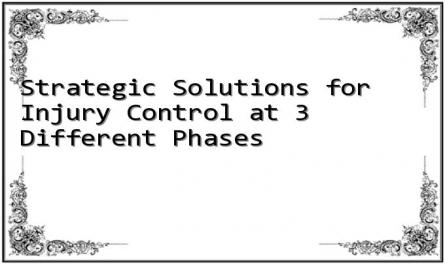
Jr. William Haddon (1963) divided trauma into three stages: pre-injury stage, trauma stage and post-injury stage. Each stage has a corresponding prevention strategy (see table 5.1).
Table 6.1. Strategic solutions for injury control at three different stages
accident , injury
Shock phase
love
Purpose of the solution | For example | ||
Drowning | Self-poisoning | ||
Pre-injury phase | Prevent these things that can cause injury | Build fence around pond | Detect and deal with sadness |
Stage of injury | Preventing injuries at events happen | Personal rescue equipment | Total prescription drug limit |
Post-traumatic phase | Prevent serious or disabling injury once it has occurred | Cardiopulmonary support | Eliminate toxins from the body by vomiting or dialysis |
2.2. Some environmental safety issues in housing and residential areas
2.2.1. Environmental safety at home
Home injury is understood as an injury that occurs within the confines of the home to family members or invited guests of the family (Monroe T. Morgan, 1997).
Most of a person's life is spent in and around the house. Children spend nearly 90% of their time at home. As they grow up and go to school, they spend less time at home. At working age, people spend most of their time and rest at home. When they retire, older people spend more than 90% of their time at home. The youngest and oldest people in the family are at the highest risk of home injuries.